
Few men’s haircuts carry the same instant appeal as a bald fade. It strips the sides and back down to bare skin, then blends upward into whatever length or texture you keep on top, so the finished look feels both sharp and effortless. Barbers reach for it constantly because it flatters nearly every head shape and hair type.
This guide walks through what a bald fade actually is, how it differs from other fades, the styles worth trying, and the barber-tested tips that keep it looking fresh. Whether you’re booking your first appointment or refining a look you already love, you’ll find practical direction here.
What Is a Bald Fade Haircut?

A bald fade takes the hair down to skin level around the ears, neckline, and lower sides, then climbs gradually into more length toward the crown. There’s no visible line where the cut stops; the change happens in stages, so the eye reads it as one smooth gradient rather than a step.
Barbers sometimes call it a “skin fade” for the same reason: the bottom section shows scalp, not just short stubble. Clippers handle the bulk of the work, while a straight razor or foil shaver often finishes the lowest inch for that true bare-skin edge.
Why Is It So Popular?
Part of the draw is flexibility. A bald fade pairs with a buzz cut, a curly top, a mohawk, or a slicked-back pompadour without losing its identity, which makes it an easy “yes” for barbers and clients alike. It also reads as tidy without demanding much daily upkeep once the shape is set.
- Delivers a crisp, high-contrast finish
- Adapts to straight, wavy, curly, and coily hair
- Suits both office settings and weekend plans
- Keeps the scalp cooler in warmer months
- Complements beards and other facial hair
- Scales from subtle to bold depending on fade height
Bald Fade vs Other Fade Haircuts

People often use “fade” loosely, but the starting height and how far the clippers go down to skin change the whole character of the cut. Here’s how a bald fade stacks up against the other common versions.
| Fade Type | Where It Starts | Skin Showing? | Best For |
| Bald Fade | Varies (low, mid, or high) | Yes, down to skin | Bold contrast, any hair type |
| Low Fade | Just above the ears | Minimal | Conservative, first-time fade clients |
| Mid Fade | Roughly temple height | Moderate | Balanced, works on most face shapes |
| High Fade | Near the crown | Extensive | Dramatic contrast, thick hair |
| Taper Fade | Neckline and sideburns only | No | Subtle, low-maintenance trims |
Bald Fade vs Low Fade
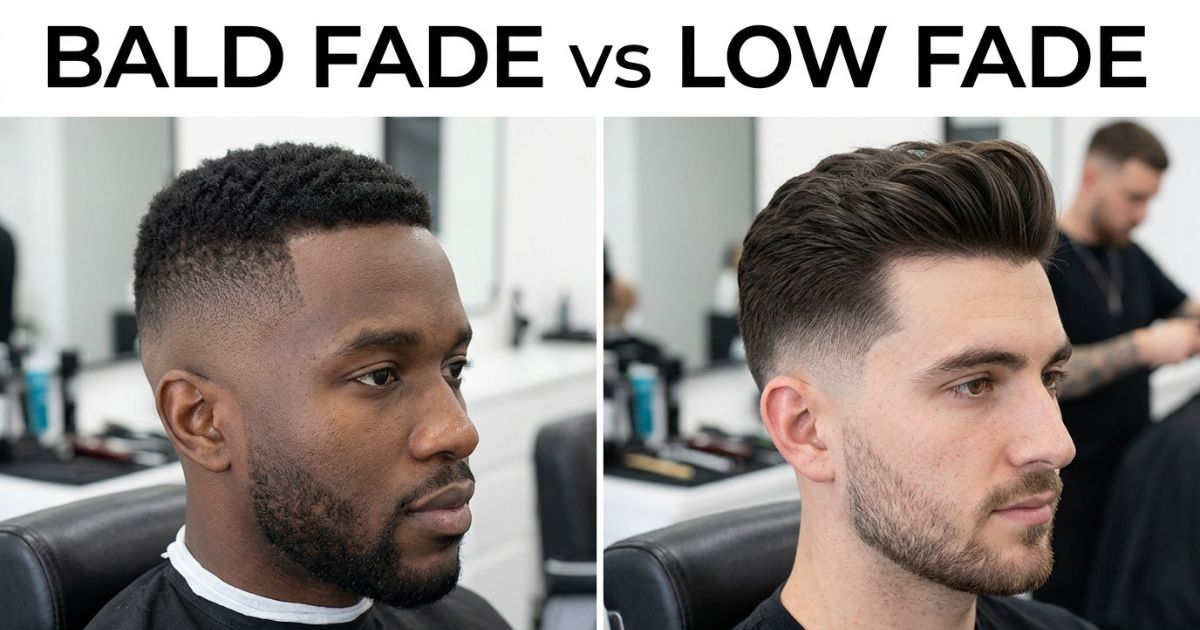
A low fade fades out just above the ears and usually leaves a trace of stubble rather than bare skin. A low bald fade takes that same starting height but pushes the bottom section down to skin, so you get a subtler placement with a sharper finish.
Bald Fade vs Mid Fade
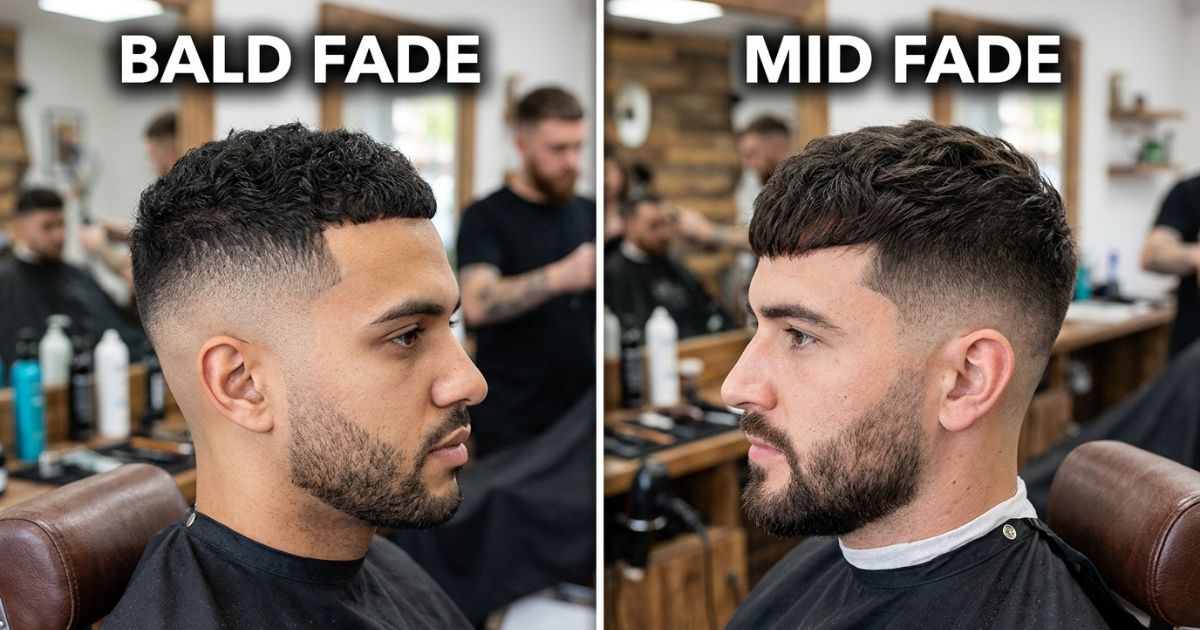
Mid fades begin around the middle of the head, giving a fairly even split between short and long. Add a bald finish to that same starting point and the contrast becomes more obvious near the bottom, even though the overall height stays balanced.
Bald Fade vs High Fade
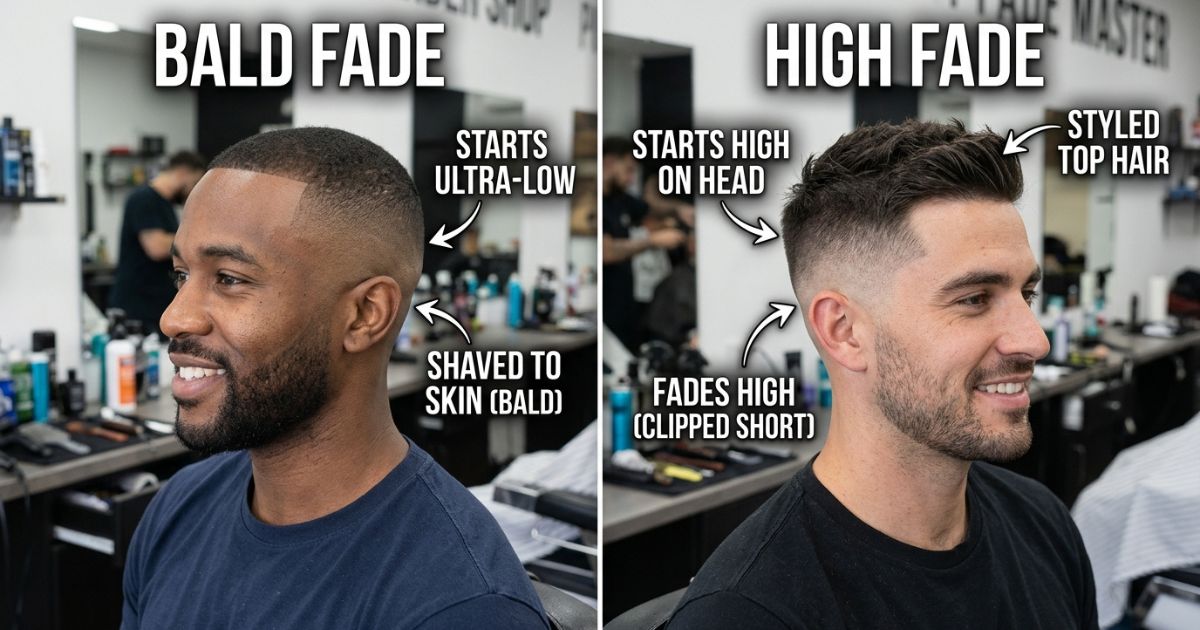
High fades start well above the ears, often near the temples or crown, and remove far more hair from the sides. A high bald fade pushes that even further by fading all the way to skin, producing one of the boldest versions of this cut.
Bald Fade vs Taper Fade
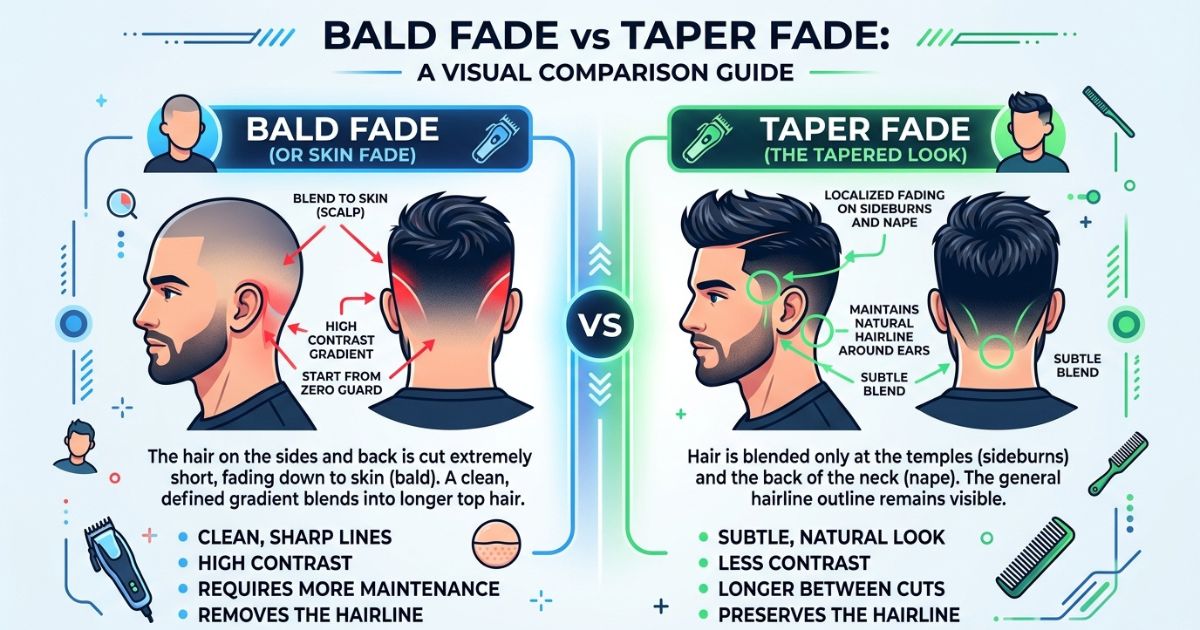
A taper fade only trims the neckline and sideburns, leaving the rest of the sides fairly full. A bald fade climbs much higher and finishes at bare skin, so the two styles suit very different comfort levels with short hair.
Types of Bald Fade Haircuts
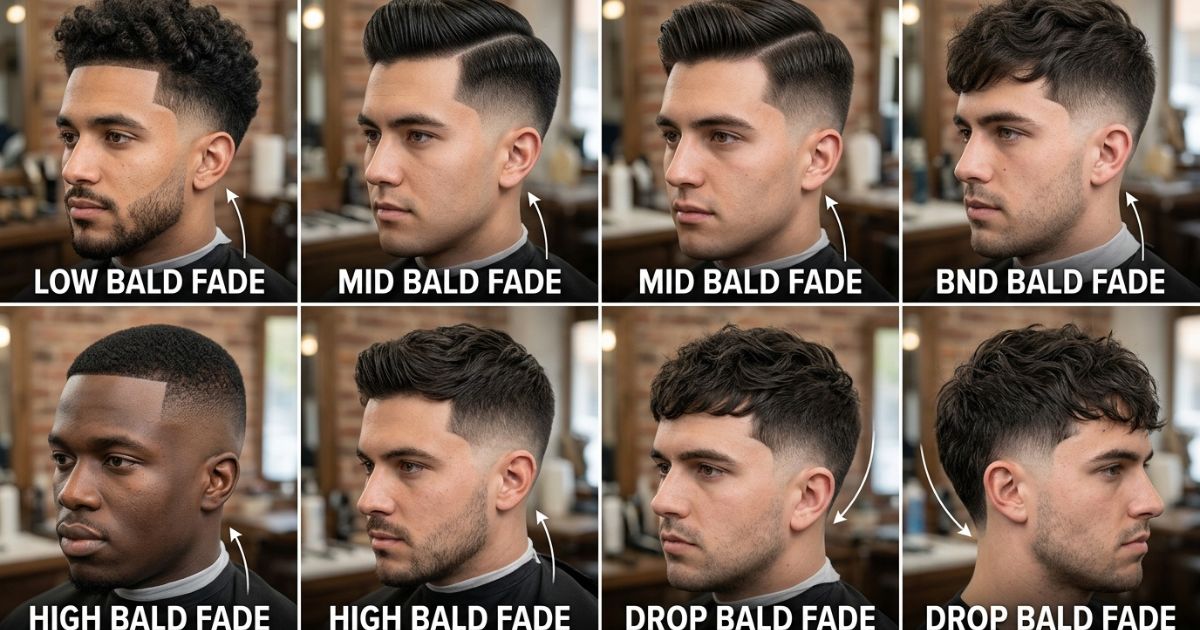
No single bald fade looks the same on every head. Fade height, hair type, and how much length stays on top all shape the final result, and the variations below cover the most requested combinations in barbershops today.
Low Bald Fade Haircut

This version starts near the ears and follows the natural hairline around the back, keeping most of the sides intact. It’s a safe, professional pick for office environments, students, and anyone easing into fades for the first time, and it pairs naturally with crew cuts or side parts.
Mid Bald Fade Haircut
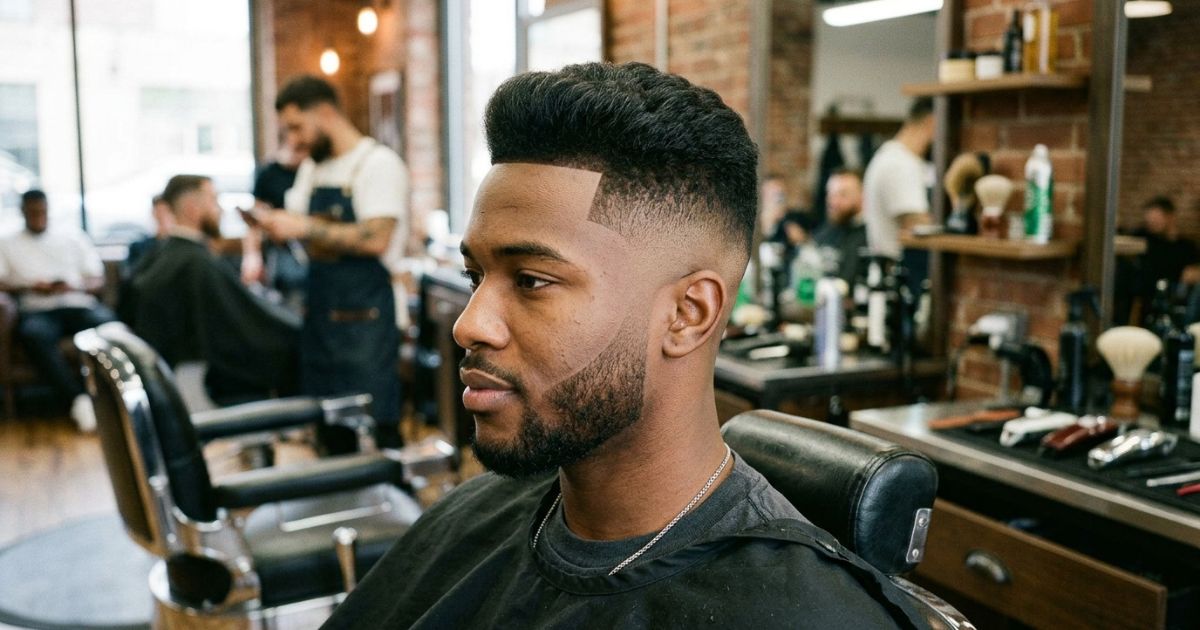
Sitting between low and high, this cut begins around the middle of the head and works with nearly any face shape. Barbers often suggest it for first-time clients because it balances contrast without going too extreme, and it suits straight, wavy, or curly hair equally well.
High Bald Fade Haircut
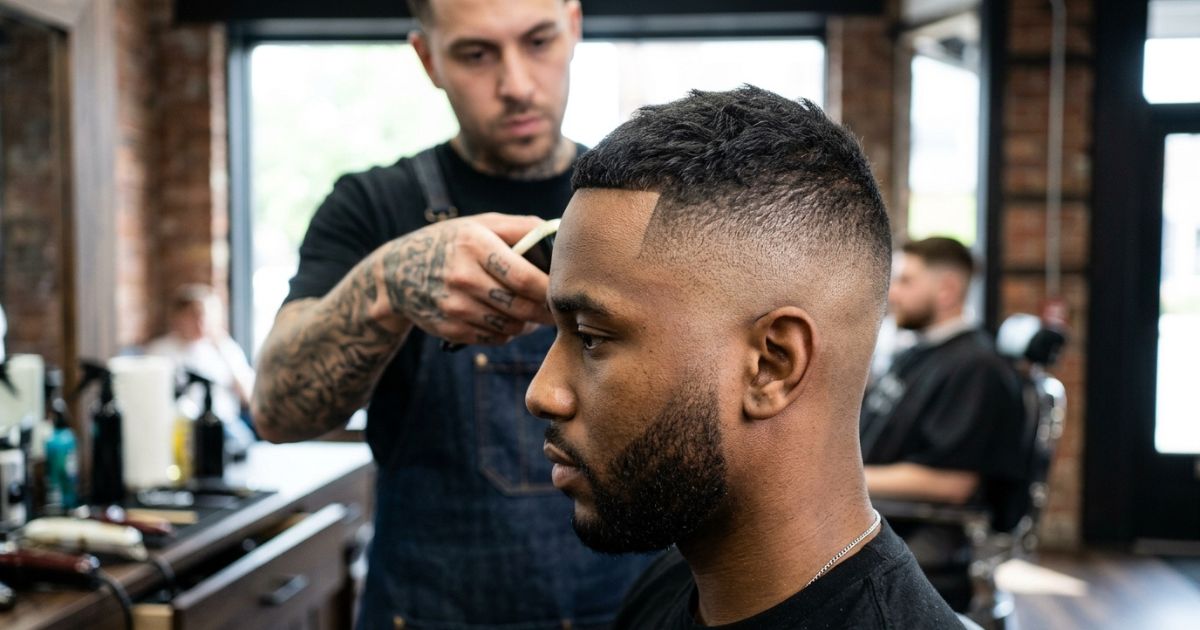
Starting much higher, this fade removes the most hair from the sides and puts real focus on the top. It works especially well with buzz cuts, pompadours, and other short, textured styles, and it’s a favorite among men with thicker hair who want less bulk.
Bald Drop Fade
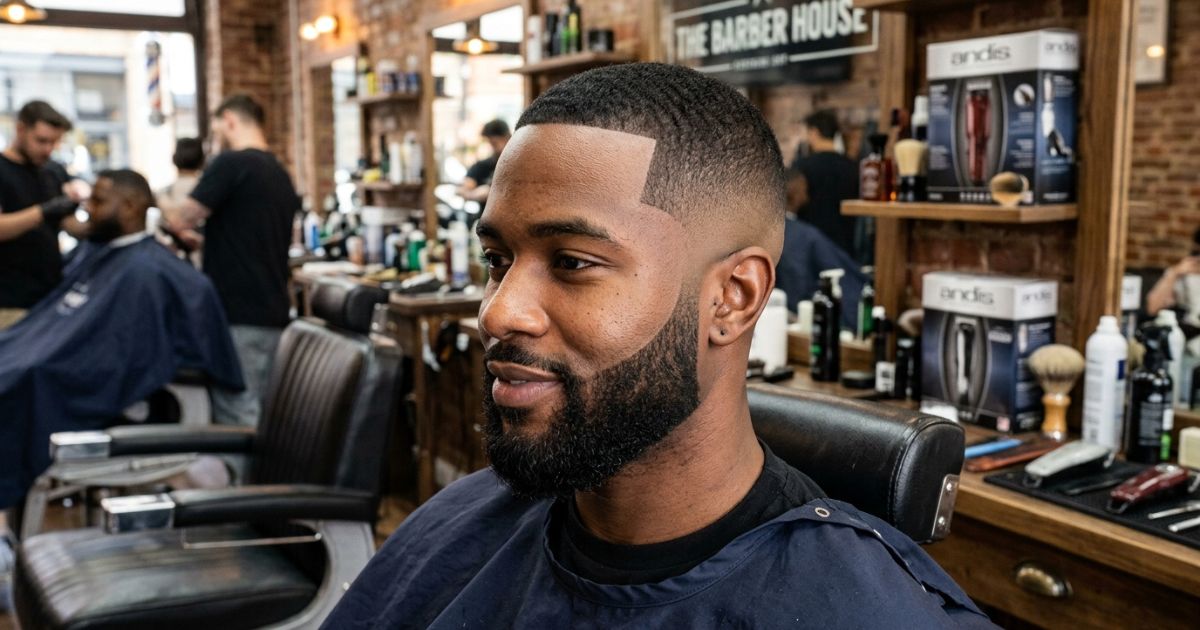
Instead of a straight line, the fade curves and drops lower behind the ears, following the natural shape of the skull. This creates a rounder, more sculpted finish that flatters curly hair, waves, and textured crops especially well.
Bald Taper Fade
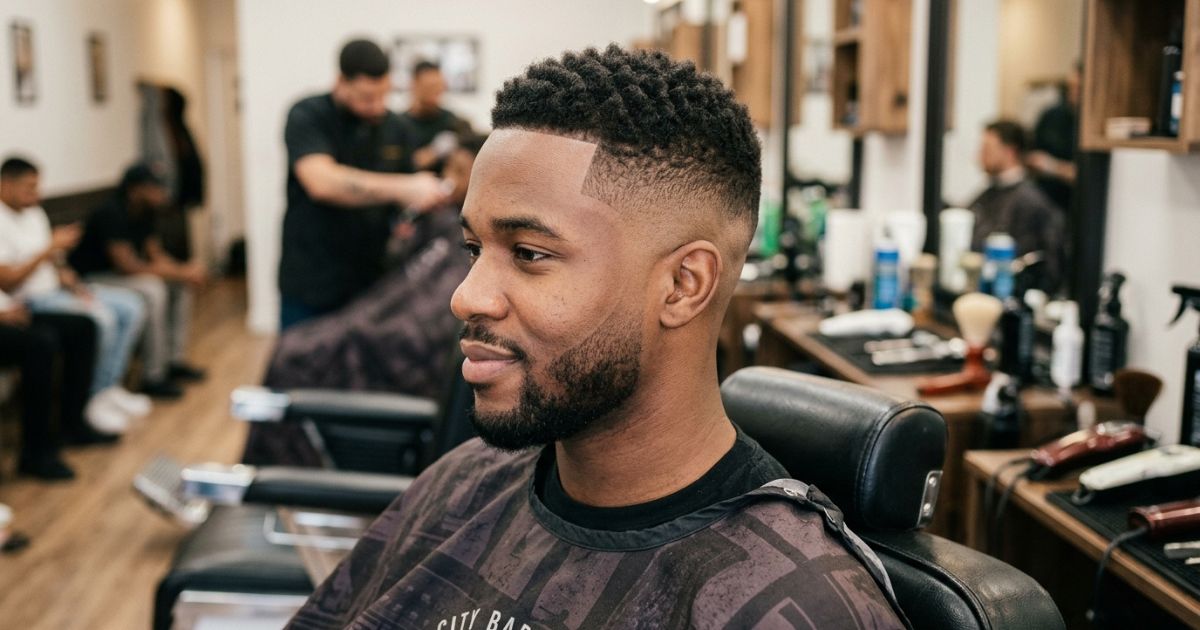
This hybrid keeps more length through the middle sides while fading to skin only at the neckline and sideburns. It’s a gentler introduction to the bald finish for anyone who isn’t ready to commit to a fully faded side.
Bald Burst Fade
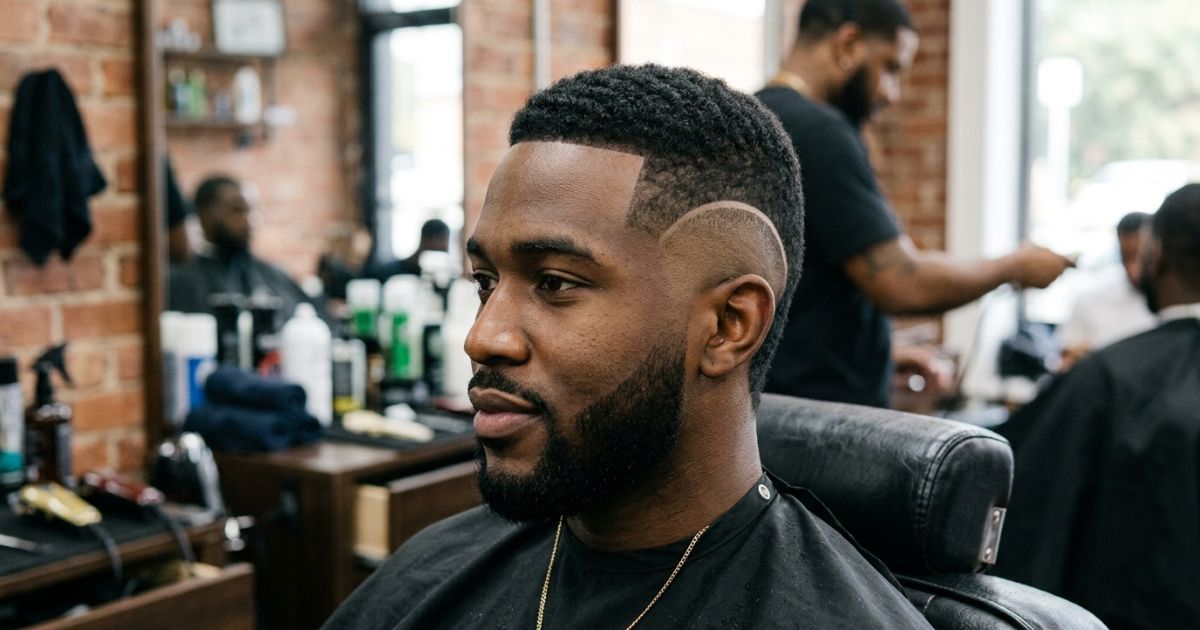
Rather than a straight line around the ear, the fade curves in a rounded “burst” shape. It’s a common match for mohawks, mullets, and curly tops because it keeps more hair at the back while the front and sides stay clean.
Skin Fade Buzz Cut
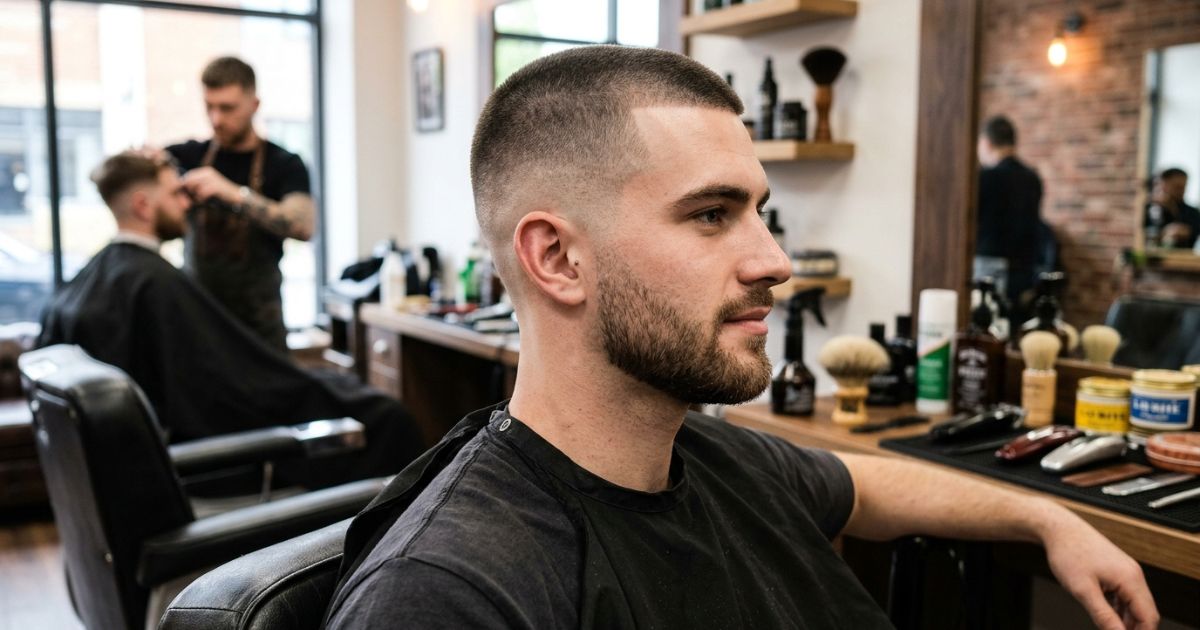
Pairing very short hair on top with a bald fade on the sides makes this one of the lowest-maintenance cuts around. Athletes, service members, and busy professionals lean on it because there’s almost nothing to style each morning.
Bald Fade with Beard
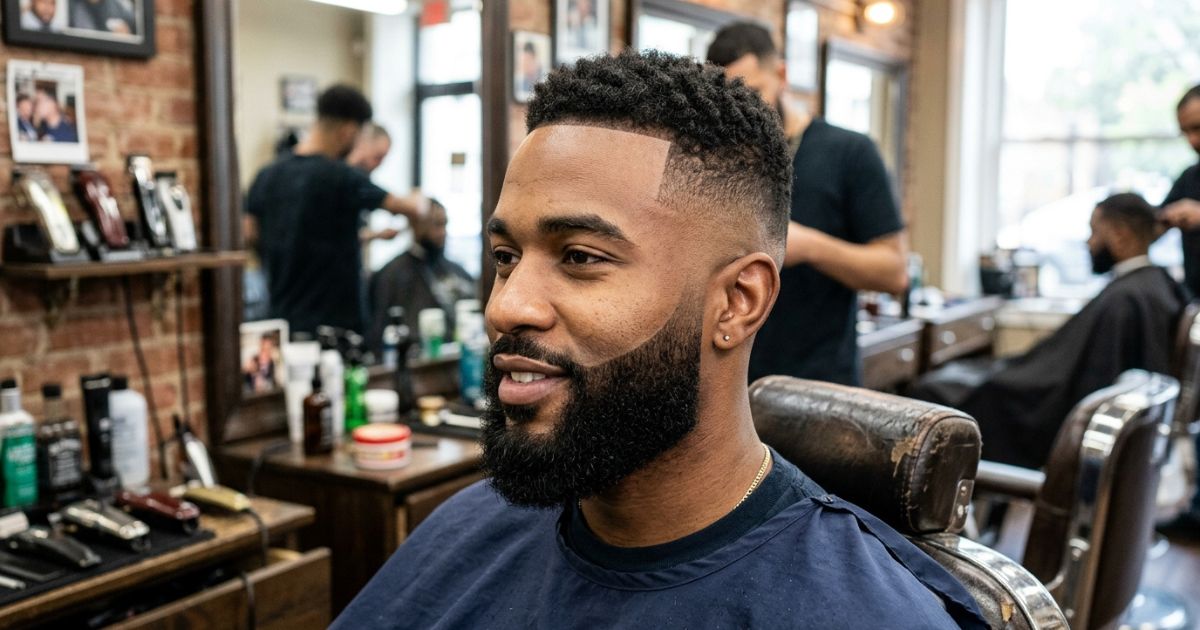
Blending the haircut directly into a beard removes any hard line between hair and facial hair. It works with stubble, boxed beards, and fuller beards alike, though it does require consistent beard trims to keep the transition looking intentional.
Bald Fade Comb Over
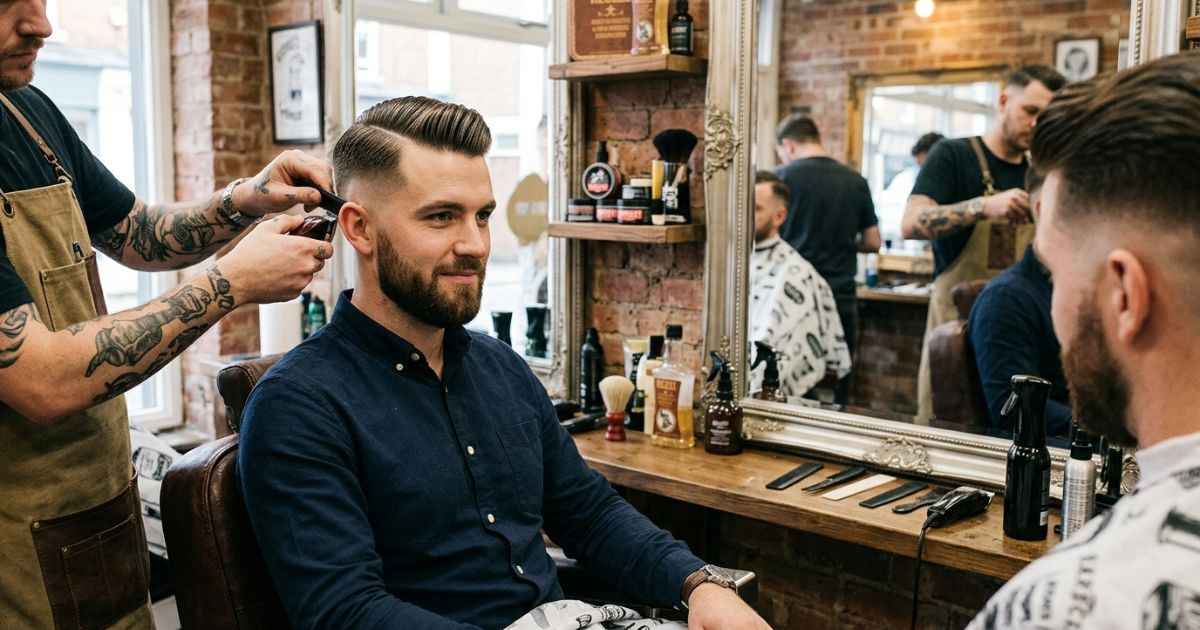
Faded sides make a combed-over top stand out even more, giving the style a polished, professional edge. A light pomade or matte product usually holds the shape through a full workday.
Bald Fade Mohawk

A strip of longer hair runs down the center while the sides fade completely to skin. It’s a bold, attention-grabbing option for anyone who wants a fade with real personality.
Bald Fade Long on Top
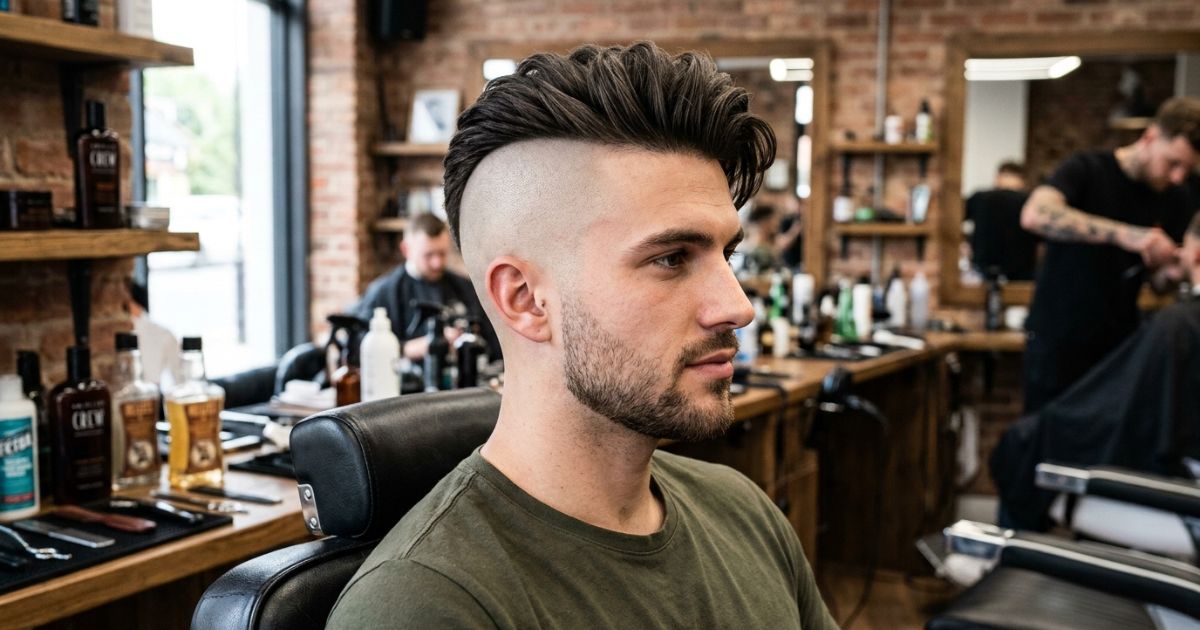
Keeping extra length up top opens the door to quiffs, textured styles, side parts, or a natural brushed-back look, all while the sides stay clean and faded. It’s a flexible pick for men who like to switch up their style often.
Bald Fade with Line Design
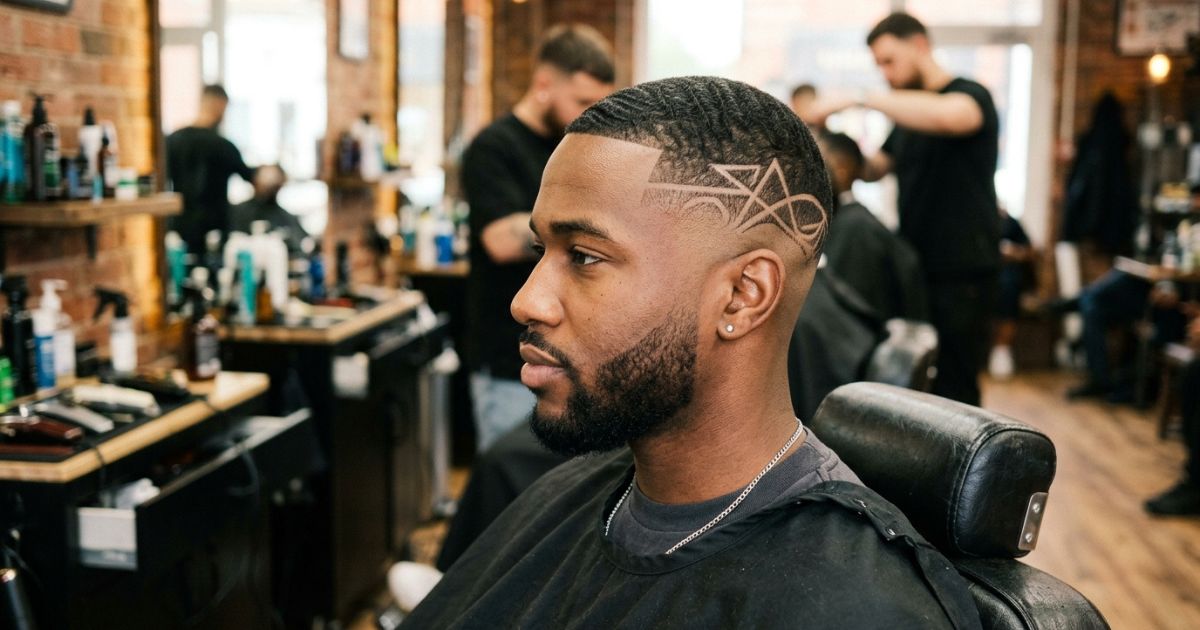
Adding a shaved line or a simple pattern gives the cut a more personal touch. Simple designs tend to grow out more evenly than intricate ones, making them easier to maintain between visits.
Learn more:Best Hispanic Mexican Low Taper Fade for Straight and Curly Hair 2026
Bald Fade Haircut for Different Hair Types
The fade itself stays consistent, but how it’s paired with the hair on top depends heavily on texture. Matching the cut to your natural hair type makes daily styling far easier.
Bald Fade Haircut for Black Men
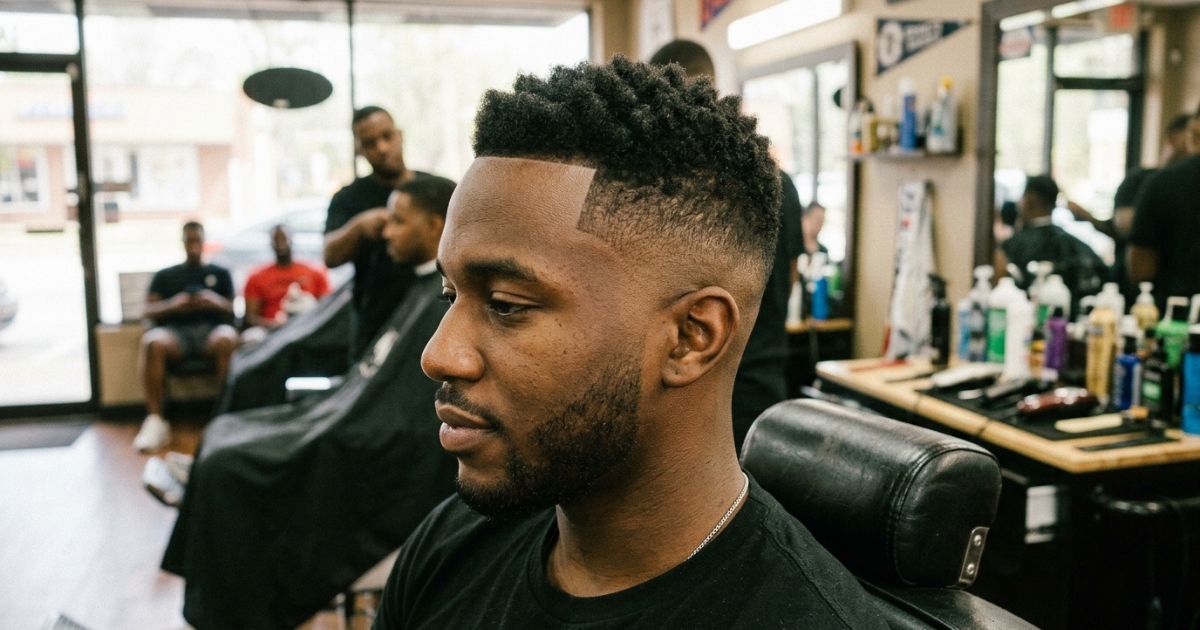
This combination is one of the most requested looks in modern barbershops, prized for how it frames natural texture. Common pairings include:
- Sponge twists with a bald fade
- Waves with a skin fade
- Short curls with a low bald fade
- A high top with a bald fade
- An afro with a mid bald fade
Regular edge-ups between full haircuts keep the lines looking crisp.
Bald Fade for Straight Hair
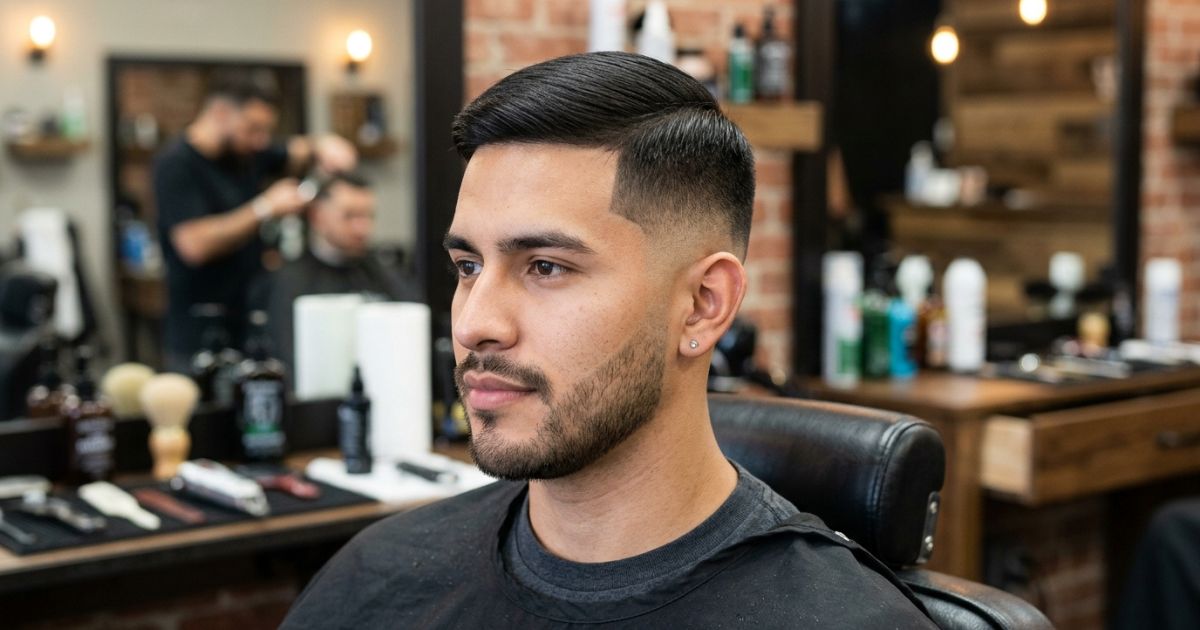
Straight hair blends into a bald fade with almost no resistance, which opens up plenty of styling routes: side parts, comb overs, slick backs, French crops, textured crops, and short quiffs all work well. A light clay or matte paste adds texture without extra shine.
Bald Fade for Wavy Hair
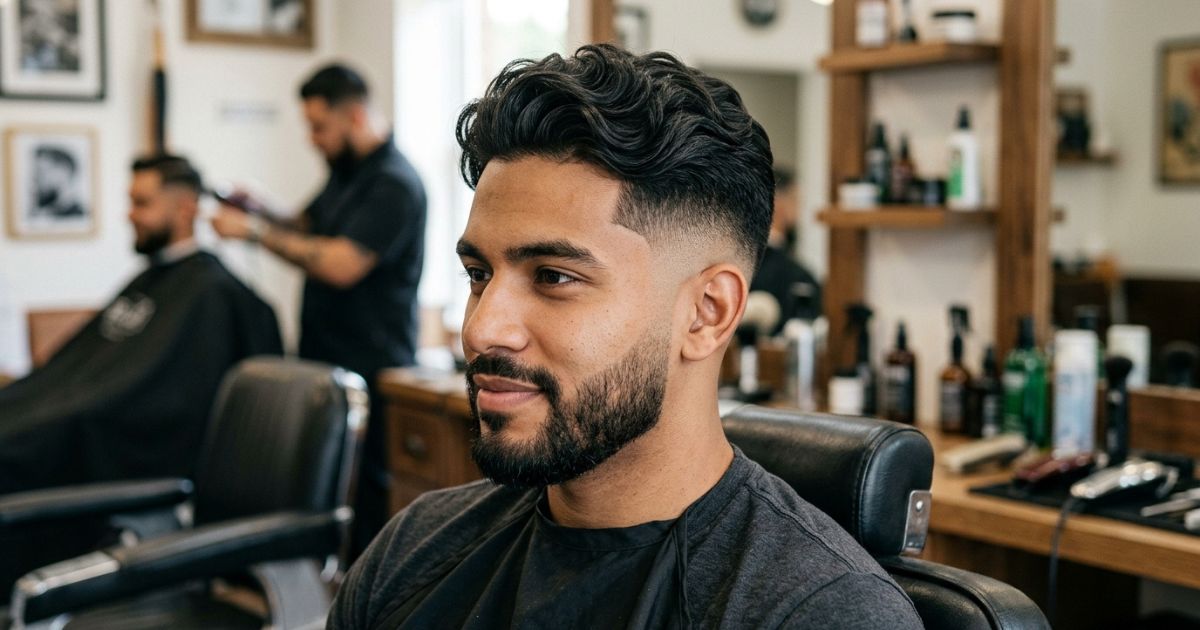
Leaving a bit of length on top lets natural waves show through while the faded sides keep everything looking deliberate. A sea salt spray enhances the movement without stiffening the hair.
Bald Fade for Curly Hair
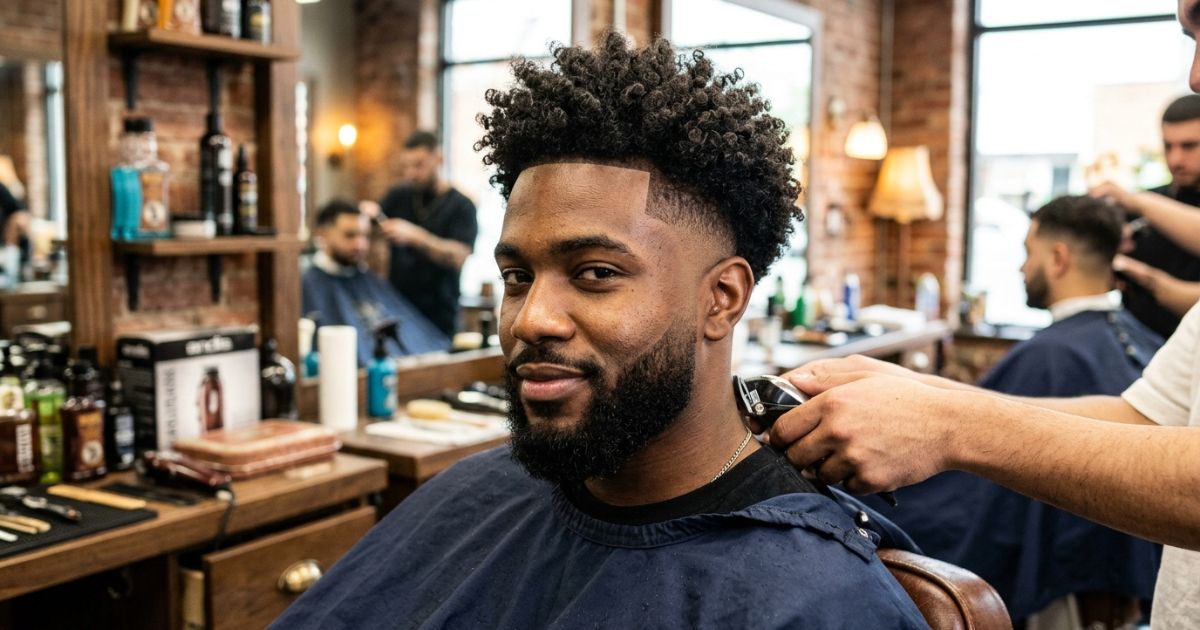
Clean, faded sides make curls pop even more, and popular combinations include a curly crop, a curly fringe, or tight curls over a low bald fade. Curl cream or a leave-in conditioner helps manage dryness and keeps definition throughout the day.
Bald Fade for Thick Hair
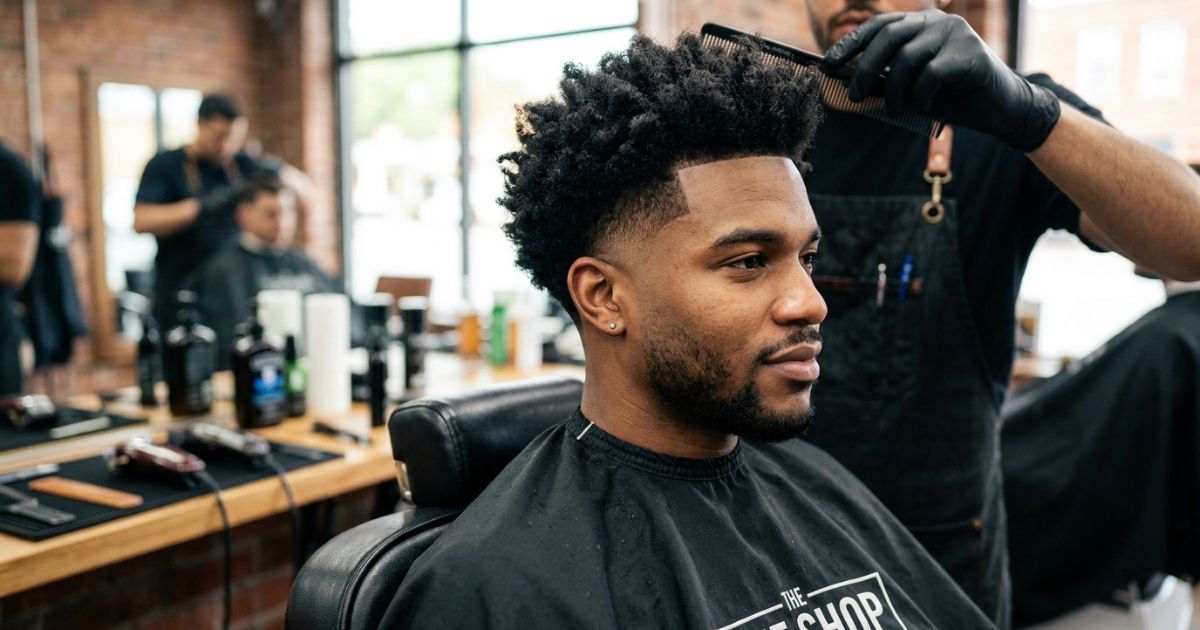
Thick hair can start to feel heavy around the ears and neckline, and a bald fade trims that bulk away for a cleaner overall shape. It also cuts down on daily styling time since there’s simply less hair to manage on the sides.
Bald Fade for Thin or Thinning Hair

Fading the sides down to skin reduces the visual gap between thicker and thinner areas, which can make the whole head look more even. Shorter top styles, like a buzz cut or textured crop, generally read better than longer styles on thinning hair.
Bald Fade Haircut by Age
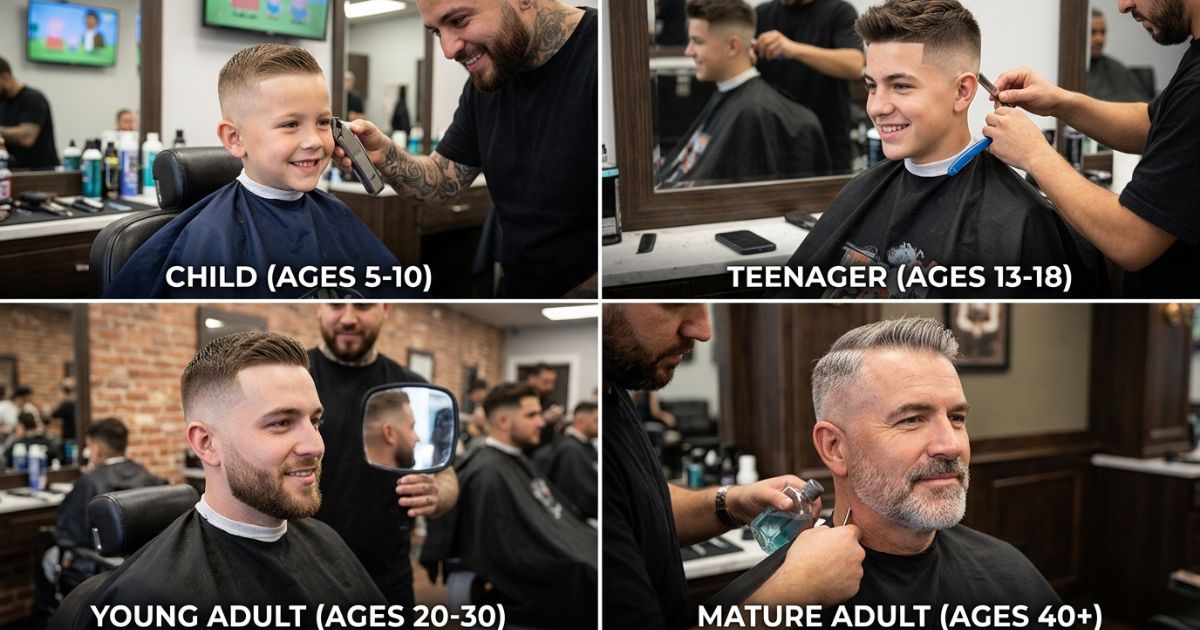
This cut isn’t limited to one age bracket. It scales from playground-friendly kids’ versions to sharp, boardroom-ready adult looks, and the right approach depends mostly on lifestyle and how much upkeep someone wants.
Bald Fade Haircut for Men
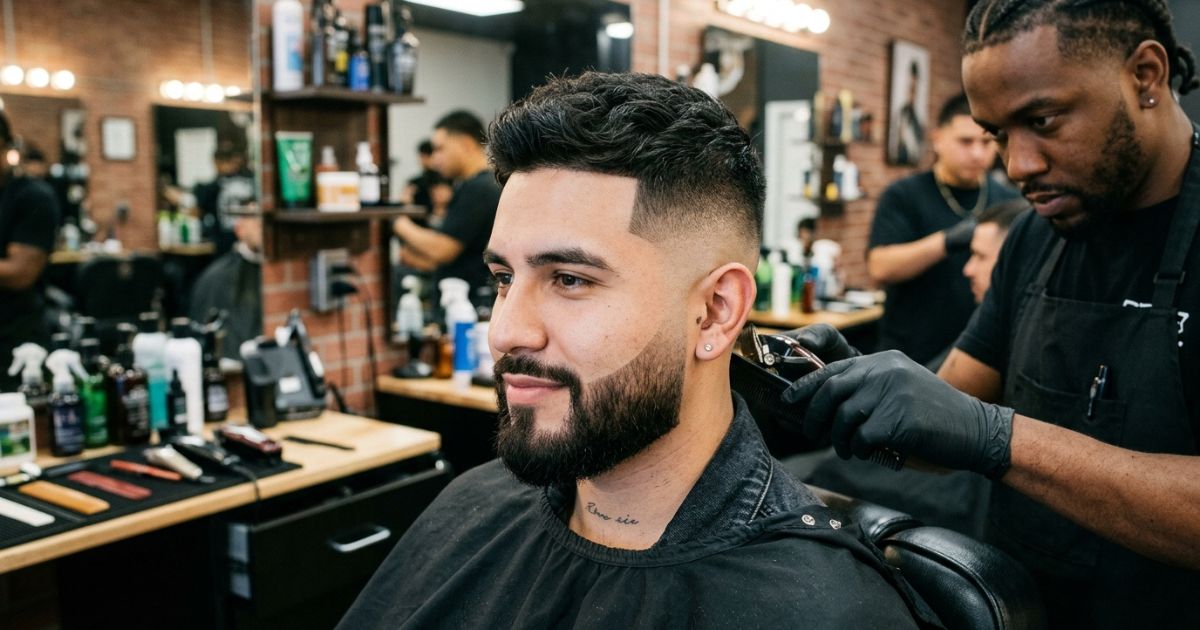
Adult men wear this style everywhere from the office to weddings. A low bald fade with a clean side part reads more conservative, while a high fade with a textured crop leans younger and edgier.
Bald Fade Haircut for Kids

Kids’ versions should stay noticeably softer than adult cuts. Parents commonly choose a low bald fade, a crew cut with a bald fade, a curly top with a low fade, or a side part over a skin fade, since all four hold up well through active school days.
Bald Fade Haircut for Boys
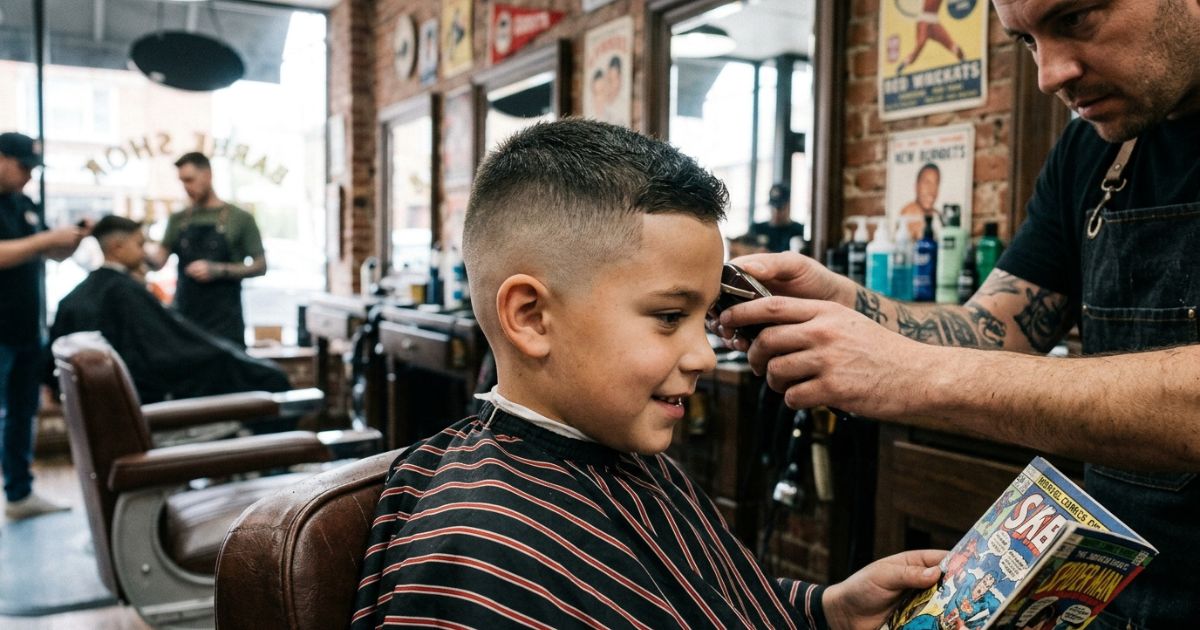
Older boys tend to want something modern that still needs minimal daily effort. Textured crops, French crops, buzz cuts, short quiffs, and curly tops paired with a low or mid bald fade all grow out gracefully between appointments.
Bald Fade Haircut for Women

Though less common, more women are choosing bald fades alongside very short cuts like pixies and buzz cuts, sometimes finished with a creative shaved design. An experienced stylist can adjust the fade height to suit different face shapes and hair textures.
How to Ask Your Barber for a Bald Fade
Saying “give me a bald fade” leaves too much open to interpretation. Instead, walk in with specifics:
- The fade height you want: low, mid, or high
- How much length to leave on top
- Whether you want a side part or a natural finish
- If your beard should blend into the fade
- A preference for a sharp or a soft neckline
Bringing one or two reference photos removes almost all of the guesswork and helps your barber match your expectations exactly.
How Barbers Cut a Bald Fade Haircut
Getting a seamless bald fade takes a deliberate process, not just a quick pass with clippers. Most barbers work through it in five stages.
Step 1: Plan the Fade
The barber decides where the fade should begin, based on your requested height and your hair’s natural growth pattern.
Step 2: Remove the Lower Hair
Clippers without a guard clear the hair near the neckline and ears first, and many barbers follow up with a foil shaver for a true skin finish.
Step 3: Blend the Hair
Switching between clipper guards gradually merges the short section into the longer hair above it, which is what keeps the transition looking smooth instead of stepped.
Step 4: Shape the Hairline
The edges around the forehead, temples, and sideburns get cleaned up last, giving the whole cut a crisp, finished outline.
Step 5: Style the Top
Finally, the barber shapes the top based on your chosen look, whether that means a natural finish or extra work with styling product for texture and hold.
How to Style a Bald Fade Haircut
The clean sides mean the top does most of the visual work, so how you style it changes the whole personality of the cut.
| Top Style | Product to Use | Quick Technique |
| Short Textured Hair | Matte clay | Work into dry hair with fingertips |
| Comb Over | Light pomade | Brush to one side for a classic finish |
| Pompadour | Volumizing product | Blow-dry upward before styling |
| French Crop | Matte paste | Shape the fringe forward and neat |
| Curly Hair | Curl cream | Scrunch in to soften frizz |
| Buzz Cut | None needed | Keep scalp clean and moisturized |
Styling Mistakes to Avoid
Even a well-cut bald fade can look sloppy if it’s styled the wrong way. Watch out for these common missteps:
- Piling on too much product
- Skipping regular hair washing
- Using heavy grease on fine hair
- Letting a blended beard go untrimmed
- Waiting too long between touch-ups
How to Maintain a Bald Fade Haircut
Because the fade goes all the way to skin, regrowth shows up faster than it would with other cuts. Most people book a touch-up every two to three weeks, though anyone chasing a razor-sharp look might prefer every one to two weeks instead.
Wash Your Hair Regularly
A gentle shampoo clears away sweat, dirt, and leftover product, and a conditioner afterward keeps the remaining hair healthy and easy to manage.
Keep Your Scalp Moisturized
With so much skin exposed along the sides, a lightweight moisturizer helps prevent dryness, particularly during extreme heat or cold.
Use Styling Products in Moderation
A small amount of clay, pomade, or paste is usually plenty. Overdoing it weighs the hair down and makes the whole cut harder to style the next day.
Trim Your Beard
If your beard blends into the fade, keep it shaped and even. A tidy beard extends the clean look of the haircut instead of undercutting it.
Protect Your Scalp
Time outdoors calls for a hat or sunscreen on any exposed scalp, since that skin burns just as easily as the rest of your face.
Best Hair Products for a Bald Fade Haircut
The right product depends entirely on your hair type and the style you’re building on top.
Matte Clay
Adds texture without shine, making it a strong pick for textured crops, short quiffs, and deliberately messy styles.
Pomade
Delivers a smoother, glossier finish suited to classic looks like a comb over or a sharp side part.
Sea Salt Spray
Boosts volume and enhances natural waves, working best on medium-length or naturally wavy hair.
Texture Powder
Gives fine hair extra lift and grip without leaving it feeling sticky or heavy.
Curl Cream
Helps curly hair stay soft and defined while cutting down on frizz throughout the day.
Beard Oil
Keeps blended facial hair healthy and comfortable, especially where the beard meets the faded skin.
Is a Bald Fade Haircut Right for Your Face Shape?
Almost any face shape can carry a bald fade, but choosing the right height sharpens the overall effect.
| Face Shape | Recommended Fade | Why It Works |
| Round | High, with extra height on top | Elongates the face |
| Oval | Most fade heights | Naturally balanced proportions |
| Square | Low or mid | Highlights the jawline without extra sharpness |
| Diamond | Mid, with some volume | Balances wider cheekbones |
| Heart | Low, with fuller top | Keeps sides neat, softens a narrow chin |
Pros and Cons of a Bald Fade Haircut
Pros
- Clean, modern appearance
- Works across nearly every hair type
- Pairs with short or longer top styles
- Looks sharp with or without a beard
- Reduces bulk on thick hair
- Highly customizable
Cons
- Requires frequent barber visits
- Regrowth becomes visible quickly
- A rushed blend can ruin the look
- Not every fade height suits every face shape
How to Find a Good Barber for a Bald Fade Haircut
Searching “bald fade haircut near me” is only the first step. Before booking, take a few extra minutes to check that the shop can actually deliver:
- Read recent reviews from other clients
- Browse the barber’s portfolio on social media
- Confirm they have experience with your specific hair type
- Look for a clean, well-run shop
- Ask how often they perform skin fades specifically
A barber who’s comfortable with bald fades will also be able to recommend the fade height that suits your face shape.
Bald Fade Haircut Photo Ideas
Reference photos remove most of the guesswork from a barber appointment. Look for images that match your hair texture, hair length, beard style, and face shape, alongside the fade height you’re aiming for. Saving two or three similar photos, rather than just one, gives your barber a clearer sense of the finished look you want.
Common Mistakes to Avoid
Choosing the Wrong Fade Height
A high bald fade isn’t universally flattering. Talk through your head shape and hair type with your barber before settling on a height.
Ignoring Hair Texture
Straight, wavy, curly, and coily hair all fade differently, so copying someone else’s exact cut doesn’t always translate to your own texture.
Skipping Regular Haircuts
Waiting too long between visits lets the clean lines blur and the whole cut lose its sharpness.
Using Too Much Styling Product
A small amount goes further than most people expect. Heavy product flattens the hair and makes washing it out more of a chore.
Trying to Cut It Yourself
Smooth blending takes practice and the right tools. Without both, it’s easy to end up with visible lines instead of a seamless fade.
FAQ’S
What is a bald fade in a haircut?
It’s a haircut that fades from longer hair on top down to bare skin near the ears and neckline, with no visible line marking the change.
Do bald fades look good?
Yes, on most face shapes and hair types. The result depends heavily on choosing the right fade height and keeping up with regular trims.
What is a high fade for a bald head?
A high bald fade starts higher on the sides than low or mid versions, removing more hair and creating stronger contrast with the top.
How do you ask for a bald fade?
Specify low, mid, or high, describe how much length to leave on top, mention any beard blending, and bring a reference photo if you have one.
Is a bald fade the same as a skin fade?
Most barbers use the two terms interchangeably, since both describe a fade that blends all the way down to the skin.
Final Thoughts
A bald fade stays relevant because it adapts to almost any hair type, face shape, and personal style without losing its clean edge. From a low bald fade for the office to a high bald fade with bold texture on top, there’s a version of this cut for nearly every man.
Getting the best results comes down to picking the right fade height, finding a barber who blends skin fades well, and sticking to a maintenance routine that keeps regrowth in check. Treat it as an investment in your regular grooming schedule, and a bald fade will keep paying off with a sharp, put-together look.