
The mullet has found a permanent home in Asian barbershops, and 2026 pushes it further into soft, wearable territory. Straight, thick strands take the cut in a direction Western barbers rarely explore, trading harsh shag layers for tapered sides and textured crowns. This guide breaks down the ten styles worth asking for.
Choosing the right mullet depends on your hair density, face shape, and how much styling time you’re willing to give it each morning. Below, you’ll find a full breakdown of every major variation, styling steps, and a maintenance plan that keeps the cut sharp between barber visits.
Asian Mullet Hairstyle – Complete Guide to Modern Styles & Care
Asian hair tends to grow straight, dense, and fast, which changes how a mullet behaves compared to wavy or curly textures. The front and sides stay structured longer, while the back grows out with a heavier, blunter edge instead of natural curl.
Barbers working with this hair type usually lean on point-cutting and texturizing shears to thin the crown, since straight strands can look flat or helmet-like without movement. A well-cut Asian mullet blends a tapered or faded perimeter with longer layers at the nape, giving you contrast without looking dated.
Top 10 Asian Mullet Hairstyle
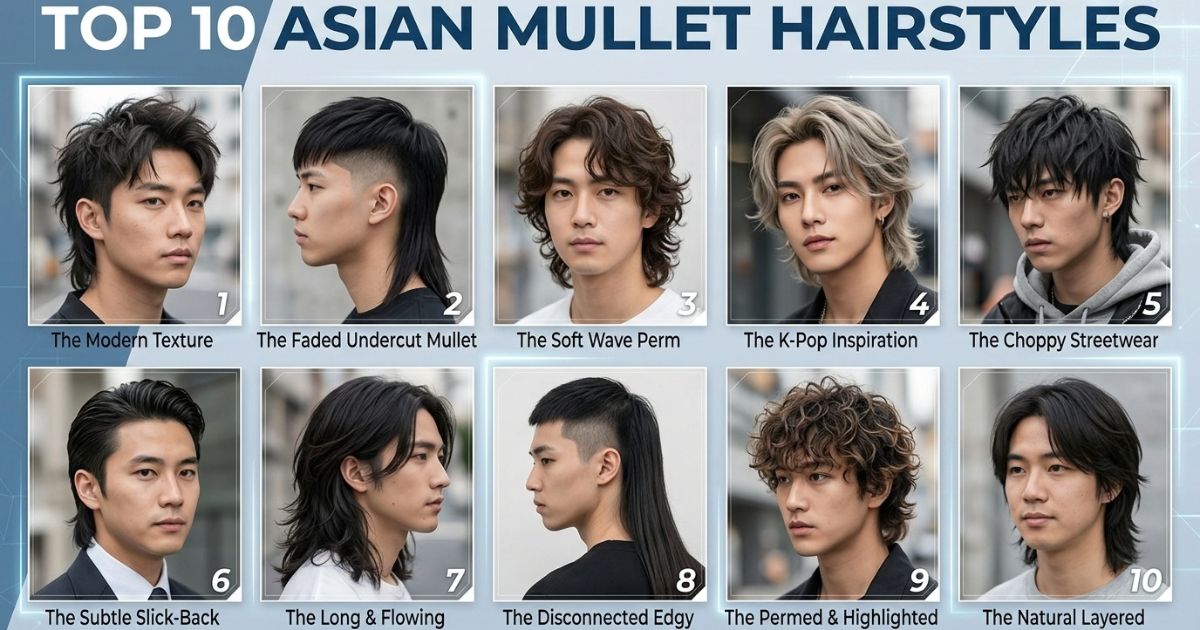
Every variation below works with straight-to-wavy Asian hair, though a few need extra length or a perm to hold shape. Use the table as a quick reference before reading the full breakdown of each style.
| Style | Best Hair Type | Maintenance Level |
| Korean Asian Mullet | Straight, medium density | Medium |
| Japanese Soft Mullet | Fine, straight | Low |
| Asian Layered Mullet | Thick, straight | Medium |
| Asian Middle-Part Mullet | Straight, medium-long | Low |
| Asian Fluffy Mullet | Thick, wavy | Medium-High |
| Asian Straight Mullet | Straight, coarse | Low |
| Asian Wolf Mullet | Wavy, textured | High |
| Asian Taper Mullet | Any texture | Medium |
| Asian Fringe Mullet | Straight, fine | Medium |
| Asian Shag Mullet | Wavy, layered | High |
Korean Asian Mullet
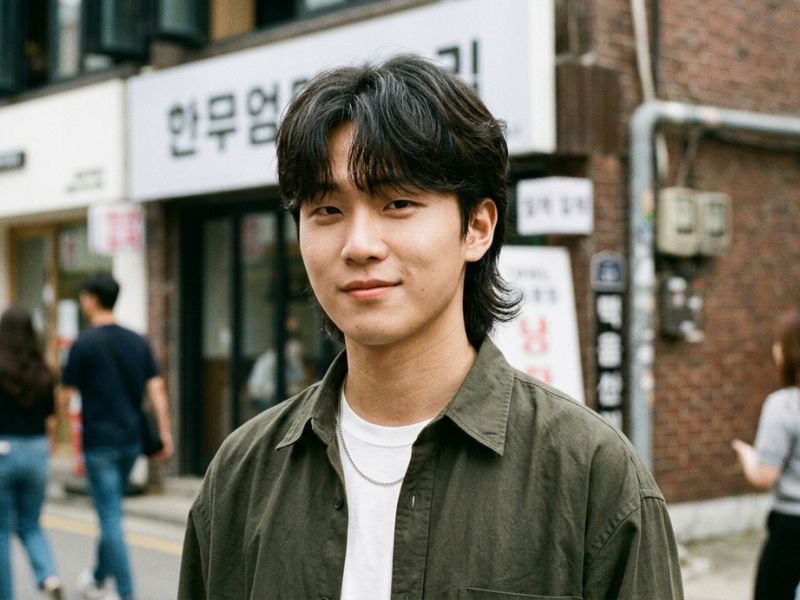
This version leans on K-pop styling: a blunt, curtain-style fringe up front, rounded sides, and a slightly longer back that flips out at the ends. It’s the softest entry point into mullet territory for anyone nervous about going too bold.
Barbers usually keep the top heavier than a typical Western mullet, since Korean stylists favor volume over sharp taper lines. A light perm at the crown adds lift without disturbing the fringe.
Japanese Soft Mullet
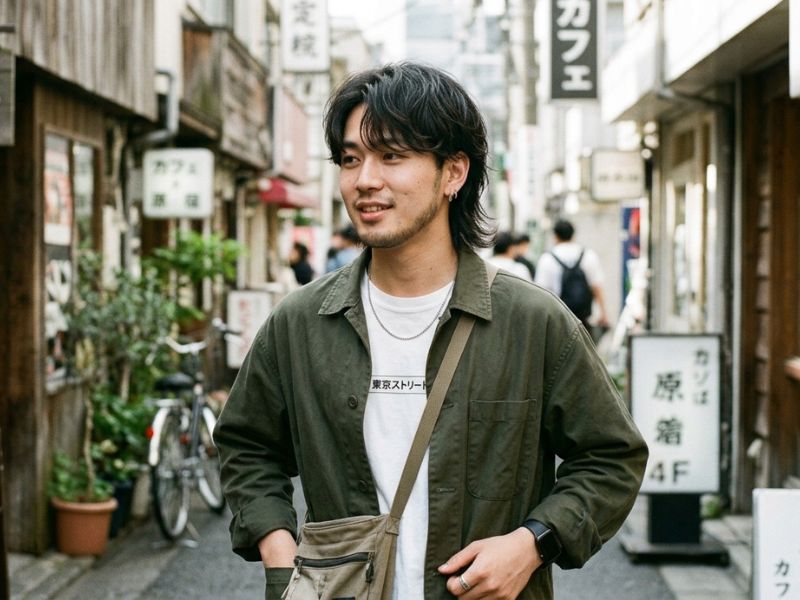
The Japanese take drops the drama in favor of understated texture. Sides stay close to the head, the crown gets light layering, and the back tapers gradually instead of ending in a hard shelf of hair.
- Works well for office settings and conservative dress codes
- Pairs naturally with round or oval face shapes
- Needs only a light wax for daily upkeep
Asian Layered Mullet

Layering solves the biggest problem with straight Asian hair on a mullet: flatness. Cutting multiple layers through the crown and back lets the hair fall with natural separation instead of sitting like a solid block.
This style suits guys who already have some length to work with, since layering needs at least three to four inches at the nape to look intentional rather than accidental.
Asian Middle-Part Mullet
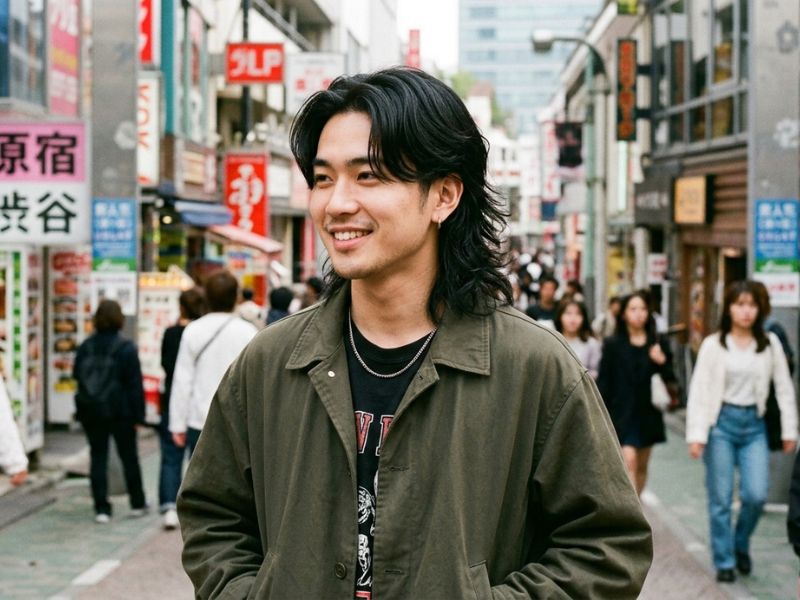
A center part splits the front section into two soft curtains, framing the face while the back stays classic mullet length. It’s a low-effort style that photographs well and requires almost no daily styling beyond a quick comb-through.
Round and square face shapes benefit most, since the part draws a vertical line that visually lengthens the face.
Learn more:21 Best Low Taper Fade Side Part Hairstyle Ideas for Men (2026)
Asian Fluffy Mullet
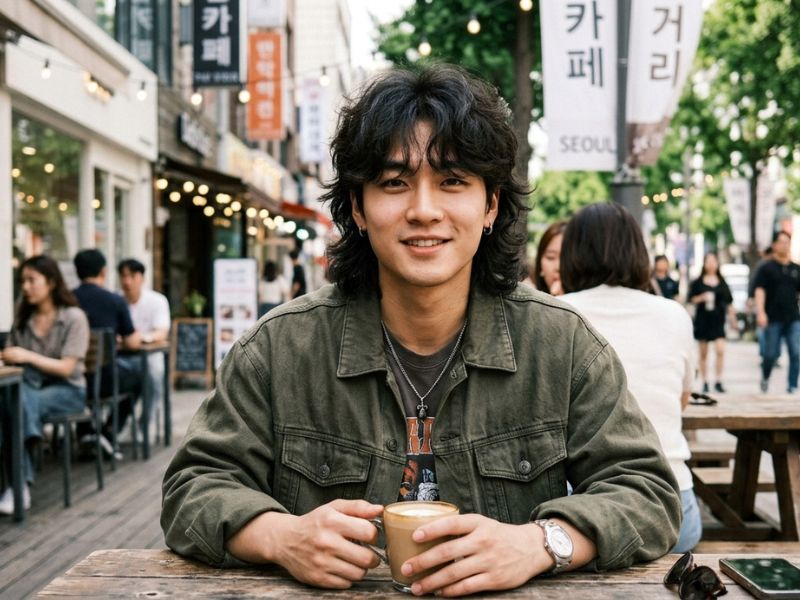
Fluffy mullets rely on a light perm or diffused blow-dry to build volume across the crown. The goal is soft, cloud-like texture up top that contrasts with a cleaner, shorter perimeter.
| Feature | Detail |
| Top length | 3–5 inches |
| Back length | 4–6 inches |
| Perm needed | Optional, recommended for extra lift |
| Styling time | 5–8 minutes daily |
Asian Straight Mullet
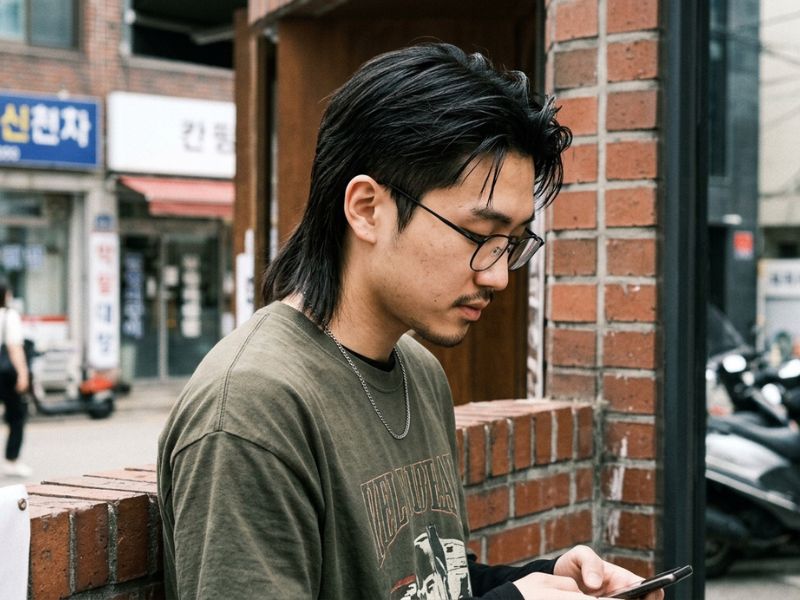
For guys who want zero styling fuss, the straight mullet skips the perm entirely and lets natural texture do the work. Sides are trimmed close, the top stays blunt, and the back grows out into a simple, un-permed tail.
It’s the most low-maintenance option on this list and holds up well in humid climates where perms tend to fall flat anyway.
Asian Wolf Mullet
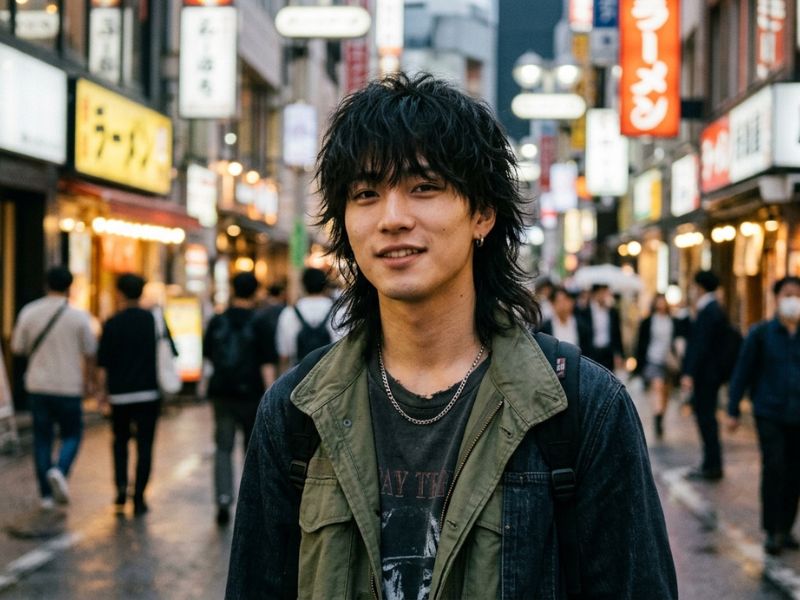
The wolf cut mullet hybrid brings heavy, choppy layers and a shaggy, undone finish. It borrows the wolf cut’s face-framing pieces and merges them with mullet length at the back, creating a rougher, more editorial look.
- Requires regular texturizing appointments to keep layers from growing out unevenly
- Works best with at least a slight wave, natural or permed
- Popular among younger clients chasing a Y2K-inspired aesthetic
Asian Taper Mullet
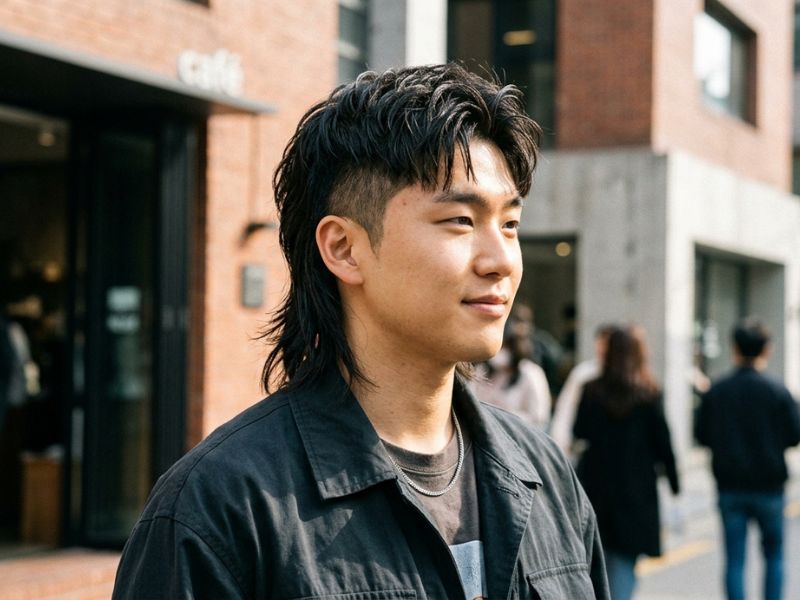
Pairing a mullet with a skin or low taper fade sharpens the whole silhouette. The sides fade cleanly into the skin while the top and back keep traditional mullet proportions, giving the cut a more polished, barbershop-ready finish.
This combination reads more masculine and structured than a shaggier mullet, making it a safer choice for workplaces with moderate grooming standards.
Asian Fringe Mullet
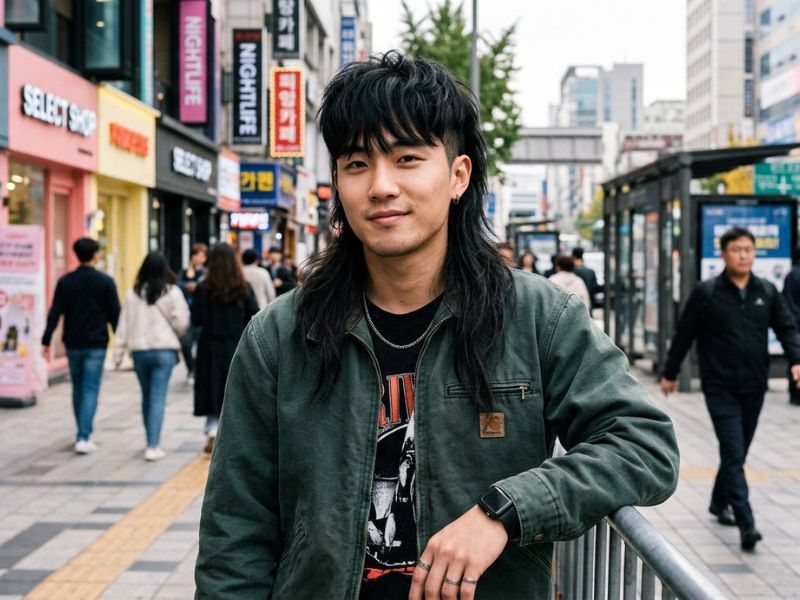
Adding a fringe softens the forehead and gives the front section purpose instead of leaving it to grow out awkwardly. The fringe can sit blunt and heavy or textured and wispy, depending on face shape.
Fine, straight hair holds a blunt fringe especially well, since there’s less flyaway to fight during styling.
Asian Shag Mullet
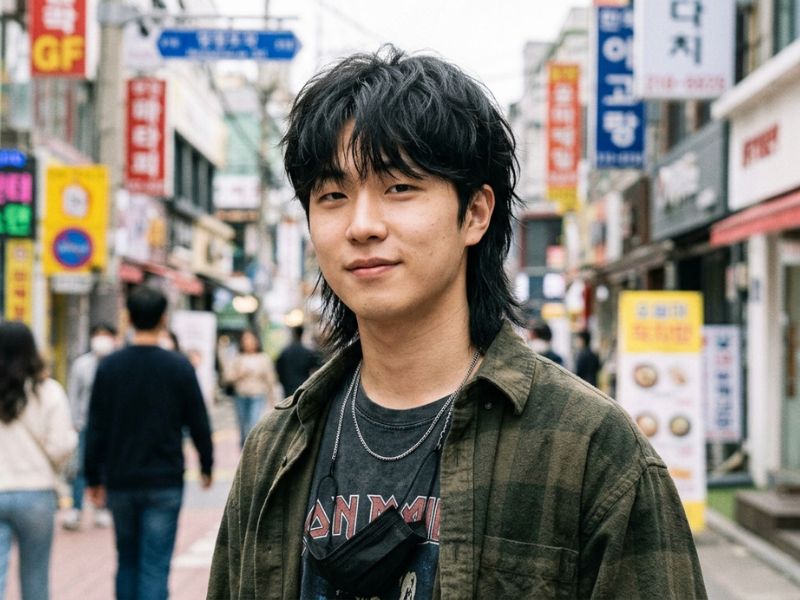
The shag mullet stacks heavy layering throughout, from the crown down through the back, for a fuller, rock-inspired silhouette. It needs the most upkeep of any style here, since uneven growth shows quickly with this much layering.
| Comparison | Shag Mullet | Layered Mullet |
| Layer density | Heavy throughout | Moderate, back-focused |
| Growth visibility | High | Medium |
| Trim frequency | Every 4–5 weeks | Every 6–8 weeks |
| Styling effort | High | Medium |
Asian Mullet Styling
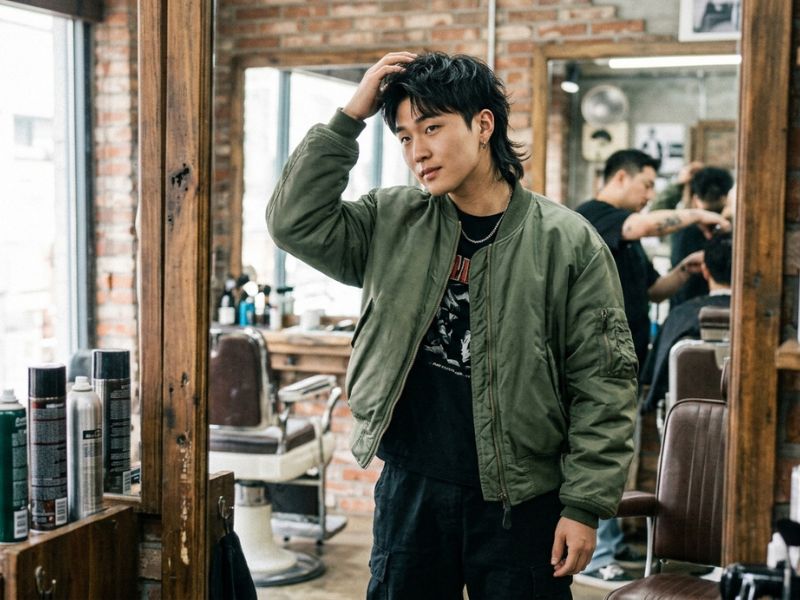
Getting a mullet to look intentional rather than accidental comes down to product and technique, not just the cut itself. Follow these steps for a clean daily result:
- Towel-dry hair to about 80%, leaving it slightly damp
- Apply a dime-sized amount of texturizing cream or sea salt spray
- Blow-dry the crown upward with a round brush for lift
- Scrunch the back section to encourage natural separation
- Finish with a light-hold wax on the fringe or front pieces
Soft Texture Asian Mullet
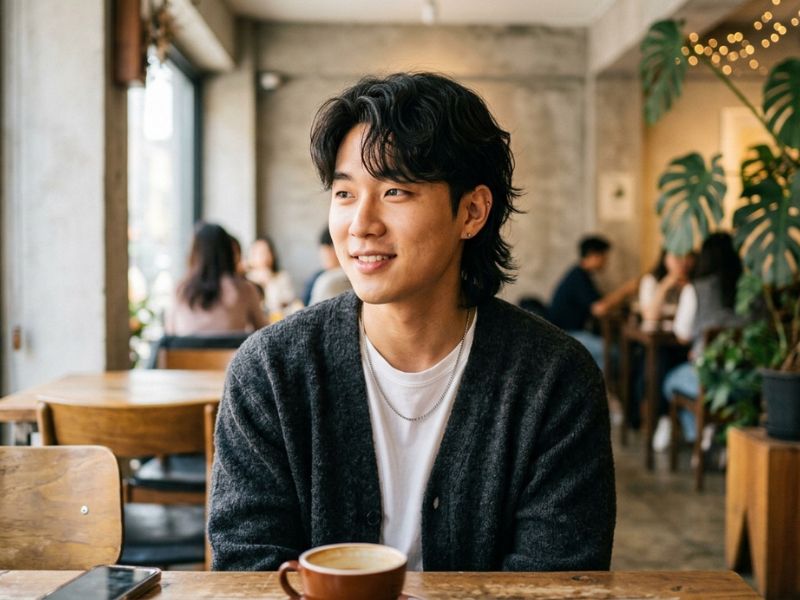
Straight, coarse Asian hair can look stiff without the right technique, so many barbers now recommend a soft-texture approach. This involves point-cutting the ends instead of blunt-cutting, which removes weight and lets strands move more naturally.
A light digital perm at the mid-lengths also helps, softening the line between the shorter sides and longer back without changing the overall length.
Easy Asian Mullet Care
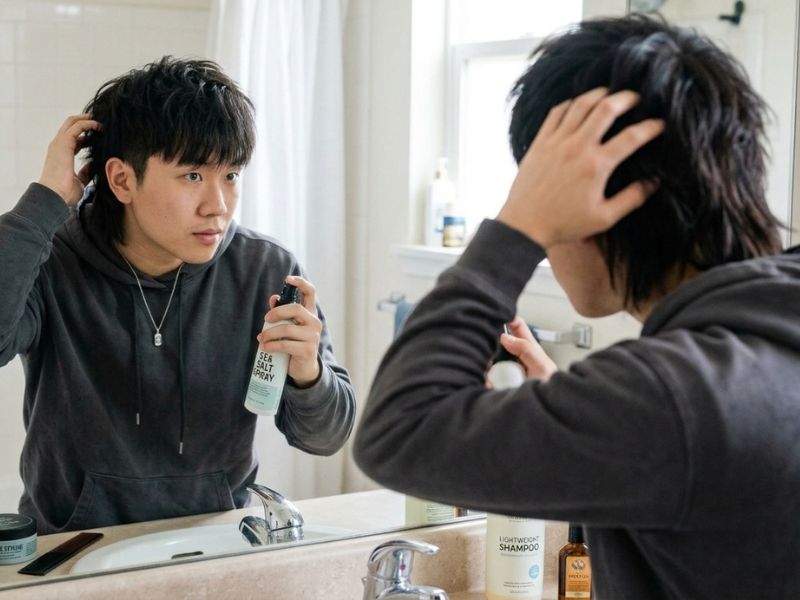
A mullet holds its shape longer with the right routine. Use this schedule as a baseline:
| Task | Frequency |
| Trim | Every 5–7 weeks |
| Deep condition | Weekly |
| Wash | Every 2–3 days |
| Perm touch-up (if applicable) | Every 4–6 months |
- Use a sulfate-free shampoo to protect any perm or color
- Sleep on a silk pillowcase to reduce frizz on the back section
- Avoid heavy oils near the roots, which can flatten volume fast
Choosing the Right Mullet for Your Face Shape
Matching the style to your face shape makes the biggest difference in how balanced the cut looks day to day.
| Face Shape | Recommended Style |
| Round | Middle-Part Mullet, Taper Mullet |
| Square | Layered Mullet, Fringe Mullet |
| Oval | Almost any variation works |
| Long | Fluffy Mullet, Korean Mullet |
| Heart | Fringe Mullet, Soft Texture Mullet |
Mullet Trends Shaping 2026
A few shifts are already visible heading into 2026:
- Softer perms replacing harsh, uniform curls for a more natural wolf-cut blend
- Skin fades paired with longer backs for a sharper, more polished contrast
- Face-framing fringes borrowed from K-pop styling gaining traction outside Korea
- Low-maintenance, product-light finishes replacing daily blow-dry routines
- Color used sparingly, mostly subtle balayage on the back section rather than full dye jobs
FAQ’S
Does an Asian mullet suit straight hair without a perm?
Yes. Straight hair holds the classic mullet shape well on its own, especially with a taper or blunt fringe added for contrast.
How often should I trim an Asian mullet?
Every five to seven weeks keeps the shape clean, though shaggier variations may need trims closer to every four weeks.
Is a perm necessary for the wolf or shag mullet?
Not required, but a light perm adds volume and texture that’s harder to achieve with naturally straight strands.
What products work best for Asian mullets?
Texturizing cream, sea salt spray, and light-hold wax handle most styles without weighing down fine or coarse strands.
Can I get an Asian mullet with fine hair?
Yes, though fine hair suits the Japanese soft mullet or middle-part styles better than heavily layered versions like the shag.
Conclusion
The Asian mullet in 2026 favors softness over shock value, blending tapered sides, gentle perms, and face-framing fringes into a cut that works in both casual and semi-formal settings. Whether you want the low-effort straight mullet or the high-drama wolf cut, there’s a version suited to your hair type.
Talk through hair density, face shape, and how much styling time you can commit to before booking your next appointment. A clear reference photo and honest conversation with your barber will get you the cleanest result, no matter which of these ten styles you choose.