
A modern mullet taper keeps the short-front, long-back shape you expect but trims the sides and neckline in gentle steps. The result looks planned instead of shaggy. It feels at home in an office, a gym, or a Saturday night out, which explains why barbers keep getting requests for it.
This guide walks you through 25 styles sorted by texture, hair type, fringe, and color. You’ll also find comparisons with other mullets, face-shape advice, clipper guard numbers, and a simple daily care routine. Pick a look, screenshot it, and walk into the chair knowing exactly what to ask for.
What Is a Modern Mullet Taper?
A modern mullet taper pairs a longer back with sides that shorten gradually around the ears and nape. Unlike a skin fade, it leaves some length on the sides, so the transition looks soft instead of stark.
The top and back can run short, medium, or long. That flexibility lets the cut work on straight, wavy, curly, and thick hair.
Quick answer: A modern mullet taper is a mullet with gradually shortened sides and neckline, a longer back, and no bare-skin contrast.
Why This Haircut Is Trending in 2026?
The taper sits between a loud mullet and a sharp skin fade. You get personality without harsh contrast, which suits men who want a statement that still passes a dress-code glance.
Several things keep it popular:
- Social media: Short videos show the back view, which is where a mullet shines.
- Barber appeal: The clean outline and flexible length give stylists room to customize.
- Easier grow-out: Soft sides hide regrowth better than a crisp fade.
- Range: You can dial it down with a short back or crank it up with layers, color, and fringe.
Top 25 Modern Mullet Taper Styles and Variations
Every style below includes a plain-English description, a “best for” line, and a phrase to say to your barber. Choose the one that fits your hair, then adjust the length to your comfort level.
| Group | Styles | Vibe |
| Classic & Everyday | 1–5 | Clean, easy, low risk |
| Textured & Layered | 6–10 | Movement and grit |
| Curly, Wavy & Straight | 11–15 | Built around your natural pattern |
| Fringe & Parted | 16–20 | Face-framing and polished |
| Color, Beard & Hair-Type | 21–25 | Personalized finishing touches |
Classic & Everyday Modern Mullet Taper Styles
1. Classic Tapered Mullet
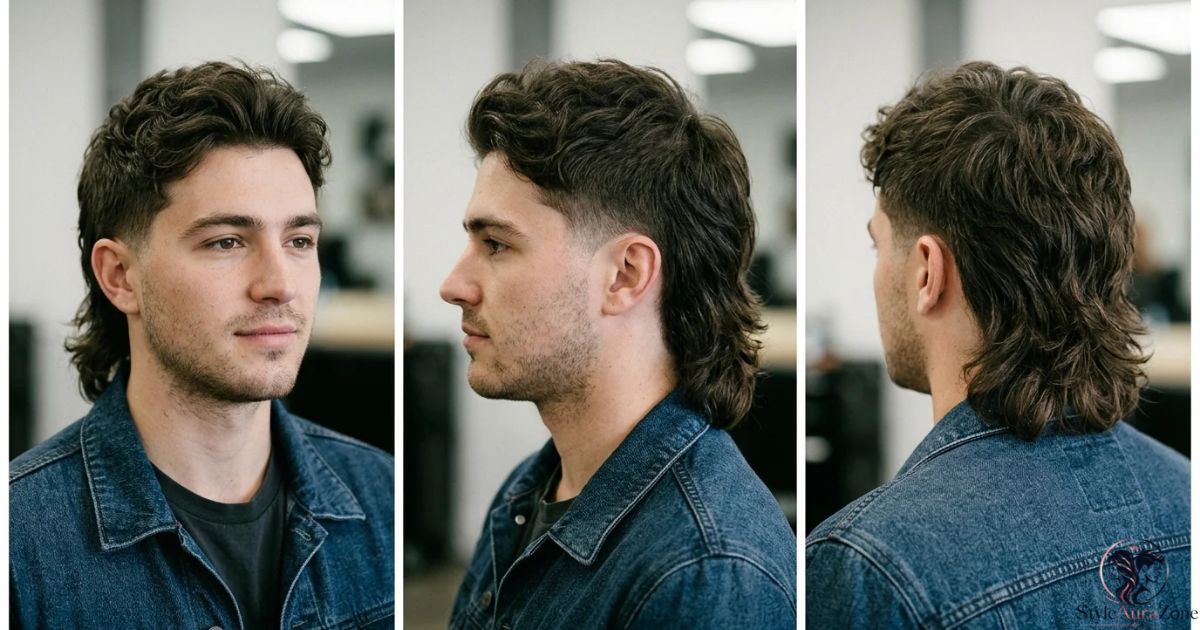
This is the blueprint. The hair around the ears and nape steps down gradually, the top stays near three inches, and the back falls just past the collar. Nothing here feels extreme, so it’s a safe first mullet for the curious but cautious.
Best for: Straight or wavy hair of medium density Ask for: A low or mid taper with a soft blend and a collar-length back
2. Short Tapered Mullet
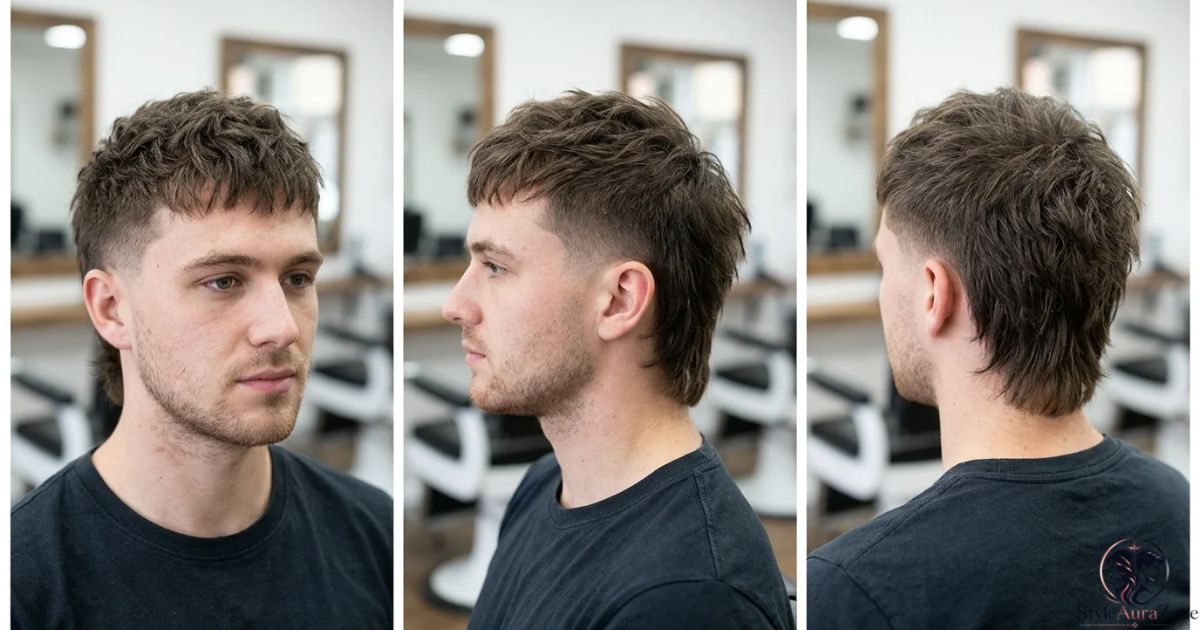
The back stops right at the collar. Up close you see the mullet outline, while from across the room you see a tidy haircut. Office workers and students like it because the length can grow later without starting over.
Best for: Conservative workplaces and first-timers Ask for: Tapered sides with the back just brushing the collar
3. Long Back Taper Mullet
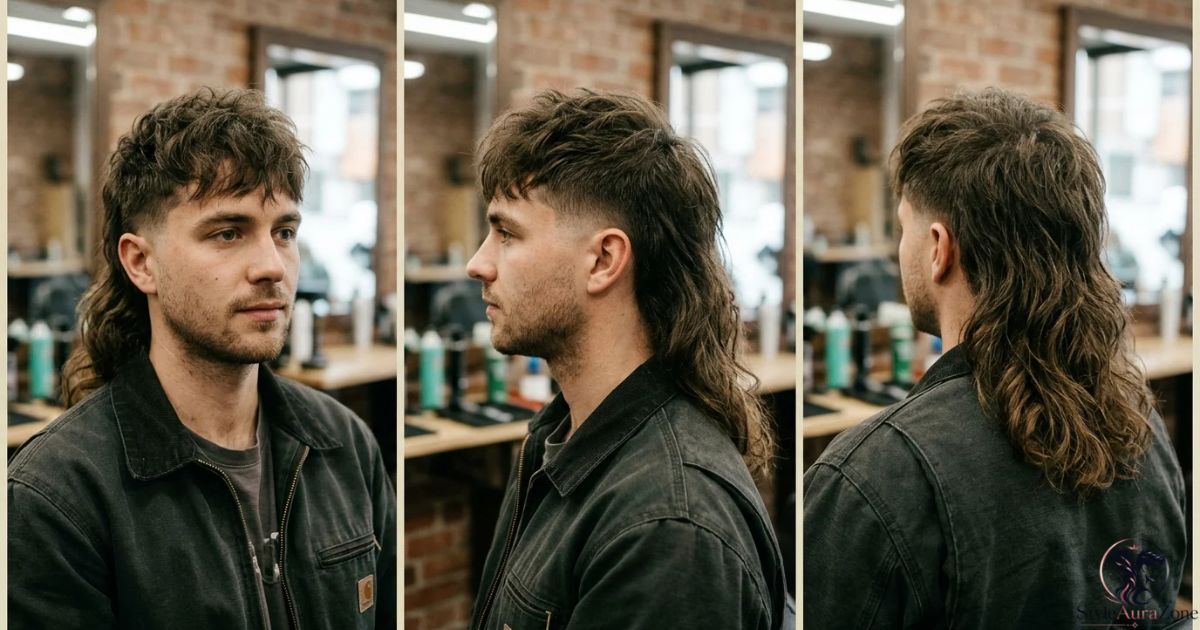
Tight sides make shoulder-length hair look deliberate instead of neglected. That contrast carries the whole style. Dense, straight hair holds a long back best, though thick waves can pull it off too.
Best for: Thick or high-density hair Ask for: A snug taper and only a light dusting of the back ends every six to eight weeks
4. Natural Flow Mullet With Taper
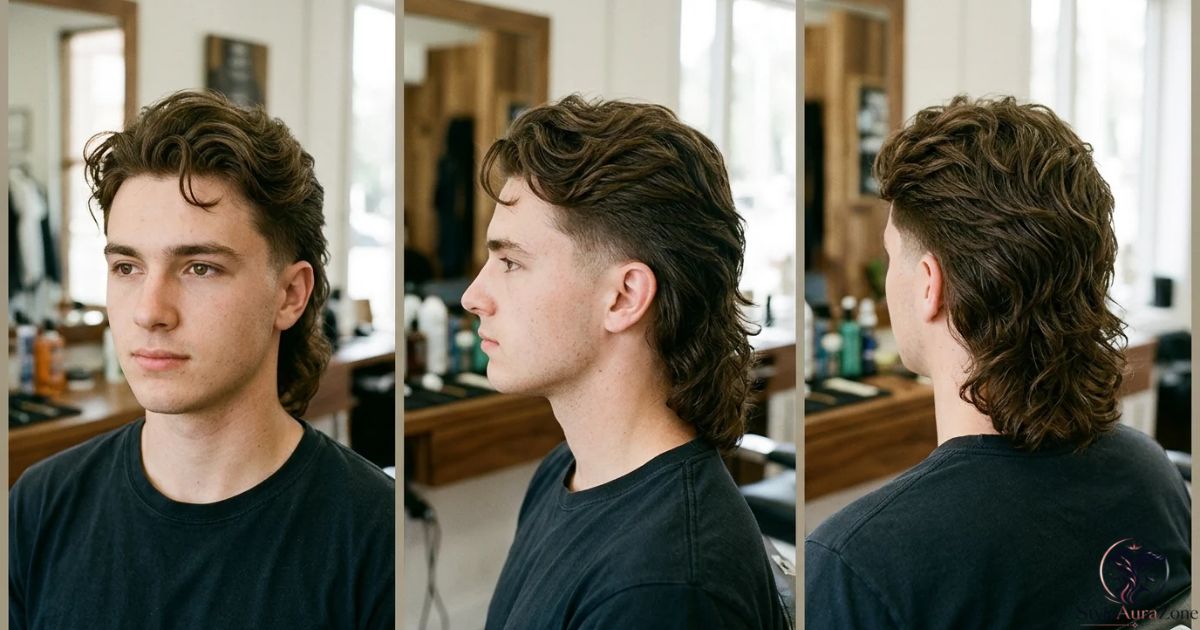
Here the hair falls wherever it wants. The taper tidies the ears and neckline, and everything else follows your own pattern. Wavy hair looks great this way. Air dry, add a pea-sized amount of cream, and skip the dryer.
Best for: Wavy, low-effort mornings Ask for: Minimal layering and a softly blended neckline
5. Modern Textured Mullet With a Natural Taper
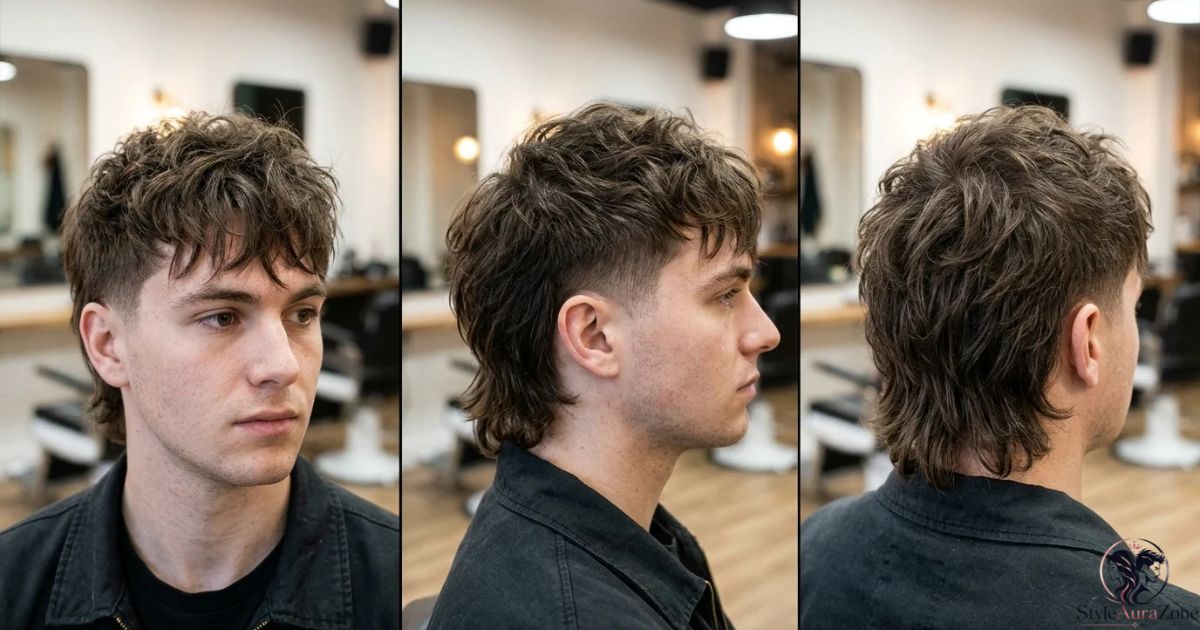
Point cutting breaks up bulk on top and at the nape, while a feathered taper keeps the sides from looking chopped off. Request scissor work over the ears instead of clippers. The edges soften as they grow, which stretches the time between visits.
Best for: Men who dislike frequent barber trips Ask for: Scissor-over-comb tapering and point-cut texture
Textured & Layered Modern Mullet Taper Styles
6. Textured Tapered Mullet
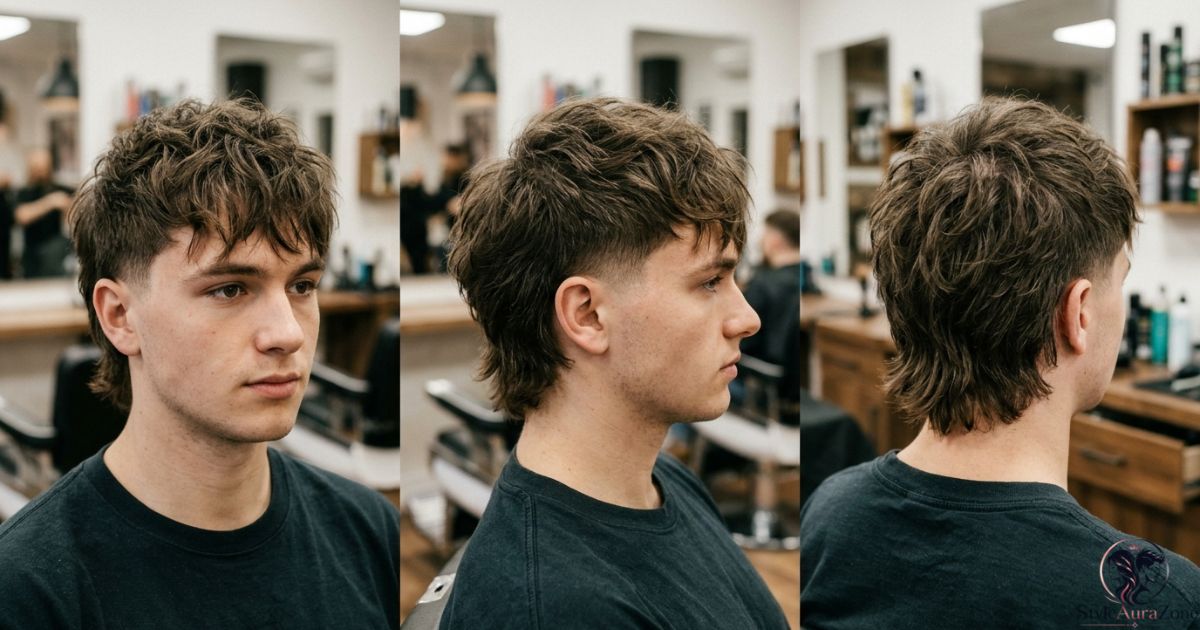
Texture starts with technique. Your barber removes weight using point cutting or a razor, and slim tapered sides make that texture pop. Scrunch sea salt spray into damp hair, then let the back dry with a slight bend.
Best for: Straight to wavy hair that looks flat Ask for: Razor or point-cut texture with slim sides
7. Messy Modern Mullet Taper
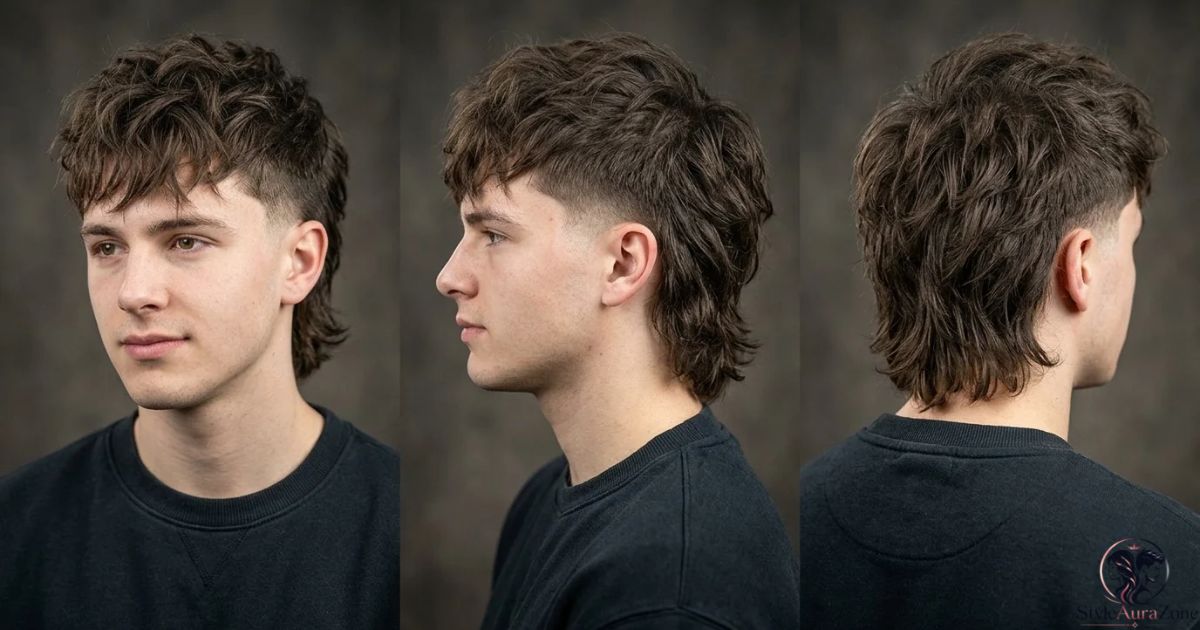
Movement is the whole point. Uneven layers and a loose top create a lived-in look, and the taper stops the outline from sliding into scruffy. Rough dry with your fingers, rub in a dab of paste, and leave a few ends uneven on purpose.
Best for: Wavy, thick, or naturally rough hair Ask for: Uneven layers without over-thinning the ends
8. Layered Mullet With Tapered Sides
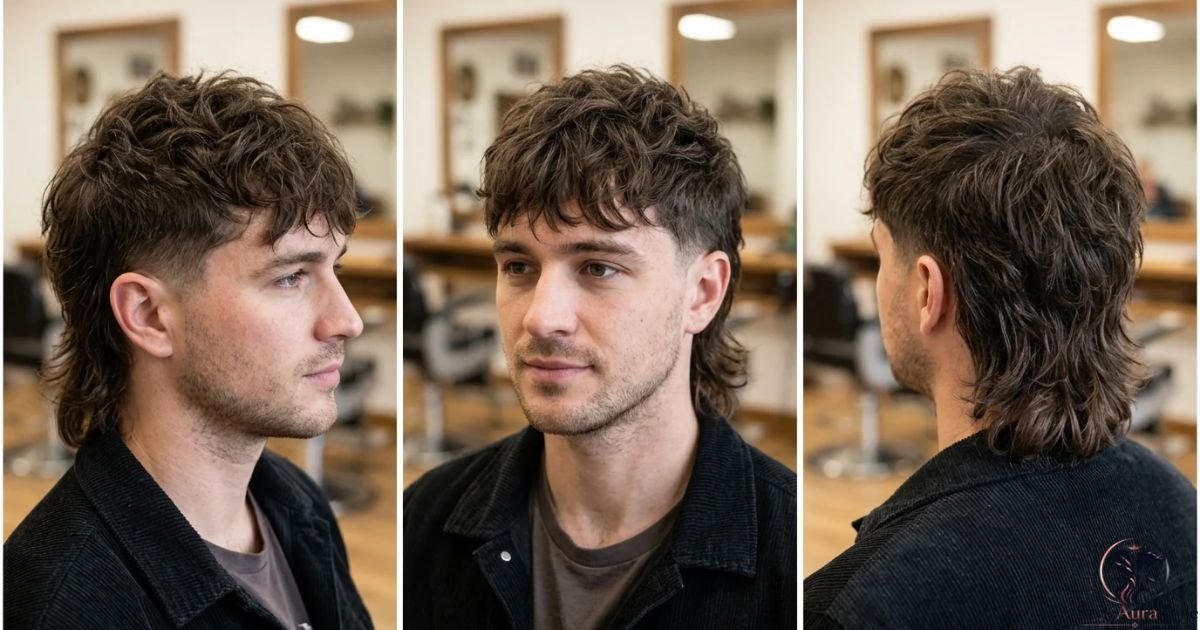
Layers build a rounded shape through the crown and nape, and a tight taper balances that roundness. Fine hair gains the most, since layers create the illusion of fullness.
Best for: Fine hair that needs body Ask for: Long layers that connect the top to the back
9. Choppy Layered Modern Mullet Taper
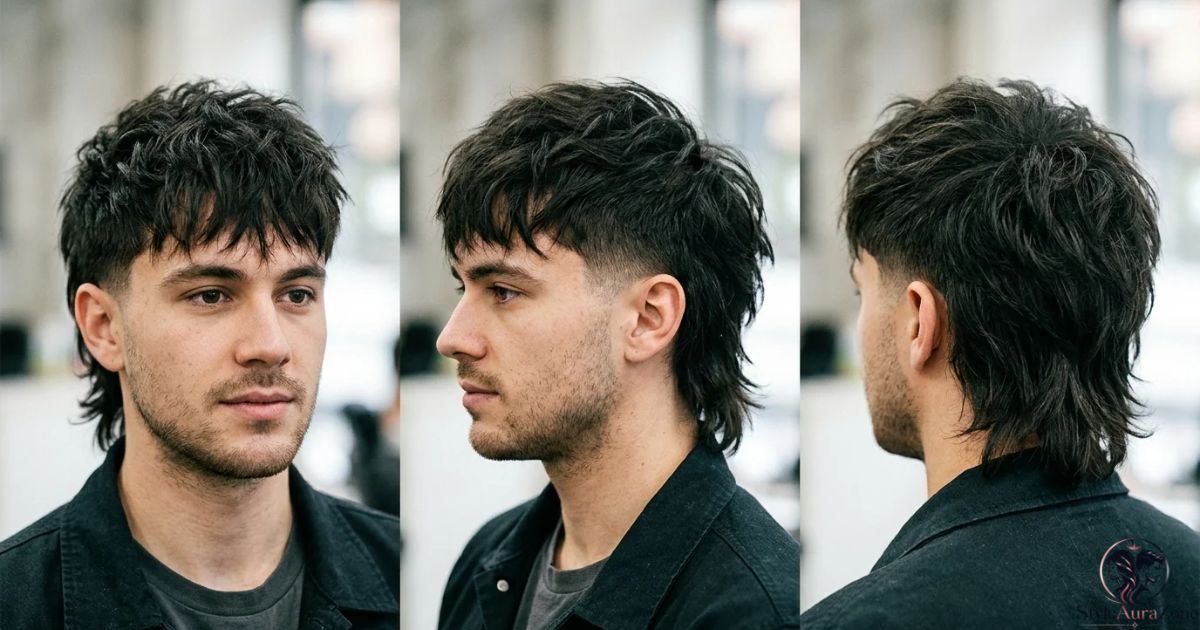
Choppy layers come from cutting uneven sections with shears or, when suitable, a razor. The jagged ends add grit to the top and back, while a mid taper keeps the sides crisp. Plan a trim every five to six weeks so the pieces don’t blur together.
Best for: Thick, dark, or coarse hair Ask for: Visible, separated layers and a mid taper
10. Feathered Modern Mullet Taper
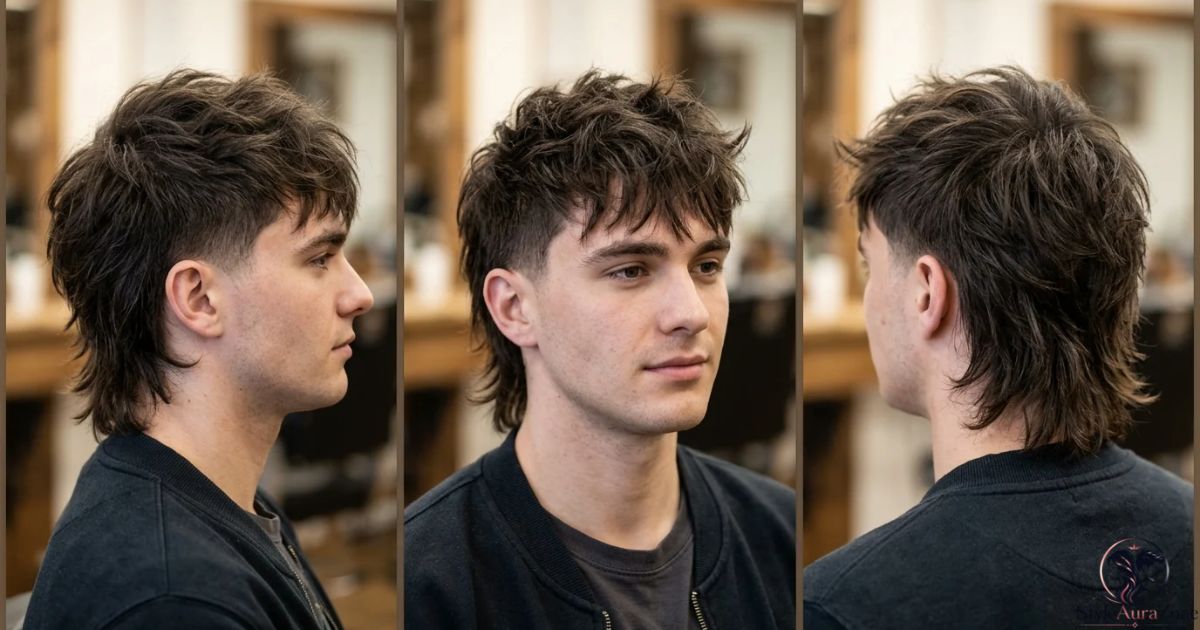
Soft, wispy layers sweep away from the face and thin toward the ends, a nod to 1970s rock stars. A clean taper brings the look up to date. Blow dry backward over a round brush, then set it with light hairspray.
Best for: Straight or wavy, medium-to-thick hair Ask for: Graduated layers that melt into the tapered sides
Read more:Taper Low Burst Fade: Styles, Barber Tips, and a Complete Guide
Curly, Wavy & Straight Hair Modern Mullet Taper
11. Curly Mullet With Tapered Sides
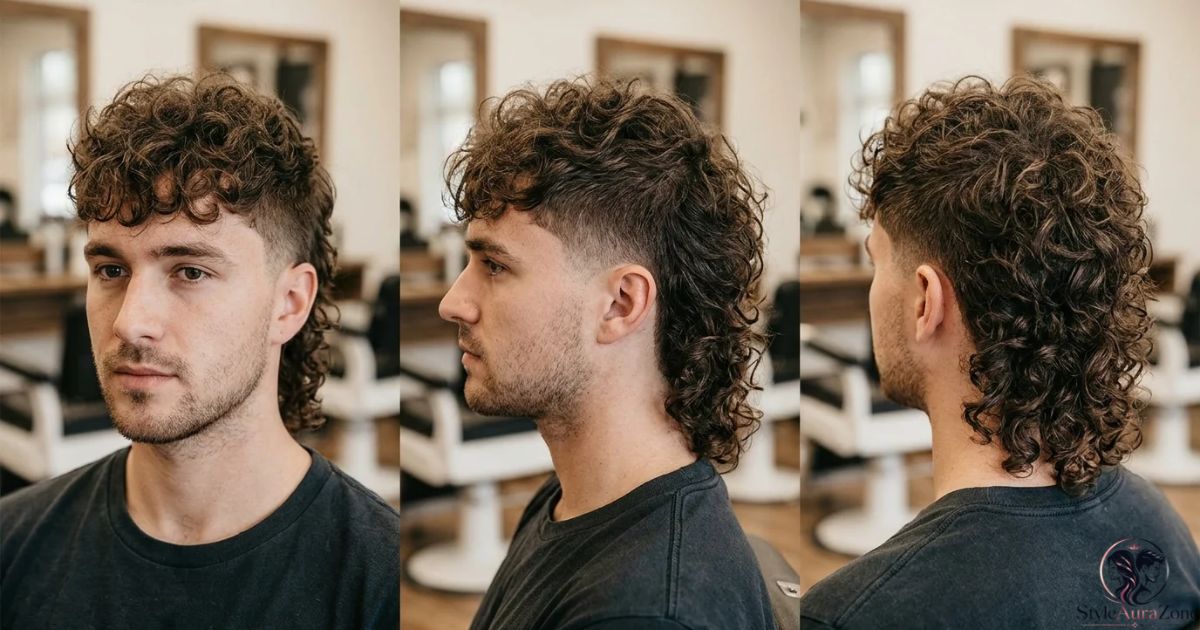
Curls bring bounce, and the taper keeps the sides from ballooning. Ask your barber to cut the hair dry so they can read your true curl pattern. At home, apply curl cream and diffuse on low heat to define the coils without frizz.
Best for: Type 2C to 3B curls Ask for: A dry cut with extra length left on top for shrinkage
12. Wavy Modern Mullet Taper
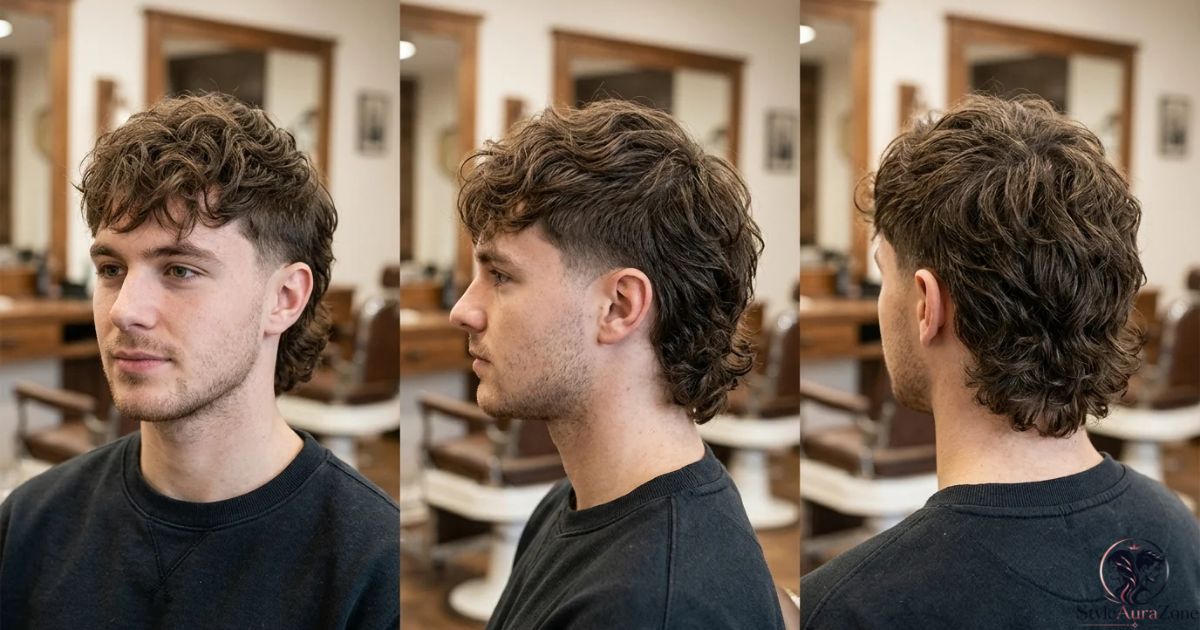
Waves supply built-in texture, so the cut needs very little help. The taper frames the ears and neckline while the waves tumble down the back. Reach for lightweight mousse. Heavy gel flattens the pattern.
Best for: Anyone with an S-shaped wave Ask for: Soft layers that protect the wave pattern
13. Straight Hair Modern Mullet Taper
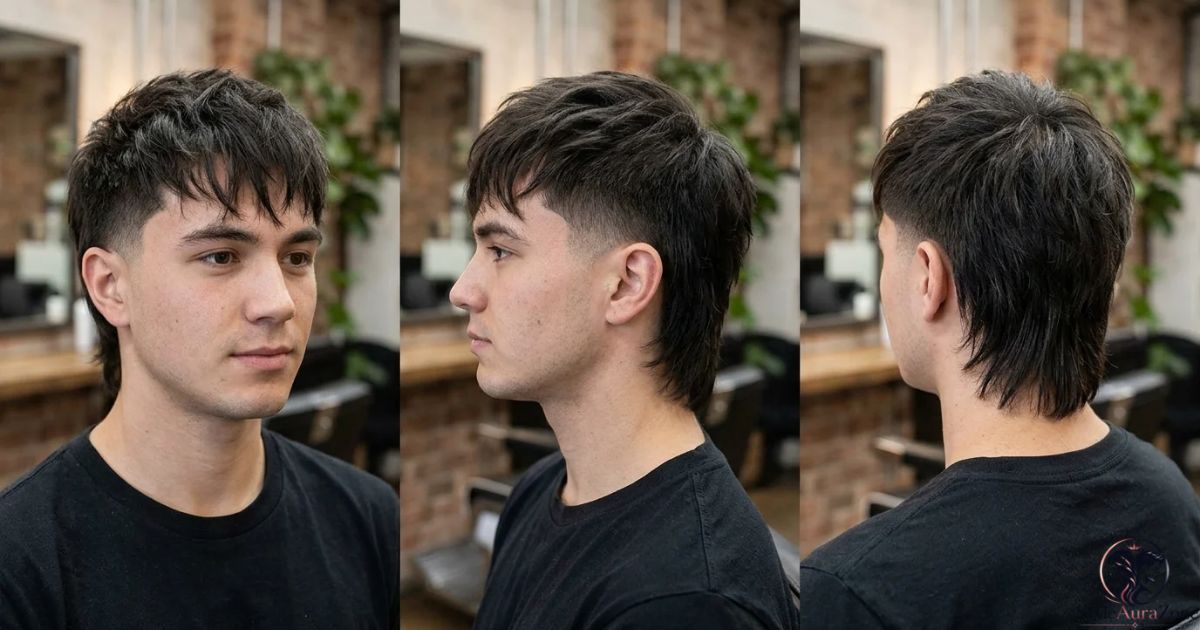
Straight hair shows every line, so the taper and layers need precision. The payoff is a sleek, polished mullet. A few spritzes of texture spray prevent a flat finish, and subtle back layers add movement without heavy thinning.
Best for: Fine to medium straight hair Ask for: Light internal layers and a crisp, clean taper line
14. Fluffy Modern Mullet Taper
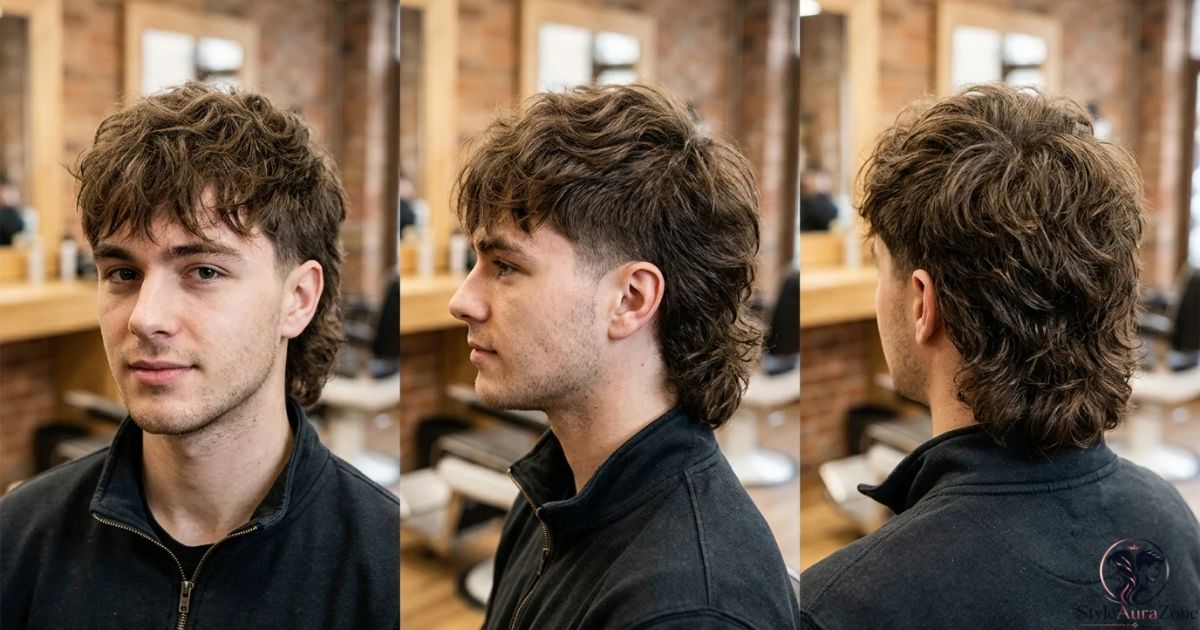
Softness and lift define this version. Feathery layers on top and at the back create a cloud-like shape, and the taper keeps the sides slim. Blow dry with a vent brush and add a dusting of root powder for staying power.
Best for: Fine to medium hair Ask for: Soft, short layers on top and a rounded back
15. Permed Modern Mullet Taper
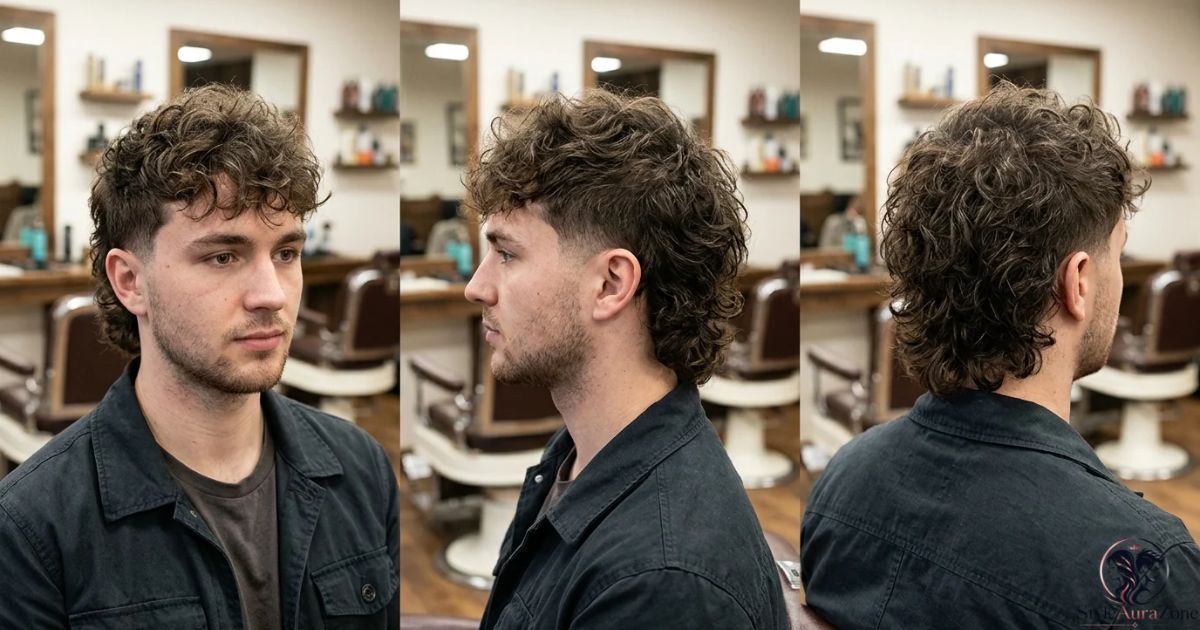
A perm turns straight hair into curls and adds a retro edge. The taper keeps the sides neat so the curls own the spotlight. Book with a stylist who handles men’s perms often, and get the taper cut before the perm for cleaner results.
Best for: Straight or fine hair that holds a curl Ask for: A curl size that matches the volume you want
Fringe & Parted Modern Mullet Taper Styles
16. Tapered Mullet With Fringe
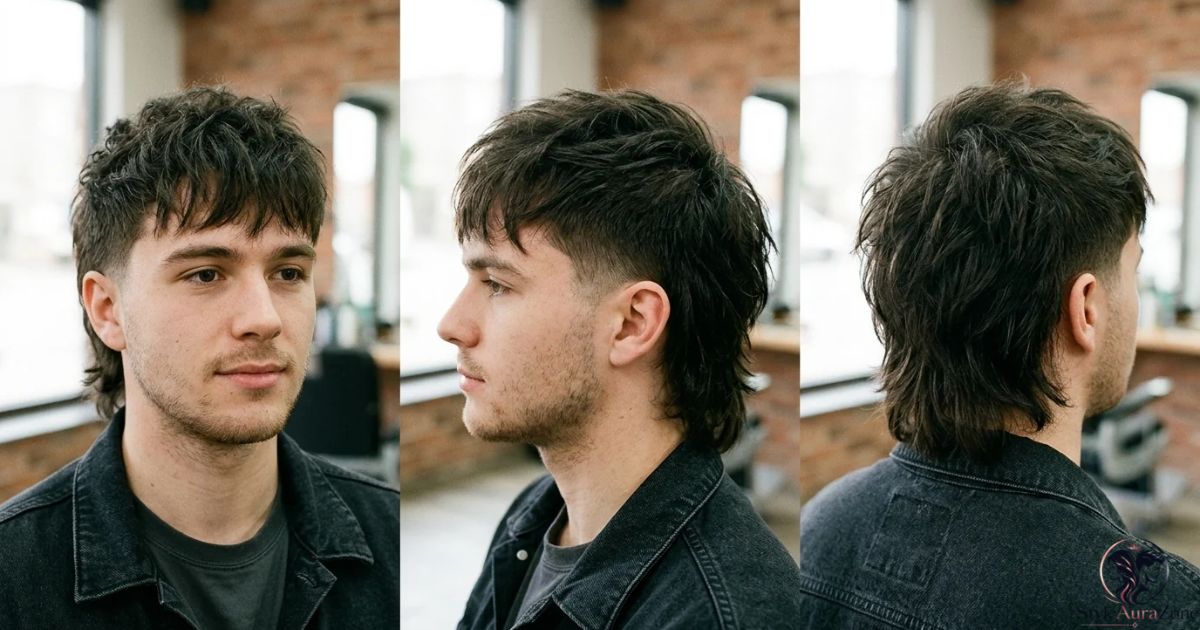
A fringe frames the forehead. Cut it short and choppy for a punk feel, or longer and swept for something gentler. Because the taper holds the sides in check, the fringe becomes the focal point.
Best for: Straight or wavy hair with a strong hairline Ask for: A fringe that sits above or at the brow
17. Middle-Part Mullet With Taper
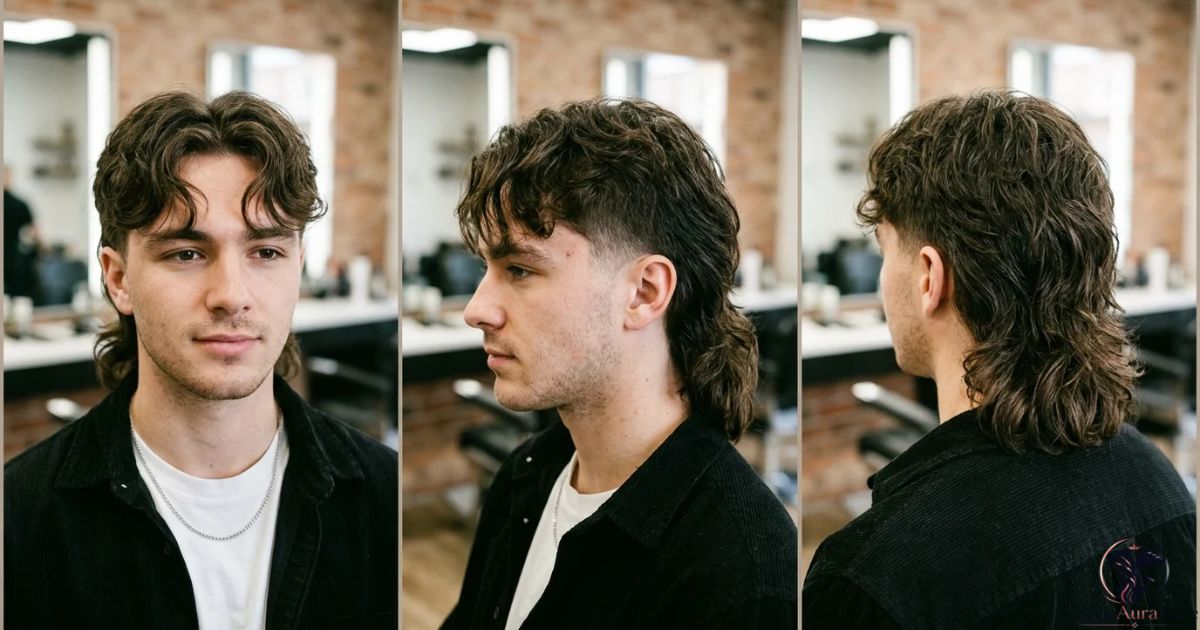
A center part gives off a relaxed 1990s mood. The taper sharpens the sides and prevents bulk. Oval and square faces carry it especially well. Set the line with a comb, then loosen the hair with your fingers.
Best for: Medium-to-thick straight or wavy hair Ask for: Enough top length to part naturally
18. Side-Part Modern Mullet Taper
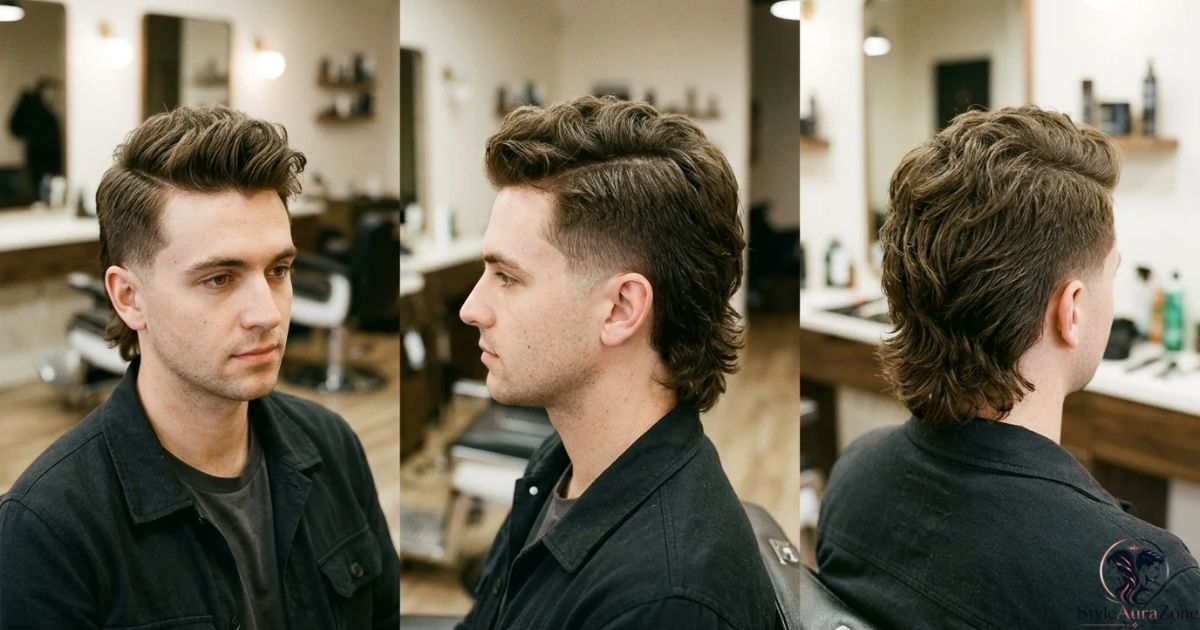
Structure is the draw. A side part reads tidy in professional settings while the back keeps its mullet attitude. Part the hair where it naturally falls, request a low taper, and hold the line with a light pomade.
Best for: Office and client-facing roles Ask for: A low taper and a defined, natural part
19. Long Fringe Taper Mullet
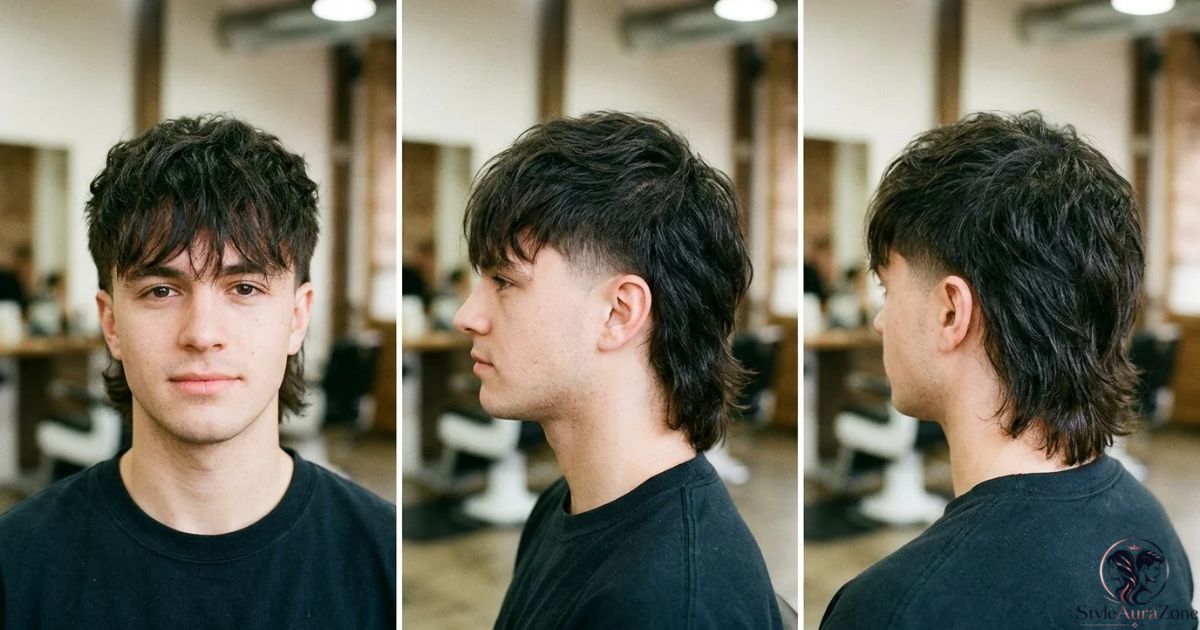
A fringe that reaches the brows or cheekbones adds a moody, editorial feel. A tight taper balances the heavier front. Wear it forward, swept aside, or tucked behind an ear. Longer fringes lose shape fast, so trim about every six weeks.
Best for: Straight, wavy, or thick hair Ask for: A fringe long enough for several styling options
20. Slicked-Back Modern Mullet Taper
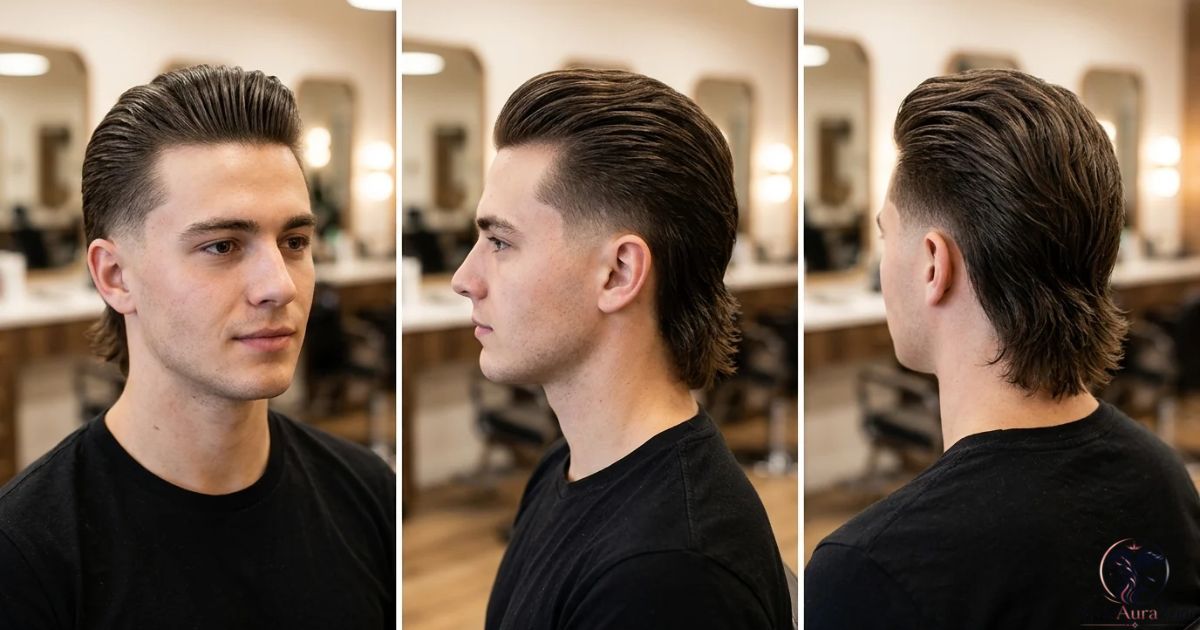
Combing the top back turns the mullet sharp and polished. The back flows right out of the slick-back, and the taper finishes the sides. Work a medium-hold pomade through damp hair, then comb it into place. It suits formal events and dinners.
Best for: Straight or lightly wavy hair Ask for: Enough top length to comb back without spiking
Modern Mullet Taper: Color, Beard & Hair-Type Variations
21. Blonde Tapered Mullet
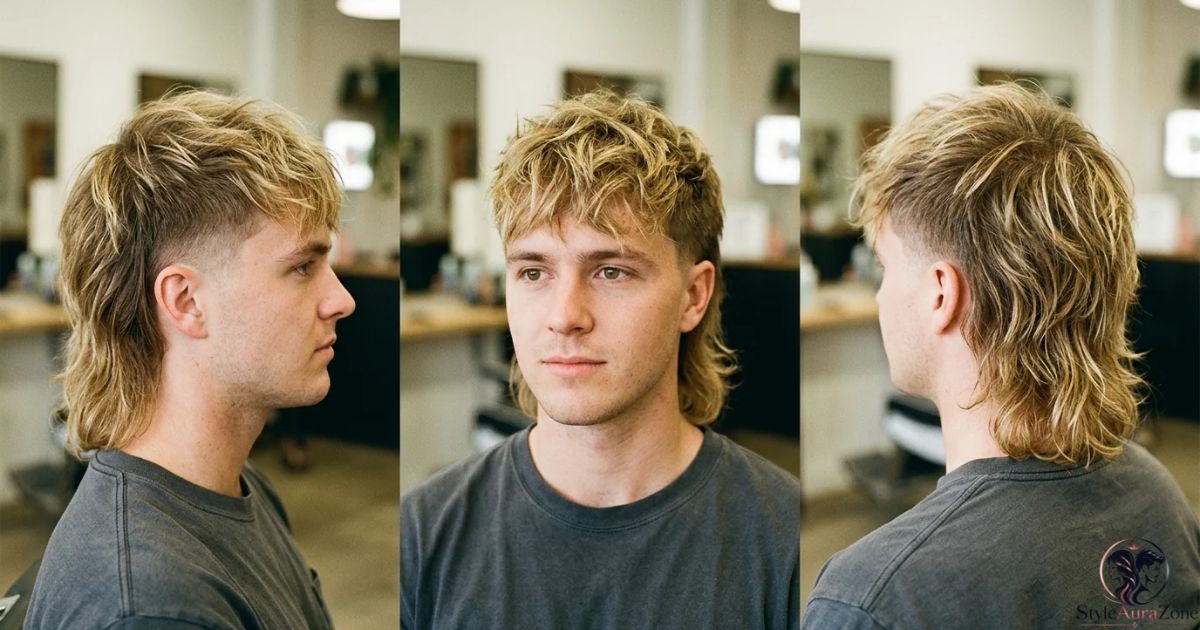
Blonde pops against darker sides and shows off the layers. The taper keeps the color from overpowering the cut. Bleach demands a professional hand, so book a toning visit and use purple shampoo occasionally to tame brassiness.
Best for: Men who want contrast Ask for: A toner to match your skin tone
22. Highlighted Modern Mullet Taper
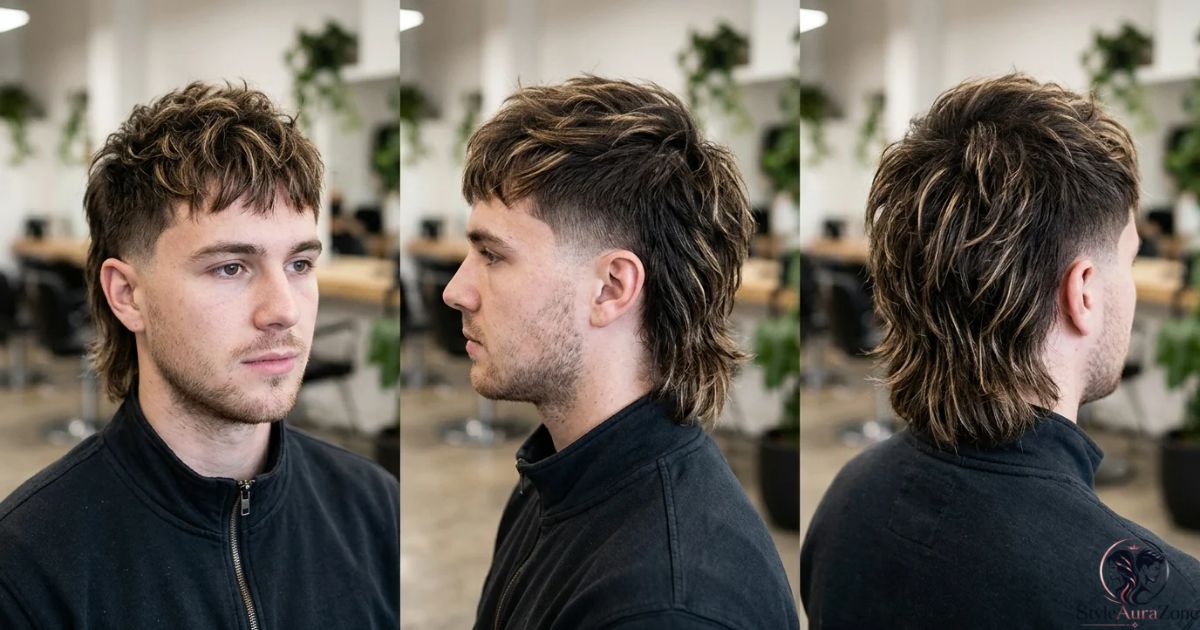
Highlights add depth and dimension. Face-framing pieces and lighter tips lift the texture on top and through the back. Ask for soft, sun-kissed ribbons instead of bold stripes, since they grow out with less obvious regrowth.
Best for: Straight, wavy, or textured hair Ask for: Fine, blended highlights around the face
23. Taper Mullet With a Beard
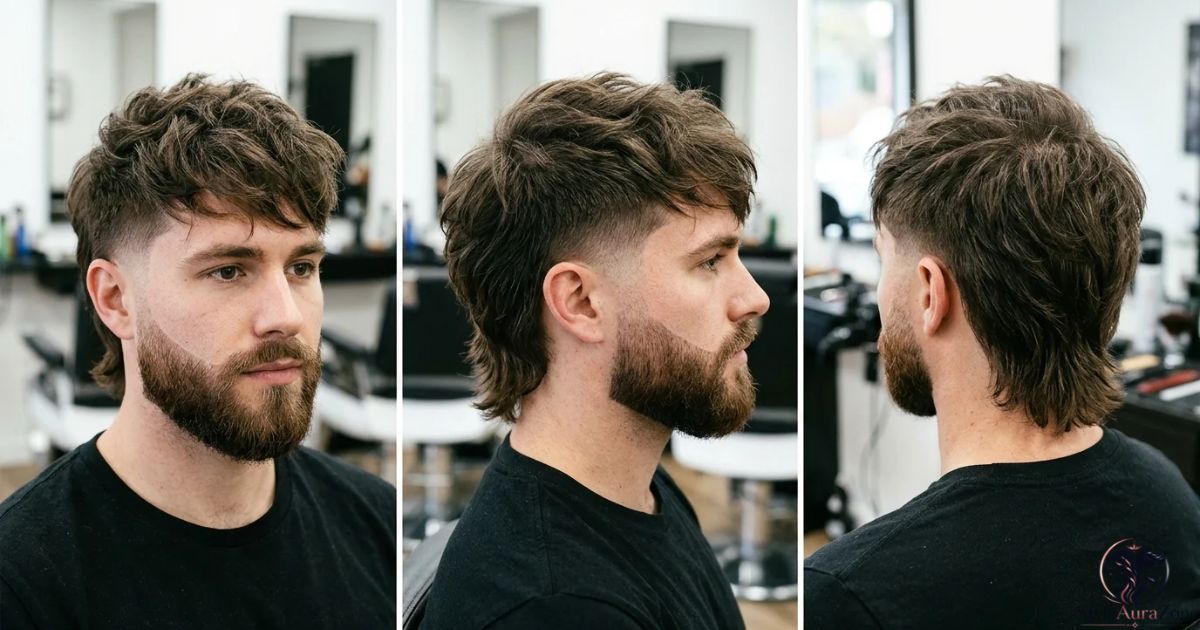
A beard balances the volume of the mullet. Blend it into the sideburns so a continuous line runs from hair to jaw. Keep it between stubble and medium length, and match the beard fade to the taper height.
Best for: Round or long faces that want more structure Ask for: A connected hair-to-beard taper
24. Thick Hair Modern Mullet Taper
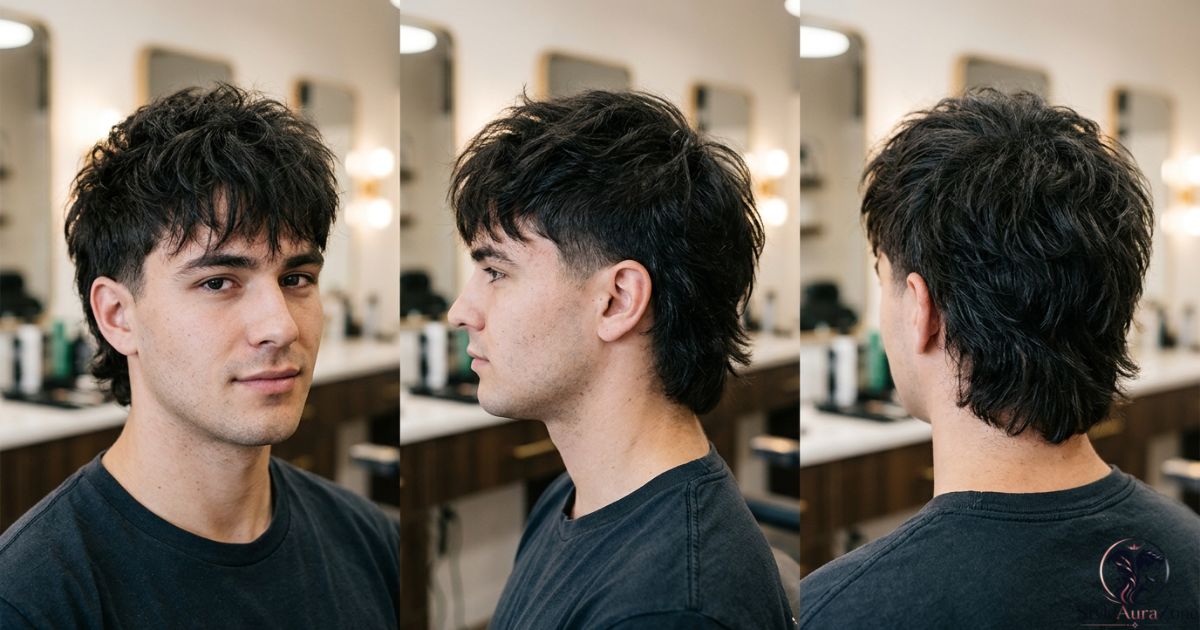
Thick hair needs weight removal. Layers and thinning shears reduce bulk, and the taper stops the sides from puffing out. A hydrating conditioner keeps coarse strands soft. Done well, the cut looks full without heavy product.
Best for: Dense, coarse hair Ask for: Selective thinning instead of all-over thinning
25. Voluminous Modern Mullet Taper
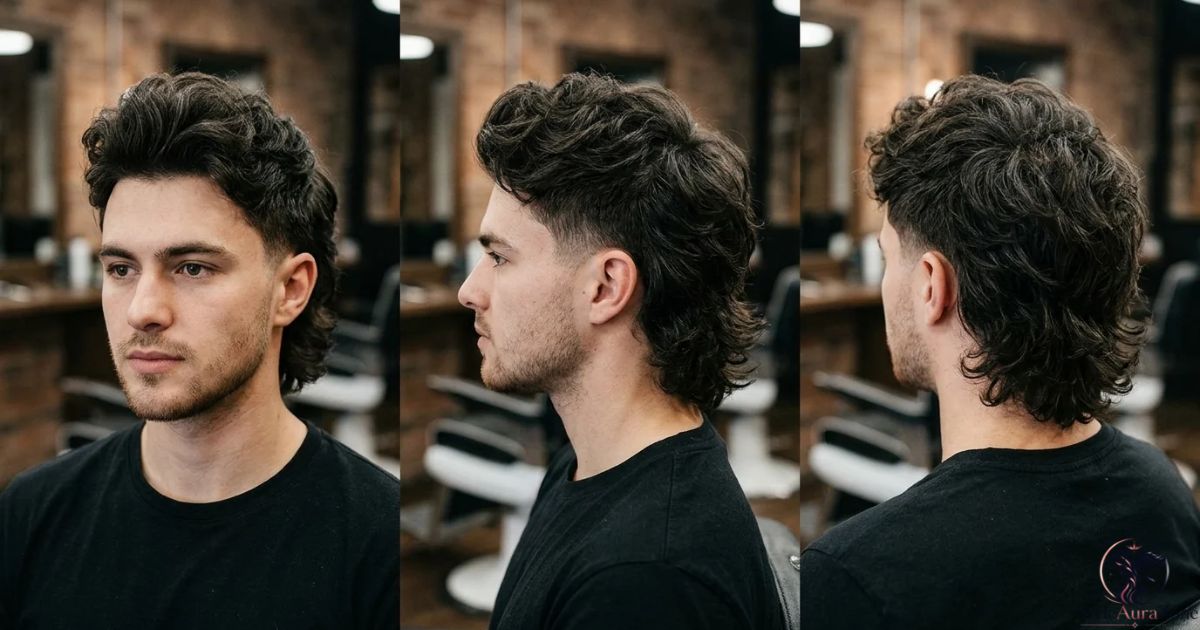
Volume lives at the crown and nape. Layers and blow-drying build height, and the taper draws attention to the size on top. Work volumizing mousse into damp roots, dry with a round brush, and finish with a light mist of hairspray.
Best for: Fine or medium hair that tends to fall flat Ask for: Short crown layers and a full, rounded back
Modern Mullet Taper vs Other Popular Mullet Haircuts
Barbers use many mullet labels, and some of them overlap. This table shows where the modern mullet taper fits.
| Cut | Side Treatment | Contrast | Upkeep |
| Taper mullet | Gradual shortening, length stays | Soft | Every 3–5 weeks |
| Traditional mullet | Blunt, similar length to the top | Low | Every 6–8 weeks |
| Fade mullet | Drops to bare skin | High | Every 2–4 weeks |
| Burst fade mullet | Semi-circle around the ear | High, localized | Every 2–4 weeks |
| Low taper mullet | Begins near ears and nape | Very soft | Every 4–6 weeks |
| Mid taper mullet | Begins around the temples | Medium | Every 3–5 weeks |
| Short mullet | Describes the back length | Varies | Every 4–6 weeks |
| Curly mullet | Describes the texture | Varies | Every 4–6 weeks |
| Wolf cut | Shaggy layers all over | Low | Every 6–8 weeks |
Taper Mullet vs. Traditional Mullet
The traditional version keeps blunt, boxy sides. The taper trims them in steps, so the outline looks cleaner and less bulky. Pick the taper if you want a modern shape.
Taper Mullet vs. Fade Mullet
A fade drops to bare skin, while a taper stops at a short but visible length. The taper looks gentler and grows out with less obvious regrowth.
Taper Mullet vs. Burst Fade Mullet
A burst fade curves around the ear like a half circle and ends at the nape. A taper follows the natural hairline. Choose the burst for more drama and the taper for a smoother finish.
Taper Mullet vs. Low Taper Mullet
The low taper is one version of the taper mullet. It starts near the ears and neckline and leaves most of the sides intact, which suits stricter dress codes.
Taper Mullet vs. Mid Taper Mullet
A mid taper begins around the temples and adds more visible contrast. It fits most hair types and face shapes, making it a dependable pick for a first visit.
Taper Mullet vs. Short Mullet
These terms describe different parts of the haircut. “Taper” covers the sides, and “short” covers the back length. You can easily combine them.
Taper Mullet vs. Curly Mullet
“Curly” describes texture, while “taper” describes the side shape. Curls and tapers pair well, which is why many men order both together.
Taper Mullet vs. Wolf Cut
A wolf cut piles on shaggy layers from crown to ends. A taper mullet keeps the sides clean and structured. Go for the wolf cut if you want volume everywhere and the taper mullet if you want shape.
Pros and Cons: What You’re Signing Up For
Every haircut has trade-offs. Here’s what to expect before you sit in the chair.
| Pros | Cons |
| Works on straight, wavy, curly, and thick hair | Taper needs a refresh every three to five weeks |
| Tidy edges suit work and casual settings | The long back can tangle or dry out |
| Grows out gracefully | Some schools and offices enforce dress codes |
| Keeps ears and neck cooler in summer | Finding a barber who knows mullets takes research |
| Adapts from subtle to bold | Growing the back takes patience |
Choosing a Taper Mullet by Hair Type
Texture decides how the cut behaves, so match the style to the hair you actually have.
| Hair Type | Best Styles | Key Tip |
| Straight | Classic, slicked-back, side-part | Add light layers to avoid a flat back |
| Wavy | Natural flow, textured, middle-part | Style only when hair is slightly dry |
| Curly | Curly or permed taper mullet | Cut dry and leave extra length |
| Thick | Layered, long-back | Remove weight, keep the sides flat |
Straight Hair
Straight hair reveals every line, so sharp styles such as the classic, slicked-back, or side-part versions shine. Fine strands look fuller with texture spray. Coarse strands carry a long back easily and need little product.
Wavy Hair
Wavy hair is the most forgiving. Natural flow, textured, and middle-part cuts all look good because the waves add built-in movement. Avoid touching wet waves too much, since that breaks the pattern and invites frizz.
Curly Hair
Curls need a taper that balances volume on top. Ask your barber to cut the hair dry, and leave extra length because curls spring up after drying. A cut that looks right stretched can jump a couple of inches.
Thick Hair
Thick hair needs weight removed. Layers and selective thinning stop the back from turning into a wedge. A mid taper helps because it slims the sides and outlines the heavier top.
Taper Mullet Styles by Face Shape
Face shape offers a starting point, but hair type and personal taste matter just as much.
| Face Shape | Try This | Why It Works |
| Oval | Classic, textured, long fringe | Balanced proportions suit most styles |
| Round | Height on top, mid taper, slick-back | Adds length and keeps sides slim |
| Square | Feathered, wavy, side-swept | Soft movement relaxes a strong jaw |
| Oblong | Fringe, middle part, low taper | Reduces extra height |
| Heart | Side-swept fringe, fuller back | Balances a wider forehead |
| Diamond | Fringe or middle part | Softens prominent cheekbones |
Oval Face
Oval faces handle almost anything. A classic or textured taper mullet works, and a long fringe or highlights can add character.
Round Face
Build some height on top and keep the sides controlled. A mid taper with a textured or slicked-back top elongates the look.
Square Face
Soft layers and a natural taper flatter a strong jawline. Feathered, wavy, or side-swept finishes add gentle movement.
Oblong or Long Face
Skip extra height. A fringe or a middle part with a low taper adds width and keeps proportions even.
Heart-Shaped Face
Try a side-swept fringe and a fuller back to offset a wider forehead and narrower chin. A softer taper keeps things natural.
Diamond Face
A fringe or middle part softens high cheekbones. A bit of volume at the forehead and nape helps balance the outline.
Taper Mullet Guard Numbers to Ask Your Barber
Guard numbers tell your barber how much hair a clipper guard leaves. Lower numbers mean shorter hair. Bring a photo, name the taper height, and state the lengths you want on top and at the back.
Barbers usually blend several guards, and brands vary slightly. Ask which sizes your barber plans to use so you know how short the taper will go.
Common Taper Guard Sizes
| Guard | Length (inches) | Length (mm) | Typical Use |
| #1 | 1/8 | 3 | Tightest part of the neckline |
| #2 | 1/4 | 6 | Lower taper zone |
| #3 | 3/8 | 10 | Mid taper zone |
| #4 | 1/2 | 13 | Upper blend on the sides |
| Taper Height | Starts At | Typical Guard Range |
| Low | Just above the ears and nape | #1 to #3 |
| Mid | Around the temples | #1 to #4 |
| High | Higher on the head, near the crown line | #1 to #4, with a stronger contrast |
Reference guard charts from clipper makers such as if you want to double-check lengths before your visit.
Video Guide: Watch a Taper Mullet Take Shape
A video shows the process better than a photo. Watch for three moments: how the barber blends the sides, how texture gets cut into the top, and how the back length gets set.
[Embed your chosen tutorial video here.]
Common Taper Mullet Styling Mistakes to Avoid
Small errors can ruin a good cut. Watch out for these:
- Starting the taper too high. A high taper on a first mullet can look severe. Start low and adjust next visit.
- Skipping back trims. Split ends make the length look thin. Dust the back every six to eight weeks.
- Using heavy products. Thick gels and waxes weigh hair down. Go for light creams, sprays, and pastes.
- Ignoring hair type. Curly, straight, and thick hair each need a different approach.
- Showing up without a photo. “Short on the sides” means different things to different barbers.
- Washing too often. Daily shampooing strips oil and dries out the long back.
Maintaining a Taper Mullet
A small routine keeps the cut sharp. Most mornings take about five minutes.
Easy Daily Styling
Start with damp hair. Work a small amount of product through the top, shape it with your fingers, and let the back dry naturally. If you need extra lift, use a blow dryer on low heat, then set the shape with a light spray.
Choosing the Right Hair Products
| Hair Type | Product | Result |
| Straight | Sea salt spray | Grip and texture |
| Wavy or curly | Curl cream | Definition without crunch |
| Thick | Matte clay | Control and a flat finish |
| Slicked-back styles | Water-based pomade | Shine and easy rinsing |
Skip alcohol-heavy sprays, which dry out the long back. Oil-based waxes attract dust and build up on the scalp.
How Often to Wash Your Hair
Wash two to three times a week with a gentle shampoo and follow with conditioner on the length. Oily scalps may need more frequent washing, while dry or curly hair can wait longer. The offers general hair-care guidance if you want more detail.
When to Get a Taper Touch-Up
| Area | Interval |
| Taper and neckline | Every 3–5 weeks |
| Top and back trim | Every 6–8 weeks |
| Quick neckline cleanup | Between full visits |
Book your next appointment before leaving the chair. Regular visits keep the shape consistent as the hair grows.
FAQ’S
How Long Does Hair Need to Be for a Taper Mullet?
You need about three to four inches on top and enough at the back to reach the collar. Shorter hair still works as a short tapered mullet.
How Long Should the Back of a Taper Mullet Be?
Anywhere from collar to shoulder or lower. Collar length suits work, while shoulder length looks bolder.
Is a Taper Mullet Suitable for Work?
Usually yes, especially with a low taper and a shorter back. Dress codes vary, so tying the back low or adding a side part helps in stricter offices.
Can I Style a Taper Mullet at Home?
Yes. Use light product, shape the top with your fingers, and air dry the back. Leave taper touch-ups to your barber, since the neckline is hard to reach.
How Long Does a Taper Mullet Usually Take to Grow Out?
Hair grows roughly half an inch per month, so a short version appears in a few months and a long version takes much longer.
Final Thoughts
The modern mullet taper gives you the attitude of a mullet with the polish of a clean outline. Whether you wear it short, curly, blonde, or slicked back, the gradual taper keeps everything tidy. Match the style to your hair type and face shape, and the cut does the rest.
Keep the upkeep realistic. Book a taper touch-up every three to five weeks, wash gently, and use light products. Then save a photo, tell your barber the guard numbers, and enjoy a haircut that looks sharp on day one and still good in week six, whatever your schedule throws at you.