
Ask for a plain fade at a busy barbershop and you could leave with almost anything. The taper low burst fade removes that gamble. It starts low, blends gradually, and curves around the ear in a tidy arc that looks sharp without shouting. That balance explains its steady popularity.
You’ll learn how the three techniques differ, who wears the cut best, and exactly what to tell your barber. Touch-up timing, home styling tips, and the mistakes that quietly flatten the curve follow. Screenshot the barber script before your appointment and sit down with confidence.
What a taper low burst fade is
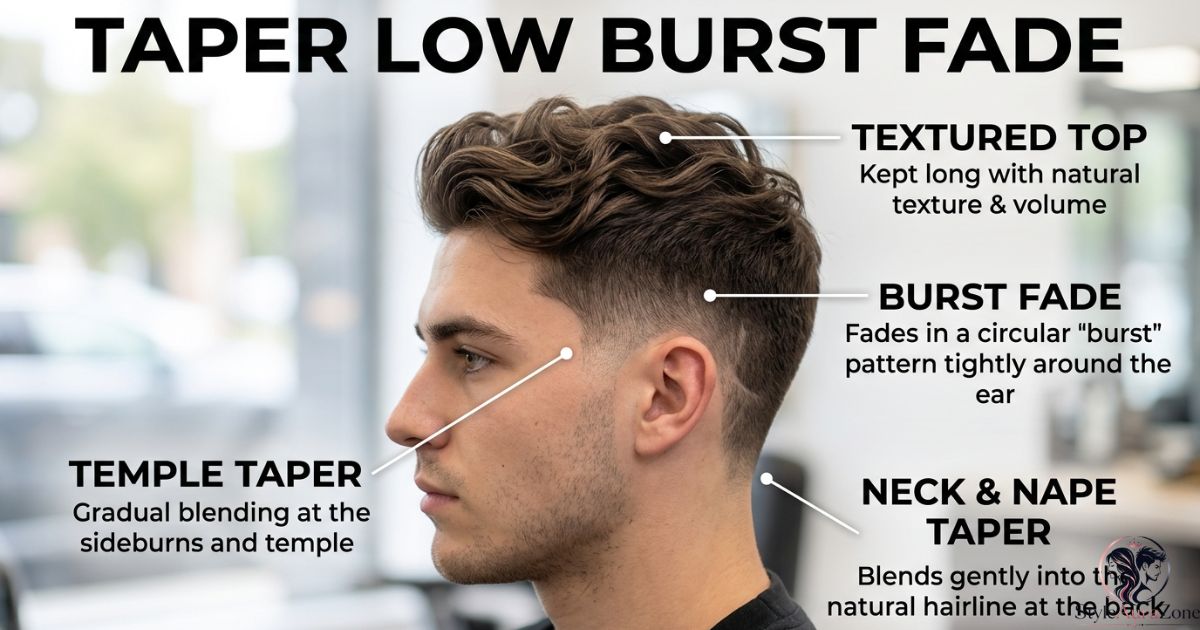
This cut blends two techniques. The low taper shortens the hair gradually along the sides and neckline. The burst then bends that blend into a half-circle around the ear, a bit like a small sunburst.
The curve is the signature. Instead of a flat line running across the sides, the shortest hair hugs the ear and the length builds outward from there. Barbers often leave extra length at the nape, so the back keeps some weight. As, notes, that rounded shape around the ear leaves the hair at the nape longer than a traditional fade would.
Because the fade begins low, the cut reads soft and conservative. You get a clean outline with a detail that a standard low taper simply lacks.
Taper vs low fade vs burst fade
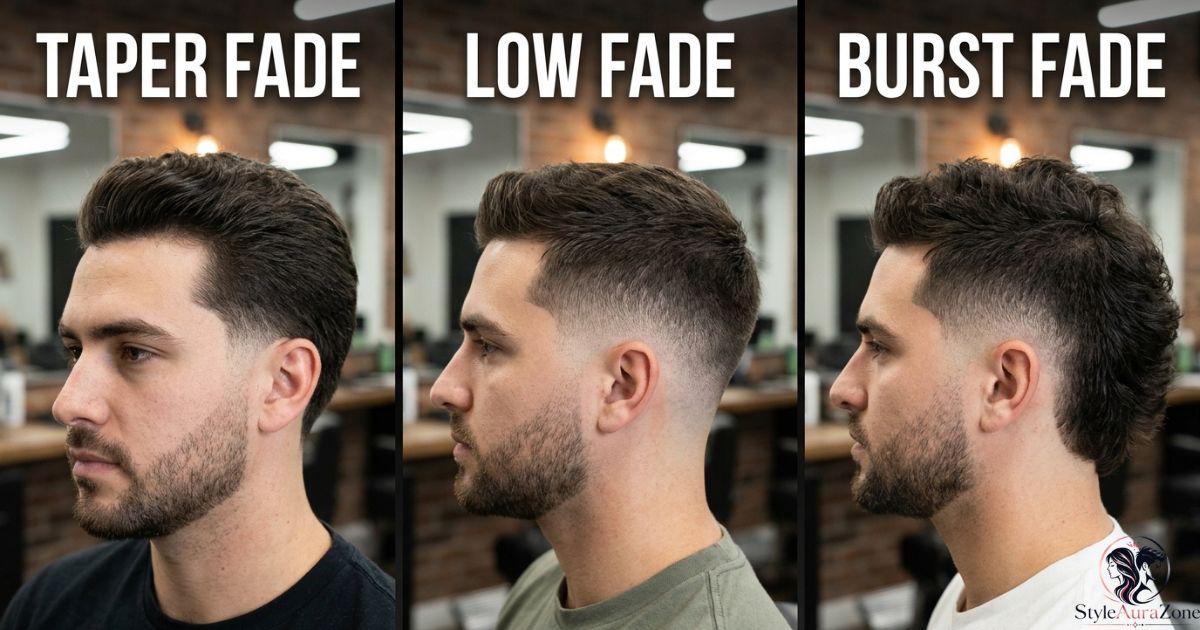
People swap these terms constantly. Each one describes something different, and the mix-up is how a good photo turns into a bad haircut.
| Term | What it describes | Contrast on the sides | Typical look |
| Taper | How gradually the hair shortens | Soft, hair stays visible | Natural and conservative |
| Low fade | Where the fade starts (near ears and nape) | Moderate, may reach skin | Clean and understated |
| Burst fade | The shape of the blend (curved around the ear) | Varies with height | Rounded and defined |
Taper
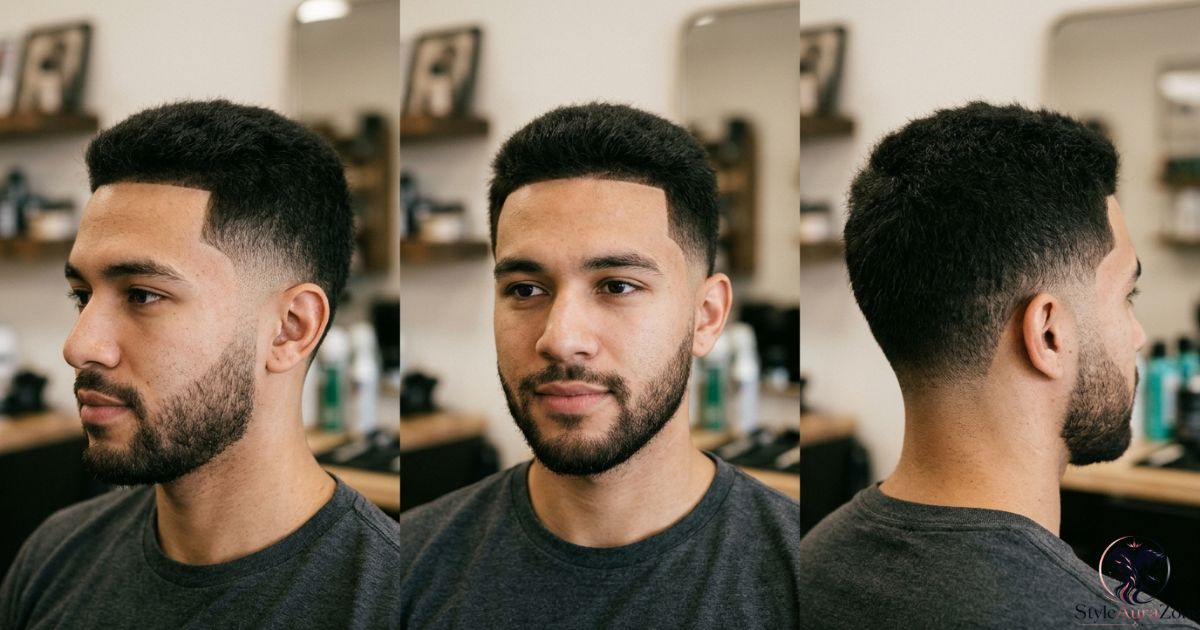
A taper trims the sides and neckline so the length drops off slowly. It rarely exposes much scalp. Barbers lean on it as a base layer, and it grows out gracefully.
Low fade
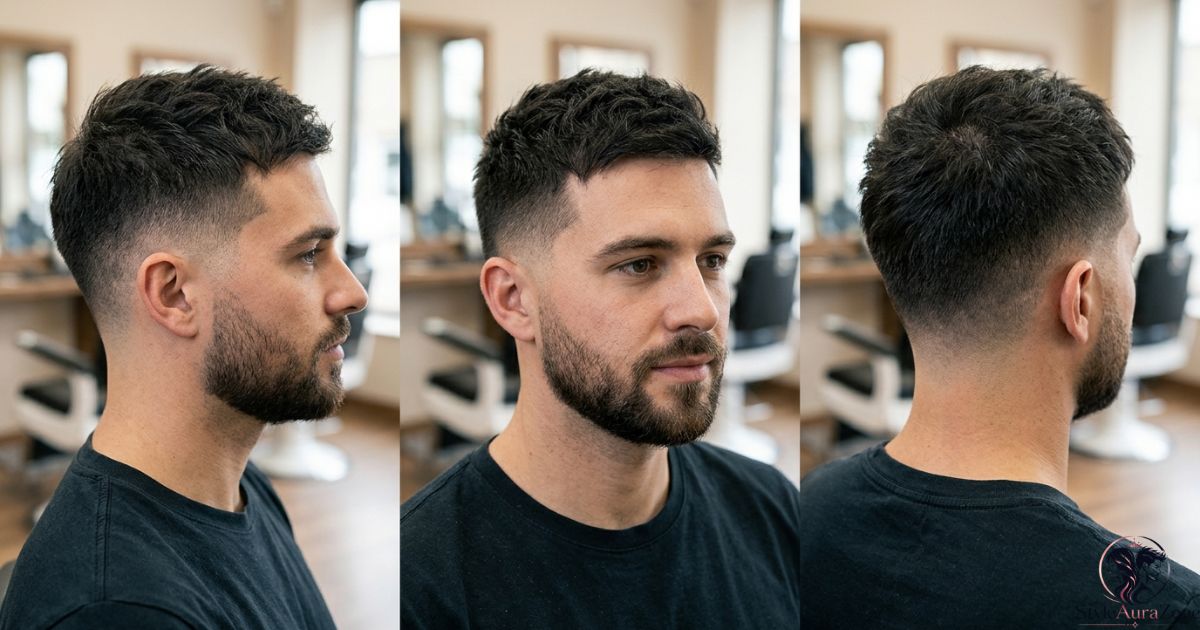
“Low” is a position, not a shape. The fade begins close to the ears and the hairline at the nape, which keeps more hair on the sides. Many low fades end near a #1 or #2 guard before any skin shows, though a skin finish is also possible.
Burst fade
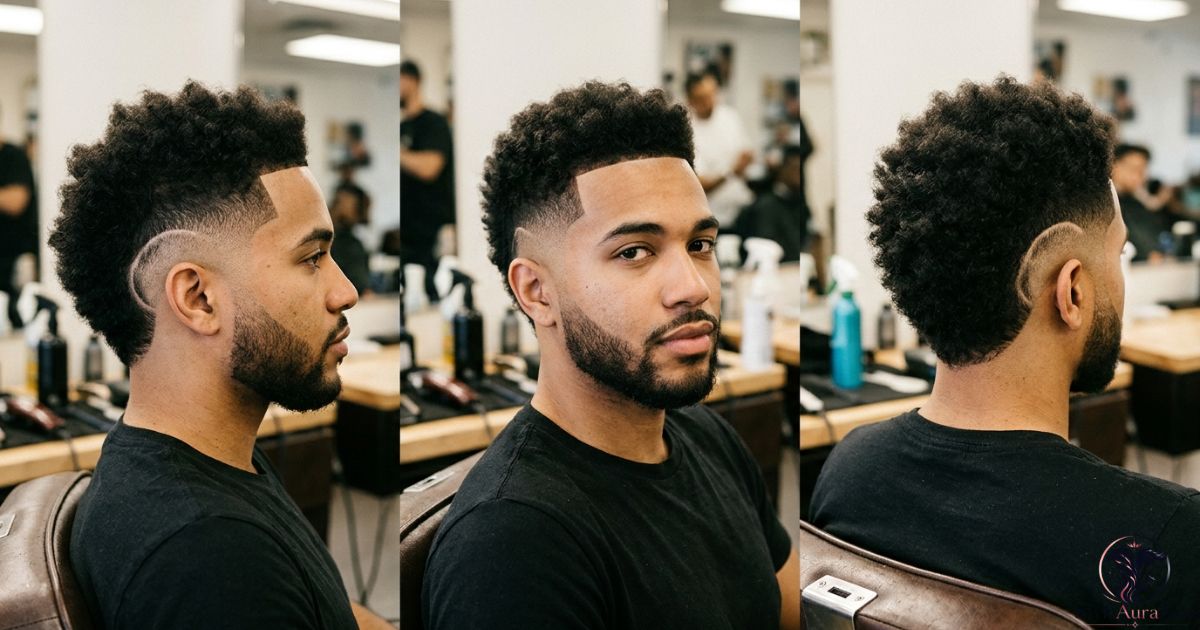
“Burst” describes the curve. The blend wraps around the ear in an arc instead of cutting straight back. It pairs well with textured crops, fringes, mohawks, and mullets because the rounded line follows the movement of longer hair on top.
Put them together, and the taper supplies softness, the low placement supplies restraint, and the burst supplies shape.
Who a taper low burst fade suits
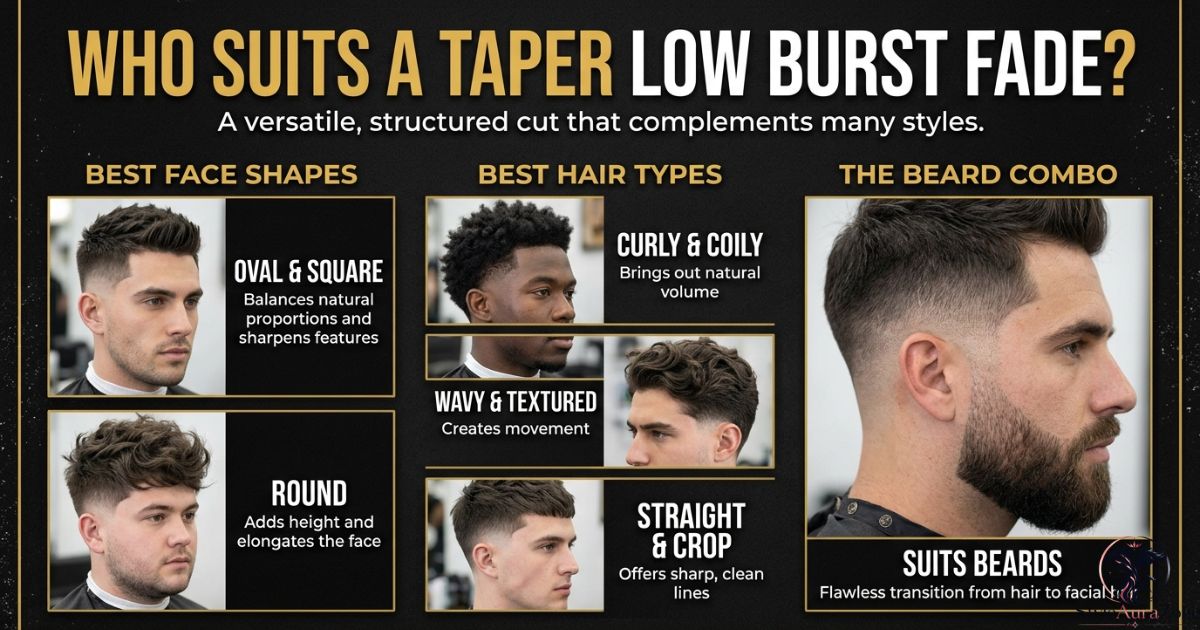
Low placement and a rounded line make this one of the more forgiving fades. A few details still change how you should order it.
Read more:Mid taper fade curly hair: styles, barber guide, and maintenance
Face shapes
| Face shape | How it wears the cut | What to tell your barber |
| Oval | Almost any top works | Pick the top length first |
| Square | The curve softens a strong jaw | Keep the arc smooth, not blocky |
| Round | Height on top matters more than the fade | Ask for lift or length up top |
| Heart | Low fade balances a narrow chin | Add volume on top |
| Long or oblong | Low placement keeps width at the sides | Avoid a tall top |
Round faces can also try a mid burst, which sits higher and narrows the sides more.
Hair types
- Straight: The arc shows clearly against straight strands. A cropped or lightly textured top keeps the look crisp.
- Wavy: Probably the easiest match. Natural movement plays off the curve with very little effort.
- Curly: The burst keeps curls full on top while controlling the bulk underneath. The rounded line follows the curl pattern instead of fighting it.
- Coily: The shape complements natural volume. A low start also means less exposed skin that can grow in unevenly.
- Fine or thin: Texture powder adds grip, and a slightly longer top hides the scalp.
Man Cave Barbershop adds a practical point. According to their, as summarized by Luxe Digital, the extra length the burst leaves at the back can add volume where a flatter head shape lacks it.
Best styles to ask for
The fade stays the same. The top decides the personality, so pick a direction before you sit down.
| Style | Vibe | Upkeep |
| Textured crop | Casual, lived-in | Low |
| Short top | Clean, easy | Low |
| Curls left long | Soft, full | Low to medium |
| 360 waves | Polished, intentional | High |
| Forward fringe | Youthful, relaxed | Medium |
| Mohawk or faux hawk | Bold, sharp | Medium |
| Burst fade mullet | Statement look | Medium to high |
A few notes on the standouts:
- Textured crop: The most requested pairing. A dab of matte clay does the job.
- Curls left long: Curls hide regrowth, so you can stretch the time between cuts.
- Mohawk or faux hawk: The burst frames a central strip of hair neatly, which is why barbers often use it for this style.
- Burst fade mullet: Short sides and a longer back. The low start keeps the shape wearable.
How to ask your barber for it
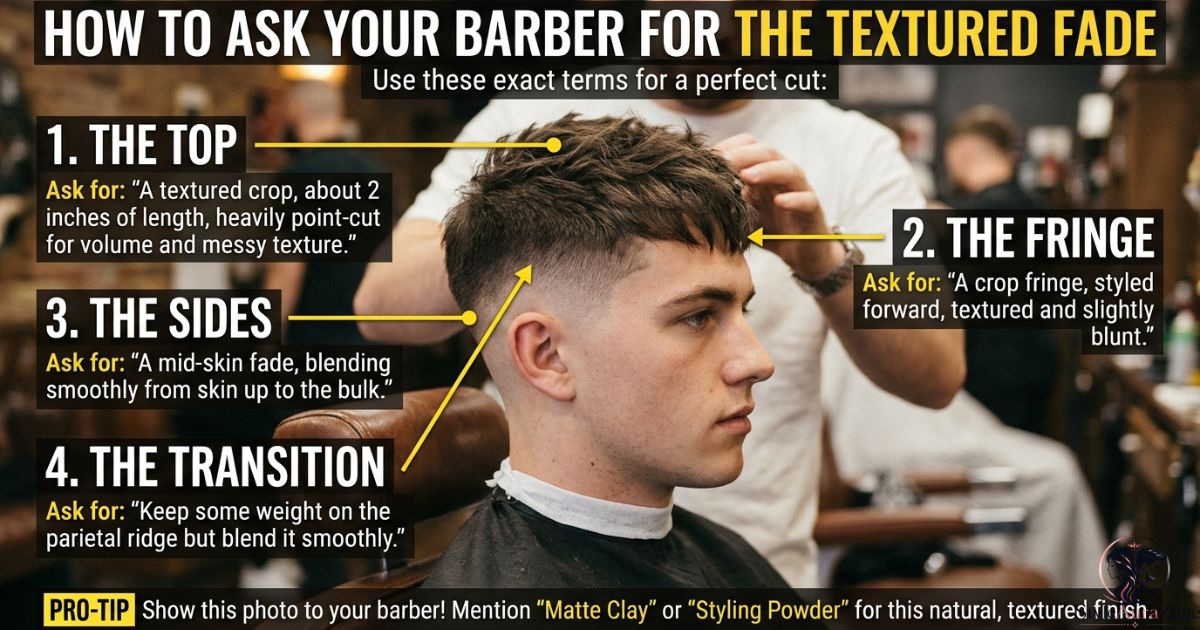
Barbers work fast and see dozens of heads a week. Specific words save you from the “that’s not quite it” moment at the mirror.
A script that works
Use this, then swap in your own details:
“I’d like a low taper that curves around my ear in a burst shape, not a straight line. Keep the fade low at the neckline, leave about [length] on top, and my hair is [type].”
Add a guard number if you know it, such as “blend down to a #1 at the bottom.” Ask one more question before the first pass: “Will the fade stay low?”
What to show
Photos beat descriptions. Man Cave Barbershop’s puts reference pictures at the top of its advice, and it also suggests pointing out the details you like.
Bring three shots:
- A side angle that shows the curve around the ear.
- A back view that shows the nape and neckline.
- A top view that shows length and texture.
Point at what you like in each. “I want this arc, but a little softer” gives your barber a target.
Keeping a taper low burst fade sharp
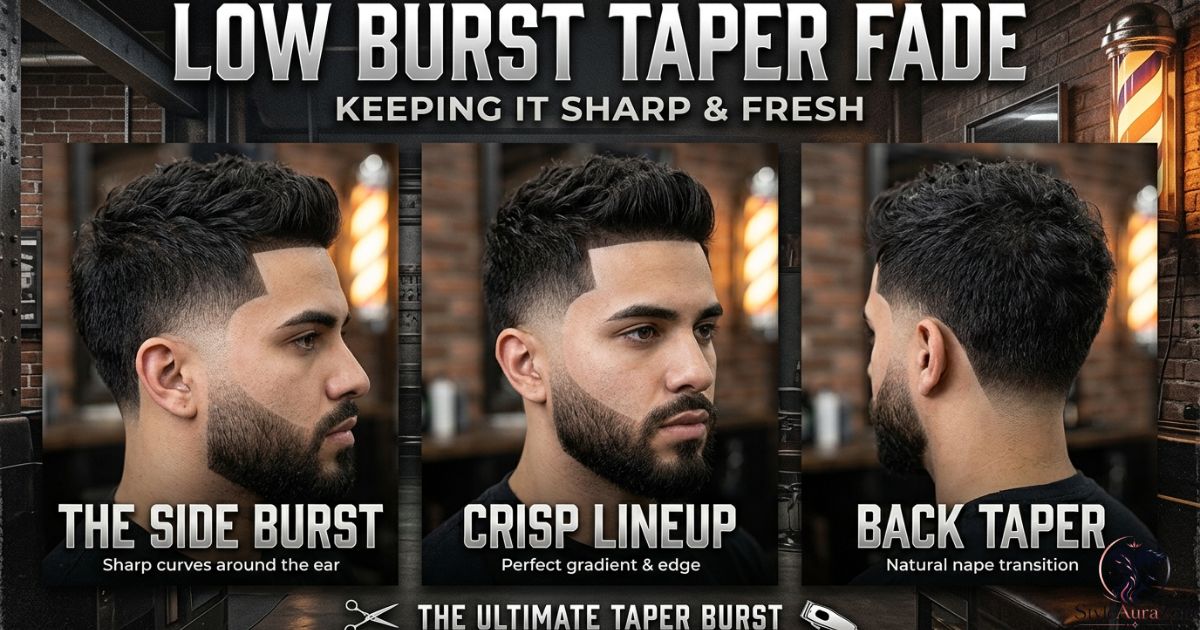
The arc is the first thing to blur as hair grows. Around the ear and nape, regrowth shows up quickly.
Touch-up timeline
| Fade tightness | Top style | Visit every |
| Tight, ends at skin | Short or waves | 2 weeks |
| Standard low fade | Crop or short top | 2 to 3 weeks |
| Soft, longer blend | Curls, fringe, mullet | 3 to 4 weeks |
Several barber guides land on the same two-to-three-week range for low fades, including. Fast growers should lean toward the shorter end.
Neckline and sideburn cleanup
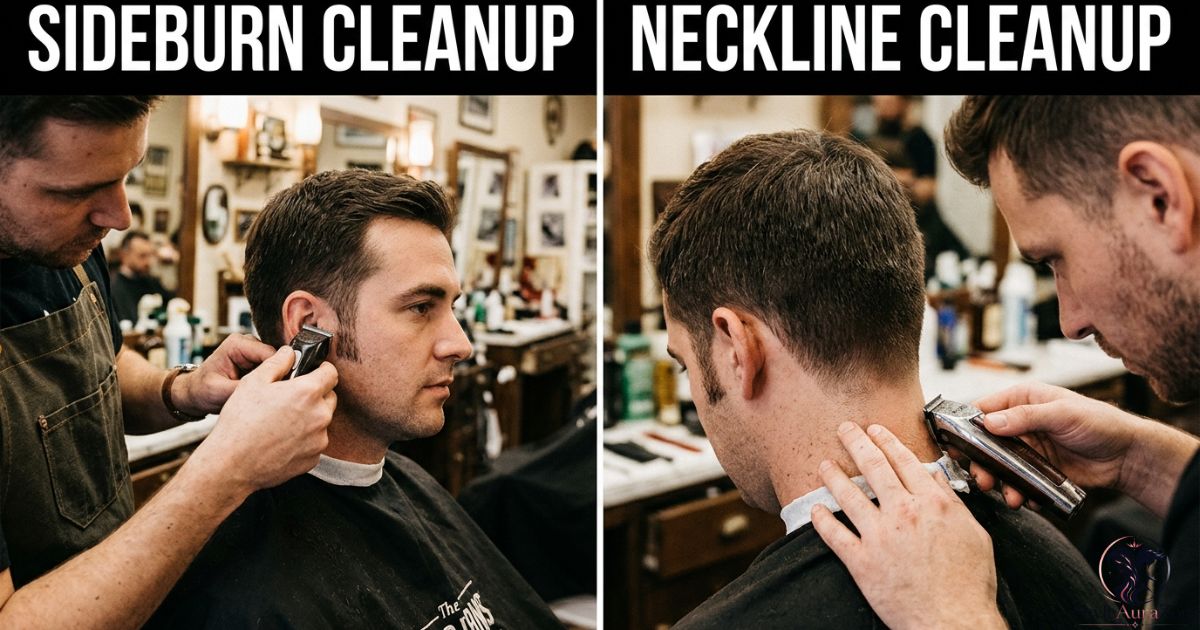
Home cleanup buys you a few extra days. Leave the blend alone, though, since a bad pass there is hard to hide.
- Use a trimmer with a close guard on the neckline.
- Follow your natural hairline instead of carving a hard, straight edge.
- Trim sideburns in tiny steps, because an uneven pair throws off the whole cut.
- Stop before the ear arc. That curve belongs to your barber.
Mistakes that ruin the cut
| Mistake | What happens | How to avoid it |
| Fade creeps too high | The low cut turns into a mid or high fade | Say “keep it low” before the first pass |
| Over-cutting around the ear | The arc flattens into a plain fade | Show a side-angle photo |
| Poor blend at the back | A visible line appears as hair grows | Ask for the nape to be blended carefully |
| Vague top length | You get an inch too short | Give a measurement or a photo |
| Heavy, shiny product | The burst looks stiff and overdone | Choose matte products |
Styling it at home
The cut does most of the heavy lifting, so the routine stays short.
- Start with damp, towel-dried hair.
- Warm a pea-sized amount of product between your fingers.
- Work it through by hand, lifting at the roots for height or pressing down for a sleek finish.
- Let it dry naturally, or use a diffuser for curls.
For product, matte clay suits most textured and short tops. Texture powder helps fine or straight hair that falls flat. A light pomade works for slicked or wave styles. Heavy, glossy products fight the soft edge of the burst, so keep the finish dry and natural.
Taper low burst fade vs blowout taper
The difference lives mostly on top. A blowout taper pairs a standard taper with a blow-dried, voluminous top. The taper low burst fade adds the curved ear detail and works with almost any top.
| Taper low burst fade | Blowout taper | |
| Side shape | Curved arc around the ear | Standard taper line |
| Top | Flexible: crop, curls, mullet | Voluminous, blow-dried |
| Daily effort | Low | Moderate to high |
| Barber visits | Frequent, to keep the curve | Less frequent |
| Best for | A clean, defined profile | Height and fullness |
If you hate morning styling, choose the burst. If you enjoy a hair dryer and want height, the blowout fits better.
Is it okay for school, work, or formal settings?
Yes. The low start keeps the cut conservative, and the curve adds polish instead of edge. Most dress codes and offices accept it without a second look.
For the most formal version, keep the top short to medium and the product matte. Skip high-contrast skin finishes and dramatic shapes like a mullet or tall faux hawk. Parents shopping for a school-age cut can also ask for a longer guard at the bottom to soften the transition.
Go deeper: low taper fade guides
- Low taper fade for curly hair
- Low taper vs low fade: the real difference
- Low taper fade with a textured fringe
- Burst fade mullet styles
- Low drop fade vs burst fade
- Mid taper fade for a higher starting point
FAQ’S
Is a burst fade the same as a taper fade?
No. A taper fade describes a gradual blend, while a burst fade specifically curves around the ear. This cut combines both.
What is the difference between a burst fade and a drop fade?
A drop fade follows the skull down behind the ear toward the nape. A burst fade arcs around the ear and keeps more length at the back.
How often do I need a touch-up?
Most people book every two to four weeks. Tighter cuts sit near two weeks, while softer, longer blends stretch toward four.
Does it work on curly hair?
Yes. The rounded curve follows natural curl patterns, so curly hair is one of the best matches for this cut.
Is a low burst fade good for round faces?
It can work with height on top. For stronger slimming, ask for a mid burst, which starts higher on the sides.
Conclusion
The taper low burst fade earns its place by being easy to wear and hard to dislike. The low start keeps things conservative, the curve adds personality, and the top can shift from a short crop to a full mullet without changing the foundation. That flexibility suits most schedules.
Success comes down to preparation. Bring a side-angle photo, name the low taper and the curve around the ear, state a top length, and mention your hair type. Book your next visit for two to four weeks out to keep the arc crisp. Do that, and every trip to the chair gets easier.