
Few cuts carry as much quiet confidence as the Ivy League haircut. Born on American campuses in the 1960s, it pairs short, tidy sides with a top long enough to part or sweep. You get a polished look that works at the office, a wedding, or a weekend brunch.
Today’s versions go well beyond the standard crew cut. Think tapered sides, textured tops, curls, fades, and even stubble pairings. Below, you’ll find 21 styles, a quick guide to what makes the cut tick, and step-by-step styling advice so your next barber visit goes smoothly and your hair looks sharp all week.
Sophisticated Ivy League Hairstyle Variations
Classic Ivy League Haircut

Short, tapered sides meet a top about two to three inches long, parted neatly on one side. It’s the original blueprint, and it suits most face shapes. Ask for a scissor-cut top and a natural blend so the part looks soft rather than stiff.
Modern Ivy League Haircut
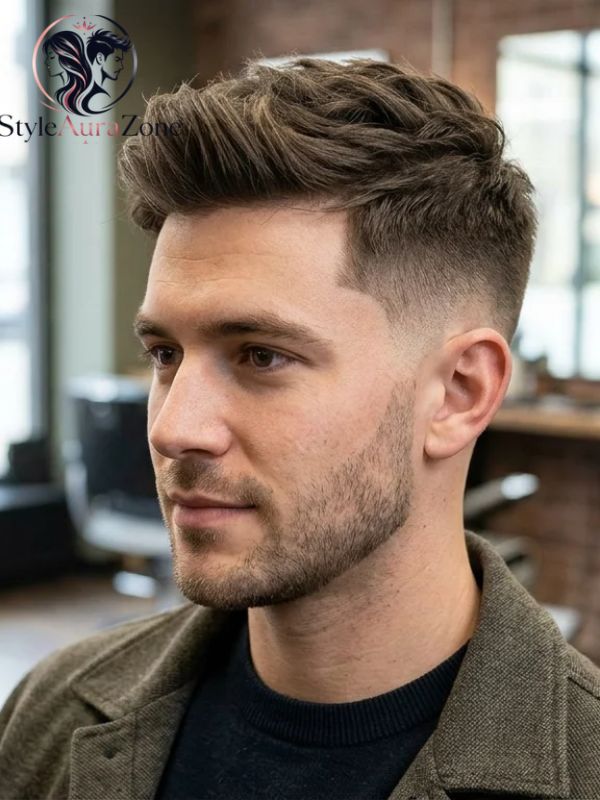
A fade replaces the old-school taper here, and the top gains structure with a brushed-up, side-swept fringe. Younger guys love the sharper contrast. A light matte paste holds the shape from morning meetings to late dinners.
Short Ivy League Haircut

Sides get clipped close, and the top stays barely longer than a crew cut. You can still comb it sideways without a part. It’s the fastest routine on this list: a comb and a dab of cream take about five minutes.
Textured Ivy League with Taper Fade
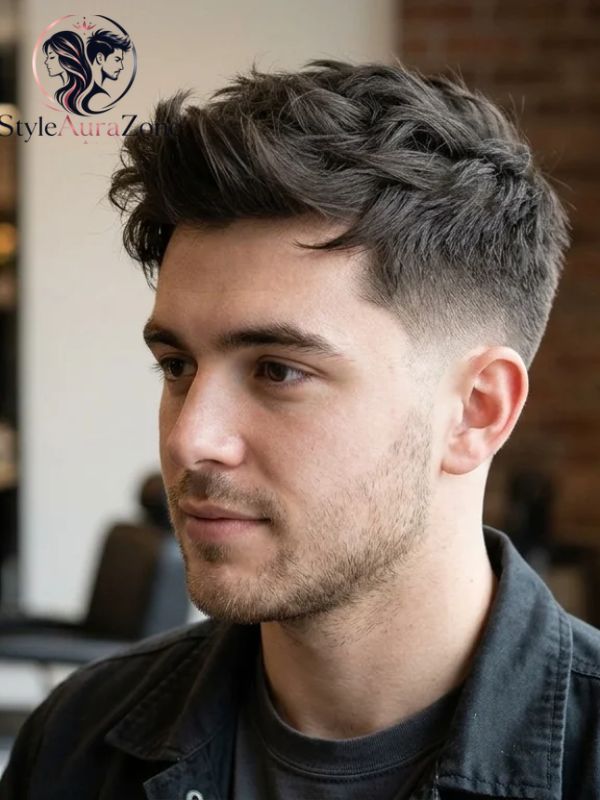
Choppy layers give the top real movement, while a taper fade keeps the neckline clean. Thick hair handles this version best. Work in sea salt spray or clay, then rough-dry with your fingers for a lived-in finish.
Ivy League Crew Cut
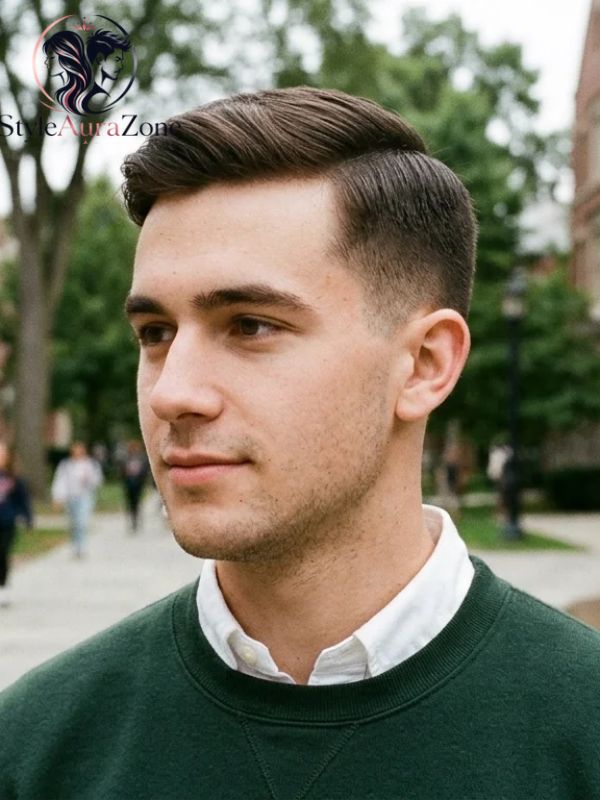
Clippers take the sides and back tight, and the front keeps a little extra length for a subtle forward sweep. Gym regulars and military-minded guys favor it. Plan a trim every three to four weeks to hold the edges crisp.
Professional Ivy League with Tapered Sides

Sides shorten gradually into the neckline, creating a tidy silhouette that suits conservative workplaces. The top gets a smooth side part. Reach for a light pomade for sheen, and skip heavy gels that read as slick.
Curly Ivy League

Natural curls give this cut a relaxed, full-of-personality feel. Keep the sides short and let the top spring up about three inches. A curl cream and a diffuser tame frizz and define each coil.
Read more:30 Trendy Modern Mullet Fade Types & Styles for Men
Preppy Ivy League

This one leans into polished tradition, with a defined side part and a faint shine from a water-based pomade. It pairs naturally with oxford shirts and blazers. Comb it through damp hair and let it set before you head out.
Ivy League Fade
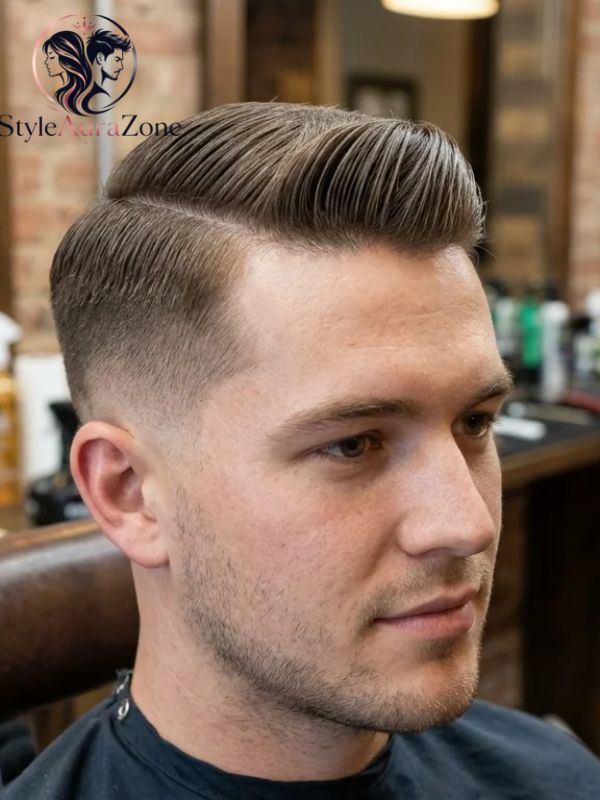
A fade trades gentle tapering for a crisp gradient from skin to length. Choose low, mid, or high depending on how bold you want to look. The longer top still gets parted or brushed to one side.
Messy Ivy League

Tousled and slightly undone, this take proves the style doesn’t demand rigid precision. Layers add body, and a finger-combed finish handles the rest. Matte clay gives grip without shine, so the mess looks intentional.
Long Ivy League

Let the top grow past three inches and you land in a relaxed, almost vintage zone. Sides stay trim to keep everything tidy. Sweep it back or part it low, and add a touch of cream to control flyaways.
Brushed Up Ivy League

A round brush and blow dryer lift the hair off your forehead, adding height and motion. The sides remain short and clean. Finish with medium-hold wax or texture spray so the volume survives the afternoon.
Ivy League Comb Over

Sharp and distinctive, this style sweeps the top across in one defined direction with a slim part line. Short sides heighten the contrast. A fine-tooth comb and firm-hold gel create that crisp, controlled finish.
Simple Short Ivy League with Texture
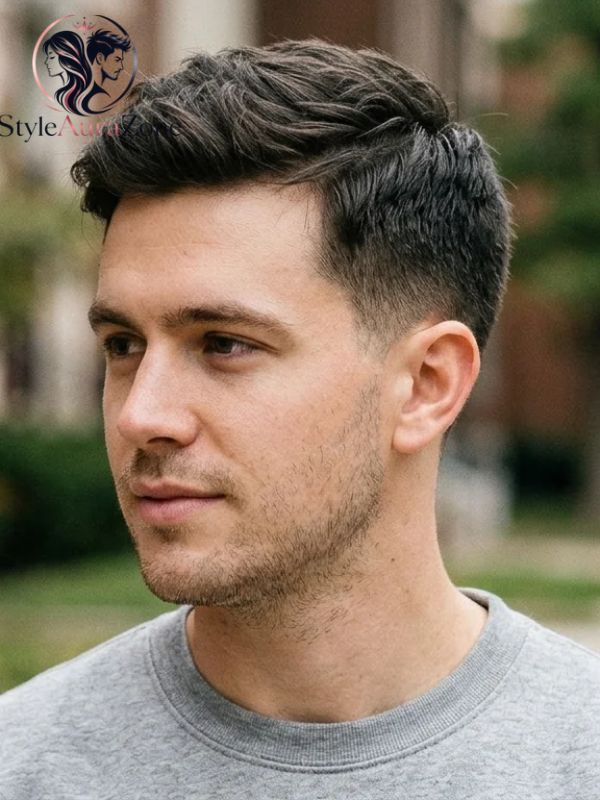
Minimal effort, maximum payoff. Point-cutting adds gentle texture to a short top, so it looks styled even when it isn’t. Rub a pea-sized amount of paste between your palms and run it through dry hair.
Side Swept Ivy League with Low Taper Fade
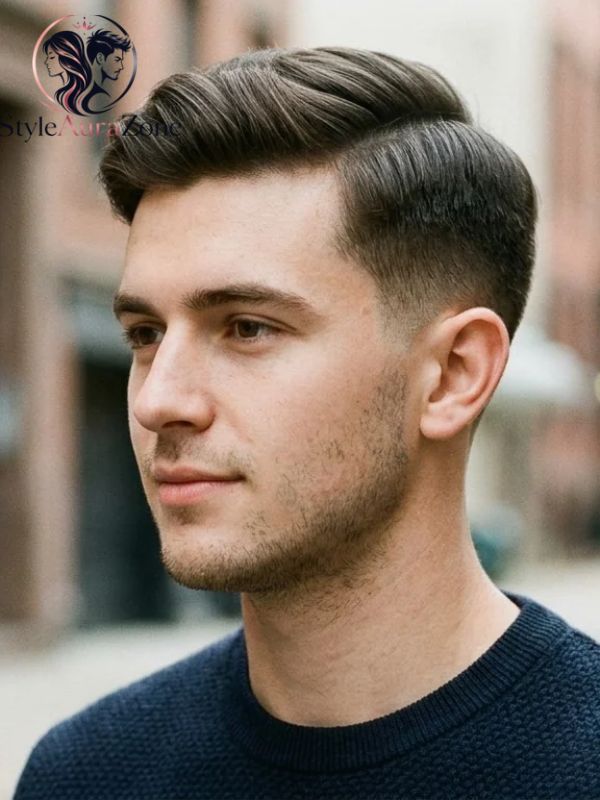
A low taper hugs the ears and neckline while the top sweeps across in a soft wave. It balances formal and casual nicely. Blow-dry in your preferred direction, then set it with a light-hold cream.
Hard Side Part
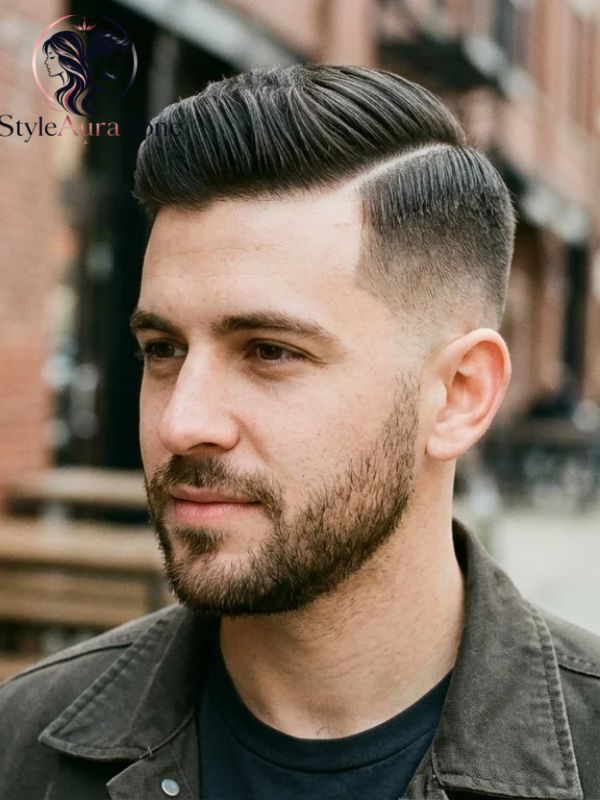
A razor-shaved or trimmed line marks the part with striking precision. The hair above combs over cleanly for a retro-meets-modern effect. Ask your barber to define the line, then tidy it with a trimmer between visits.
Ivy League with Low Fade
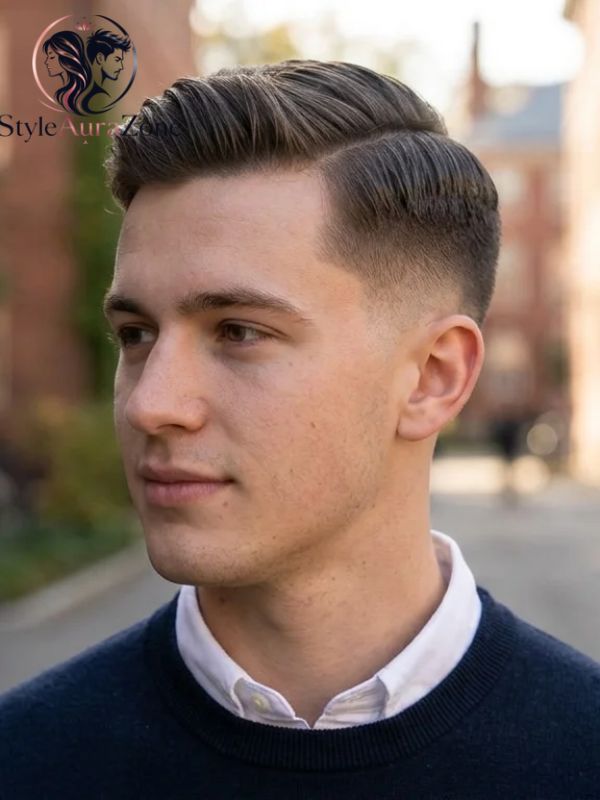
Starting just above the ears, the gradient stays subtle and leaves most side hair intact. It suits strict dress codes and anyone new to fades. Part the top with a light pomade for a neat, versatile finish.
Medium Length Ivy League

With roughly four inches on top, you gain styling freedom. Sweep it back, part it, or push it forward. Sides stay neat to prevent bulk, and sea salt spray plus a blow dryer builds shape quickly.
Low-Maintenance Ivy League

Choose a uniform short length with softly tapered sides, and daily styling becomes optional. Wash, towel dry, and comb. Trims every five to six weeks keep it presentable, which suits busy schedules and frequent travel.
Fresh Ivy League with Clean Tapered Sides
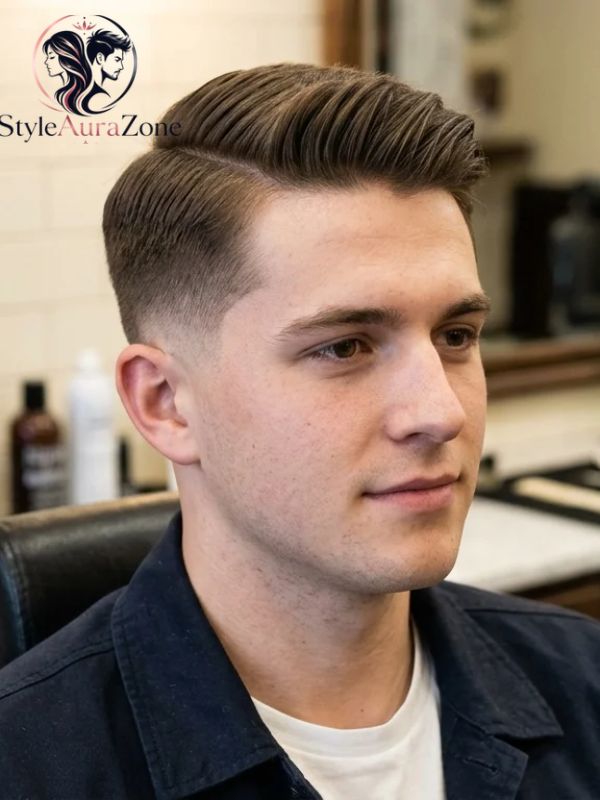
Crisp edges and a razor-clean neckline give this look its appeal. The top stays soft and neatly combed. Book your barber before big events, since the sharpness peaks during the first week or two.
Textured Ivy League Taper Fade with Stubble Beard
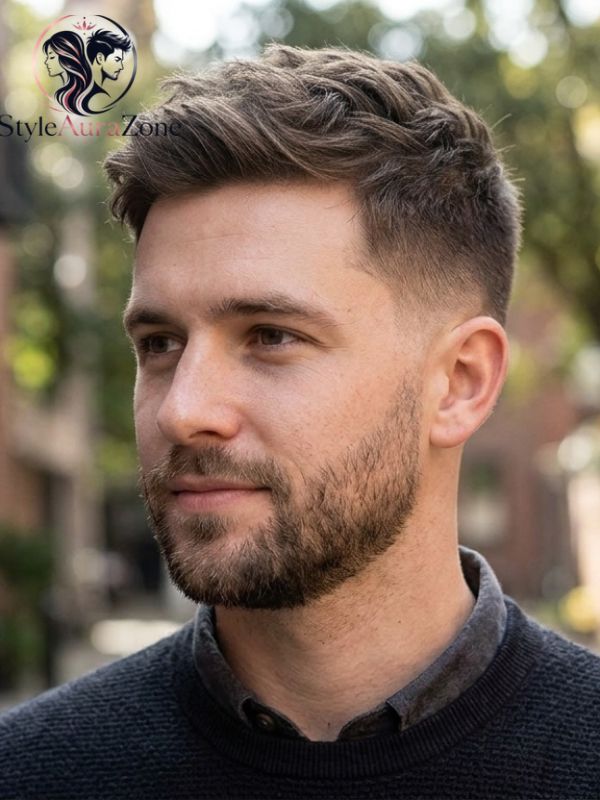
Combine a textured top and taper fade with a short, evenly trimmed stubble beard, and the whole face looks sculpted. Keep the beard around three to five millimeters. Blend the sideburns into it for a seamless transition.
What Is The Ivy League Haircut?
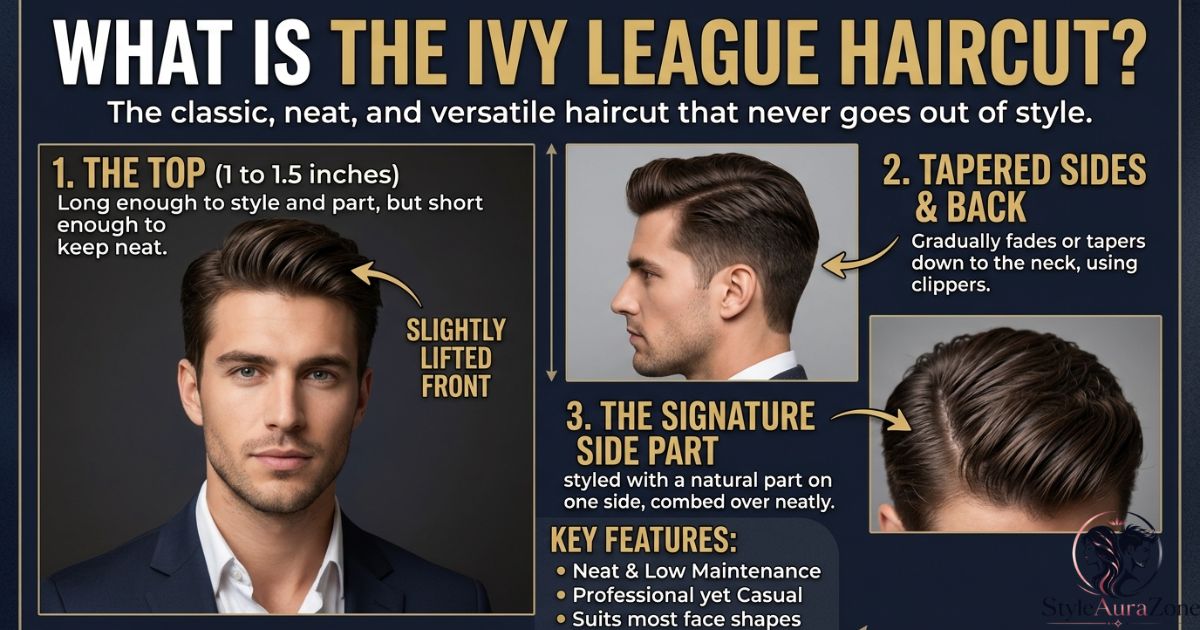
The Ivy League haircut is a variation of the crew cut with short, tapered sides and a longer top that can be parted or swept to one side. Also called the Harvard clip or Princeton cut, it began on U.S. college campuses and is still famous for its
Barber tip:
Ask for “a crew cut with enough length on top to part.” Barbers recognize that phrase instantly.
Key Features at a Glance
| Feature | Typical Specification |
| Top length | 2–4 inches (longer for medium and long versions) |
| Sides and back | Tapered or faded, short |
| Parting | Soft side part or hard part |
| Styling time | 3–7 minutes |
| Trim frequency | Every 3–5 weeks |
| Best occasions | Office, weddings, interviews, casual outings |
Ivy League vs. Crew Cut vs. Caesar Cut
| Haircut | Top Length | Front Styling | Overall Vibe |
| Ivy League | Longer, can be parted | Swept to the side or brushed up | Polished and collegiate |
| Crew Cut | Short, even | Slightly raised front, no part | Athletic and minimal |
| Caesar Cut | Short, uniform | Forward fringe, horizontal line | Bold and low effort |
Best Ivy League Haircut by Face Shape
| Face Shape | Recommended Style | Why It Works |
| Oval | Classic or long Ivy League | Nearly every length flatters balanced proportions |
| Round | Brushed up with a high fade | Added height elongates the face |
| Square | Textured with a low taper | Soft texture eases a strong jawline |
| Oblong | Short or side-swept versions | Less height avoids exaggerating length |
| Diamond | Comb over or preppy | Top volume adds width at the forehead |
Thick hair carries textured and curly versions well. Fine hair benefits from layers and a volumizing spray, because the longer top needs lift to avoid looking flat.
How To Style An Ivy League
Styling this cut takes minutes once you know the order. Follow these six steps for a clean, repeatable result.
- Start with clean, damp hair. Towel dry until it stops dripping but still feels slightly moist.
- Apply a pea-sized amount of product. Warm it between your palms so it spreads evenly.
- Work it through from root to tip. Use your fingers for texture or a comb for a sleek finish.
- Shape the part. Use a fine-tooth comb to draw a line, soft for casual and sharp for formal.
- Blow-dry for direction. Point the airflow where you want the hair to lie, then finish with a cool blast to lock it.
- Check the sides. Smooth the tapered areas with your hand so nothing flares out.
Best Products by Style
| Look | Product | Finish |
| Classic or preppy | Water-based pomade | Light shine, flexible hold |
| Textured or messy | Matte clay | No shine, strong grip |
| Curly | Curl cream | Soft definition |
| Brushed up | Medium-hold wax or texture spray | Volume with movement |
| Hard part or comb over | Firm-hold gel | Sharp, controlled |
FAQ’S
Is the Ivy League haircut the same as the Princeton cut?
Yes. The Ivy League cut, Princeton cut, and Harvard clip all describe the same longer crew cut with a styled top.
Does the Ivy League haircut work for thin hair?
Yes. Ask for layers on top and use a volumizing spray with a blow dryer to add lift.
How often should I trim an Ivy League haircut?
Book a trim every three to five weeks. Faded versions need touch-ups closer to the three-week mark.
Can men with curly hair get an Ivy League haircut?
Absolutely. Keep the sides short, leave the top slightly longer, and use curl cream for definition.
What is the difference between an Ivy League and a crew cut?
An Ivy League cut leaves enough length on top to part or sweep, while a crew cut stays short and unparted.
Conclusion
The Ivy League haircut earns its reputation through balance. Short sides keep things tidy, while the longer top gives you room to experiment. With 21 variations on this list, there’s a version for every hair type, schedule, and dress code. Pick one, screenshot it, and show your barber.
Success comes down to communication and consistency. Tell your barber the exact length, part, and fade level you want. Then trim every three to five weeks and keep a quality styling product at home. Do that, and this classic cut will look sharp for years and keep earning compliments.