
Trendy Modern Mullet Fade The mullet came back, and it dropped the ’80s baggage on the way. A modern mullet fade pairs a clean, blended side with length at the crown and nape. Barbers see it daily now. The result looks sharp, relaxed, and a little rebellious all at once. Few cuts flex this well.
This guide covers 30 types and styles, from burst and taper fades to curly, fine, and permed versions. You will also find face shape matches, barber scripts, styling steps, and upkeep schedules. Pick the version that fits your hair and routine, then walk into the shop with confidence. Nothing left to guess.
What Is a Modern Mullet Fade? Trendy Modern Mullet Fade
A modern mullet fade is a haircut with short, gradually blended sides and a longer back. The top keeps medium length, and the nape carries the “tail.” Think of it as three zones: a clean perimeter, a textured crown, and a flowing back.
Modern Mullet vs Fade
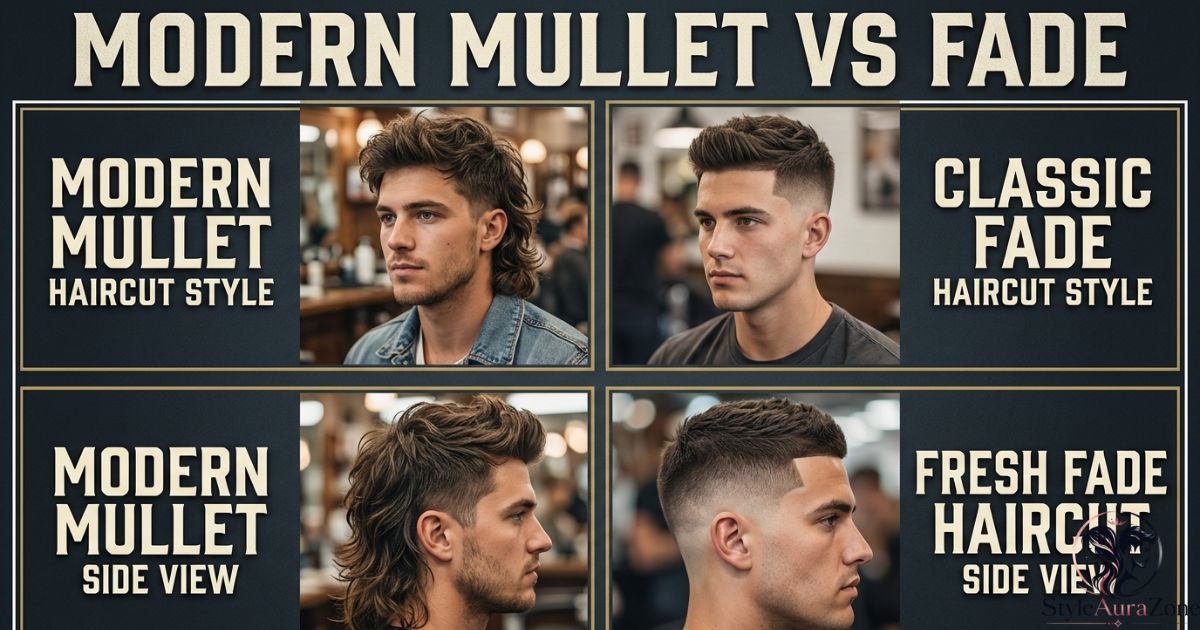
A mullet describes where the length sits. A fade describes how the sides are cut. You aren’t choosing one over the other. You’re choosing how to combine them, and the fade is simply the tool that gives the mullet its sharper, more current finish.
Modern Mullet Fade vs Taper
A taper shortens hair slowly and keeps a natural edge. A fade drops much shorter, often to skin, and creates stronger contrast.notes that the fade can sit at any height, which is why the choice comes down to how bold you want to look.
| Feature | Taper | Fade |
| Contrast | Soft and subtle | Sharp and high |
| Shortest length | Short, with hair left | Skin or near skin |
| Grow-out | Easy | Faster to look messy |
| Best for | Office, school, everyday | Statement looks |
Top 30 Modern Mullet Fade Types & Styles to Try
Modern Mullet Burst Fade
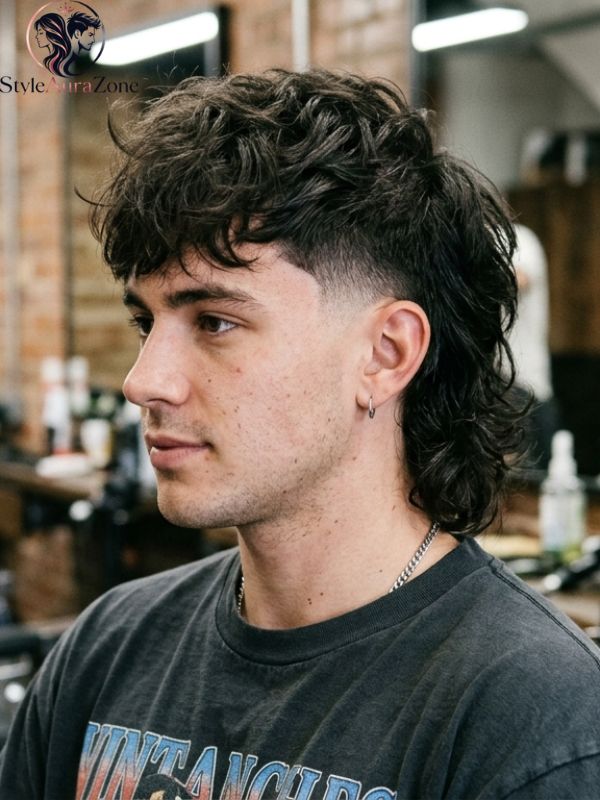
The burst fade arcs around the ear like a semicircle and leaves the nape longer. That curve frames the head without a harsh line, so the flowing back looks intentional. Curly and wavy hair pick up the shape best, especially when the crown carries some volume.
Modern Mullet Low Fade
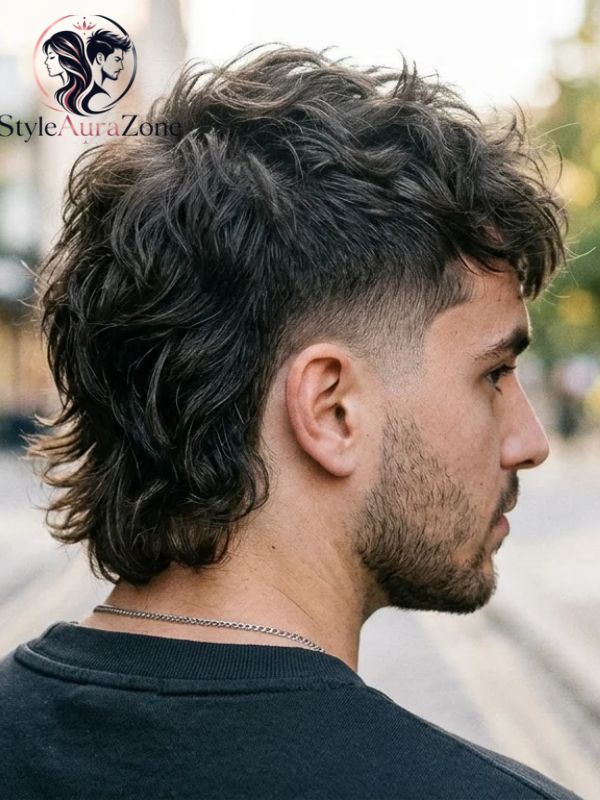
Start low if you want the safest entry point. This fade hugs the sideburns and nape, then melts out well above the ear. Dress codes rarely object. The mullet shows up mostly from behind, which makes it a smart trial run.
Modern Mullet Taper Fade
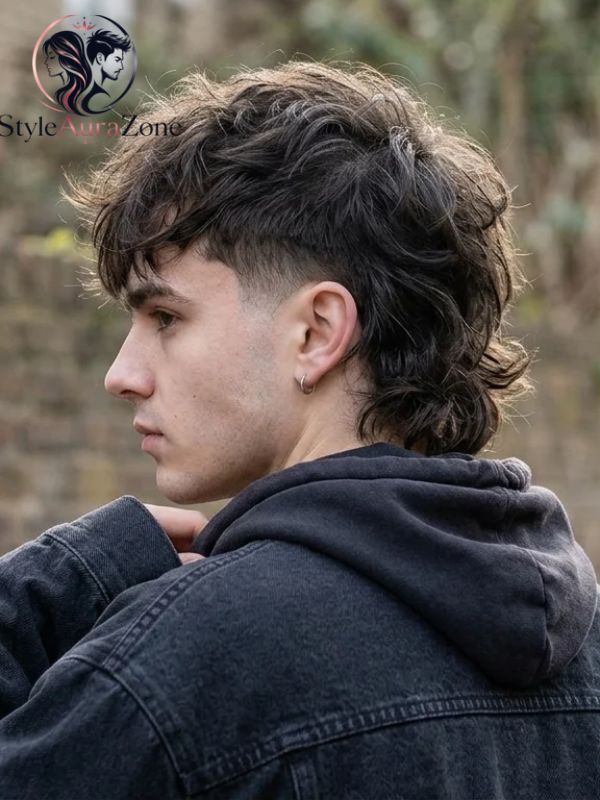
A taper fade shortens hair gradually and stops before bare skin. Paired with a mullet, it reads soft and lived-in. Growing out is simple, since no sharp line goes stale. Pick this one if you want fewer barber visits and an easy daily routine.
Classic Modern Mullet Fade
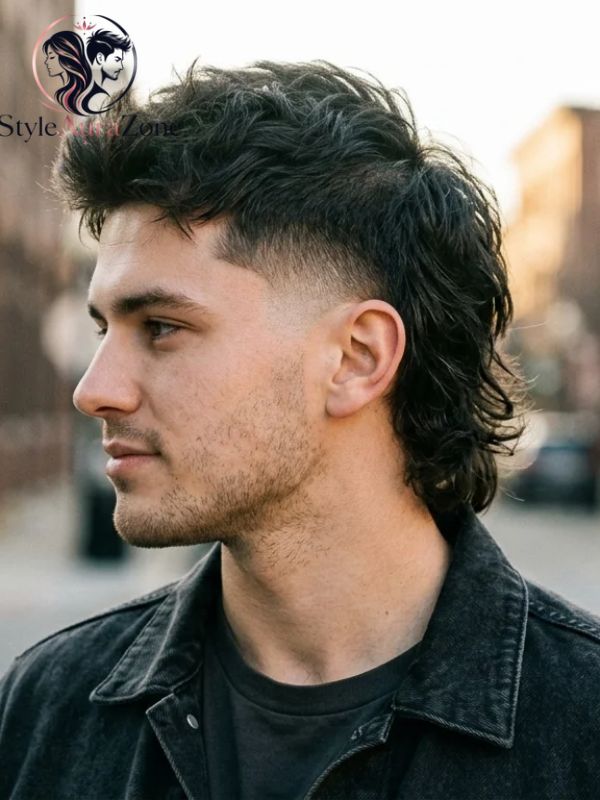
Think of this as the blueprint. Sides stay neat with a standard fade, the top keeps moderate length, and the back falls just past the collar. Most other styles here tweak one detail of this shape. Ask for it when you want a dependable starting point.
Mid Fade Modern Mullet
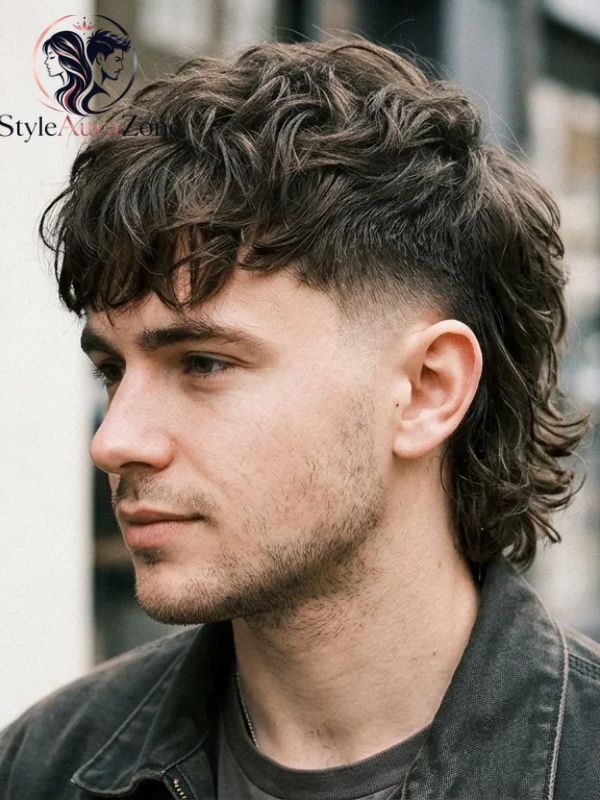
Starting near the temples, a mid fade lands between subtle and dramatic. You see real contrast against the longer sections, yet the look stays wearable. Barbers often suggest it for men who can’t decide between low and high. It suits medium-thick hair particularly well.
Modern Mullet High Fade
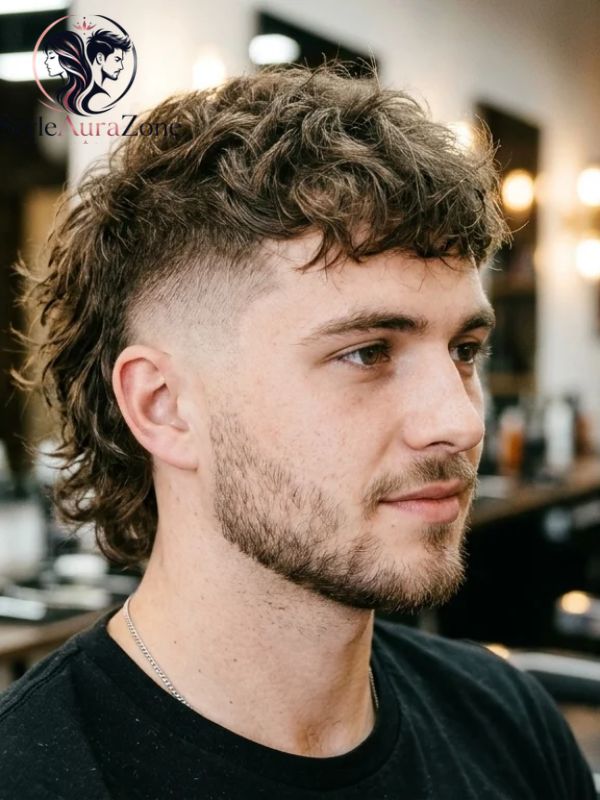
Go high when you want maximum drama. The fade climbs toward the upper head, leaving short sides beneath a long, loud back. Contrast gets sharp. Thick hair holds this look best, though you’ll need frequent clean-ups to keep the edges crisp.
Modern Mullet Skin Fade
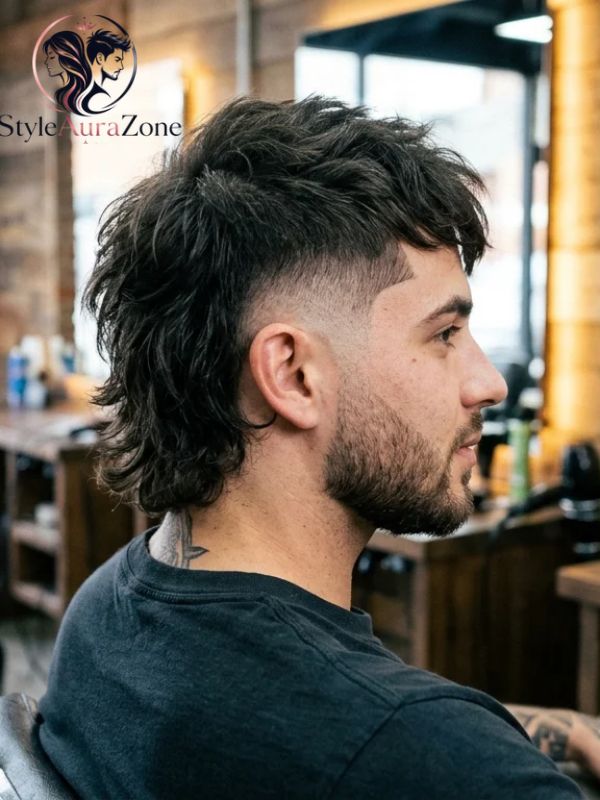
Also called a bald fade, this cut melts all the way to bare skin. Nothing looks cleaner. The tradeoff is time, because stubble shows within days and the line softens fast. Book a trim every two weeks for that razor-sharp finish.
Read more:Haircut Designs: 30 Cool, Creative Ideas
Undercut Mullet Fade
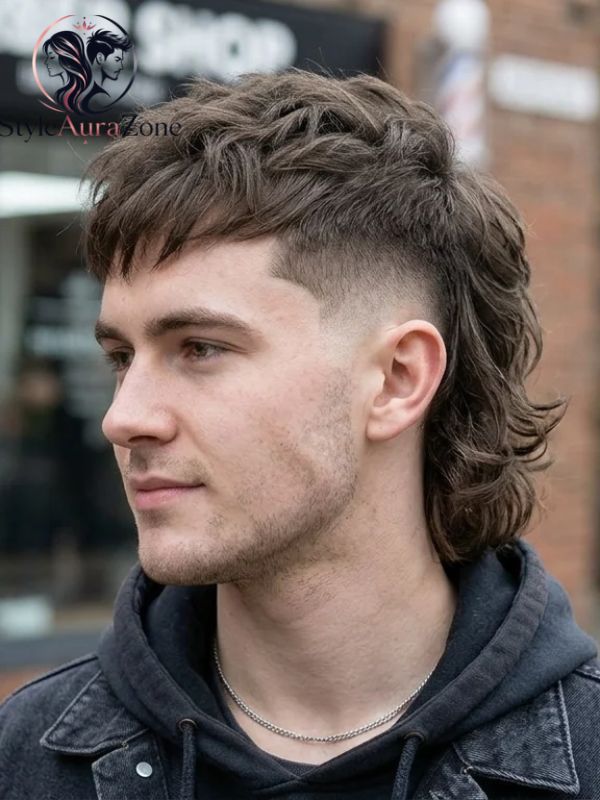
An undercut removes the sides in a disconnected block rather than blending them gradually. Add a fade at the edge, and the cut gets a bold, graphic split. Longer hair on top falls over the shaved section. It’s a high-contrast pick for confident dressers.
Textured Modern Mullet Fade
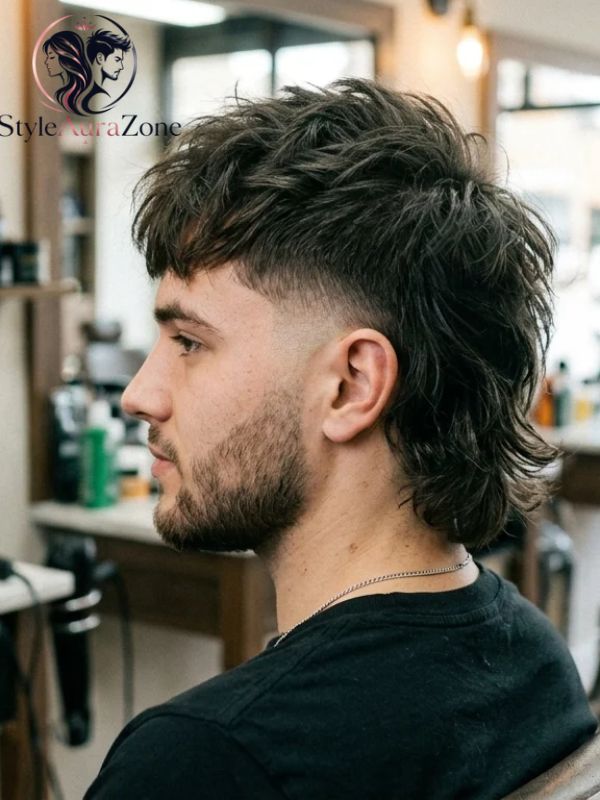
Choppy layers do the heavy lifting here. Your barber slices texture into the top and back so the hair moves instead of sitting like a helmet. Sea salt spray or clay adds grit. The effect is messy on purpose, which suits casual wardrobes.
Fringe Modern Mullet Fade
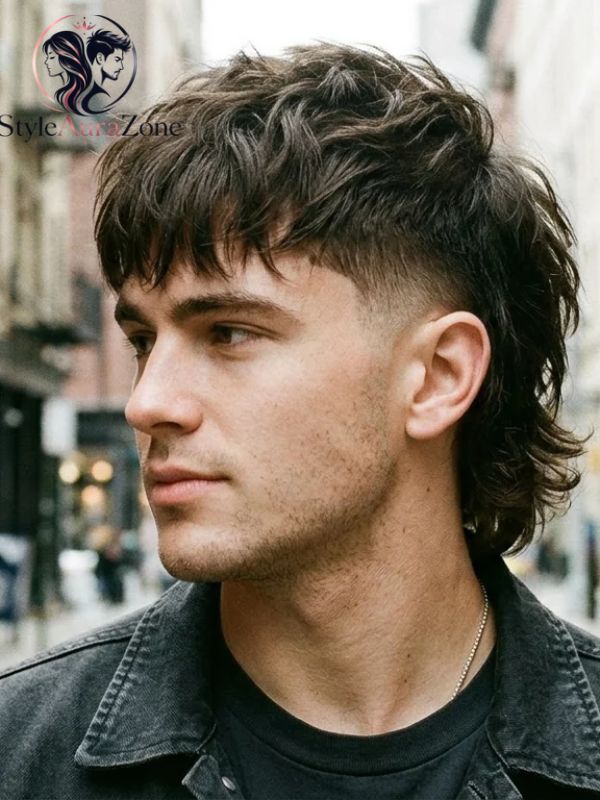
Bringing hair forward into a fringe softens the forehead and balances the length behind. Ask for it to land around the eyebrows with broken-up ends. Straight and wavy hair cooperate best. Heavy, blunt bangs can look stiff, so keep the edges textured.
Middle Part Modern Mullet Fade
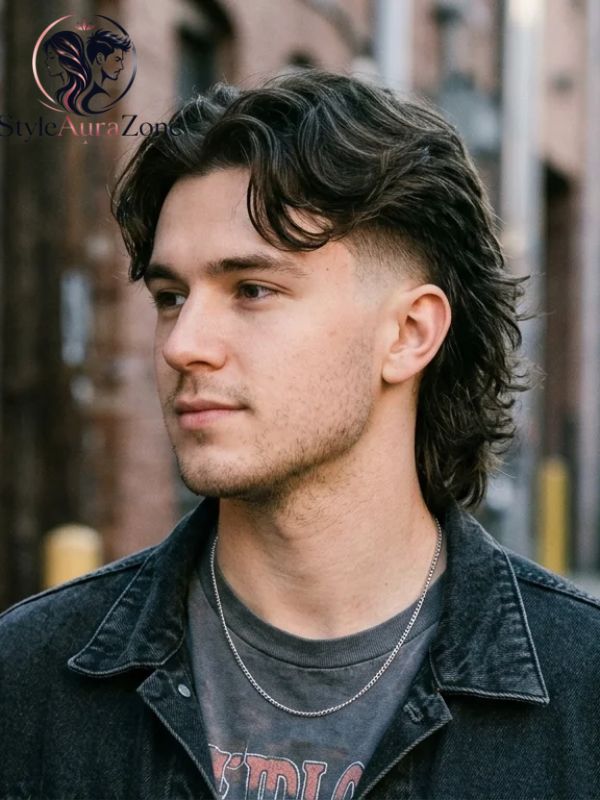
A center part gives this cut a relaxed, ’90s-leaning vibe. The top needs medium length so it falls evenly on both sides. Pair it with a low or taper fade for a polished finish. Front cowlicks may fight back, so mention them to your barber.
Layered Modern Mullet Fade
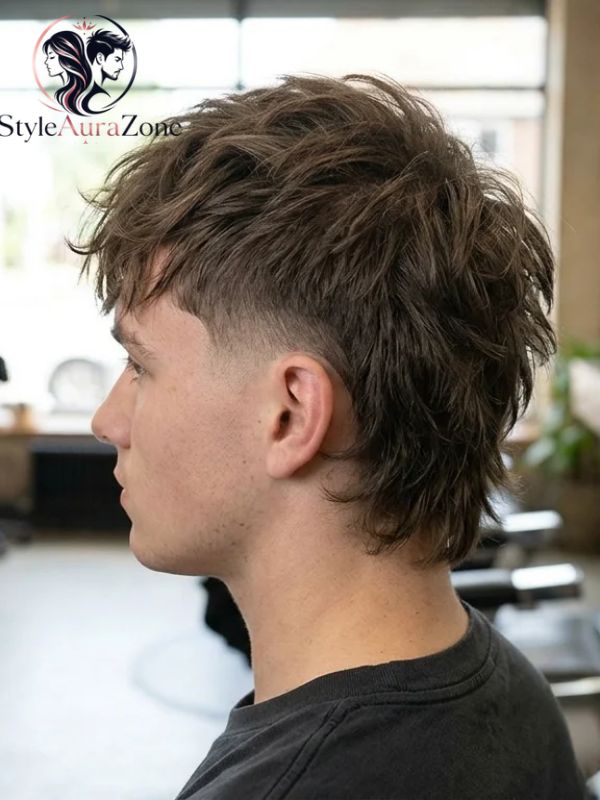
Layers strip weight from the back and crown. Without them, long sections can stack into a heavy shelf. With them, the mullet feathers out and flows. Thick hair benefits most, though fine hair gains movement from lighter, shorter layers.
V Back Modern Mullet Fade
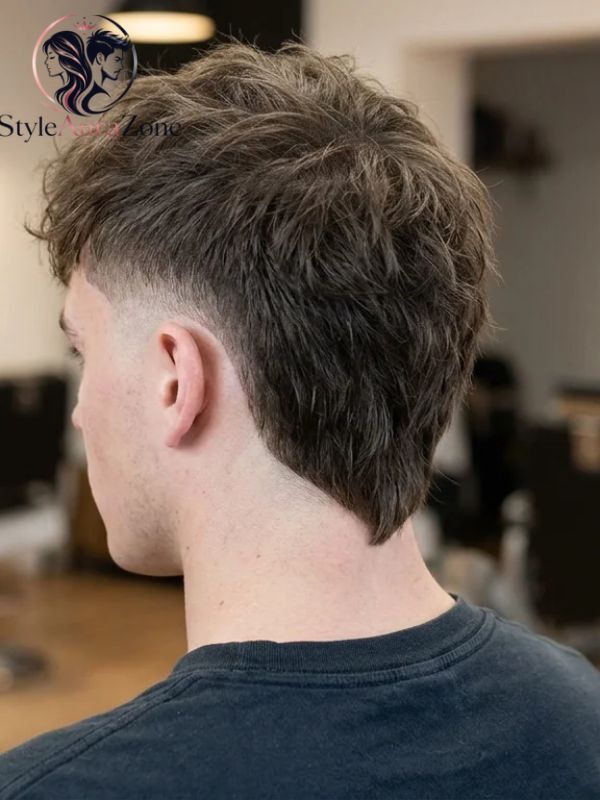
Rather than cutting the nape straight across, a barber shapes it into a V. Small tweak, big payoff. The point draws the eye downward and finishes the silhouette from behind. It looks especially striking with straight hair and a tapered neckline.
Sporty Modern Mullet Fade
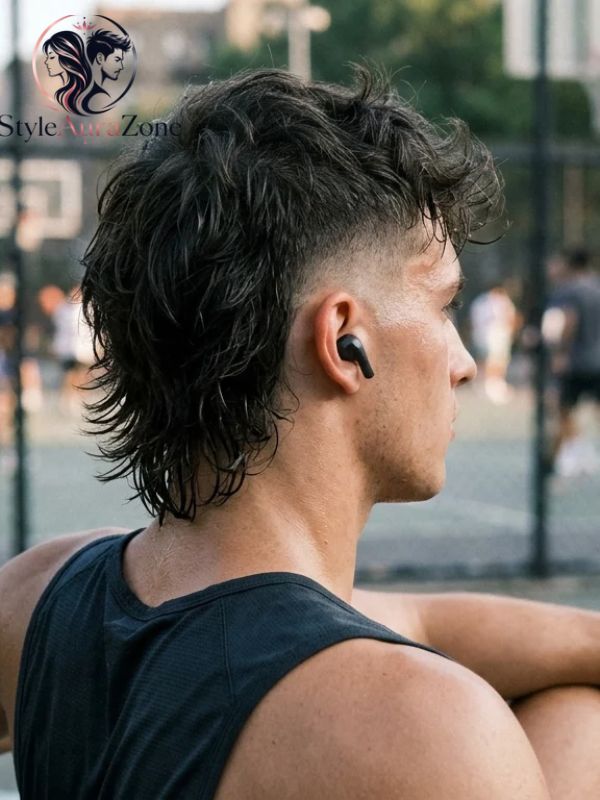
Active guys usually want length that stays out of the way. This version tightens the fade and shortens the back so a helmet, sweat, or a swim won’t wreck it. Little styling is needed. Towel dry, add a dab of paste, and go.
Wolf Cut Modern Mullet Fade
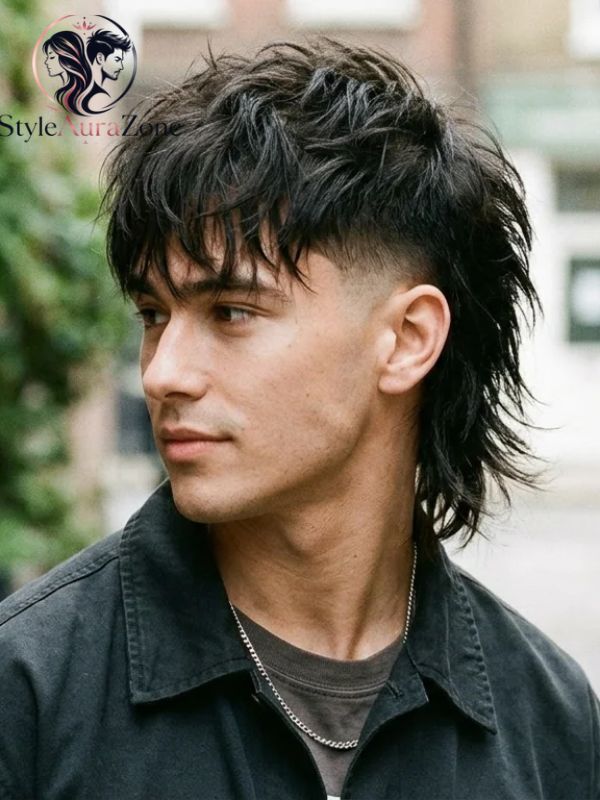
The wolf cut borrows shag layering and merges it with mullet length. Expect plenty of choppy volume on top and a wispy, uneven back. A fade on the sides keeps the shape from swallowing your face. It rewards thick or wavy hair.
Modern Mullet Fade Line Design
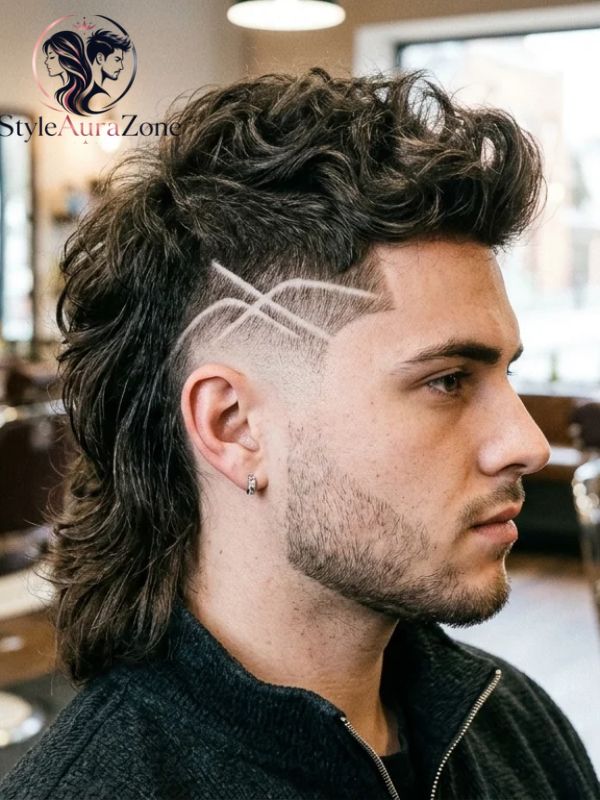
A shaved line adds a signature detail. Barbers can carve a straight part, a curve, or a tiny pattern into the faded area. Keep the design subtle for work settings. Expect frequent touch-ups, since regrowth blurs fine lines within a couple of weeks.
Short Modern Mullet Fade
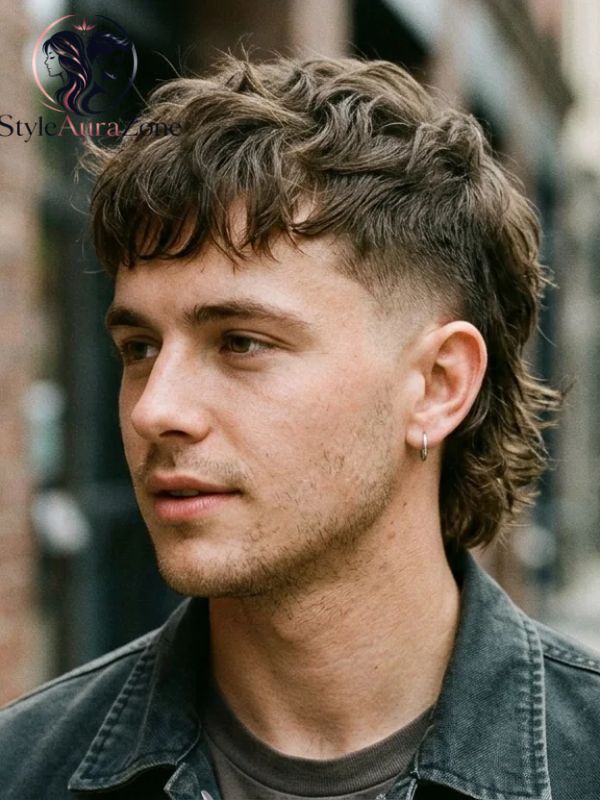
Not ready for a long tail? Keep the top and back close, just a touch longer than the sides. The mullet shows through shape rather than length. This approach suits school, work, and anyone testing the trend. Upkeep stays low.
Long Hair Modern Mullet Fade
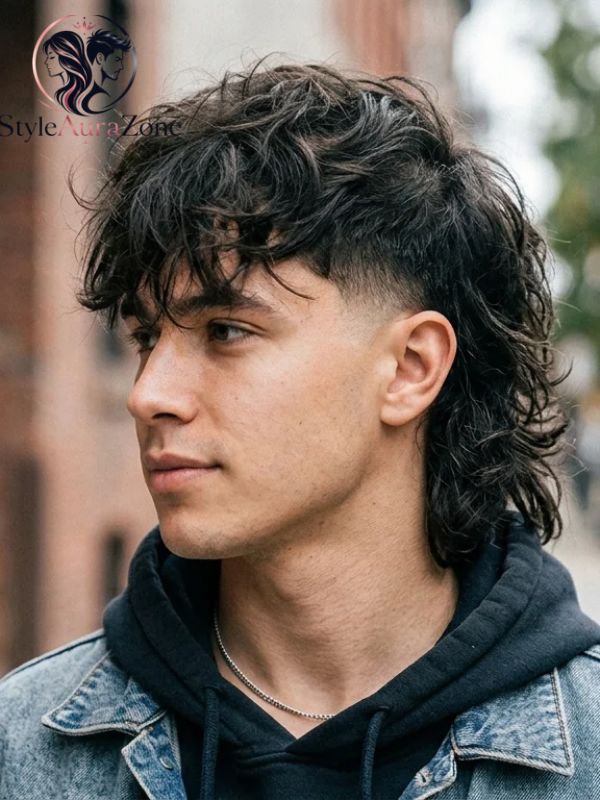
Length at the nape turns this into a statement cut. Hair can brush the shoulders while the sides stay clean. Regular trims keep ends healthy and the shape deliberate. Skip them, and the style slides from planned to overgrown fast.
Modern Mullet Fade Straight Hair
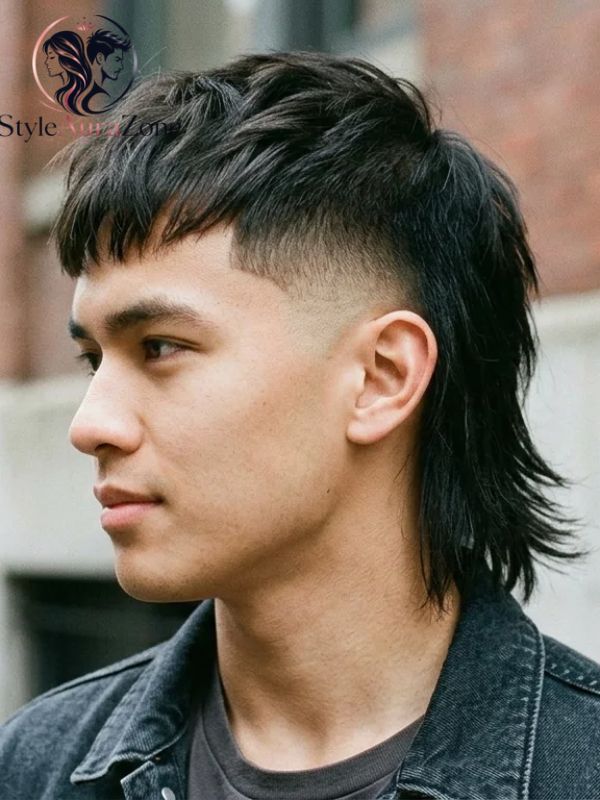
Straight strands lay flat, which shows off every inch of the mullet’s line. Clean cuts look sharp here. Texture spray helps because sleek hair can cling to the neck. Combine a fringe or center part with a taper for the best effect.
Modern Mullet Fade Curly Hair
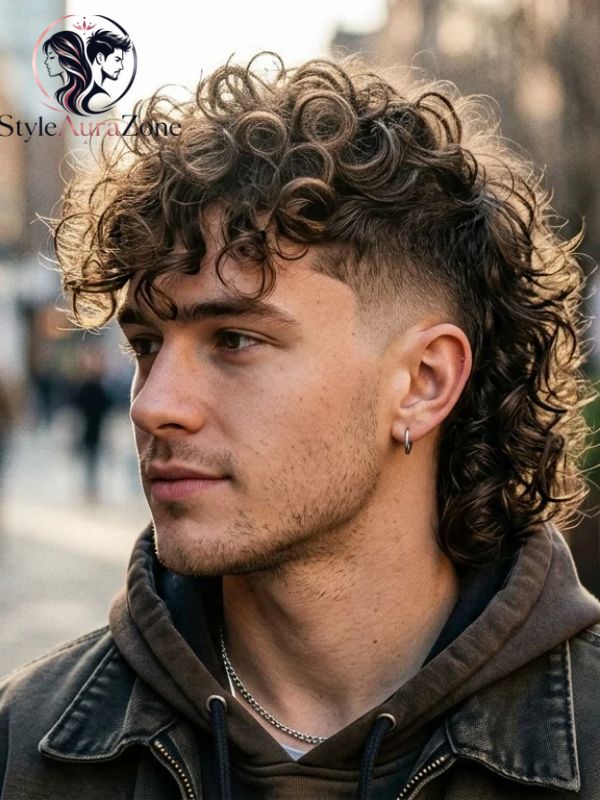
Curls add natural volume that makes the back look full without effort. A burst or taper fade controls bulk on the sides while the curls stay center stage. Use a curl cream and diffuse on low heat. Brushing dry curls only invites frizz.
Modern Mullet Fade Wavy Hair
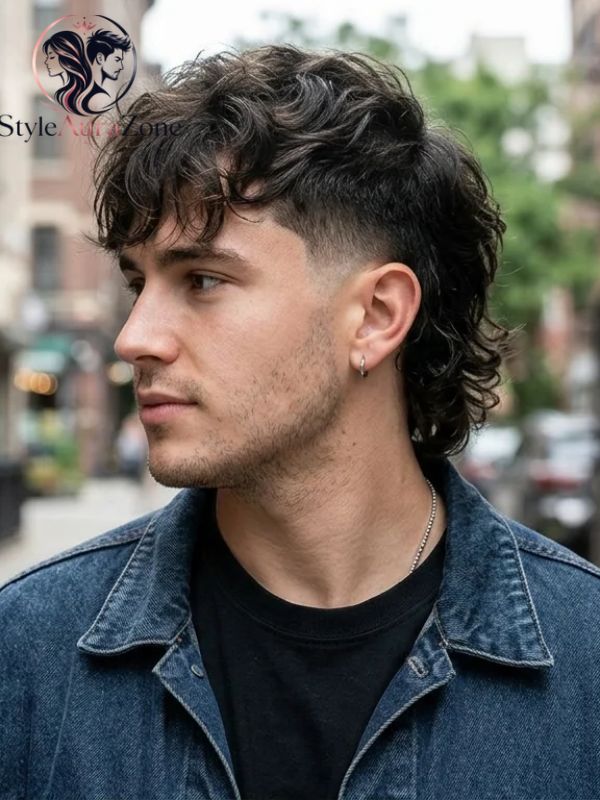
Waves sit in the sweet spot between flat and coily. They give movement without bulk. Layered, textured cuts let the pattern show through, and a mid or low fade keeps the outline tidy. Air drying with a little cream often delivers the finish you want.
Modern Mullet Fade Fine Hair
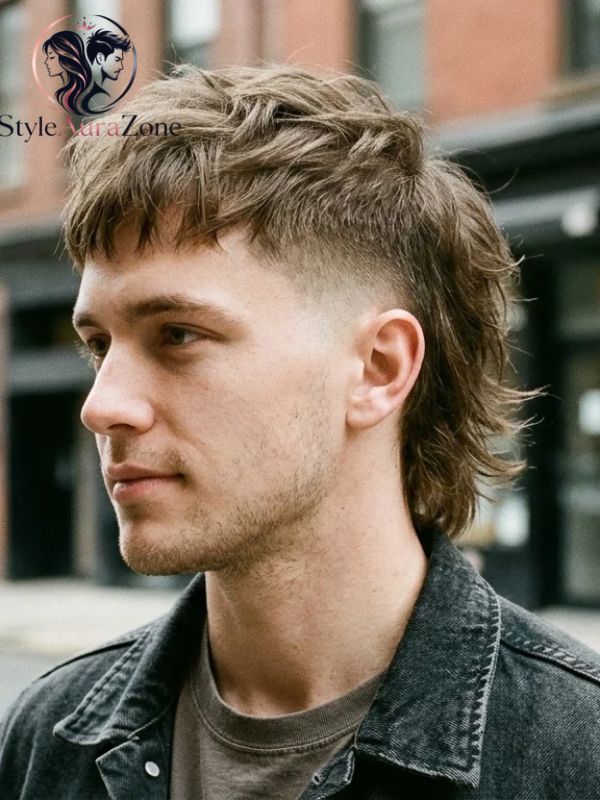
Thin strands need strategy. Heavy lengths drag fine hair flat, so keep the back moderate and layer lightly. Choose a taper or low fade over a skin fade, since extreme contrast can expose a thin top. A volumizing powder adds lift.
Modern Mullet Fade for Asian Hair
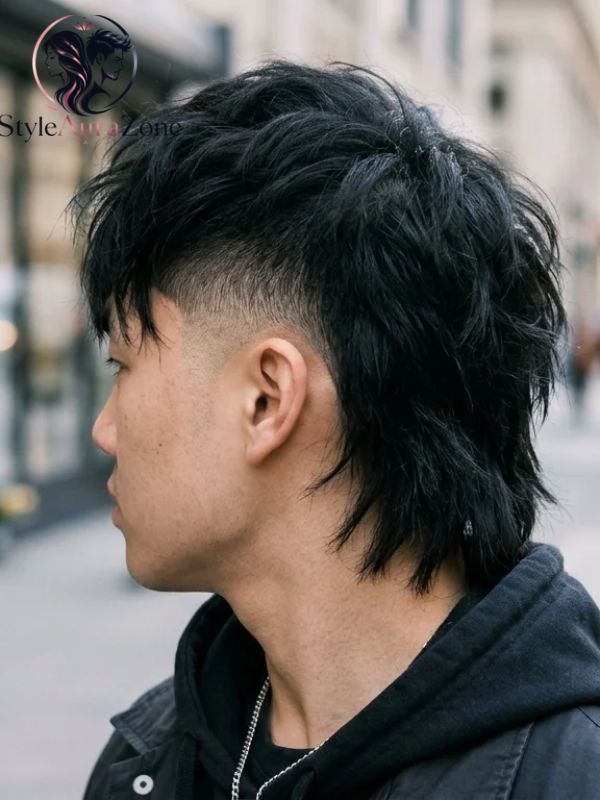
Asian hair often grows thick and straight, which holds a mullet’s shape well. Thinning layers stop the back from sticking out. A textured top with tapered sides gives an effortless, street-style feel. Ask for point cutting so the ends look soft instead of blunt.
Blonde Modern Mullet Fade
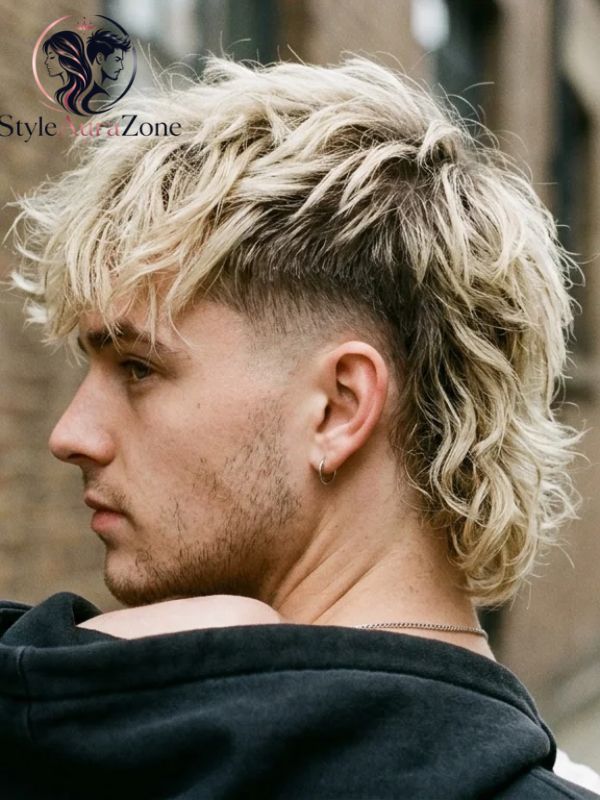
Bleached or naturally light hair makes the fade-to-length contrast pop. Burst and skin fades look especially vivid. Bleach dries strands, so plan a weekly deep conditioner and go easy on heat tools. Purple shampoo keeps brassiness away.
Permed Modern Mullet Fade
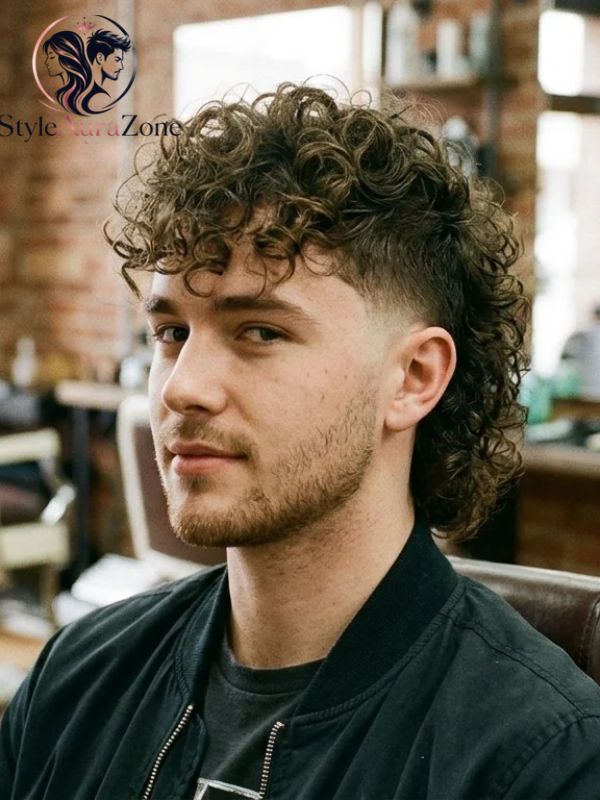
A light perm adds curl to straight hair, giving the back bounce and shape. Many guys love how it pairs with tapered sides. Treat permed hair gently. A sulfate-free shampoo and a dab of curl cream keep ringlets springy.
Fluffy Modern Mullet Fade
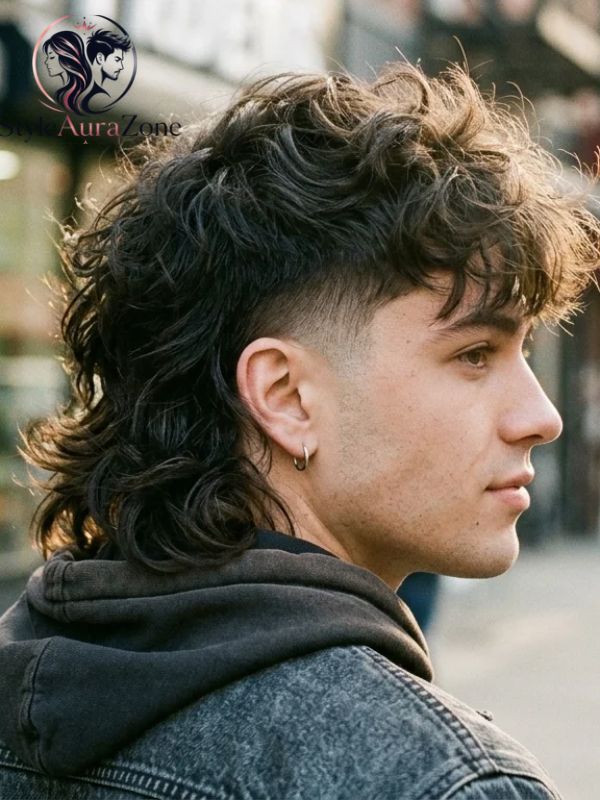
Volume is the whole point here. Blow-dry the top upward with a round brush, then work in a light mousse. Faded sides keep the poof from looking oversized. The finished look sits soft and airy, like a throwback with cleaner edges.
Modern Mullet Drop Fade
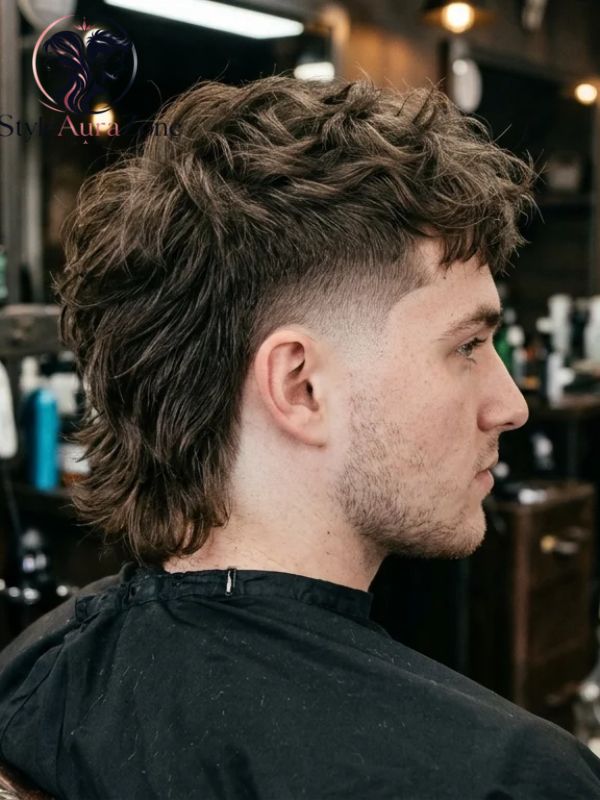
A drop fade curves downward behind the ear, tracing the descending line of the mullet itself. That arc echoes the hair’s flow and looks great from the back and side. Ask your barber to let the fade dip toward the nape.
Modern Mullet Shadow Fade
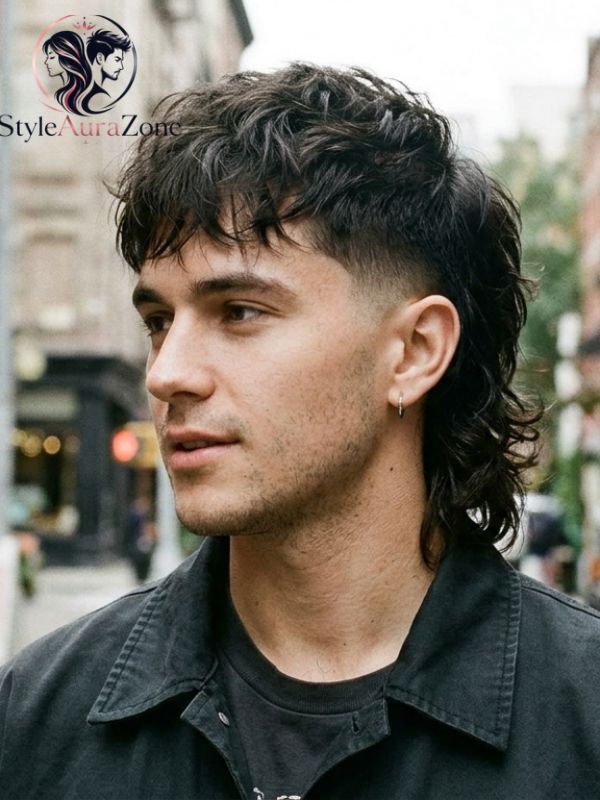
A shadow fade leaves a faint darkness on the sides instead of bare skin. The blend looks soft and smoky. Sharp edges disappear, which makes regrowth less obvious. It’s a nice middle ground if skin fades feel too stark.
Modern Mullet Temple Fade
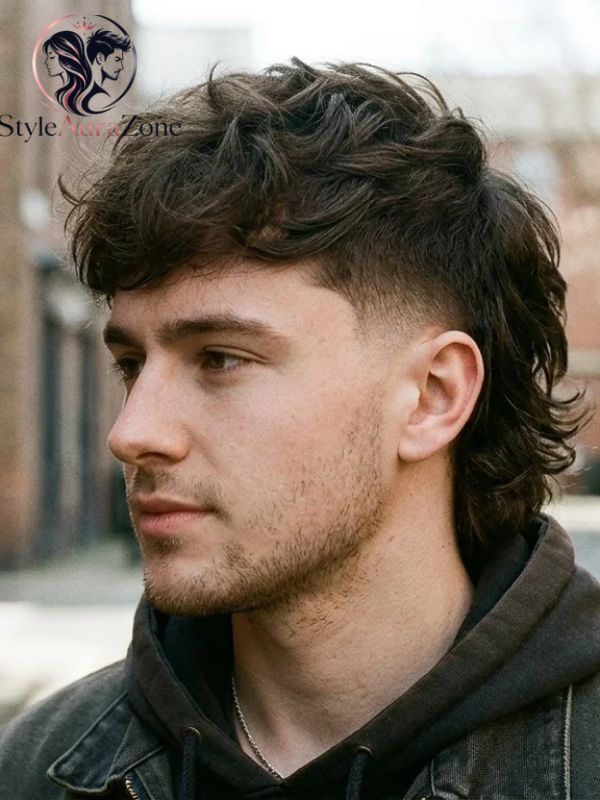
This cut zeroes in on the temples and sideburns while the top and back stay full. Hairline edges turn crisp, which sharpens the whole face. It suits coily and textured hair well, and a clean edge-up finishes the look.
Modern Mullet Fade With Beard
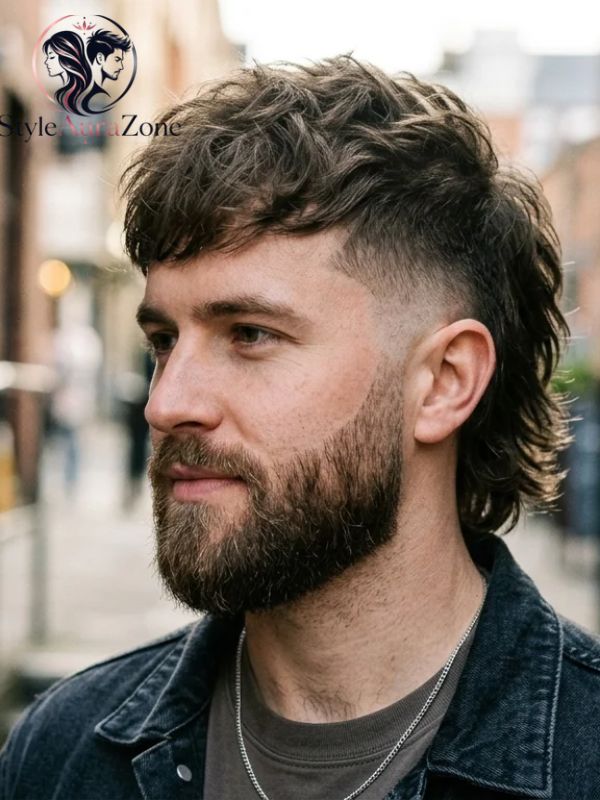
A beard ties the fade into the jawline. Blend the sideburns into the beard for a seamless transition. Match the beard to your mullet’s energy: tidy for polished looks, fuller for rugged ones. Beard oil keeps dryness and itch in check.
Best Face Shapes for a Modern Mullet Fade
Most faces can wear this cut. The trick is adjusting fade height, top volume, and back length to balance your proportions.
Oval Face
Oval faces handle nearly every version. Burst, taper, fringe, or skin fade all work without much tweaking. You have room to experiment, so choose based on hair type and lifestyle rather than face shape.
Round Face
Add height on top and pick a mid or high fade to create vertical lines. Skip heavy volume at the sides. A textured crown with a V back helps elongate the overall shape.
Square Face
Soft layers and a textured fringe balance a strong jaw. A taper fade keeps the sides gentle instead of adding more angles. Avoid blunt, razor-straight lines that echo the jawline.
Long Face
Long faces need width, not extra height. Keep some fullness at the sides with a low fade or taper, and consider a fringe to shorten the forehead. Skip tall quiffs on top.
Heart-Shaped Face
A fuller back and nape balance a narrow chin. Medium to long mullet lengths with a low or taper fade work nicely. Side-swept or middle-part fringes soften a wide forehead.
How to Ask Your Barber for a Modern Mullet Fade
“Mullet fade” means different things in different chairs, so specifics matter. Break your request into four parts and bring a reference photo. For numbers,suggests a #1 or #2 guard on disconnected sides, with several inches left on top and a bit more in back.
| Detail | What to Tell Your Barber |
| Fade type | Low, mid, high, taper, burst, drop, or skin |
| Top length | Short, medium, or long (use inches) |
| Back length | Collar, mid-neck, or shoulder |
| Finish | Textured, layered, V back, fringe, or a line design |
Sample script: “I’d like a mid taper fade on the sides, about three inches on top with texture, and the back just past my collar. Please keep it layered and cut a slight V at the nape.”
How to Style a Modern Mullet Fade
Good styling takes about five minutes. The goal is texture and shape without a stiff, shiny finish.
Modern Mullet Fade Tutorial
- Towel dry first. Aim for damp, not dripping. Product grips better on slightly wet hair.
- Warm a pea-sized amount of cream or paste. Rub it between your palms.
- Work it through the top and back. Keep the faded sides clean.
- Dry the crown upward. A blow dryer on medium heat adds lift. Skip this step for a flatter, natural look.
- Shape the back with your fingers. Pull it into a V or leave it feathered.
- Finish with light texture spray on top. It locks shape without stiffness.
What Products Should I Use to Style a Mullet Fade?
Matte products work best. They add grip without that wet-look shine.
| Hair Type | Best Product | Why It Works |
| Straight | Sea salt spray or matte paste | Adds grit to slick strands |
| Wavy | Texturizing cream | Defines waves without weight |
| Curly | Curl cream plus diffuser | Reduces frizz and holds shape |
| Fine | Volumizing powder | Lifts roots, adds body |
| Thick | Matte clay | Controls bulk and shapes layers |
How to Maintain a Modern Mullet Fade
Two zones need different care. The faded sides grow out fast. The longer back grows slowly and rewards patience.
Is a Mullet Fade Hard to Maintain?
Not hard, but it asks for more attention than a basic cut. You must keep the fade sharp and manage the back at the same time.
How Long Does a Modern Mullet Fade Last?
Fades look crisp for roughly two to three weeks. The longer back can usually go six to eight weeks between trims.
How Long Does It Take to Cut a Mullet Fade?
Expect about 30 to 45 minutes in the chair. Detail work on the fade, top, and nape adds time over a standard cut.
| Area | Trim Frequency | Notes |
| Fade and edges | Every 2–3 weeks | Skin fades need the most upkeep |
| Taper or low fade | Every 3–4 weeks | Grows out gracefully |
| Top | Every 6 weeks | Keeps balance with the sides |
| Back and nape | Every 6–8 weeks | Trim ends to prevent splits |
A small detail trimmer helps clean the neckline and ears between visits.
Modern Mullet Fade Comparison: Top Options at a Glance
| Fade Type | Where It Starts | Best Face Shape | Best Hair Type | Barber Visit | Vibe |
| Burst | Curves around ear | Oval, round | Curly, wavy | Every 3–4 weeks | Bold, shaped |
| Low | Just above ear | Oval, square | Straight, wavy | Every 3–5 weeks | Subtle, office-safe |
| Taper | Sideburns, nape | Square, long | All types | Every 4–6 weeks | Soft, natural |
| Mid | Temple area | Oval, heart | Medium to thick | Every 3 weeks | Balanced |
| High | Upper head | Round, long | Thick | Every 2–3 weeks | Dramatic |
| Skin | Down to skin | Oval, round | Thick, straight | Every 2 weeks | Sharp, clean |
| Drop | Curves behind ear | Oval, heart | All types | Every 3 weeks | Flowing |
| Shadow | Blurred, not bare | Square, oval | Wavy, straight | Every 3–4 weeks | Smoky, soft |
| Temple | Around temples | Oval, long | Coily, textured | Every 2–3 weeks | Edgy, precise |
Best starting point: A taper or low fade gives the cleanest silhouette with the least upkeep.
Is the Mullet Still in Style in 2026?
Yes. Barber-led roundups such as, still call it one of the most fashionable cuts around. Paired with fades, layers, and texture, the mullet looks current rather than costume-y, and every cut above proves how many versions you can wear.
FAQ’S
Is a Modern Mullet Fade Good for Straight Hair?
Yes. Straight hair shows off the mullet’s length and line clearly. Fringes and center parts look especially clean.
What Fade Is Best for a Modern Mullet?
A burst fade is a favorite pairing, while low and taper fades suit a subtler everyday look.
Is a Mullet Fade Good for a Round Face?
Yes. Add height on top and choose a mid or high fade to lengthen the face.
Does a Mullet Work With Curly Hair?
Yes. Curls add volume and texture to the back, giving the cut extra character.
Can a Mullet Fade Be Short?
Yes. Keep the top and back close to the sides for a subtle, low-maintenance version.
Conclusion
A modern mullet fade works because it flexes. Change the fade height, tweak the texture, or shorten the back, and you get a different cut each time. Start with a taper or low fade if you feel unsure. You can always go bolder at the next visit. That freedom is the appeal.
Great results come from three habits: a clear barber request, a light styling routine, and regular trims. Book fade touch-ups every few weeks and let the back grow on its own schedule. Bring a photo to every visit. Follow those habits, and your mullet will look deliberate, current, and completely yours.