
A mid taper fade haircut sits right between a low fade and a high fade. It starts at your temple line and blends down smoothly. This cut removes bulk on the sides while keeping length on top. Men love the mid taper fade haircut because it works with almost any hair type. Straight, wavy, curly or thick hair all look sharp with this style.
The mid taper fade haircut also suits every face shape. It frames your features without looking too bold or too plain. You get clean sides and a long top you can style your way. That’s why barbers recommend the mid taper fade haircut so often. It’s sharp, simple and easy to maintain.
What Is A Mid-Taper Fade For Long Hair, And How Long Should The Top Be?
A mid taper fade haircut blends short sides into a long top. The fade starts at your temple, right where your ear meets your head. From there, it gradually shortens down to the neckline.
Your top hair should stay long, usually four to six inches or more. That gives you room to style it however you like. Short sides won’t hold you back.
This combo works so well because it removes bulk without losing length. You keep the volume up top and skip the shapeless, overgrown look on the sides.
What Is A Mid Taper Fade For Long Hair?
Think of the mid taper fade haircut as the middle ground. It’s not as bold as a high fade, and it’s not as quiet as a low one. It sits right between the two.
The fade begins near your temple, roughly where your ear line starts. From there, your barber blends the length down toward your neck using a few different clipper guards.
This balance is what makes long hair sit right. Your sides stay sharp and clean, while your top keeps all its length and flow for whatever style you want.
Where Does The Mid Taper Start On The Head?
Find where your ear attaches to your head. That’s your temple line, and it’s exactly where the mid taper fade haircut begins its work.
From that point, the fade splits in two directions. It blends upward toward your long top hair, and it fades downward toward your neckline for a clean finish.
Your barber will use several guard sizes across roughly two to three inches of space. That’s what creates a smooth gradient instead of a harsh, choppy line.
Mid Taper Vs Low Taper For Long Hair
A low taper starts just above your ear. It’s subtle, quiet, and barely noticeable, which some guys prefer for very formal settings.
A mid taper fade haircut starts higher, right at the temple. It creates more contrast, so your long hair on top looks fuller and better defined against the sides.
| Feature | Low Taper | Mid Taper |
| Starting Point | Just above ear | Temple line |
| Contrast | Subtle | Balanced, noticeable |
| Best For | Max length retention | Definition and shape |
| Touch-Up Frequency | Every 3–4 weeks | Every 2–3 weeks |
Why The Mid Taper Fade Works Specifically For Long Hair
Long hair tends to grow into a triangle shape without help. Side volume builds up fast, and it can make your whole head look wider than you want.
A mid taper fade haircut fixes that problem at the source. It strips away the bulk on the sides while leaving your top completely untouched and full of length.
The result feels intentional, not overgrown. You get clean structure below and total freedom above, so your hair actually looks styled instead of just long.
1. Bulk Reduction Without Length Loss
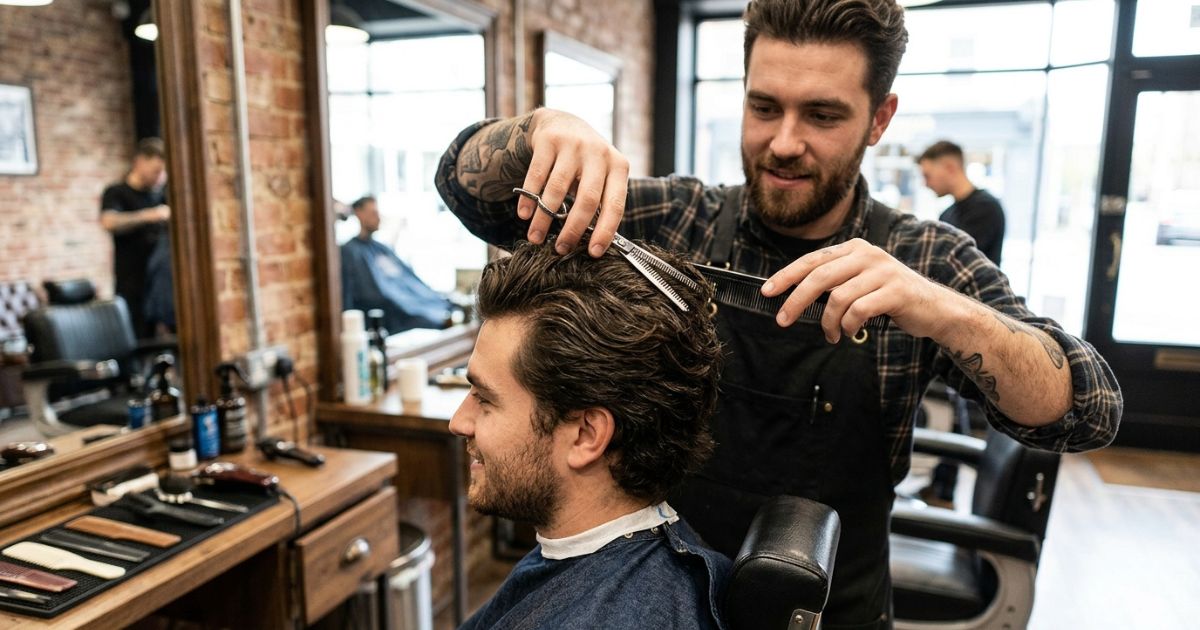
Your barber tapers the sides from a heavier guard near the temple down to a close cut at the neck. That single move removes most of the extra weight.
Nothing on top gets touched during this process. You keep every inch of length exactly where you want it, while the sides do all the heavy lifting.
It’s a trade you’ll actually notice. Less bulk below means your long hair on top reads as fuller, thicker, and way more deliberate.
2. Visual Frame And Focus

Clean, faded sides work like a picture frame around your face. They draw attention straight up toward your longer hair instead of getting lost in bulk.
This is why a mid taper fade haircut pairs so well with buns, slicked styles, and flowing curtains. The frame does the work so your top hair gets to shine.
Without that frame, long hair can look flat or shapeless. With it, even a simple style suddenly looks pulled together.
3. Scalp Health And Airflow

Short sides mean better airflow across your scalp. That matters more than most guys realize, especially once your hair starts holding heat and moisture.
Less trapped sweat means less buildup, less itchiness, and a lower chance of dandruff creeping in over time. Your scalp genuinely breathes easier.
If you work out often or live somewhere hot and humid, this benefit alone might be worth the cut. Comfort counts.
4. Maximum Styling Flexibility
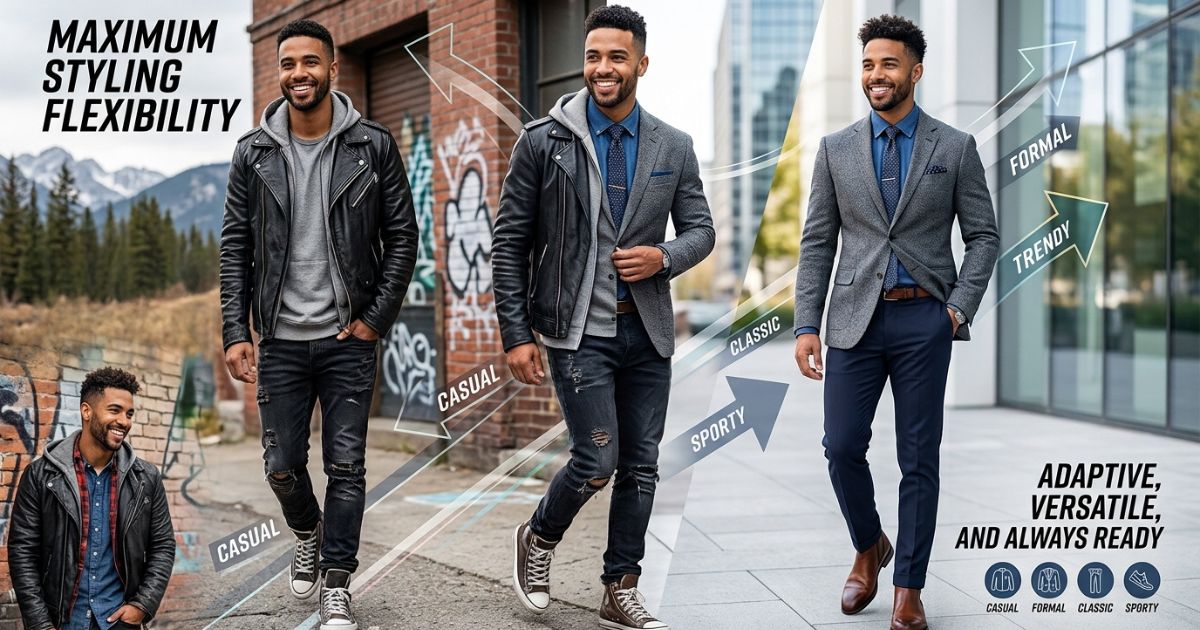
A mid taper fade haircut doesn’t lock you into one look. You can wear your hair down, tie it back, or slick it flat, and it’ll still work.
Heading to the gym? Throw it in a bun. Got a meeting? Slick it back with pomade. Just relaxing? Let it flow loose and natural.
That range is rare. Most cuts force a choice, but this one adapts to whatever your day actually needs.
How Long Does Your Hair Need To Be On Top?
Four inches is your minimum for a true long-hair mid taper fade haircut. Below that, you’re really working with a medium length instead.
Five to eight inches gives you the most options. That range unlocks buns, curtains, slicked styles, and natural flow without any real limits.
Growing out from short hair takes patience. Hair grows about half an inch monthly, so reaching six inches from scratch takes roughly eight months of no top trims.
28 Mid Taper Fade Long Hair Styles For Men In 2026
Twenty-eight different looks, one solid foundation. Every style below pairs the same clean mid taper with a different way of wearing your long top hair.
Some suit straight hair best. Others were practically made for curls, waves, or coils. Pick based on your texture first, then your face shape second.
Browse through and find the one that feels like you. There’s no wrong answer here, just different flavors of the same great base cut.
1. Mid Taper Fade With Curtain Hair
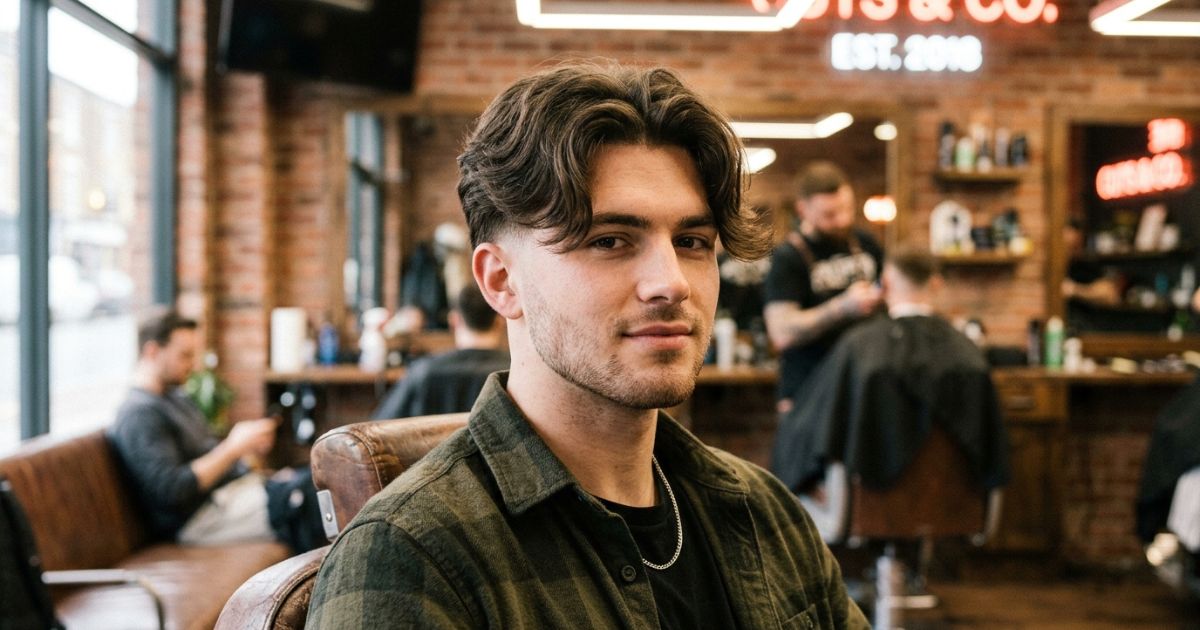
Curtains part down the middle and fall softly on each side of your face. Paired with a mid taper fade haircut, the effect looks clean and intentional.
This style favors straight or wavy hair with medium thickness. It flatters oval, heart-shaped, and square faces especially well, framing them without adding bulk.
You’ll need at least five inches on top for this to work right. Shorter hair tends to look choppy instead of soft and flowing.
2. Mid Taper Fade With Slick Back
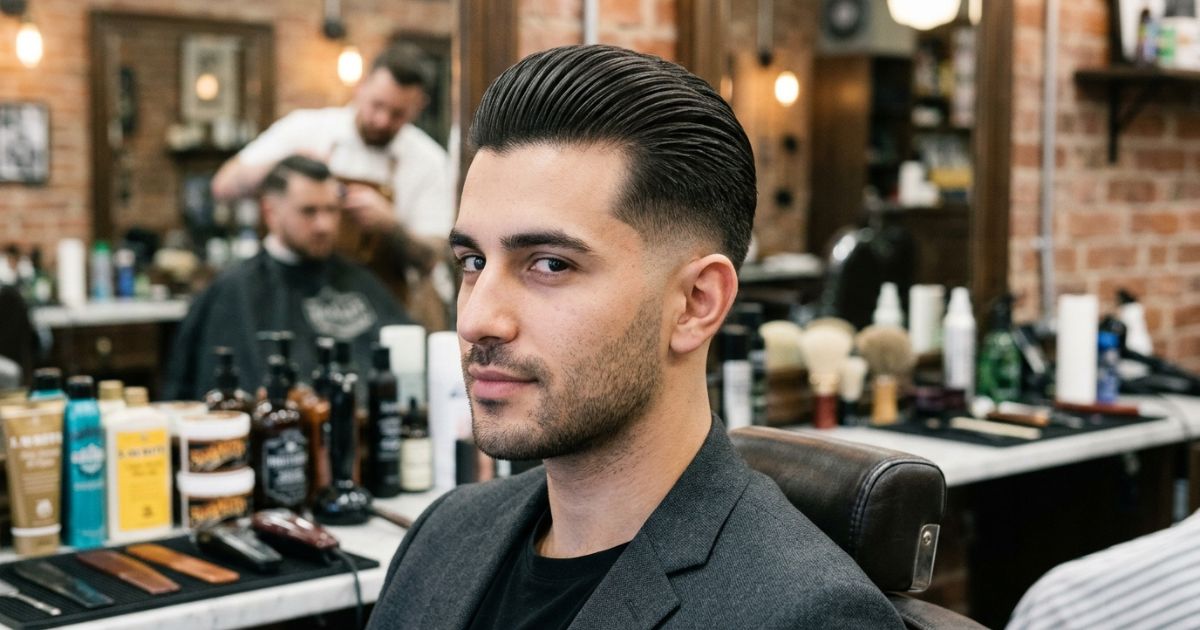
Nothing says polished quite like a slick back. Pomade pulls your top hair straight back, creating a sharp, formal finish that works in any boardroom.
Straight, wavy, and thick hair all take to this style easily. Oval, oblong, and square faces get the best results from the added structure.
Apply pomade to damp hair, comb it back, then blow-dry while brushing. Finish with a cool blast of air to lock everything in place.
3. Mid Taper Fade With Man Bun
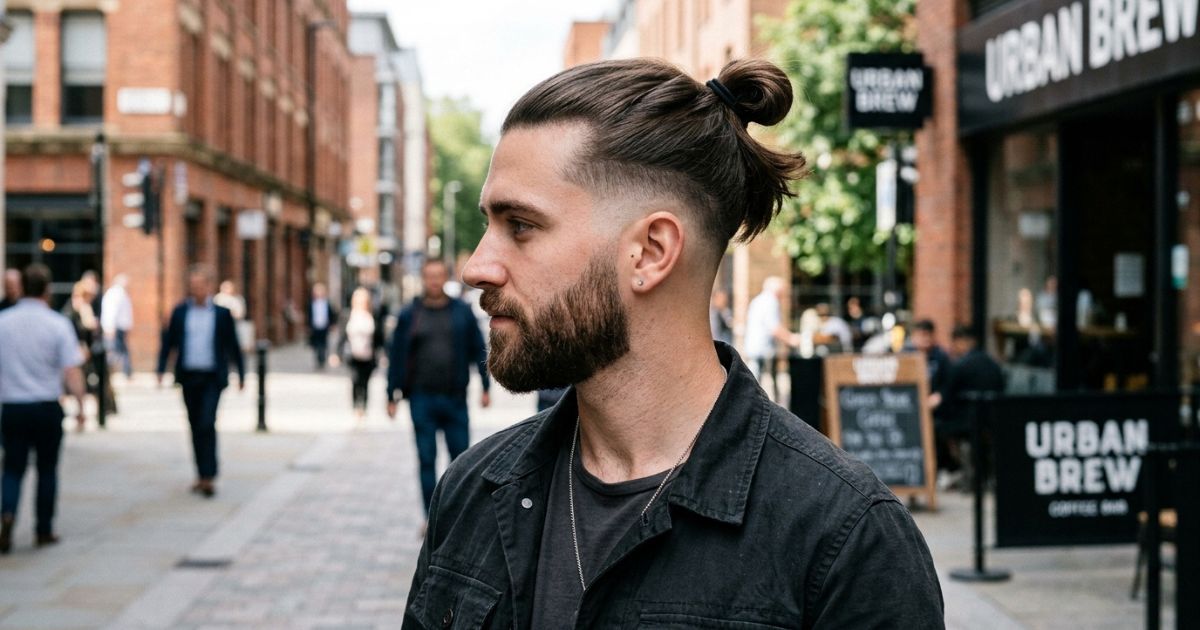
The man bun keeps things practical. Gather your top hair, twist it, and wrap it into a bun while your mid taper fade haircut handles the rest.
Every hair type works here, and every face shape too. It’s genuinely one of the most universal pairings on this entire list.
Use a fabric tie instead of metal to protect your strands. And don’t pull it too tight, your scalp will thank you later.
4. Mid Taper Fade With Wavy Long Hair Flow

Natural waves look their best when they’re left alone. This style keeps five to eight inches on top, letting your waves fall exactly as they grow.
Wavy, medium-to-thick hair suits this look perfectly. Oval, square, and diamond faces pick up the relaxed texture especially well.
Skip the brush once your hair dries. Scrunch in some sea salt spray instead, and let the waves do their own thing.
5. Mid Taper Fade With Curly Long Hair
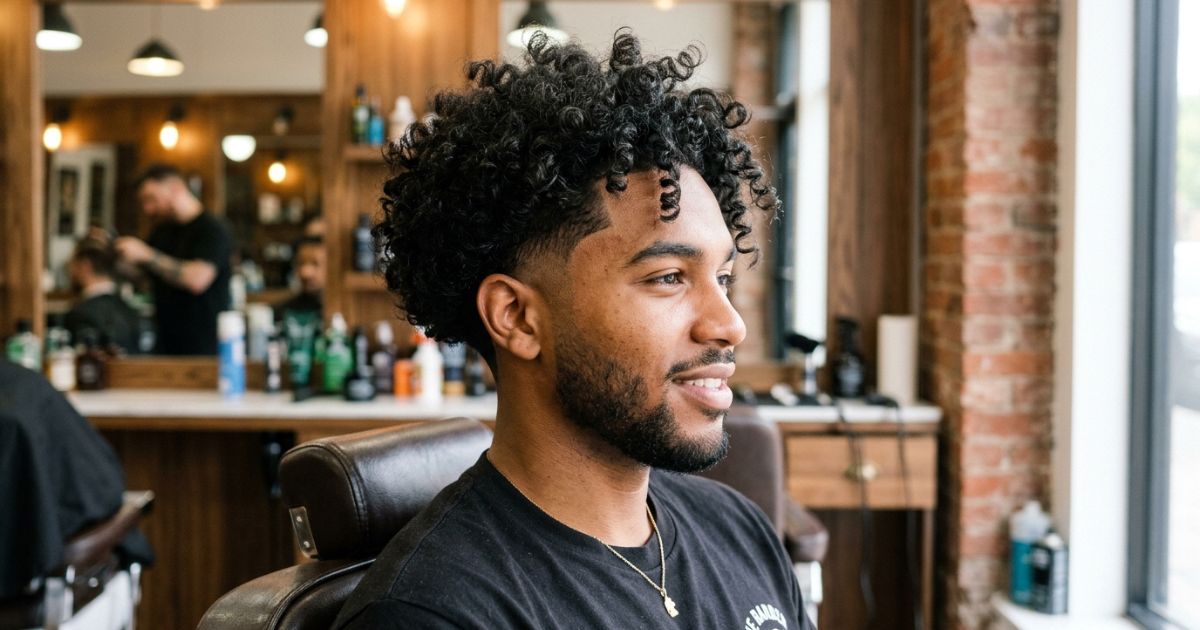
Curls need room to breathe, and this style gives them exactly that. Clean sides frame your natural curl pattern instead of competing with it.
Curly, coily, and afro-textured hair are the natural fit here. Round, diamond, and oval faces balance out beautifully against the curl volume.
Detangle in the shower with conditioner, never dry. Scrunch in curl cream afterward, then let your curls air-dry or diffuse on low heat.
6. Mid Taper Fade With Ponytail
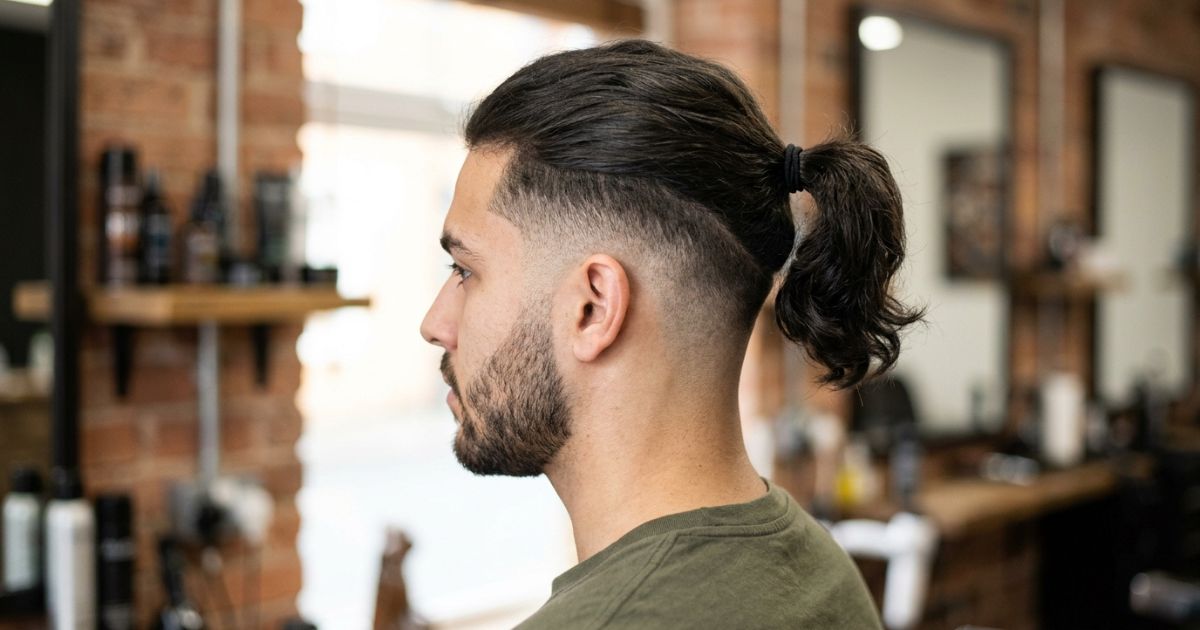
A ponytail keeps hair off your face fast. Pull everything back, secure it low or mid-height, and you’re ready to go in under a minute.
This works for every hair type and every face shape without exception. It’s the low-effort, high-payoff option on this list.
Switch up where you tie it each day. Doing the same spot constantly can weaken strands right at the tie point over time.
7. Mid Taper Fade Mullet (Modern Mullet)
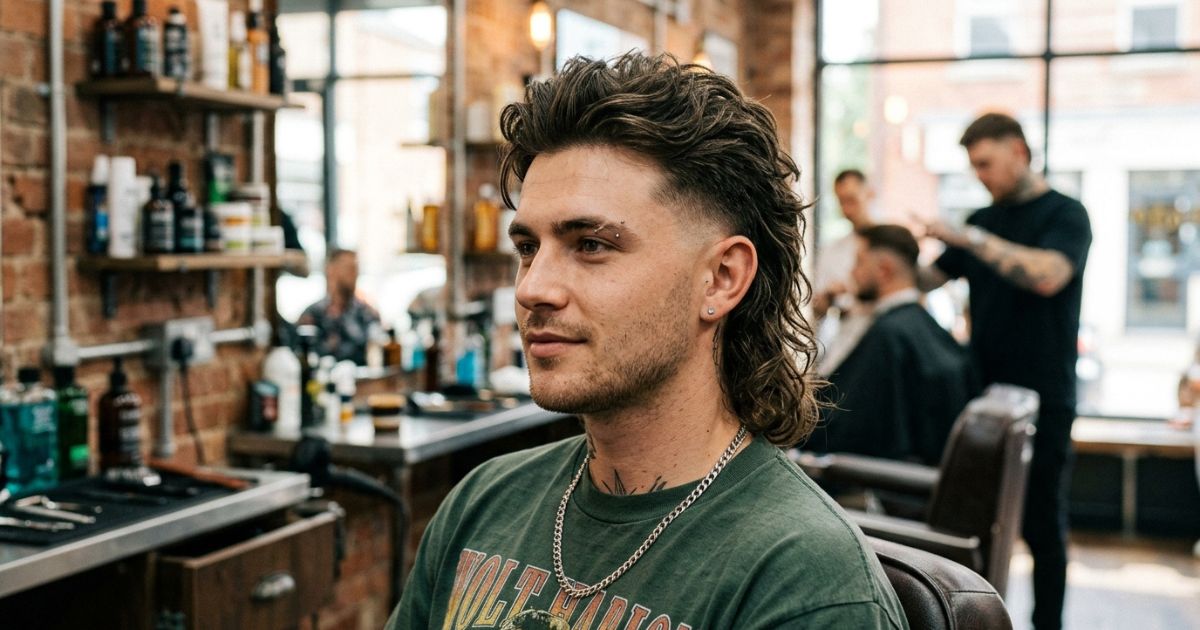
The mullet is back, but sharper this time. Medium-long top hair meets a longer back section, while your mid taper fade haircut keeps the whole thing balanced.
Straight and wavy hair with medium-to-thick density works best. Oval, oblong, and long faces suit the extra length in back.
Apply texturizing paste while hair’s damp, then let it dry loose and messy. This style wants to look a little undone.
8. Mid Taper Fade With Middle Part
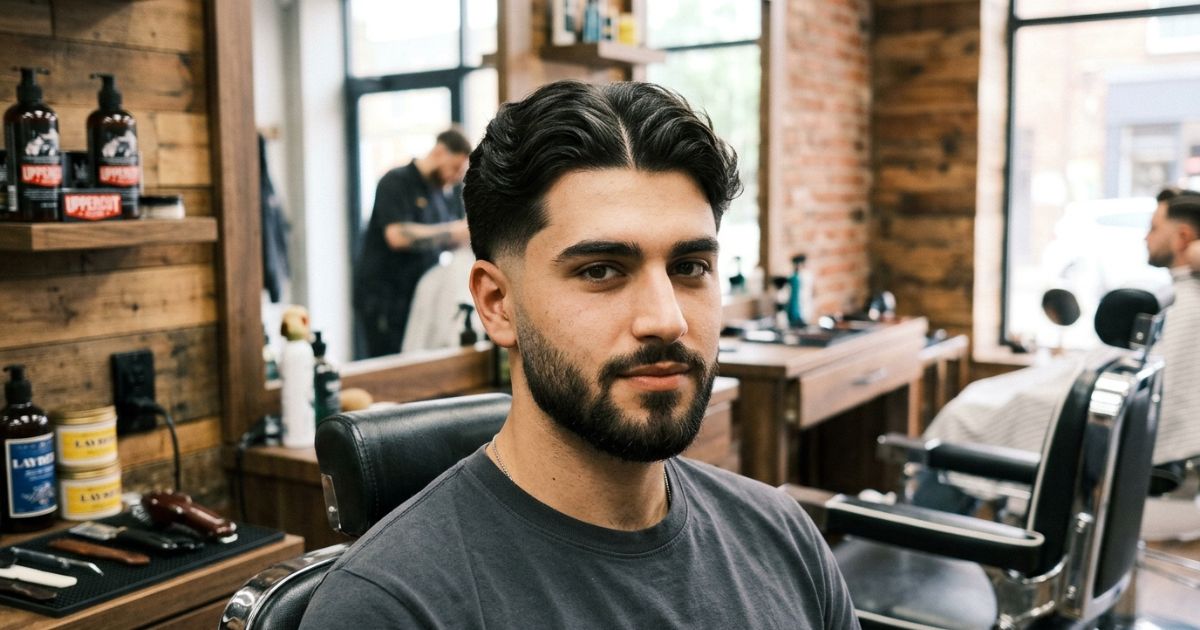
A crisp center part with hair falling to both sides reads as clean and current. Five to seven inches on top gives you enough length to work with.
Fine-to-medium straight or wavy hair takes this style best. Oval and heart-shaped faces get flattered by the symmetrical fall.
Use a rat-tail comb to trace a razor-straight part. Blow-dry each side down and forward, then separate gently with your fingers.
9. Mid Taper Fade With Side Part
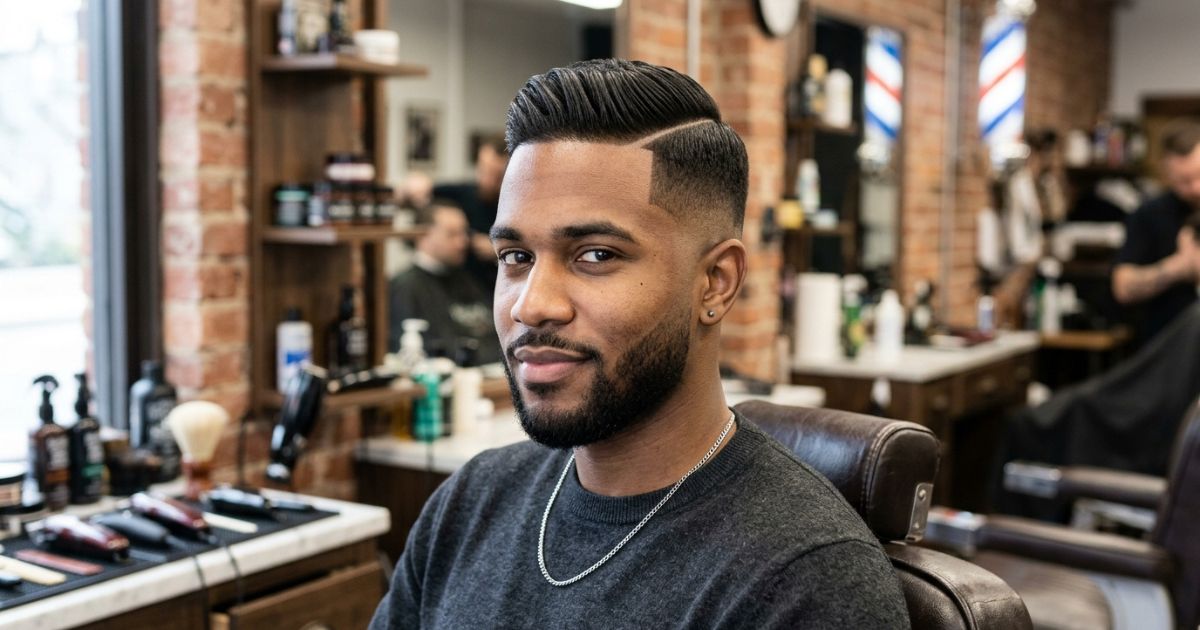
A deep side part adds instant polish. One side carries more volume than the other, creating a look that feels professional without trying too hard.
Straight to wavy hair with medium-to-thick density holds this shape well. Oval, rectangular, and square faces suit the asymmetry nicely.
Comb the larger section across and the smaller section back. Round-brush it while blow-drying, then set with a light hairspray.
10. Mid Taper Fade With Long Textured Fringe
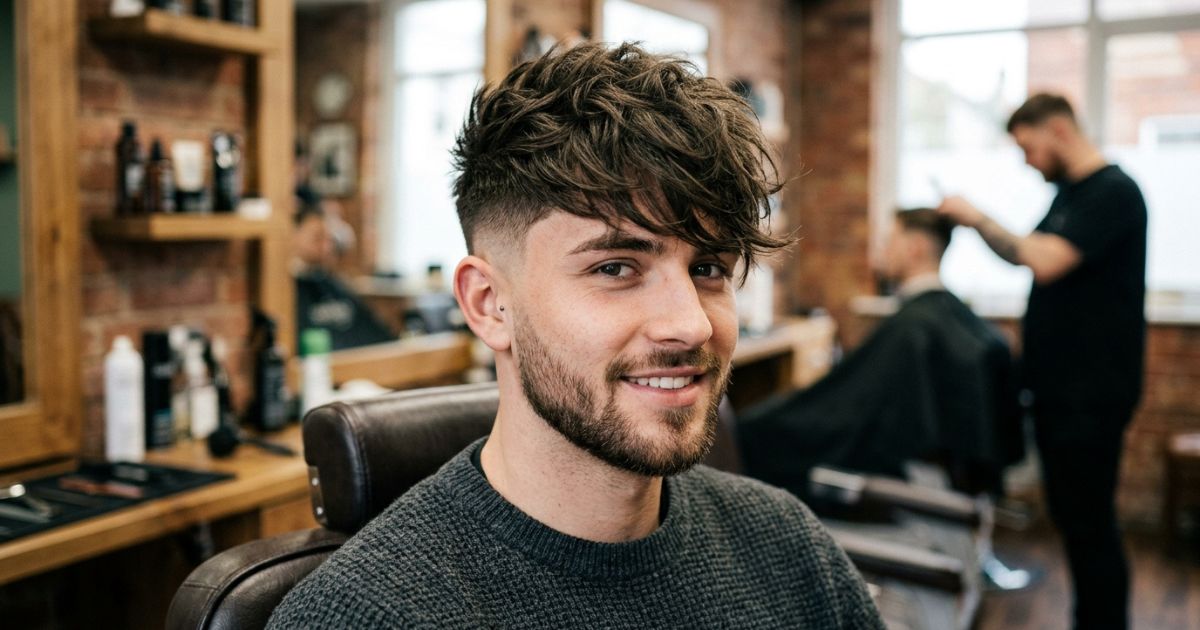
A forward fringe with point-cut texture brings movement to the front. Five to seven inches gives it enough weight to fall naturally over your forehead.
Straight or wavy medium-density hair works best here. Oval, square, and diamond faces balance well against the forward-swept front.
Ask your barber for point-cutting specifically. Without it, a long fringe can flatten out into something closer to a helmet than a hairstyle.
Learn more:Low Taper Fade Curly Hair: 50 Best Styles (2026)
11. Mid Taper Fade With Quiff
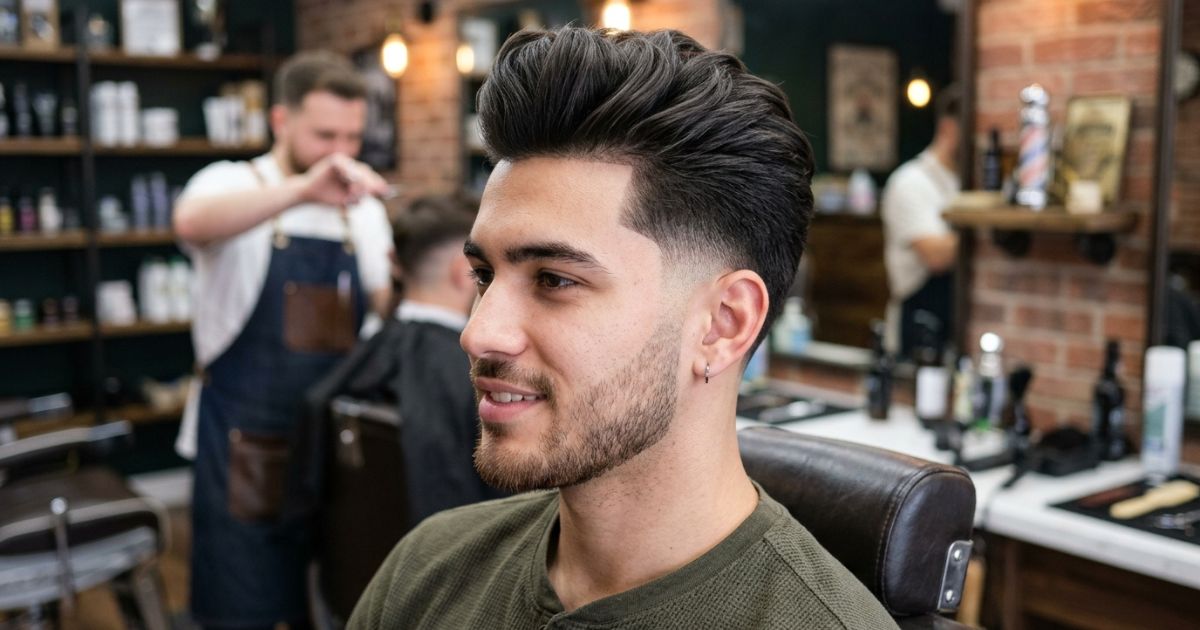
A quiff adds height right up front. Your barber blows the front section up and slightly back, creating lift that plays nicely against your mid taper fade haircut.
Straight, wavy, or thick hair holds a quiff shape well. Round, square, and oval faces benefit most from the added vertical height.
Style hair while it’s damp, not soaked or dry. That’s the window where it’s most workable and easiest to shape.
12. Mid Taper Fade With Pompadour
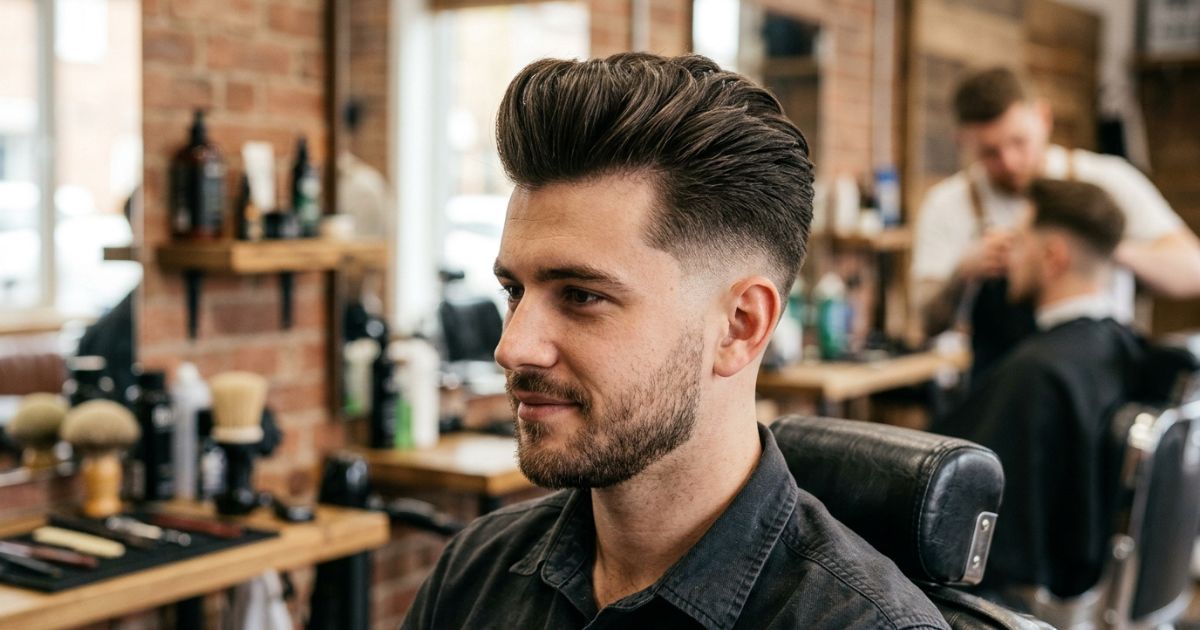
The pompadour takes the quiff idea and turns the volume all the way up. Hair sweeps upward and back for a bold, structured finish.
Straight or thick hair suits this look best. Round, square, and oval faces gain the most from the dramatic height.
Plan for daily upkeep here. A strong-hold gel and about ten minutes each morning will keep the shape standing tall.
13. Mid Taper Fade With Messy Textured Flow

This one’s for guys who want long hair that looks effortless. Layers and point-cutting create movement, even though there’s real technique behind the “messy” look.
Wavy or straight hair at medium density works well. Oval, square, and diamond faces suit the loose, textured finish nicely.
Let hair air-dry after applying a matte paste. Skip the brush entirely, and just tousle with your fingers once it’s dry.
14. Mid-Taper Fade With Comb-Over
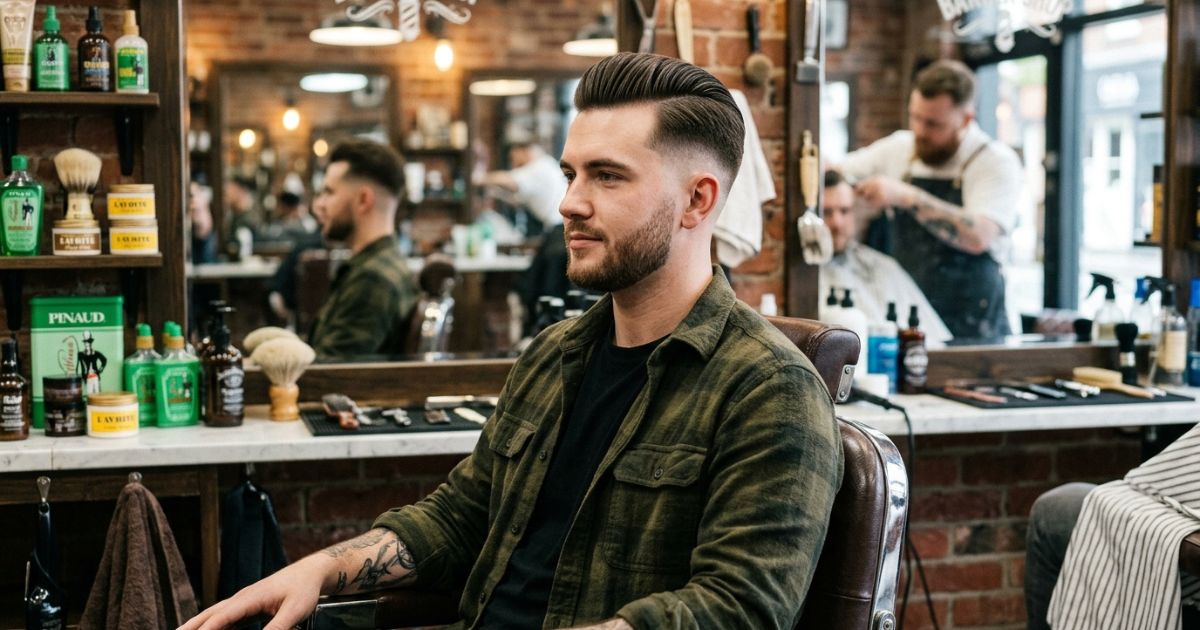
A comb-over sweeps all your top hair to one side. Combined with clean sides, it reads as sharp, business-ready, and easy to maintain.
Medium-to-thick straight hair suits this look most. Oval, rectangular, and oblong faces pick up the smooth, side-swept volume well.
Comb toward the direction your hair naturally falls. Fighting your natural part usually means fighting your style all day long.
15. Mid Taper Fade With Dreadlocks (Locs)
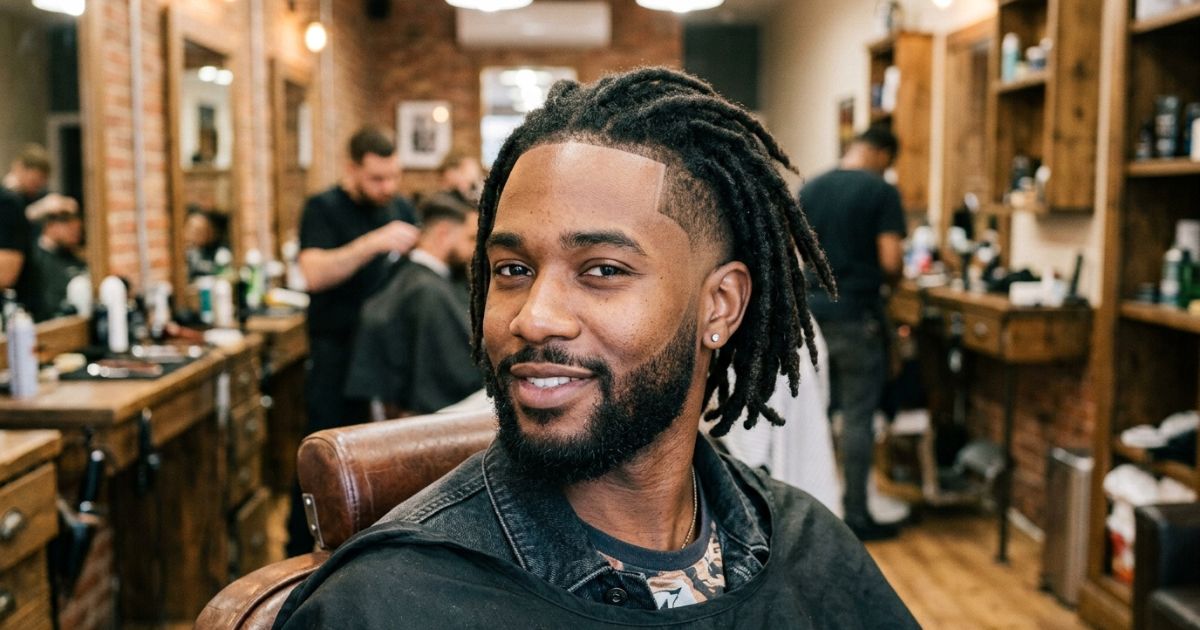
Locs bring length and texture that’s entirely their own. Whether you tie them back or let them hang, your mid taper fade haircut keeps the sides sharp underneath.
This style is built for coily and afro-textured hair. It suits every face shape without much adjustment needed.
Retwist new growth every four to six weeks. Be specific with your barber about exactly how high you want that fade to sit.
16. Mid Taper Fade With Box Braids
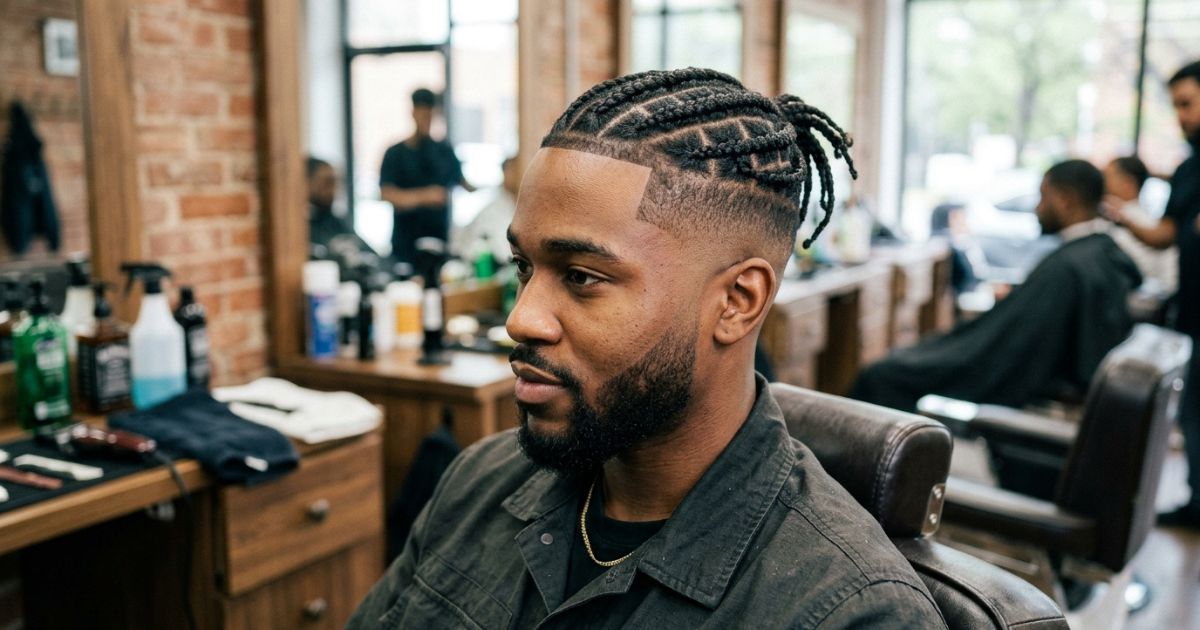
Box braids install cleanly on top while your fade handles everything below. It’s a low-maintenance combo that holds its shape for weeks at a time.
Coily and afro-textured hair works best for this style. It also flatters every face shape without much fuss.
Keep braids moisturized with a light spray or oil. Sleep with a satin wrap to protect both the braids and the fade underneath.
17. Mid Taper Fade With Long Afro
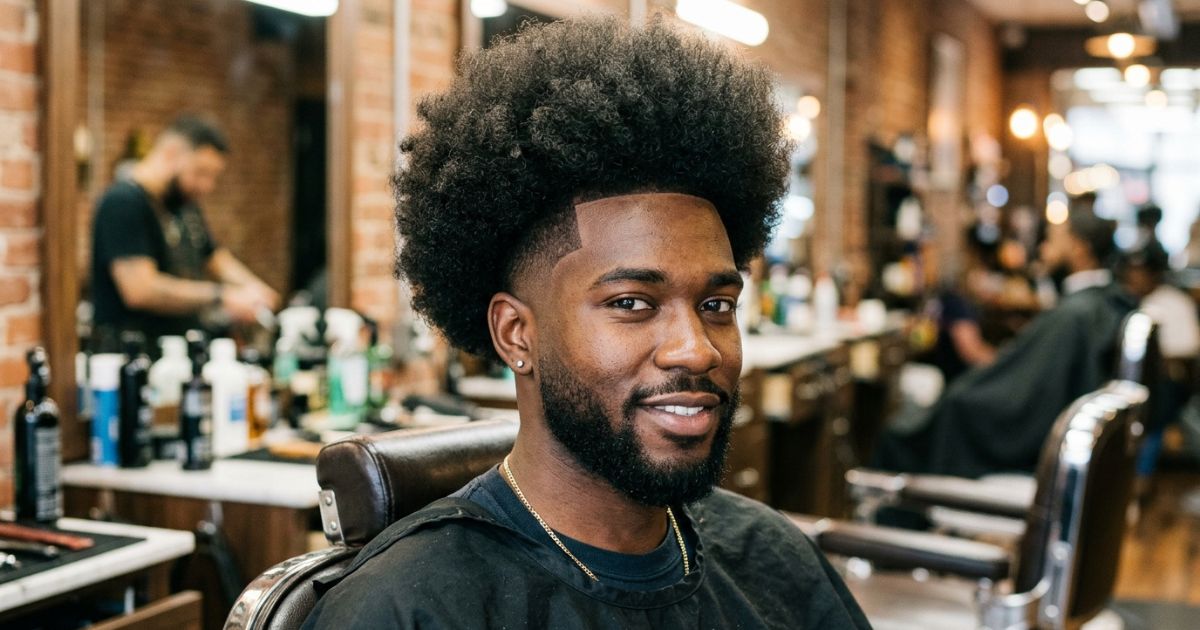
An afro on top paired with faded sides is sometimes called a temp fade, and for good reason. It’s one bold, striking combination.
Coily and tight-curl hair suits this look naturally. Round, oval, and diamond faces balance especially well against the volume up top.
Detangle with a wide-tooth comb or afro pick while hair’s wet. Use that same pick daily to lift and shape your volume.
18. Mid Taper Fade With Blow Back
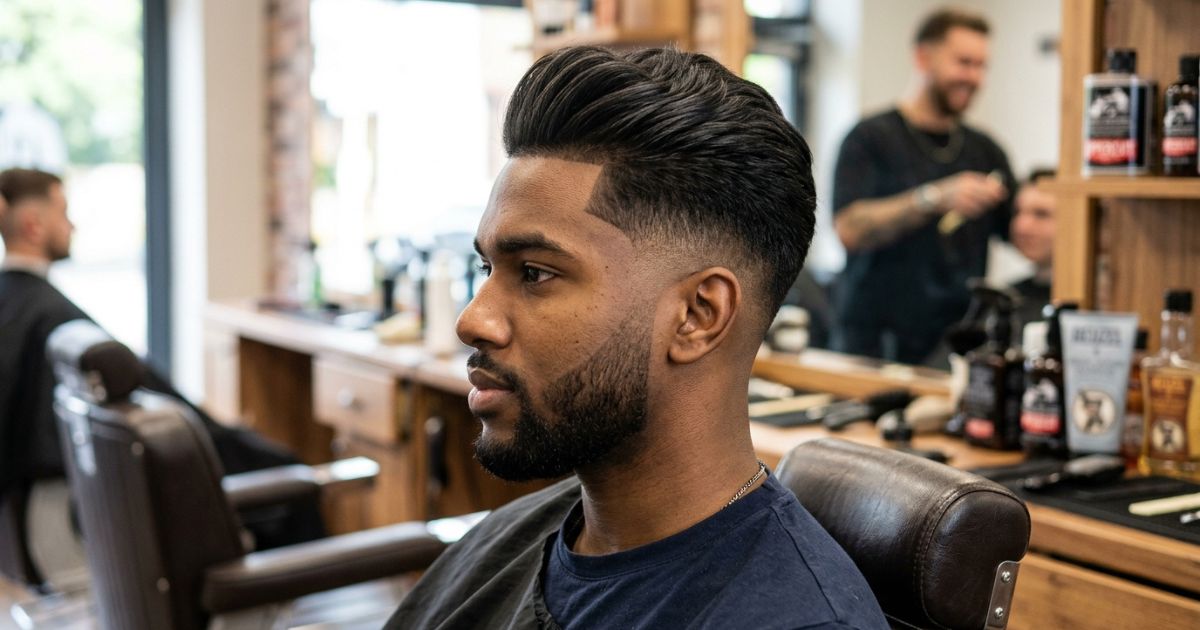
Blow back styling pushes hair up and away from your face. It reads as windswept and a little more relaxed than a full pompadour.
Thick, straight, or wavy hair takes this shape well. Oval, square, and oblong faces gain the most from the added lift.
Direct your dryer from front to back while lifting at the roots. Set the shape with a light clay once it’s dry.
19. Mid Taper Fade With Faux Hawk
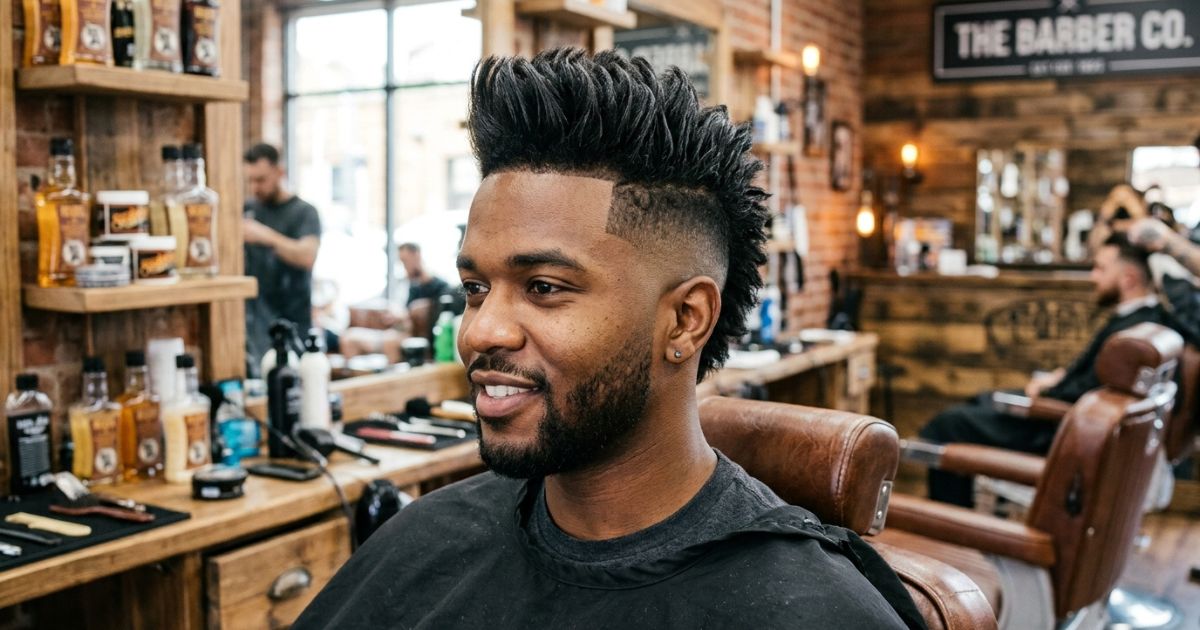
A faux hawk builds height down the center without shaving anything. Your mid taper fade haircut handles the sides while the middle strip stands tall.
Thick, straight hair holds this shape most reliably. Oval, square, and diamond faces suit the bold center focus.
Expect some daily effort here. Strong-hold gel and about ten minutes with a round brush will get that ridge standing right.
20. Mid Taper Fade With Half-Up Style
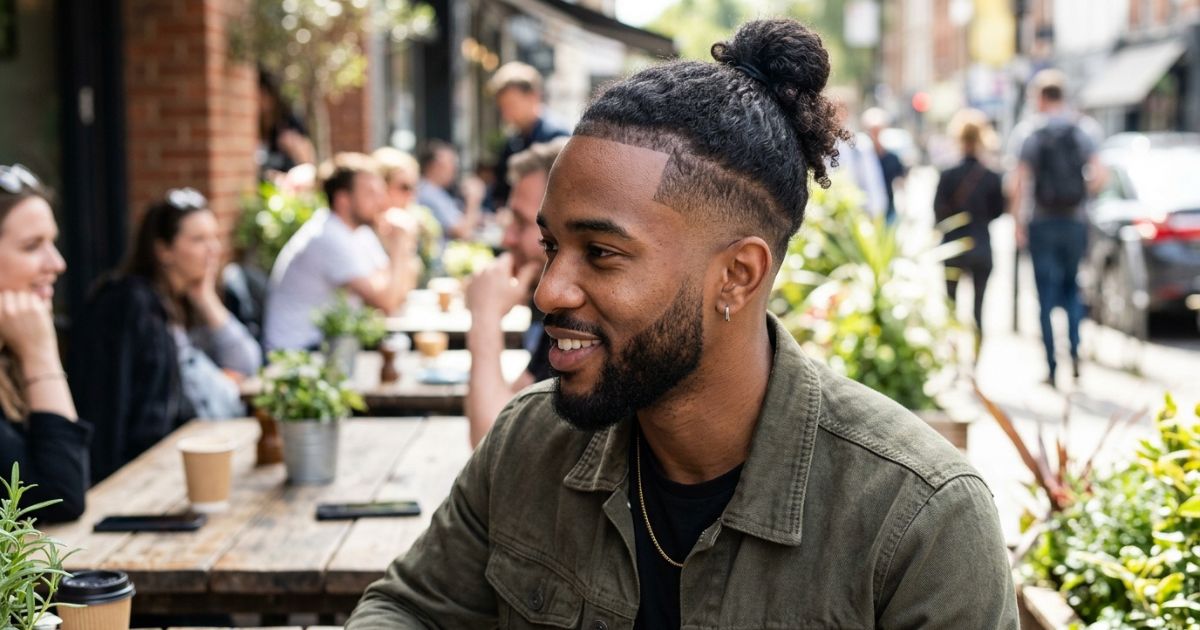
Half-up styling ties back your top section while letting the rest flow free. You get two looks out of one simple style.
Medium-to-thick straight or wavy hair adapts well to this. It suits just about every face shape without much trouble.
Gather just the crown section into a small tie. Leave the rest loose, and add a light sea salt spray for texture.
21. Mid Taper Fade With Side Swept Long Hair
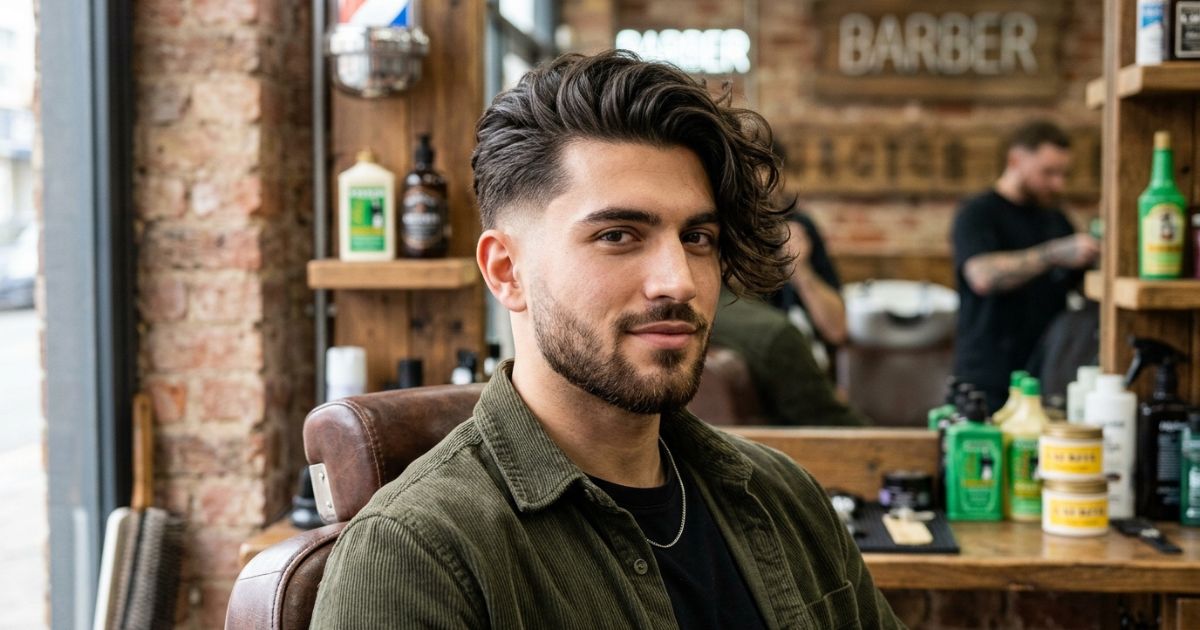
Side-swept hair pushes everything dramatically to one side. It’s bold, a little editorial, and pairs beautifully with a clean mid taper fade haircut.
Straight or wavy hair sweeps most naturally. Oval, heart-shaped, and diamond faces get flattered by the strong asymmetry.
Sweep toward your hair’s natural part line first. Fighting the grain usually means a shorter-lived style by the end of the day.
22. Mid Taper With Drop Fade (Long Top)
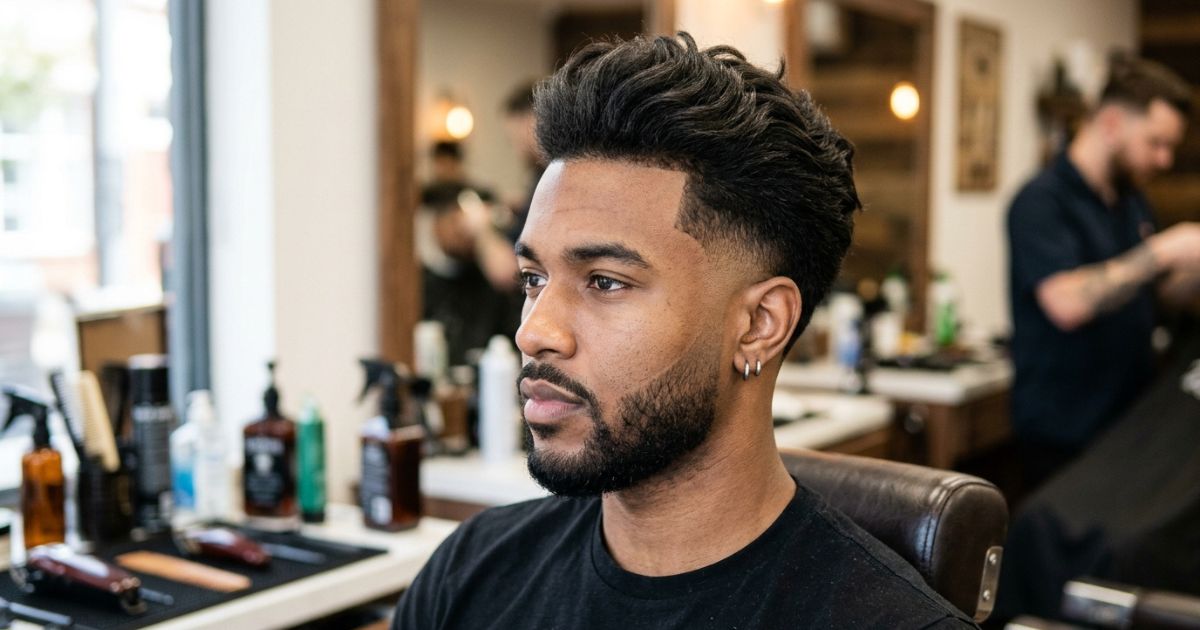
A drop fade curves down behind the ear instead of running straight. It’s a small design detail that makes a noticeable difference in profile.
Nearly every hair type suits this variation, especially curly and wavy textures. Oval, square, and diamond faces pair well with the added shape.
Since the drop fade is mostly structural, style your top however fits your texture best. The fade does its own visual work.
23. Mid Taper With Burst Fade (Long Hair)

A burst fade curves in a half-circle around your ear. It’s named for that bursting shape and takes real skill to execute cleanly.
Curly, coily, and afro-textured hair suit this fade especially well. Oval, round, and diamond faces balance nicely against the curved line.
Find a barber who’s done this cut before. It’s more technical than a standard taper, so experience really shows in the result.
24. Mid Taper Fade With Blonde Long Hair

Color adds another layer of style on top of your cut. A blonde top against a clean mid taper fade haircut stands out in the best way.
Any hair type or density can carry this look. It suits every face shape since the impact comes from color, not shape.
Use purple shampoo weekly to fight brassiness. Deep-condition often too, since color processing leaves hair more fragile than usual.
25. Mid Taper Fade With Permed Long Hair
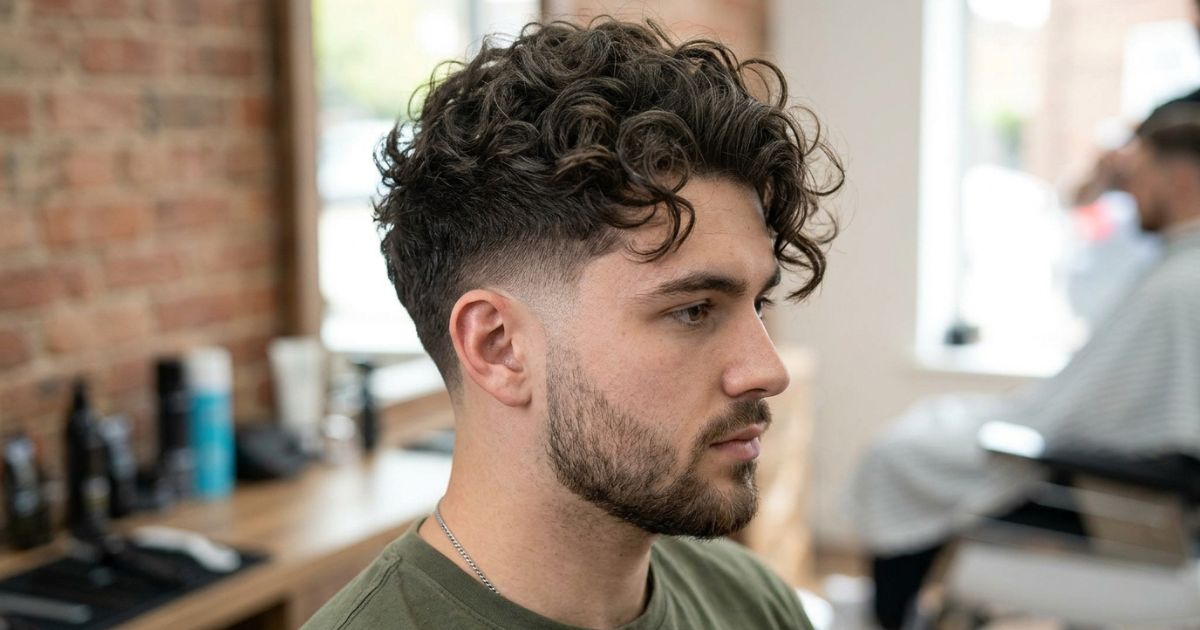
A perm turns straight hair wavy or curly on purpose. It’s a popular pairing with a mid taper fade haircut for guys chasing texture without natural curl.
Naturally straight hair is the ideal starting point here. Oval, square, and heart-shaped faces suit the added texture well.
Skip washing for about 48 hours after your perm. After that, use curl cream and avoid brushing, fingers or a wide comb only.
26. Mid Taper Fade With Highlights (Long Hair)
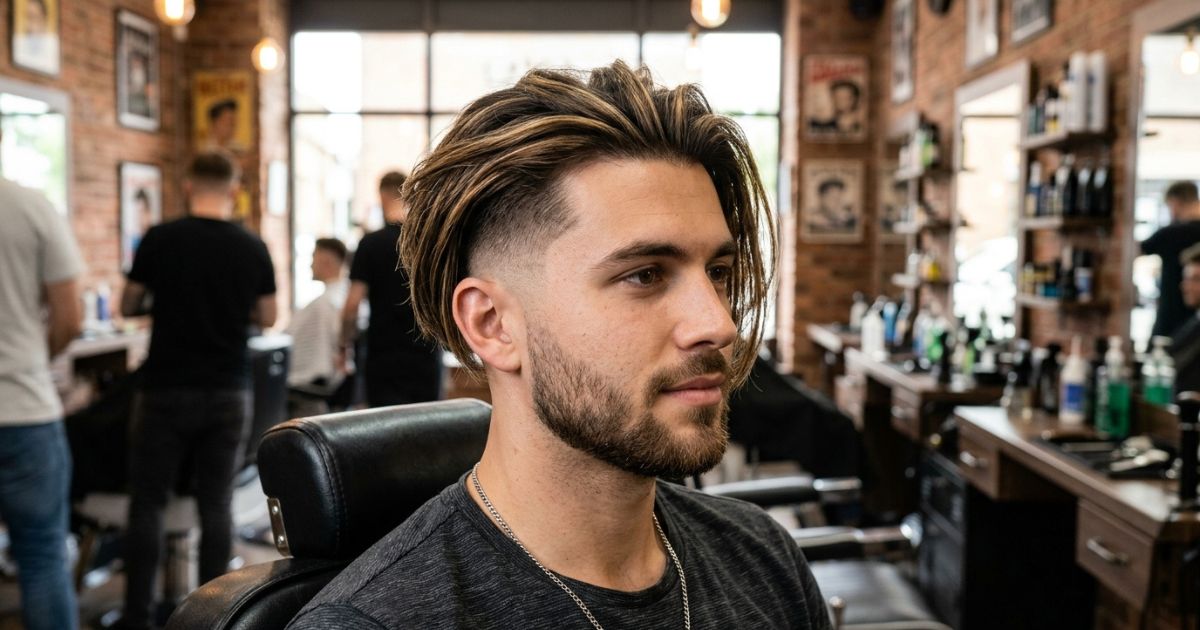
Highlights add dimension without a full color commitment. Lighter streaks catch the light differently as your hair moves throughout the day.
This works across every hair type and face shape. The subtlety makes it more forgiving than a full-color change.
Ask for babylights or balayage for the most natural gradient. Stick with color-safe shampoo to protect the tone between salon visits.
27. Mid Taper Fade With Hard Part (Long Hair)
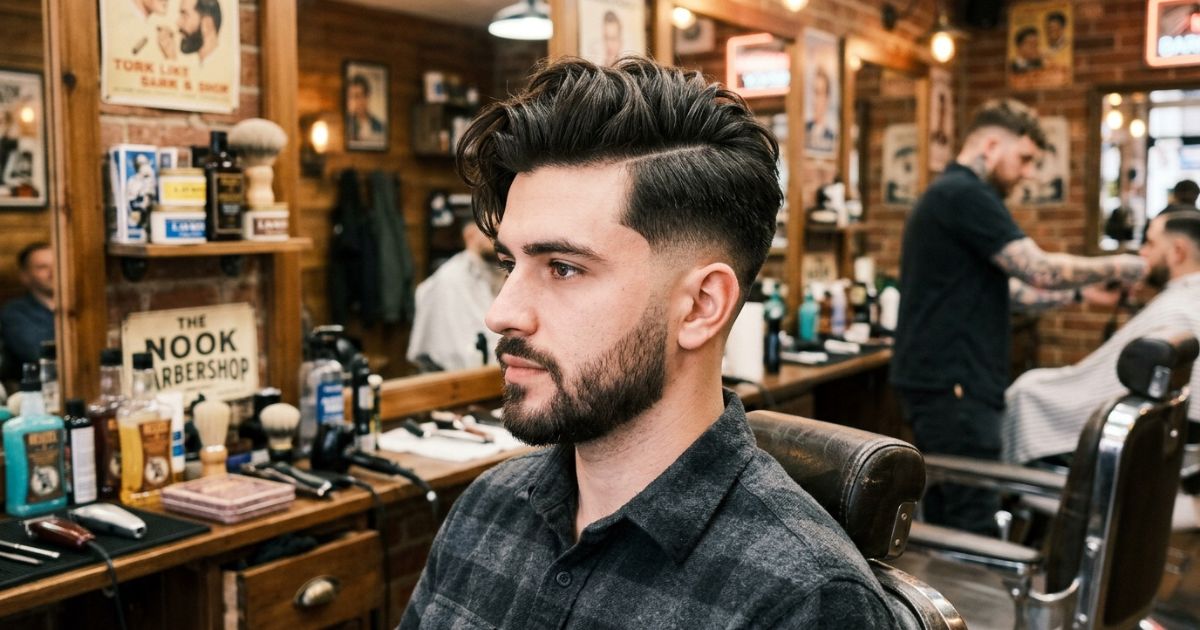
A hard part uses a razor-cut line for a crisp, defined edge. It’s bold, graphic, and adds real structure to a side-styled top.
Straight or wavy hair holds this line best. Oval, square, and rectangular faces suit the sharp geometric detail well.
Expect touch-ups every two to three weeks. The line grows out fast, so upkeep matters more here than with other styles.
28. Mid Taper Fade With Long Hair And Beard Combo

Pairing your cut with a well-groomed beard ties the whole look together. Any top style works, since the beard is doing complementary work below.
This combo suits every hair type and every face shape. A beard genuinely reshapes how any face reads.
Ask your barber to fade the beard directly into your hairline. That seamless connection is what separates sharp from merely “trimmed.”
Mid Taper Fade For Long Hair By Hair Type
Not every texture behaves the same way under a fade. What looks sharp on straight hair might need small adjustments for curls or coils.
Knowing your texture ahead of time saves you a disappointing chair visit. It also helps you talk to your barber with real specifics instead of guesswork.
Below, you’ll find exactly how a mid taper fade haircut performs across the four major hair types, plus what to say when you book your next cut.
Does Mid Taper Fade Work For Straight Long Hair?
Straight hair blends about as smoothly as it gets. It lays flat naturally, so the fade line reads clean without much extra effort from your barber.
This texture handles slick backs, side parts, and curtains especially well. The contrast between fade and top makes straight hair look fuller than it actually is.
Tell your barber you want a scissor-over-comb blend up top. Point-cutting afterward adds a bit of texture so straight hair doesn’t sit flat and lifeless.
Does Mid Taper Fade Work For Wavy Long Hair?
Waves and fades were basically made for each other. Removing side bulk stops your waves from puffing out into a shapeless triangle over time.
Curtains, natural flow, and textured sweeps all look great on wavy hair. The faded sides let your waves move freely without weighing the whole look down.
Use sea salt spray and let hair air-dry or diffuse on low. Brushing dry waves is a fast way to invite frizz you didn’t ask for.
Does Mid Taper Fade Work For Curly Long Hair?
Curls thrive against a clean frame. The fade highlights your natural curl pattern instead of competing with it for attention.
Remember that curls shrink once they dry. Six inches stretched might look like four once curled, so ask your barber to leave extra length on top.
Detangle in the shower with conditioner, never on dry hair. Scrunch in curl cream, then let your curls air-dry or diffuse on low heat.
Does Mid Taper Fade Work For Thick Long Hair?
Thick hair carries a lot of natural weight, and that’s exactly what a mid taper fade haircut is built to manage on the sides.
Slick backs, quiffs, and man buns all suit thick hair especially well. There’s enough natural volume here to fill out even bold, structured styles.
Ask for thinning shears or point-cutting up top. Without it, thick hair can sit heavy and block-like instead of moving naturally.
Best Mid Taper Fade For Your Face Shape
Picking the right variation comes down to balance. The goal is always to make your proportions read as even, no matter your starting shape.
Some shapes want height. Others need width, or softness, or just a bit of visual distraction from a strong jawline.
Match your face shape to the right style below, and your mid taper fade haircut will do more flattering work than you’d expect.
Oval Face
Oval faces are naturally balanced, so almost anything works here. You’ve got the most freedom of any face shape on this list.
There’s no real style to avoid either. Pick based on your hair texture and personal taste instead of worrying about proportions.
Try a quiff, curtains, or a slick back. Honestly, just go with whatever style speaks to you most.
Round Face
Height is your best friend here. A quiff or pompadour adds vertical length, which helps balance out a fuller, wider face shape.
Skip anything flat on top. Curtains or a loose messy flow can add unwanted width right where you don’t need it.
Ask your barber for extra volume at the crown specifically. That lift does most of the visual work for you.
Square Face
Soft and textured beats sharp and structured for square faces. Your jawline already brings plenty of angles, so your hair doesn’t need to compete.
A wavy flow or loose curtain style softens things nicely. Overly precise styles like a hard part can emphasize angularity you might not want.
Lean into texture over structure. Let your natural waves or curls do the softening work for you.
Heart-Shaped Face
Wider foreheads and narrower chins define this shape, so crown volume helps even things out. A quiff or pompadour handles that job well.
Avoid piling volume near your temples. That tends to widen the forehead area even further instead of balancing it out.
Ask your barber to focus lift right at the crown. That’s the sweet spot for this particular shape.
Diamond Face
Narrow forehead, wide cheekbones, narrow jaw, that’s the diamond shape in a nutshell. Volume on top helps soften those pointed extremes.
A blow back or textured flow works especially well here. Sharp, angular designs tend to emphasize the very points you’re trying to balance.
Keep some movement and softness up top. It rounds out the sharper angles naturally without much extra effort.
Oblong / Long Face
Long faces are stretched vertically, so width helps more than height. Side volume and curtain styles balance out the extra length nicely.
Skip tall styles like a pompadour or high quiff. Extra height only stretches an already long face even further.
Curtains or a side sweep are your best bets. They add the horizontal balance this face shape actually needs.
How To Ask Your Barber For A Mid Taper Fade With Long Hair
Bad communication ruins more haircuts than bad barbers do. Walking in with vague instructions is basically asking for a result you didn’t actually want.
A little prep changes everything. Specific language, plus a reference photo, gets you remarkably close to exactly what you pictured.
Below is a simple script you can use word for word. It covers height, length, blend, and finish, so nothing gets left to guesswork.
The Exact Script: What To Say Word For Word
Start with the fade height. Say, “I want a mid taper fade that starts at temple level, not higher,” so there’s zero ambiguity about placement.
Next, specify your top length and blend. Ask for a smooth transition with no visible line, and mention your preferred neckline finish too.
Finally, bring a photo and ask for styling tips. A quick “can you show me how to style this before I leave” goes a long way.
What Clipper Guard Numbers Are Used For Mid Taper Fade?
Guard numbers correspond directly to hair length. Lower numbers cut closer, while higher numbers leave more length behind on the sides.
A typical mid taper fade haircut uses a #1 near the neckline, blending up through a #2, and finishing around a #3 at the temple line.
| Guard | Length | Placement |
| #1 | 1/8 inch | Neckline to lower fade |
| #1.5 | 3/16 inch | Transition zone |
| #2 | 1/4 inch | Mid-section |
| #3 | 3/8 inch | Temple line |
Most skilled barbers blend between three or four guards using the clipper lever. That’s what creates a gradient instead of visible steps.
How To Style Long Hair With A Mid Taper Fade
Your haircut is only half the story. What you do at home between visits determines whether your style still looks sharp two weeks later.
Good news: it doesn’t take long. A few minutes with the right product each morning keeps your mid taper fade haircut looking freshly cut.
Below, you’ll find a daily routine, product picks by style, and two step-by-step guides for the most popular looks on this list.
Daily Styling Routine
Start with damp, not soaking, hair. Towel-dry until it’s roughly seventy percent dry, since that’s the easiest texture to work with.
Apply product based on your goal. Pomade for sleek looks, matte clay for texture, or curl cream if you’re working with waves or curls.
Shape with a comb for sleek styles, or your fingers for anything textured. Finish with light hairspray if you want the style to last all day.
Best Products For Long Hair + Mid Taper Fade
Different styles call for different products, and using the wrong one can undo an otherwise great cut in minutes.
Slick backs want a high-shine pomade. Curtains and wavy flow prefer sea salt spray, while curly styles lean on curl cream and leave-in conditioner.
| Style | Primary Product |
| Slick Back | High-shine pomade |
| Curtain Hair | Sea salt spray |
| Curly Long Hair | Curl cream |
| Quiff / Pompadour | Volumizing mousse |
Start small with any product. A dime-sized amount goes further than you’d think, and you can always add more.
Step-by-Step: How To Style A Slick Back
Apply pomade evenly to damp hair first. Work it through from roots to tips so every section gets even coverage.
Comb straight back from your hairline toward the crown. Blow-dry on medium heat while combing, which helps the shape set as it dries.
Add a touch more pomade for shine once it’s dry. Finish with a cool blast of air and, if you want extra hold, a light hairspray.
Step-by-Step: How To Style Curtain Hair
Apply sea salt spray or a lightweight cream to damp hair. This gives you the texture curtains need without weighing your hair down.
Part down the center using a fine-tooth comb. Aim for a straight, even line since it sets the tone for the whole style.
Blow-dry each side forward and slightly down using your fingers. Tousle gently once dry, and skip heavy products that flatten the natural fall.
How To Maintain A Mid Taper Fade With Long Hair
One underrated perk of this cut is how well it ages between visits. Your long top hair covers most of the fade’s natural growth, buying you extra time.
Still, the fade line itself softens gradually. Knowing the general timeline helps you plan barber visits instead of scrambling last minute.
Below, you’ll find how often to book touch-ups, plus a realistic timeline for growing your hair out from short to fully long.
How Often Should You Get A Mid Taper Fade Trimmed?
Every two to three weeks keeps a mid taper fade haircut looking its sharpest. Waiting much longer lets the line soften more than most guys want.
In the first week or two, your fade stays crisp with barely any upkeep needed beyond your normal routine.
By week four, growth becomes noticeable and the line starts to blur. That’s your cue to book another appointment before it looks unintentional.
How To Grow Your Hair Long Enough For This Style
Growing out hair takes real patience, usually six to nine months from short to genuinely long. The mid taper fade haircut makes that stretch look purposeful the whole way.
Keep trimming your sides every two to three weeks throughout the process. Meanwhile, leave your top completely alone, not even a small trim.
Expect an awkward middle phase around three to four months in. Push through it with a hat, headband, or light pomade, and don’t give up early.
Common Mistakes To Avoid
A handful of small errors turn a great mid taper fade haircut into a mediocre one. Most are easy to avoid once you know what to watch for.
Starting the fade too high changes the whole proportion of the cut. Always confirm temple-level placement before your barber picks up the clippers.
Cutting the top too short kills your styling options fast. Skipping moisturizer dries out long hair, and waiting past four weeks lets the fade lose its edge entirely.
How Much Does A Mid Taper Fade Cost For Long Hair?
Expect to pay somewhere between $40 and $75 for a mid taper fade haircut in the United States, depending on your barber and location.
Standard barbers typically charge less and take around 25 to 35 minutes per visit. Specialist barbers charge more but bring extra precision, especially for longer, more detailed cuts.
| Barber Type | Per-Cut Cost | Monthly Estimate |
| Standard | $30–$45 | $60–$120 |
| Specialist | $50–$75 | $130–$210 |
Stretching visits to every three weeks, plus light neckline upkeep at home, can trim your monthly spend by roughly thirty percent.
FAQ’S
Is a mid taper fade haircut good for long hair?
Yes, it works great. A mid taper fade haircut removes side bulk, keeps your top long, and suits nearly every hair type and face shape.
How long should hair be on top for a mid taper fade haircut?
Aim for four to six inches minimum. That length gives your mid taper fade haircut enough room for buns, curtains, or a clean slick back.
How often should you get a mid taper fade haircut trimmed?
Every two to three weeks keeps things sharp. Waiting longer softens the fade line, so your mid taper fade haircut loses its clean, crisp edge.
Does a mid taper fade haircut suit curly hair?
Absolutely. Curly hair pairs beautifully with this cut. The mid taper fade haircut frames your curls while removing extra bulk from the sides.
How much does a mid taper fade haircut cost?
Expect to pay $40 to $75 on average. A mid taper fade haircut costs more with specialist barbers, but the precision often justifies it.
Conclusion
The Mid Taper Fade for Long Hair: 28 Styles + Expert Barber Guide gives you everything you need. A mid taper fade haircut works with any hair type. It suits every face shape too. You get clean sides and long hair that stays full of options.
Ready to try a mid taper fade haircut? Bring the script from this guide to your barber. Ask for the right clipper guards. Keep your top hair long enough to style. Stick to a two to three week trim schedule. A mid taper fade haircut stays sharp when you maintain it right. Simple, clean and always in style.