
Textured Fringe With Low Taper Fade: Complete A textured fringe with a low taper fade gives you loose, lived-in hair on top and clean, softly blended sides. It looks sharp without trying too hard. That balance explains why barbers book this cut constantly, and why it fits a classroom, an office, and a Saturday night equally well.
This guide breaks down what the cut is, who wears it best, and how to ask for it by name. You’ll also get face shape advice, hair type tweaks, product picks, and a trim schedule that keeps the taper crisp between visits. Every tip reflects what working barbers recommend.
What a Textured Fringe With Low Taper Fade: Complete
Quick answer: It’s a haircut with a longer, choppy front section that falls toward the forehead, paired with sides and a neckline that shorten gradually from just above the ears downward. The top has movement, and the sides stay tidy.
The fringe is the hair that falls forward over your forehead. “Textured” means the barber cut it so the ends break apart instead of lying in one flat sheet. Point cutting and texturizing shears do most of that work.
The low taper handles everything below. Hair gets shorter as it moves toward the sideburns and nape, but it starts low, close to the ear. That keeps the contrast soft. According to, a taper leaves some length while a fade goes down to skin, so the taper reads gentler under a fringe.
| Part of the Cut | What It Looks Like | Typical Detail |
| Top | Choppy, forward-falling fringe | 2 to 4 inches long |
| Sides | Low blend starting near the ear | Short guard at the edge, no hard line |
| Neckline | Tapered, not blocked | Fades into natural hairline |
| Finish | Matte, slightly undone | Light product only |
Why the Cut Is Everywhere in 2026
Men have moved away from shiny, product-heavy styles. Matte texture and soft blends feel current, and this cut delivers both. It also photographs well from every angle, which helps it spread across social feeds.
Practicality matters just as much. A low taper grows out more gracefully than a high skin fade, so the shape stays presentable longer. Styling takes about two minutes, and the look carries from work to weekends without a change.
Barbers like it too. It adapts to nearly any head of hair with small adjustments, which makes it an easy recommendation for first-time clients.
Who It Suits
This cut works for students, professionals, and anyone who wants a modern look without a long morning routine. It also helps if you’re wary of very short fades. The low blend keeps more hair on the sides, so you don’t feel exposed.
Men with a larger forehead or a receding hairline often like it as well. The forward fringe softens the hairline, while the low taper keeps attention off it.
Very tightly coiled hair can still wear the style. It just needs a barber who adjusts the fringe length for shrinkage.
Read more:High taper fade haircut: what it is, who it suits, and what to ask for
Best Face Shapes
Small changes in fringe length and taper height reshape the whole look. Use this table as a starting point and let your barber fine-tune it.
| Face Shape | Best Fringe | Taper Tip |
| Oval | Almost any length, short to messy | Keep it low and simple |
| Round | Longer fringe with some root lift | Slim, low sides add length |
| Square | Soft, relaxed fringe over a blunt one | Blend lower if your jaw is wide |
| Oblong | Medium fringe, little extra height | A slightly higher blend adds width |
| Heart | Forward fringe to balance the forehead | Keep sides clean and the crown flat |
Best Hair Types
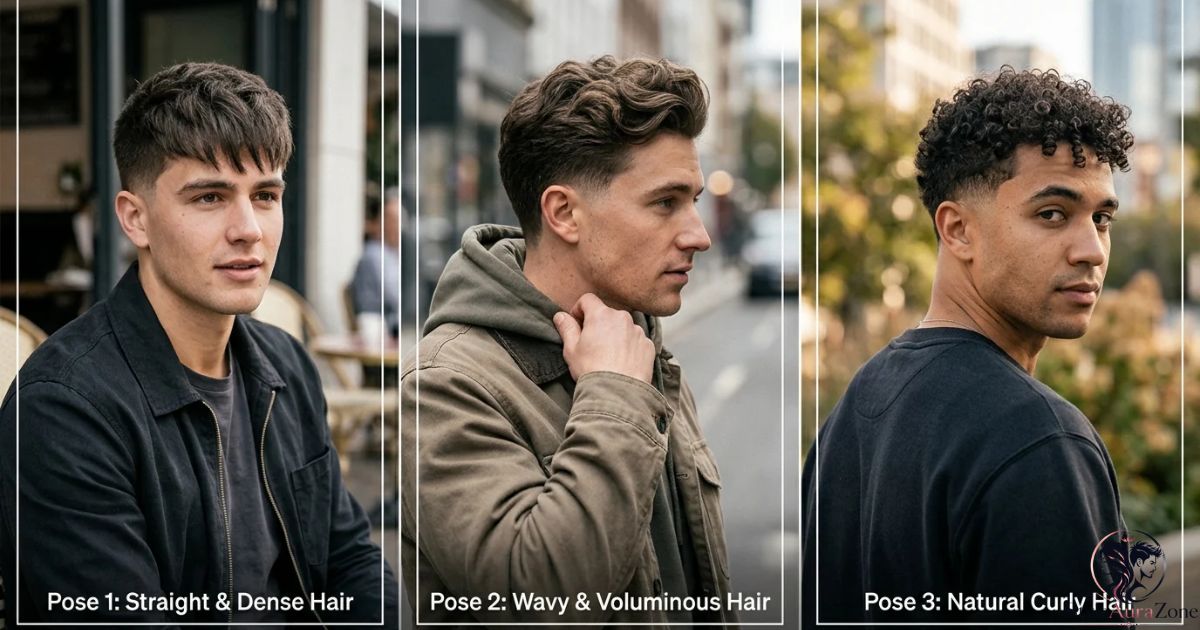
The same cut behaves differently depending on strand type. Here’s how to adjust.
Straight Hair
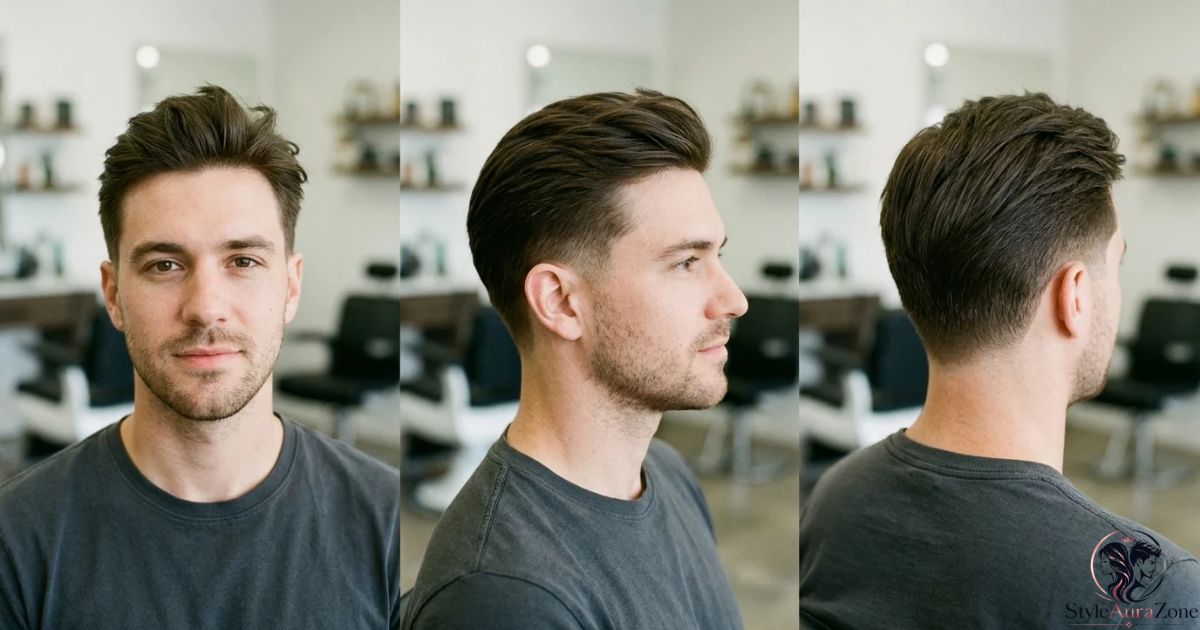
Straight hair can fall like a curtain if nobody breaks it up. Ask for point cutting through the front so the pieces separate. A little sea salt spray then gives it grip.
Wavy Hair
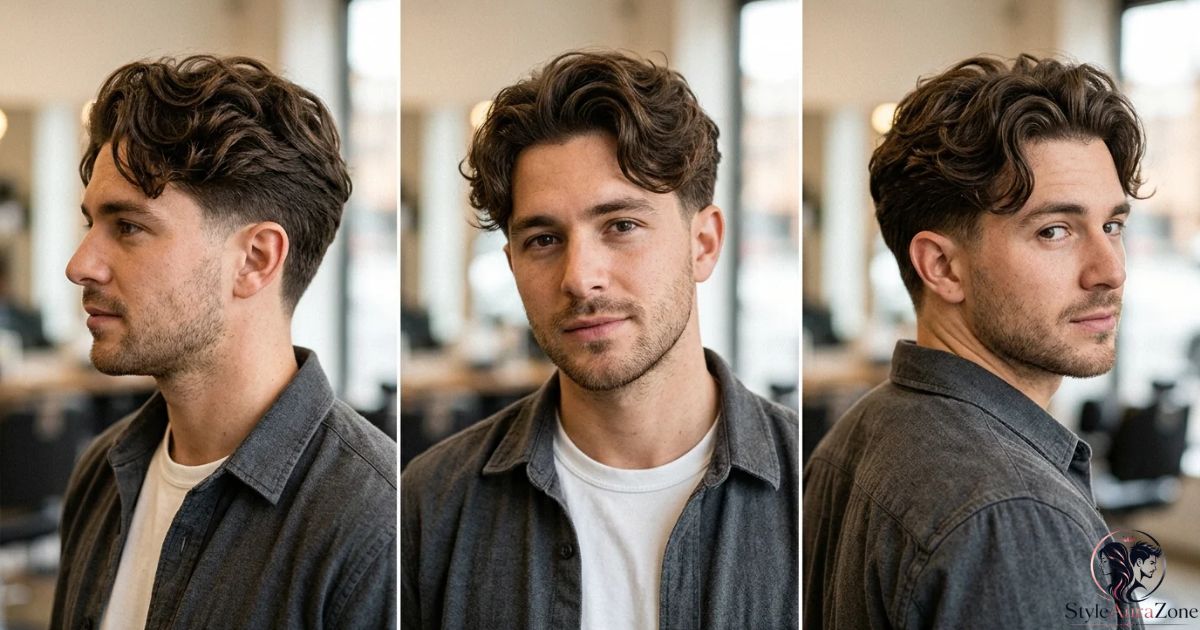
Wavy hair is the easiest match. The natural bend adds movement for free. Your barber mostly removes bulk, so the waves don’t stack and puff at the sides.
Thick Hair
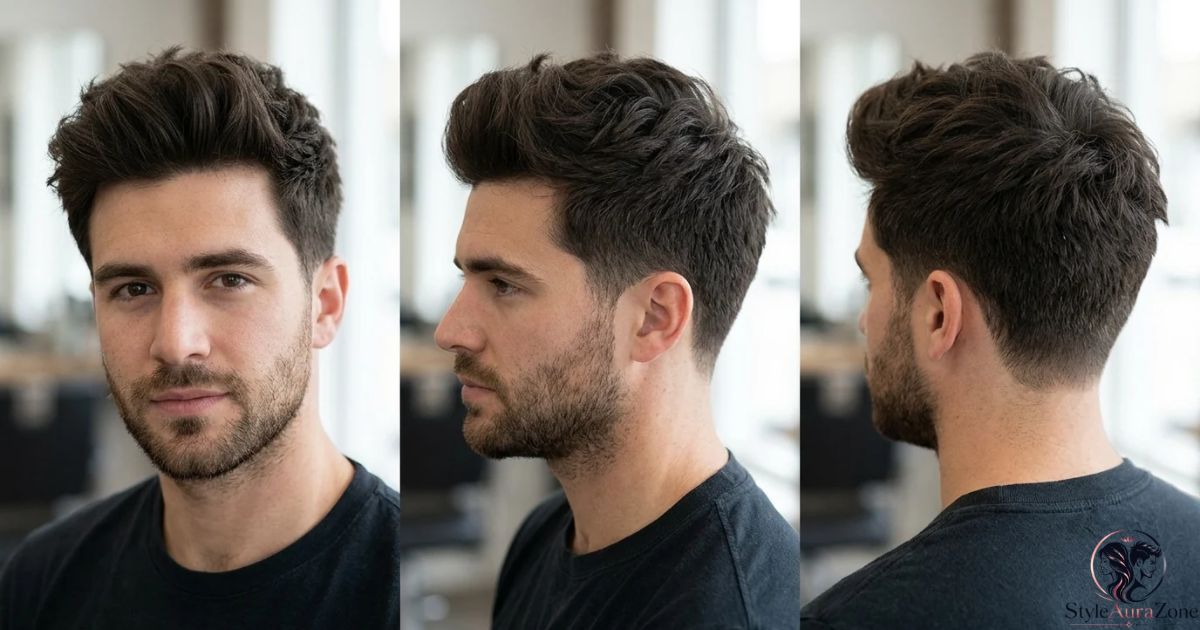
Thick hair looks full but can feel heavy and stiff. Request lighter texturizing through the top to take out weight. Then use a slightly larger dab of clay to keep the shape controlled.
Fine or Thin Hair
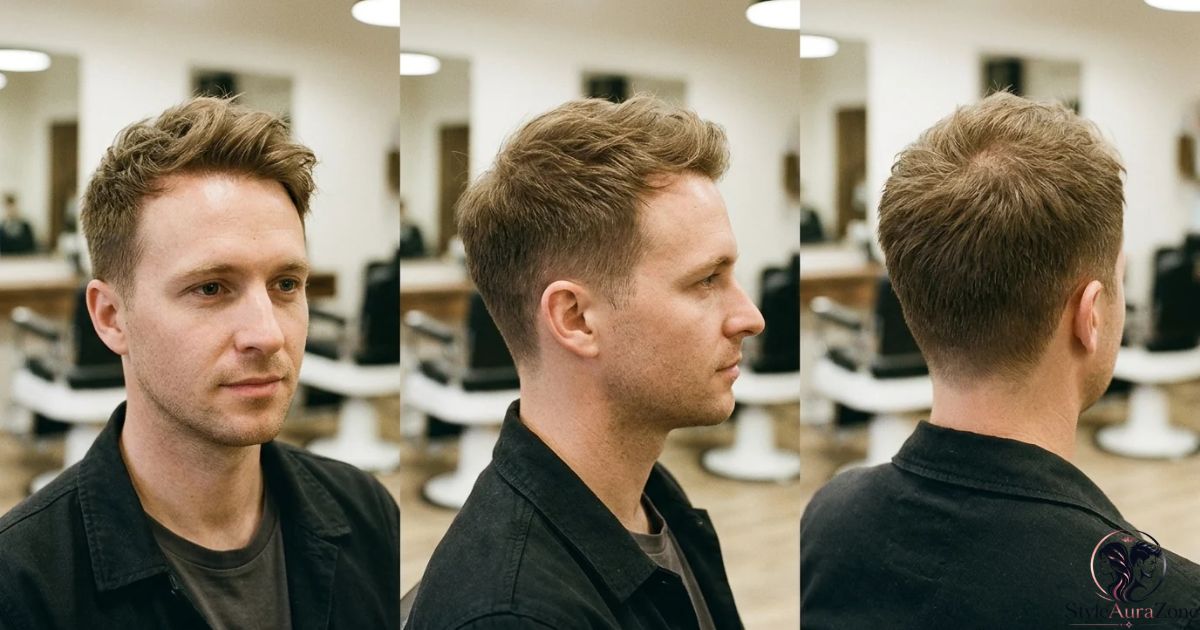
Fine hair needs a lighter hand. Too much thinning leaves it flat instead of full. Keep enough length to build lift, and use mousse or salt spray at the roots before drying.
Curly Hair
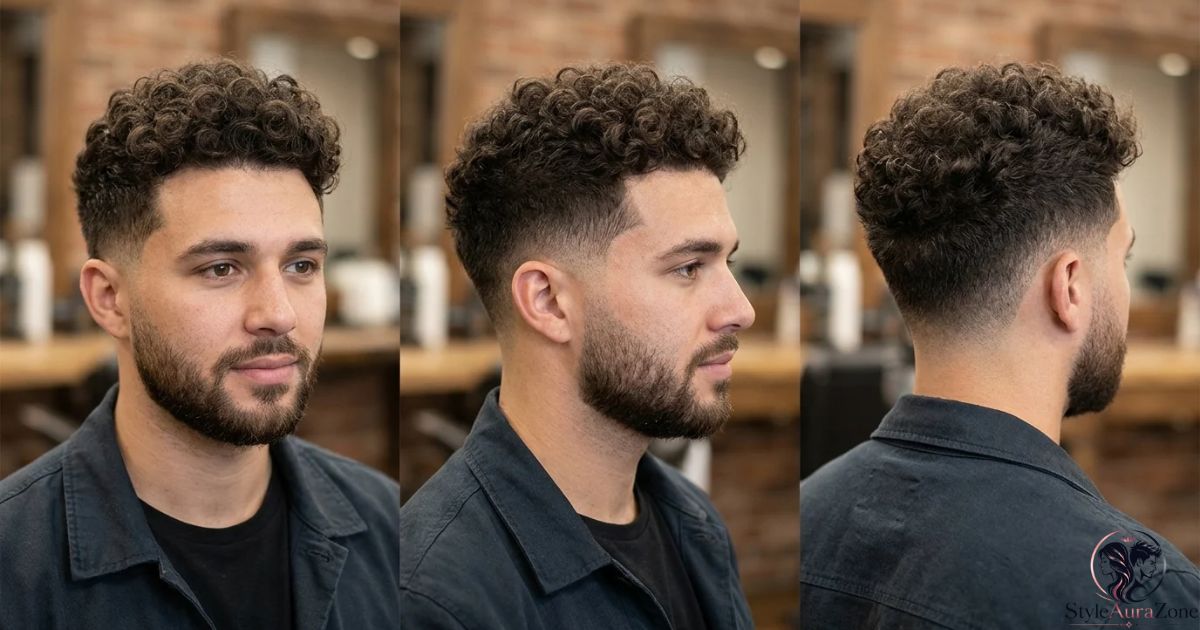
Curls shrink as they dry, so a wet cut can end up much shorter than planned. recommends having the fringe cut dry or nearly dry. A curl cream usually works better than heavy hold products.
The Main Variations
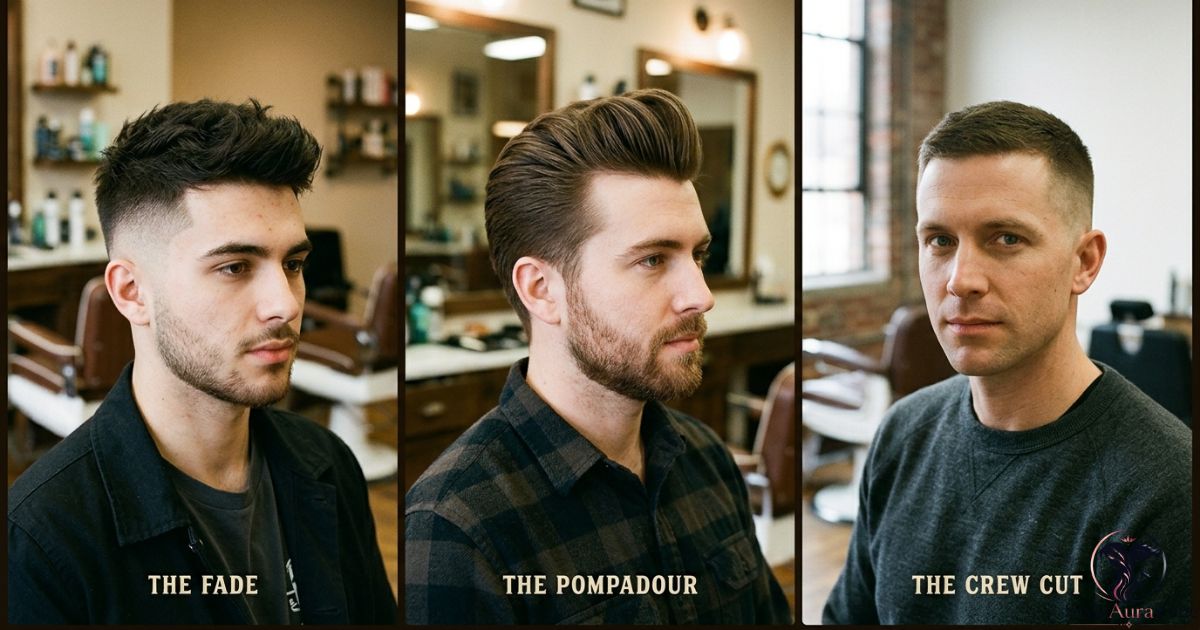
Fringe length, front shape, and skin exposure create very different moods. Pick the version that matches your routine.
| Variation | Top Length | Feel | Best For |
| Short textured fringe | About 1.5 to 2 inches | Neat, low effort | Warm weather, active routines |
| Medium fringe | About 2 to 4 inches | Balanced, the classic version | Most faces and hair types |
| Messy fringe | 3 inches or more | Relaxed, off-duty | Wavy and thick hair |
| Blunt-edged fringe | 2 to 3 inches | Structured, a bit sharper | Straight hair |
| Skin low taper | Any | High contrast on the sides | Clean, defined looks |
If you want the sides to curve around the ear, a burst-style blend can replace the straight taper. A drop version curves behind the ear instead. Both work under the same fringe.
How to Ask Your Barber
Clear words beat a vague gesture at your head. Start with the top and say how long you want the fringe, ideally with a spot on your face for reference, like “just above my eyebrows.” Next, describe the sides. Say “low taper” and point to where the blend should start.
Then request texture by technique. Many men ask for “textured” and leave with thinned-out hair. Ask for point cutting instead, which removes weight while keeping length.
“I’d like a low taper starting just above my ears and blending down to the neckline. Leave the fringe about three inches long, point cut so the ends look choppy rather than blunt.”
Bring a front photo and a side photo.suggests pointing to one specific detail in the photo instead of the whole look.
| Instead of Saying | Try This |
| “A low fade” | “Low taper, not down to skin” (or the reverse, if you want skin) |
| “Make it textured” | “Point cut the fringe so the pieces separate” |
| “Keep it natural” | “Leave about three inches, falling forward” |
| “Shorter on the sides” | “Blend starting just above the ear” |
How to Style It at Home
Styling takes minutes once you know the order.
- Start with damp hair. Towel-dry until it’s slightly moist, not dripping.
- Add prep if needed. Fine or straight hair benefits from a spritz of sea salt spray at the roots.
- Dry the front. Aim a dryer forward for about ten seconds on low heat to set the fringe direction.
- Warm a pea-sized amount. Rub matte clay or cream between your palms.
- Work it through with your fingers. Start at the back and move forward, so the fringe gets the least product.
- Pull the ends apart. Pinch and separate a few pieces for that lived-in finish.
If it looks shiny or sculpted, you’ve used too much. Rinse it out and try half the amount.
Best Products
You rarely need more than two items. Match them to your hair.
| Product | Finish | Best For |
| Matte clay | Medium hold, no shine | Thick, straight, and wavy hair |
| Texture powder | Light grip, adds lift | Fine or flat hair |
| Sea salt spray | Rough, beachy separation | Straight and wavy hair |
| Lightweight cream | Soft, flexible control | Wavy and curly hair |
| Curl cream | Definition without crunch | Curly hair |
Skip heavy gel and glossy pomade. Shine coats each strand and flattens the separation that makes a textured fringe look textured.
Maintenance and Trim Schedule
The sides and top run on different timelines. The neckline and taper grow out fastest, so they lose their shape first.
| Area | Visit Frequency | What to Watch |
| Taper and neckline | Every 3 to 4 weeks | Soft, fuzzy neckline |
| Fringe and top | Every 5 to 6 weeks | Hair hitting your eyes |
| Home neckline tidy | Between visits | Sideburns and nape stubble |
A quick trimmer cleanup at home can stretch a cut by a week or so. If the top starts feeling heavy, book a point cutting refresh without losing length. Growing it out? Ask the barber to raise the blend gradually each visit.
Common Mistakes to Avoid
- Taking the taper too high. Say “low” and point to the ear.
- Cutting the fringe too short. Above mid-forehead, it becomes a textured crop.
- Overloading on product. Heavy hold clumps the fringe together.
- Asking for thinning when you mean texture. The wrong tool leaves hair limp.
- Choosing the wrong variation. A blunt fringe on very curly hair rarely behaves.
- Skipping the reference photo. Words alone leave room for guesswork.
- Stretching trims too far. Past six weeks, the shape fades.
FAQ’S
How long should the fringe be?
Most men land between 2 and 4 inches. Go shorter for low effort and longer for a messy look.
Does this cut work on thin hair?
Yes. Keep the texture light and style with mousse or powder for lift.
How often should I get a trim?
Refresh the taper every 3 to 4 weeks. The top can usually wait 5 to 6 weeks.
What’s the difference between a textured fringe and a textured crop?
A fringe sits longer and falls over the forehead. A crop is shorter and sits higher.
Conclusion
The textured fringe with low taper fade earns its popularity by balancing relaxed and polished. It adapts to most faces, suits several hair types, and asks for very little styling time. Few cuts manage that combination, which is why barbers keep recommending it.
Choose a fringe length that flatters your face, pair it with the right product, and keep the taper fresh every few weeks. Bring a photo, use clear words, and speak up about texture. Do that, and the cut will look good every day.