
Low Taper Fade Haircut for Straight Hair: Complete A low taper fade on straight hair looks sharp from every angle. The sides shrink gradually toward the ears and neckline, while the top keeps its length. Straight strands lie flat, so each step in the blend shows clearly. That crisp, tidy contrast explains why barbers book this cut constantly in 2026.
This guide walks you through the cut from start to finish. You’ll learn how it differs from a low fade, which top styles work best, and what to tell your barber. We also cover products, home upkeep, and the mistakes that quietly ruin an otherwise good haircut.
What is a low taper fade?Low Taper Fade Haircut for Straight Hair: Complete
A low taper fade is a clipper cut where the sides and back shorten gradually, starting near the ears and nape. The blend sits low on the head. The hair on top stays long, and the shortest length lands at the hairline, often close to the skin.
Think of it as a soft gradient rather than a hard line. Your barber works with clippers, a comb, and sometimes shears to erase any visible steps between lengths.
| Zone | Typical guard | Purpose |
| Nape and around the ears | #0.5 to #1 | Shortest edge, cleanest outline |
| Lower blend | #1.5 to #2 | Smooth transition |
| Upper sides | #3 to #4 | Connects the fade to the top |
| Top | Shears, 2 to 4 inches | Your styling length |
Guard choices vary by barber, clipper brand, and head shape. Treat this table as a starting point rather than a rule.
Read more:Textured Fringe With Low Taper Fade: Complete Style Guide for Men
Why straight hair suits this cut
Straight hair shows every detail of a fade. Nothing curls or waves over the transition, so the gradient reads as smooth and intentional. A well-cut blend looks polished for days.
- Predictable hold: Straight strands respond to most products in a consistent way.
- Easy parting: Side parts, brush-backs, and fringes fall naturally into place.
- Neat but relaxed: Keeping the fade low avoids the stark look of a high fade.
- Bulk control: The taper removes weight from the sides of thick hair.
There’s one catch. Straight hair also exposes mistakes. A patchy or banded blend stands out immediately, so choose a barber who does fades daily. Fine hair can also sit flat on top. Ask for light texturizing during the cut to build lift into the shape.
Low taper fade vs low fade vs taper
Barbershops mix these terms up constantly. Knowing the difference keeps you from leaving with the wrong cut.
| Feature | Classic taper | Low fade | Low taper fade |
| Where it starts | Sideburns and nape | Low, just above the ear | Low, around the ear and nape |
| Reaches skin? | Usually not | Yes | Often close to it |
| Contrast | Very soft | Bolder | Moderate |
| Overall look | Conservative | Sharp and modern | Clean and balanced |
| Upkeep | Every 4 to 5 weeks | Every 2 to 3 weeks | Every 3 to 4 weeks |
| Best for | Strict dress codes | High-contrast looks | A polished everyday cut |
The low taper fade sits between the other two. It borrows the gentle shortening of a taper and adds the cleaner finish of a fade. For a first fade, it’s the safest bet.
Best top styles for straight hair in 2026
The sides stay the same. The top is where your personality shows up.
Textured Fringe
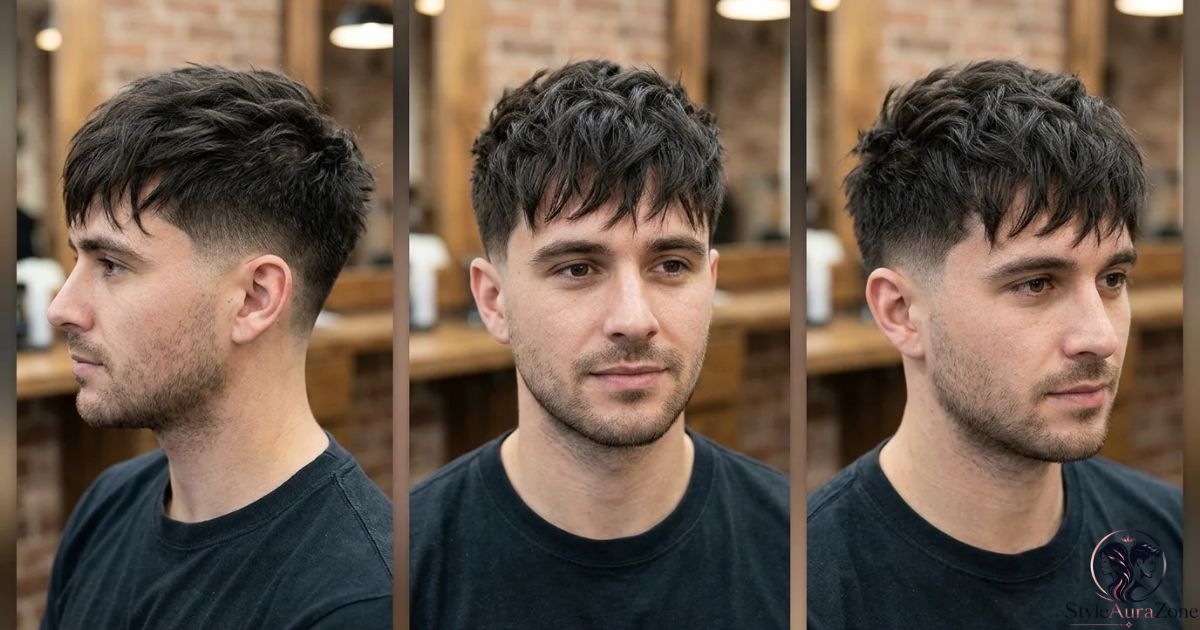
Your barber cuts the front slightly forward and chops into it for movement. A matte paste finishes the job. This look sits between sharp and casual.
Side Part
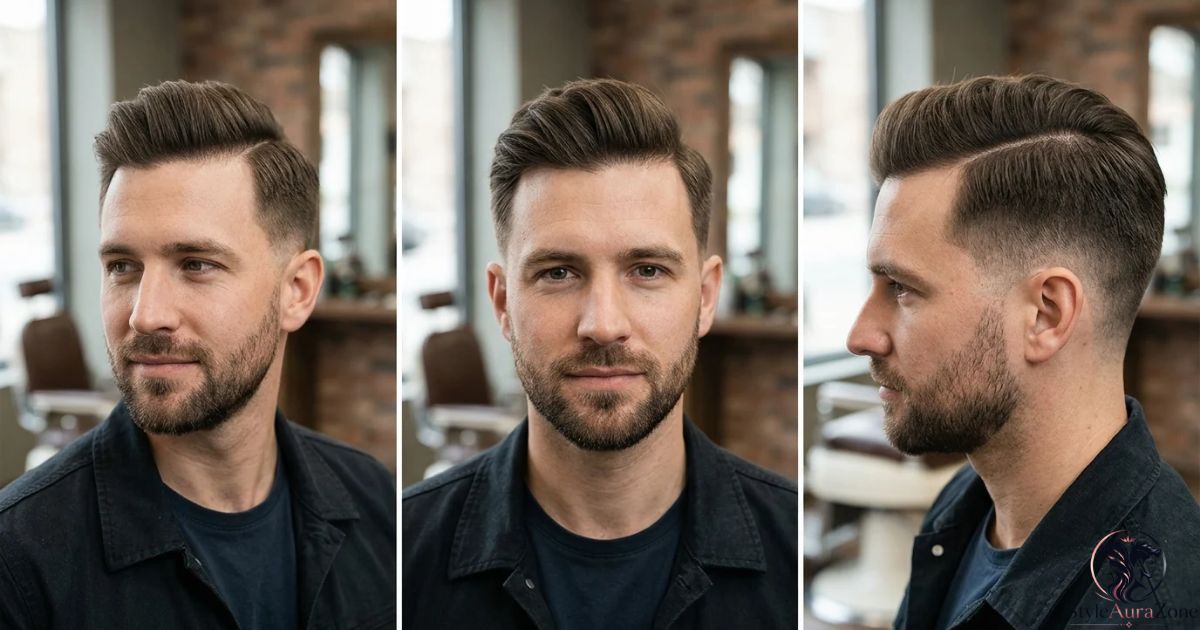
Straight hair makes a clean part almost effortless. It suits offices, interviews, and weddings. A light pomade adds definition without shine overload.
Slick Back
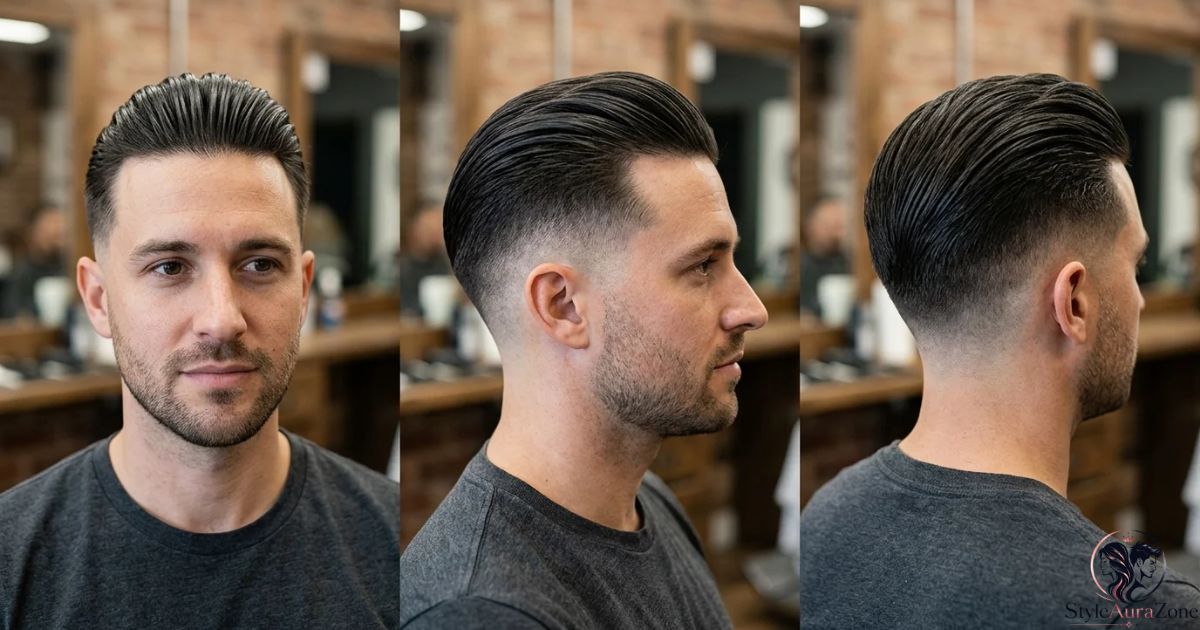
Longer tops sweep straight back for a classic, confident shape. The low fade keeps the sides from looking bulky. Straight hair holds this style well.
Comb Over
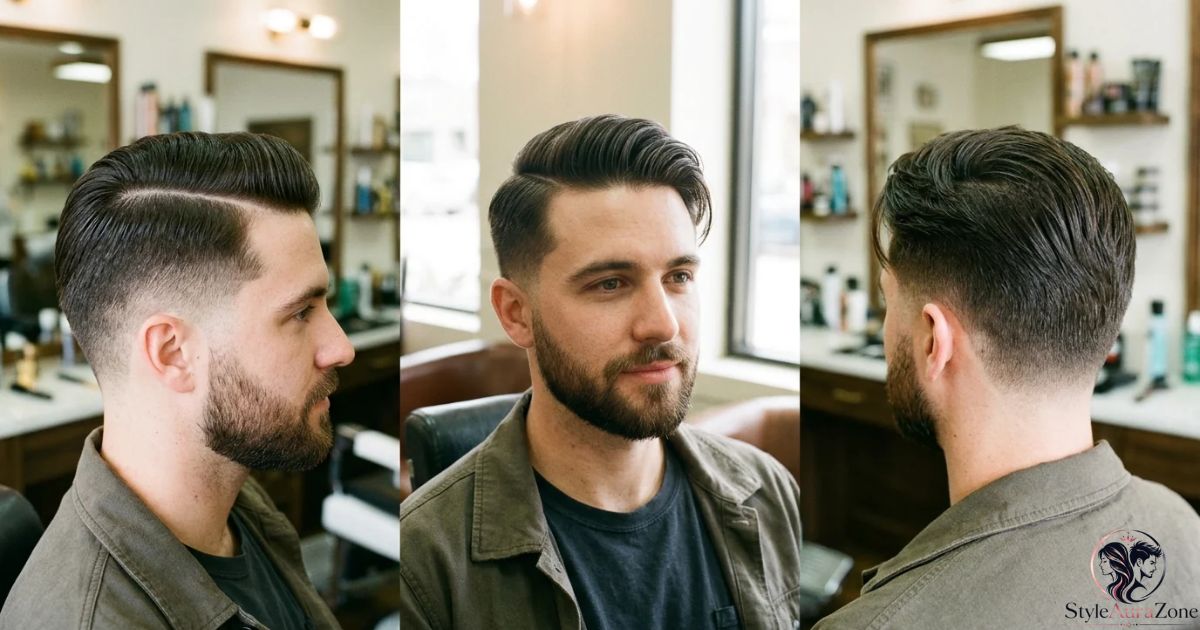
A comb over with a low taper reads modern rather than dated. Use a fine-tooth comb and a medium-hold product. Keep the part crisp.
French Crop
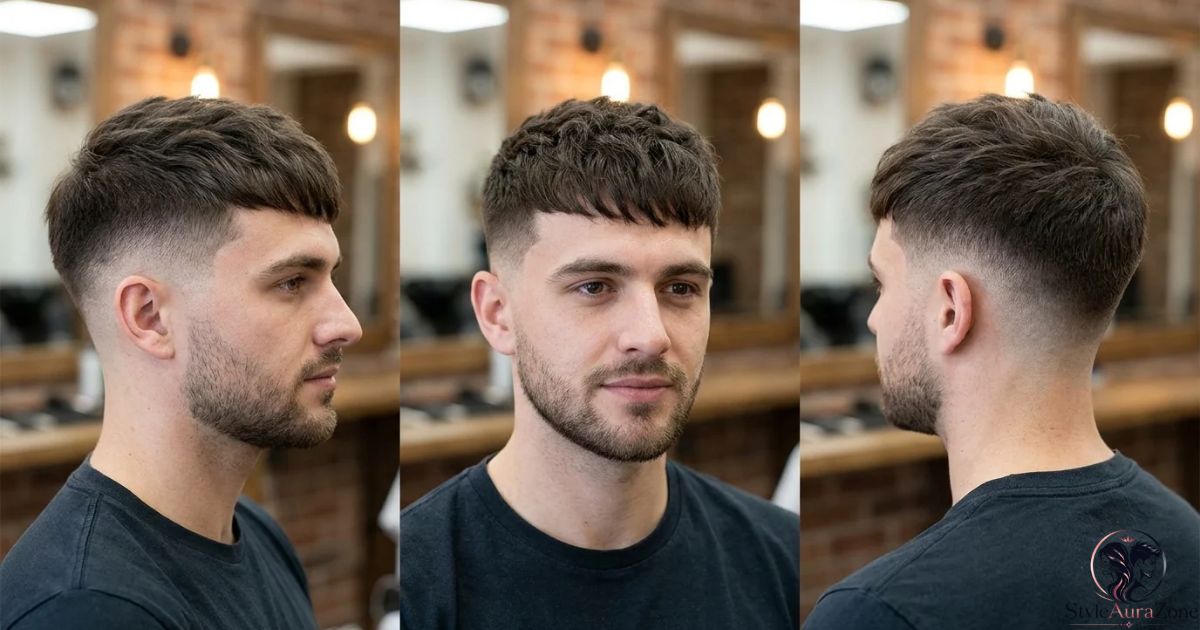
This short, forward-brushed top needs almost no effort. A blunt fringe and tight sides give it a structured feel. It’s ideal for busy mornings.
Quiff
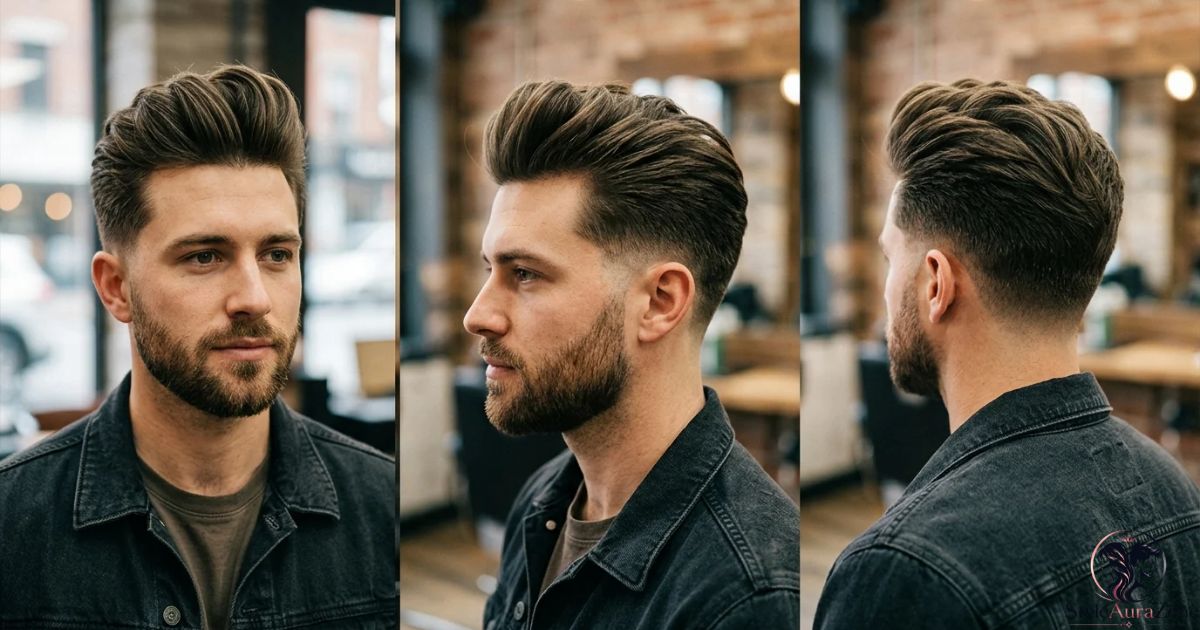
Lift at the front adds height and balances rounder faces. Thick straight hair holds a quiff best. Fine hair needs a volumizing product underneath.
| Style | Ideal top length | Product type |
| Textured fringe | 2 to 3 in | Matte paste |
| Side part | 3 to 4 in | Light pomade |
| Slick back | 4+ in | Water-based pomade |
| Comb over | 3 to 4 in | Medium-hold cream |
| French crop | 1 to 2 in | Matte clay |
| Quiff | 3 to 4 in | Texture powder plus clay |
Best face shapes and hair types
This cut forgives a lot. Small tweaks to the top still make a visible difference.
| Face shape | Best top | Skip |
| Oval | Almost anything | Nothing in particular |
| Round | Quiff, brush-up, height | Flat, middle-parted tops |
| Square | Textured fringe, loose side part | Boxy, blunt tops |
| Long | Short crop, side part with width | Tall, vertical styles |
| Heart | Side-swept fringe | Heavy volume at the temples |
Hair type matters just as much:
- Fine hair: Keep some length and ask for internal texture. Add a volumizing product.
- Medium hair: The easiest to style. Most looks work.
- Thick hair: The taper removes bulk. Ask your barber to thin the sides if they puff out.
How to ask your barber for a clean low taper fade
Clear words beat vague ones. Follow these steps:
- Say “low taper fade” and point to the ears and nape.
- State your top length in inches.
- Ask for a soft, gradual blend.
- Mention that your hair is straight, and say whether it’s fine or thick.
- Bring a reference photo.
Here’s a script you can borrow:
“I’d like a low taper fade, kept low around the ears and neckline. Soft blend, nothing dramatic. Leave about three inches on top with some texture so it doesn’t fall flat.”
If the barber starts fading above the temple, speak up early. Fixing a fade that’s too high takes weeks.
Short, medium, and long variations
| Version | Top length | Best for | Morning effort |
| Short | 1 to 2 in | School, conservative offices | Under 2 minutes |
| Medium | 2 to 4 in | Everyday wear, most styles | 3 to 5 minutes |
| Long | 4+ in | Creative settings, slick backs | 5 to 10 minutes |
Short versions give you the least styling room. Medium is the sweet spot because it opens up fringes, parts, and quiffs. Long tops look great but demand more product and patience.
How to style it
Straight hair dries fast and cooperates. Try this routine:
- Start with towel-dried, slightly damp hair.
- Blow-dry on medium heat, lifting at the roots with your fingers.
- Warm a pea-sized amount of product between your palms.
- Work it through from back to front.
- Shape the top with your fingers or a comb, then check the sides in a mirror.
Start with less product than you think you need. Adding more is easy. Removing it means rewashing.
Best products for straight hair
| Product | Finish | Hold | Best for |
| Matte clay | Matte | Medium to strong | Textured fringes, crops |
| Texture powder | Dry, matte | Light | Fine or flat hair |
| Sea salt spray | Natural, grainy | Light | Medium to long tops |
| Water-based pomade | Low to medium shine | Medium | Side parts, slick backs |
| Styling cream | Natural | Light | Thick hair, soft looks |
Skip heavy waxes and oil-based pomades. They weigh straight strands down and turn greasy by lunchtime.
How to maintain it at home
The fade grows out faster than the top, so the haircut loses shape in the sides first.
| Task | How often |
| Barber visit | Every 3 to 4 weeks |
| Neckline clean-up with a trimmer | Weekly, if needed |
| Shampoo | Every 2 to 3 days |
| Clarifying shampoo | Once a week with daily product use |
| Light conditioner on mid-lengths and ends | After each wash |
Trim only the neckline between visits. Re-blending the fade yourself usually creates uneven patches. Leave that job to the barber.
Common mistakes to avoid
- Asking for the fade too high. A low taper should hug the ears and nape.
- Leaving the top flat. Request texture so the hair has movement.
- Overloading on product. More product means more grease rather than more hold.
- Using vague length requests. “Not too short” means something different to every barber.
- Ignoring face shape. A tall quiff on a long face stretches it further.
- Stretching the gap between cuts. After five or six weeks, the shape is mostly gone.
FAQ’S
Is a low taper fade good for straight hair?
Yes. Straight strands lie flat, so the blend looks smooth and well defined.
How often should I get a low taper fade touched up?
Every three to four weeks keeps the fade clean. Waiting longer lets the sides lose their shape.
What should I tell my barber to get a low taper fade?
Ask for a low taper fade around the ears and nape, name your top length, and bring a photo.
Is a low taper fade the same as a low fade?
No. A low fade goes shorter and looks bolder, while a low taper fade blends more softly.
What products work best on straight hair?
Matte clay, texture powder, and water-based pomade suit most straight hair. Avoid heavy waxes.
Conclusion
The low taper fade rewards straight hair with clean lines and easy styling. Pick a top that suits your face shape, then ask for a soft blend kept low around the ears. Those two choices do most of the work so everything after the chair gets simpler.
Book a fresh trim every three to four weeks and keep a matte product nearby. Bring a reference photo to your next appointment. With a clear request and a simple routine, your low taper fade stays sharp, modern, and easy to live with from January through December.