
Meta description: 12 short hair mullet ideas for 2026, from burst fade to wolf mullet, with styling tips and the best fade for every hair type.
A short mullet gives you the personality of the classic cut without the commitment that scares most people off. You keep the sides tight, the top textured, and just enough length in the back to signal you’re not playing it safe. It’s the haircut equivalent of a bold accessory: noticeable, but never over the top.
This guide breaks down 12 short mullet variations worth bringing to your barber in 2026. You’ll find options for curly, straight, thick, and fine hair, plus advice on fades, styling products, and upkeep so the cut holds its shape between visits.
Short Modern Mullet
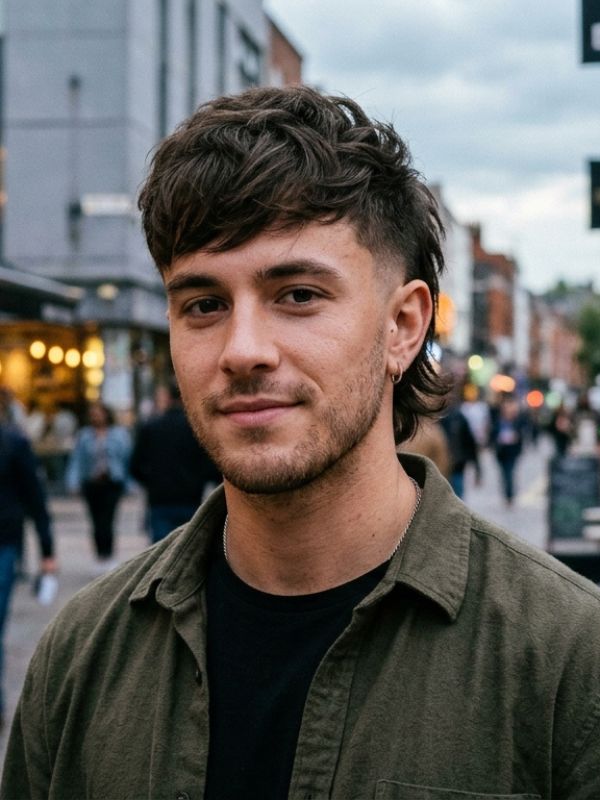
The short modern mullet is the safest entry point into mullet territory, and that’s exactly why barbers recommend it first. Sides stay tapered and clean, the crown carries light texture, and the back extends only an inch or two past a standard haircut.
This version reads as sharp rather than shaggy, which makes it workplace-friendly in most industries. Ask for graduated length at the nape instead of a hard shelf, since a soft transition ages better as the cut grows out.
- Works with straight, wavy, and loosely curly hair
- Suits oval, square, and round face shapes
- Needs a trim every 4 to 5 weeks to stay balanced
Short Burst Fade Mullet
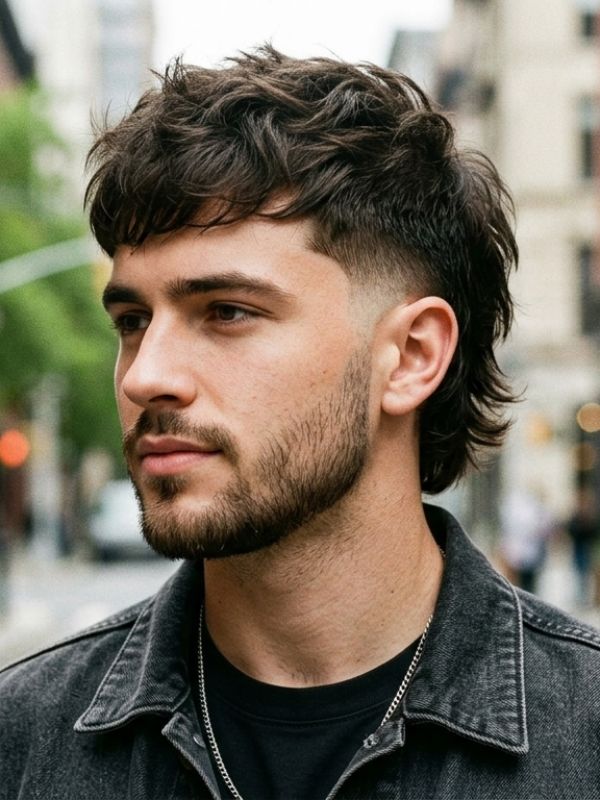
A burst fade curves around the ear in a semicircle instead of running in a straight line, which gives this mullet its signature explosion of texture. The fade stays high and tight near the temple, then fans out toward the back where the mullet length begins.
Because the fade is so precise, this style needs a skilled hand behind the clippers. It rewards thick or coily hair especially well, since the contrast between the shaved curve and the longer top reads clearly on any density.
Short Taper Mullet
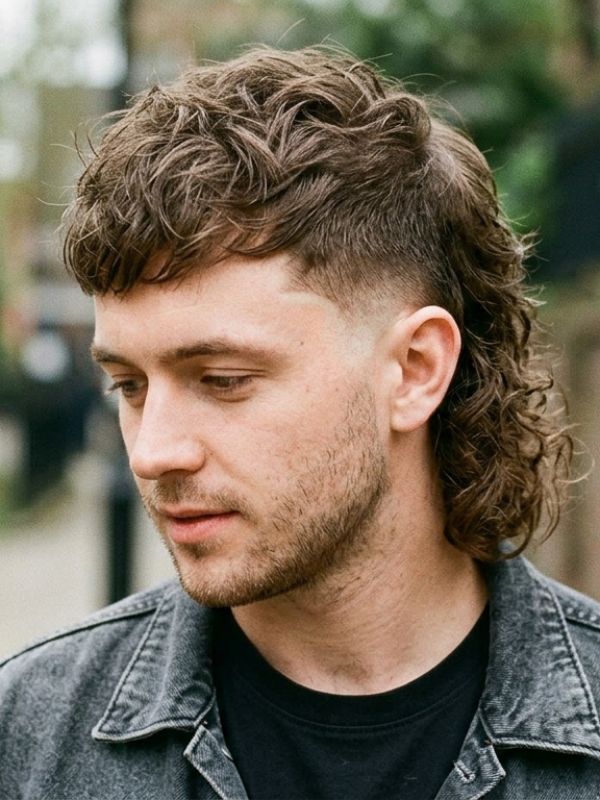
A taper mullet skips the dramatic clipper work altogether. Instead, hair shortens gradually from the crown down to the neckline, with no visible line separating the lengths. That makes it the lowest-maintenance fade option on this list.
Barbers often pair a low taper with a short mullet for clients who want subtlety over statement. The result grows out gracefully, so you can stretch appointments to five or six weeks without the cut looking unkempt.
Short Drop Fade Mullet
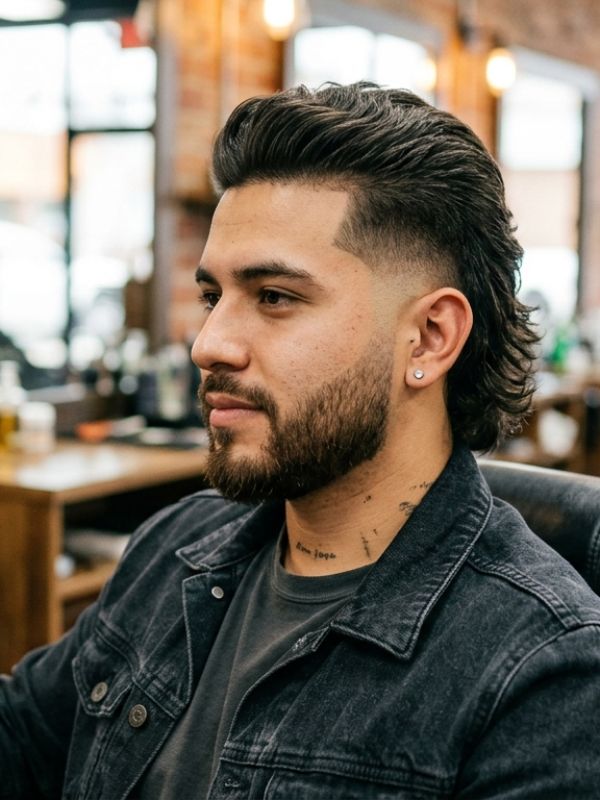
The drop fade dips lower behind the ear before curving back up toward the nape, following the natural shape of the skull rather than cutting a straight path. Paired with a short mullet, it adds roundness that flatters longer or narrower face shapes.
This combination works best on medium to thick hair, since finer strands can struggle to hold definition around the drop. Textured top pieces balance the fade and keep the overall silhouette from looking top-heavy.
Learn more:What Is a Mid Taper Fade Haircut? Types, Styles & Complete Guide (2026)
Short Hair Mullet Buzz Cut
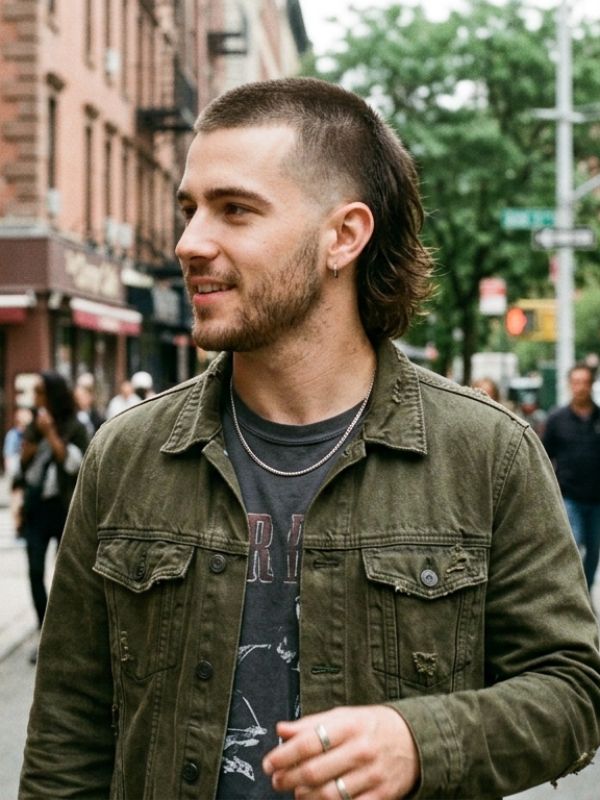
This is the most extreme reduction of the mullet concept: buzzed sides and top at a low guard, with just enough length preserved at the back to keep the mullet identity intact. It’s practically maintenance-free during the week and only needs a touch-up every two to three weeks to prevent the back from catching up to the rest.
- Guard sizes of 1 to 3 on the sides create the sharpest contrast
- The back is typically left 1 to 2 inches longer than the buzzed area
- Best suited to thick or coarse hair that holds shape without styling
Short Curly Mullet
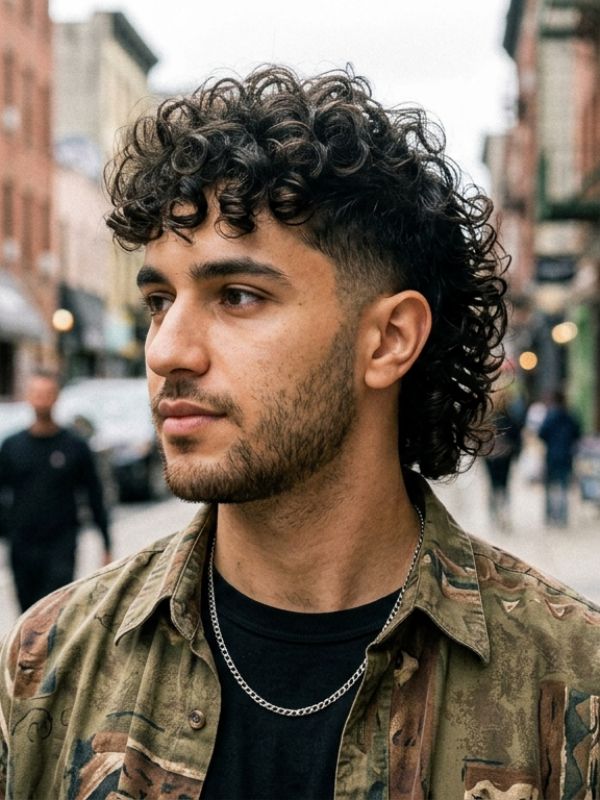
Curly hair naturally adds volume, so a short curly mullet often needs less length than a straight version to achieve the same visual impact. Layers throughout the crown let curls spring into shape instead of clumping into a single dense mass.
Curl cream works better here than pomade, since it defines ringlets without weighing them down. Ask your barber to cut curls dry whenever possible, because curl pattern shifts once hair is wet and can throw off the finished shape.
Short Straight Mullet

Straight hair shows every cut line clearly, so precision matters more here than in any other version. There’s no natural texture to hide an uneven back or a lopsided taper, which means the barber’s technique carries the whole look.
A light sea salt spray or mousse before blow-drying adds lift and prevents the style from sitting flat against the scalp. The payoff is a crisp, photo-ready silhouette that holds its edges through a full day.
Short Wolf Mullet

The wolf mullet borrows its heavy, disconnected layering from the wolf cut and folds it into a shorter mullet base. Choppy pieces throughout the crown create a deliberately wild finish, one that looks intentional rather than overgrown.
Medium to thick hair supports this layering best, since finer strands can look sparse under such aggressive texturizing. Matte clay or a texture powder finishes the look with a piecey, lived-in feel.
Short Shaggy Mullet

Where the wolf mullet leans chaotic, the shaggy mullet keeps things softer. Feathered layers throughout the top and sides create movement without the choppy, disconnected edges, giving the cut a relaxed, effortless quality.
This variation suits wavy and curly hair especially well, since natural movement does most of the styling work. A sea salt spray enhances texture on days when hair needs a boost.
Short V-Back Mullet
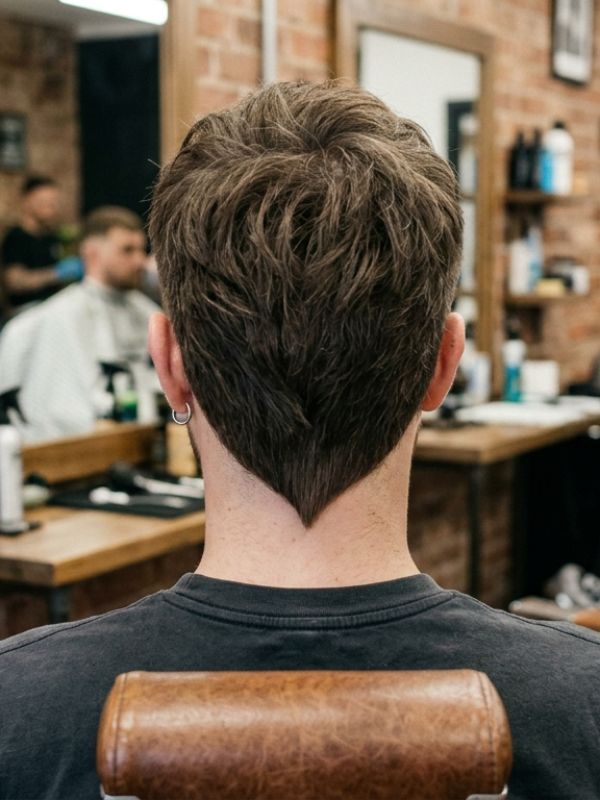
The V-back gets its name from the pointed shape cut into the nape, where hair tapers to a V instead of ending in a straight or rounded line. It’s a small detail, but it sharpens the back of a short mullet considerably.
Barbers usually pair a V-back with faded or tapered sides so the point stays the clear focal spot. This version suits straight or lightly wavy hair, since the shape needs definition to stand out.
Short Mullet Fade
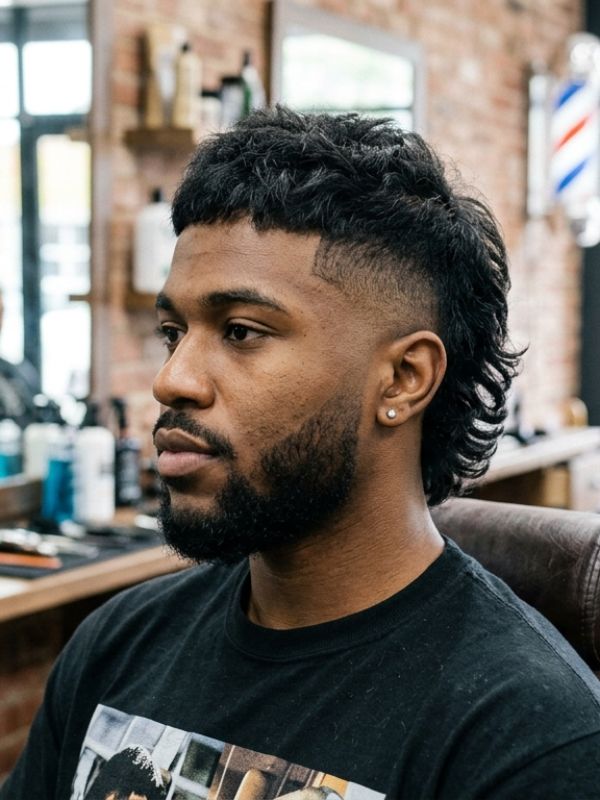
“Short mullet fade” covers any version that pairs faded sides with mullet-length back hair, and it’s the broadest category on this list. The fade height changes the entire personality of the cut, from subtle to bold.
| Fade Height | Best For | Overall Look |
| Low fade | Formal settings, subtle contrast | Understated, office-friendly |
| Mid fade | Everyday versatility | Balanced, noticeable but not extreme |
| High fade | Bold statement styles | Maximum contrast, edgier finish |
| Burst fade | Curly or coily hair | Rounded, textured, standout |
| Drop fade | Narrower or longer faces | Softer, rounder silhouette |
Short Fringe Mullet
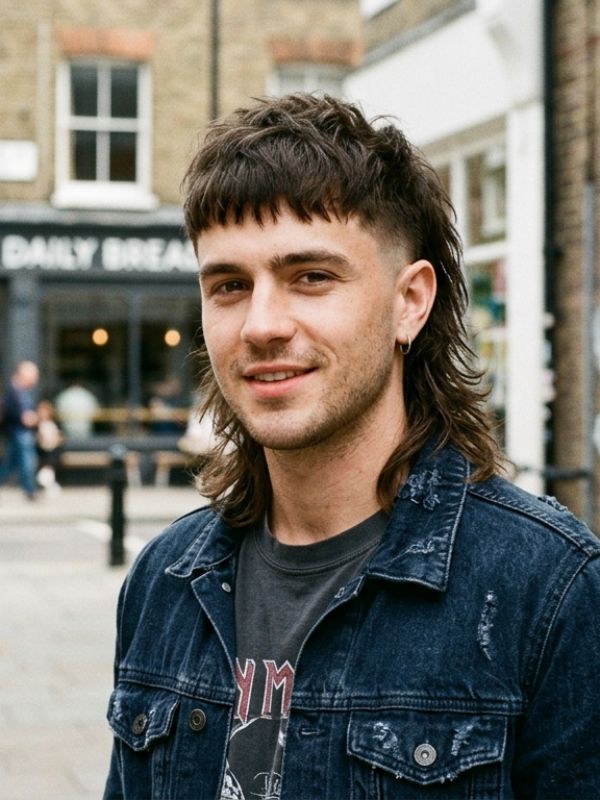
A textured fringe at the front pairs naturally with mullet length at the back, since both features work off contrast. The fringe can be blunt for a sharper look or choppy for something more relaxed, depending on how much edge you want.
This variation suits round and oval face shapes especially well, since fringe adds visual length to the upper face. Keep the fringe just above the brow line to avoid it drifting into the eyes.
Styling a Short Mullet
Getting a short mullet cut right is only half the job; daily styling keeps it looking sharp rather than accidental. The routine changes slightly by hair type, but a few core steps apply across the board.
- Start with damp, towel-dried hair rather than soaking wet strands.
- Apply a lightweight texturizing cream or sea salt spray, focused on the crown and back.
- Blow-dry on a low or medium heat setting, lifting hair at the roots with your fingers.
- Finish with a small amount of matte clay or pomade to define pieces without adding shine.
- Comb or finger-style the back separately, since it often needs a bit more direction than the top.
Skipping the finishing product is the most common mistake. Without it, even a well-cut short mullet can look flat or unfinished by midday.
Best Fade for Short Mullet
There’s no single “correct” fade, but a low taper fade comes closest to a universal answer. It has no hard line, grows out without an awkward in-between stage, and suits nearly every face shape and hair type.
| Fade Type | Growth-Out Friendliness | Recommended For |
| Low taper | Excellent | First-timers, low-maintenance schedules |
| Burst fade | Moderate | Curly or coily hair, bold styles |
| Drop fade | Moderate | Longer or narrower face shapes |
| High fade | Requires frequent trims | Statement looks, thicker hair |
If you’re testing the mullet for the first time, start with a low taper. You can always go bolder at your next appointment once you know how the length suits you.
Mullet, Low-Maintenance, Short
Short mullets earn their reputation as the low-maintenance branch of the mullet family, but “low-maintenance” still means a routine, not no routine at all. The key is matching the fade and length to how often you can realistically get to a barber.
| Cut Style | Trim Frequency | Daily Styling Effort |
| Taper mullet | Every 5 to 6 weeks | Low |
| Buzz cut mullet | Every 2 to 3 weeks | Minimal |
| Shaggy or wolf mullet | Every 4 to 5 weeks | Moderate |
| Burst or high fade mullet | Every 2 to 3 weeks | Moderate to high |
If your schedule only allows for occasional trims, lean toward a taper or a shaggy cut. Both grow out gracefully instead of developing a visible gap between the fade and new growth.
FAQ’S
Is a short mullet still considered a mullet?
Yes. The defining feature, shorter front and sides with longer back length, stays intact even at reduced proportions. It’s simply a more compact take on the same silhouette.
How much longer should the back be than the sides?
Most short mullets keep the back one to three inches longer than the sides. Anything past that starts to shift toward a traditional, longer mullet.
Does a short mullet work with fine hair?
Yes, though layering should stay light. Heavy texturizing can make fine hair look thin instead of full, so ask your barber for subtle movement only.
Can I grow a short mullet out into a longer one?
Absolutely. Most people transition gradually, letting the back grow while keeping the sides trimmed to maintain the contrast throughout.
What’s the easiest short mullet to maintain?
A low taper mullet with minimal fringe requires the least upkeep. It grows out cleanly and rarely needs more than a monthly trim.
Final Thoughts
A short mullet works because it takes the boldest part of the original cut and scales it down to something wearable every day. Whether you go with a crisp taper, a burst fade, or a shaggy, textured finish, the proportions stay easy to manage. Pick the version that fits your hair type first.
Bring reference photos to your appointment, since “mullet” means something slightly different to every barber. A clear picture, paired with an honest conversation about your maintenance schedule, gets you the closest match to what you actually want.