
A low taper fade keeps the sides neat, the neckline clean, and the top completely yours to style. It starts just above the ear and sweeps down to the sideburns and nape. Barbers love it, and for good reason: it looks sharp on day one and still looks decent on day twenty.
This 2026 guide breaks down what the cut really is, how it differs from a low fade, and which tops work for curly, straight, and wavy hair. You’ll also get a word-for-word barber script, a maintenance schedule, and a face shape chart, so you can walk in prepared.
What is a low taper fade haircut?
A low taper fade is a haircut where the hair gets gradually shorter around the sideburns, behind and above the ears, and along the neckline. The blend starts low and never climbs far up the head. The result is a soft, clean edge that leaves the top long and flexible.
Think of it as a quiet frame. The sides stay tidy, so whatever you do on top gets the attention. Here’s how a barber typically builds it:
| Zone | What the barber does | Typical finish |
| Sideburns | Shortens them in a smooth gradient that follows your hairline | Short but not bald, often a #1 or #2 |
| Above and behind the ears | Starts the blend about an inch above the ear and steps down | Gradual shift from a #3 or #4 to shorter |
| Neckline (nape) | Tapers the hair into the skin with no hard block | Soft, natural edge |
| Top | Cuts with scissors or clipper-over-comb | Whatever length you choose |
Guard numbers vary by barber and by clipper brand, so treat these as typical ranges rather than rules. If you want a visual for each number, a clipper guard chart helps.
One more point. A low taper isn’t a skin fade. A skin fade drops to bare scalp, while a low taper usually keeps a little length, even at its shortest point. That’s why it looks softer and less exposed.
Low taper fade vs low fade: what’s the difference?
Both cuts begin low, near the hairline. The difference is how fast the hair shortens. A low taper changes length slowly over a longer stretch. A low fade moves quickly and often ends at skin. As the barbers at point out, a taper leaves more scalp coverage than a fade.
| Feature | Low taper fade | Low fade |
| Blend starts | Just above the ear and nape | Just above the hairline |
| Shortest length | Short guard length, often a #1 or #2 | Often skin or close to it |
| Transition | Long and gentle | Shorter and sharper |
| Overall look | Soft, conservative | Crisp, high contrast |
| Upkeep | Looks good for 3–4 weeks | Looks best for 2–3 weeks |
| Best for | Office settings, first-time fade wearers | Guys who want a bold, clean contrast |
Barbers use these terms loosely, and some treat “taper fade” as one cut with two names. That’s why a photo beats a label every time.
Why low taper fade haircuts are so popular
Three things drive the trend: flexibility, polish, and easy upkeep. Here’s what that looks like in real life:
- It fits most workplaces. The sides look groomed without looking severe.
- It works with almost any top. Quiffs, crops, curls, and slick backs all sit well on it.
- It grows out gracefully. Because the contrast is gentle, regrowth doesn’t scream for attention.
- It’s a safe first fade. Small imperfections hide in the soft blend.
- It suits every hair texture. Straight, wavy, curly, and coily hair all take the taper well.
Best low taper fade haircuts for men
The fade stays the same. The top changes the whole mood. These eight combinations show up most often in barbershops right now.
Classic Side Part
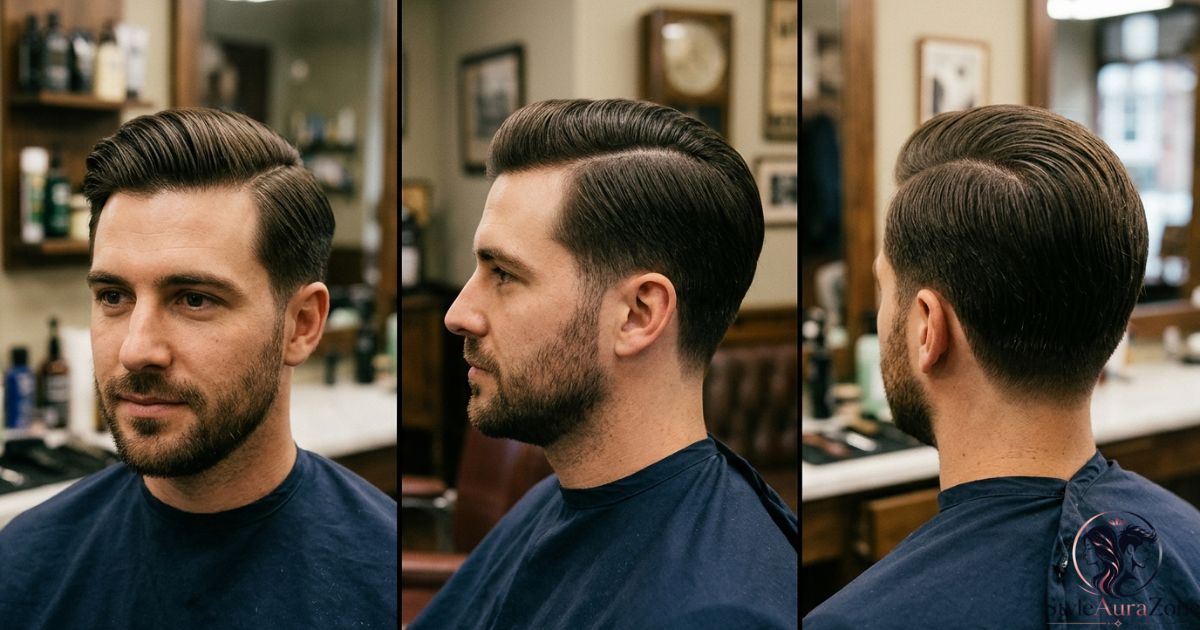
A short, combed top with a clean part gives you the sharpest, most traditional look. Use a light pomade for a neat finish. It works in a boardroom or at a wedding.
Textured Crop
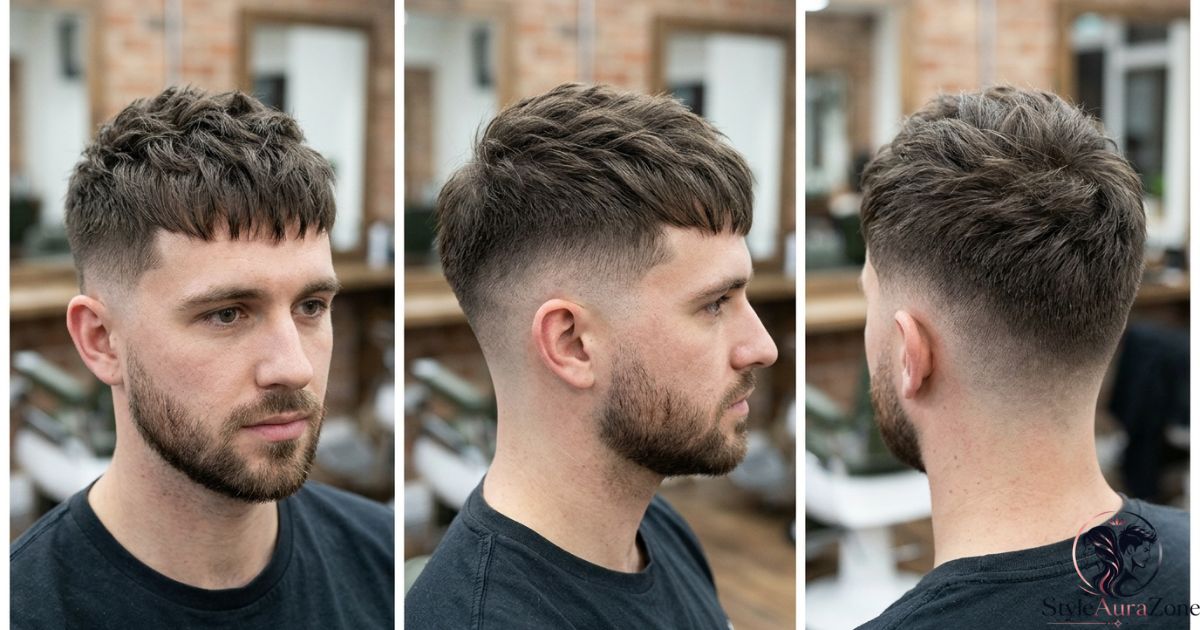
This is a short, choppy top with a bit of forward movement. Matte clay does most of the work. It’s close to wash-and-go and reads modern without much effort.
French Crop
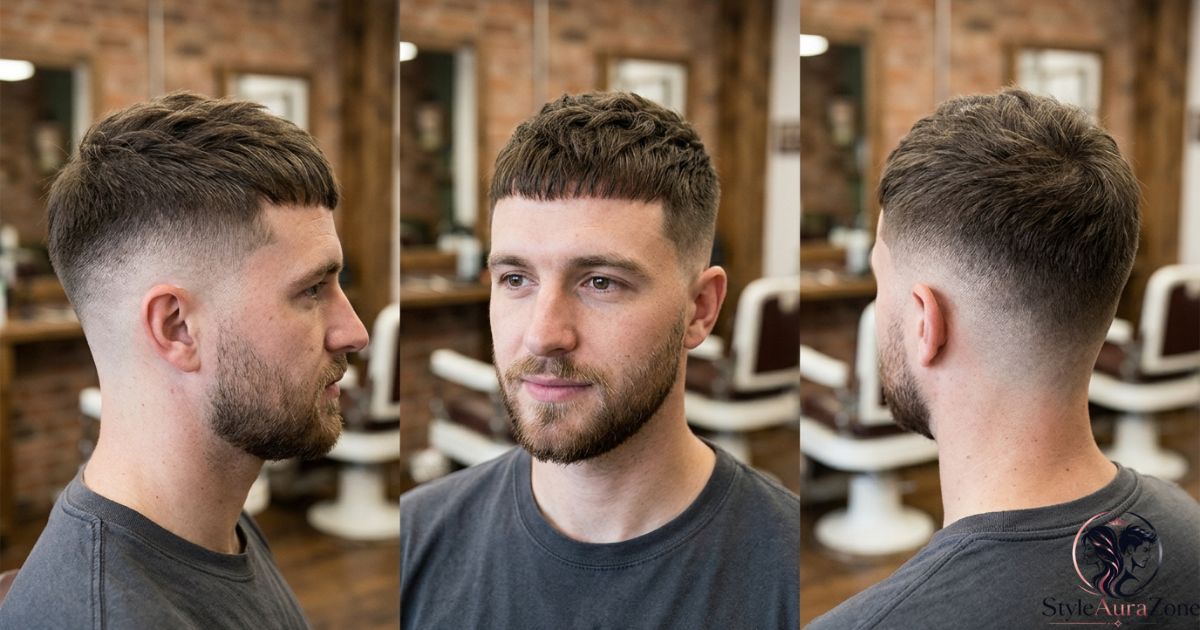
Here the top is cut short and pushed forward into a blunt fringe. It suits thick, straight hair well. It also hides a high forehead, if that’s a concern.
Quiff
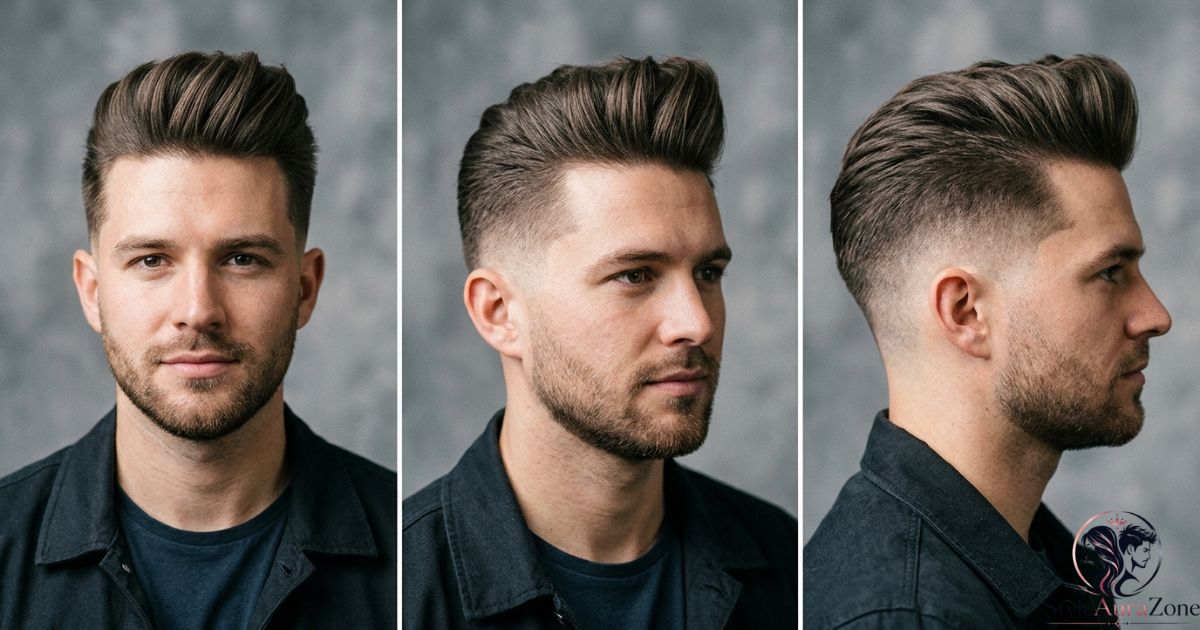
A quiff lifts the front up and back for extra height. Ask for more length at the front than at the crown. A blow dryer and a bit of paste keep it standing.
Slick Back
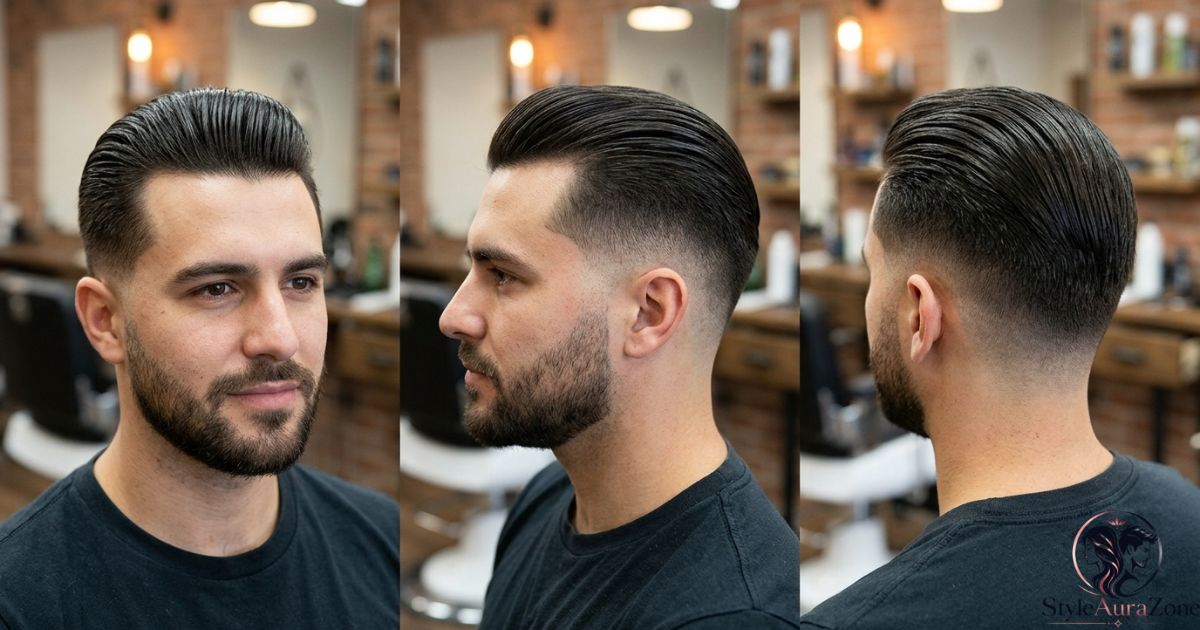
Slicked-back hair over a low taper looks polished and a little retro. Medium length works best. A water-based pomade gives hold without the crunchy feel.
Comb Over
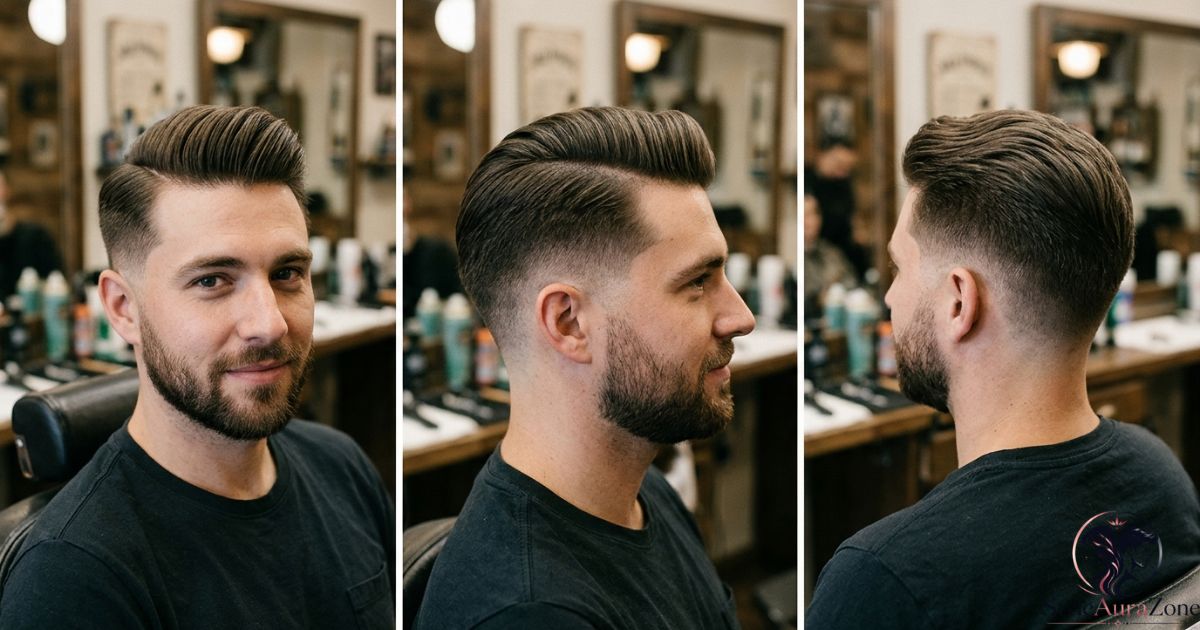
The comb over pairs a defined part with a longer sweep across the top. A low taper keeps the sides quiet so the part stays the star. It’s a strong choice for professional settings.
Read more:Burst Fade Haircut: What It Is, Types, Styles and Barber Guide
360 Waves
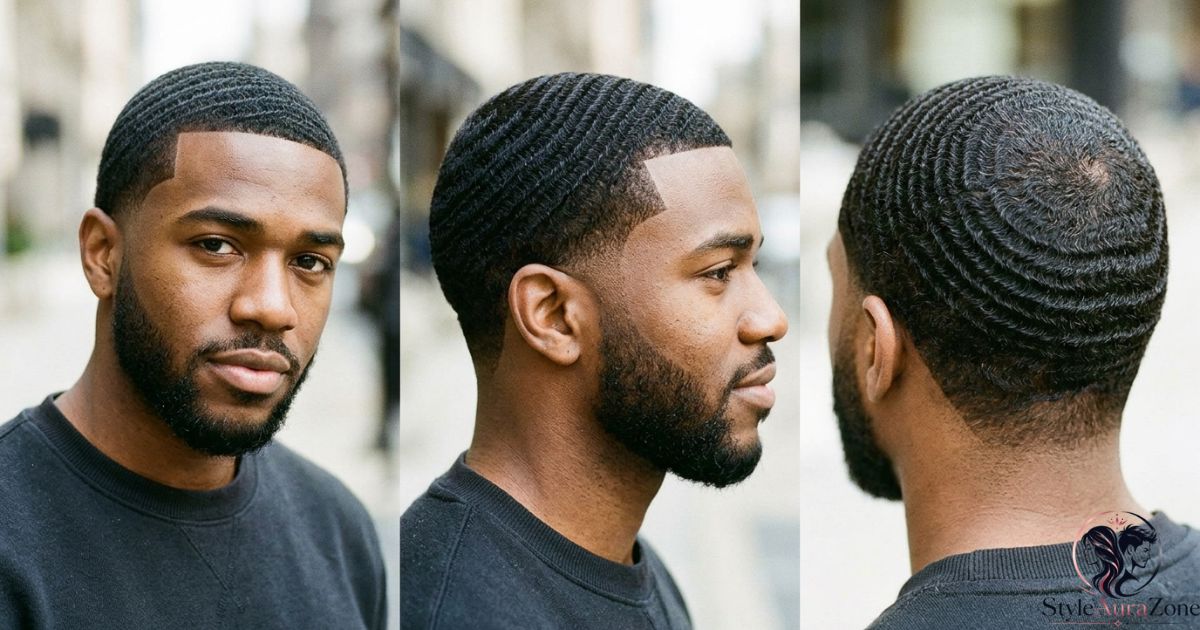
If you brush your hair into waves, a low taper frames the pattern without cutting into it. Keep the fade low so it doesn’t chop through the waves. Regular brushing and moisture keep the pattern defined.
Longer Flow
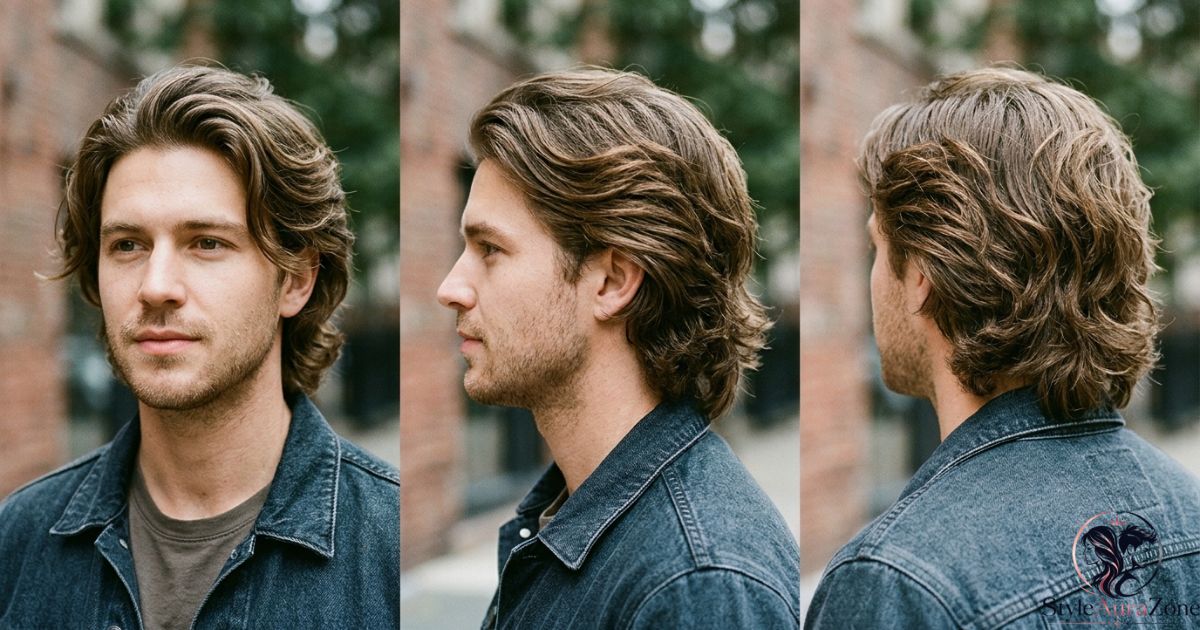
Medium to long hair on top gives you room to switch between sleek and loose. The tapered sides stop all that length from looking heavy. It’s a good option if you’re growing your hair out.
Quick picker:
| Style | Top length | Daily effort | Works best on |
| Classic side part | Short to medium | Low | Straight, wavy |
| Textured crop | Short | Very low | Straight, wavy, curly |
| French crop | Short | Low | Thick, straight |
| Quiff | Medium | Medium | Thick, straight, wavy |
| Slick back | Medium | Medium | Straight, wavy |
| Comb over | Medium | Medium | Straight, wavy |
| 360 waves | Short | Medium | Coily, curly |
| Longer flow | Long | Medium | All textures |
Low taper fade for curly hair
A low taper suits curls because it cleans up the edges and leaves your natural volume alone. Keeping the fade low also matters. A high fade on curly hair can make the top look smaller and the sides look stark.
Here’s how to get a better result:
- Cut it dry. A barber who cuts curls dry sees exactly how they spring and sit.
- Leave enough length. Curls shrink as they dry, so go longer than you think you need.
- Keep the neckline soft. A tapered nape looks more natural than a blocked-off one.
- Moisturize. Dry curls look frizzy and make the fade look rougher.
| Curl pattern | Top approach | Product idea | Barber note |
| Wavy (2A–2C) | Medium length with light layers | Sea salt spray or light mousse | Don’t thin it out too much |
| Curly (3A–3C) | Enough length to let curls spring | Curl cream plus a diffuser | Cut dry to see the pattern |
| Coily (4A–4C) | Shape it into a rounded or defined top | Leave-in conditioner and curl custard | Keep the taper gentle around the hairline |
Low taper fade for straight and wavy hair
Straight hair shows every line of the blend, so a clean, gradual taper matters here. The usual issue is a flat top. Ask for light texturizing, and style with a matte product and a quick blow dry at the roots.
Wavy hair is more forgiving. The natural movement adds body and hides small flaws in the fade. Leave some weight on top so the waves can form instead of poofing out.
A few product rules that help both:
- Skip heavy gels. They flatten straight hair and weigh down waves.
- Use clay or paste for texture and cream for a softer, natural finish.
- Blow dry upward from the roots to build lift.
- Add a little salt spray to wavy hair for definition.
How to style a textured or messy top
A textured top looks relaxed but deliberate. The trick is that the cut does most of the work. Ask your barber for point cutting or texturizing shears so the ends aren’t blunt and uniform.
Then follow these steps at home:
- Towel-dry your hair until it’s damp, not dripping.
- Warm a pea-sized amount of matte clay or paste between your palms.
- Work it through from back to front with your fingers.
- Pull the pieces forward or upward, depending on your look.
- Finish with a light dusting of texture spray if you want more grip.
Go easy on product. Too much turns texture into grease and drags the top down. The clean tapered sides are what keep a messy top looking intentional instead of unkempt.
How to ask your barber for a low taper fade
Clear details beat fancy terms. Every barber reads the words slightly differently, so cover these five points:
| Detail | What to say |
| Height | “Start the blend low, just above my ear” |
| Finish | “Taper it. Don’t take it down to skin” |
| Top | “Leave about this much length and add texture” |
| Neckline | “Tapered and natural, not squared off” |
| Edges | “Soft line-up” or “no line-up” |
Put it together like this:
“I’d like a low taper fade. Blend it gradually from just above my ears, keep a short guard length at the shortest point, and leave the top long enough to style. Taper the neckline instead of blocking it.”
Two more habits help. First, bring a reference photo, because it removes guesswork. Second, mention how you style your hair and what you do for work. A good barber uses that to decide the top length and texture.
How to style and maintain a low taper fade
Upkeep is light, which is a big part of the appeal. Most people book a trim every three to four weeks, though fast growers may want a refresh sooner. You can clean up the neckline and sideburns with a trimmer between visits, but leave the blend itself to your barber.
| Task | How often | Tip |
| Barber trim | Every 3–4 weeks | Book ahead if you have a big event |
| Neckline cleanup | Every 1–2 weeks | Use a trimmer, and go slowly |
| Shampoo | 2–4 times a week | Over-washing dries out hair and scalp |
| Conditioner | After each wash for curly or coarse hair | Focus on the ends |
| Styling product | Daily, if needed | Start small and add more only if you need it |
Product choice matters more than you’d think:
- Matte clay gives hold and a flat, natural finish.
- Pomade adds shine and structure for sleek styles.
- Curl cream keeps curls soft and defined.
- Sea salt spray adds grip and a beachy look to wavy hair.
Does a low taper fade suit your face shape?
Almost always, as long as you adjust the top. The sides stay quiet, so your face shape mostly decides what happens above them. Treat this table as a starting point, not a rulebook.
| Face shape | Does it work? | Top that flatters | Why |
| Oval | Yes | Nearly anything | Balanced proportions handle every style |
| Round | Yes | Quiff, textured crop with height | Added height makes the face look longer |
| Square | Yes | Medium length with light texture | Clean sides echo a strong jaw |
| Oblong | Yes | Fringe or side-swept top | Breaks up forehead length and adds width |
| Heart | Yes | Textured crop or longer fringe | Balances a wider forehead and narrower chin |
| Diamond | Yes | Fringe or side part | Softens prominent cheekbones |
A beard adds one more option. Your barber can blend the taper into the beard so the two look like one clean shape. That tends to flatter round and square faces especially well.
The bottom line
The low taper fade earns its spot because it asks little and gives plenty. Clean edges, a flexible top, and a grow-out that doesn’t embarrass you add up to a cut that fits an office, a gym, and a Saturday night without any changes. Match the top to your hair type and you’re set.
Before you book, save a reference photo and decide how short the sides should finish. Tell your barber where the blend starts, how much length stays on top, and how you plan to style it. Add a trim every three weeks or so, and the cut stays sharp.
Go deeper: low taper fade guides
Ready to narrow it down? These companion topics each deserve their own deep dive:
- Low taper fade with a beard: how to blend the sideburn into your beard line
- Low taper vs mid taper fade: which height gives you the contrast you want
- Low taper fade for Black men: styles for waves, curls, afros, twists, and locs
- Low taper fade for Asian hair: cuts for thick, straight, and coarse textures
- Low taper fade with a fringe: French crop and textured fringe variations
- Low taper fade mullet: keeping the back long and the sides tidy
- Low taper fade buzz cut: guard lengths and low-effort styling
- Low taper fade for boys: school-friendly styles and upkeep
- Low taper fade blowout: a lifted, brushed-up top over a soft taper
- Low taper fade with designs: carved lines and patterns
FAQ’S
What is a low taper fade?
It’s a haircut where the hair gradually shortens around the sideburns, ears, and neckline. The blend starts low and stays soft.
Is a low taper fade professional?
Yes. The subtle blend looks groomed and polished, so it fits most offices.
How often should I get a low taper fade trim?
Every three to four weeks works for most people. Fast growers may want a trim closer to two weeks.
What’s the difference between a low taper and a low fade?
A low taper blends slowly and keeps some length. A low fade shortens faster and often ends at skin.
Does a low taper fade work on curly hair?
Yes. It tidies the sides and neckline while leaving your curls on top untouched.
Conclusion
This Low Taper Fade: The Complete 2026 Haircut & Style Guide showed you how simple a low taper can be. A low taper keeps the sides neat. It leaves the top free to style. It suits most hair types and face shapes. A low taper also grows out well.
Ready to get a low taper? Save a photo and tell your barber where the blend should start. Ask for a soft taper at the neckline. Trim it every three to four weeks. A good low taper needs little effort. Do this, and your low taper will look sharp every day.