
Burst Fade Haircut curves around the ear like a sunrise instead of running flat across the head. The shortest hair sits right behind the ear, and length grows outward from there. It’s the fade shape behind today’s mullets, mohawks, and curly tops, and barbers hear the request constantly.
This guide covers what a burst fade is, who it suits, and how low, mid, and high versions differ. You’ll also get five styles to show your barber, a plain-English script for the chair, styling steps, and upkeep timing. Everything here is built to help you walk out happy.
What Is a Burst Fade?
A burst fade is a fade haircut where the shortest hair sits directly behind the ear and the length grows outward in a curved, semicircular pattern. It frames the ear like a half-moon instead of running level around the head.
The name describes a shape, not a length. Height, finish, and top style are separate choices. Man Cave Barbershop makes a useful point here: the burst is a type of fade, while a mullet is a style of the back. They’re often paired, but they aren’t the same thing.
How Does the Burst Shape Work Around the Ear?
Think of the spot behind your ear as the center of a target. A barber builds the arc there first and works outward in rings. Each ring leaves a little more length than the last.
Here’s the usual sequence:
- The barber outlines the curve with an outliner or T-blade.
- The area behind the ear goes to its shortest setting.
- Clippers and guards blend outward, one length at a time.
- The blend rises toward the top, reaches forward to the temple, and falls toward the neckline.
This is harder than a level fade because the guide line bends. An uneven arc looks patchy instead of smooth, so the barber’s skill matters more here than with a basic cut.
Read More:Burst Fade Mullet: 15 Stylish Mullet Haircuts for Men in 2026
What Hair Stays Longer in a Burst Fade?
A burst fade works on the sides only. Everything else is up to you and your barber. In the classic versions, the top and the nape keep their length, so the fade clears space around each ear while the back stays full.
| Zone | Typical length in a burst fade | Your call? |
| Behind the ear | Shortest point (skin or a low guard) | Yes, say which |
| Temples and sideburns | Graduates upward and forward | Partly |
| Top and crown | Left long, medium, or short | Yes |
| Nape and back | Often left long, especially with mullets | Yes, say it out loud |
Luxe Digital’s burst fade guide stresses that the back is where a burst differs most from a regular fade. If you want that length kept, say so before the first pass.
Who Does a Burst Fade Suit?
Most men can wear one. The cut wraps around the ear instead of sitting at one fixed height, so it adapts to many head shapes. What really decides the result is your texture, your density, and how often you’re willing to visit the chair.
Which Hair Textures Work With a Burst Fade?
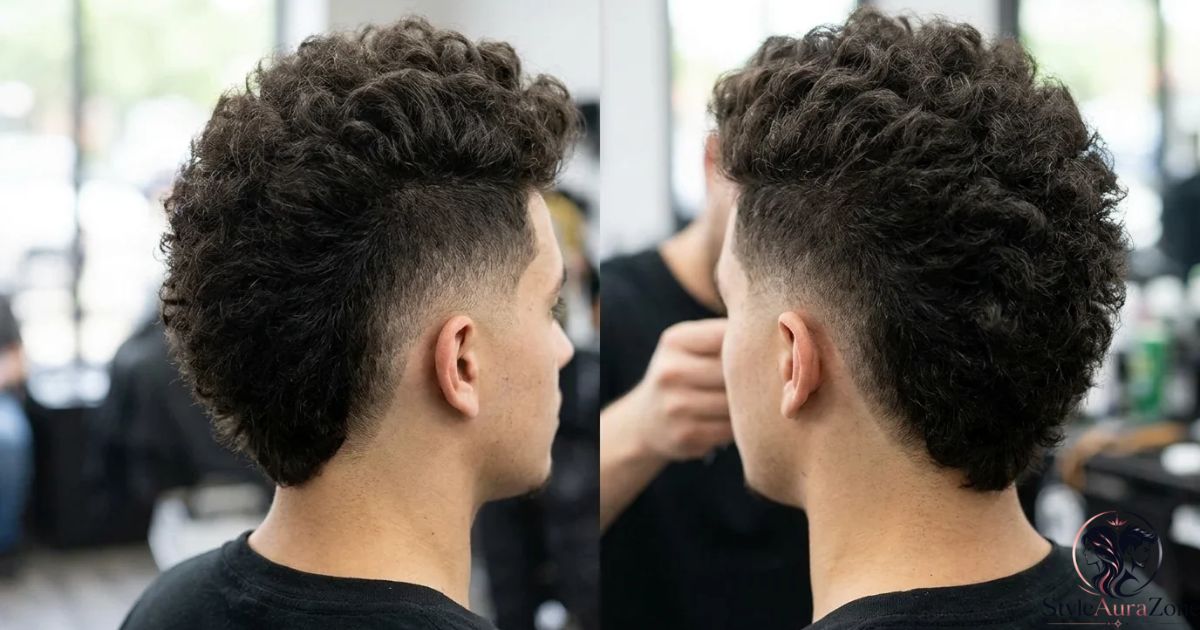
Every texture works, because the fade lives on the sides and the texture lives on top. The top just needs the right length to balance the arc.
| Hair texture | How the burst looks | Top-length tip |
| Straight | Shows the curve most clearly | Leave enough length for a part or movement |
| Wavy | Soft, natural contrast | Keep a few inches for the wave to show |
| Curly | Strong contrast against defined curls | Leave extra, since shrinkage hides length |
| Coily or Afro-textured | Bold, sculpted frame for twists or an afro | Check the length dry, not stretched |
Straight hair has the least volume to hide behind, so a flat top looks flat next to a sharp fade. Curly and coily hair shrinks, which makes it longer than it looks. Ask your barber to judge length while the hair is dry.
How Do Head Shape, Density, and Lifestyle Affect the Choice?
Skip the face-shape charts. These four factors change the recommendation far more:
- Fine or thinning hair: It holds less contrast, so choose a guard finish over skin.
- Thick hair: It keeps a crisp edge longer between visits.
- Office dress code: A low burst with a guard finish reads quiet and polished.
- Busy calendar: If you can’t rebook every three weeks, pick the version that softens gracefully.
Low vs Mid vs High Burst Fade: Which Should You Choose?
Low, mid, and high describe how far up the side the arc climbs. The curved shape stays the same. Only the height and the strength of the contrast change.
| Version | Where the arc sits | Contrast | Best for |
| Low burst fade | Just above the natural hairline, close to the ear | Subtle | First-timers and conservative workplaces |
| Mid burst fade | Around the temple midpoint | Balanced | Most people |
| High burst fade | Near the upper temple and crown | Bold | High-contrast looks with frequent upkeep |
What Is a Low Burst Fade?
A low burst fade keeps the arc tight to the ear and the hairline. Most of the side length stays, so the contrast is gentle. It grows out the easiest and is the safest first booking.
What Is a Mid Burst Fade?
A mid burst fade lifts the arc to the middle of the side. It’s visible enough to read clearly as a burst without feeling extreme. If you’re unsure, this is the sensible starting point.
What Is a High Burst Fade?
A high burst fade pushes the arc up near the temple and crown. It creates the sharpest line between the sides and the top. Nothing sits above the arc to soften it, so agree on exactly where the curve ends before the clippers start.
Best Burst Fade Styles to Show Your Barber
The arc looks different depending on what sits above it. Each style below changes the top and back silhouette, so each is a separate request.
1. Burst Fade Mullet
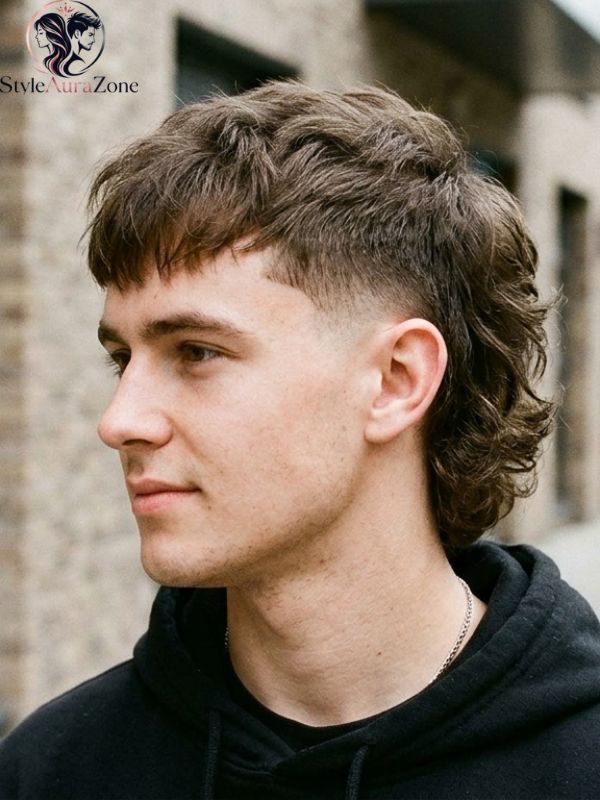
This is the pairing that made the burst famous. The arc stays tight around the ear while length runs through the crown and down the nape. The contrast between short sides and a long back is the whole point.
Ask for: a tight burst, the back left long, and no blending upward into the back length.
2. Burst Fade Mohawk or Faux Hawk
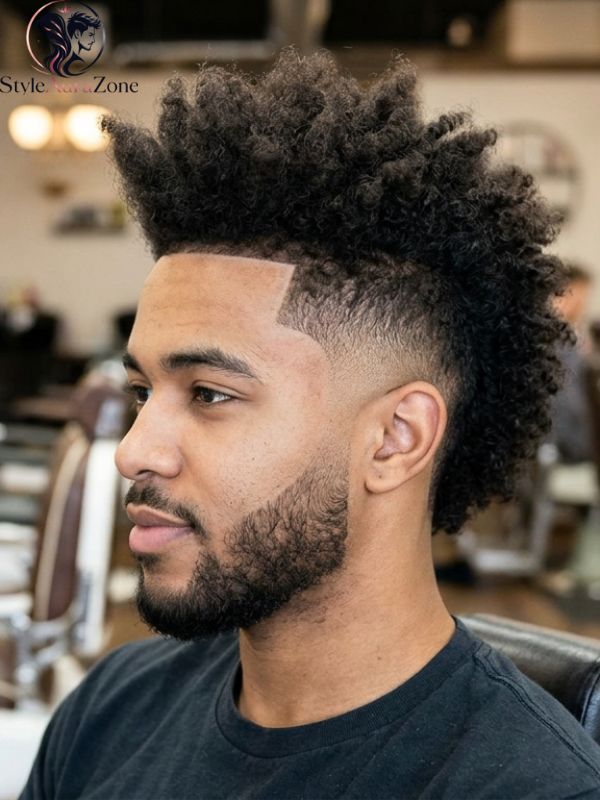
Curved sides pull the eye toward the strip of length down the center. A true mohawk narrows the top into a strip. A faux hawk styles the top upward without cutting the sides away, which makes it the lower-commitment choice.
Ask for: a mid burst with the center left long enough to push up and back.
3. Curly or Coily Burst Fade
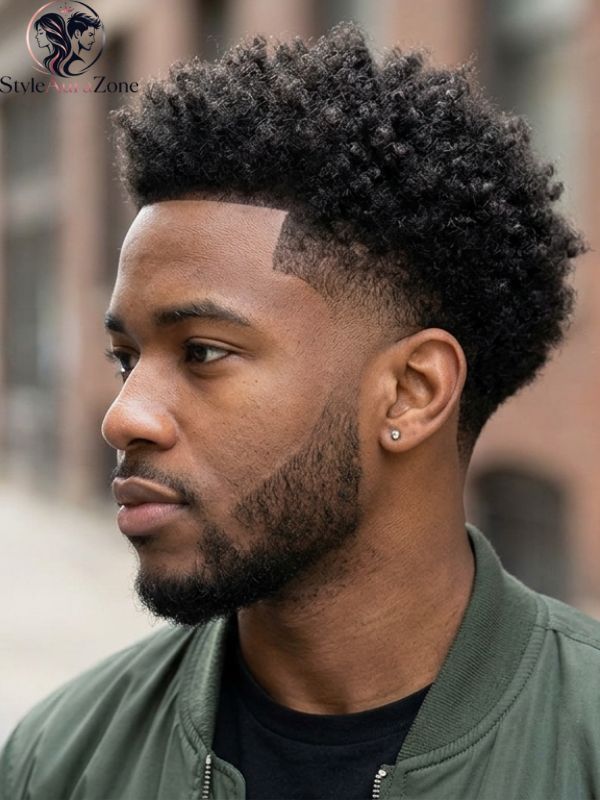
Curls on top against a clean arc below create the strongest contrast this cut offers. Leave more length than feels necessary, because shrinkage takes some back. Twist-outs and rounded afros hold the shape well as the fade softens.
Ask for: extra length on top, a mid burst, and the nape left curly.
4. Short or Textured-Top Burst Fade
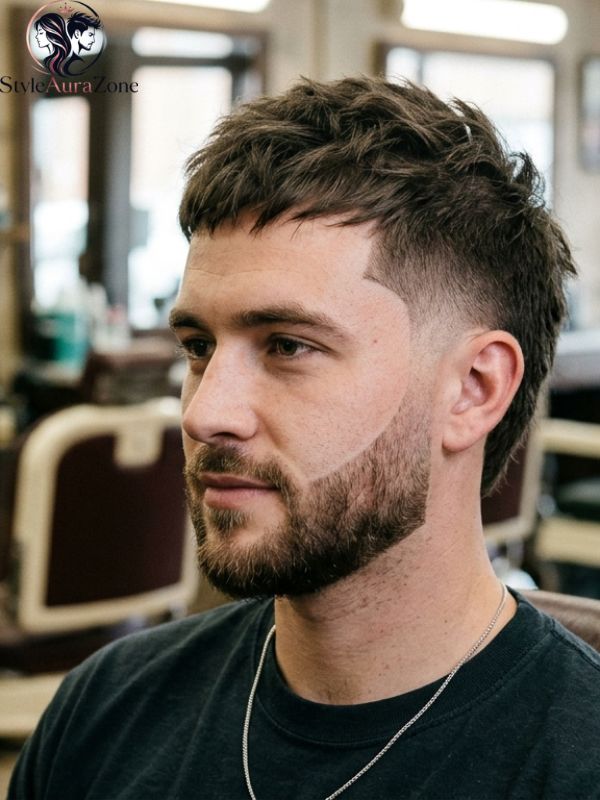
You don’t need a long top. With a short textured crop or light fringe, the arc turns into a quiet detail. It’s the easiest way to try the shape without a big style change.
Ask for: a low burst, a textured crop, and a soft neckline.
5. Straight or Wavy Burst Fade
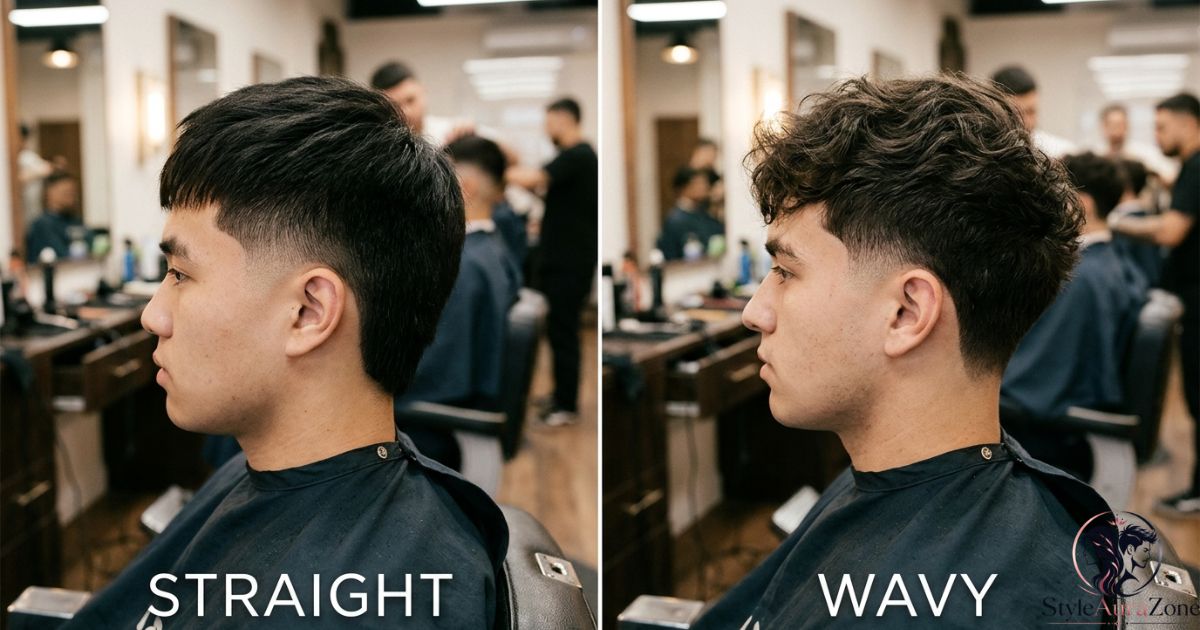
Straight and wavy hair show the geometry clearly, so the top needs direction. A defined side part, a swept-over fringe, or enough length for visible movement keeps it from looking unfinished.
Ask for: a mid burst, a defined part, and enough length to style with a comb.
Burst Fade vs Drop Fade, Taper Fade and Skin Fade
These terms overlap, and shops don’t use them identically. Two describe a shape and two describe a depth, which is where the confusion starts.
| Cut | What it describes | Fade line | Best when |
| Burst fade | Shape | Semicircle around the ear | You want an ear-framing curve |
| Drop fade | Shape | Dips lower behind the ear toward the neckline | You want a fuller, rounder crown |
| Taper fade | Depth | Stops at short stubble | You want an easy grow-out |
| Skin fade | Depth | Goes all the way to bare skin | You want maximum contrast |
Burst Fade vs Drop Fade
Both curve behind the ear, so they’re easy to mix up. Look at where the line ends up. According to the Forte Series comparison cited by Luxe Digital, a drop fade dips lower behind the ear and looks more angular, while a burst curves around the ear and into the neck. Some barbers use the two names interchangeably. A photo settles the question faster than vocabulary.
Burst Fade vs Taper Fade
These two aren’t rivals. A taper describes depth, meaning the fade stops at short hair instead of bare skin. A burst describes shape. You can combine them into a burst taper fade, which gives you the curve with a softer, more forgiving grow-out.
Burst Fade vs Skin Fade
A skin fade tells your barber how short to go. A burst tells them how to shape the line. Put them together and you get a skin burst fade. Specify the finish out loud, since some barbers assume skin and others assume a guard.
How to Ask Your Barber for a Burst Fade
Barbers can’t read minds, and “burst fade” alone leaves a lot of blanks. Fill them in with a short brief.
Use a Five-Point Barber Brief
- Arc height: Low, mid, or high. Point to where you want the curve to stop.
- Arc width: Tight and close to the ear, or wide and dramatic.
- Finish: Skin, or a specific guard number.
- Nape and back: Keep the length, taper it, or blend it.
- Top and edges: Top length, style, and whether you want a sharp line-up or a natural hairline.
Put together, it sounds like this:
“A mid burst, fairly tight around the ear, finished at a one instead of skin. Keep the length at the back. Leave the top long enough to style, and give me a natural hairline.”
What Should Your Reference Photo Show?
Bring two photos: one from the side and one from the back. Choose hair with a similar texture and density to yours. A front-facing shot hides the arc and the nape, which are the two details that matter most.
What Are the Most Common Miscommunications?
| Mistake | What goes wrong | Quick fix |
| Not mentioning the back | Nape comes out shorter than expected | Say “keep the length at the back” |
| Assuming “burst” means skin | You get a skin finish you didn’t want | Name the guard number |
| Mixing up burst and drop | The curve lands in the wrong place | Show a side and back photo |
| Skipping the arc width | Result looks too bold or too faint | Say “tight” or “wide” |
How Do You Style a Burst Fade?
The fade holds its own shape. Your daily routine is all about the top, and it takes a few minutes. Blow-drying in the direction you want the hair to sit does more than any product.
Styling by Hair Texture and Top Style
| Top style | Product type | Quick method |
| Straight or wavy | Matte paste or light cream | Blow-dry in the direction of the part, then comb |
| Curly | Curl cream on damp hair | Scrunch and air-dry or diffuse |
| Coily | Moisturizing cream or light oil | Define with fingers, let it set, then fluff |
| Mullet | Sea salt spray or light cream | Scrunch the back and tousle the crown |
| Faux hawk | Strong-hold clay or wax | Push the center up and back with your fingers |
Treat products as categories to shop in, not as one-size-fits-all picks. Hair varies too much for a single recommendation.
How Long Does a Burst Fade Last, and How Do You Maintain It?
Plan on two to three weeks before the arc loses its edge. Regrowth shows first behind the ear, right where the hair is shortest. A high or skin-finished burst fades sooner. A low, guard-finished one stretches longer.
Touch-Up Timing and Grow-Out
| Version | Sharp for | Rebook around |
| Low burst, guard finish | 2 to 3 weeks | 3 to 4 weeks |
| Mid burst, skin finish | 2 weeks | 2 to 3 weeks |
| High burst, skin finish | 1 to 2 weeks | 2 weeks |
These are barbershop rules of thumb, not biology. Your growth rate changes everything. As the cut grows out, the contrast softens instead of turning ugly. If you’re stretching time between visits, ask for a neckline clean-up only and leave the arc alone.
Scalp and Skin Care for Very Close or Skin Bursts
Skin-level cuts can irritate sensitive skin. Hair cut very close can curl back into the skin and cause razor bumps. DermNet notes this is more common with tightly curled, coarse hair.
Try these simple habits:
- Choose a short guard instead of bare skin if bumps keep showing up.
- Cleanse the area gently and moisturize.
- Skip picking at bumps.
- See a clinician if irritation persists or leaves marks.
Is a Burst Fade Right for You?
It suits you if you want a distinctive side profile and don’t mind more frequent visits. It’s a weaker fit if you want six weeks between cuts or if your barber rarely cuts curved fades.
Main Benefits
- A side profile that standard fades can’t match.
- Works on every hair texture.
- Pairs with mullets, mohawks, curls, and crops.
- The low version stays understated.
- Easy to change up by swapping only the top.
Trade-Offs and Edge Cases
- Demands more barber skill than a level fade.
- High and skin versions need earlier touch-ups.
- Skin finishes can irritate bump-prone skin.
- The biggest letdown is a nape that came out shorter than you pictured.
What Are the Best Alternatives to a Burst Fade?
If the curve or the upkeep doesn’t fit your life, these three get you close.
| Choose this | If you want |
| Drop fade | A curve that follows the back of the head with a fuller crown |
| Low taper | The softest finish and the gentlest grow-out |
| Standard low or mid fade | A level line that works with the widest range of tops |
Burst Fade FAQs
What Is a Burst Fade in Simple Terms?
It’s a fade that curves in a semicircle around the ear. The hair is shortest behind the ear and gets longer as it moves outward.
Is a Burst Fade the Same as a Drop Fade?
No. A burst circles the ear, while a drop dips lower behind it toward the neckline. Bring a photo, because some shops blur the terms.
Can You Get a Burst Fade Without Going to Skin?
Yes. Shape and closeness are separate choices. Ask for a specific guard number and confirm it before the first pass.
How Often Do You Need a Touch-Up?
Most people rebook every two to three weeks. High and skin versions need visits closer to two weeks.
Does a Burst Fade Work With a Beard?
Yes. Ask for the sideburn to blend into the beard instead of stopping at a hard line. Bring it up at the start of the consultation.
Can You Wear a Burst Fade With Short Hair on Top?
Yes. A textured crop or side part works well. The arc just reads as a subtle detail instead of a bold statement.
Conclusion
A burst fade is a shape, and the shape is only half the haircut. Height, finish, nape length, and top style complete it. Say all four out loud before the clippers start, and a curved fade becomes one of the easiest cuts to get right, and far less stressful to book.
Save a side photo and a back photo on your phone before your next visit. Match them to your hair texture if you can. Book a touch-up around the three-week mark and keep skin care simple. Do that, and your burst fade will look sharp week after week.