
Low Taper Fade with Barbershops everywhere are seeing the same request over and over: a low taper fade paired with a textured fringe. It’s the kind of cut that looks sharp without trying too hard, and it works whether your hair is straight, wavy, or curly. That combination of ease and versatility explains why it’s dominating men’s grooming in 2026.
This guide breaks down exactly what the cut is, why it caught on, and how to get it right. You’ll find the main variations, styling steps for home upkeep, maintenance timelines, and answers to the questions men ask most before sitting in the chair.
What Is a Low Taper Fade Textured Fringe?
A low taper fade textured fringe blends two separate techniques into a single, cohesive haircut. The fade handles the sides and back, while the fringe brings personality to the front.
Here’s what each part actually does:
- Low taper fade: The hair tapers down gradually near the ears and along the neckline, instead of starting higher up the head. Because the fade sits low, the sides keep more length overall, which softens the transition and avoids the stark line you’d get from a higher fade.
- Textured fringe: The top section stays longer and gets cut with point-cutting or slide-cutting techniques. This breaks up the ends so the fringe falls with movement and separation instead of sitting as one flat, blunt slab.
Put together, the result reads as controlled on the sides and expressive up top. That contrast is the whole appeal — the fade keeps things tidy, and the fringe keeps things interesting.
| Feature | Low Taper Fade | High/Mid Taper Fade |
| Where the fade begins | Near the ears and neckline | Above the ears or at the temples |
| Amount of scalp shown | Very little | Noticeably more |
| How it grows out | Slowly and evenly | Loses shape faster |
| Best suited to | Nearly all face shapes | Oval and oblong faces especially |
| General impression | Understated, adaptable | Sharp, high-contrast |
Why This Style Became So Popular

A handful of haircuts break out of the barbershop and into everyday conversation. This one did, and for reasons that go beyond looks alone.
- It flatters almost anyone. Because the low taper doesn’t expose much scalp, it feels less extreme than a skin-tight fade, and the softened fringe balances a wide range of face shapes.
- It adapts to your day. Comb the fringe forward for a tidy look at work, then run your fingers through it for something looser at night. Same cut, two completely different vibes.
- Social platforms spread it fast. Barbers posting transformation clips on TikTok and Instagram put this style in front of millions of people who’d never have stumbled onto it otherwise.
- Upkeep stays manageable. A low taper doesn’t demand weekly trims to stay sharp, and the fringe needs little more than a bit of clay worked through with your fingers.
- Younger guys and their parents both approve. It reads as modern enough for teenagers, yet neat enough to pass most school or workplace dress codes.
Variations of the Low Taper Fade with Textured Fringe
No two heads of hair are identical, so barbers have built out several takes on this cut. Here’s how each one differs.
Short Textured Fringe

The fringe stays trimmed near the eyebrow line or slightly above it, still point-cut for texture but kept compact and neat. It’s a solid pick for anyone easing into the style or working in a conservative environment, and it tends to suit wider foreheads well since the shorter length draws less attention upward.
Works well for: office jobs, school settings, first-time try, wider foreheads.
Wavy Fringe with Low Taper

When natural wave is already present, the barber cuts with it rather than against it, letting the fringe fall in loose, uneven curves across the forehead. Instead of fighting years of trying to flatten that texture, this variation puts it to work.
Works well for: naturally wavy hair, medium density, relaxed everyday looks.
Curly Fringe Low Taper
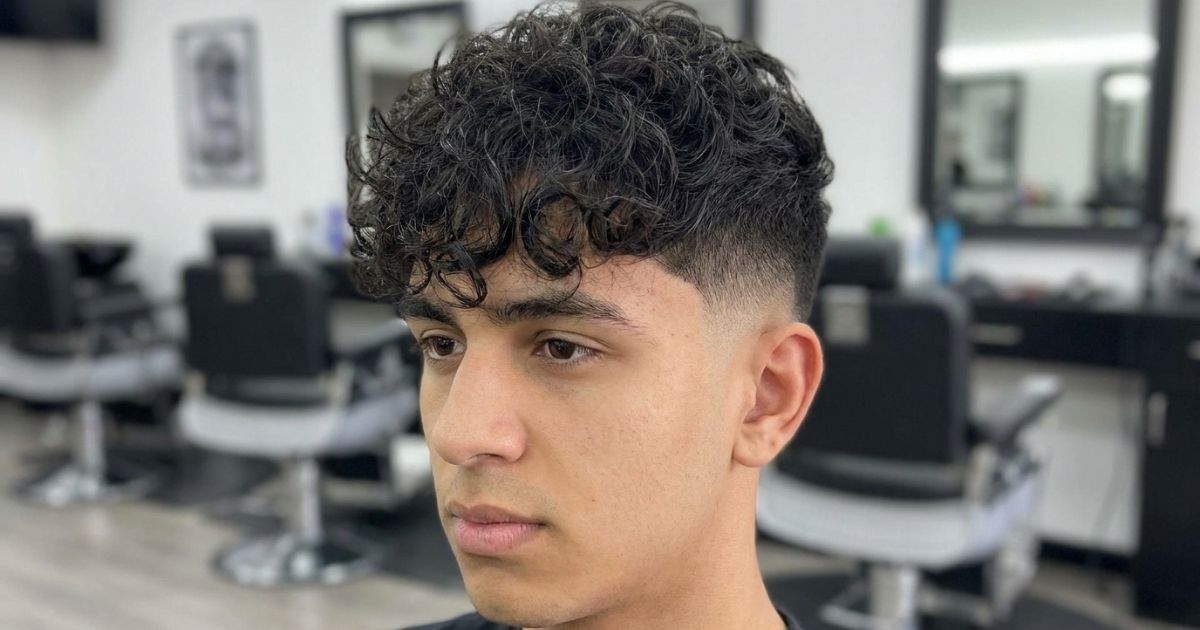
Curly hair tends to expand outward on the sides, and the low taper keeps that bulk under control. Up top, curls are shaped to frame the face rather than obscure it, with a little extra length built in to account for how much curls shrink once they dry.
Works well for: all curl patterns, guys embracing their natural texture, oval and square faces.
Messy Textured Fringe

This is the loosest, most undone version of the cut. The fringe runs a bit longer, layers cut deeper, and the finished look is meant to feel unplanned — even though real technique goes into achieving it. Thicker hair holds this shape especially well because the added weight keeps the texture from collapsing.
Works well for: thick or coarse hair, casual lifestyles, teens and young adults.
Layered Fringe with Low Taper
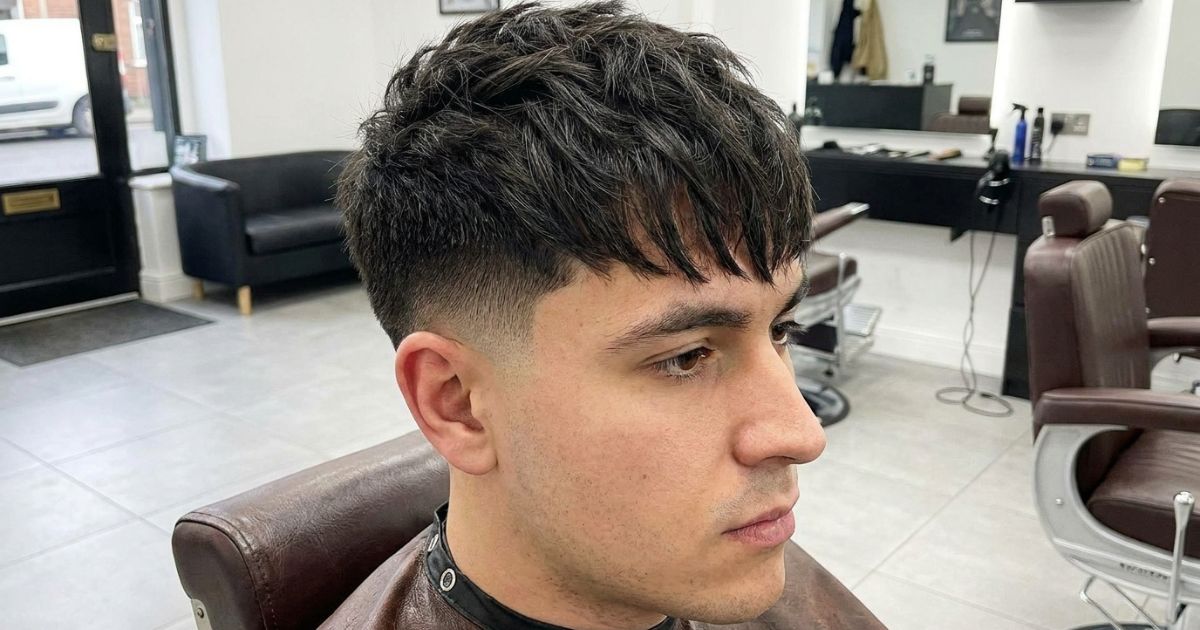
Layering throughout the top section builds volume and bounce, which helps fine or flat hair look noticeably fuller. It also gives the barber more control to shape the fringe around specific face proportions — adding width for a longer face, or height for a rounder one.
Works well for: fine or flat hair, guys chasing extra volume, longer or rounder face shapes.
How Your Barber Creates This Haircut
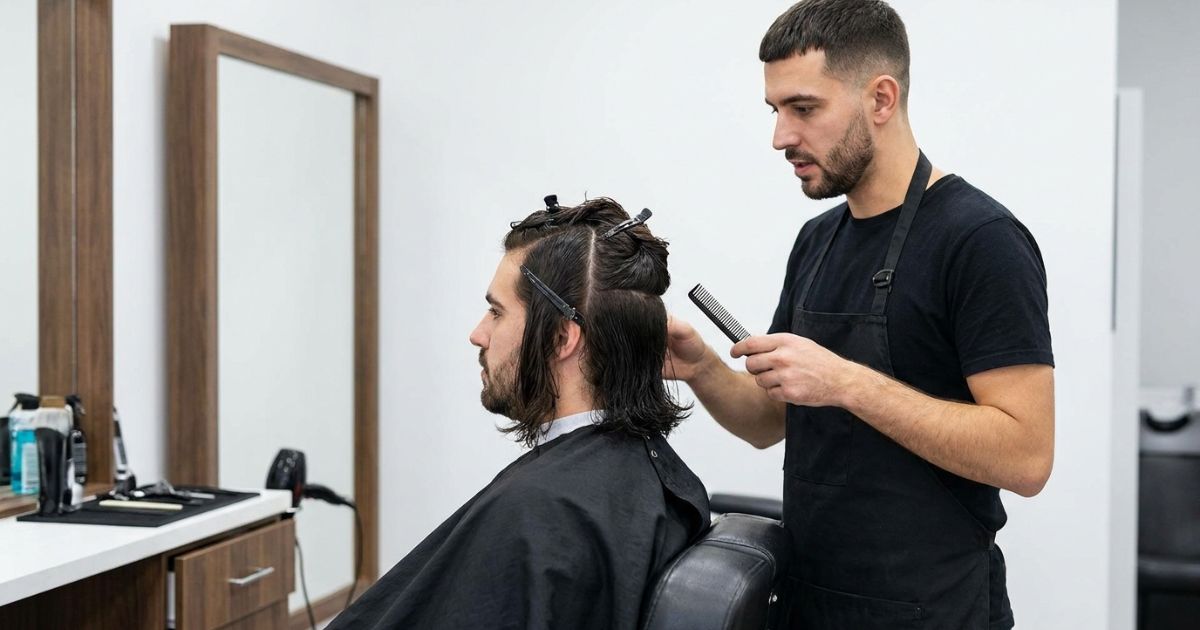
Knowing the process makes it easier to describe what you want and spot when something’s off. A skilled barber typically works through these stages:
- Consultation. They’ll ask about your hair type, morning routine, and whether you wear glasses — all of it shapes the final decisions.
- Fringe first. Cutting the top section early establishes the target length everything else builds around.
- Layering. Layers get worked through the crown to give the fringe movement once it falls forward.
- Fading the sides. Clipper guards step down gradually, often from a #2 or #3 near the crown to a #0 or #1 near the ears and neckline, blending each pass so there’s no visible line.
- Detail work. A trimmer sharpens the hairline, and shears or a razor smooth out any remaining transitions.
- Dry check. The barber lets everything fall naturally and makes small corrections once the hair is dry.
Learn more:Low Taper Mullet Guide 2026: Best Styles & Care
What to Say to Your Barber
Bring a photo if you have one, but these phrases help get the point across:
- “I want a low taper starting near my ears and neckline, blending to nothing.”
- “Keep about two to three inches on top and point-cut the fringe — I want movement, not a straight edge.”
- “Let the fringe land just above my eyebrows with a piecey finish.”
- “Keep the sides clean but not shaved down — I want it to look natural.”
How to Style a Low Taper Fade Textured Fringe at Home
You don’t need a full counter of products to keep this looking right. A short, repeatable routine gets the job done.
- Wash and towel-dry your hair until it’s damp, not dripping — this is the ideal state for product to grip.
- Pick a product suited to your hair type (see the table below).
- Work it through with your fingertips, starting at the back and moving forward. Skip the comb; it flattens the texture you’re trying to build.
- Push the fringe forward and slightly down, lifting small sections to create separation.
- If you want more lift, blow-dry on low heat while lifting the roots with your fingers.
- Once dry, pinch a few pieces together to define the ends and finish the piecey look.
| Hair Type | Recommended Product | Why It Works |
| Straight or fine | Texture powder or matte clay | Builds grip and lift without added weight |
| Wavy | Sea salt spray | Brings out natural wave pattern |
| Curly | Lightweight curl cream | Defines curls and keeps frizz down |
| Thick or coarse | Matte clay or paste | Controls bulk while holding texture |
Maintenance and Hair Care

Barber Visits
This cut is lower-maintenance than a full skin fade, but it still needs regular attention to stay sharp.
| Preferred Look | Suggested Visit Frequency |
| Crisp, tight fade | Every 2–3 weeks |
| Natural, slightly grown-out | Every 3–5 weeks |
| Loose and casual | Every 4–6 weeks |
Each visit, expect your barber to refresh the fade line, trim the fringe back to length, thin out any buildup on top, and reshape layers that have started to sag.
At-Home Care
- Wash two to three times a week. Daily shampooing strips natural oils the fringe needs to hold texture.
- Use a light conditioner. It keeps the fringe soft without weighing it down.
- Skip heavy products. Thick gels and waxes turn the fringe greasy and stiff — stick to matte finishes.
- Guard against humidity. A light anti-frizz spray helps the fringe keep its shape through the day.
- Style with fingers, not a brush. Repeated brushing undoes the layering your barber worked to create.
Who This Haircut Suits Best

Face Shapes
| Face Shape | How the Cut Helps | Fringe Adjustment |
| Round | Low taper adds definition; fringe adds forward length | Slightly longer fringe elongates the face |
| Square | Soft, textured fringe eases a strong jawline | Avoid a blunt edge; keep it layered |
| Oval | Naturally balanced; most versions work | Choose based on personal taste |
| Long/rectangular | More width on top balances proportions | Shorter fringe avoids extra height |
| Heart/diamond | Fringe fills out a narrower forehead | Medium length with volume near the crown |
Hair Types

- Straight hair: Point cutting manufactures texture that wouldn’t happen naturally. Gripping products like matte clay do most of the work.
- Wavy hair: The wave carries much of the style on its own, so light products and air-drying are usually enough.
- Curly hair: The low taper reins in width on the sides, and extra length on top accounts for shrinkage as curls dry.
- Fine hair: Layering tricks the eye into seeing more volume; a medium fringe length prevents it from looking limp.
- Thick or coarse hair: Slide cutting removes bulk without shortening the fringe, and this hair type often holds the messy variation best.
The Style’s Journey and What’s Ahead
Taper cuts have roots stretching back to mid-century barbering, when short, neat sides were the standard for a clean appearance. Fringe-forward styles came from a different direction entirely, popularized decades later as a way to frame the face with movement. Modern barbers eventually merged the two, producing a cut that’s tidy where it needs to be and expressive everywhere else.
Social media pushed the style well past its original niche. Once barbers began sharing sharp before-and-after transformations, requests for this exact combination spread across regions and age groups far faster than trends used to travel.
Looking ahead, a few shifts are worth watching:
- Softer tapers overall. Ultra-tight skin fades are giving ground to more relaxed, blended tapers — a shift this cut is already ahead of.
- More individualized fringe lengths. Barbers are tailoring fringe length to face shape and density rather than defaulting to one standard cut.
- A continued move toward matte, natural finishes. High-shine products are fading out in favor of lived-in texture.
- Small creative add-ons. Subtle highlights, shaved side details, or a center part in the fringe are showing up more often.
- Perms as a companion service. Loose wave perms are gaining traction as a way to build permanent texture into the fringe.
The core structure — clean low taper, expressive top — isn’t going anywhere. It’s flexible enough to absorb these small shifts without losing what makes it work.
Low Taper Fade Textured Fringe: Asked Questions
How is a low taper different from a mid or high taper?
A low taper begins near the ears and neckline, while mid and high fades start higher up the head. The low version grows out more gracefully and suits a broader range of face shapes.
Will this cut work if my hair is thinning?
Yes. A forward-falling fringe helps mask a receding hairline, and extra layering adds the appearance of fullness on top.
What’s the best product for a textured fringe?
It depends on your hair type — matte clay for straight or fine hair, sea salt spray for wavy hair, and curl cream for curly hair.
How long does the cut usually take?
Most barbers finish it in 30 to 45 minutes, longer if you’re adding a beard trim or a line-up.
Is it appropriate for a professional setting?
Yes, especially when the fringe is styled forward at a moderate length. The low taper keeps the sides looking neat and controlled.
Can teenagers or younger boys wear this style?
It’s one of the more popular cuts for younger guys right now, since the sides stay tidy while the top still has personality.
How do I know my barber nailed the cut?
Look for visible separation and movement in the fringe, plus a fade that blends without any sudden lines. Speak up if either looks off.
Can I grow this cut out into something else later?
Yes. Tell your barber ahead of time, and they’ll shape the layers so it transitions smoothly into a longer style down the road.
FAQ’S
What exactly is a low taper fade with textured fringe?
It’s a haircut combining a subtle, low-starting fade on the sides with a longer, choppy fringe on top, giving you clean structure paired with expressive, movement-rich styling up front.
Who does this haircut suit best?
Almost everyone. It flatters round, oval, square, and heart-shaped faces, and adapts well to straight, wavy, and curly hair, making it one of the most versatile modern cuts available.
How often do I need a trim to maintain it?
Plan on visiting your barber every three to five weeks. Tighter fades need attention sooner, while looser, more natural styles can comfortably stretch closer to six weeks between visits.
What’s the easiest way to style it at home?
Apply a small amount of matte clay or texture powder to damp hair, then use your fingers to push the fringe forward, creating natural separation without relying on a comb.
Can this haircut work for a professional workplace?
Absolutely. Keep the fringe styled neatly forward at a moderate length, and the low taper reads as polished and put-together, fitting comfortably into most office dress codes.
Conclusion
The low taper fade with textured fringe earns its popularity honestly. It’s controlled where it counts and expressive where it matters, and it adapts across nearly every hair type, face shape, and daily routine without asking for constant upkeep. Few haircuts manage that kind of everyday reliability, which is exactly why barbers keep recommending it.
If you’re ready to try it, bring a reference photo and be specific about your routine when you sit down. Get the maintenance schedule and product choice right for your hair type, and this cut will keep looking sharp with very little daily effort on your part.