
Long hair on top. Clean, low fade on the sides. That’s the combo turning heads everywhere right now. Low taper long hair isn’t just a haircut it’s the one style your barber keeps getting asked for. It works on straight hair, wavy hair, curly hair, pretty much any face shape you’ve got. Sharp for weeks, not days. Sharp at your desk, sharp on a Friday night out. No wonder low taper long hair has become the go-to move for guys who want more than just another basic cut.
Here’s the real magic: low taper long hair gives you the best of both worlds. Short, blended sides. Long, full top. Structure where you need it, freedom where you want it. Nail the cut and this style never looks messy or overgrown it just looks like you know exactly what you’re doing. That’s low taper long hair done right.
What Is A Low Taper Fade With Long Hair, And Who Does It Work Best For?
A low taper fade with long hair keeps the top full length while the sides fade gently. The fade starts close to the ears, not up near the temples. This keeps the whole look soft and easy to wear anywhere.
It suits almost every guy. Straight, wavy, curly, and coily hair all work with this cut. Oval faces can wear any version, while round faces look best with a bit more height on top.
You don’t need a dramatic haircut to look sharp. This style proves that a small, careful fade paired with long hair does more for your look than a bold, high-contrast cut ever could.
What Is A Low Taper Fade With Long Hair?
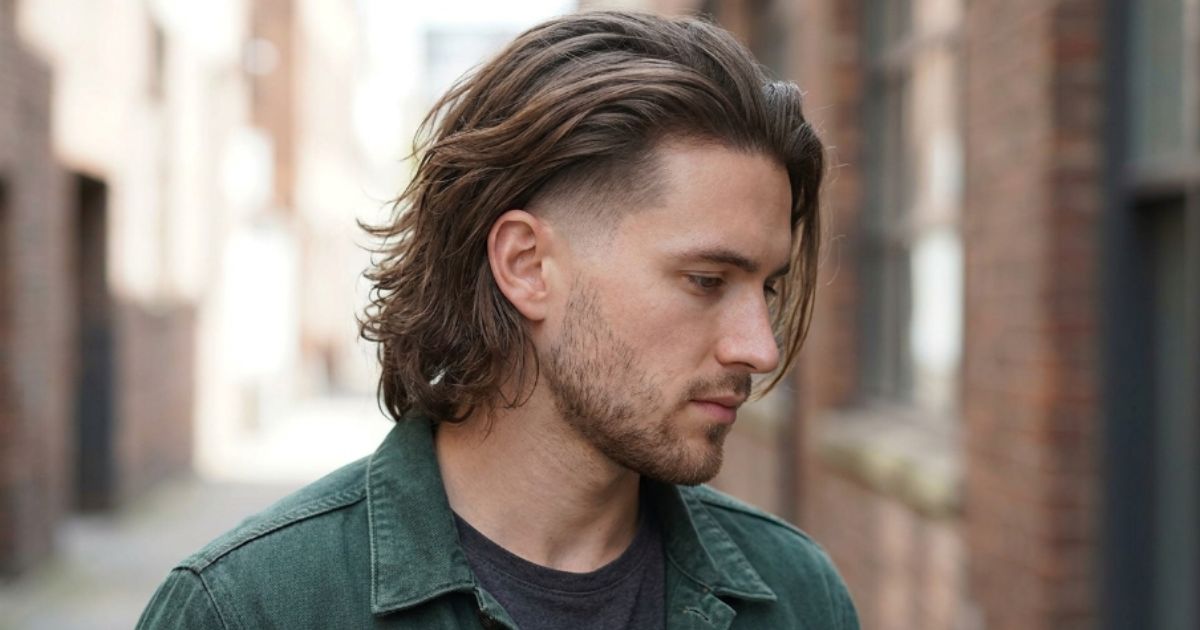
This haircut keeps the top section completely long. The sides and back are gradually blended shorter, starting just above the ears. Nothing on top gets touched, so your natural length stays exactly as it was.
The word “low” tells you where the fade sits. It starts near the natural hairline around the ears, not higher up the head. This placement keeps the cut looking calm rather than dramatic.
The end result is neat and balanced. Your sides look tidy and controlled, while the top still shows off your natural texture, whether that’s straight, wavy, or curly hair.
How Is A Low Taper Fade Different From A Regular Taper?
People often mix up “taper” and “fade,” but they aren’t the same thing. A taper trims hair gradually shorter without ever reaching the skin. A fade goes further, cutting close to the skin with clippers.
A low taper fade blends both ideas together. It uses fade-style blending but keeps the fade low near the ears. This makes it subtle instead of bold, unlike a high or mid fade.
| Style | Starts At | Goes To | Best For |
| Low Taper Fade | Just above the ears | Near-skin | Everyday, professional wear |
| Mid Taper Fade | Temple level | Skin | Modern, balanced look |
| High Taper Fade | Above temples | Skin | Bold statement |
| Skin Fade | Any point | Fully bald | Maximum contrast |
| Classic Taper | Lower back of head | Some length left | Traditional, conservative |
Where Exactly Does A Low Taper Fade Start?
The fade begins just above the ears, right along your natural hairline. From there, it blends smoothly down toward the neckline. It never rises up toward the temples like a mid fade does.
Barbers usually keep the fade within one to two inches of the ear. This is what makes it “low.” It stays close to where your hair naturally sits instead of moving higher up the head.
Your neckline is the final touch. A barber can leave it soft and rounded, or clean it up with a straight razor for a sharper, squared finish. Either option still looks neat.
Why Is The Low Taper Fade Long Hair So Popular In 2026?
This cut works for almost anyone. It suits straight, wavy, and curly hair, and it looks just as good at work as it does on the weekend. That flexibility is a big reason for its popularity.
Social media and celebrities have pushed the trend further. Viral haircut videos, athletes, and stars with long, wavy hair have shown that long hair paired with clean sides can look sharp, not messy.
Barbering itself has also grown more skilled. More barbers now focus on precise blending and clean lines, which means more men are getting better results from this classic, low-effort style.
35 Best Low Taper Fade Long Hair Styles For Men
Below is a full list of ways to wear this haircut. Each style suits different hair types and face shapes, so you can pick the version that matches your own hair best.
Every style comes with simple guidance. You’ll find who it suits, what to say to your barber, which products help finish the look, and one quick tip for styling it at home.
Use this list as a starting point. Try a few looks that match your hair type, then adjust length and styling until you find the version that feels most like you.
Classic Long Hair Styles
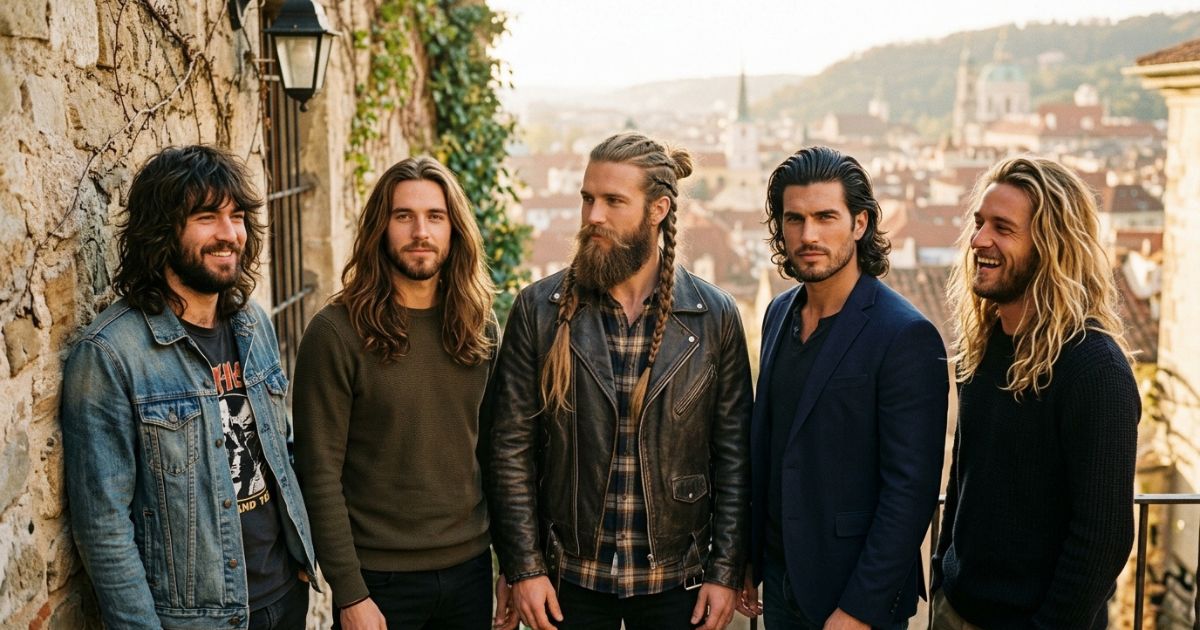
These are the simplest versions of the cut. The top stays long in its most natural form, whether that’s straight, wavy, or curly, while the sides fade cleanly near the ears.
They work well for anyone who doesn’t want a complicated style. You keep your natural hair pattern on top and let the tidy, low fade do the rest of the work.
Classic styles are also the easiest to maintain. There’s no special technique required, just regular trims and a simple fade touch-up every few weeks to keep things looking sharp.
1. Long Hair With Low Taper Fade (The Classic)
This is the original version of the style. The top flows freely at any length, while the sides fade gently starting just above the ears, without ever cutting into the length on top.
It suits oval and rectangular faces best, especially with medium to thick, straight or wavy hair. Tell your barber to leave the top completely untouched and keep the neckline natural at the back.
Use a medium-hold pomade or sea salt spray to style it. Ask for a clipper-over-comb technique near the top of the fade, which blends more softly than clippers alone.
2. Low Taper Fade With Long Slicked Back Hair
The long top is combed straight back, lying smooth and flat. The low taper on the sides keeps everything clean underneath, giving the whole look a sharp, polished, professional feel.
This version suits oval and angular faces with straight or wavy hair. Ask your barber for a low taper starting at the ears, with enough top length to fully slick back.
Use a high-shine pomade or strong gel for hold. Blow-dry the top backward while it’s damp and coated in product, which helps the style last much longer through the day.
3. Low Taper Fade With Long Wavy Hair
Natural waves add real movement here. The top keeps its wave pattern completely intact, while the low taper below gives the whole look a clean, structured base underneath the texture.
This suits square and triangle face shapes with medium to thick wavy hair. Ask your barber to leave the natural wave pattern untouched and only fade the sides starting above the ears.
Use sea salt spray or light mousse for texture. Apply it to damp hair and scrunch upward, never downward, to keep the waves defined without turning them frizzy.
4. Low Taper Fade With Long Straight Hair
Straight hair creates the sharpest contrast with a fade. Every line looks crisp and clean, since straight strands lie completely flat and show off the blend at its most precise.
This works well on oval, heart, and diamond faces with fine to medium straight hair. Ask for a low taper starting above the ears, with no texture cutting anywhere on top.
Use matte clay or a light pomade to finish. A flat iron on low heat can smooth the top even further, but always use heat protectant first to avoid damage.
5. Low Taper Fade With Long Curly Hair
Curls add natural volume and bounce on top. The tapered sides create a clean, tidy border around the curls, so they get to stand out without looking overgrown or messy.
This suits round and square faces with medium to coarse curly hair. Ask your barber to leave the full curl pattern untouched on top and fade only the sides and back.
Use curl cream, leave-in conditioner, and a diffuser. Press moisture out gently with a microfiber towel instead of rubbing, which helps keep the curl pattern healthy and defined.
Tied & Pinned Up Styles
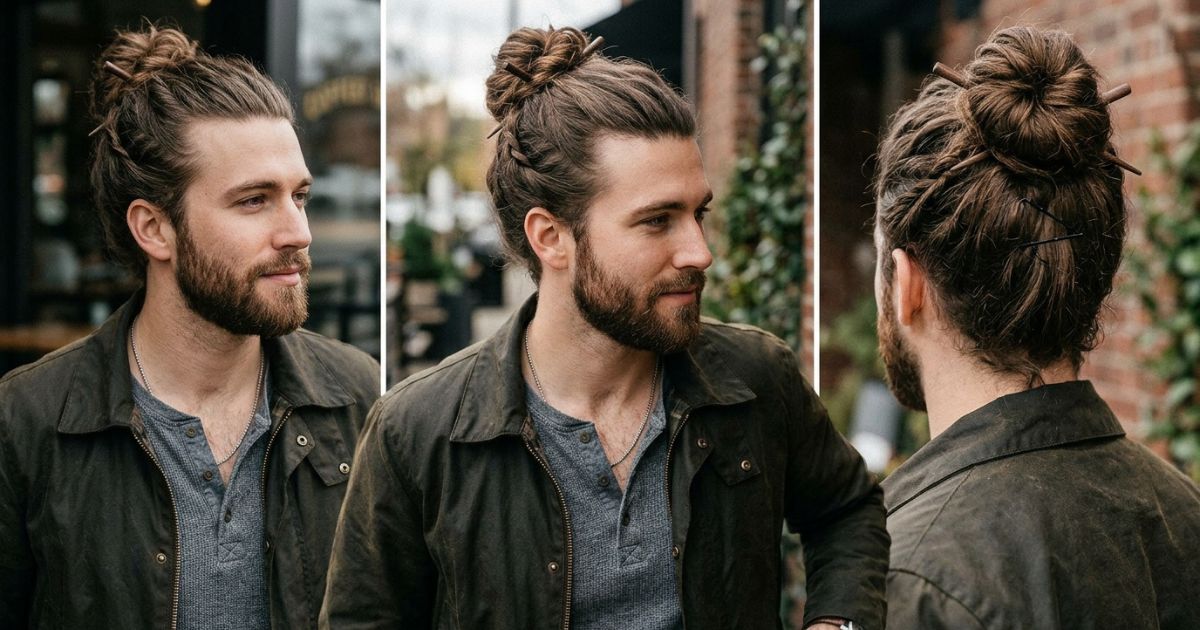
These styles work when your hair is long enough to tie back. The low taper keeps the sides sharp, while the top gets pulled up into a bun, knot, or half-up style.
They’re a great option for gym days or busy mornings. You get a clean look without much daily styling effort, since most of the top simply gets tied back out of the way.
The contrast is what makes these styles stand out. Neat, faded sides paired with a gathered top create a look that feels both relaxed and deliberately put together.
6. Low Taper Fade With Man Bun
The sides fade cleanly near the ears while the top stays long enough to tie into a full bun. It’s a relaxed but tidy look that works in many settings.
This suits square and oval faces with thick, straight to wavy hair. Ask for a low taper with a soft blend into the sideburns, keeping at least four to five inches on top.
Use styling cream or light wax before tying it back. Applying cream to damp hair first helps control flyaways and gives the bun a smoother, more polished finish.
7. Low Taper Fade With Half-Up Long Hair
Only the top half gets tied up, while the rest falls naturally around the face and neck. The low taper keeps the sides looking neat rather than simply grown out.
This works for triangular and oval faces with medium to thick hair. Ask your barber for a low taper from the ears down, leaving enough top length for a half-up tie.
Use light wax or finishing spray to control flyaways. Try changing the height of the half-up bun occasionally, since using the same spot daily can cause breakage over time.
8. Low Taper Fade With Slick Back Bun
The entire top gets combed back flat and secured in a low bun at the nape of the neck. The tapered sides make the whole shape look sharp and deliberate.
This suits square and oval faces with straight, thick hair. Ask for a low taper from the ears down, with enough length on top to comb back fully into a low bun.
Use strong pomade or high-shine gel. Apply it to damp hair, comb straight back, and secure with a clear elastic before it dries to lock the shape in place.
Parted & Framed Styles
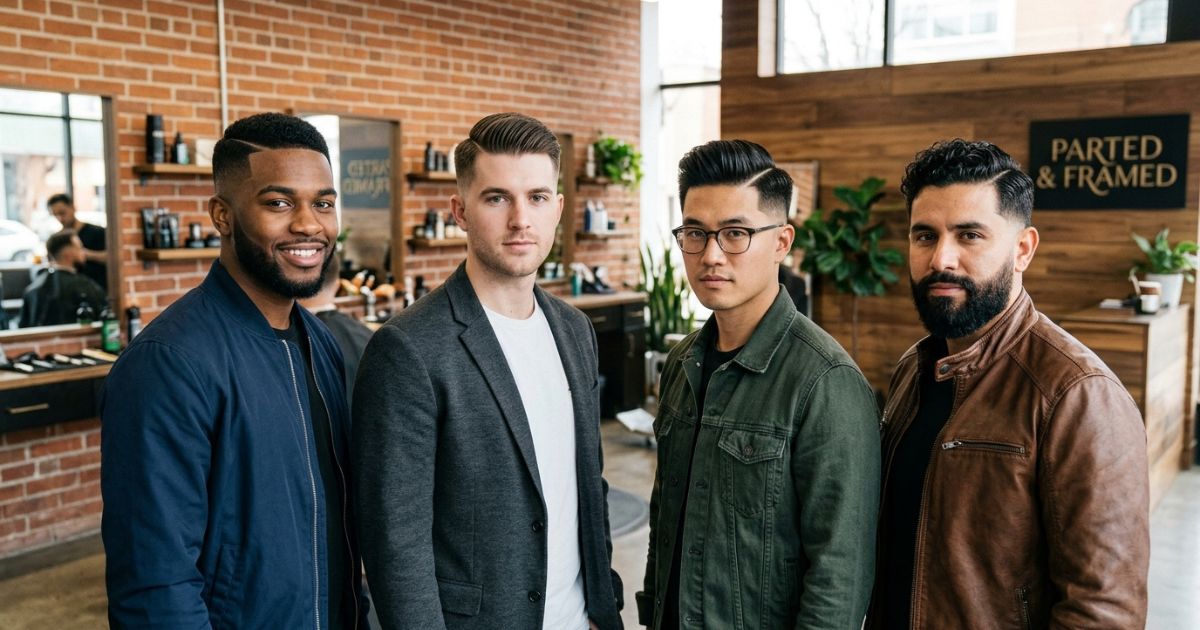
These styles use a part line to frame the face. Whether centered or to one side, the part gives the top direction, while the low taper adds clean structure underneath.
They suit guys who like a bit more definition without going too bold. A sharp part paired with a subtle fade feels classic, tidy, and easy to recreate every morning.
Reference photos help a lot with these cuts. Showing your barber exactly where you want the part can make a big difference in how natural the final style looks.
9. Low Taper Fade With Curtain Hair
Hair is parted in the center and swept to both sides, framing the face like curtains. The low taper underneath stays quiet, letting the soft, parted top do the talking.
This suits heart and diamond faces with straight to wavy hair. Ask for a low taper just above the ears, keeping the top long enough for a full center part.
Use lightweight cream or medium wax. Blow-dry the top in opposite directions first, then release it into the center part, which trains the curtain shape to hold longer.
10. Low Taper Fade With Center-Parted Long Hair
This style uses a straighter, more symmetrical part than curtain hair. Both sides mirror each other closely, giving a clean, balanced look that still feels classic and easy to wear.
It suits heart and diamond faces with straight to slightly wavy hair. Ask for a low taper above the ears, with enough top length for a clean, even center part.
Use a light pomade and a fine-tooth comb. Dip the comb in water to create a sharp part line, then set it lightly so it holds without looking stiff.
11. Low Taper Fade With Side Part
A side part gives long hair a clear sense of direction. The low taper on the opposite side balances it out, making the whole style feel coordinated and put together.
This suits oval and rectangular faces with straight, medium-length hair. Ask for a low taper from the ears down, with a defined side part and optional hard part line.
Use medium pomade and a firm-hold spray. A razor-cut hard part adds a bold, graphic detail if you want the part line to stand out even more.
12. Low Taper Fade With Long Fringe
A longer fringe sweeps down across the forehead, drawing attention to the front. The low taper on the sides keeps the rest of the look calm and balanced underneath.
This suits round and heart faces with thick, straight to slightly wavy hair. Ask for a low taper above the ears, with the fringe falling just below eyebrow level.
Use styling cream and a paddle brush. Blow-dry the fringe downward while it’s still damp, which trains the direction into the hair for faster styling every morning.
Volume & Statement Styles
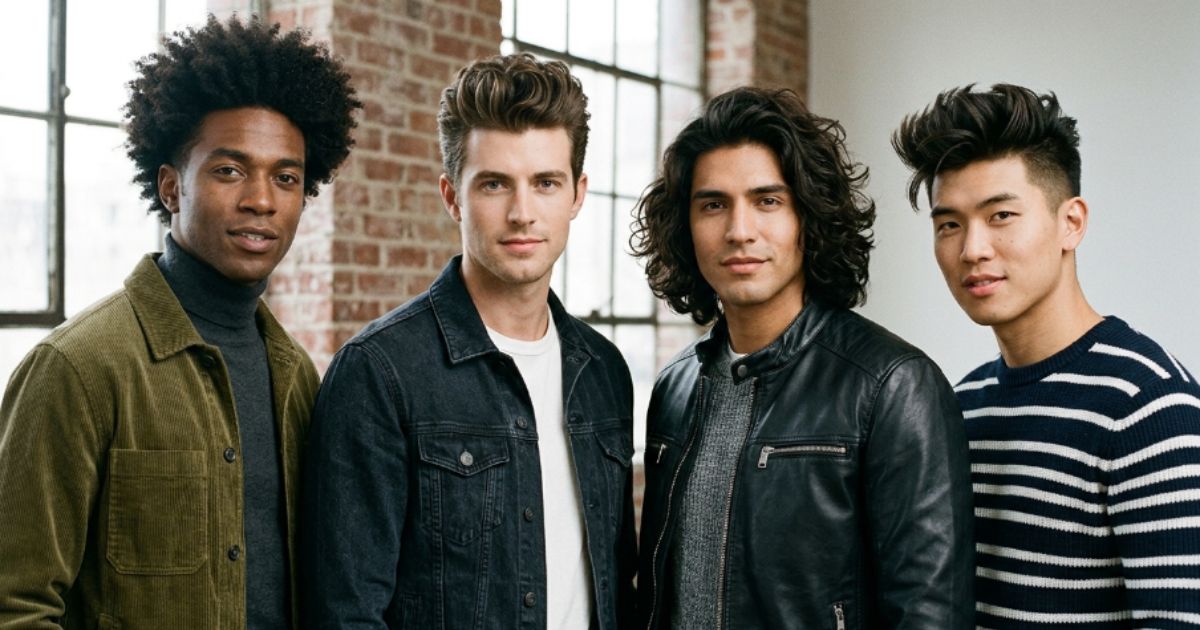
These cuts add height and movement on top. Whether it’s a pompadour, quiff, or big blowout, the low taper keeps the sides simple so the volume gets all the attention.
They suit guys who like a bit more drama in their style. The bold top paired with a quiet, faded base creates contrast without looking overdone or hard to manage.
Styling usually takes a bit more time with these cuts. A blow dryer and round brush are common tools, since lift and direction matter more here than with flatter styles.
13. Low Taper Fade With Long Pompadour
The front lifts up and sweeps back in a full, voluminous wave. The low taper underneath keeps the sides quiet, letting the height and movement on top stand out.
This suits rectangular and square faces with straight to fine hair. Ask for a low taper from the ears down, with extra length at the front for lift and volume.
Use volumizing mousse and medium-hold pomade. Blow-dry the front section upward and back over a round brush, since the root direction decides how long the shape holds.
14. Low Taper Fade With Quiff
The quiff is a more relaxed version of the pompadour. The top lifts with natural movement and a slight backward sweep, while the low taper keeps it from looking too casual.
This suits round and heart faces with wavy, medium-length hair. Ask for a low taper from the ears down, with some lift at the front rather than a stiff, formal shape.
Use medium clay applied to dry hair for the best texture and hold. Wet application softens the matte finish and can make the clay feel heavier than intended.
15. Low Taper Fade With Messy Long Hair
This style leans into natural texture and movement. The top looks tousled and lived-in, but the clean low taper on the sides keeps the overall look feeling groomed, not careless.
It suits oval and oblong faces with medium to thick hair of any texture. Ask for a low taper above the ears, with the top left long and layered for texture.
Use texturizing paste or matte clay with your fingers only, skipping the comb. Air-dry or diffuse for a natural, effortless finish that still looks intentional.
16. Low Taper Fade With Blowout Long Hair
The top gets blow-dried upward for big, noticeable volume. The low taper on the sides stays structured and clean, balancing out the bold height created on top.
This suits round and oval faces with fine to medium straight hair. Ask for a low taper from the ears down, with the top left very long for maximum blow-dry volume.
Use volumizing mousse and a strong-hold spray. A concentrator attachment on your blow dryer gives directional lift, while a diffuser only adds body without real shape.
Retro & Bold Styles
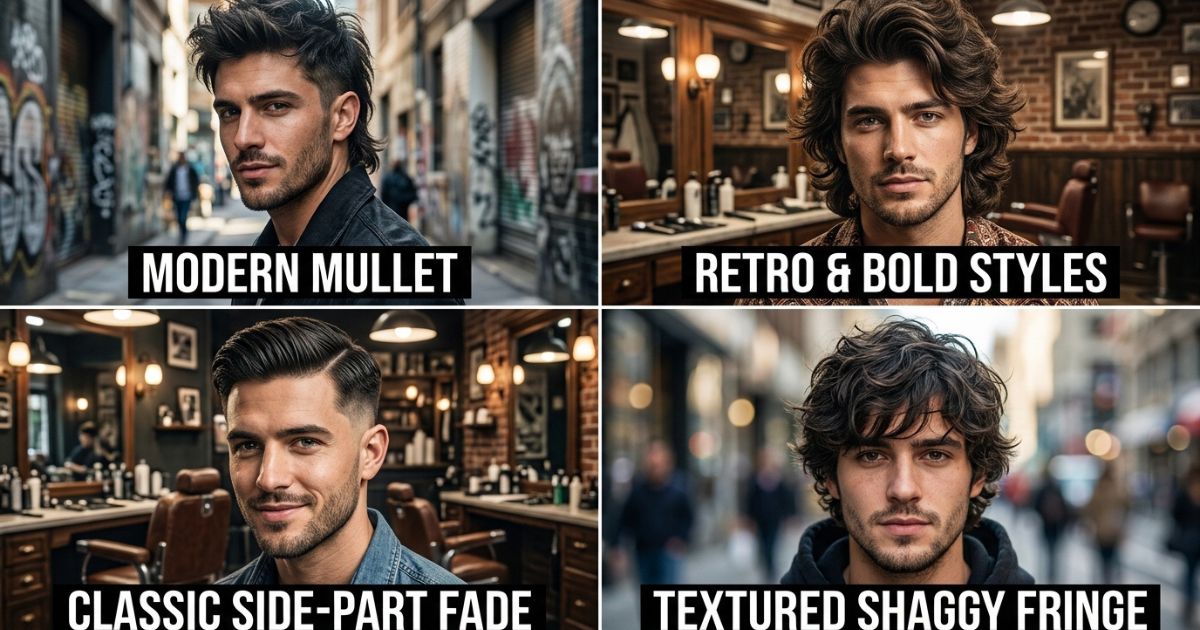
These cuts bring back older, statement-making shapes like mullets and comb-overs. The low taper keeps things wearable today, softening what might otherwise feel like a dramatic throwback style.
They suit guys who want personality in their haircut. Retro styles stand out more than classic cuts, but the quiet fade underneath keeps them from looking outdated or too extreme.
Ask your barber for reference photos when trying these. Retro shapes vary a lot in interpretation, so a clear picture helps avoid ending up with the wrong version.
17. Low Taper Fade With Mullet
The sides fade cleanly while the back stays noticeably longer than the rest. It’s a bold, retro shape that has become one of the most requested cuts in recent years.
This suits oval, round, and heart faces with any hair type. Ask for a low taper on the sides from the ears down, medium length on top, and a long back section.
Use sea salt spray and light texturizing paste. Avoid over-smoothing the top, since natural texture is part of what makes this retro shape feel authentic rather than flat.
18. Low Taper Fade With Curtain Mullet
This combines a center-parted curtain front with a long, mullet-style back. The low taper on the sides ties both halves together into one cohesive, eye-catching shape.
This suits oval and heart faces with wavy to straight hair. Ask for a low taper on the sides, a center part with curtain styling up front, and length left in the back.
Use light cream and sea salt spray. The side profile shows the curtain-to-mullet transition most clearly, which is often the most striking angle for this particular style.
19. Low Taper Fade With Comb Over
Long hair is combed dramatically to one side from a deep part. The low taper keeps the opposite side clean, creating a sleek option for both formal and casual wear.
This suits oval and square faces with straight to fine hair. Ask for a low taper from the ears down, with the top combed clearly to one side and a defined part.
Use strong pomade and a fine-tooth comb. Always comb in the direction of natural hair growth, since fighting it makes the style collapse faster during the day.
20. Low Taper Fade With Long Wolf Cut
The wolf cut is layered and shaggy with plenty of texture. Paired with a low taper, it blends grunge-inspired movement with the precision of a clean, barbered fade.
This suits oval and heart faces with wavy to textured hair. Ask for a low taper from the ears down, with lots of layers, texture, and movement left on top.
Use sea salt spray, light mousse, and texturizing powder. This cut grows out well between visits, making it a low-maintenance option for guys with busy schedules.
Textured & Cultural Styles
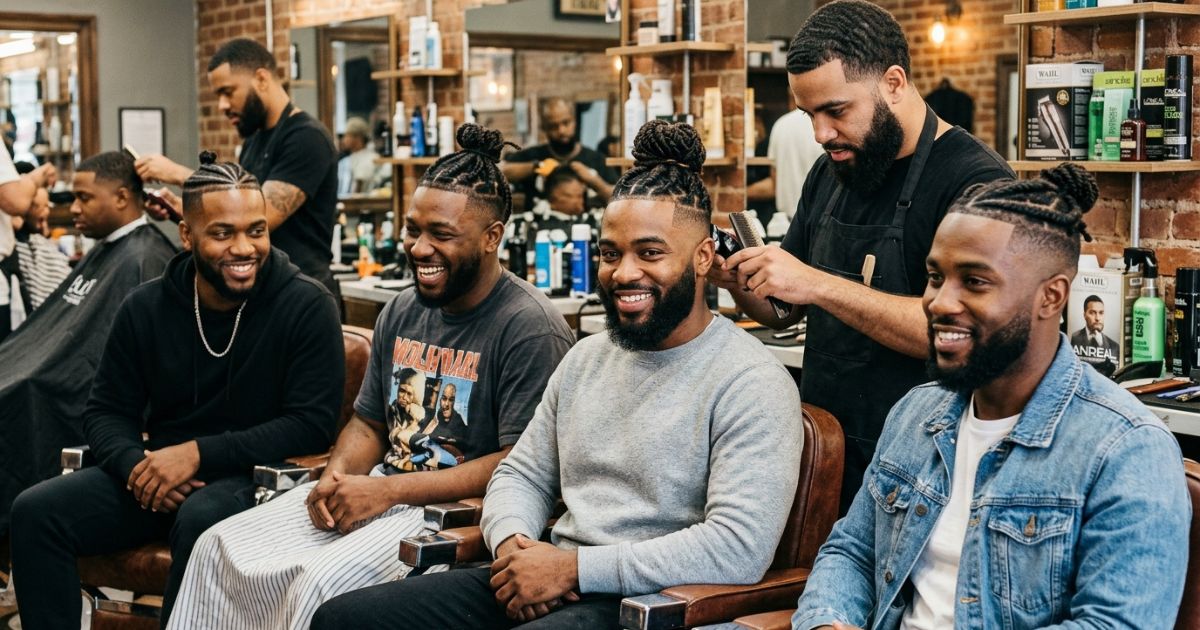
These styles highlight braids, twists, and natural coily texture on top. The low taper creates a defined, clean border that makes the top texture stand out even more.
They celebrate natural hair patterns rather than smoothing them away. The contrast between structured sides and expressive top texture is a big part of what makes these looks so striking.
Regular care matters more with these styles. Moisturizing products and gentle detangling help protect the top section, while the low taper still needs its usual touch-up schedule.
21. Low Taper Fade With Braided Top
Cornrows, box braids, or single braids sit on top, while the clean, tapered sides create a sharp border that makes the braid pattern really pop against the skin.
This suits square and oval faces with thick, coily, or textured hair. Ask for a low taper starting above the ears, with the top left long enough for your chosen braid style.
Use edge control, braid spray, and argan oil. Moisturize the scalp weekly during braided periods, and keep the fade touched up every two to three weeks regardless.
22. Low Taper Fade With Twist Out Top
The twist-out method creates a bouncy, spiral-textured top full of definition. The low taper gives it a balanced, proportionate frame that highlights the natural volume on top.
This suits round and oval faces with coily, afro-textured hair. Ask for a low taper on the sides starting above the ears, with the twist-out top left fully intact.
Use twisting butter, leave-in conditioner, and curl cream. Doing your twist-out the night before your barber visit helps them see the shape clearly when planning the cut.
23. Low Taper Fade With Long Afro-Textured Hair
Tight coils build natural height and volume on top. The gradual fade on the sides creates a bold, intentional contrast that highlights the shape of the afro.
This suits oval and round faces with coily, type 4 hair. Ask for a low taper below the natural afro shape, with the top left completely untouched and full.
Use defining gel, leave-in conditioner, and argan oil. Pick out the afro upward before your appointment so your barber can see its true shape clearly.
2026 Trending Styles
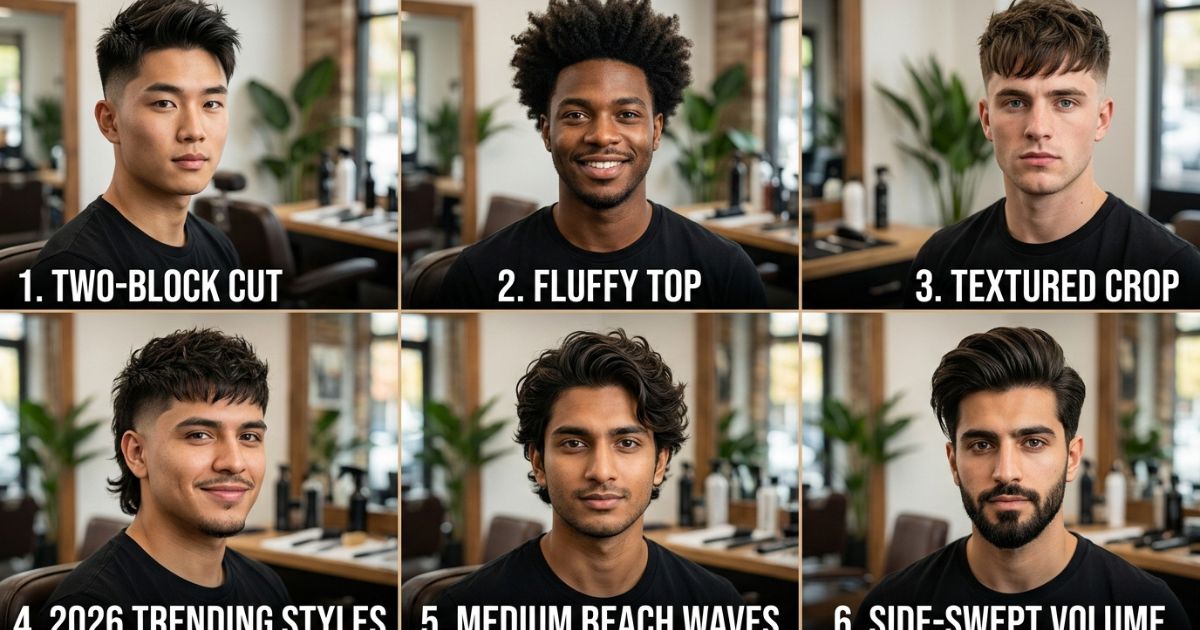
These are newer takes on the low taper fade, blending international trends and modern texture work. They show how flexible this haircut can be when paired with fresh ideas.
Many of these styles borrow from Korean and European barbering trends. Others focus purely on texture and movement, proving the low taper fade keeps evolving alongside changing hair fashion.
Trying one of these is a good way to feel current without going too extreme. Most still keep the same reliable, low-maintenance base that made this haircut popular in the first place.
24. Low Taper Fade With Two-Block Cut
This Korean-style cut features a dramatically long top set against short sides. A soft low taper replaces the usual hard disconnect, making the shape easier to wear daily.
This suits oval and diamond faces with straight to wavy hair. Ask for a two-block shape using a soft low taper instead of a hard line, with a very long top.
Use light cream and a round brush. Ask your barber to keep the sideburn connection soft, which gives this style its most natural, face-framing result.
25. Low Taper Fade With Fluffy Long Top
The top is styled for maximum body and softness, almost cloud-like in movement. The low taper keeps the outline clean without taking away from the top’s fullness.
This suits round and oval faces with fine to medium wavy hair. Ask for a low taper above the ears, with the top left long and layered for a full, fluffy finish.
Use volumizing mousse on soaking-wet hair, then diffuse right away. Letting it air-dry first loses much of the volume the mousse was meant to build.
26. Low Taper Fade With Textured Long Top
Point cutting creates movement and dimension across the top. Individual pieces catch the light differently, while the low taper brings everything back to a clean, organized whole.
This suits all face shapes with medium to thick hair of any texture. Ask for a low taper from the ears down, with point cutting used on top to add movement.
Use matte clay, texturizing paste, or sea salt spray. Point cutting rather than blunt cutting removes bulk without sacrificing the overall length on top.
27. Low Taper Fade With Ponytail
The long top gets pulled back into a simple ponytail, at any height you like. The low taper on the sides makes the whole look feel intentional, not just practical.
This suits all face shapes with any hair type long enough to tie back. Ask for a low taper from the ears down, with at least three to four inches for tying.
Use styling cream and a seamless elastic. Regular rubber bands cause breakage over time, especially near the nape, so a proper hair tie is worth the investment.
28. Low Taper Fade With Beach Waves
Loose, casual waves give the top a relaxed, sun-kissed look. The low taper grounds the style with clean, tidy sides underneath the effortless texture on top.
This suits oval and square faces with naturally wavy or straight hair. Ask for a low taper just above the ears, styled afterward with sea salt spray for a beachy finish.
Use sea salt spray and light texturizing cream. Spray onto slightly damp hair, scrunch gently, then leave it alone, since the less you touch it, the better it sets.
29. Low Taper Fade With Long Side Swept Hair
The top sweeps dramatically to one side, creating strong movement and direction. The low taper on the other side adds a bold but still professional-looking contrast.
This suits oval and rectangular faces with straight to wavy hair. Ask for a low taper from the ears down, with enough top length for a clear, dramatic side sweep.
Use medium pomade, a round brush, and light spray. Blow-dry against gravity and in the sweep direction at once to build both volume and direction together.
30. Low Taper Fade With Long Shag Cut
The shag brings heavy layering and movement to the top, giving it a slightly rebellious feel. The low taper keeps the overall shape wearable in everyday settings.
This suits oval and heart faces with wavy to straight, medium to thick hair. Ask for a low taper on the sides, with lots of layers and face-framing pieces left on top.
Use texturizing spray, light mousse, and styling cream. This cut needs an experienced barber, so ask to see previous shag work before committing to the style.
31. Low Taper Fade For Coily Long Hair
Long coily hair creates real visual impact when paired with this cut. The coils spiral upward from the top, while the low taper gives a clean, proportional base below.
This suits round and oval faces with type 3C to 4C coily hair. Ask for a low taper on the sides, keeping all coily length on top completely untouched.
Use leave-in conditioner, defining cream, and argan oil. Detangle only while wet and conditioned, since dry detangling can cause breakage in the longer sections.
32. Low Taper Fade With Flow Hairstyle
The flow is long hair styled with no rigid shape imposed on it. Adding a low taper makes the natural flow feel deliberate rather than simply grown out.
This suits all face shapes with medium to long straight or wavy hair. Ask for a low taper on the sides, with the top left as natural and long as possible.
Use leave-in conditioner, light cream, and sea salt spray. Schedule fade touch-ups every three weeks, but only trim the top every six to eight weeks to keep length.
33. Low Taper Fade With Long Faux Hawk
A subtle central ridge runs down the top, styled slightly upward, while both sides taper down. The low taper makes the shape feel polished rather than edgy.
This suits oval and square faces with medium to thick hair. Ask for a low taper on the sides, with the top styled into a subtle, not overly dramatic, faux hawk.
Use medium clay at the roots for hold, plus sea salt spray through the lengths for texture. Together they create lift without making the style feel stiff.
34. Low Taper Fade With Sleek Long Top
This is a clean, minimal, no-frills version of the cut. The top is styled perfectly straight and smooth, while the low taper keeps every angle looking precise.
This suits oval and heart faces with straight, fine to medium hair. Ask for a low taper above the ears, with the top kept long, straight, and free of any texture cutting.
Use high-shine pomade and a flat iron with heat protectant. A light mist of finishing spray at the end helps lock the smooth finish in place all day.
35. Low Taper Fade With Long Natural Texture
This style embraces whatever your hair naturally does, no fighting the pattern. The low taper gives it a clean, finished feel without changing the top’s natural character.
This suits all face shapes and hair textures. Ask for a low taper on the sides, with the top left long, working entirely with your hair’s natural pattern.
Use a light leave-in conditioner and minimal styling product. Start with a small amount and build up only if needed, since less product usually looks better here.
Which Low Taper Fade Long Hair Style Suits Your Face Shape?
Your face shape plays a big role in which version of this cut looks best. Some styles add height, others add width, and the right balance depends on your proportions.
| Face Shape | Best Style | Avoid |
| Oval | Any variation | Nothing works best on all |
| Square | Slick back, man bun, pompadour | Hard disconnected sides |
| Round | Curtains, quiff, center part | Extra volume at the sides |
| Heart | Curly hair, center part | Heavy fringe |
| Diamond | Wavy flow, pompadour, quiff | Too much width on the sides |
| Oblong | Wavy, tousled, half-up bun | High pompadour, skin fades |
Use this table as a starting guide, not a strict rule. Personal taste and hair type still matter, so feel free to adjust based on what you like most.
What Hairstyle Works Best For Oval Face Shape?
Oval faces are the most flexible shape for this haircut. Nearly every style on this list works well, so you can choose based on personal taste rather than face shape limits.
Add volume on top if you want a bit more personality. Or keep things sleek and smooth for a more professional, polished appearance, whichever suits your daily life better.
There’s very little risk of choosing wrong here. Oval faces balance well with both bold, voluminous styles and simple, understated ones, so experiment freely with different looks.
What Hairstyle Works Best For A Square Face Shape?
A strong, angular jawline is an asset with this cut. The clean, low fade highlights the jaw nicely instead of competing with it, which is why square faces suit this style so well.
Good options include a slick back, a man bun, or a long pompadour. These add contrast on top while letting the strong jawline stay the focal point of the face.
Avoid blunt, disconnected sides, since they clash with square bone structure. A gradual, low taper blends much more naturally with sharp, angular features than a hard line does.
What Hairstyle Works Best For A Round Face Shape?
Round faces benefit from height and length on top. Leaving two to three inches of length helps create better vertical balance and makes the face appear less wide overall.
Curtain hair, a quiff, or a center part all work well here. These styles pull visual attention upward, which naturally balances out the fuller, rounder shape of the face.
Avoid styles that add width at the sides. Since the low taper already keeps the sides minimal, it’s already doing part of this work for you automatically.
What Hairstyle Works Best For A Heart Face Shape?
Heart faces have a wider forehead and a narrower chin. Styles that frame the face symmetrically help balance out that width, making curly or center-parted styles a strong choice.
Center parts and curly textures both work particularly well. They soften the width of the forehead by drawing the eye down and across the face rather than straight up.
Avoid heavy, blunt fringes. These tend to make a wide forehead look even wider, which works against the natural balance a heart-shaped face is looking for.
What Hairstyle Works Best For Diamond Face Shape?
Diamond faces are narrow at both the forehead and chin, with the cheekbones as the widest point. Adding volume on top helps balance out that narrower top and bottom.
A pompadour, quiff, or fluffy top all complement this shape well. These add height and fullness where the face naturally narrows, creating a more balanced overall silhouette.
Tapering on the sides also helps here. It softens the visual focus on the cheekbones, giving the whole face a gentler, less angular overall appearance.
What Hairstyle Works Best For A Long Or Oblong Face Shape?
Long faces should avoid extra height on top. Adding height only makes the face appear even longer, so flatter, side-flowing styles usually work better for this shape.
Let the hair move sideways instead, with waves or tousled texture. This adds width visually, which helps balance out the natural length of an oblong face shape.
A low taper is preferred over a high fade here. It keeps a bit of width at the sides instead of dramatically elongating the face further.
How Does The Low Taper Fade Work For Different Hair Types?
This haircut works on every hair type, but the approach changes slightly depending on your natural texture. Straight, wavy, curly, and coily hair all need slightly different care.
The main difference is in styling and product choice. The cutting technique stays largely the same, but how you finish and maintain the top depends heavily on your texture.
Knowing your hair type helps you get better results. It also helps you communicate more clearly with your barber about what kind of finish you’re hoping to achieve.
Low Taper Fade Long Hair For Straight Hair
Straight hair creates the sharpest, most precise version of this cut. Every line looks clean, and the contrast between the smooth top and faded sides is at its clearest.
Use pomade for shine or matte clay for a modern, flatter finish. A blow dryer with a round brush also helps add directional volume if the hair looks too flat.
Pick one finish and stick with it, either glossy or matte. Mixing both types of product often creates an inconsistent, slightly messy look on straight hair.
Low Taper Fade Long Hair For Curly Hair
Curly hair pairs especially well with this fade. The curl pattern naturally blurs the blend line, making the transition from long top to tapered sides look organic and soft.
A taper fade with curly hair keeps curls defined on top while reducing bulk on the sides. This prevents the overall shape from looking too heavy or overgrown.
Use curl cream, leave-in conditioner, and a diffuser attachment. These help build volume and definition without adding frizz to the curl pattern on top.
Low Taper Fade Long Hair For Coily Or Afro-Textured Hair
This combination creates the most dramatic contrast of any hair type. Tight coils rise up from the top, creating a striking visual separation from the tapered sides underneath.
Use argan oil for shine and moisture, plus a defining gel for coil structure. A wide-tooth comb also helps with gentle detangling while the hair is still wet.
Regular moisture is especially important here. Coily hair needs more hydration than other textures to stay healthy and keep its natural shape looking defined.
Low Taper Fade Long Hair For Fine Or Thin Hair
Fine hair benefits a lot from this style. The taper removes bulk from the sides without making the top look thin, helping create the appearance of fuller hair overall.
Use volumizing mousse, thickening spray, and a round brush with a blow dryer. Lifting at the roots helps prevent the style from looking flat throughout the day.
The contrast between tapered sides and styled top also helps. It creates definition that prevents fine hair from looking one-dimensional or overly flat against the head.
What Should You Tell Your Barber For A Long-Hair Low-Taper Fade?
Clear communication makes a big difference in the final result. Many guys know roughly what they want but struggle to explain it clearly, leading to a cut that’s slightly off.
A good script removes the guesswork. Simple, specific phrases about fade height, blend style, and top length help your barber understand exactly what you’re picturing.
Bringing reference photos also helps enormously. Even the best verbal description can be interpreted differently, so visuals give your barber a clearer target to work toward.
What Is The Exact Script To Ask For This Cut?
Tell your barber: “I want a low taper fade starting just above my ears.” This single sentence sets the height and starting point clearly from the very beginning.
Add this next: “Blend it gradually down toward the neckline, and leave the top completely untouched.” This protects your length while making sure the blend stays smooth and natural.
Finish with: “Blend softly into the sideburns, using a number two on the sides moving to a number one near the base.” This gives your barber exact, specific guidance.
Which Clipper Guard Sizes Are Used For A Low Taper Fade?
| Zone | Guard Size | Length | Purpose |
| Base / Neckline | #0 or #0.5 | Near skin | Lowest fade point |
| Low sides | #1 | 3mm | Start of the blend |
| Mid sides | #2 | 6mm | Middle transition zone |
| Upper sides | #3 | 10mm | Approaches the longer top |
| Top | Scissors | Full length | Length preservation |
Guard numbers can vary slightly between barbershops. Always ask your barber to confirm what each size means at their specific shop before the clippers start.
Knowing these numbers helps you communicate clearly. It also gives you a useful reference if you ever switch to a new barber and want the same result.
What Reference Photos Should You Bring To The Barber?
Bring three photos: one from the front, one from the side, and one showing the back neckline. A single photo rarely gives enough information for a barber to work from.
Different barbers interpret phrases like “long on top” differently. Multiple angles remove that ambiguity and make sure everyone is picturing the exact same haircut before starting.
If the person in your photo has different hair or face shape than you, say so clearly. Tell your barber exactly which elements to copy and which to adjust.
When Is The Best Time To Book A Barber Appointment?
Morning appointments tend to give the best results. A barber’s hand is steadier earlier in the day, before several hours of cutting have added fatigue to their work.
Fresh blades also make a noticeable difference. Booking early in the day often means your barber is working with sharper, cleaner tools than later in a busy schedule.
Before leaving the shop, book your next appointment. This simple habit is the easiest way to stay consistent with the two to three week fade schedule.
How To Pair A Low Taper Fade Long Hair And A Beard
A well-groomed beard can make this haircut look even better. Blending the taper from your sideburns directly into your beard creates one smooth, continuous look from scalp to chin.
This removes the hard stop between hair and facial hair. Instead of two separate grooming choices, it reads as one intentional, cohesive style across your whole head.
Talk to your barber about a beard fade specifically. It takes a bit more skill than a regular fade, but the seamless result is usually worth the extra time.
Which Beard Style Complements A Low Taper Fade With Long Hair?
| Beard Style | Best Paired With | Effect |
| Stubble (3–5mm) | All long styles | Casual, masculine balance |
| Full Beard | Man bun, slick back | Strong, powerful contrast |
| Clean Shave | Pompadour, curtains, center part | Sleek, maximum contrast |
| Chinstrap | Long pompadour | Sharp, structured framing |
| Beard Fade | All styles | Smooth taper-to-beard blend |
There’s no single correct pairing here. The right beard style depends on how much contrast you want between your facial hair and your haircut overall.
Experimenting a little is worthwhile. Try a couple of beard lengths with your current cut before settling on the combination that suits your face best.
How To Style Low Taper Fade Long Hair: Step-By-Step
Styling this haircut isn’t complicated once you know your hair type. Most routines take under fifteen minutes and use only a few basic products to finish the look.
The steps differ slightly depending on whether your hair is straight, wavy, or curly. Each texture needs a slightly different drying and product approach to look its best.
Following a consistent routine each day helps too. Your hair responds better over time when it’s styled the same general way rather than constantly changed.
How To Style Long Straight Hair With A Low Taper Fade
Start with a pea-sized amount of heat protectant on damp hair. This step matters if you plan to use any heat tools during the rest of your styling routine.
Blow-dry backward using a round brush, lifting slightly at the roots. Then work pomade or clay through the mid-lengths to ends using your fingertips for even coverage.
Finish with a fine-tooth comb or vent brush to set direction, followed by a light-hold spray. The whole process usually takes about eight to ten minutes.
How To Style Long Wavy Hair With A Low Taper Fade
Pat the hair gently with a towel instead of rubbing it. Rubbing creates frizz, while patting helps preserve the natural wave pattern as the hair starts to dry.
Apply sea salt spray throughout, scrunching upward from the ends. Follow with a small amount of texturizing paste worked through using only your fingers, not a comb.
Air-dry or diffuse on low heat, moving the diffuser in small circles. Once dry, gently shake the roots to separate the waves and add extra volume.
How To Style Long Curly Hair With A Low Taper Fade
Wash with a sulfate-free shampoo to protect natural curl moisture. Sulfates can strip curls of the oils they need to stay soft and well-defined.
Apply leave-in conditioner while hair is still soaking wet, section by section. Follow with curl cream, pressing it in using a gentle, prayer-hands motion through each section.
Diffuse on medium heat with a scrunching motion, moving the diffuser upward. Avoid touching the curls until fully dry, since this is key to keeping definition.
Best Products For Low Taper Fade Long Hair
| Hair Type | Goal | Best Product | Finish |
| Straight | Sleek and shiny | High-shine pomade | Glossy |
| Straight | Modern, matte | Matte clay | Matte |
| Wavy | Natural texture | Sea salt spray | Gritty |
| Wavy | Controlled definition | Texturizing paste | Matte |
| Curly | Defined curls | Curl cream | Natural |
| Coily | Moisture and shine | Argan oil + gel | Glossy |
| Fine | Volume and body | Volumizing mousse | Soft |
Always start with a small amount of product and build up gradually. Too much can weigh the taper down or make the fade line look greasy.
If you’re new to styling, texturizing powder is a forgiving option. For a sharper, more precise finish, matte clay tends to give the cleanest overall result.
How To Maintain A Low Taper Fade With Long Hair
Maintaining this haircut takes consistency, not a lot of effort. A regular schedule for both the fade and the top keeps the whole style looking sharp between visits.
The sides need more frequent attention than the top. Fades grow out and blur faster than long hair, so the sides usually need touch-ups sooner and more often.
A simple routine at home also helps. Small daily habits protect both the fade line and the health of your longer top section between barber visits.
How Often Should You Get A Low Taper Fade With Long Hair?
Get your fade touched up every two to three weeks. Without regular visits, the sharp blend line starts to blur and the fade loses its clean, defined shape.
The top section is more forgiving. A trim every four to six weeks is usually enough to remove split ends and keep the top’s shape looking healthy.
Regular trims also protect hair health over time. Trimming prevents split ends from traveling further up the strand, which helps keep long hair strong and less prone to breakage.
At-Home Maintenance Tips Between Barber Visits
Pat your hair dry instead of rubbing it. Rough towel-drying near the fade zone creates friction that can make the blend line look fuzzy faster than it should.
Sleep on a silk or satin pillowcase if possible. Cotton creates more friction overnight, which can dull the crisp edges of your fade sooner than expected.
Use a sulfate-free shampoo and go easy on product near the fade. Heavy wax or pomade applied directly to the sides can clump and blur the blend line.
Common Mistakes To Avoid With A Low Taper Fade Long Hair
Most damage to this haircut happens at home, not at the barbershop. Small daily habits can either protect your fade and length or slowly wear them down.
Being aware of common mistakes helps you avoid them. A few simple changes to your routine can keep the haircut looking sharp for much longer between visits.
None of these fixes require much extra effort. They’re mostly about being a little more careful and consistent with how you treat your hair day to day.
What Are The Most Common Mistakes Men Make With This Haircut?
Waiting too long between barber visits is the biggest one. After about three weeks, the fade starts to blur and can begin looking like an unkempt, grown-out mess.
Overloading product on the fade zone is another common issue. Heavy wax or pomade applied directly to the sides tends to clump and blur the clean blend line.
Skipping heat protectant is a mistake for anyone using a blow dryer or flat iron. Long hair is especially vulnerable to heat damage without this simple protective step.
Is The Low-Taper Fade With Long Hair Suitable For Professional Settings?
Yes, and this is one of the style’s biggest strengths. Its low placement keeps it close to the natural hairline, which reads as clean and refined rather than bold.
It sends a subtle, professional message. Unlike higher, more dramatic fades, this style says “well put together” rather than drawing attention to the haircut itself.
It also works well outside the office. The same cut that looks appropriate for work transitions easily into weekend or casual settings without needing any real changes.
How To Style Low Taper Fade Long Hair For Different Occasions
| Occasion | Best Style | Product |
| Office / Professional | Slicked back, comb over, side part | Pomade or clay |
| Date Night | Slick back bun, wavy flow, curtains | High-shine pomade |
| Casual / Everyday | Messy top, tousled waves, half-up | Sea salt, light wax |
| Formal Event | Pompadour, slick back | Strong pomade |
| Beach / Outdoors | Natural wavy flow, messy top | Sea salt spray |
| Gym / Active | Man bun, half-up | Styling cream |
Having a few go-to looks makes mornings easier. You don’t need a completely different haircut for each occasion, just a different way of styling the same base cut.
Keep a small set of products on hand for quick changes. Switching between casual and polished looks becomes much faster once you know what each occasion calls for.
The Low Taper Fade Long Hair In 2026: History, Culture & Modern Influence
This haircut has real history behind it. It didn’t appear overnight, and understanding where it came from adds meaning to a style many guys now wear every day.
Taper fades started in the 1940s as part of military grooming rules. Soldiers were required to keep hair short and neat, which led to the first standardized version of the taper.
Black barbers later transformed the basic military taper into an art form. They introduced sharper contrasts and creative designs, turning barbershops into hubs for new fade techniques.
The style exploded into mainstream fashion in the late 1980s and 1990s. Hip-hop culture and athletes helped push the fade into everyday fashion far beyond its military roots.
Low Taper Fade Vs. Mid Taper Fade With Long Hair: Which Is Better?
For long hair, the low taper fade is usually the better choice. It creates a more natural transition and stays more versatile across professional and casual settings alike.
A mid taper fade offers stronger contrast instead. It sits higher on the head and works well with bolder styles, though it’s less flexible for everyday, all-purpose wear.
The long top already provides plenty of visual interest on its own. This means you don’t need an aggressive, high-contrast fade underneath to make the overall style work.
Expert Barber Tips For The Perfect Low Taper Fade Long Hair
A few small details separate an average fade from a great one. These tips come from experienced barbers and can make a noticeable difference in your final result.
Booking a morning appointment is a simple but effective one. A steady hand earlier in the day tends to produce a cleaner, more precise fade line overall.
Clear communication with your barber matters just as much as skill. Being specific about blend style, guard sizes, and neckline shape leads to far more consistent results.
What Do Professional Barbers Recommend For This Style?
Specify “soft blend” or “hard contrast” clearly before starting. These phrases mean different things to different barbers, so stating your preference upfront avoids confusion during the cut.
Always confirm guard sizes at your specific shop. A number one guard at one shop might behave differently at another, so it’s worth asking before the clippers start.
For a professional look, request a natural, rounded neckline. It grows out cleaner over time and requires less frequent maintenance than a sharper, squared neckline.
FAQ’S
What is a low taper with long hair?
It’s a haircut where the top stays long, while the sides fade gently starting just above the ears, blending down toward the neckline smoothly.
Who does a low taper fade suit best?
Almost everyone. It works on straight, wavy, curly, and coily hair, and flatters oval, square, round, and heart-shaped faces equally well.
How often should you get it touched up?
Get the fade refreshed every two to three weeks. The long top only needs trimming every four to six weeks for shape.
Is this style office-appropriate?
Yes. The low placement keeps it subtle and polished, making it one of the most professional-friendly long hairstyles you can wear daily.
What should you tell your barber?
Say, “Low taper fade starting above my ears, blended to the neckline, top left completely untouched for length.” That’s it.
Conclusion
The guide “Low Taper Fade Long Hair: 35 Best Styles (2026)” gives you every option you need. Low taper long hair works for any face shape. It fits every hair type too. You can go sleek, curly, wavy, or messy. Low taper long hair stays sharp without much fuss. It never looks out of place, at work or on weekends.
Pick a style that fits your life. Show your barber the right words and photos. Low taper long hair needs a fade touch-up every few weeks. Trim the top now and then too. Low taper long hair is the smart, easy pick for 2026. It’s simple, clean, and always in style.