
Nobody wakes up hoping for a longer morning routine. The best low-maintenance men’s haircuts hold their shape with a towel dry, a dab of product, and almost no thought. Short crops, easy tapers, and relaxed lengths all qualify and each one hands you back precious minutes every single day.
This guide covers 35 simple styles, plus the details that decide whether a cut stays easy. You will find upkeep timelines, face shape and hair type matches, home-cutting tips, a lean product setup, and common mistakes to dodge. Pick the one that fits your hair and your schedule.
Classic Low-Maintenance Haircuts For Guys
Buzz Cut

The buzz cut is as easy as hair gets. Clippers run one guard length over the whole head, so there is nothing to style and nothing to buy. A #2 guard leaves roughly a quarter inch. Expect a touch-up every two to three weeks if you like crisp edges.
Crew Cut
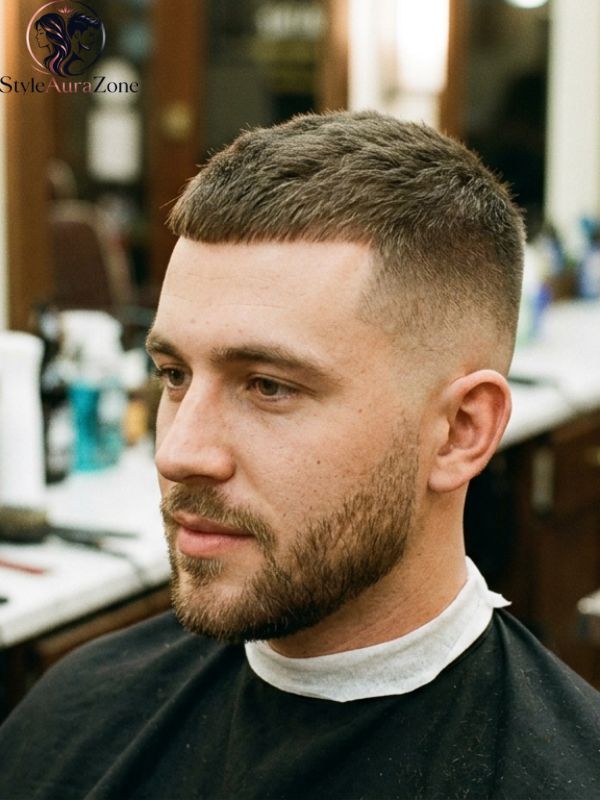
A crew cut keeps the sides tapered short and leaves a little extra length on top. That top can lie flat or lift at the front with a pea-sized bit of matte clay. It suits office desks and weekend errands alike, and it grows out gracefully for about four weeks.
Curly Hair Fade
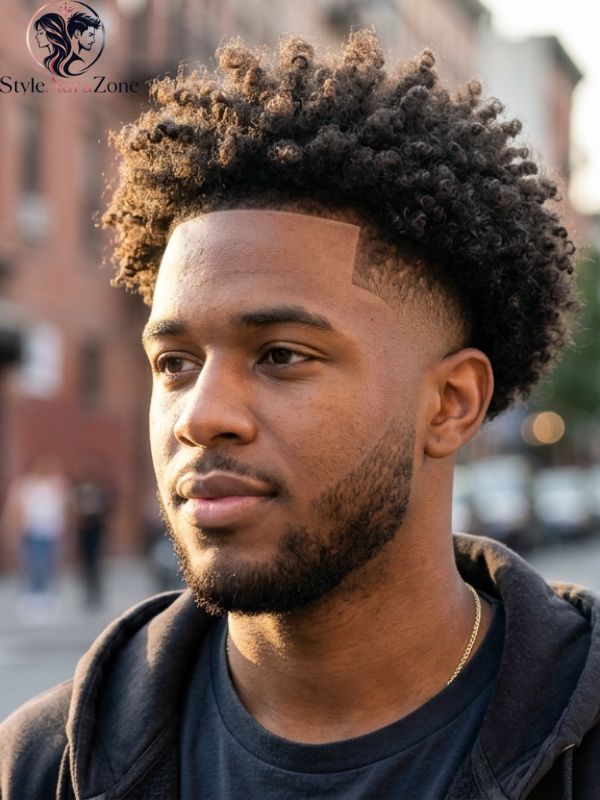
Natural curls on top meet a clean fade on the sides. The contrast shows off your pattern without any heat tools. Work curl cream through damp hair, scrunch once, and let it air dry. Curls hide uneven growth, so the shape stays presentable for five or six weeks.
Short Brush Up
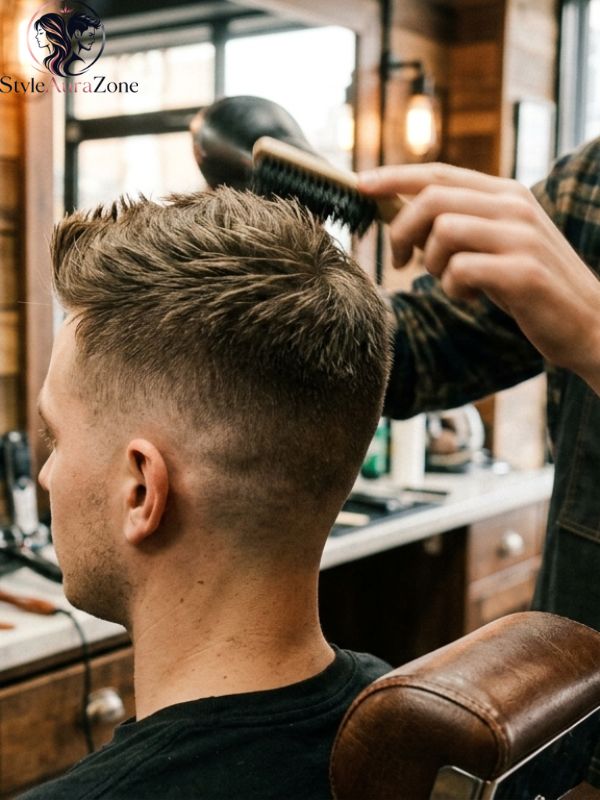
Think of the short brush up as a crew cut with a little attitude. Brush the front upward with a touch of paste and you are finished. The sides stay tight with a fade or taper. Plan a barber visit every three to four weeks.
Burr Cut

A burr cut lands between a buzz and a butch cut, typically at a #2 or #3 guard. The soft, even fuzz forgives small head-shape quirks that a closer clip would expose. Wash, towel off, and walk out the door. Trims run about every three weeks.
French Crop
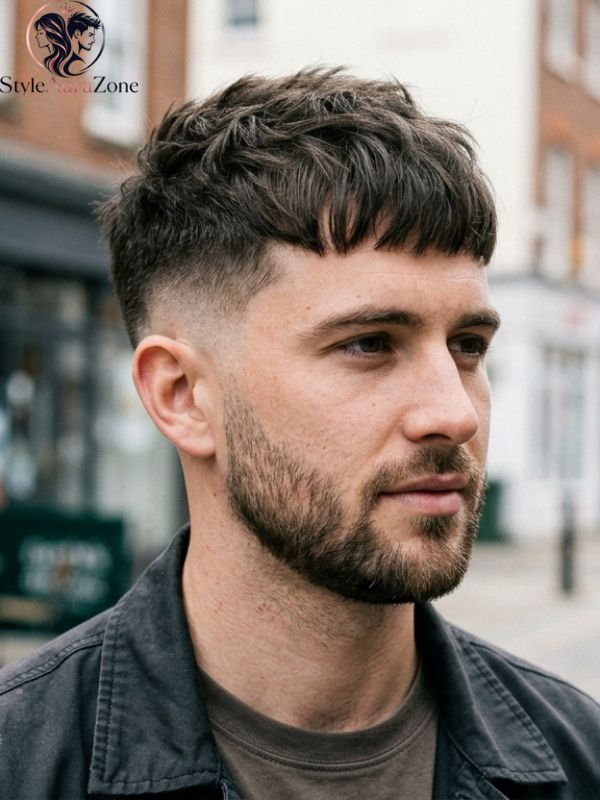
The French crop pairs a short, textured top with a straight, cropped fringe. The sides get a taper or fade. A pinch of texturizing clay and a quick forward push with your fingers is the entire routine. That blunt fringe also camouflages a high forehead or early recession.
Comb Over Fade
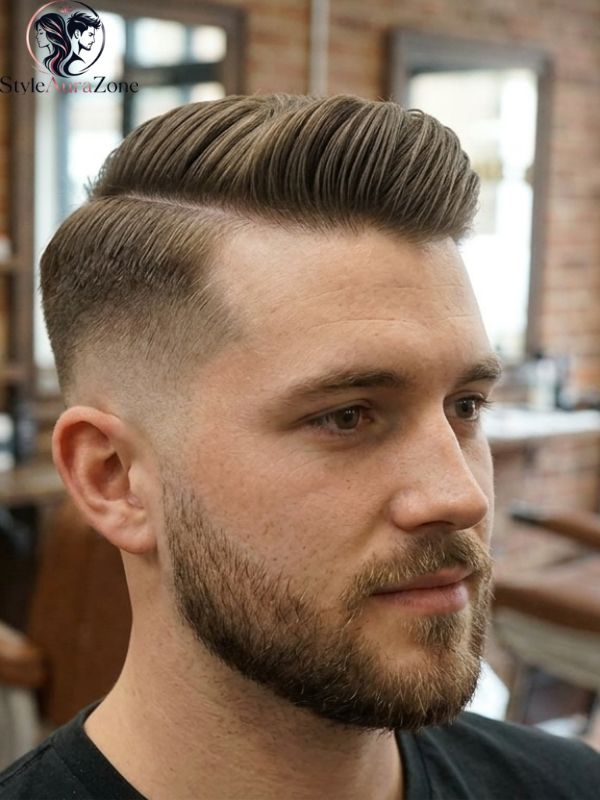
Slightly longer hair on top gets combed to one side off a defined part, with faded sides below. It looks tailored yet takes about two minutes. A light cream or pomade gives a clean finish without stiffness. Refresh the fade every three to four weeks.
Fringe with Scissor-Tapered Sides
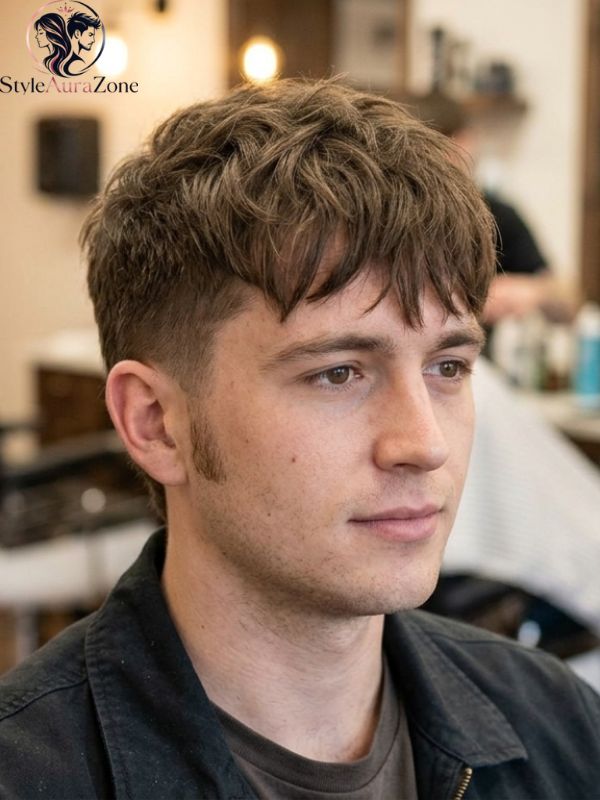
Here the sides are shaped with scissors and shears instead of clippers, so the outline softens as it grows. A textured fringe skims the forehead. Without a hard fade, there is no awkward grow-out stage. Many guys with waves skip product and book a trim every six weeks.
Read more:30 Perfect Low Fade Haircuts
High and Tight Fade
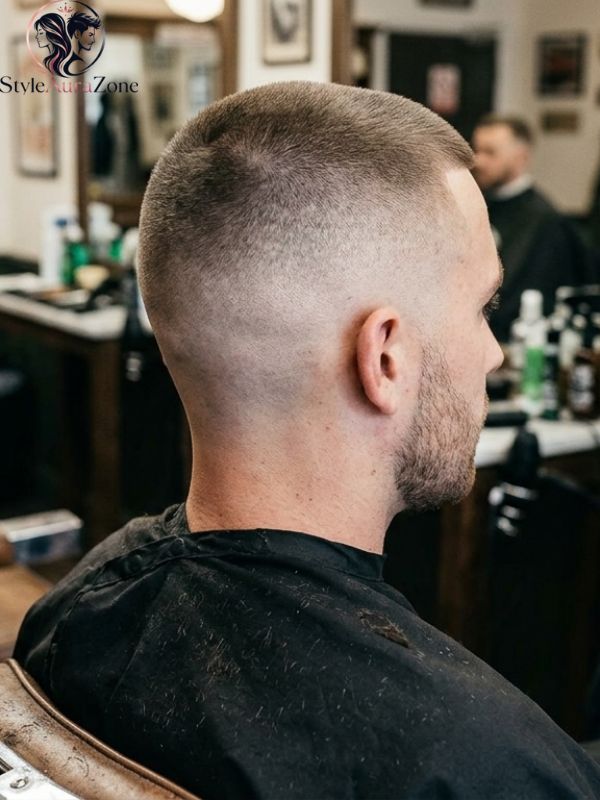
The high and tight fade is the military cut with modern polish. Sides climb high on the head and fade to skin or close to it. The top stays short, often under an inch. Styling takes seconds. The tradeoff is fade touch-ups every two to three weeks.
Short, Spiky Hair with Fade
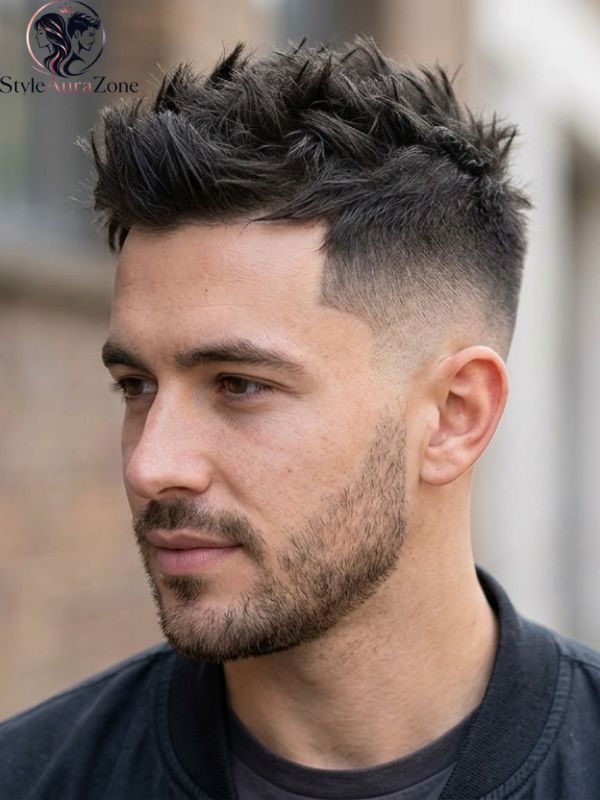
Short spikes bring personality to a low-effort cut. Rub a dab of firm paste between your palms and push the top upward. A fade keeps the sides neat. Because the spikes are only an inch or so long, shaping takes about a minute and a rinse resets everything.
Butch Cut Fade
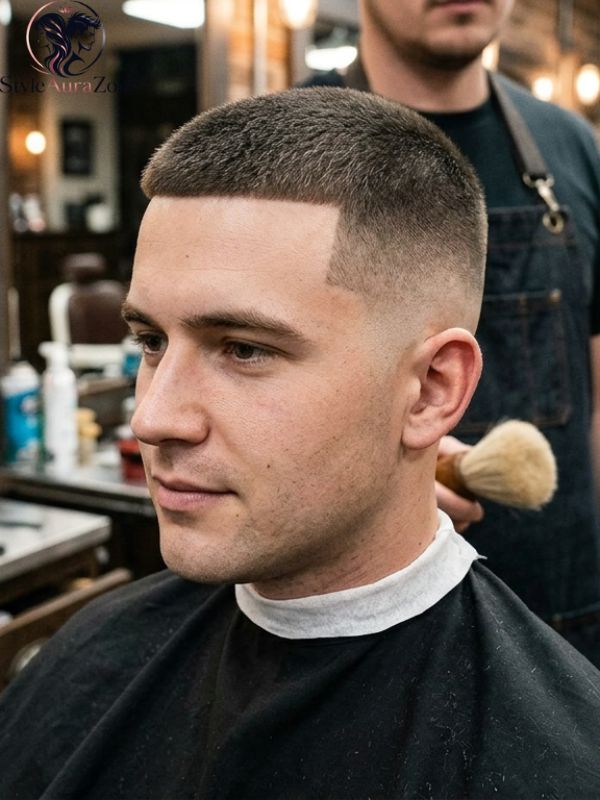
A butch cut leaves the top at one short, even length. Add a fade and the sides melt into skin. No product, no comb, no fuss. It’s a favorite for gym regulars and hot climates. Book a fade refresh every two to three weeks.
Cool Low-Maintenance Short Men’s Haircuts
Textured Quiff
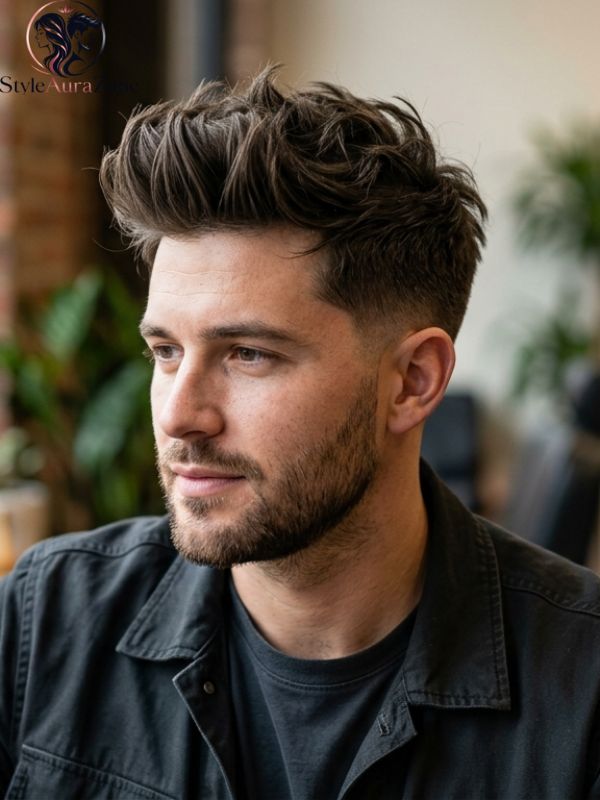
The textured quiff lifts the front into a relaxed wave of height while the sides stay short. Layers do the heavy lifting, so imperfect styling still looks intentional. A fingertip of clay provides hold. Barber visits land about every four weeks.
Short Curls

Cropped curls are practical by design. Short length prevents tangles and cuts drying time to minutes. A little curl cream defines each coil, and the natural pattern masks growth between trims. Most guys stretch five to six weeks between cuts.
Mohawk Fade
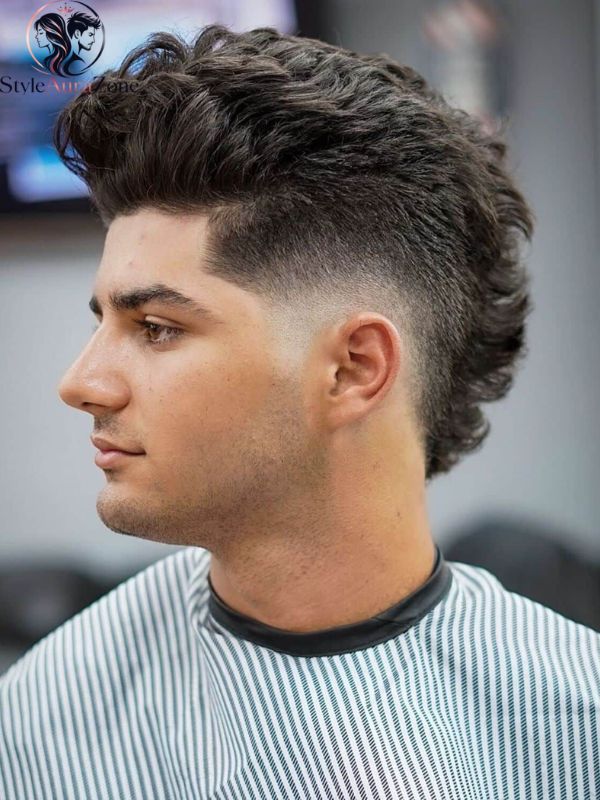
A mohawk fade runs a strip of longer hair down the center with faded sides. Keep the top short and tousled for an easy version. Run clay through it and shape it with your hands. The fades need cleaning up every two to three weeks.
Undercut
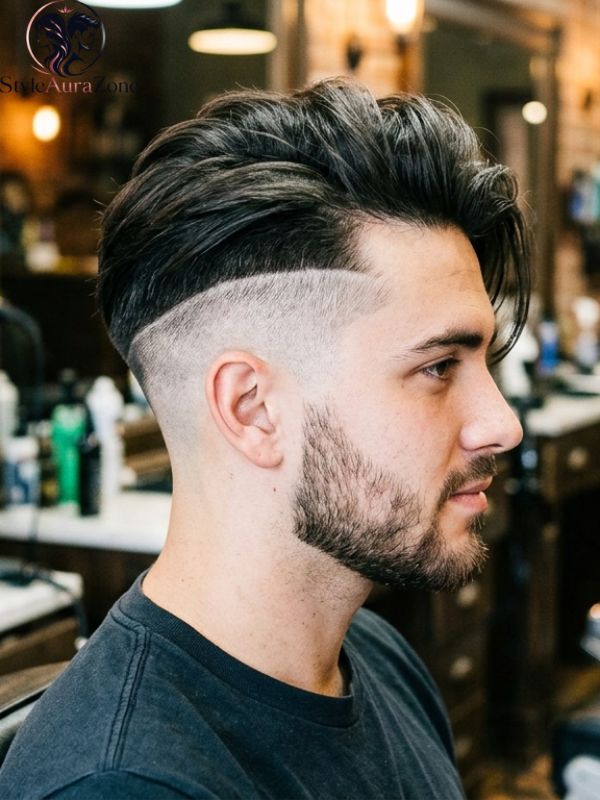
An undercut disconnects clipped sides from a longer top. With no gradual blend, there are fewer sharp-line headaches than a skin fade brings. Comb it back with medium-hold pomade or let it fall naturally. Plan trims every four weeks since the sides show growth first.
Braids

Braided styles, from cornrows to larger patterns, lock hair into place for weeks. Mornings shrink to almost nothing. The catch is the first appointment, which can last several hours. Moisturize the scalp, wear a satin cap at night, and redo the braids every few weeks.
Short, Messy Hair with Taper Fade
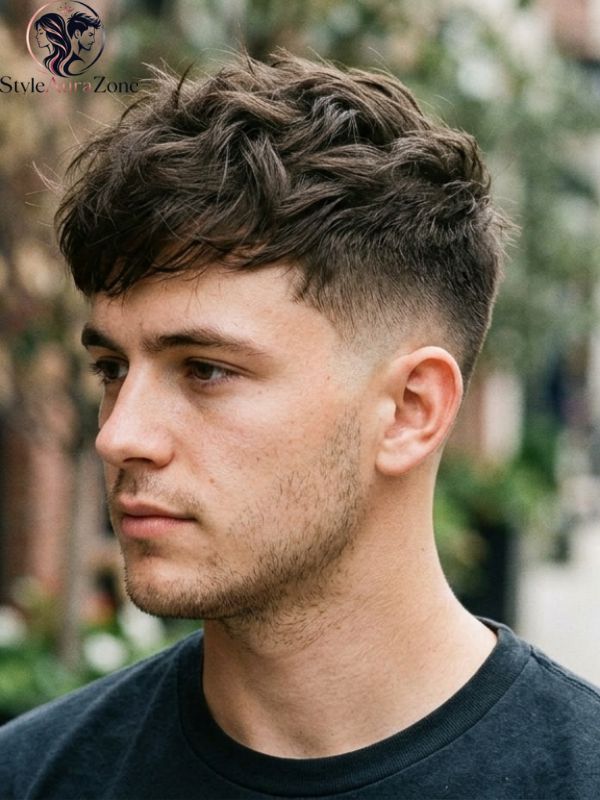
Messy on purpose is one of the kindest looks for lazy mornings. A short, tousled top rests above a soft taper at the neck and ears. Sea salt spray and a quick scrunch add grit. Perfection isn’t the goal, so the cut lasts about five weeks.
Modern Caesar Cut
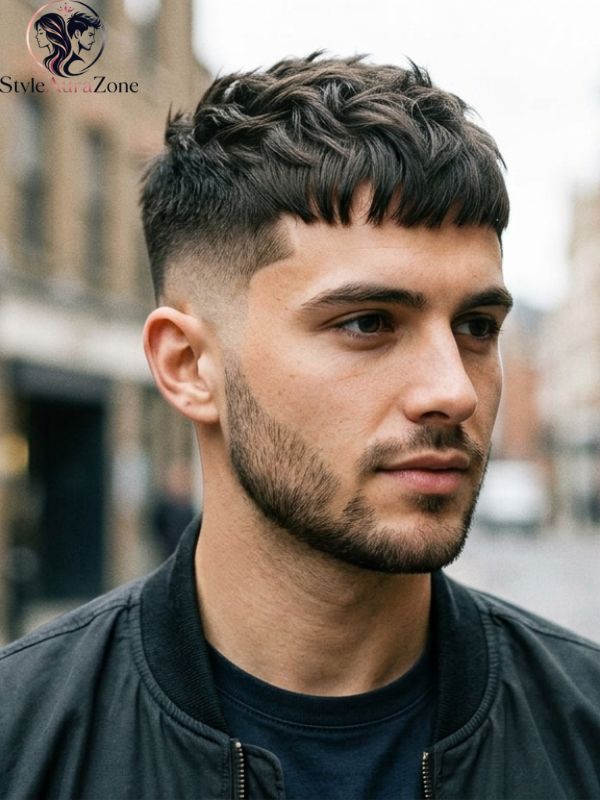
The modern Caesar combines a short, horizontal fringe with a low taper or skin fade. The forward-brushed fringe also covers receding temples. Add a touch of matte paste, push the hair forward, and leave. A trim every three to four weeks keeps the fringe line tidy.
Temp Fade with Line Up
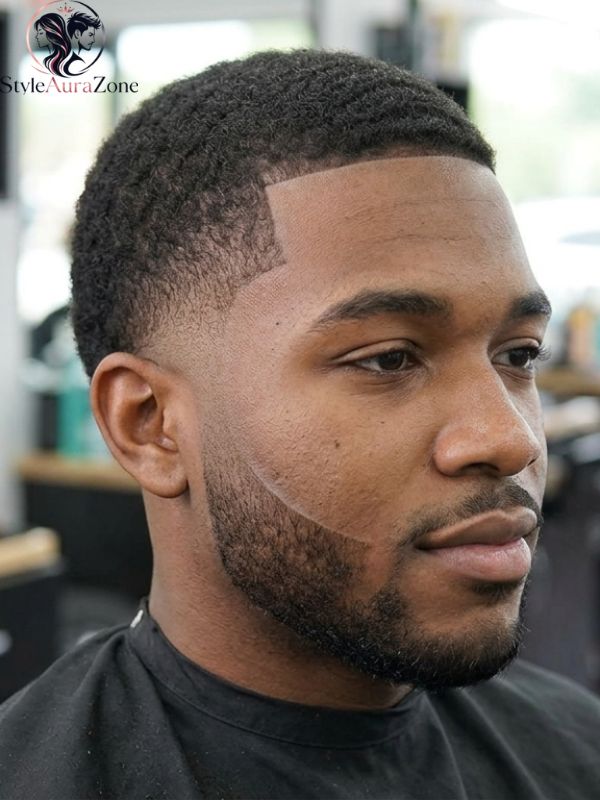
A temp fade, also called a temple fade, tapers only around the temples and neckline. Pair it with a crisp line up along the forehead and the cut looks polished without styling. Edge ups run every two weeks for the sharpest result.
Long Buzz Cut Fade
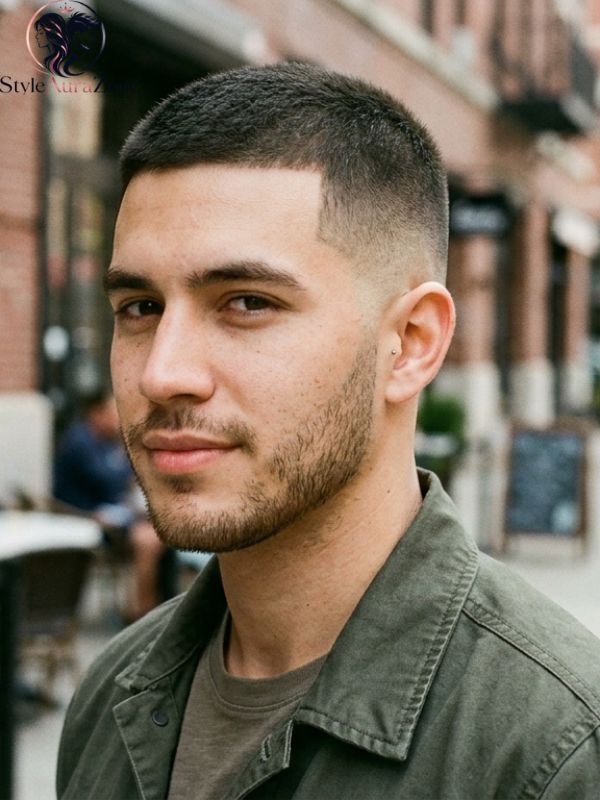
Go a little longer on top with a #3 or #4 guard and fade the sides into it. You get the zero-product ease of a buzz with more shape. It pairs well with a beard. Expect a fresh fade about every three weeks.
Textured Crew Cut Fade with Blunt Fringe
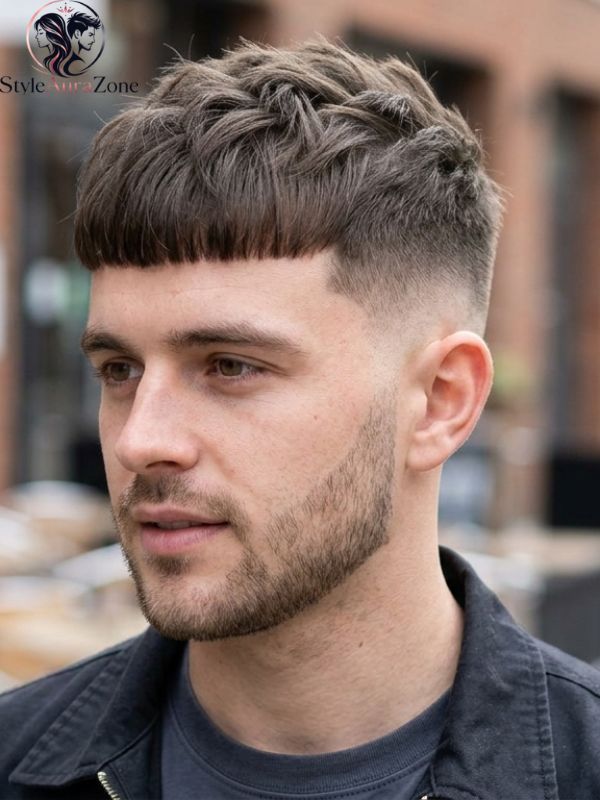
This crew cut variation keeps some length on top, texturizes it, and finishes with a straight, blunt fringe over a fade. The front comes forward and the sides stay clean. A quick rake with your fingers does the job. Visits happen every three to four weeks.
Shaved Sides
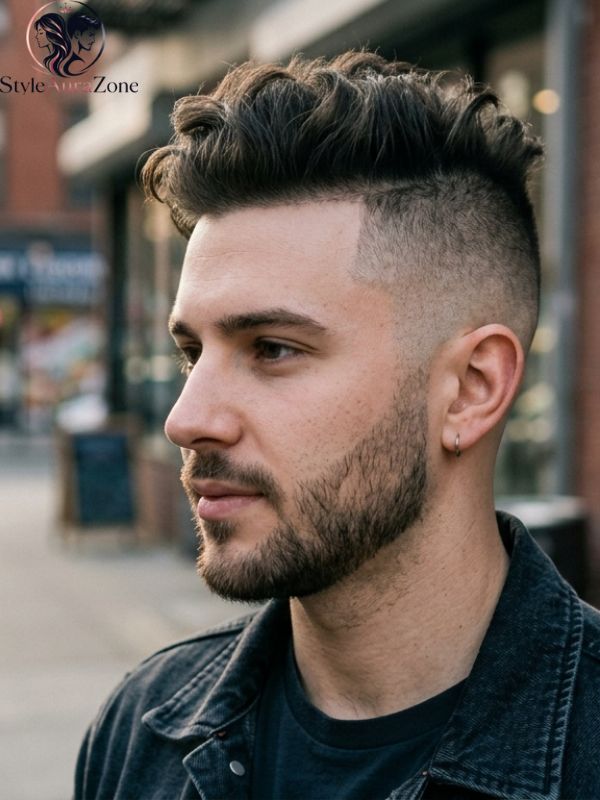
Shaving the sides lets a longer top steal the spotlight. It trims drying time and makes the style look taller. Keep the top casual or slick it back. The shaved sections need touching up every two to three weeks, though a home trimmer can maintain them between visits.
Afro Fade
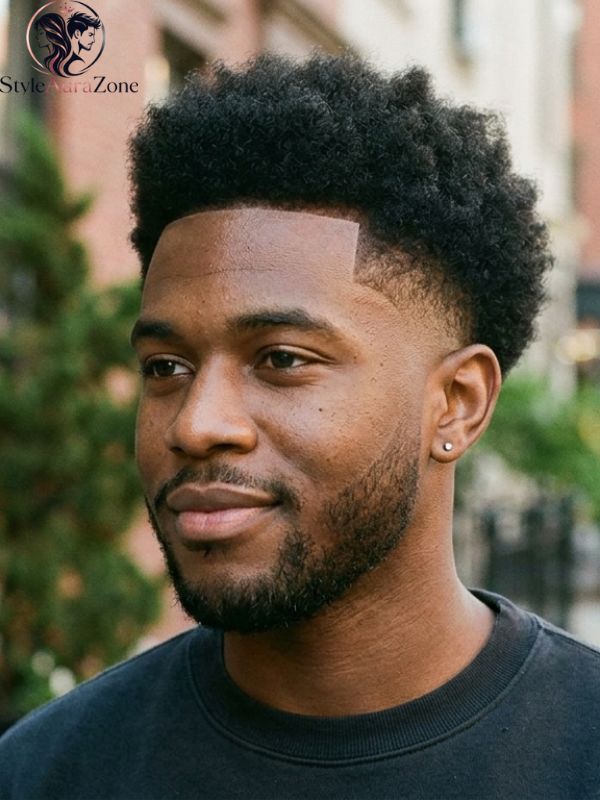
A natural afro with a fade lets texture lead. Daily care boils down to moisture: a leave-in conditioner or light oil and a pick for shape. The fade tidies the sides and neckline. Shaping visits fall around every three weeks.
Regular Cut with Low Drop Fade
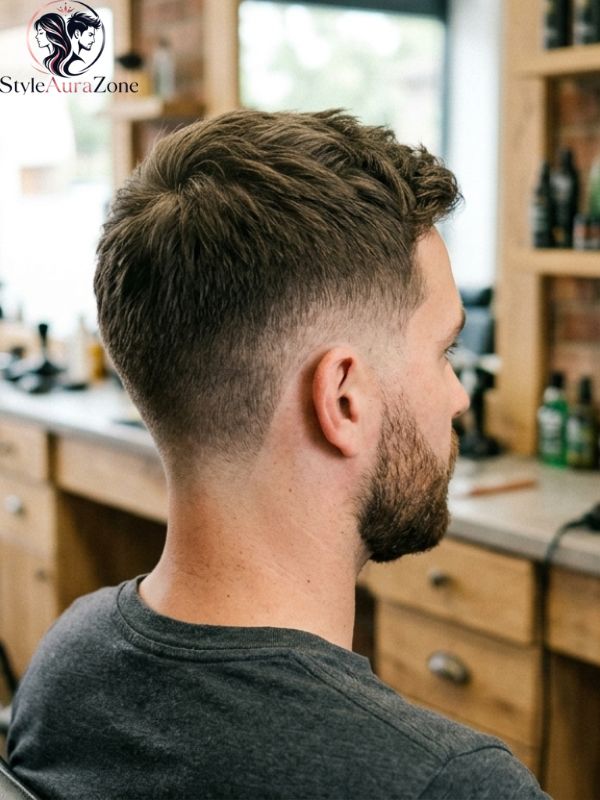
The low drop fade curves down behind the ear and softens the lines around the head. A regular, scissor-cut top sits above it. Comb it, add a bit of cream, and finish.are among the easiest fades to keep, so four weeks is realistic.
Short Twists with Mid Fade and Beard
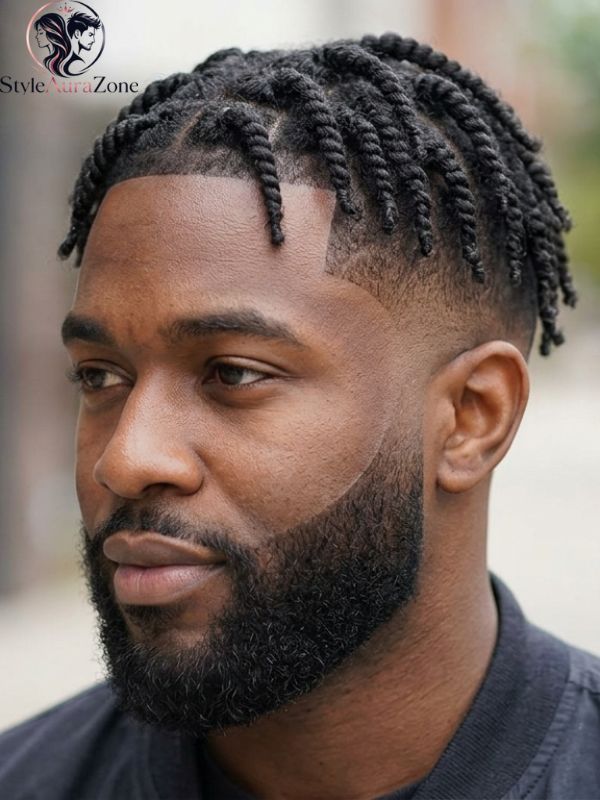
Two-strand twists about an inch long give coily hair definition with little styling. A mid fade keeps the sides tight. Light moisturizer plus a satin bonnet at night prevents frizz. Have the roots retwisted roughly once a month as new growth appears.
Attractive Low-Maintenance Men’s Medium Hairstyles
Layered Flow

Layered flow lets hair move naturally from crown to collar. Layers remove bulk, so waves fall into place without a fight. Towel dry and add a bit of cream. Trims every eight weeks keep the ends from getting heavy.
Slick Back Fade
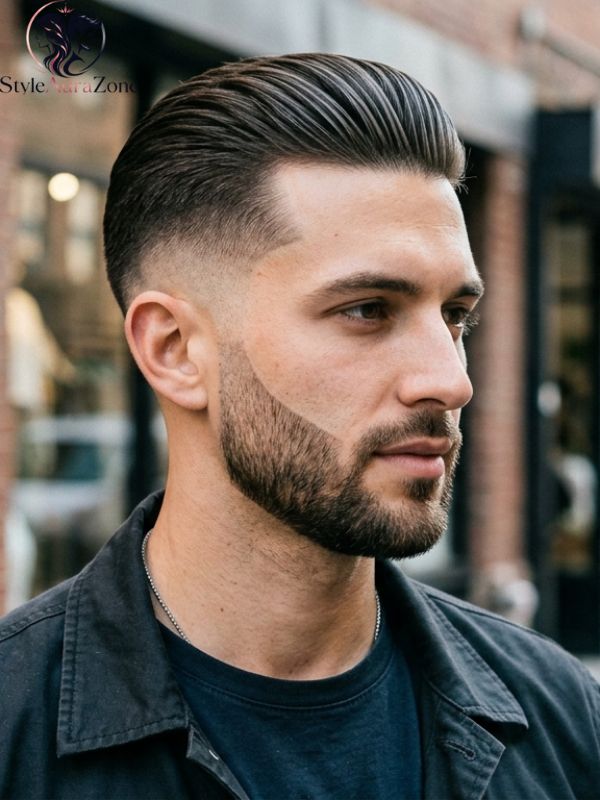
The slick back fade sweeps medium-length hair backward over faded sides. It reads sharp in boardrooms and bars alike. A medium-hold pomade and a comb take under three minutes. Fade refreshes come every three to four weeks.
Shaggy Hair

Shaggy hair thrives on neglect. Choppy layers and a loose fringe look better slightly undone. Mist with sea salt spray, rough dry with your fingers, and go. Structure is intentionally loose here, so you can wait eight to ten weeks between trims.
Man Bun
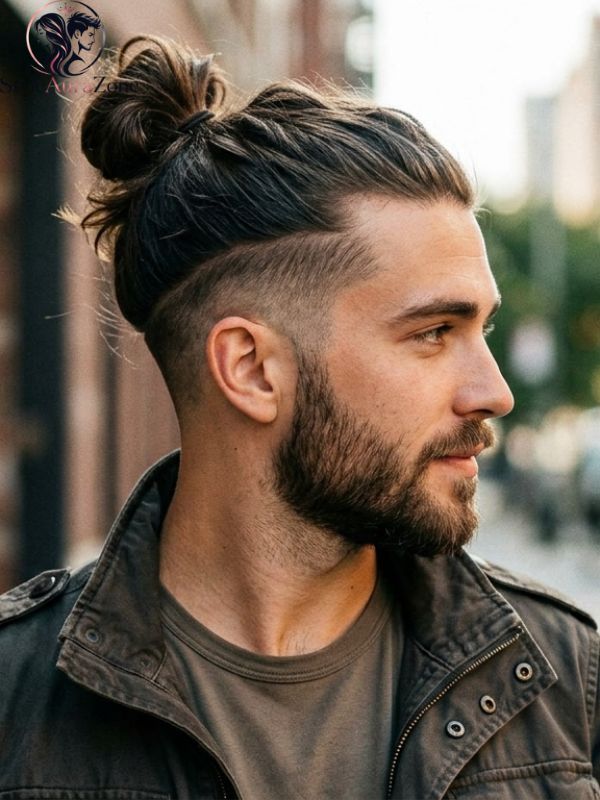
A man bun clears hair from your face with one elastic and ten seconds of effort. It demands length, so the grow-out stage takes patience. Wash and condition regularly to keep strands healthy. Choose a soft hair tie over a tight rubber band, and trim the ends every ten to twelve weeks.
Short Mod Cut

The short mod cut sweeps a layered, forward-combed fringe across the forehead above neat, short sides. The retro vibe holds up with a little cream and a comb. A trim every five to six weeks keeps the fringe at the right length.
Wavy Medium Shaggy Hair

Wavy hair already has shape, and this cut lets it work. Feathered layers at medium length give waves room to stack. Apply sea salt spray to damp hair and air dry. Skip the blow dryer, and a trim every seven to eight weeks is plenty.
Medium Middle Part

A center part with medium-length hair falling to each side looks relaxed and current. Part it, rake in a little cream, and let gravity finish the job. The shape works best on straight to wavy hair. Plan a trim every six to eight weeks.
Messy Medium Waves

Messy medium waves lean into your texture. Layers balance the volume while the sides stay tidy. Smooth in curl cream, scrunch, and let the hair dry on its own. Hair this loose forgives off days, so appointments can sit eight weeks apart.
Dreads
Once locs are established, upkeep is mostly cleanliness and root maintenance. Use a residue-free shampoo and have a loctician tighten new growth every four to eight weeks. The early stages demand patience, so weigh that before starting.
Textured Side-Swept Styling with A Low Fade
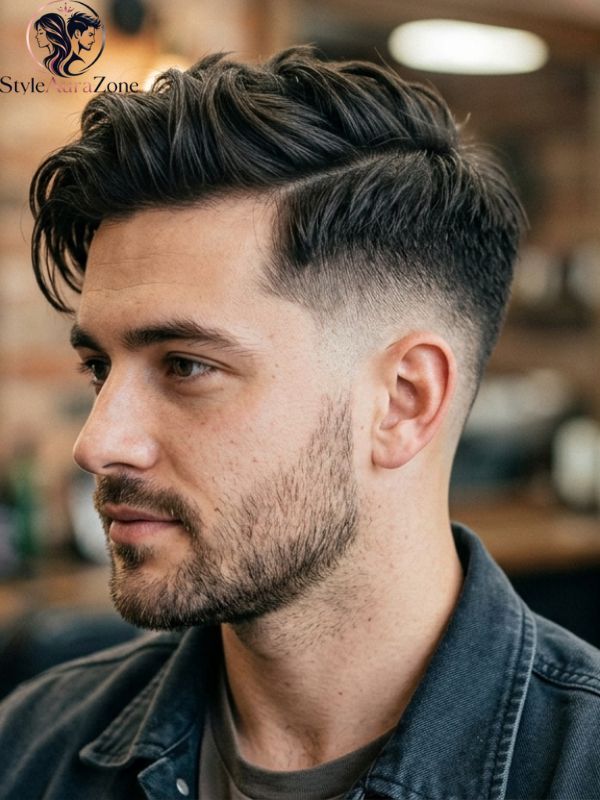
A medium-length top brushed to one side sits over a low fade. Texture adds movement so the sweep never looks flat. A pinch of clay and a comb finish it in a couple of minutes. The low fade grows out softly, making four to five weeks between visits realistic.
The Most Basic Men’s Hairstyles
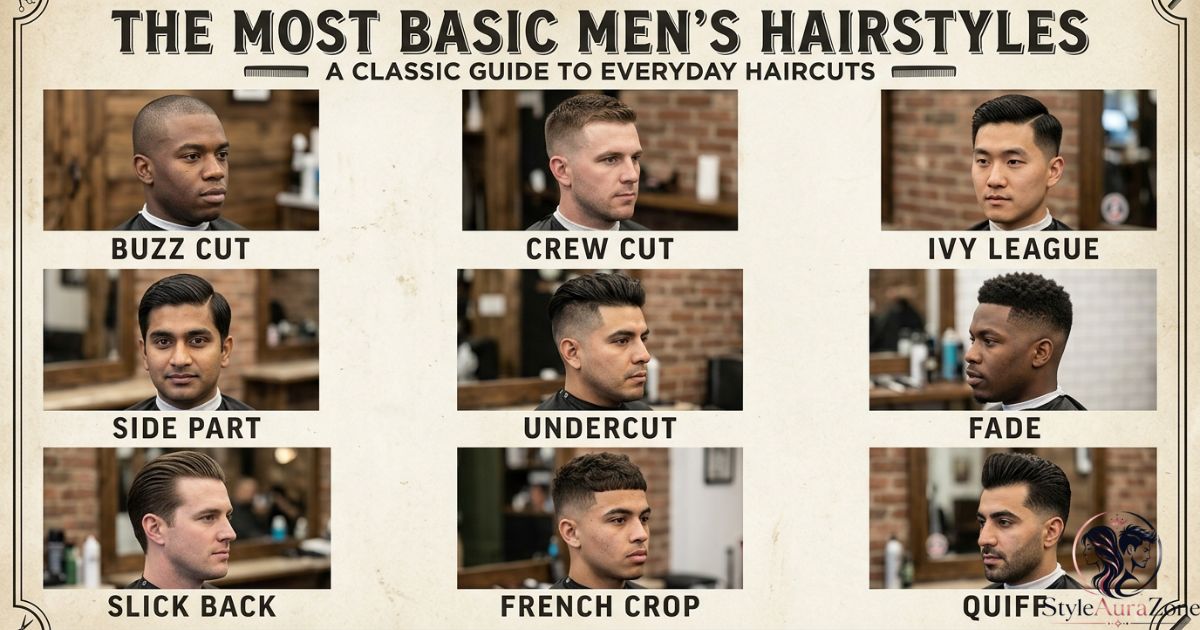
The most basic men’s hairstyles are the buzz cut, crew cut, Ivy League, classic side part, undercut, French crop, slick back, comb over, and short shag. They rely on smart cutting instead of complicated styling. Most need only a comb and a little product, which explains why barbers have cut them for decades.
Why These Cuts Stay Popular
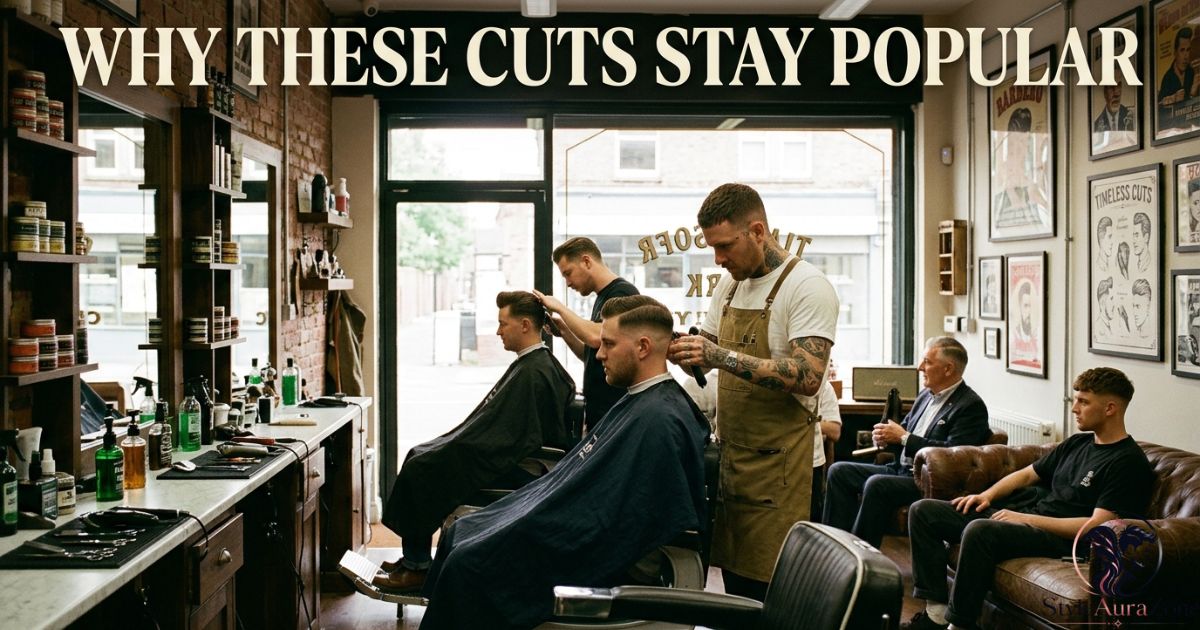
The haircut itself does the work. There is no trick to learn and no gadget to master. Because the shape is built into the cut, a small amount of clay, wax, or cream is all you need to finish.
Versatility helps too. A crew cut works at a wedding and at a barbecue. According to, the best haircut is one you like and can actually keep up, and these basics make that easy.
What’s The Easiest Haircut To Maintain For Guys?
The buzz cut is the easiest haircut for guys to maintain. One guard length covers the whole head, so there is no styling, no product, and almost no skill involved. The burr cut, butch cut, and crew cut follow close behind. Many guys also,and skip the barbershop entirely.
| Haircut | Daily Styling | Product Needed | Trim Interval | Home-Friendly |
| Buzz cut | 0 minutes | None | 2-4 weeks | Yes |
| Burr cut | 0 minutes | None | 3-4 weeks | Yes |
| Butch cut | 0-1 minute | None | 3-4 weeks | Yes |
| Crew cut | 2 minutes | Optional clay | 3-5 weeks | Partly |
| Short curls | 2-3 minutes | Curl cream | 5-6 weeks | Partly |
| French crop | 2 minutes | Texturizing clay | 4-5 weeks | No |
What Counts As A Low-Maintenance Haircut?
Short hair is not automatically easy hair. A skin fade looks effortless yet needs a barber every two weeks. A medium shag looks messy yet can go two months untouched. Real low maintenance comes down to three measurable things: styling time, trim cadence, and product count.
The Criteria For A Low-Maintenance Style
Score any cut from 0 to 2 on each test below. A total of 5 or 6 means the style is truly low-maintenance. A 3 or 4 is moderate. Anything lower is a routine in disguise.
| Test | 2 Points | 1 Point | 0 Points |
| Styling time | 3 minutes or less | 4-7 minutes | 8+ minutes |
| Trim cadence | 5+ weeks | 3-4 weeks | Under 3 weeks |
| Products | None or one | Two | Three or more |
The Styling Time Test
Watch the clock for one week. A buzz or burr cut scores a perfect zero minutes. A crew cut or French crop takes about two with clay. If your style needs a blow dryer, a round brush, and three mirror checks, it fails no matter how short the hair is.
The Trim Cadence Test
Count the days between appointments you actually keep. A cut that demands a visit every 10 to 14 days costs time even when the chair session is quick. Skin fades land here. Uniform lengths and scissor-cut sides stretch much further, and the longer a style takes to look bad, the lower its upkeep.
The Product Test Low-Maintenance Men’s Haircuts:
Count the bottles this cut requires. None or one is ideal. Clay, paste, or curl cream alone usually does the job. Once you need a heat protectant, a styling cream, and a finishing spray, you’ve built a routine instead of a haircut.
How To Choose A Low-Maintenance Cut For Your Face Shape
Your face shape decides which easy cut looks best on you. The same buzz that flatters one face can exaggerate another. Use the sections below as a starting filter, then confirm with your barber.
Oval Face
Oval faces are the easy case. Nearly every style on this list works, so choose by routine instead of geometry. A crew cut, French crop, slick back fade, or textured quiff all sit well.
Round Face
Round faces benefit from height and angles. A high and tight fade, textured quiff, brush up, or comb over adds vertical lines. Avoid flat, uniform clipper cuts with no taper because they emphasize width.
Square Face
Strong jawlines already provide structure, so soften them with texture. A French crop, short curls, brush up, or messy taper brings movement. Strict, geometric cuts can make an angular face look harsher.
Oblong (Long) Face
Long faces need width rather than height. Pick a crew cut, layered flow, medium middle part, or mod cut, which keep volume at the sides. Tall quiffs and pompadours stretch the face further.
Heart-Shaped Face
A wider forehead and narrower chin respond well to side-swept lengths and fringe. A comb over, side-swept low fade, layered flow, or French crop softens the upper face. Skip very tight sides under a voluminous top.
Diamond Face
Prominent cheekbones look best balanced by fullness at the forehead and jaw. A textured fringe, French crop, shaggy layers, or man bun does that well. Extreme skin fades beside a tall top spotlight the cheekbones even more.
The Pro Move for Low-Maintenance Specifically
When two cuts flatter your face shape equally, choose the shorter one. Shorter styles ask less of you each morning and the grow-out phase stays tidy. Show your barber a reference photo and ask what would change on your hair.
| Face Shape | Goal | Easy Picks | Skip |
| Oval | Keep balance | Crew cut, French crop | Nothing major |
| Round | Add height | Brush up, comb over, high and tight | Flat uniform buzz |
| Square | Soften angles | French crop, short curls | Rigid geometric cuts |
| Oblong | Add width | Crew cut, mod cut | Tall quiffs |
| Heart | Balance forehead | Side-swept low fade, fringe | Very tight sides with big top |
| Diamond | Add forehead and jaw fullness | Textured fringe, shaggy layers | High skin fade with tall top |
The Best Low-Maintenance Haircuts by Hair Type
Hair texture decides how easy a cut really is. A crew cut that lies flat on straight hair can puff up on coarse curls without the right tweaks. Match the cut to your strands first.
Straight Hair
Straight hair shows every line, so simple cuts look sharp with little effort. The buzz, crew cut, French crop, and Ivy League all shine. Matte clay adds grip when the top is longer.
Wavy Hair
Wavy hair works best when the cut follows its natural pattern. The textured quiff, messy taper, layered flow, and medium middle part fit. Sea salt spray on damp hair brings out the bend.
Curly Hair
Curls are naturally low-maintenance when cut well. Short curls, a curly fade, or a tapered top keep shape and cut drying time. Apply curl cream to damp hair, scrunch, and air dry or use a diffuser.
Coily Hair
Afro fades, temp fades with a line up, short twists, braids, and close buzzes all suit coily textures. Moisture matters more than hold. Leave-in conditioner or a light oil keeps the pattern defined and the scalp healthy.
Thick Hair
Thick hair needs bulk removed so the style sits cleanly. Crew cuts, brush ups, short comb overs, and textured quiffs work. Ask your barber to use thinning shears and avoid uniform medium lengths that turn helmet-like.
Fine or Thin Hair
Fine hair does best when it stays short and textured. A French crop, textured crew cut, or buzz creates visual density. A volumizing paste adds body. Skip longer lengths that expose thin spots and demand more styling.
| Hair Type | Easy Cuts | Best Product |
| Straight | Buzz, crew cut, French crop | Matte clay |
| Wavy | Quiff, messy taper, layered flow | Sea salt spray |
| Curly | Short curls, curly fade | Curl cream |
| Coily | Afro fade, twists, braids | Leave-in or light oil |
| Thick | Brush up, crew cut, comb over | Paste after thinning |
| Fine or thin | French crop, buzz | Volumizing paste |
Choosing An Easy Hairstyle For Your Lifestyle
The right easy cut matches how you actually live. What suits a boardroom regular may frustrate a new parent, and the reverse is also true. Start with your daily reality and work backward.
For Busy Professionals
A crew cut, comb over fade, or slick back fade looks sharp in meetings and takes about three minutes. Each holds shape for three to four weeks. A small amount of matte clay or light pomade is the only product required.
For Dads and Parents
The buzz cut, crew cut, short curls, and French crop win here. At 7 a.m. with kids underfoot, the shorter the better. None need a real routine, and most can be tidied at home when appointments are hard to schedule.
For Athletes and Gym Regulars
A buzz, butch cut fade, high and tight, or temp fade copes with sweat, helmets, and headbands. There is no product to wash out after training. Skin fades look sharp under gear but need frequent visits, so a softer taper may suit tighter schedules.
For Students
A French crop, short brush up, textured crew cut, or curly fade looks current and survives dorm life. Each needs minimal product and still looks deliberate after a short night of sleep.
For First Job Interviews and Conservative Workplaces
A crew cut, Ivy League, classic side part with a low fade, or neat comb over reads clean and confident. Book the appointment five to seven days before the interview so the cut settles in and any sharp edges soften.
For Frequent Travelers
A buzz, French crop, or butch fade packs light. No bottles for airport security, no tools to carry, and the look stays consistent across humidity and hotel water. Mornings in a different time zone become painless.
For Men Over 40
A French crop, low fade with a short top, or textured crew cut looks polished and age-appropriate. The French crop’s forward fringe also softens temple thinning if it has begun. Shorter lengths generally read more intentional as the hairline shifts.
| Lifestyle | Best Cuts | Morning Time | Trim Interval |
| Busy professional | Crew cut, comb over fade | About 3 minutes | 3-4 weeks |
| Dad or parent | Buzz, short curls | 0-2 minutes | 3-5 weeks |
| Athlete | Butch fade, high and tight | 0-1 minute | 2-3 weeks |
| Student | French crop, brush up | 2-3 minutes | 4-5 weeks |
| Interview or conservative office | Side part, Ivy League | 3 minutes | 3-4 weeks |
| Frequent traveler | Buzz, French crop | 0-2 minutes | 3-5 weeks |
| Over 40 | French crop, textured crew | 2-3 minutes | 4-5 weeks |
How Often To Get A Low-Maintenance Haircut
The cuts that look simplest in the chair often need the most visits. Looser styles tend to hold their shape longest. Use this as a baseline and adjust to how fast your hair grows.
Timeline By Style
| Style Type | Typical Visit Interval | What Drives It |
| Buzz and burr cuts | 2-4 weeks | Edges and neckline fuzz up quickly |
| Crew cuts and short crops | 3-5 weeks | Extra length forgives grow-out |
| Skin fade styles | Fade every 10-14 days, full cut every 4-6 weeks | Bare skin shows growth fast |
| Medium styles (flow, shag, middle part) | 6-8 weeks | Layers hide new growth |
| Locs and long styles | Roughly every 4-12 weeks | Root tightening or shape trims |
How to Cut Your Own Low-Maintenance Haircut at Home
Home cutting works when the haircut is uniform. The more the style relies on blending, edges, or layers, the more training it takes. Start simple and build skill slowly.
Styles You Can Actually Do At Home
- A buzz cut at any guard length
- A burr cut
- A butch cut without a fade
- A long buzz cut
- A crew cut with uniform sides
These need only steady hands and a feel for the curve of your head.
Cuts You Can Maintain at Home, But Shouldn’t Start There
- Crew cuts, where you can trim length but the original shape needs a barber
- Any style where you only clean up the neckline and around the ears
Use these skills between barber visits to stretch the time before your next appointment. Avoid rebuilding the shape from scratch.
Ones You Should Never Attempt
- Any fade, since blending is the hardest barbering skill
- Any line up, which demands precise edge work
- Layering or scissor-over-comb work
- Anyone else’s hair if you lack practice
The Minimum Equipment You Need
| Tool | Why You Need It | Notes |
| Quality clippers | Cut evenly without pulling | Budget models overheat; mid-range ones last years |
| Guard set (#1 to #4) | Controls length | #1 is about 1/8 inch, #4 about 1/2 inch |
| T-blade trimmer | Neckline, ears, sideburns | Used for edges only |
| Handheld mirror | See the back of your head | Pair with a bathroom mirror |
| Cape or old towel | Easier cleanup | Optional but helpful |
The Basic At-Home Buzz Cut Process
- Start with clean, fully dry hair so clippers glide evenly.
- Choose a guard one size longer than you think you want. You can always go shorter.
- Begin at the front and work backward, moving against the direction of growth.
- Overlap each pass by about half the width of the clipper head.
- Change direction on the sides because the growth pattern shifts there.
- Clean the neckline and around the ears with the T-blade trimmer.
- Check the back with a handheld mirror and correct missed patches.
Cost vs. Barbershop Math
Many shops charge $25 to $45 for a basic cut, and more in major cities. A home kit costs less than a handful of those visits. If you buzz your own hair, the equipment pays for itself fast.
| Item | Typical Cost | Break-Even Point |
| Home clipper kit | 60-200 | About 3-6 haircuts |
| Barbershop cut | 25-45 each | Ongoing |
| Yearly shop cost (every 4 weeks) | 325-585 | Compare to one-time kit |
The Minimum Product Setup
The goal is fewer products, not fancier ones. Most guys overbuy and overapply, then wonder why a simple cut feels like work. A lean routine beats a crowded bathroom shelf.
The One-Product Setup
A matte clay or paste covers almost everything. Rub a pea-sized amount between your palms and work it through damp or dry hair. It supports the crew cut, French crop, brush up, quiff, comb over, and slick back.
The Right Styling Product By Texture
| Hair Texture | Best Product | Why It Works |
| Straight | Matte clay or paste | Adds grip without flattening |
| Wavy | Sea salt spray | Enhances natural bend |
| Curly | Curl cream | Defines pattern and cuts frizz |
| Coily | Moisturizing cream or light oil | Moisture matters more than hold |
| Fine or thin | Volumizing matte paste | Adds fullness without weight |
The Two-Product Setup (If You Want It)
Add a clarifying shampoo once a week. It strips product buildup so hair stays light and responsive. Without it, even a tiny daily dab of clay eventually leaves hair dull and heavy.
What Not to Buy
- High-shine pomade for short, casual cuts
- Hard-hold gel that creates a stiff look
- Hairspray
- Heat protectant unless you use hot tools
- Dry shampoo
- Shine sprays and finishing mists
Cost Expectation
A solid clay often runs $15 to $30 and lasts several months on short styles. Shampoo and a clarifying wash add little. A truly low-maintenance routine should cost well under $100 a year in products.
Common Haircut Mistakes
Certain errors show up again and again, and most come from misunderstanding what low maintenance really means. Avoiding these five saves time and money.
Choosing a Cut That Requires a Fade
A fade looks best within one to two weeks of a fresh cut. That schedule is not low effort no matter how short the hair is. For true ease, ask for a uniform length or a soft taper that stretches visits to three or four weeks.
Skipping the Line Up to Save Time
Short cuts without clean edges at the forehead and neck look unfinished. A quick trimmer pass makes the difference between deliberate and sloppy. Request it by name if your barber does not include it.
Picking a Cut Based on a Celebrity, Not Your Hair Type
Celebrity looks come with stylists, lighting, and retouching. Your hair has its own texture, density, and growth pattern. Bring the photo but ask your barber what must change to suit you.
Trying to Fade at Home Without Practice
Blending is the hardest skill in barbering. Even small errors leave visible steps that take weeks to grow out. Stick with uniform clipper cuts and neckline tidy-ups until you build real experience.
Not Adjusting the Cut as You Age
A style that worked at 25 may not flatter the same face at 50. Hairlines shift and features change. Review your cut every few years and adapt the length, shape, and texture to match.
FAQ’S
How often should I get a men’s haircut?
Most men need a trim every three to five weeks. Fades need visits sooner, while longer styles can even stretch to six or eight weeks.
How do I choose a haircut for my face shape?
Match the cut to your proportions. Round faces like height on top, long faces want side volume, and square faces look great with soft texture.
What’s the best men’s haircut for thinning hair?
Keep it short and textured. A buzz cut or French crop reduces contrast between thick and thin areas, and it makes hair look noticeably fuller.
What should I tell my barber to get the haircut I want?
Bring a reference photo and name the guard numbers, fade height, and top length. Then ask what adjustments suit your hair type and head shape.
Which men’s haircut needs the least styling?
The buzz cut wins. One even length means no product and no styling, and a crew cut comes close with just a little matte clay.
Conclusion
Low-maintenance does not mean low style. A good cut earns its keep through easy styling, long gaps between barber visits, and a short product list. Match your pick to your face shape, hair type, and daily schedule, and your mornings will thank you.
Start with one style from this list and give it a few weeks. Fine-tune the length with your barber, keep your routine lean, and skip fades unless you enjoy frequent appointments. The best low-maintenance men’s haircuts feel effortless because the cut does the work.