
This guide walks you through 31 low fade ideas, from a classic office cut to a bold burst paired with a mohawk. Each one includes a styling tip you can take straight to your barber. You’ll also learn how a low taper differs from a low skin fade.
This guide walks you through 31 low fade ideas, from a classic office cut to a bold burst paired with a mohawk. Each one includes a styling tip you can take straight to your barber. You’ll also learn how a low taper differs from a low skin fade.
Popular Men’s Low Fade Haircuts
Classic Low Fade
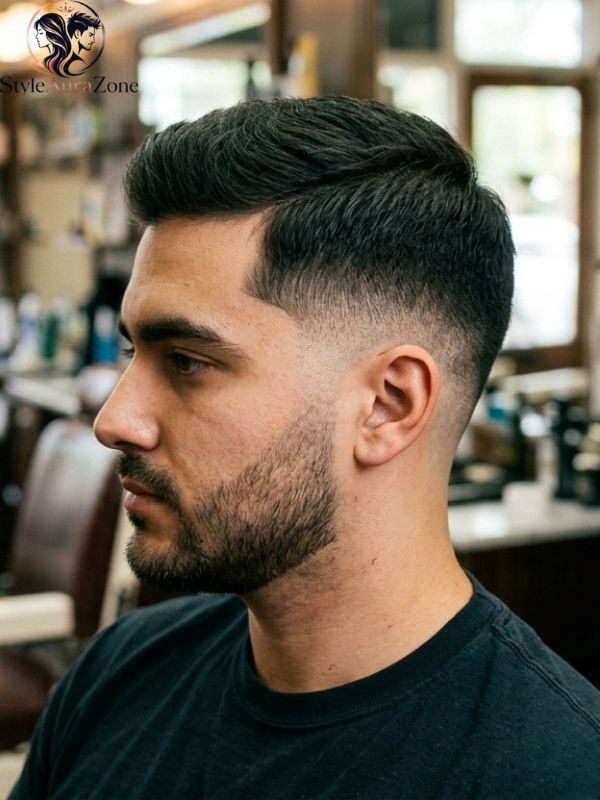
The sides blend from just above the ear into a soft, short finish at the nape. The top stays neat and medium in length. It works at offices, weddings, and weekend barbecues alike. Because the shortest point sits low, the cut grows out gracefully, so you can stretch visits to four weeks.
Low Drop Fade
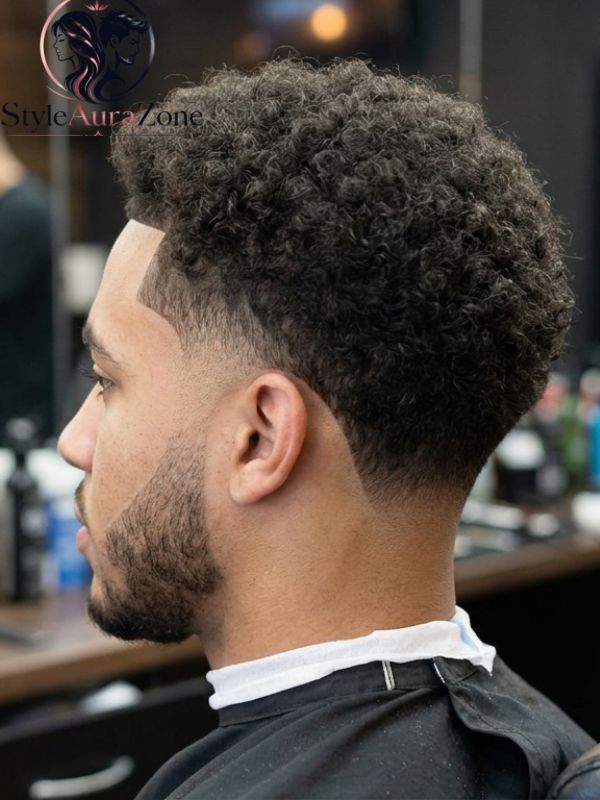
The fade line arcs behind the ear and dips toward the neck, tracing the natural curve of your skull. That curve adds shape a straight guide line can’t match. Wavy tops and curly fringes look especially good above it. Ask your barber to start the drop about an inch behind the ear.
Low Temp Fade
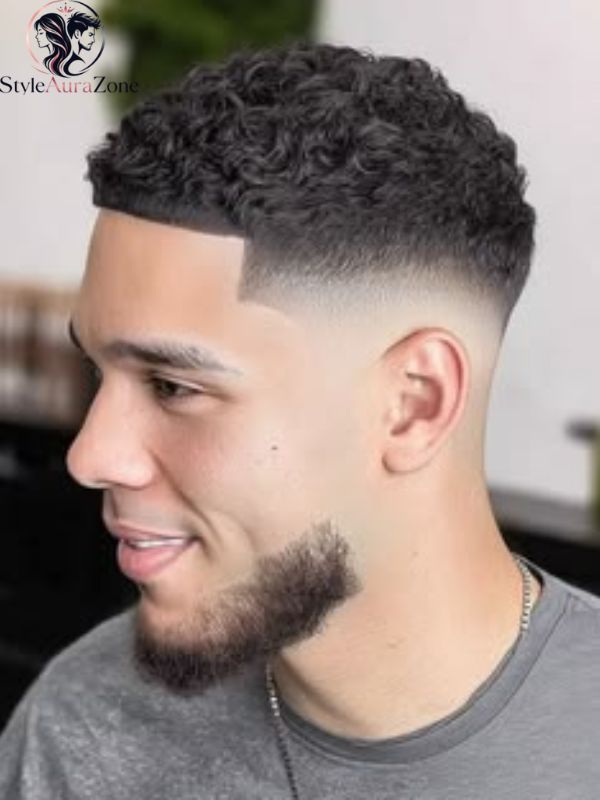
The shortest section hugs the temples and sideburns, framing the front of your face with crisp edges. Coarse and coily textures hold this edge beautifully. It pairs well with buzz cuts, twists, and short afros. A groomed beard ties the sharp temple line to the jaw.
Low Skin Fade
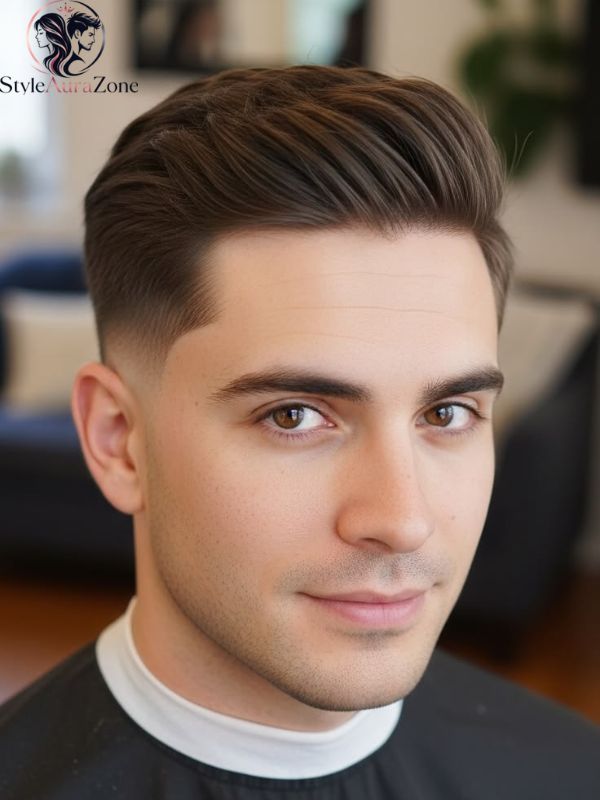
Hair melts all the way to bare skin low on the sides and nape. Contrast is the draw, since the longer top stands out sharply. Request point cutting up top for added movement. Skin shows regrowth fast, so book touch-ups every two to three weeks.
Low Burst Fade
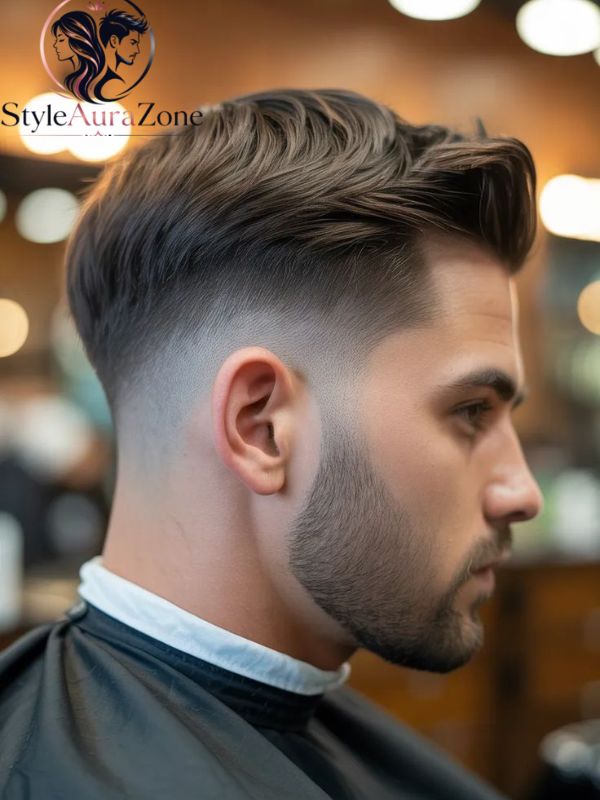
The fade curves in a semicircle around the ear and wraps toward the nape, leaving the center back longer. This shape makes a mohawk or mullet look intentional rather than accidental. Keep the top layered so the burst has room to shine.
Low Fade Undercut
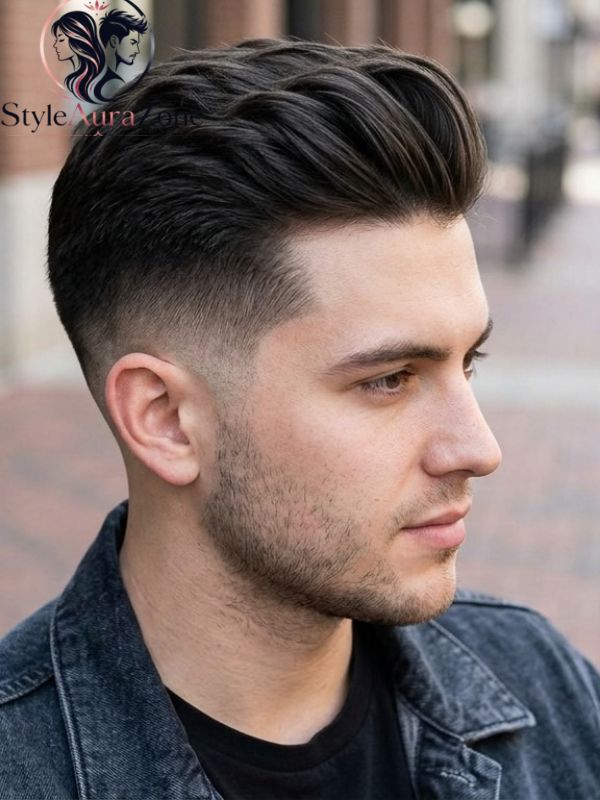
A disconnected top sits over faded sides, so the two lengths read as separate blocks. That abrupt shift gives the cut an edgy, masculine finish. Slick it back, push it into a pomp, or sweep it sideways with a light pomade.
Hard Side Part with Low Taper Fade
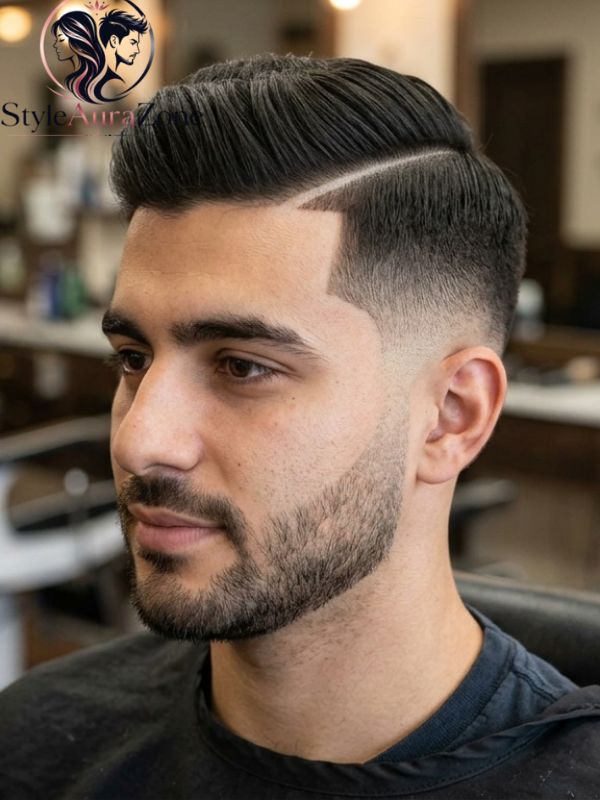
A razored part line cuts a sharp edge through the top, while the taper keeps the sides softly blended. The result looks crisp and old-school. Comb damp hair with a medium-hold pomade, then let it set. You’ll walk into any meeting looking put together.
Blunt French Crop with Low Fade
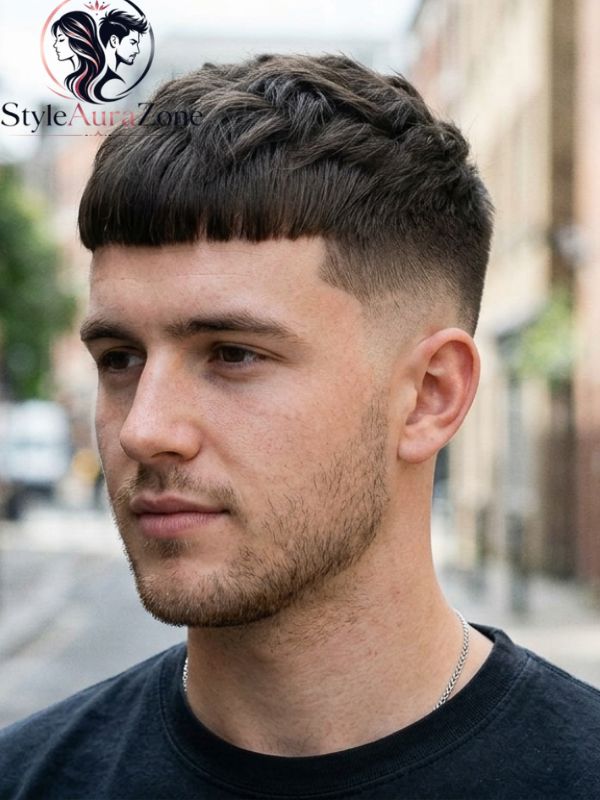
Short, straight-cut bangs sit above the forehead while the sides fade low and neat. Cutting the fringe blunt means no layers to maintain. This style suits straight and thick hair best. Add a line up and a trimmed beard if you want extra bite.
Read more.27 Stylish Burst Fade Haircuts
Trendy Short Hair with Low Skin Fade
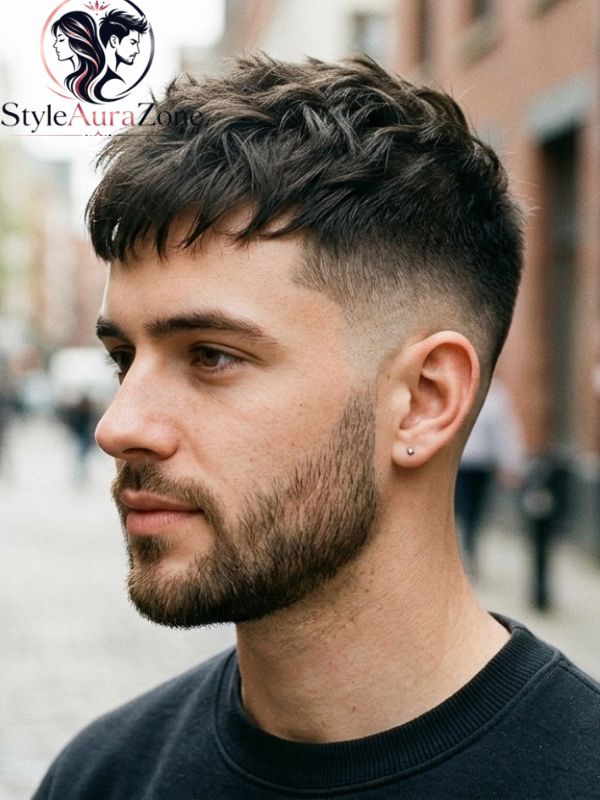
A scissor-cut top of about two inches pairs with a skin-blended perimeter. Push it forward for a casual vibe or comb it tidy for the workday. Matte clay keeps the finish natural, while a light pomade adds polish.
Low Fade Comb Over
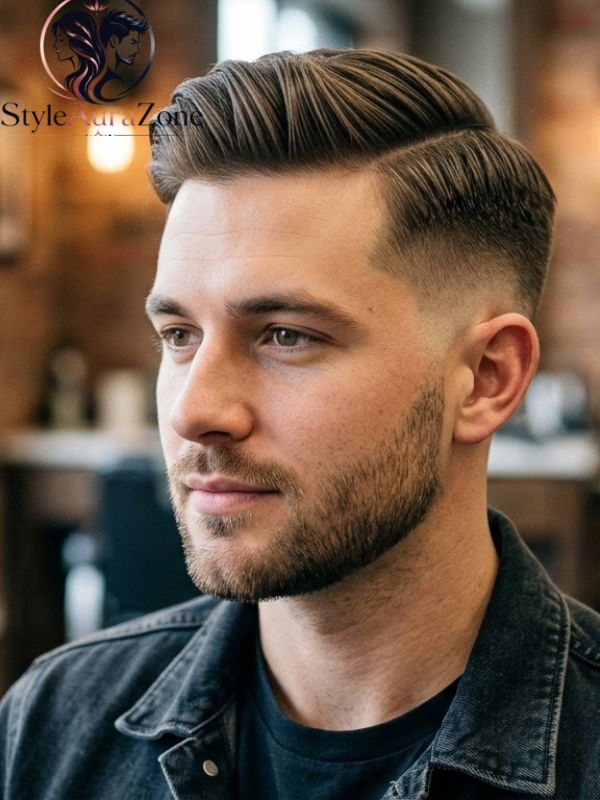
Longer hair on top sweeps to one side over faded sides. Towel-dry first and leave the hair slightly damp. Then work a shine pomade through and comb it into place. This one looks distinguished without trying hard, and it flatters round and oval faces.
Long Curly Hair with Low Fade
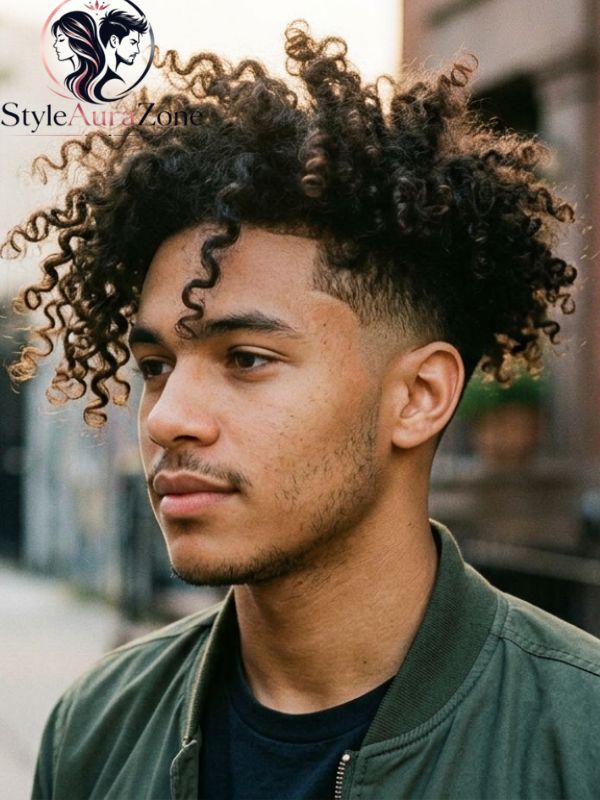
Natural curls keep their length and volume, and the fade strips bulk from the sides. Without that trim, curly hair tends to mushroom outward. Wash with a moisturizing shampoo and scrunch in curl cream to calm frizz.
Low Fade with Design
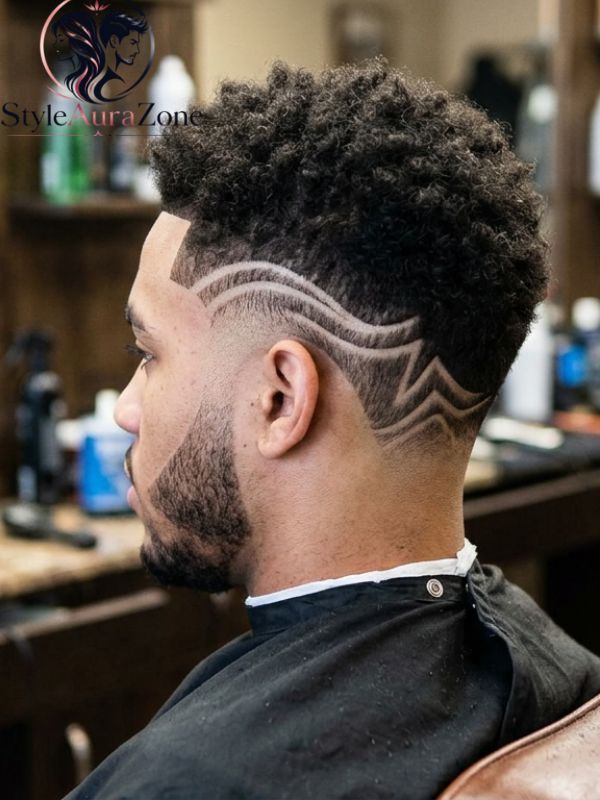
Razor lines, stripes, and small geometric shapes turn a fade into a statement piece. Try a subtle part line or a single curve for your first design. Look for a barber with a steady hand and a good detail trimmer.
Textured Spiky Hair with Sharp Low Fade
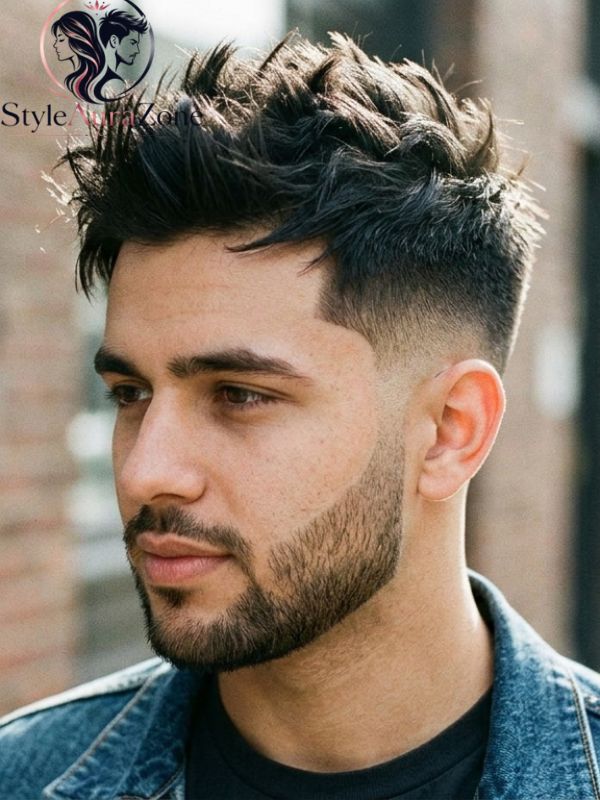
Short spikes with messy ends create movement against crisp sides. Blow-dry the top upward, twist small sections between your fingers, and set them with matte clay. Fine hair that falls flat gets extra grip from a texturizing powder.
Stylish Low Taper Fade
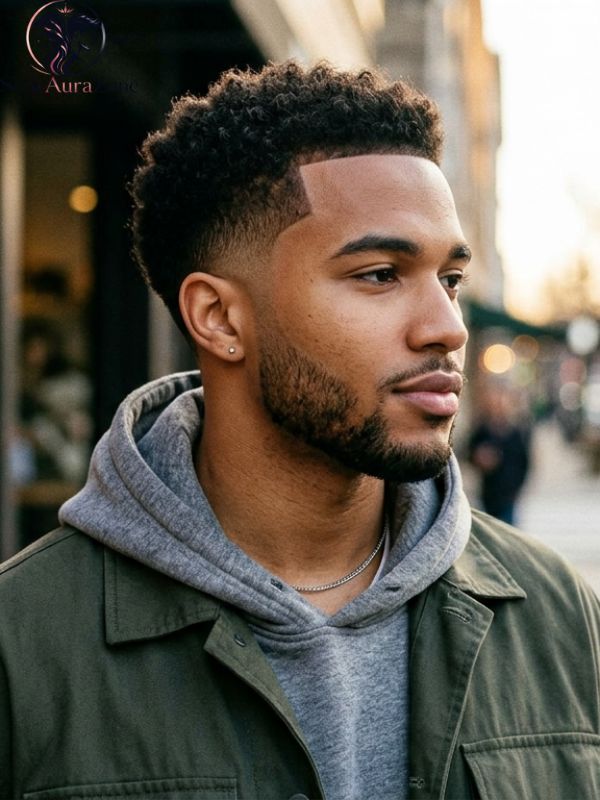
A taper keeps a touch of length at the neckline for a softer transition than a skin fade. It supports almost any top, so you can change styles without recutting the sides. Finger-scrunch a layered top with a bit of paste for a youthful look.
Very Low Fade
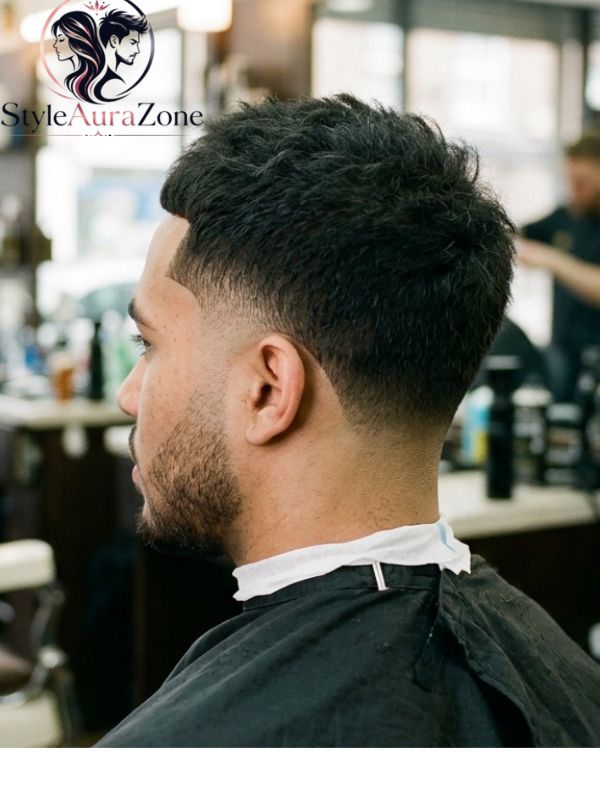
The blend begins near the natural hairline, barely above the ears and nape. It’s the most conservative fade you can request, with almost no visible lines. Conservative workplaces love it. Daily styling takes almost no effort.
Short Messy Waves with Low Fade
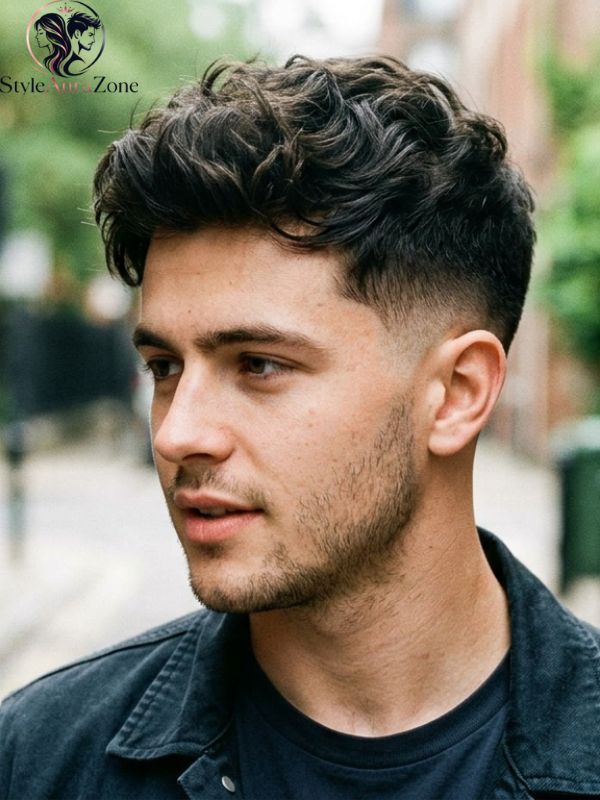
Waves flop forward on their own, and a clean low fade keeps the look intentional instead of unkempt. Spray sea salt mist onto damp hair and dry it with a diffuser on low. A dab of light clay finishes the beachy texture.
Crew Cut with Low Fade
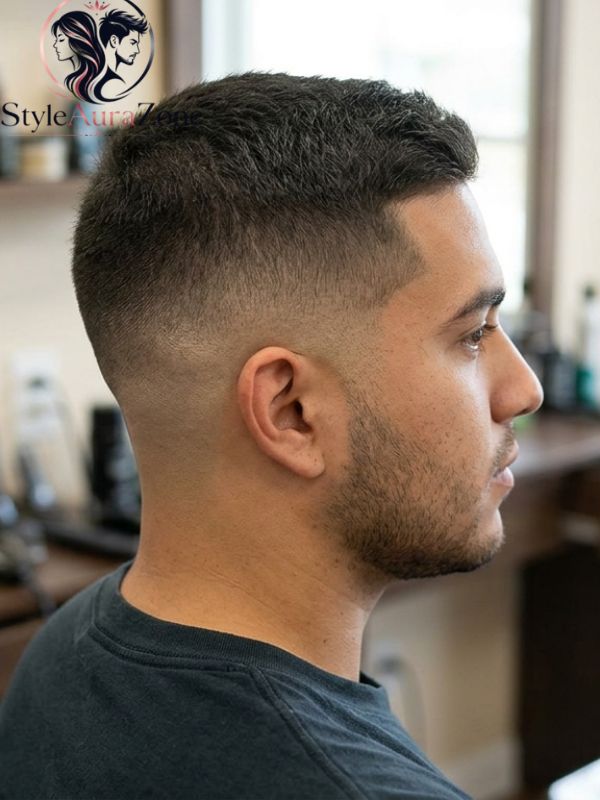
Military-inspired short sides meet a slightly longer top that lies forward or sweeps gently to the side. It’s tidy, fast to style, and hard to get wrong. Run light cream through the front and lift with a round brush for body.
Medium, Layered and Straight
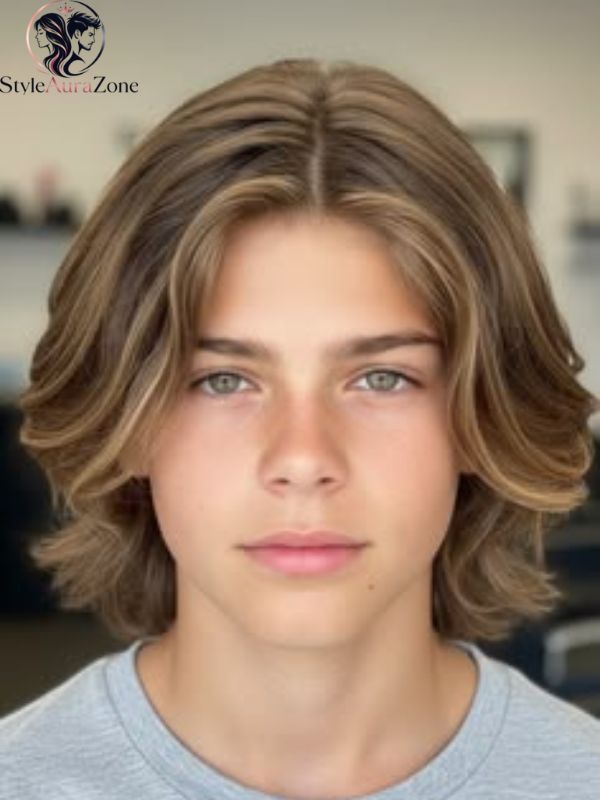
Layers add airiness to medium-length straight hair, and a low drop fade keeps the sides from looking heavy. Brush the fringe forward or push it back. Clay separates the layers and gives the ends a relaxed, lived-in finish.
Textured Crop with Low Fade and Groomed Beard
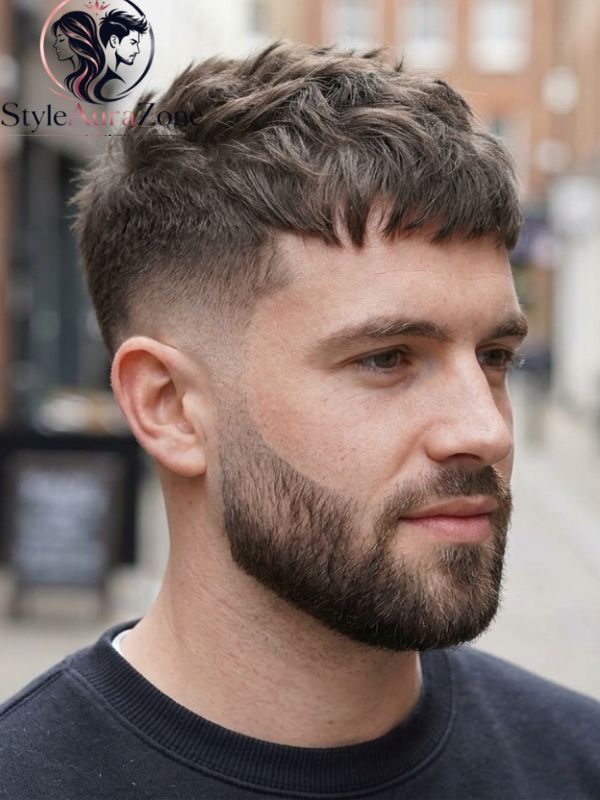
Choppy layers give the crop a tousled feel, while the fade cleans up the sides. A trimmed beard adds weight to the jaw and makes the whole look more grown-up. Apply beard oil daily to soften stubble and tame flyaways.
Brush Back with Low Drop Fade
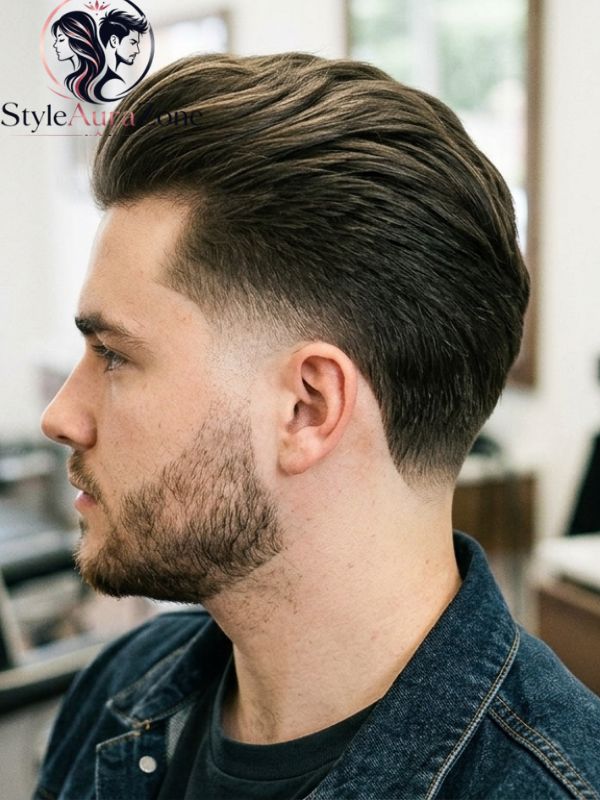
Hair sweeps back from the roots with lift at the front, and the drop fade frames the ears. Blow-dry backward with a vent brush, then finish with gel or wax. Thin hair benefits from a volumizing spray at the roots first.
Loose Curly Mohawk Fade
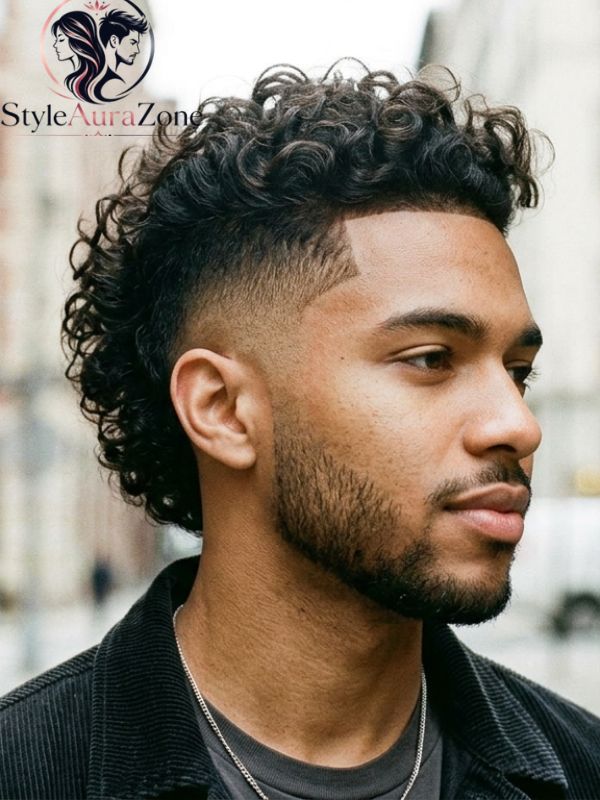
Curls rise through the center strip while faded sides sharpen the silhouette. The loose curl pattern keeps the shape playful rather than punk. A flexible-hold gel defines each curl without crunch. Stay clean-shaven if you want the cut to take center stage.
Thick, Tousled Brush Up with Low Skin Fade and Beard
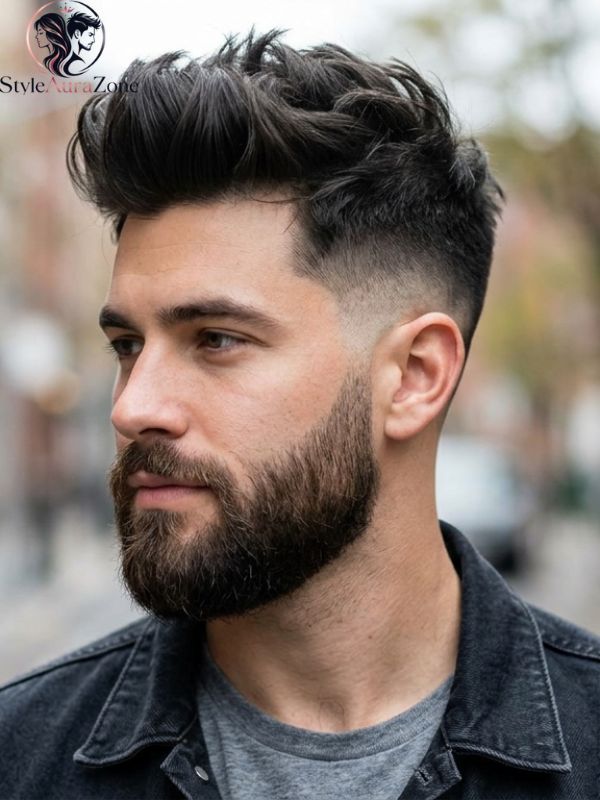
The top lifts up and back to show off its thickness. A skin-faded perimeter and a full beard balance it out. Work texturizing cream through towel-dried hair, then blow-dry at the roots. Trim the beard weekly so the fade stays visible.
Modern Buzz Cut with Clean Low Fade
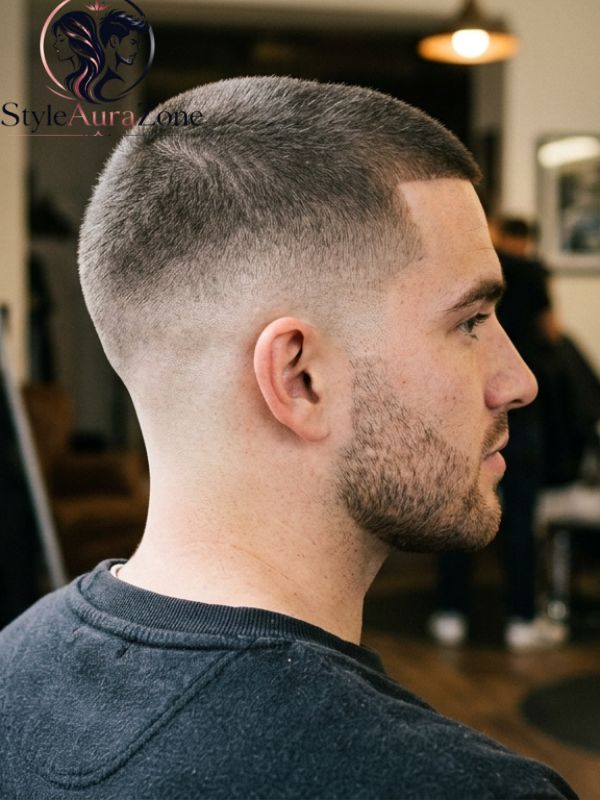
An even buzz, usually a #1 to #4 guard, plus a subtle low fade creates a minimalist look. Styling takes seconds. Add a crisp line up for definition and schedule trims every two to three weeks.
Heavy Fringe with Low Fade
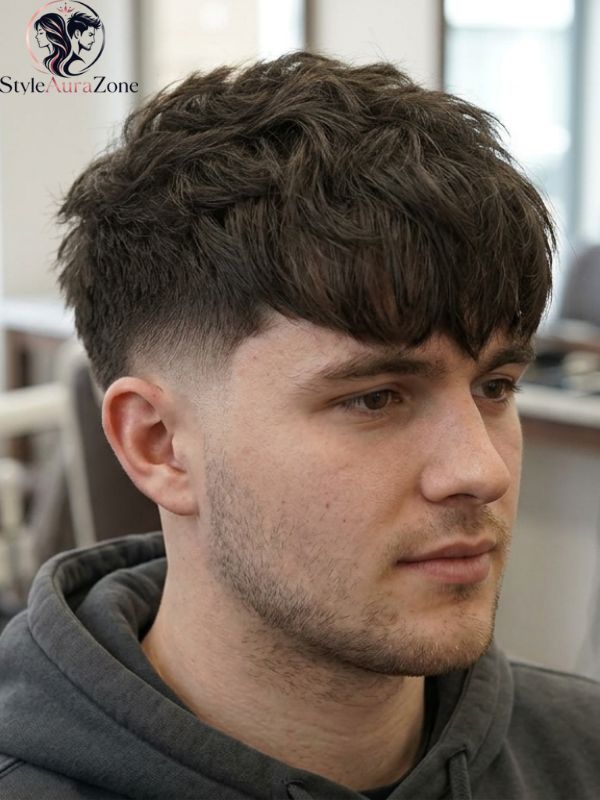
A long, full fringe falls across the forehead, and the low fade tidies everything else. It frames the eyes and softens strong jawlines. Skip the thinning shears and use a light pomade to control weight. Blow-dry the fringe flat for formal days.
Thick Fluffy Hair with Low Temp Fade
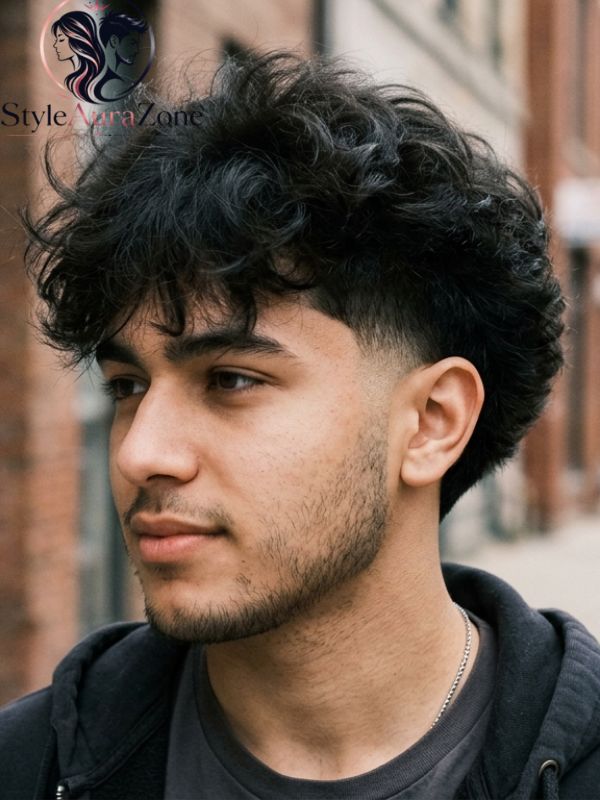
Dense hair puffs up on top, and the temp fade carves clean edges at the temples. Finger-comb sea salt spray or texture powder through the top for a messy finish. The contrast keeps all that volume looking deliberate.
Textured Pompadour with Low Skin Fade and Heavy Stubble Beard
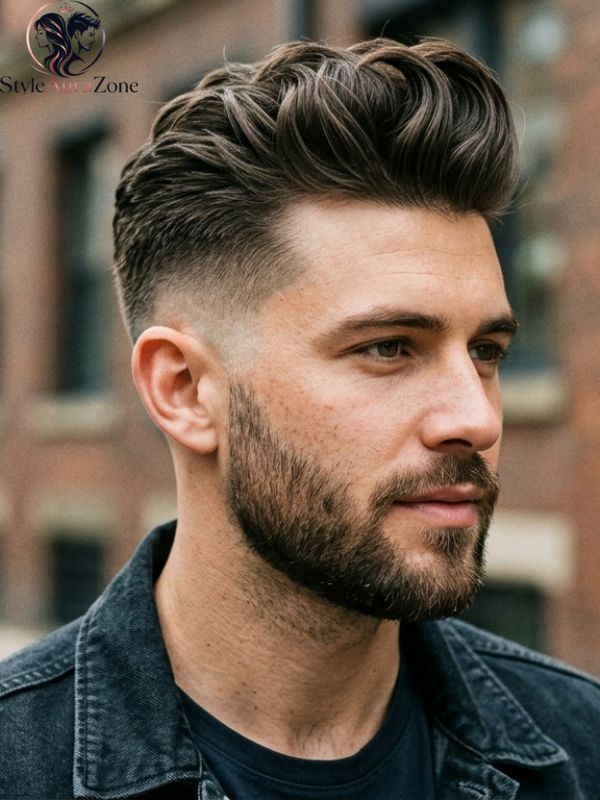
Volume rolls up and back from the forehead, with a skin fade below and dense stubble along the jaw. Blow-dry with a round brush, then shape with matte pomade. Trim the stubble every few days to keep the cheek lines clean.
Modern Low Fade Mullet
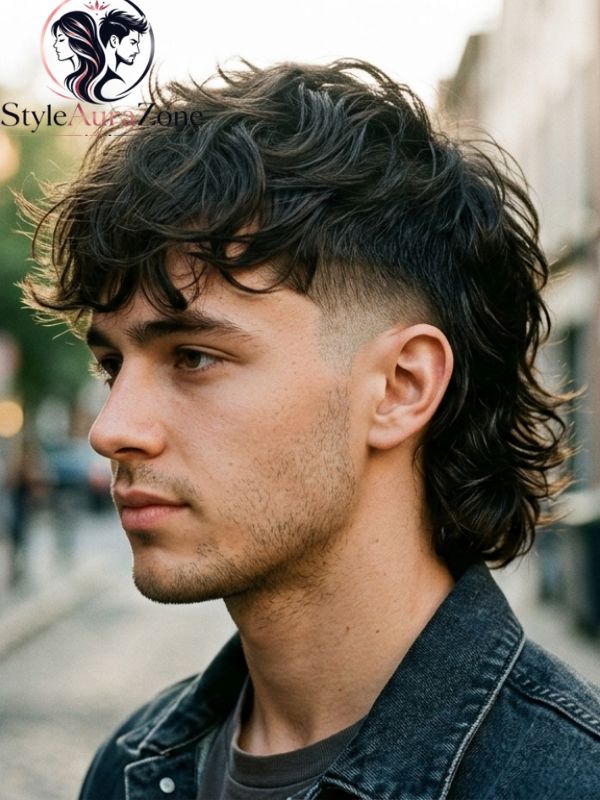
Shorter, faded sides clean up the silhouette while the back keeps its length. Compared with the retro version, this mullet reads polished. Comb the top forward and add texture with mousse. Tidy the neckline often so the back never looks scraggly.
Waves Buzz Cut with Low Temp Fade
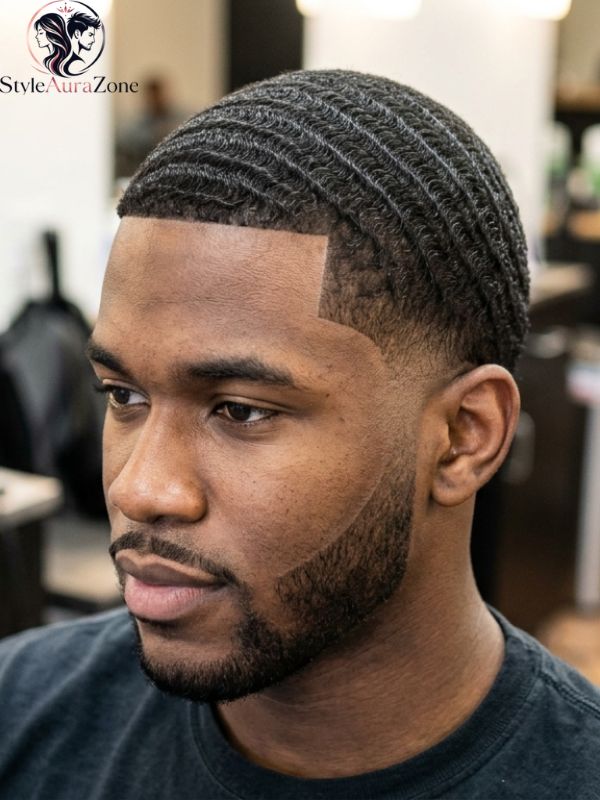
A buzzed top lets 360 waves show their pattern, and the temp fade sharpens the front. Brush in circles with a firm-bristle brush, and wear a durag overnight. Moisturize your scalp to prevent flaking.
Short Curly Hair Fade with Line Up
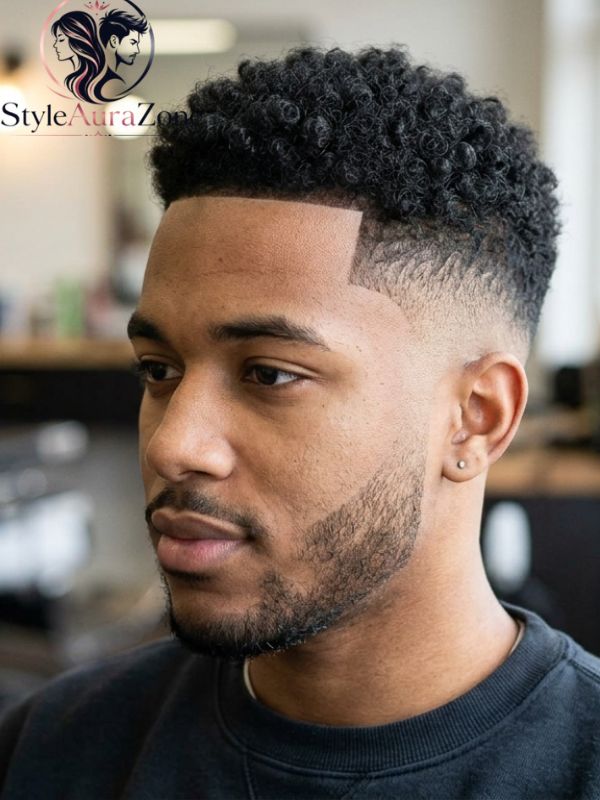
Tight curls on top contrast with a faded perimeter, and a crisp line up outlines the forehead. Detangle with a wide-tooth comb, then add curl cream for definition. Deep condition weekly and keep barber visits regular.
Thick Textured Brush Back with Low Bald Fade
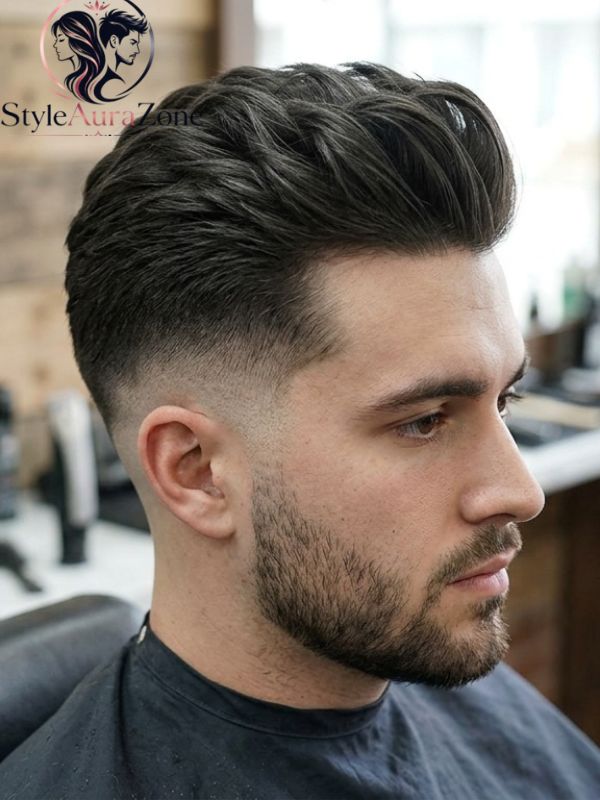
A bald fade is razor-finished to smooth skin, while the brush back adds height and texture on top. Dry with a round brush, then finger-comb for a slightly mussed finish. Ask for a straight razor pass at the nape.
Edgy Short Mohawk with Clean Low Burst Fade
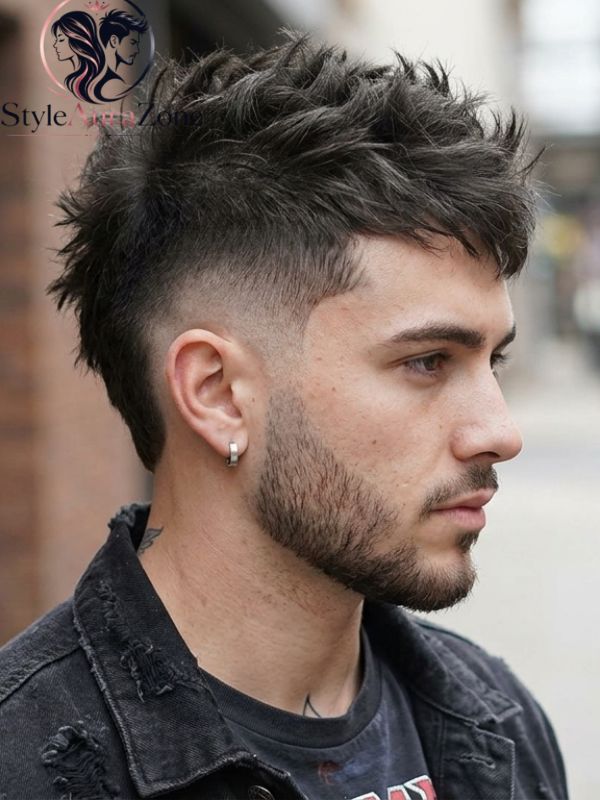
A short center strip rises between curved, faded sides. It works on curls and coils, and straighter hair can be spiked with gel. Use a molding paste to hold the center without making it heavy.
Quick Reference: Low Fade Placement
| Fade Type | Where It Starts | Shortest Point | Best For |
| Very Low Fade | Near the natural hairline | Neckline and ear edge | Conservative workplaces |
| Classic Low Fade | About 1 inch above the ear | Nape | Everyday wear |
| Low Drop Fade | Arcs behind the ear | Lower neck | Curly and wavy tops |
| Low Temp Fade | Temples and sideburns | Temple area | Coarse and coily hair |
| Low Burst Fade | Curves around the ear | Behind the ear | Mohawks and mullets |
What Is A Low Fade?
A low fade is a haircut where the sides and back gradually shorten, starting about an inch above the ear. The blend then travels down toward the nape. Because it begins low, it keeps more length on the sides than a mid or high fade.
Barbers love it for its flexibility. The cut doesn’t dictate your top, so a textured crop, a side part, or a pompadour all work. It also grows out cleanly, which means fewer emergency trims.
Key traits of a low fade:
- Starts low, usually near the top of the ear
- Leaves more side length than mid or high fades
- Keeps a subtle, professional look
- Works with straight, wavy, curly, and coily hair
- Needs a refresh every three to four weeks
Which Low Fade Suits Your Hair?
| Hair Type | Best Low Fade Pairing | Styling Product |
| Straight | Low taper with side part or crop | Matte clay or pomade |
| Wavy | Low drop with textured fringe | Sea salt spray |
| Curly | Low skin fade with long curls | Curl cream or mousse |
| Coily | Low temp fade with twists or waves | Moisturizing gel |
| Thin | Low taper with short textured top | Volumizing powder |
Low Taper vs. Low Skin Fade
Both cuts begin low and use clippers with guards, but they finish differently. A low taper leaves short hair at the nape and around the ears for a gentle transition. A low skin fade blends all the way to bare skin for a sharper, higher-contrast result.
Your lifestyle should guide the choice. A taper forgives missed appointments, whereas a skin fade shows regrowth quickly. Bring reference photos from several angles, and ask your barber how short the guard should go.
| Feature | Low Taper Fade | Low Skin Fade |
| Shortest Length | Short hair remains | Bare skin |
| Contrast | Soft and subtle | Bold and sharp |
| Vibe | Classic and professional | Modern and edgy |
| Touch-Up Schedule | Every 3 to 4 weeks | Every 2 to 3 weeks |
| Skill Level Needed | Moderate | High, since blending is exposed |
| Best For | Office settings, first-time fades | Short styles, high-contrast looks |
FAQ’S
What is a low fade haircut?
It’s a haircut where the sides and back shorten gradually, starting about an inch above the ear. The blend stays low, so more length remains on the sides.
How often should I get a low fade touched up?
Plan on every two to four weeks. Skin fades need quicker refreshes than tapers.
Is a low fade the same as a low taper?
Not exactly. A taper keeps some hair at the nape, while a fade can go all the way to skin.
Does a low fade work on curly hair?
Yes. It controls side bulk and lets your curls keep their shape and volume on top.
What should I tell my barber to get a low fade?
Say where the fade starts, how short it ends (taper or skin), and how much length you want on top. Photos help.
Conclusion
A low fade earns its reputation by being easy to wear and easy to adapt. Whether you choose a soft taper, a razor-sharp skin fade, or a curved burst, the cut frames your face and supports whatever you do on top. Start with the style that fits your hair.
Next, bring clear photos, name your preferred guard length, and set a realistic touch-up schedule with your barber. Pair the cut with a product that suits your texture, and you’ll keep the look sharp between visits. A great fade comes from good communication and steady upkeep.