
A low taper fade fringe pairs a soft, low blend on the sides with a longer, textured top that falls forward over the forehead. It’s low-maintenance, grows out cleanly, and reads as put-together without looking stiff, which is why so many men are asking for it right now.
Below you’ll find what the cut actually involves, how it stacks up against the French crop, why barbers keep recommending it, and 18 variations worth screenshotting before your next appointment. plus advice on fringe length, face shape, hair type, products, and upkeep.
What Are Low Taper Fade Fringe Haircuts?
A low taper fade fringe is really two decisions stacked together. The taper handles the perimeter. sides and back. starting its shortest point low, around the sideburns and nape, then climbing gradually with no visible line. The fringe is the leftover length on top, combed or pushed forward so it sits across the brow.
Since the fade begins low, there’s less contrast between the top and the sides than you’d get with a mid or high fade. That softness is exactly what makes the style so wearable at work, at school, or anywhere a sharper cut might feel like too much.
A few things define the cut:
- The blend starts low, roughly at ear level or just above, not mid-skull
- Top length usually runs two to four inches, enough to style into a fringe
- The nape and hairline stay rounded rather than boxed
- Some texture is cut into the fringe so it has movement instead of lying flat
Low Taper Fade Fringe vs French Crop
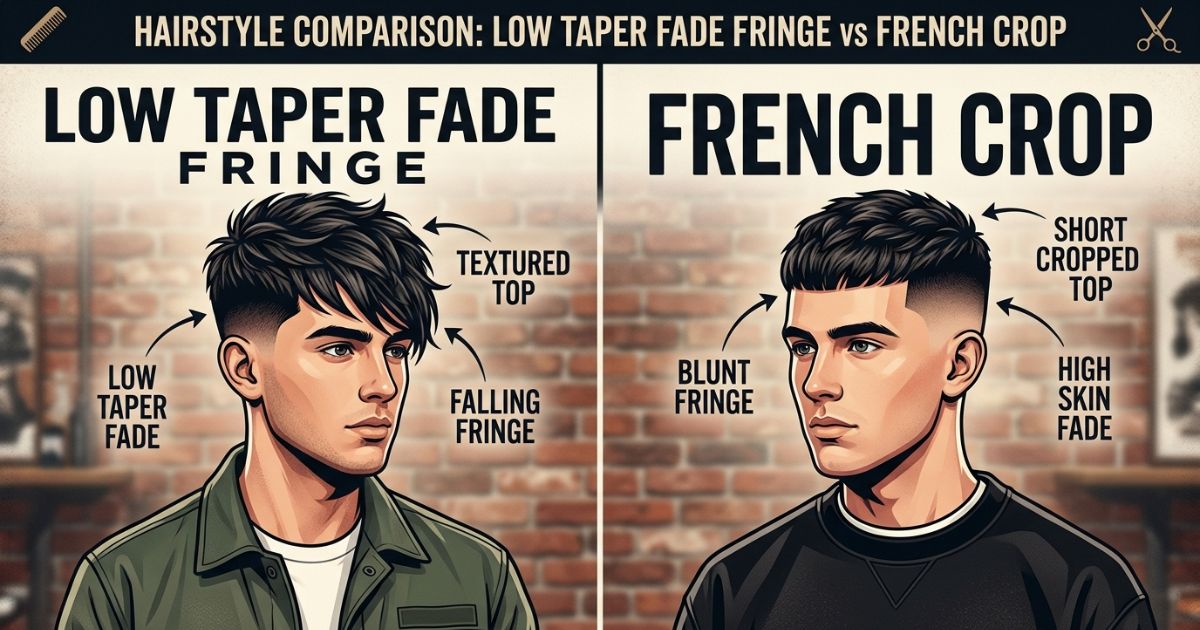
People mix these two up constantly because both rely on a low taper and a longer top pushed forward. The gap between them comes down to how the fringe is finished.
| Feature | Low Taper Fade Fringe | French Crop |
| Fringe edge | Soft, textured, broken-up | Blunt, cut in a straight line |
| Top length | Slightly longer, more coverage | Shorter, sits higher on the forehead |
| Overall feel | Relaxed and easygoing | Sharp and tailored |
| Styling time | A few seconds with texture paste | Blow-dry forward, then a light hold product |
| Best occasion | Everyday wear, casual to smart-casual | Interviews, formal settings, polished looks |
If you want a cut that looks a little undone on purpose, ask for the fringe version. If you’d rather have a crisp, defined line across your forehead, the French crop is the better call.
Why Barbers Recommend a Low Taper Fade Fringe
- It grows out slowly and evenly, since there’s no harsh fade line to maintain
- It suits straight, wavy, curly, and coily hair without major adjustments
- It can soften a strong jaw or add height to a rounder face, depending on styling
- It needs fewer trips to the chair than a skin fade or high fade
- It moves easily from the office to the weekend without a restyle
1. Textured Low Taper Fade Fringe
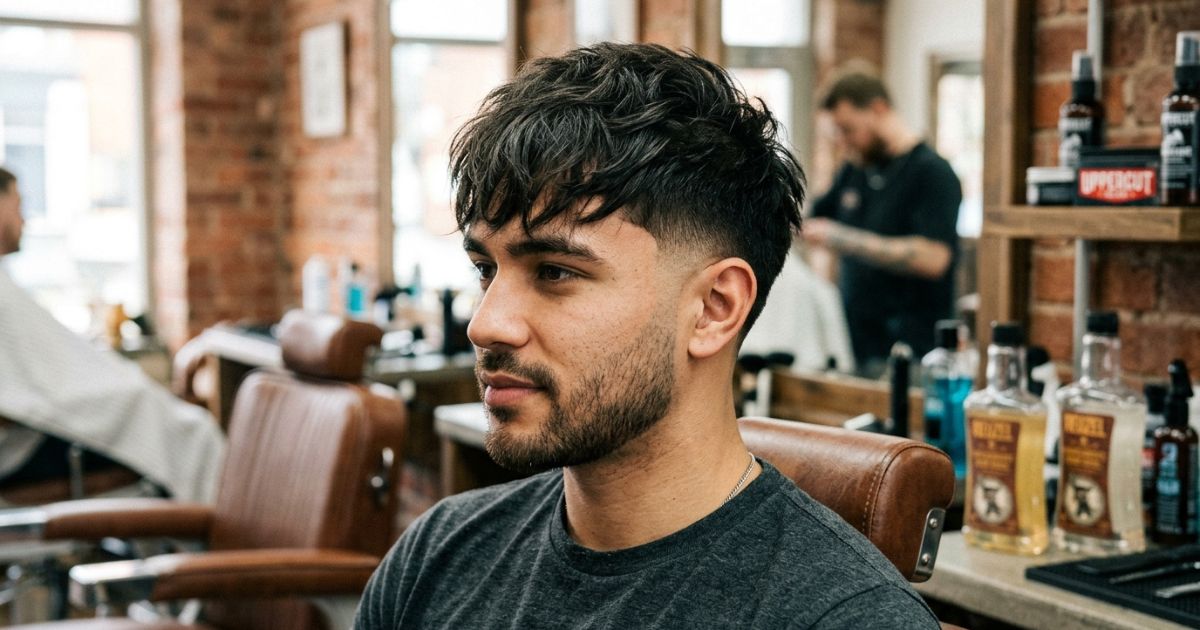
Layers are point-cut through the top so the fringe breaks apart instead of sitting as one flat piece. A pea-sized amount of matte clay worked through damp hair keeps the pieces separated all day without any shine.
2. Messy Low Taper Fade Fringe
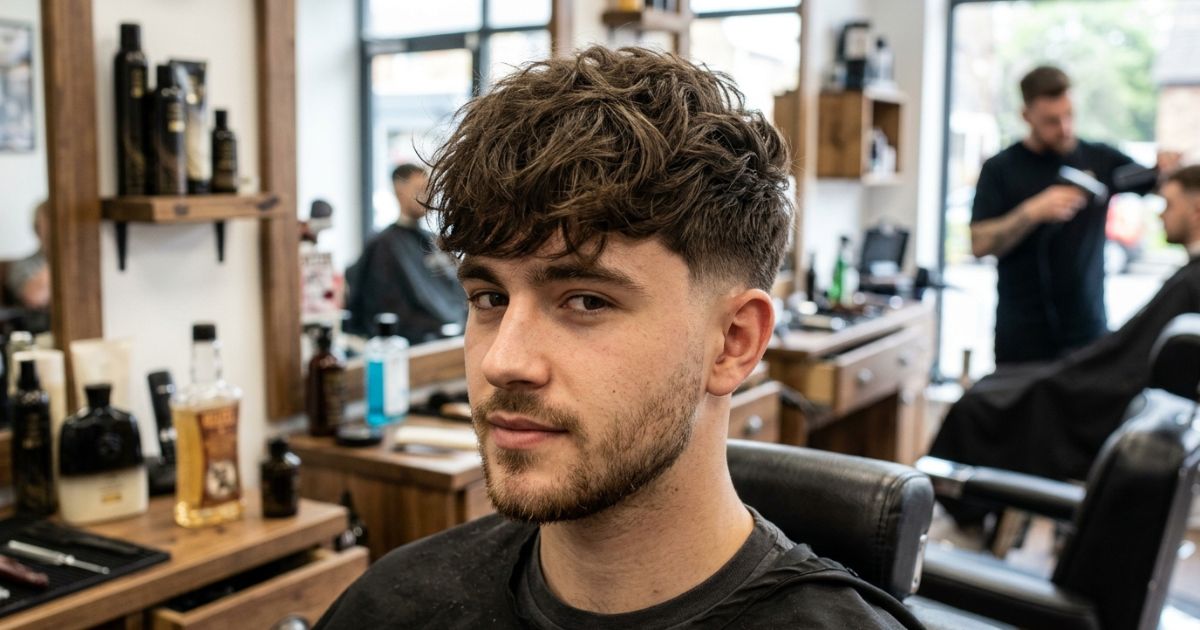
Here the top is left a touch longer and tousled with fingers rather than combed. It looks unplanned, which is the point, and the extra length up front is a handy way to camouflage a receding hairline.
3. Curly Low Taper Fade Fringe
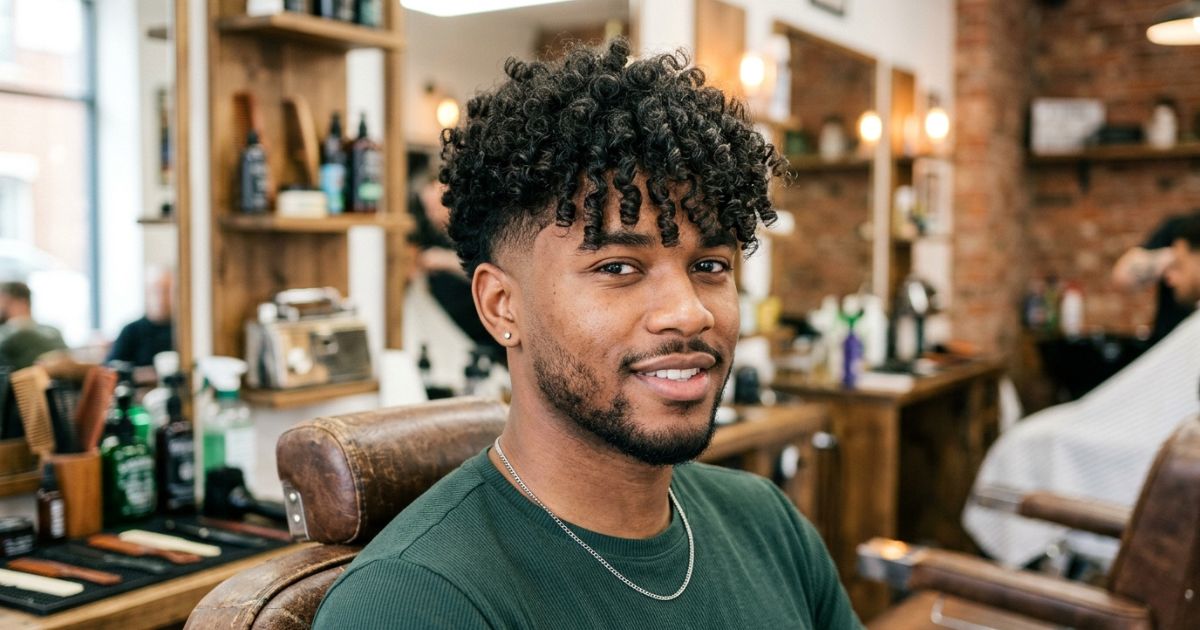
Curls shrink noticeably once they dry, so barbers leave extra length on top to account for it. The fringe is cut with the curl pattern rather than against it, and a curl cream keeps definition without dragging the curls down.
4. Wavy Low Taper Fade Fringe
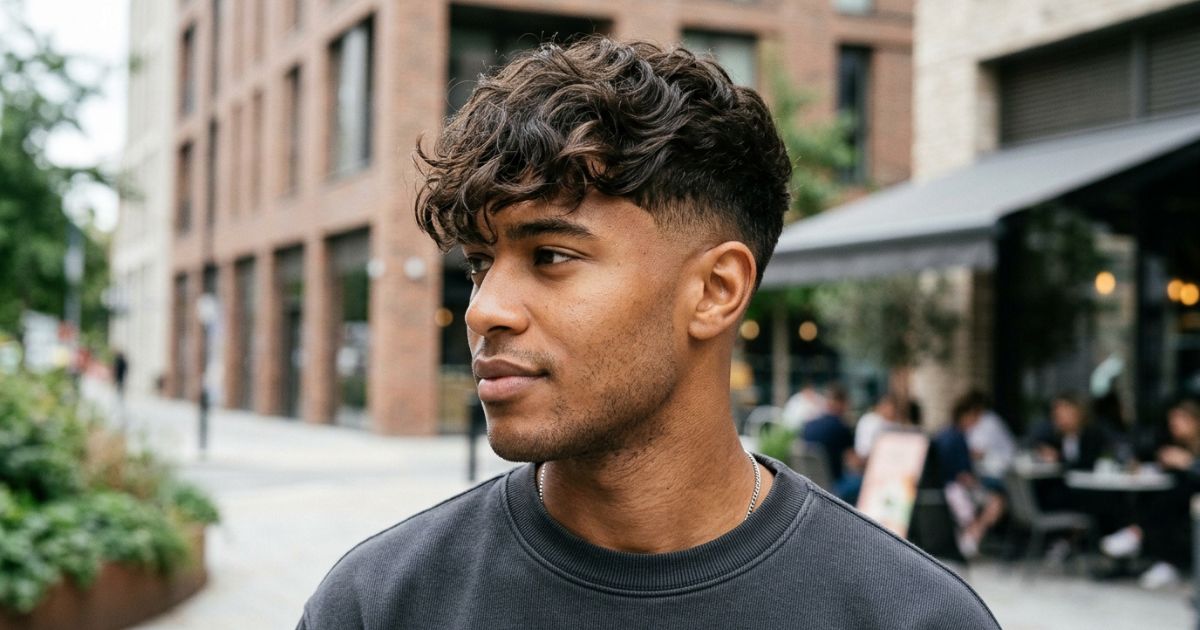
Natural wave pattern does most of the styling work here. A light sea-salt or texture spray scrunched through damp hair brings out that beachy roughness as the fringe settles across the forehead.
5. Korean Low Taper Fade Fringe
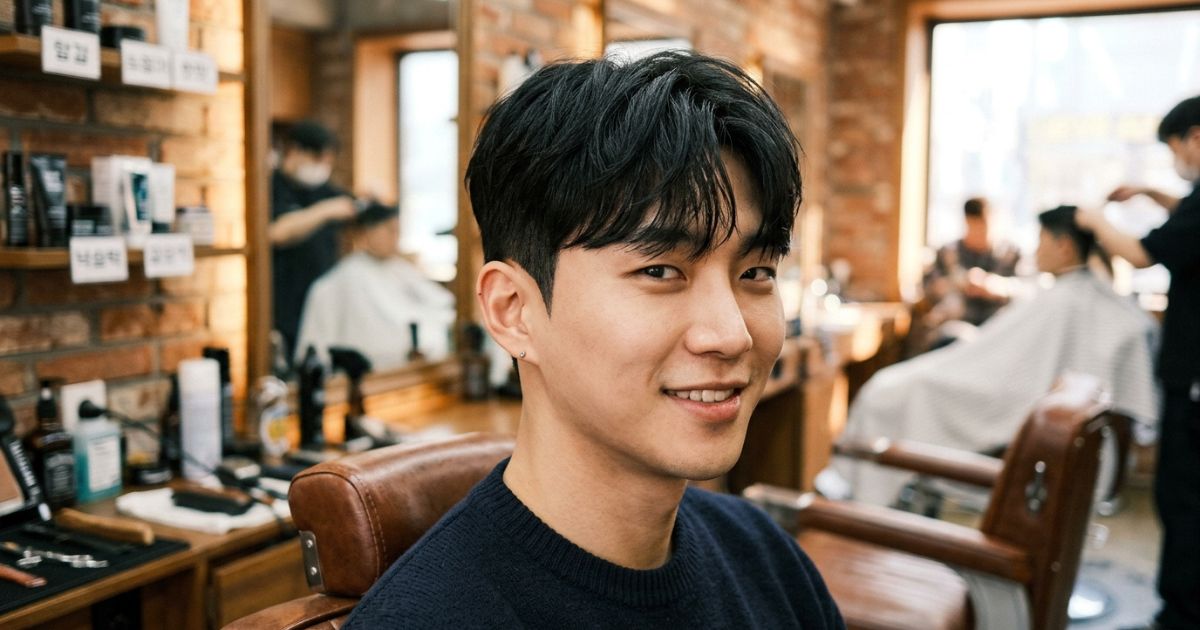
This version keeps a heavier, blunt fringe sitting straight across the brow. a look borrowed from Korean street style. while the sides taper down low and soft, keeping the whole silhouette clean.
Learn more:16 Guard Buzz Cut: A Longer Buzz Cut for a Clean, Natural Look
6. Long Fringe Low Taper Fade
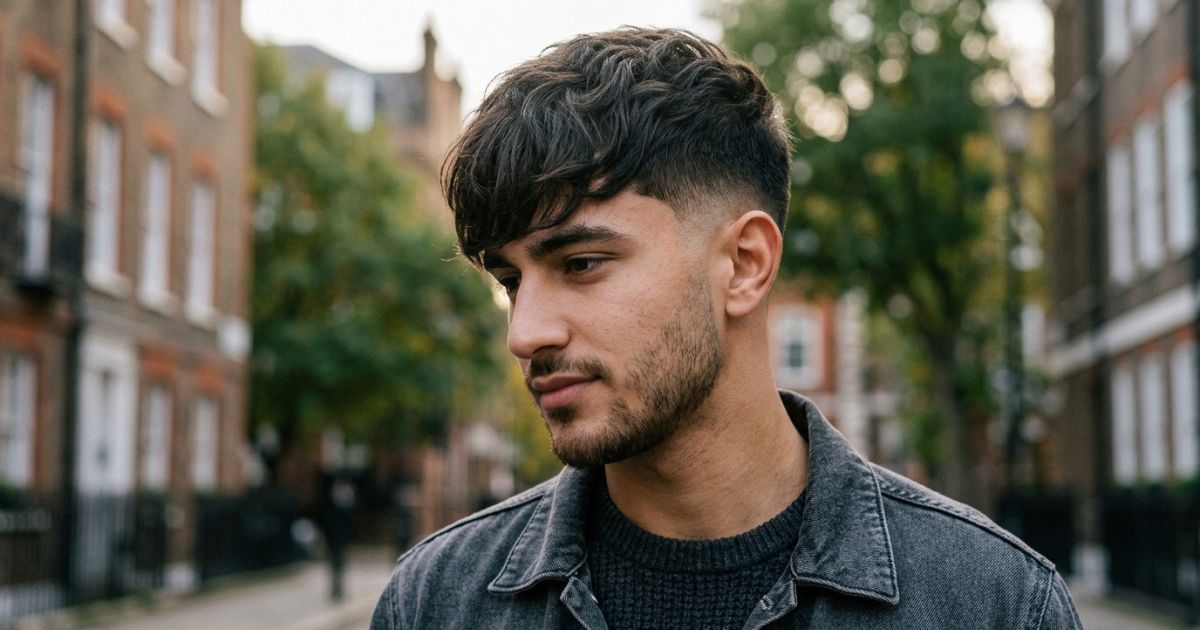
Growing the top out further gives you a fringe that covers more of the forehead and can be swept left, right, or straight down depending on the day. It’s the most flexible length on this list.
7. Choppy Low Taper Fade Fringe
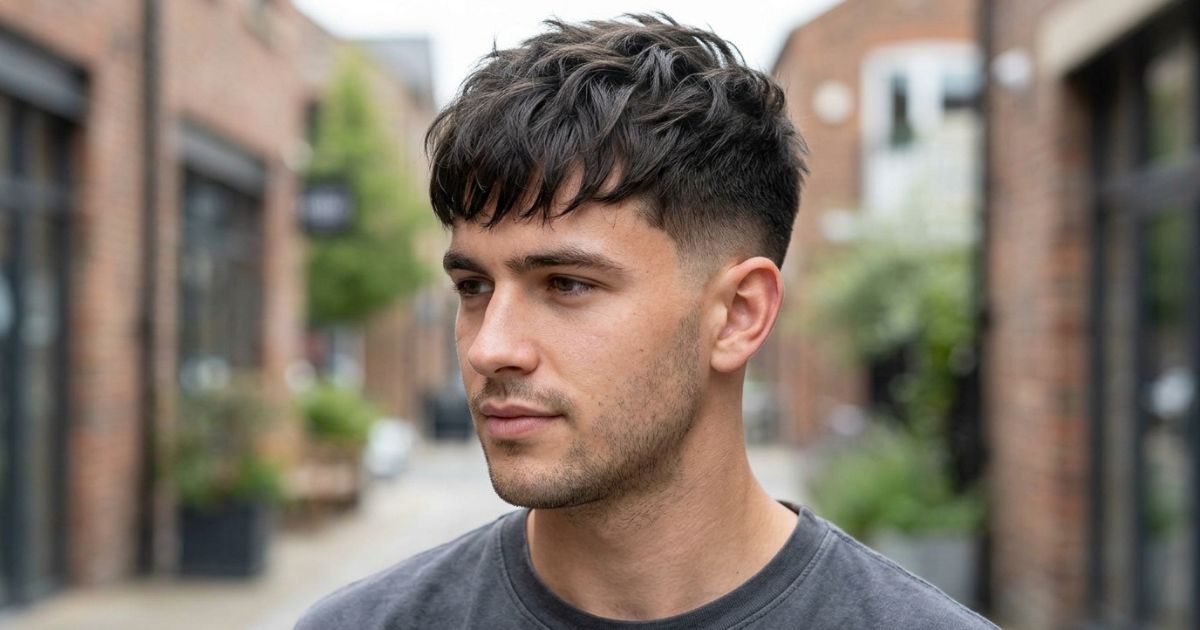
Point cutting strips weight from the ends of the fringe, leaving jagged, uneven pieces. This works especially well on thick hair, which otherwise tends to sit as one heavy block.
8. Side-Swept Low Taper Fade Fringe
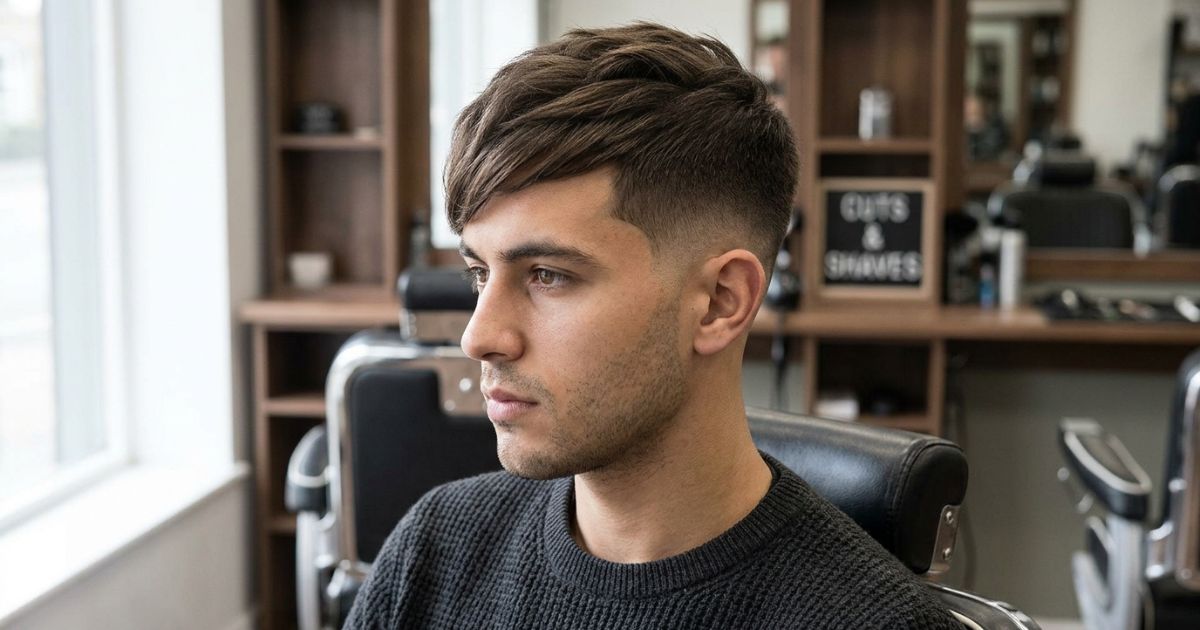
The fringe is directed to one side with a light-hold cream, giving the cut a slightly dressier, asymmetrical finish that still pairs easily with a low, understated fade.
9. Thick Hair Low Taper Fringe
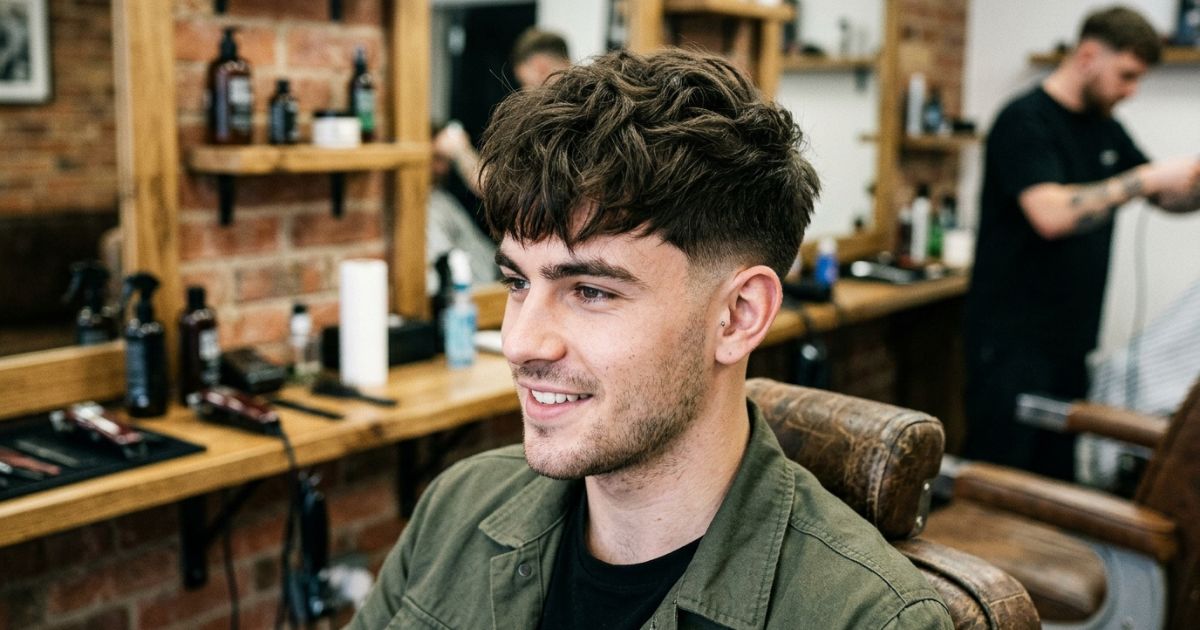
Thinning shears and heavier layering remove bulk so the fringe stays manageable instead of turning into a dense mass. This is the go-to fix for anyone whose hair grows in fast and dense.
10. Straight Hair Low Taper Fringe
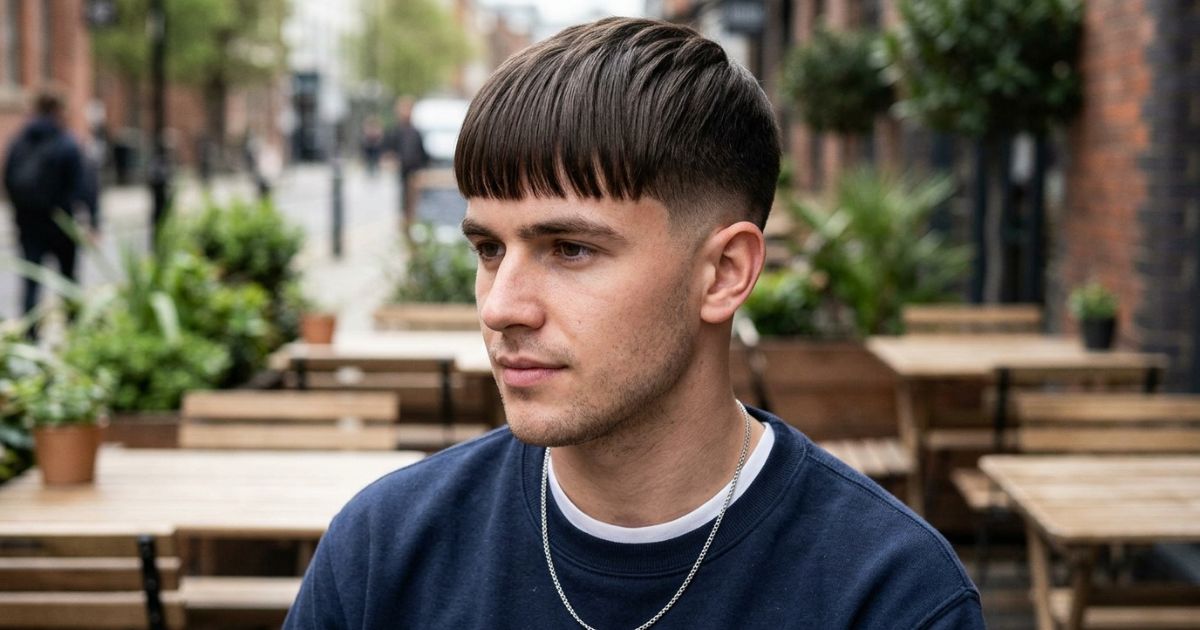
Straight strands naturally fall into a clean, defined fringe line with almost no effort. A small dab of pomade tames flyaways and adds a bit of shine without weighing the hair down.
Choosing the Right Fringe Length
| Fringe Length | Where It Sits | Best For |
| Short | Above the eyebrows | A cleaner, more conservative look, easy for beginners |
| Medium | Brushing the eyebrows | The most versatile option, works for most hair types |
| Long | Falling into the eyes | A bolder statement, needs more daily styling |
Face shape, how dense your hair is, and how much time you’re willing to spend styling each morning should all factor into which length you pick.
11. Feathered Low Taper Fade Fringe
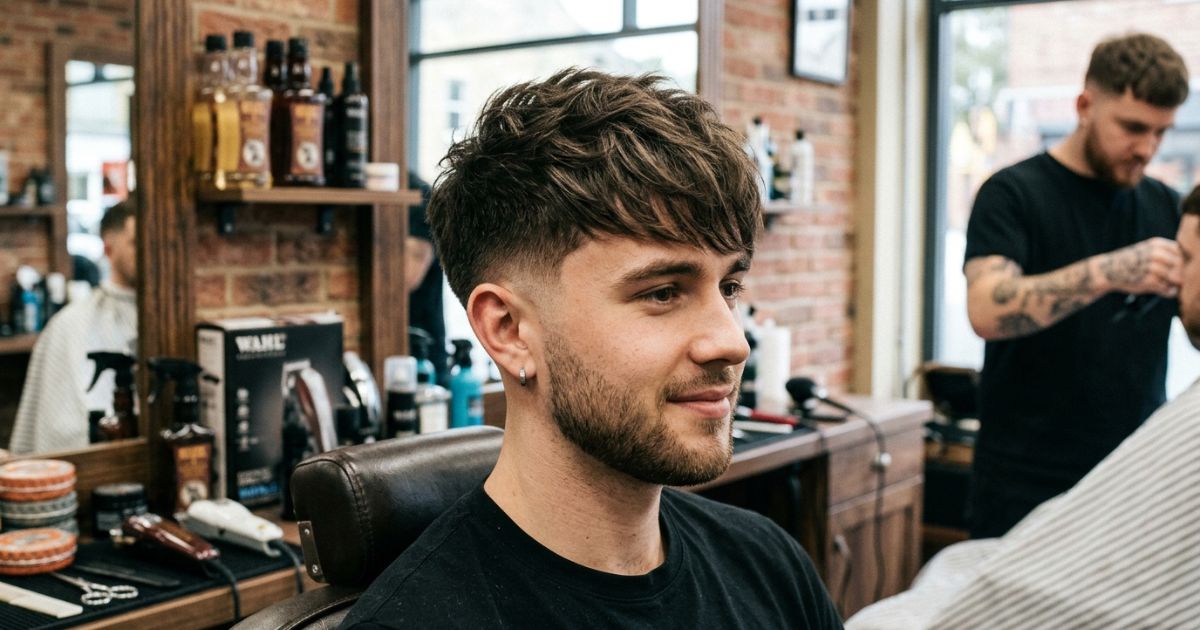
Fine layers cut into the ends create a soft, feathered edge rather than a hard line. It’s a strong choice for fine or thin hair since it adds visible movement without extra product.
12. Angular Fringe Low Taper Fade
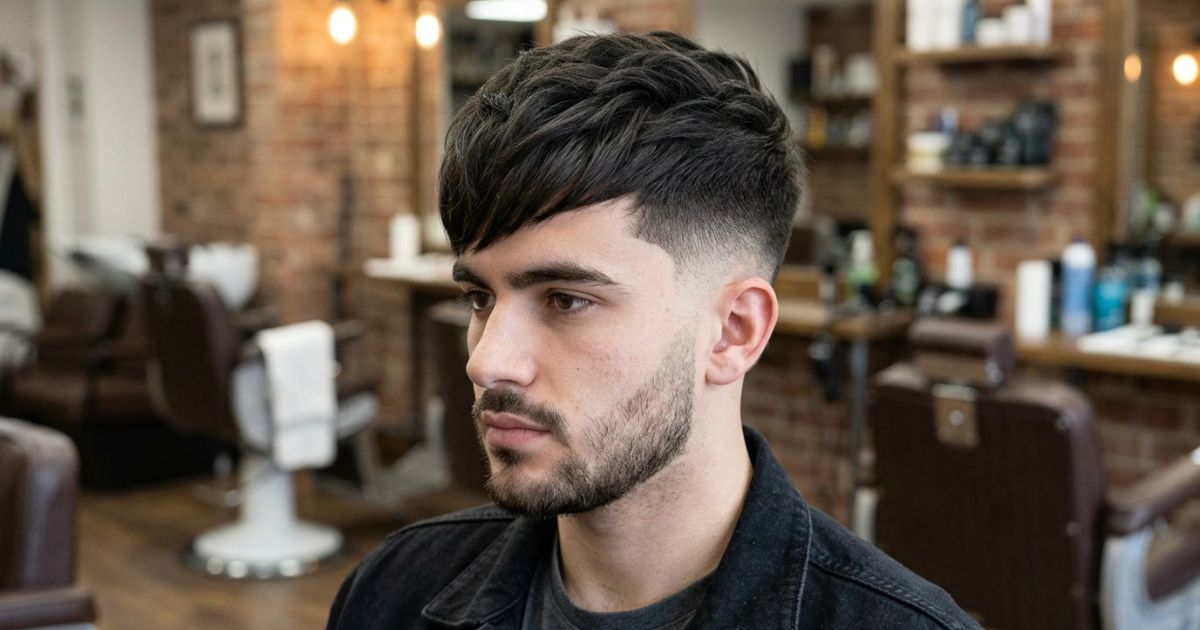
Instead of a straight-across cut, the fringe is angled diagonally. That diagonal line draws the eye and can visibly soften a strong, square jawline.
13. Ivy-Inspired Low Taper Fringe

The top is combed forward and slightly to the side over a barely-there part, echoing the old Ivy League cut but paired with a modern, low blend on the sides.
14. Textured Crop Fringe with Low Taper
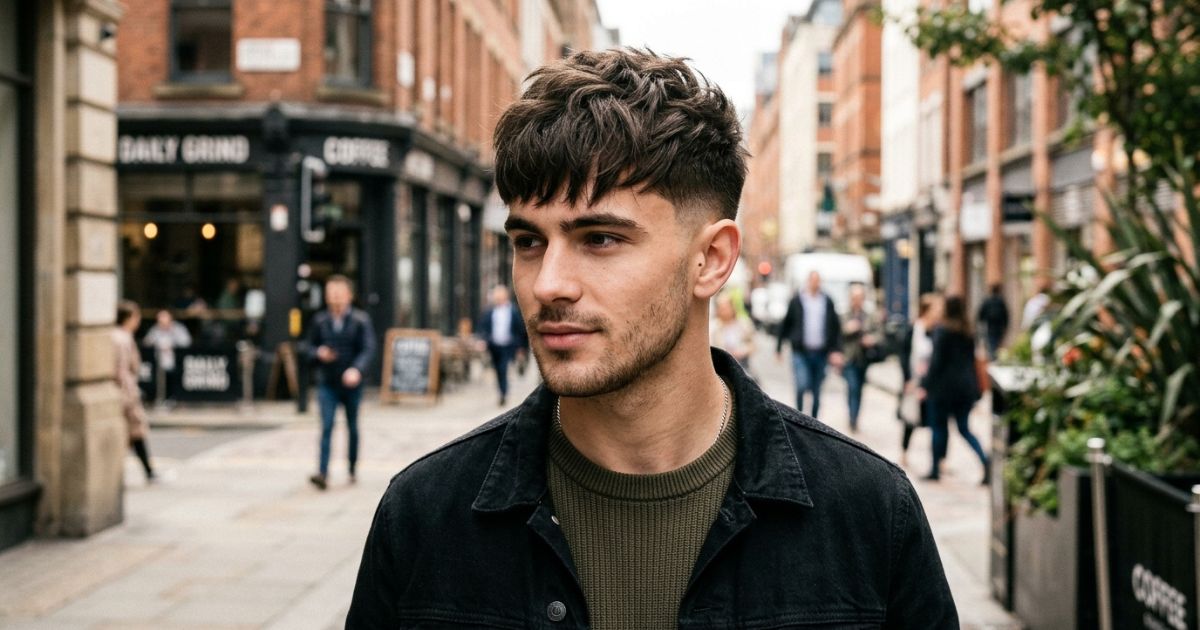
This one combines choppy crop texture with a fuller fringe, giving more coverage on top while the sides still taper cleanly. It suits thick or coarse hair particularly well.
15. Modern Curtain Fringe with Low Taper
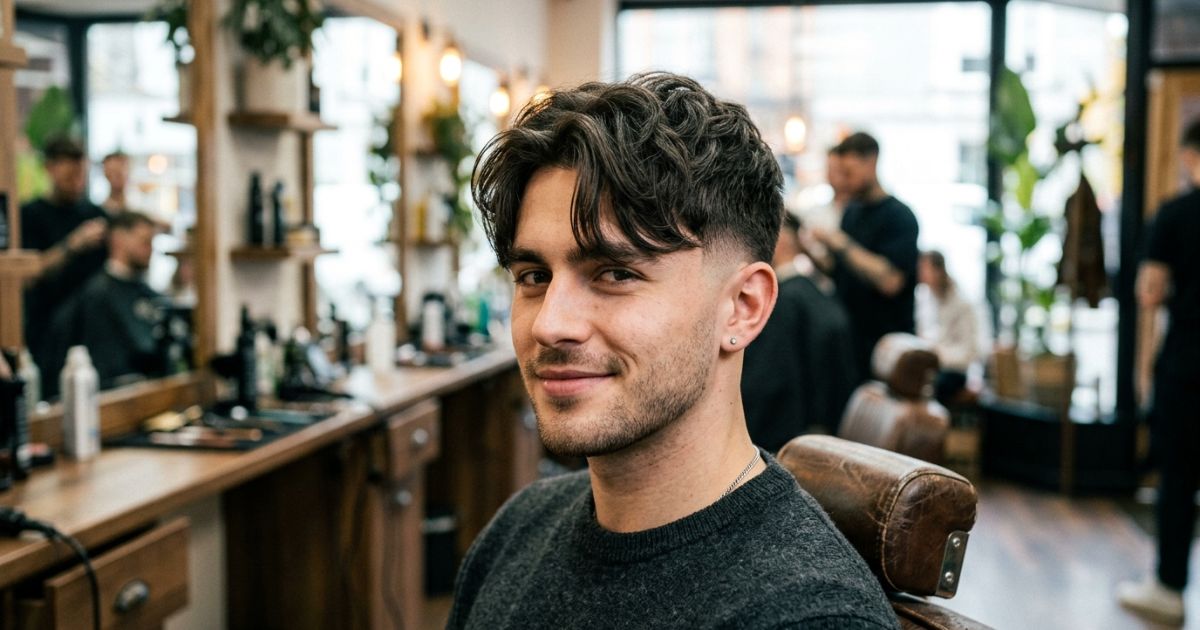
The top parts in the center and sweeps outward on both sides, borrowing from the curtain-bangs trend. Naturally wavy hair tends to hold this shape best.
16. Mid Taper Fade
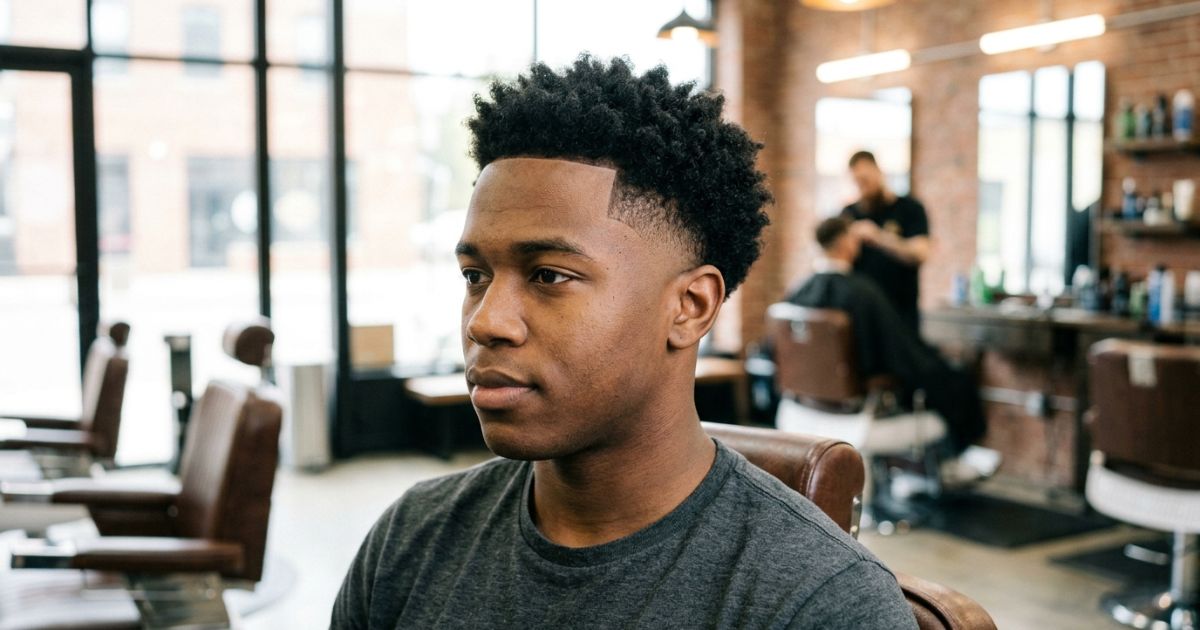
Technically a step up rather than a true low taper, the mid fade starts higher, between the temple and the ear, and shows more visible contrast while still leaving enough length on top for a fringe.
17. Messy Low Taper Fade Fringe Straight Hair
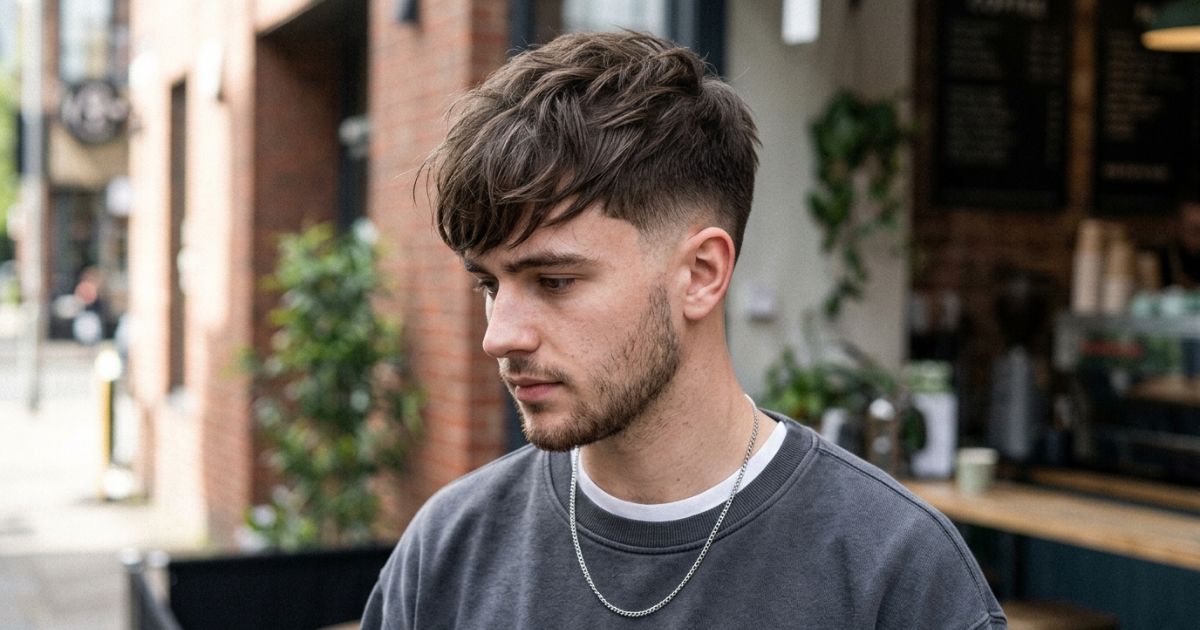
Straight hair is cut with intentional texture, then styled by hand for a controlled, “just got out of bed” look that sits above a tidy, low blend.
18. Low Drop Mid Taper Fade Fringe
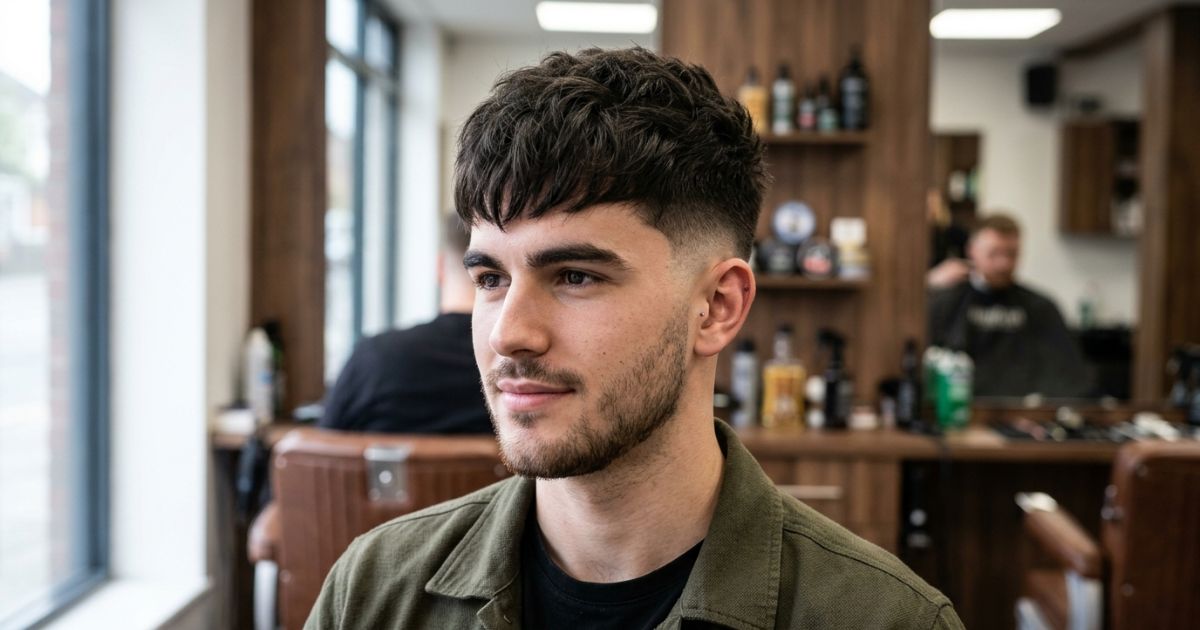
The fade drops slightly lower behind the ear while keeping mid-fade contrast toward the front, producing a rounded blend that reads as more natural than a straight-across taper line.
How to Ask Your Barber for a Low Taper Fade Fringe
- Lead with the fade placement. say something like “a low taper starting near my temples and nape.”
- Describe the fringe in detail: length, whether you want it textured or blunt, and how it should fall.
- Mention your hair type upfront so the barber can adjust their technique for curls, waves, or thick strands.
- Bring reference photos from the front, side, and back. one angle rarely tells the full story.
- Ask how often you’ll need to come back in, since fringe upkeep and fade upkeep run on different schedules.
Best Face Shapes for a Low Taper Fade Fringe
- Oval: Nearly any fringe length works here since the proportions are already balanced.
- Square: A softer, side-swept fringe eases the sharpness of a strong jawline.
- Round: A fringe with height rather than one lying flat helps elongate the face.
- Heart-shaped: A fuller fringe balances out a narrower chin and jaw.
Best Hair Types
| Hair Type | What Works Best |
| Straight | Blunt or lightly textured fringe, clean lines, minimal product |
| Wavy | Natural movement, light salt spray, side-swept styling |
| Curly | Extra length left on top, curl cream, diffuser drying |
| Thick | Heavier layering to cut bulk, texturizing scissors |
| Thin or fine | Feathered ends, lightweight cream for added volume |
Best Styling Products
- Matte clay for hold without shine. the default choice for textured fringes
- Texture powder to build volume and grip right at the roots
- Light pomade for a sleeker, more defined finish on straight hair
- Curl cream to keep natural curls defined without dragging them down
- Sea-salt spray for quick, effortless texture on wavy hair
Maintenance Tips
- Get the fade touched up every two to three weeks to keep the blend sharp
- Trim the fringe every three to four weeks, or sooner if it starts covering your eyes
- Use a light hand with product. too much weighs the fringe down and kills the texture
- Blow-dry the fringe forward with a round brush to train it to fall the way you want
- Ask your barber to show you how to maintain the blend yourself between visits
FAQ’S
What is a low taper fade fringe?
It’s a haircut where the sides blend low near the ears and neckline while the top stays longer, styled forward into a fringe that frames the forehead.
How long does a low taper fade fringe last before a trim?
The fade holds its shape for two to three weeks, but the fringe usually needs trimming sooner, around three to four weeks, once it starts covering the eyes.
Does a low taper fade fringe work for curly hair?
Yes, barbers leave extra length on top to account for shrinkage, and the fringe is cut to follow the natural curl pattern instead of fighting it.
What products should I use for a low taper fade fringe?
Matte clay gives hold without shine, texture powder adds root volume, and curl cream or sea-salt spray helps depending on your natural hair texture.
Is a low taper fade fringe good for a receding hairline?
Yes, the longer fringe can be styled forward to soften and cover a receding hairline, making it one of the more forgiving fade styles available.
Final Thoughts
The low taper fade fringe has earned its popularity the honest way. it suits nearly every face shape and hair type, asks little of you between barber visits, and looks just as at home in a meeting as it does on a night out. That kind of range is rare in a single haircut.
Whether you’re drawn to something messy and textured or clean and side-swept, the 18 styles above give you a real starting point. Save a couple of reference photos, bring your hair type into the conversation, and let your barber build the blend around what actually grows out of your head.