
Not every short haircut has to look severe. The 16 guard buzz cut sits at the longer end of the buzz cut family, leaving about two inches of hair on top for a soft, natural texture. It works for men who want low maintenance without losing volume or shape.
This guide breaks down what a 16 guard buzz cut looks like, how it compares to shorter fades, and why barbers pair it with tapers for extra polish. You’ll also find styling advice for curly hair, plus tables that make picking the right length and fade combination easy.
What Makes 16 Guard Buzz Cut Unique and Popular?

A clipper guard number tells you how much hair gets left behind. Most brands follow a simple rule: divide the guard number by eight to get the length in inches. That puts a #16 guard at roughly two inches, or about 50mm, which is far longer than the close-cropped #1 or #2 buzz most people picture.
Here’s how the 16 guard stacks up against other common clipper lengths:
| Guard Number | Length (inches) | Length (mm) | Common Use |
| #1 | 1/8″ | 3mm | Skin-close buzz |
| #2 | 1/4″ | 6mm | Classic short buzz |
| #4 | 1/2″ | 13mm | Textured crop |
| #6 | 3/4″ | 19mm | Longer buzz, some flow |
| #8 | 1″ | 25mm | Transitional length |
| #12 | 1 1/2″ | 38mm | Fuller top, defined shape |
| #16 | 2″ | 50mm | Longer buzz with movement |
That extra length is exactly why the style has caught on. A few things set it apart:
- Enough length to style. Two inches gives you room for a slight comb-over, forward brush, or natural fall, something a #2 buzz simply can’t do.
- Low daily upkeep. You can run a hand through it and go, with no blow-dryer or heat tools required.
- Face-shape flexibility. The added volume on top balances narrower faces, while a fade on the sides keeps rounder faces sharp.
- A softer bridge between buzz and crop. It reads as intentional rather than “growing out a haircut.”
16 Guard Haircut Buzz Cut for a Clean and Natural Look

At its core, the 16 guard haircut buzz cut is about uniformity. The clippers run over the entire head at one consistent length, so there’s no blending line to maintain and no guesswork for touch-ups. The result reads clean, structured, and a little more grown-up than a typical shorter buzz.
Because the hair keeps some natural texture, this version suits straight and slightly wavy hair especially well. Light waves show through instead of getting buzzed flat, giving the cut a bit of dimension without any extra styling effort. Barbers often finish it with a light trim around the ears and neckline so the edges stay sharp between visits.
Men who want a cut that photographs well in professional settings, but still feels effortless day to day, tend to gravitate toward this version. It skips the harsh lines of a fade while still looking deliberate.
Buzz Cut 16 Guard for Fuller and Longer Buzz Cut

If your hair is thick, coarse, or naturally full, the buzz cut 16 guard length lets that texture actually show instead of getting stripped away. Shorter guards can make thick hair look flat and stiff; the extra length here keeps the natural body intact.
A few styling notes make a real difference with this fuller version:
- Dry hair thoroughly after washing, since damp thick hair can look uneven once it’s fully dry.
- Use a light matte paste rather than a heavy pomade, which can weigh the length down and flatten the volume.
- Brush forward or to the side while the product is still workable, then let it set.
- Trim every three to four weeks to keep the length consistent, since a longer guard shows growth faster than a shorter one.
This length also gives you room to experiment. You can push it slightly longer on top for more of a crop feel, or keep the sides matched for a fuller, rounder silhouette.
16 Guard Buzz Cut with Taper for a Professional Look

Pairing the 16 guard top with a taper on the sides turns a simple buzz into something sharper. The taper gradually shortens the hair around the ears and neckline, creating contrast without the boldness of a full fade.
| Taper Height | Where It Starts | Best For |
| Low Taper | Just above the ears | Subtle contrast, conservative workplaces |
| Mid Taper | Between the ear and temple | Balanced look, most face shapes |
| High Taper | Near the temple or crown | Sharper contrast, bolder styling |
A low taper works best here for a polished, office-ready finish. It keeps the sides close to the head while leaving enough length on top to comb or brush into place. Because the transition is gradual rather than sharply blended, this version needs fewer barber visits than a true fade, though the taper line itself still benefits from a monthly cleanup.
Learn more:Top 10 Asian Mullet Hairstyle 2026
16 Guard Buzz Cut with Mid Taper for a Balanced Appearance
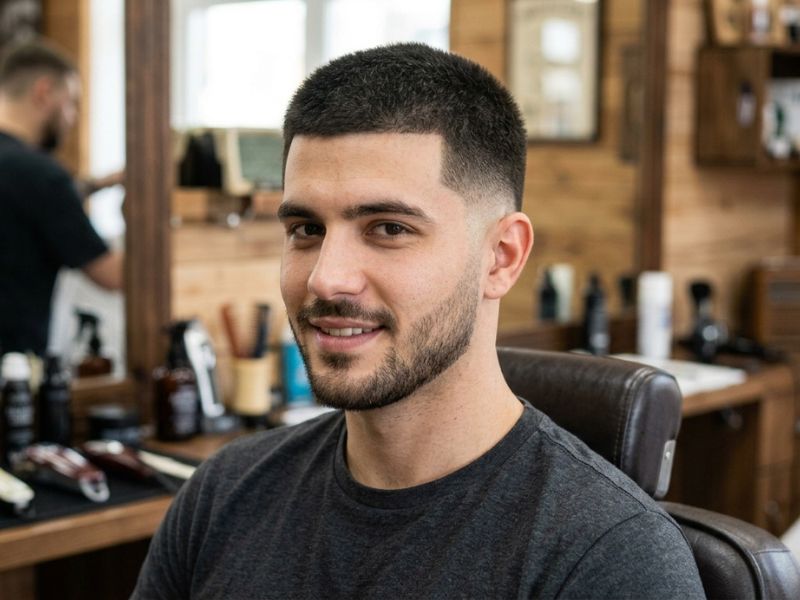
A mid taper sits between the low and high options, starting its blend around the middle of the head rather than right at the ear. Combined with the 16 guard top, it gives a bit more visual contrast than the low-taper version while still avoiding a sharp, high-fashion fade look.
This balance makes it one of the more versatile pairings on this list:
- Suits most hair densities, from fine to thick, since the fuller top offsets the closer sides.
- Reads as neither too casual nor too formal, so it moves easily between a job interview and a weekend out.
- Grows out gracefully, with the taper line staying wearable for several weeks before it needs a fresh trim.
Ask your barber for a “mid taper with a 16 on top” to land this exact combination, since taper terminology can vary slightly from shop to shop.
16 Guard Buzz Cut Curly Hair for a Modern Look
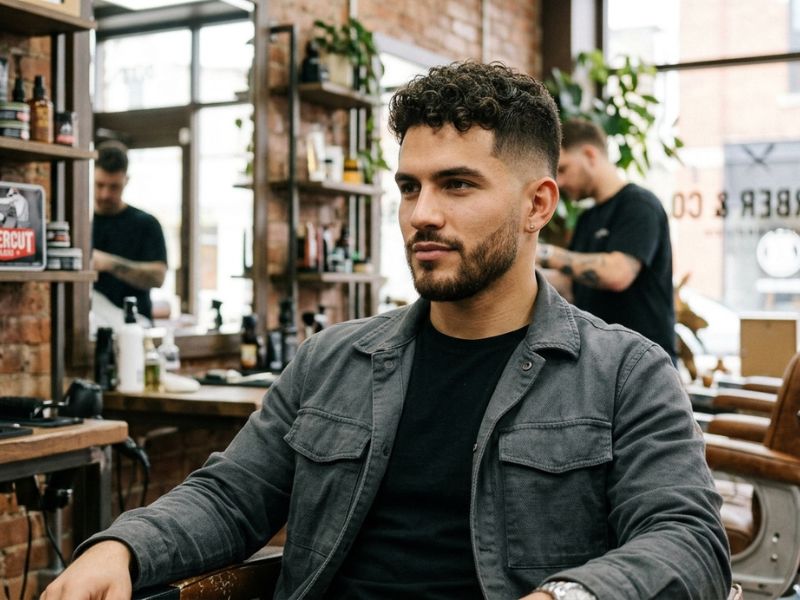
Curly hair behaves differently under a longer guard. Instead of lying flat, the curls hold their shape and add natural volume, which is part of why this pairing has become so popular. A 16 guard buzz cut on curly hair often looks fuller than the same length on straight hair, simply because curl pattern adds lift.
To keep curls looking defined rather than frizzy, a few habits help:
- Ask for a dry cut, or a cut on stretched hair, since curls shrink noticeably once they dry, and cutting on wet hair alone can leave the length uneven once it springs back.
- Use a curl cream or light gel instead of paste, which tends to clump in curly texture.
- Scrunch rather than comb the hair once product is applied to preserve the curl pattern.
- Sleep with a satin or silk cap to cut down on frizz and extend the time between washes.
This version pairs especially well with a low or mid taper, since a closer side length lets the curls on top take center stage without competing for attention.
16 Guard Buzz Cut Low Taper Curly Hair for a Natural Finish
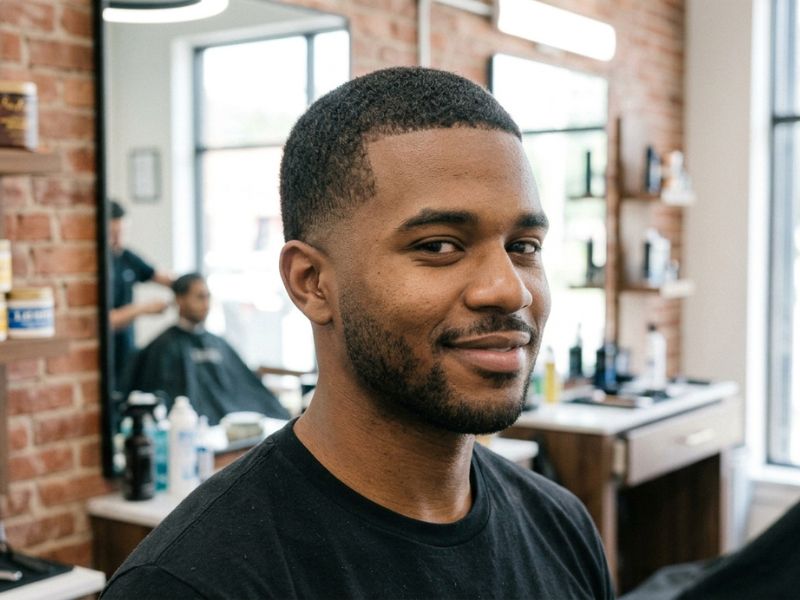
Combining a low taper with curly hair and a 16 guard top gives you one of the most natural-looking versions of this style. The low taper keeps the sides close but soft, without the stark blend line a high fade creates, so the focus stays on the curls up top.
| Feature | What It Looks Like |
| Top | Full curls at roughly two-inch length |
| Sides | Gradual taper starting just above the ears |
| Overall Effect | Rounded, natural silhouette with minimal contrast |
| Maintenance | Trim every four to six weeks |
This combination works particularly well for men who want their curl pattern to be the main feature of the haircut rather than a fade line. It also tends to age well between barber visits, since the low taper grows out more evenly than a higher, sharper blend.
How to Ask Your Barber for This Cut
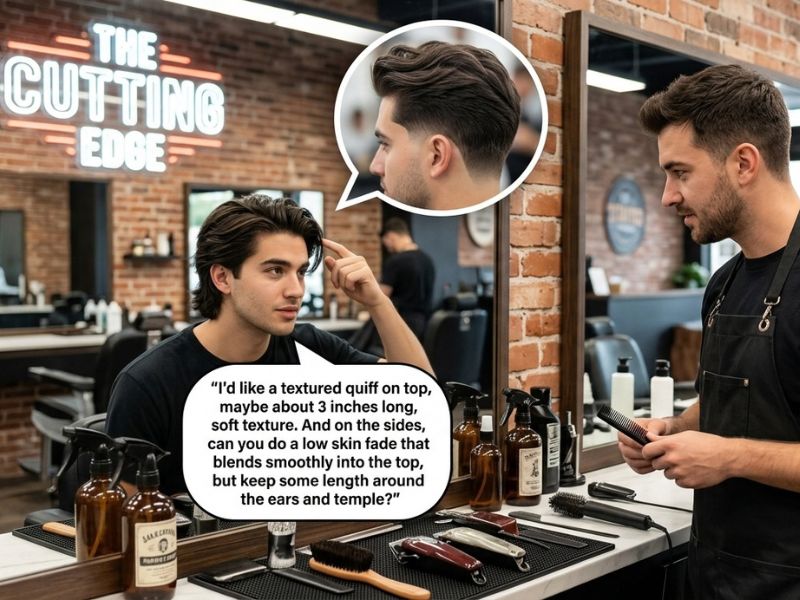
Clear communication saves you from a length that’s too short or a taper that’s too aggressive. Try phrases like:
- “A 16 guard on top, left natural, no fade.”
- “16 on top with a low taper on the sides.”
- “16-guard length, mid taper, and keep my curl pattern intact.”
Bringing a reference photo helps even more, since guard numbers can vary slightly between clipper brands.
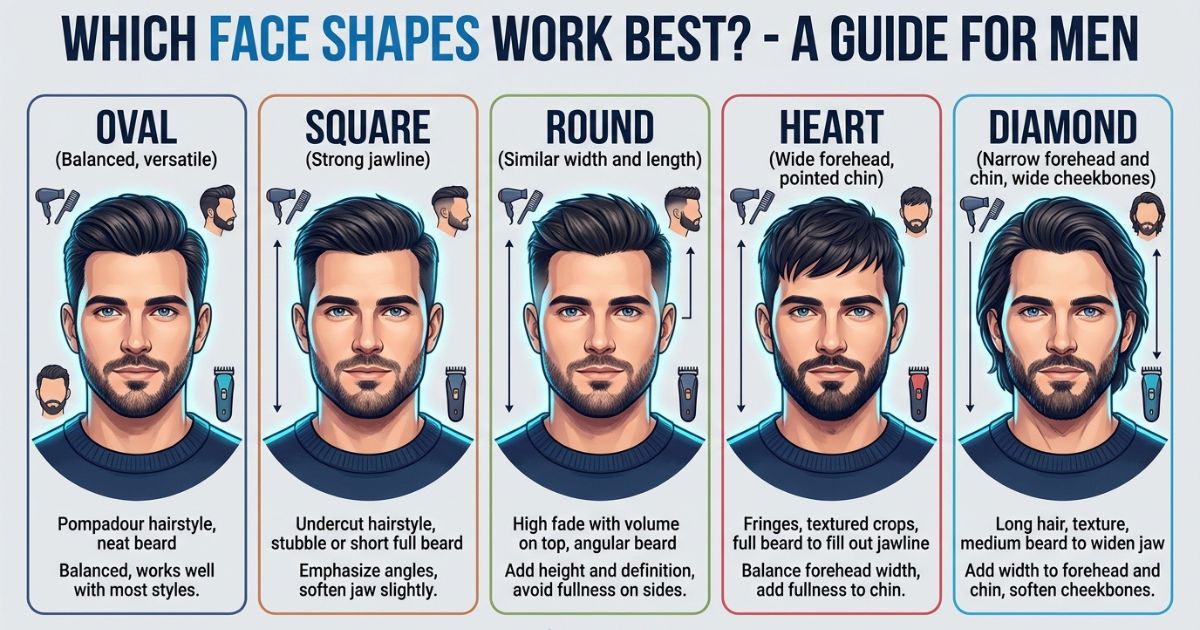
Which Face Shapes Work Best?
| Face Shape | Why It Works |
| Oval | Nearly any taper height complements the balanced proportions. |
| Square | A taper softens strong jawlines while the top adds height. |
| Round | Added volume on top elongates the face; avoid a fully rounded shape. |
| Oblong | A low taper with fuller sides keeps the face from looking longer. |
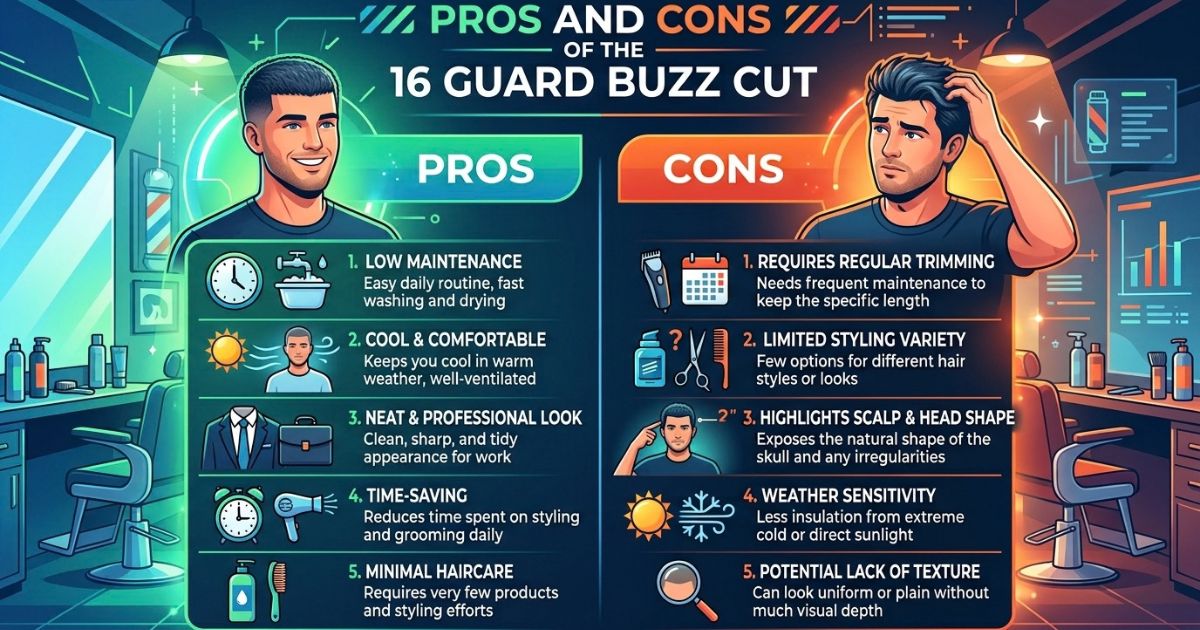
Pros and Cons of the 16 Guard Buzz Cut
| Pros | Cons |
| Low daily styling effort | Grows out faster than shorter buzz cuts |
| Works with straight, wavy, and curly hair | Not as low-maintenance as a #1 or #2 buzz |
| Flexible with tapers or worn on its own | Requires more frequent trims to hold shape |
| Softer, more natural appearance | Less dramatic contrast than a full fade |
FAQ’S
Is a 16 guard buzz cut still considered a buzz cut?
Yes, since it’s cut with clippers at one consistent length, though it sits at the longer end of the buzz cut range.
Can I get a 16 guard buzz cut with curly hair?
Absolutely. Curly hair often looks fuller at this length, and it pairs especially well with a low or mid taper.
How often does a 16 guard buzz cut need a trim?
Most men trim every three to six weeks, depending on how fast their hair grows and how defined they want the shape.
What’s the difference between a 16 guard and a 12 guard buzz cut?
A 12 guard leaves about 1.5 inches, while a 16 guard leaves roughly two inches, so the 16 guard looks noticeably fuller.
Does a 16 guard buzz cut suit thinning hair?
It can work, though a slightly shorter guard often disguises thinning areas more effectively than a longer, fuller length.
Final Thoughts
The 16 guard buzz cut proves that “buzz cut” doesn’t have to mean ultra-short. With roughly two inches of length, it offers enough texture to style while keeping upkeep simple. Whether paired with a low taper, a mid taper, or worn on curly hair, it adapts to a wide range of looks and face shapes.
If you’re after a haircut that feels clean without looking severe, this is worth bringing to your next barber appointment. Ask for the guard number by name, pick a taper height that fits your style, and let the natural texture of your hair do the rest of the work.