
Types of Taper Fade Standing in the barber’s chair with nothing to say beyond “just a trim” is how a lot of guys end up with the same forgettable cut, year after year. The taper fade fixes that problem. It’s one haircut with a dozen personalities, sharp enough for a boardroom, bold enough for a night out, and adaptable to nearly any hair type you’ve got.
This guide walks through every major taper fade style you’ll find in a barbershop today. You’ll learn where each fade starts on your head, how long it lasts between cuts, and which version fits your hair texture and face shape best. By the end, you’ll walk in and order exactly what you want, no guessing required.
12 Styles Explained 2026 What Are the Main Types of Taper Fade?
Three heights form the backbone of every taper fade: low, mid, and high. A low taper starts just above your ears and stays subtle. A mid taper climbs about an inch higher for a look with more edge. A high taper begins near the temples, delivering the sharpest contrast of the three.
From there, barbers layer on technique. A burst fade curves around the ear. A drop fade dips behind it, following your skull’s natural shape. A shadow fade skips the skin exposure altogether, and a skin fade goes the other direction entirely, down to bare scalp.
Here’s the quick version: pick your height first, then decide how dramatic you want the finish line to look. Everything else in this guide builds on those two decisions.
Quick Navigation: Types of Taper Fade at a Glance
| Type | Where It Starts | Best For | Touch-Up Frequency |
| Low Taper Fade | Just above the ears | Conservative, professional settings | 3-4 weeks |
| Mid Taper Fade | ~1 inch above the ears | A balance of style and polish | 2-3 weeks |
| High Taper Fade | Near the temples | Bold, angular statements | 1-2 weeks |
| Skin/Bald Fade | Down to bare scalp | Maximum contrast | 1-2 weeks |
| Burst Taper Fade | Arcs behind the ear | Curly or thick hair, mohawks | 2 weeks |
| Drop Fade | Curves down behind the ear | Natural head shape, subtle flow | 2-3 weeks |
| Shadow Taper Fade | Blends to a #1 or #2, never skin | Dense hair, conservative offices | 3-4 weeks |
| Temple Fade | Only temples and nape | Framing the face, natural styles | 2-3 weeks |
Bookmark this table. It’s the fastest way to compare your options before you ever sit down in the chair.
What Is a Taper Fade?
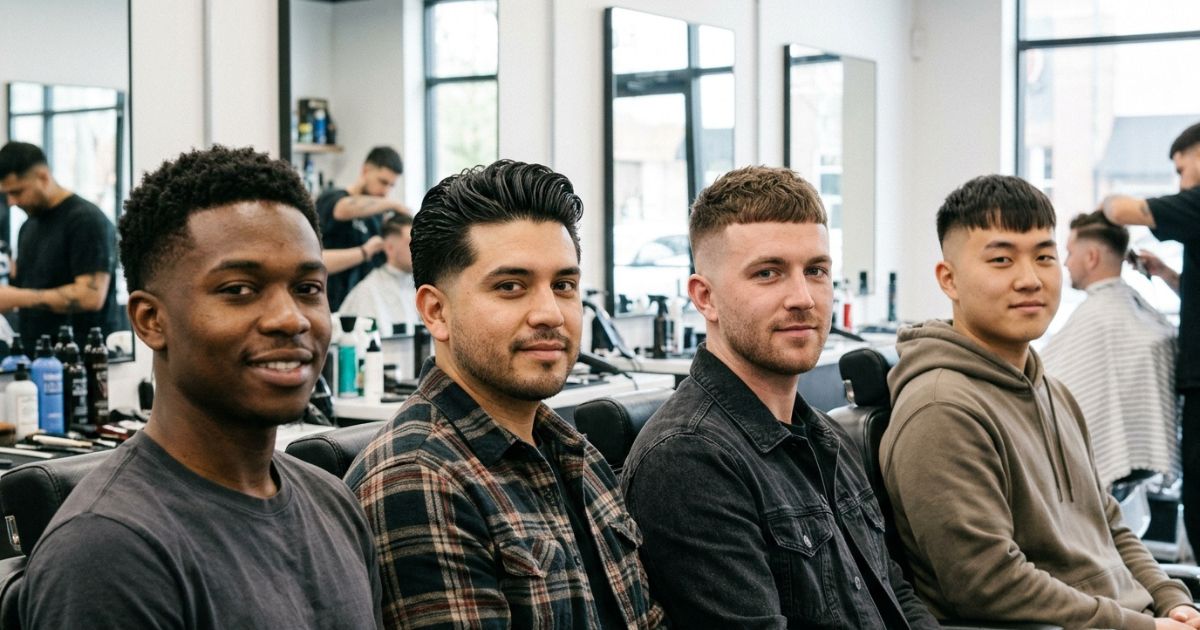
A taper fade combines two separate barbering moves into one haircut. Tapering gradually shortens hair as the clippers move down your head. Fading blends that hair into an even shorter length, sometimes all the way to skin, so there’s no visible line where one length meets another.
Put them together and you get a cut that keeps weight and length on top while the sides melt away smoothly. Nothing about it looks choppy or abrupt. That smooth blend is exactly what separates a taper fade from a plain trim, and it’s why the style keeps showing up as one of the most requested men’s cuts, according to barbers at Man of Many.
Hair on top usually runs 1 to 4 inches, so you’ve got room to slick it back, spike it up, or leave it loose. Straight, wavy, curly, or coily, the taper fade flexes to fit whatever’s already growing on your head.
Taper vs. Fade: What’s the Difference?
A taper is the gentle version: hair gets shorter as it goes, but it never disappears completely. It grows out naturally and keeps a soft edge around your hairline.
A fade pushes further. It often runs all the way to skin, creating a hard, visible line between the shortest hair and the longest. That contrast is the whole point.
A taper fade borrows from both. You get the gradual blend of a taper up top, paired with a fade’s shorter finish down at the base, so the cut looks sharp without feeling harsh.
The 3 Foundation Types of Taper Fade
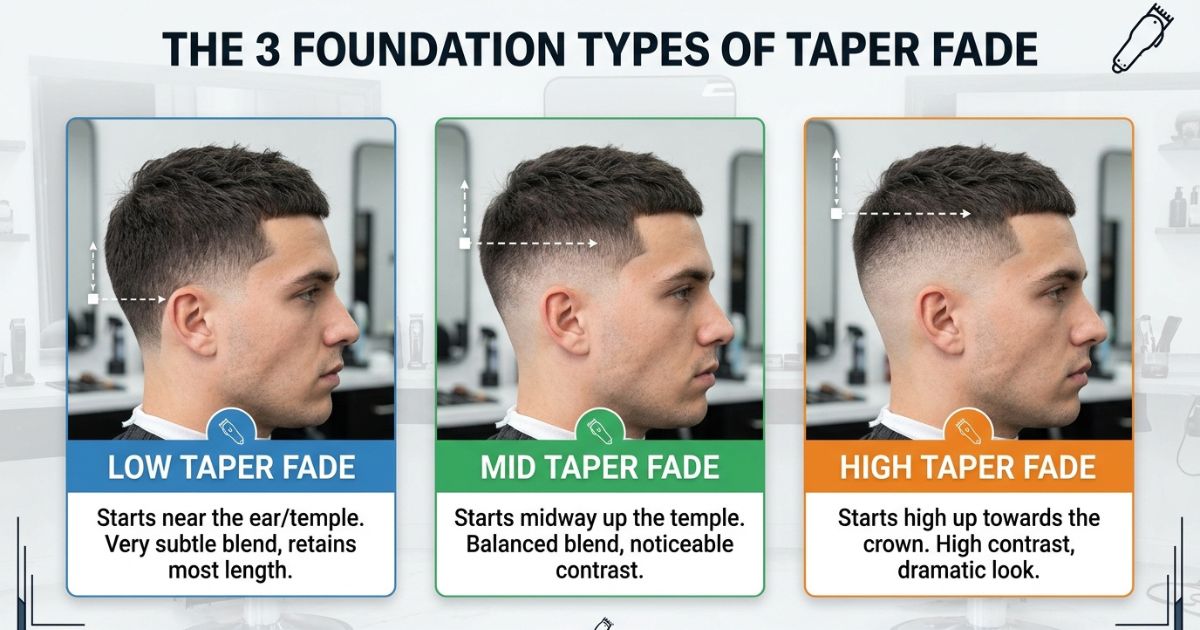
Every other style in this guide is really just a variation on these three heights. Once you know where you want the fade to begin, picking a technique on top gets a lot easier.
Low Taper Fade
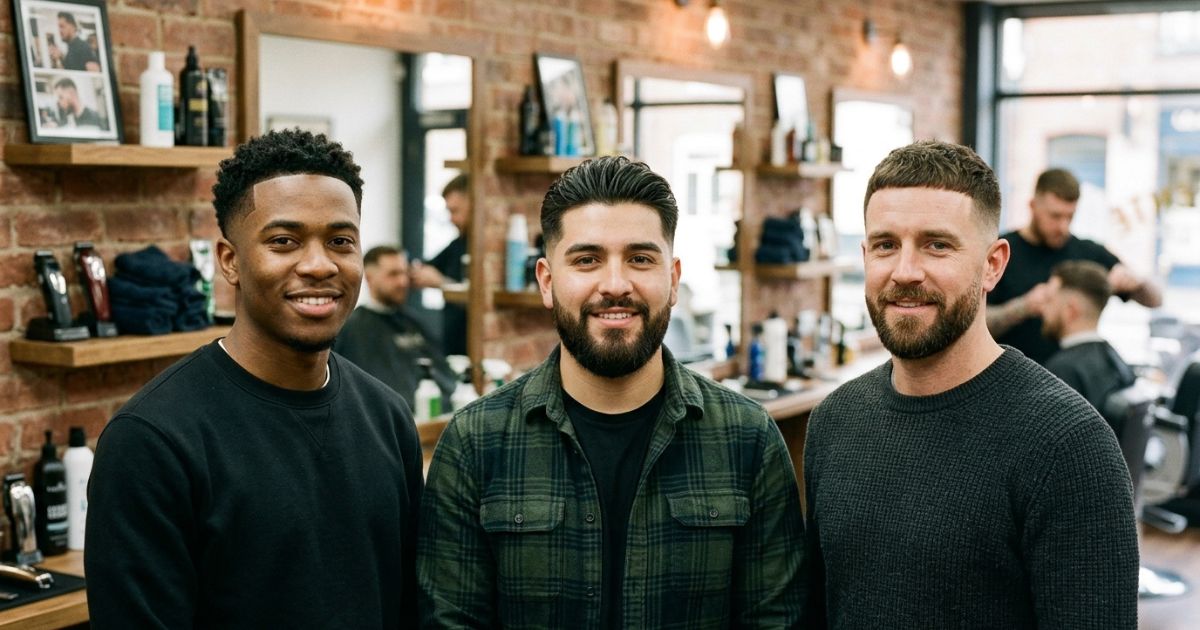
The low taper fade starts just above your ears and around your natural neckline, which makes it the most forgiving of the three. Because the blend sits so close to your hairline, regrowth barely shows, and you can usually stretch four weeks between cuts without anyone noticing.
It suits pretty much every face shape, but it does extra work for round faces by adding subtle vertical lines that make your face look a touch longer. Guys in conservative fields, like law, finance, or education, tend to gravitate here because it reads as polished rather than trendy.
Tell your barber: “Low taper fade starting just above my ears, gradual blend, and [your preferred length] on top.” Expect a #1 or #2 guard at the base, blending up to a #3 or #4.
Mid Taper Fade
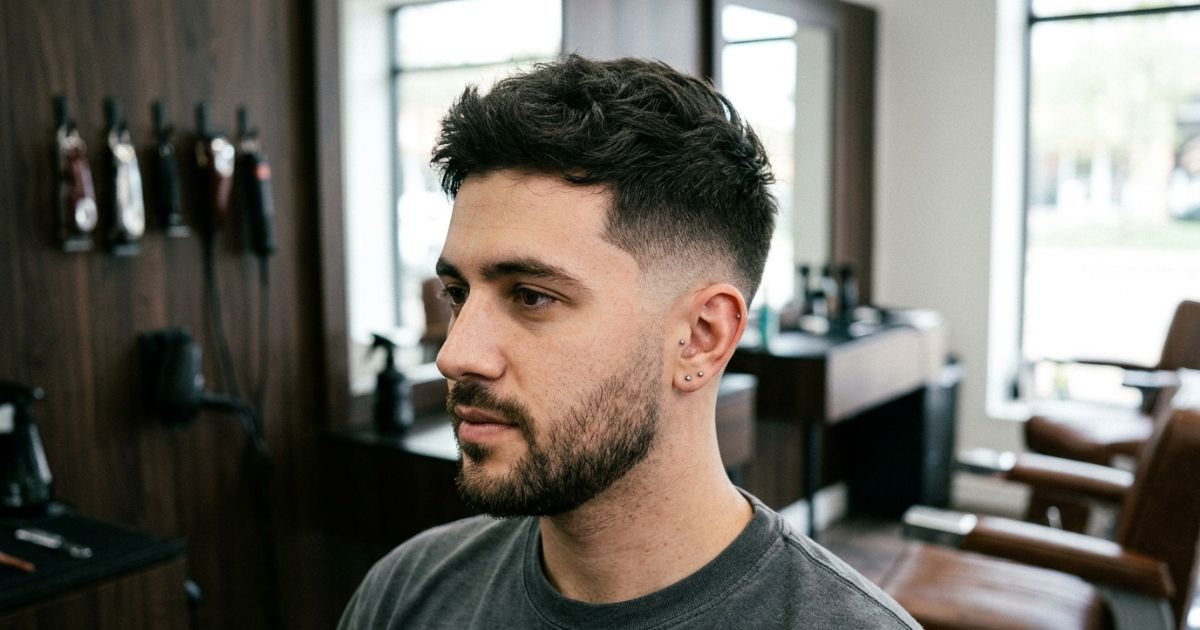
Starting about an inch higher than a low taper, the mid taper fade lands right in the sweet spot between subtle and bold. You’ll see a clearly defined fade line, but it never tips into “trying too hard” territory.
This is the fade most barbers report seeing from younger clients who want something office-appropriate that still reads as current. It plays especially well with oval and square faces, and it pairs naturally with textured crops, side parts, and slicked-back styles.
Tell your barber: “Mid taper fade about an inch above my ears, blending toward eye level.” Most shops start around a #0.5 or #1 and taper up to a #2 or #3.
High Taper Fade

A high taper fade starts near your temples and creates the most dramatic contrast on this list. Expect a tight blend zone, noticeable scalp exposure on the sides, and a cut that grows out fast, sometimes within ten days.
Angular faces and strong jawlines benefit most, since the high placement softens sharp features rather than exaggerating them. It also shows best on dark hair. If your hair runs blonde or light brown, the contrast tends to look more washed out than sharp.
Tell your barber: “High taper fade near my temples, tight blend, down to a [#0 or skin] at the base.” Budget for a barbershop visit roughly every one to two weeks.
Learn more:Drop Taper Fade Guide: Low, Mid, High + Drop vs Taper (2026)
Advanced Technique Variants: Beyond Basic Height
Once you’ve settled on a height, technique variants change the shape and finish of the fade itself. These are the styles that separate a good barber from a great one.
Skin Fade / Bald Fade Taper
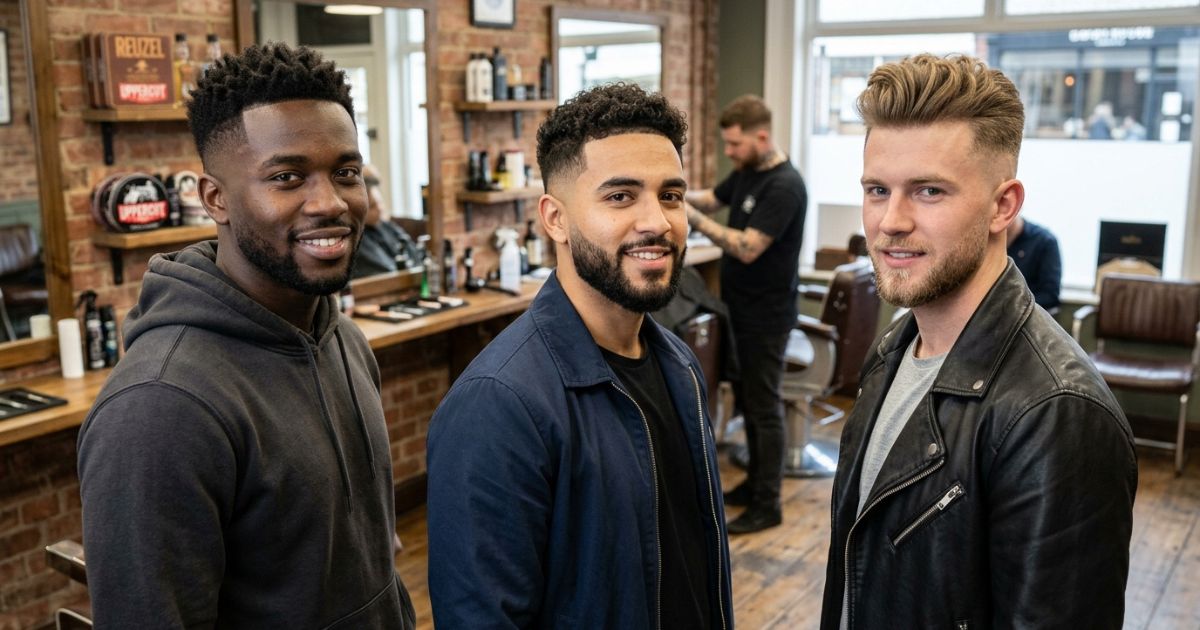
A skin fade takes the shortest point of your cut all the way down to bare scalp, usually with a razor or a foil shaver rather than standard clippers. It’s the highest-contrast option in this entire guide.
Because the transition is so stark, skin fades pair beautifully with hard parts, hairline designs, and other detail work. That clean canvas gives your barber room to get creative. Expect to book a touch-up every seven to ten days, since exposed scalp shows stubble fast.
Burst Taper Fade
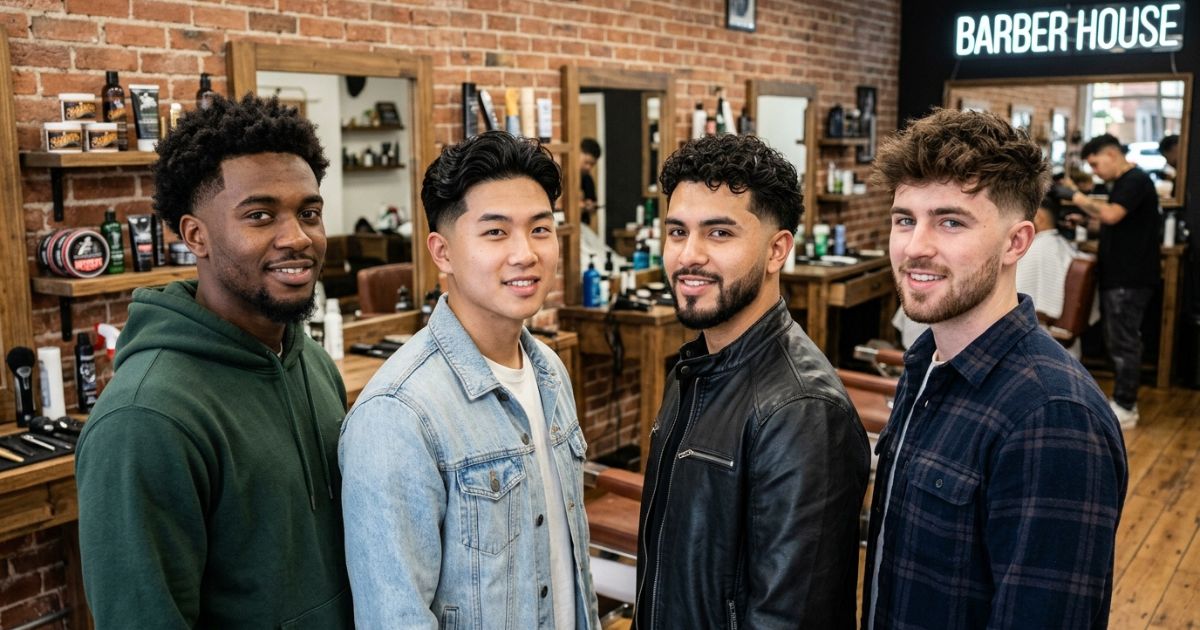
The burst fade cuts a semi-circular arc behind the ear instead of running in a straight line around your head. Hair at the nape stays longer, which gives it a natural flow that works well with mohawks, faux hawks, and modern mullets.
It’s a technically demanding cut, so it’s worth finding a barber with real experience here rather than someone learning on your head. According to grooming guides comparing burst fades and drop fades, the style suits round, square, and diamond face shapes especially well thanks to its added height and angular lines.
Drop Fade Taper
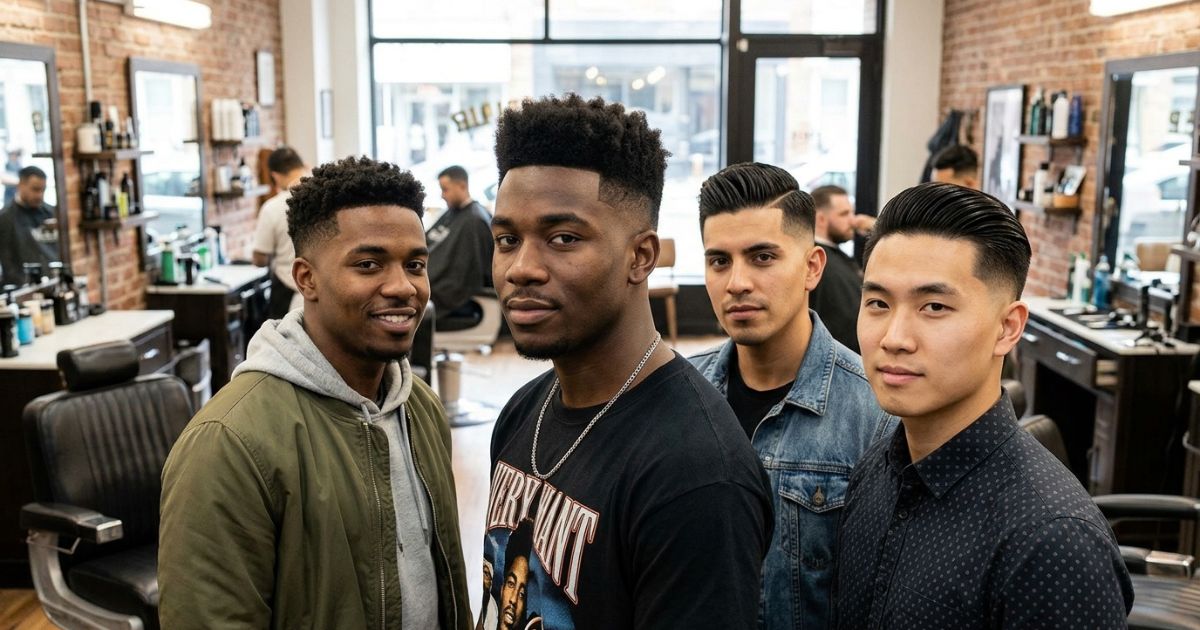
Instead of a straight horizontal line, a drop fade curves downward behind your ear, following the natural curve of your skull. The result looks more organic than a straight fade, since it works with your head shape instead of against it.
It comes in low, mid, or high variations, and it’s particularly flattering if you’ve got a noticeable bump at the back of your skull, known as the occipital bone. Guys with oval, heart, or long face shapes tend to suit the smooth, contoured lines a drop fade creates.
Shadow Taper Fade
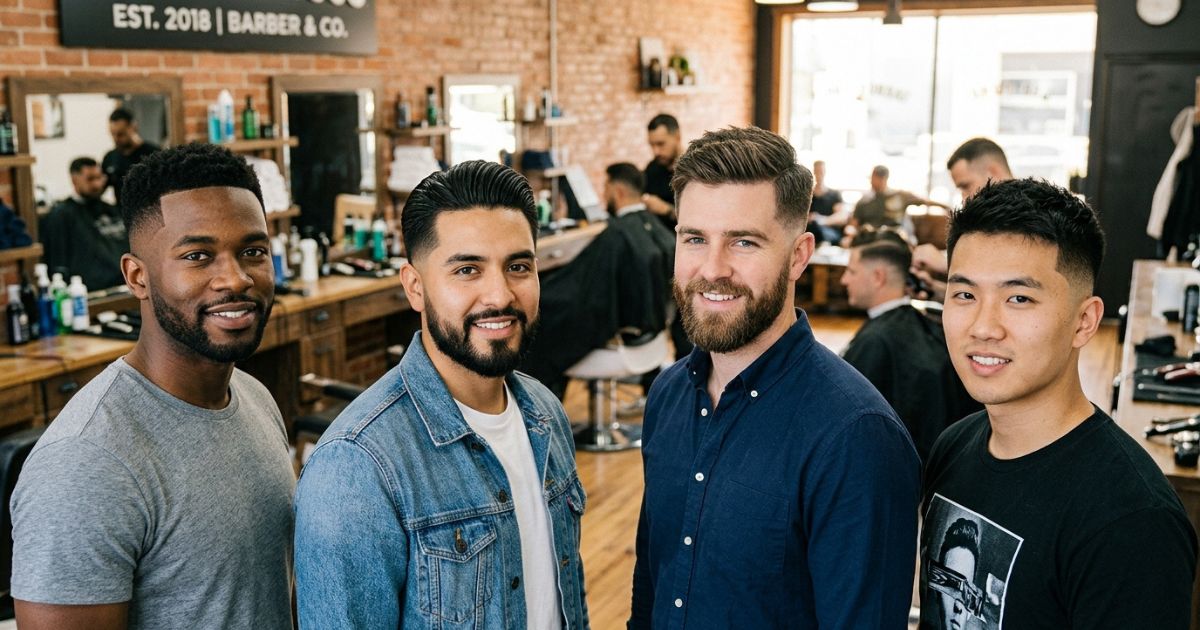
A shadow taper skips the skin entirely. Instead of blending down to a #0 or a razor finish, the shortest point stops at a #1 or #2 guard, leaving a soft “shadow” rather than a hard line.
That subtlety makes it a favorite in conservative corporate settings, and it’s kind to sensitive scalps that don’t love razor irritation. Dense, coarse textures like afros and tight curls tend to show this fade off particularly well, since the shadow effect reads as refined instead of severe.
Temple Fade (Brooklyn Fade)
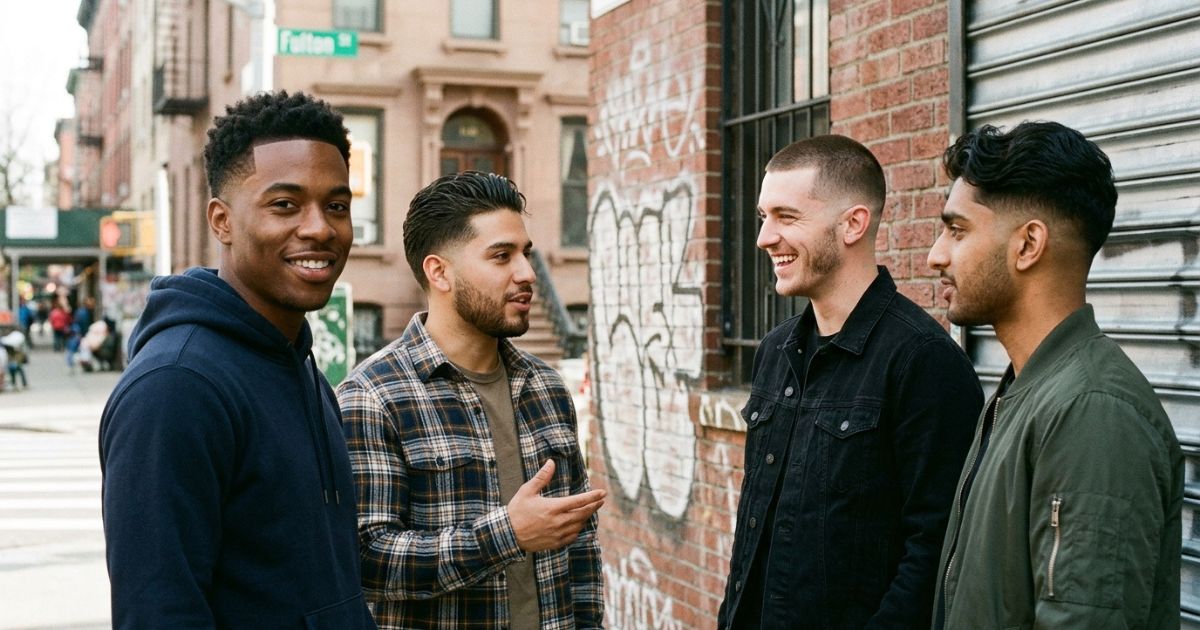
Also called a temp fade, this variation only tapers the temples and the nape, leaving the hair over and behind your ears at full length. The effect frames your face without touching the volume everywhere else.
It has deep roots in Black barbershop culture and pairs naturally with afros, box cuts, and other natural textures where preserving side volume matters. Expect touch-ups every two to three weeks, since temple hair tends to grow out faster than you’d expect.
Taper Fade Styles by Hair Type & Texture
Not every fade works the same way on every head. Your natural texture changes how a barber approaches the blend, and it changes how often you’ll need a touch-up too.
Taper Fade for Curly Hair
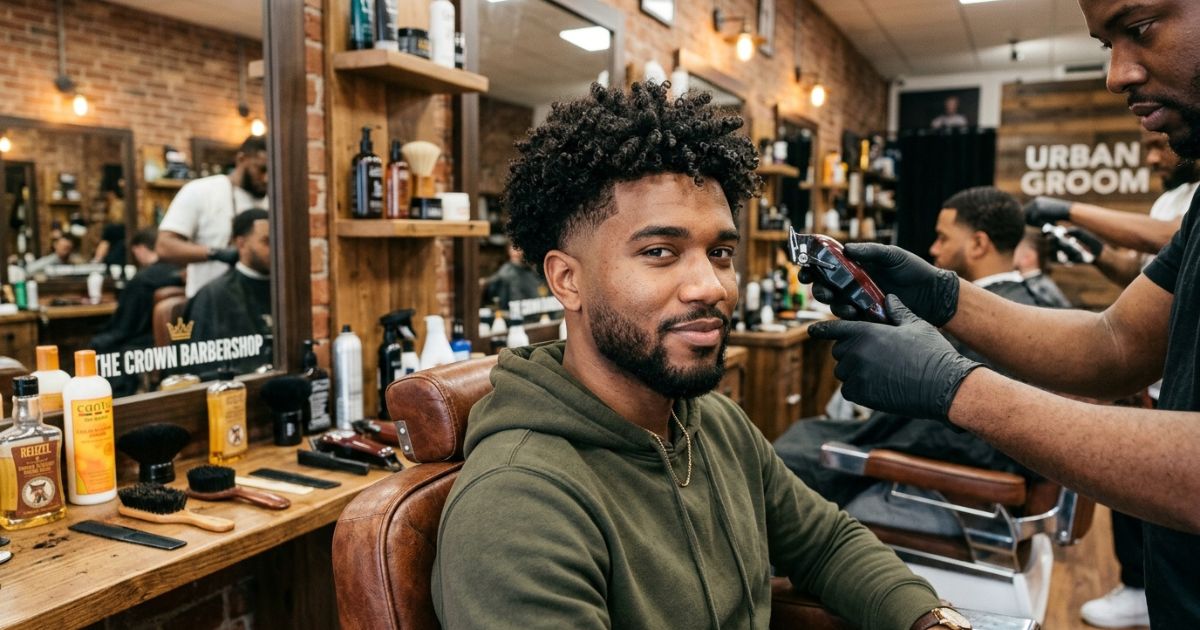
Curly hair and taper fades were basically made for each other. The contrast between tight curls on top and clean sides gives your natural texture room to stand out instead of getting buried under length.
Stick with low to mid heights so you don’t strip away the weight your curls need to hold their shape, and keep at least two to four inches on top. Cutting curls too short is the most common mistake here. It tends to leave a mushroom-shaped silhouette that fights your natural pattern instead of working with it.
Curls also hide grow-out better than straight hair does, so you can often stretch to three or four weeks between visits.
Taper Fade for Straight Hair
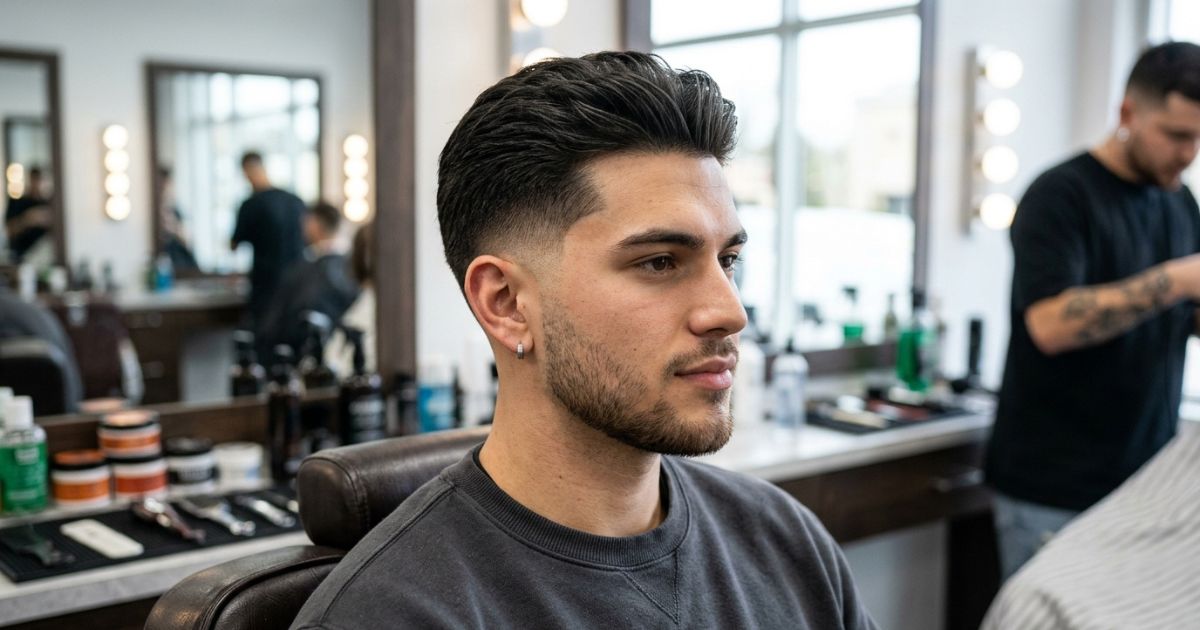
Straight hair shows off a taper fade with total clarity, since there’s no curl pattern softening the lines. Every height works here, though mid and high fades tend to show the sharpest definition.
The tradeoff is that grow-out becomes visible faster on straight hair, so plan on visiting your barber every two to three weeks to keep the line crisp. On the upside, straight hair holds styled shapes all day, whether you’re going for a side part, a slicked-back look, or a textured pompadour.
Taper Fade for Afro Hair
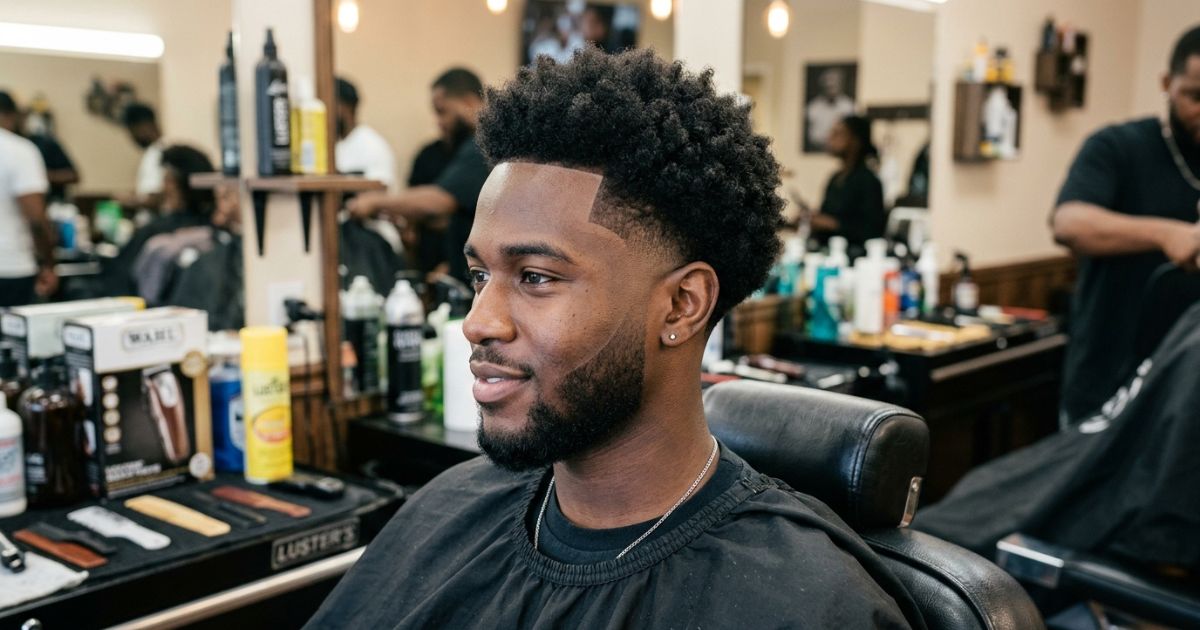
Few combinations are as iconic as a rounded afro paired with a precisely faded side. It’s a timeless look, but it demands a barber who genuinely understands coily hair structure and the cutting angles it requires.
Low to mid tapers, shadow fades, and temple fades tend to preserve texture best, since they avoid stripping too much volume from the top. Many guys pair this style with an edge-up along the hairline for extra sharpness. Plan on a touch-up every two to three weeks to keep the fade shape clean while the afro itself keeps growing.
Taper Fade for Asian Hair
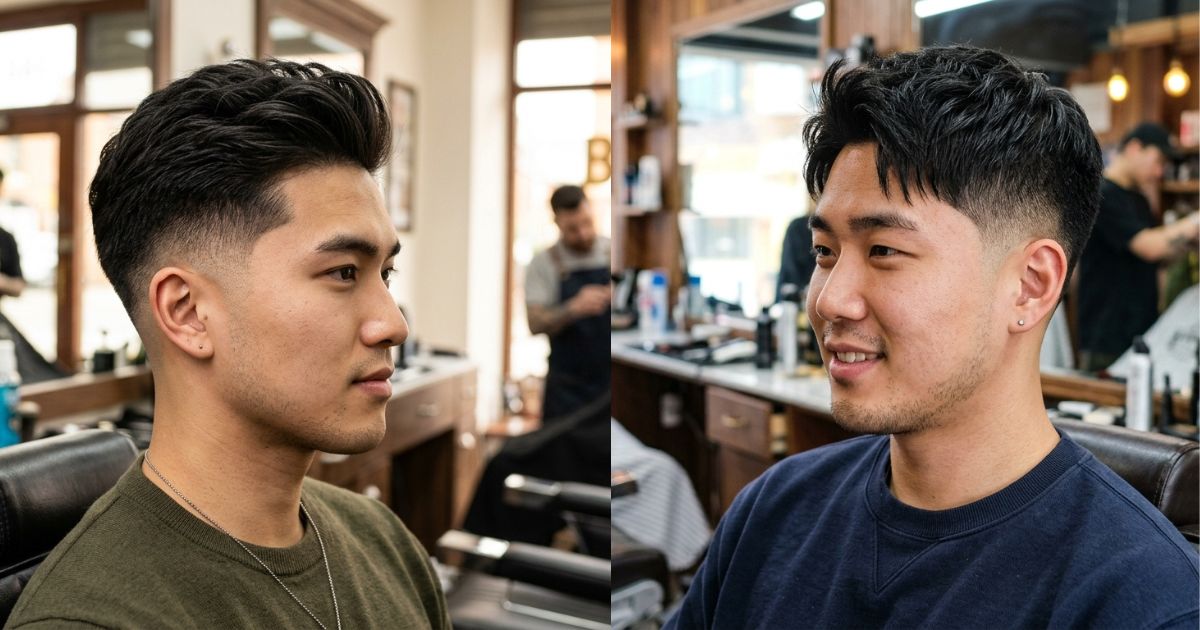
Asian hair tends to run thick, straight, and coarse, thanks to a circular hair follicle shape that holds its form well but can look heavy without the right taper. A fade removes that bulk while keeping a structured, clean silhouette.
Low to mid heights control the weight best without over-thinning the hair. Because the strands are naturally dense, you’ll likely need less styling product than the label suggests, so start small and build up only if you need to. Thick density also means grow-out stays hidden longer, often three to four weeks between cuts.
FAQ’S
What are the 3 main types of taper fade?
Low, mid, and high, named for where the fade starts on your head. Low sits just above the ears, mid starts about an inch higher, and high begins near the temples.
Which taper fade is best for beginners?
The low taper fade. It’s the most subtle, lasts three to four weeks, and works with nearly any face shape or hair type.
How often do you need to cut a taper fade?
Low tapers last three to four weeks, mid tapers two to three weeks, and high or skin fades need attention every one to two weeks.
What’s the difference between a taper and a taper fade?
A taper stops around a #2 or #3 guard and keeps things soft. A taper fade pushes further, sometimes down to skin, for a sharper contrast.
Can you get a taper fade with curly hair?
Yes. Low to mid heights preserve curl volume best, and it’s worth asking your barber to cut curls dry rather than wet.
Conclusion
Types of Taper Fade Twelve styles, one core idea: a taper fade is really just a height and a technique working together. Start with low, mid, or high based on how bold you want to look and how often you’re willing to visit the barber. From there, layer on a skin fade for maximum contrast, a burst or drop fade for a more sculpted line, or a shadow fade if you want structure without the skin exposure.
Bring your hair type and face shape into the decision, and don’t be afraid to bring a reference photo. The right words at the chair make all the difference between walking out with exactly what you pictured and settling for close enough.