
Trending Medium-Length Hairstyles Medium-length hair gives you room to play without demanding a long morning routine. It sits between a cropped cut and a full mane. You can slick it back for work, tousle it for the weekend, or let it fall loose. That flexibility explains its popularity among men of every age.
This guide covers 47 medium-length hairstyles for men, plus the practical details that make each one work. You’ll find length definitions, styling steps, product picks, barber-chair scripts, a grow-out timeline, care habits, and common mistakes. Pick a look, save a reference photo, and book the appointment with confidence.
Popular Medium Hairstyles For Men Trending Medium-Length Hairstyles
Use this quick-pick table to narrow the list before you scroll.
| Your Profile | Styles Worth Trying |
| Oval face | Middle Part, Medium Flow, Textured Quiff |
| Round face | Long Parted Flow, Long Quiff, Textured Slick Back |
| Square face | Wavy Middle Part, Messy Fringe, Medium Flow |
| Long or oblong face | Medium Curtains, Textured Shag, Middle Part |
| Fine, straight hair | Layered Brush Back, Textured Quiff, Wolf Cut |
| Thick hair | Thick, Feathered Wings, Textured Flow Back, Textured Slick Back |
| Wavy hair | Casual Flow, Medium, Flowing Waves, Pulled Waves |
| Curly or coily hair | Medium Curls, Curly Curtains, Afro Fade |
Middle Part

A center part splits the hair evenly and lets each side drape toward the cheekbones. It flatters oval and long faces and softens a strong jawline. Blow-dry forward first, then part with a comb and set with a light cream.
Layered Brush Back
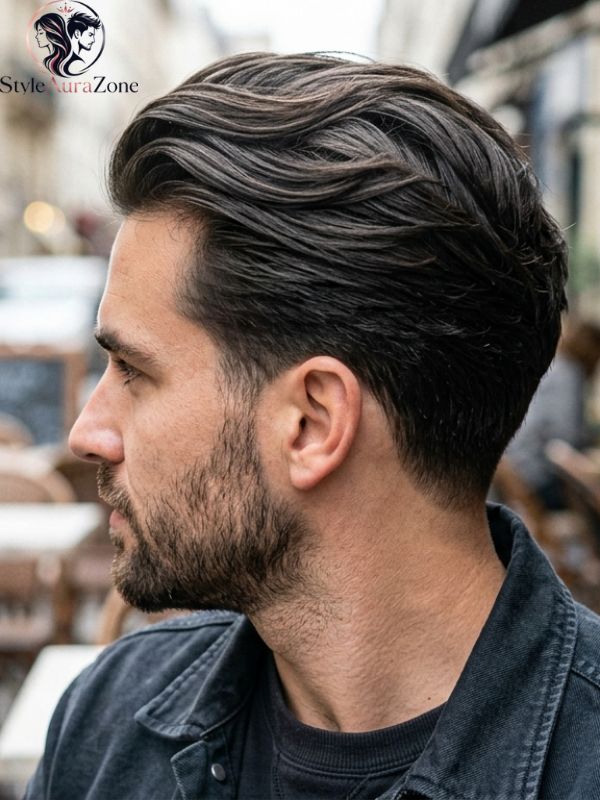
Soft layers through the top give brushed-back hair lift without a stiff, helmet-like shape. Dry the roots upward with a round brush, then sweep everything toward the crown. A medium-hold mousse keeps the volume intact until evening.
Medium Flow
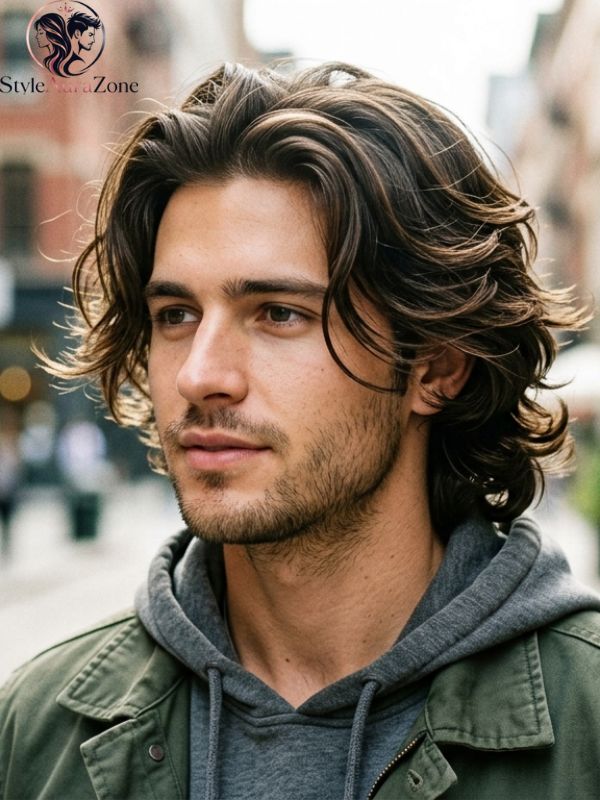
Hair stays one even length and falls past the ears in loose, natural motion. Thick or wavy strands carry it best. Work in a leave-in conditioner and a pinch of sea salt spray. Tuck the sides behind your ears or leave them free.
Combed Over Pompadour
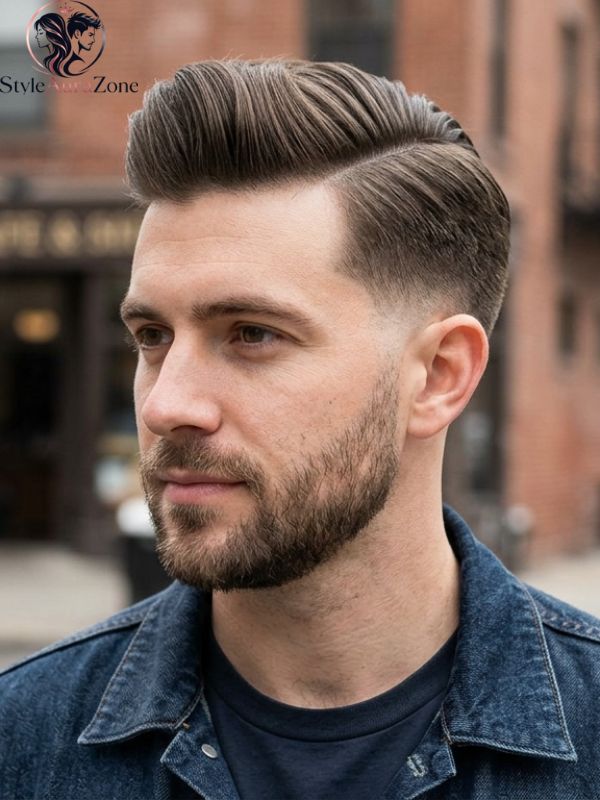
Height at the front meets a polished sweep to one side. Blow-dry the top upward, then comb it across and back with a water-based pomade. Tapered sides sharpen the contrast. It suits office days and wedding invitations, especially beside a trimmed beard.
Messy Fringe
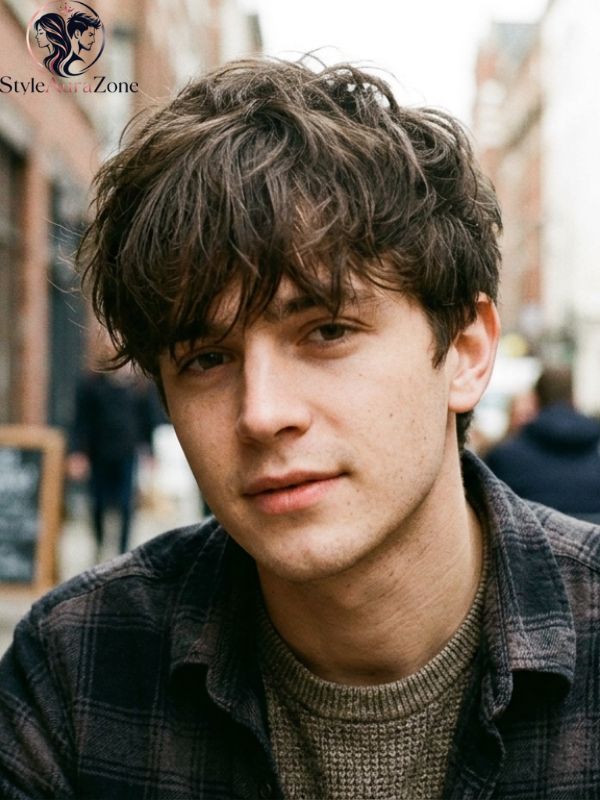
A long fringe tumbles toward the eyebrows while layered sides and back keep everything moving. Thick and wavy hair wears it well. Rub matte paste between your palms, then pinch the front into loose, piecey sections.
Messy Textured Mod
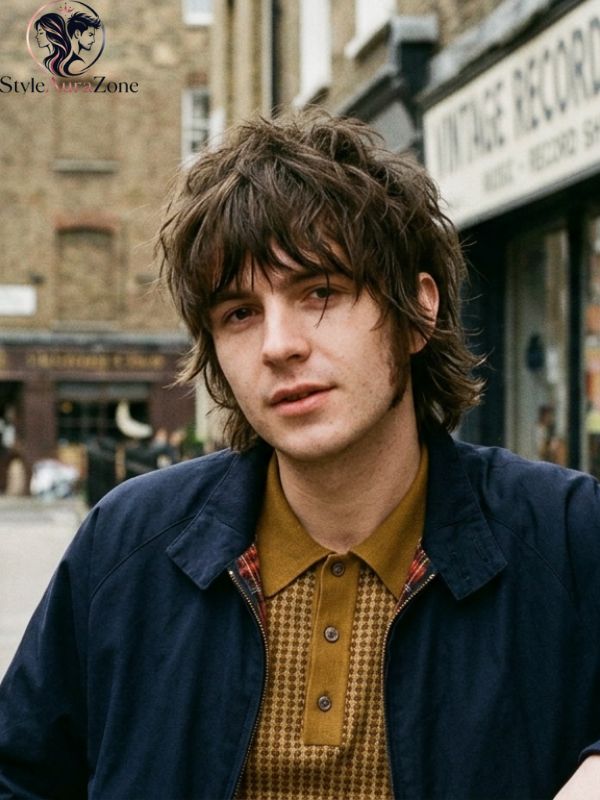
The classic ’60s mod shape gets roughed up with choppy layers around the crown. The rounded outline survives, but the finish feels lived-in. Style with a light clay, rake it forward with your fingers, and let a few strands go rogue.
Modern Mullet
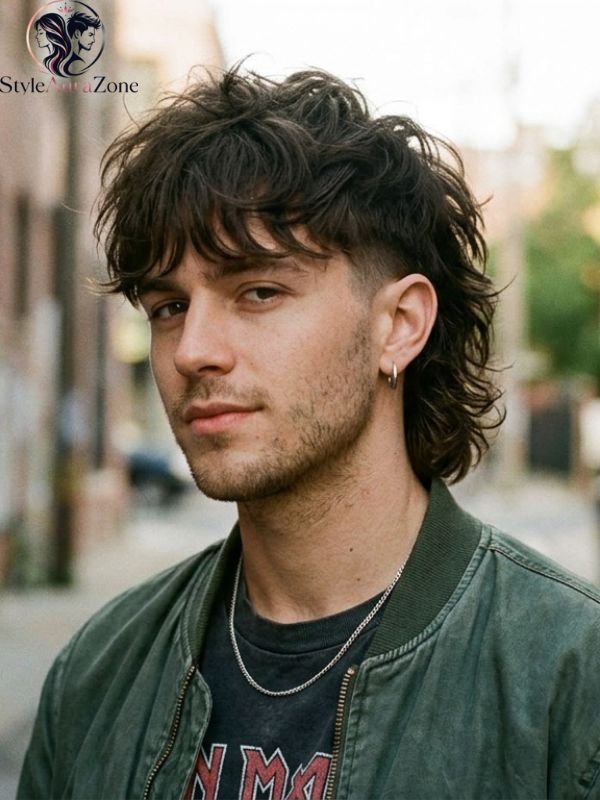
Shorter sides and a fuller top flow into extra length at the nape. It reads as edgy without tipping into costume territory. Ask for blended layers so the transition looks soft. A little cream keeps the tail from frizzing.
Wolf Cut
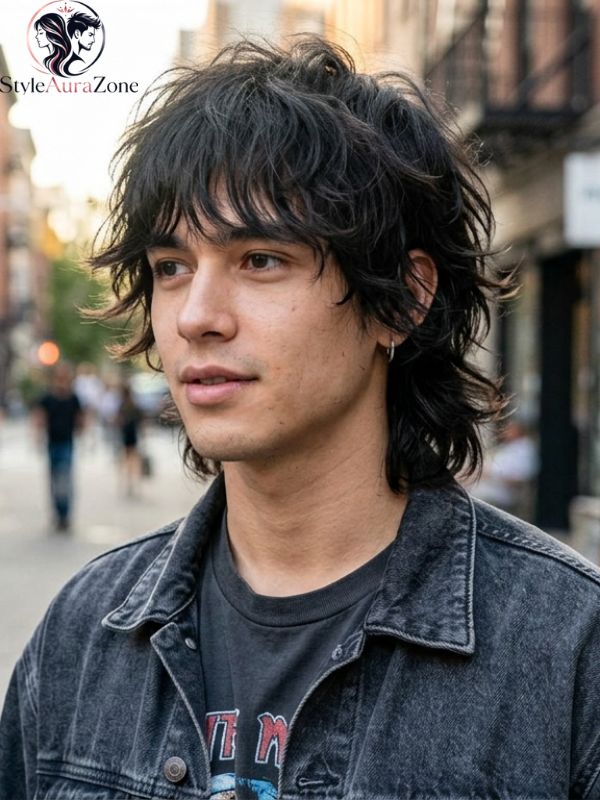
Heavy layering around the crown meets a wispy, longer back. This shag-meets-mullet hybrid adds plenty of volume to fine or straight hair. Scrunch texturizing spray into damp strands, then air-dry or diffuse for a tousled finish.
Long Side Part
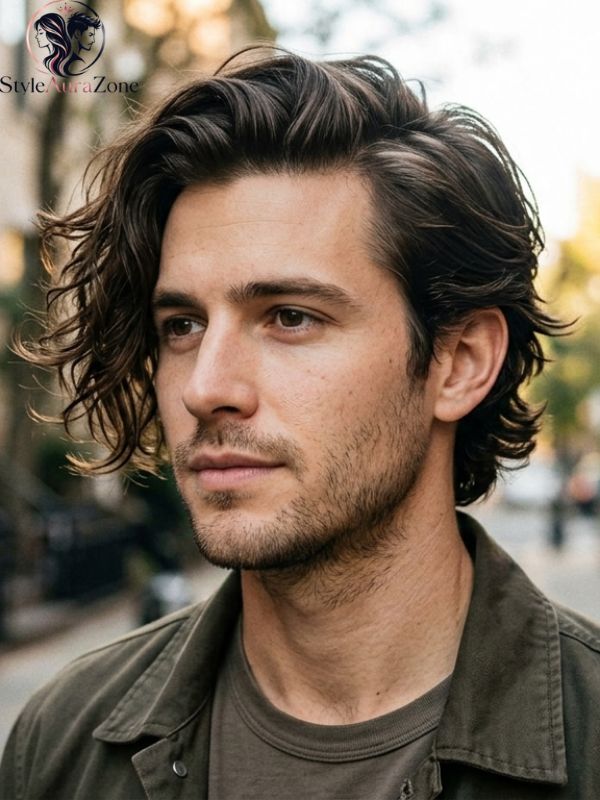
A defined part starts near the temple and lets the longer top sweep across in a smooth arc. The result feels gentlemanly and slightly retro. Lift the roots with a round brush while drying. Comb through with a touch of cream for sheen.
Medium Curls

Curls get enough length to bounce without drooping. Apply curl cream to soaking-wet hair and scrunch upward. Resist brushing once dry. A low-heat diffuser or a patient air-dry keeps definition high and frizz low.
Man Bun
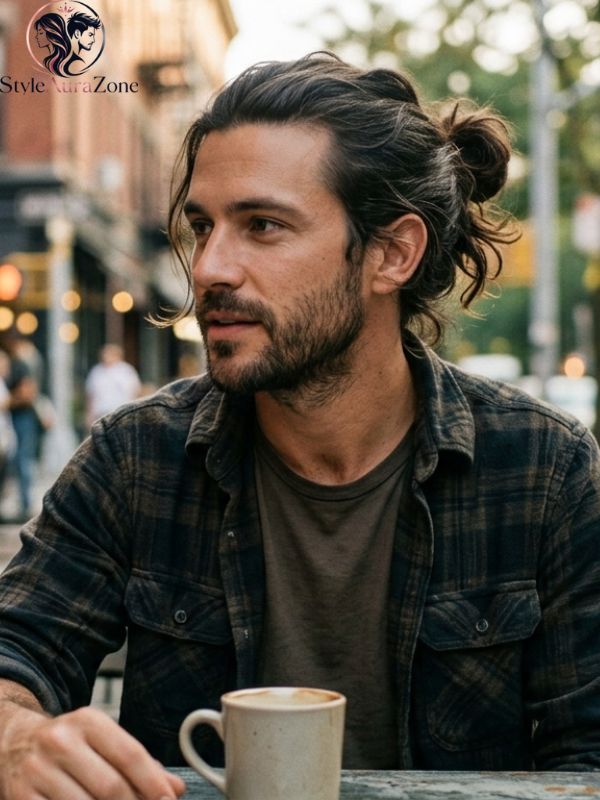
Gather the length at the crown or nape and secure it with a snag-free elastic. A faded undercut removes bulk underneath. Leave a few face-framing strands loose so the look stays relaxed rather than severe.
Read more:Types of Fade Haircuts: 7 Stylish Examples For Men
Textured Middle Part with Curtains
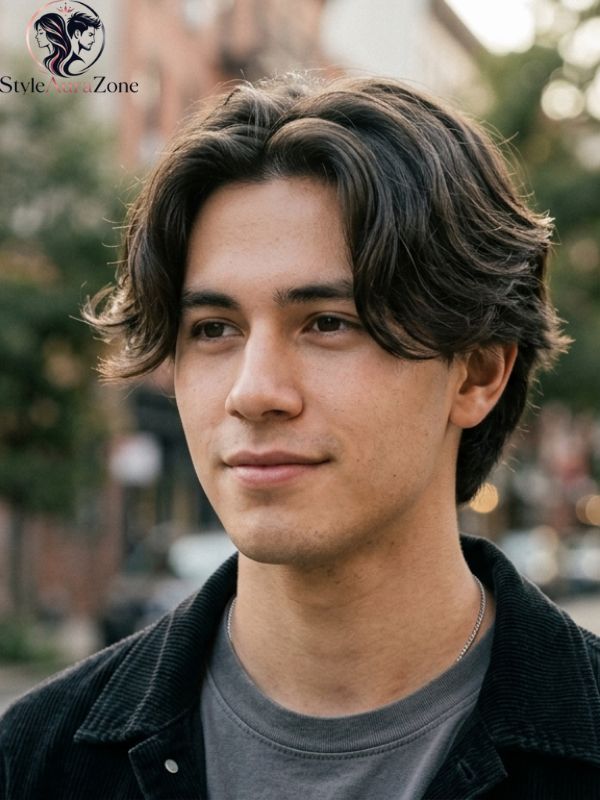
Parted down the center, the hair drapes in soft curtains around the forehead. Light layers prevent flatness. Spritz in texture spray, then twist a few pieces with your fingers. The vibe lands somewhere between skater and indie guitarist.
Mohawk with High Burst Fade
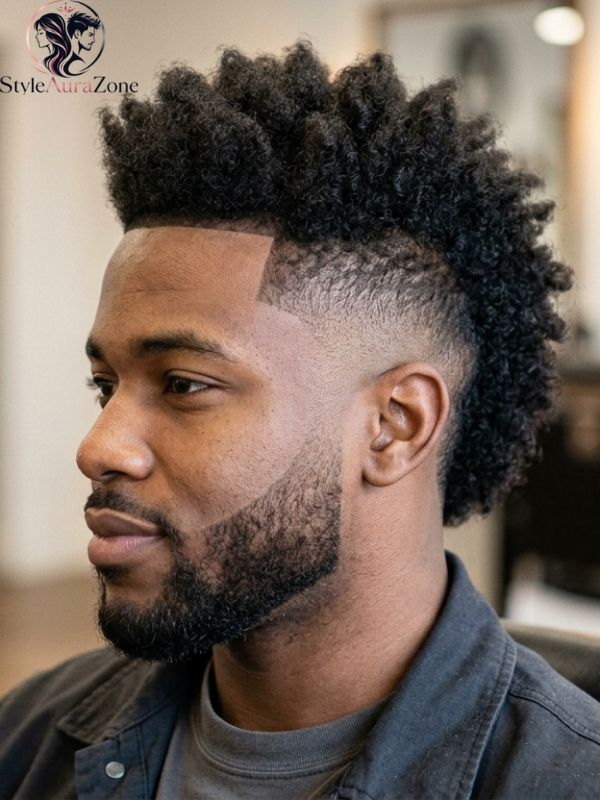
Sides fade to skin in a rounded arc around each ear while the center strip stays long and upright. Strong-hold wax locks in the height. It’s a bold pick, so book a fade refresh every two weeks to keep the burst crisp.
Textured Slick Back
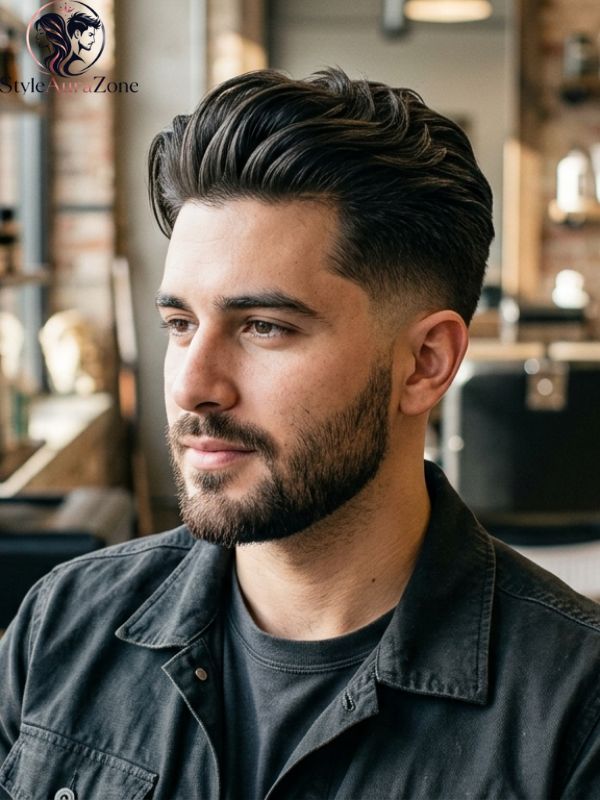
Layered hair gets brushed straight back, then roughed up with matte paste so it never looks wet. Tapered sides narrow the silhouette. Think refined with a rebellious streak. Dry the front with a vent brush before adding product.
Shoulder Length and Loose

Hair brushes the shoulders in relaxed layers with zero fuss. Wash with a gentle shampoo, smooth argan oil through the ends, and let it dry naturally. Regular dusting trims keep the lower length healthy and swingy.
Long Spiky Hair
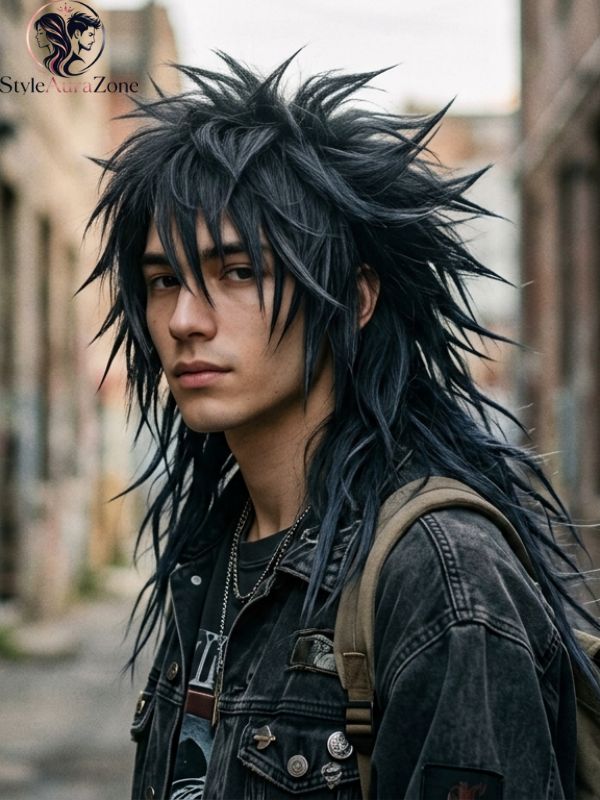
Layers on top get pushed upward into defined points while the sides stay short and tidy. Work strong-hold mousse into damp roots and blow-dry against the grain. A dab of paste on the tips finishes the punk-lite attitude.
Messy and Layered
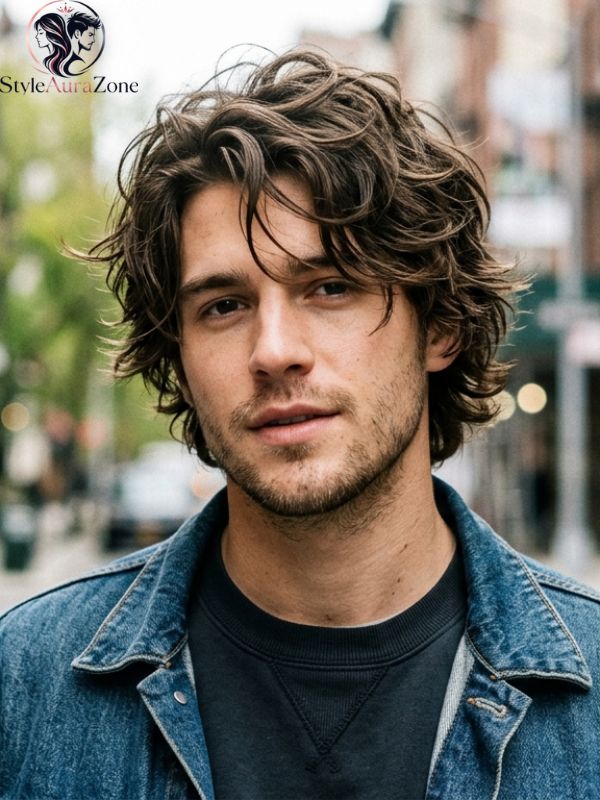
Point-cutting removes bulk and creates uneven movement, so strands fall in natural disarray. Straight or wavy textures both cooperate. A handful of sea salt spray and a quick blast from the dryer is all you need.
Loose Mid Part

Here, a relaxed center part and a few strands grazing the brow create a casual-but-considered mood. Slightly shorter, combed-back sides keep the outline neat. Add a little light cream, comb once, and leave it alone.
High Bun with Beard
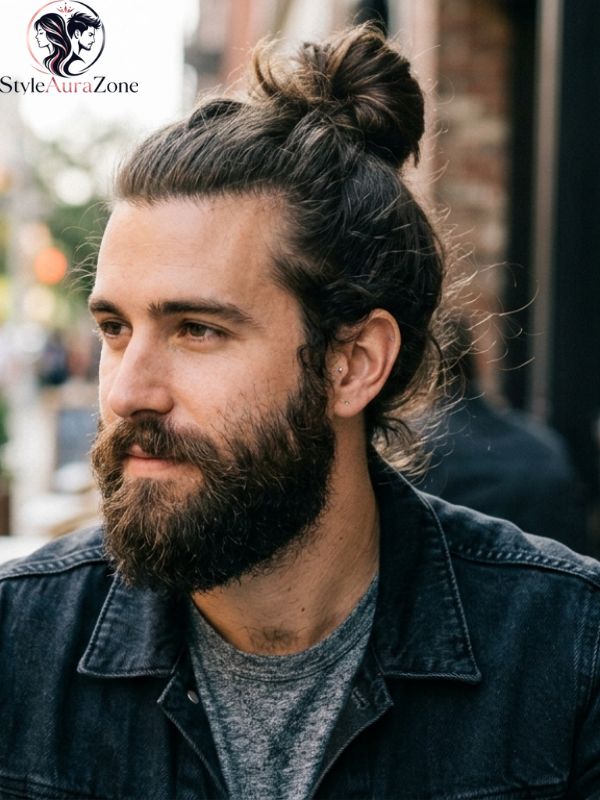
A top bun paired with a groomed beard frames the jaw and balances your proportions. Ask the barber to thin the bulk so the knot sits flat. Tie hair up while dry to limit breakage.
Textured Shag
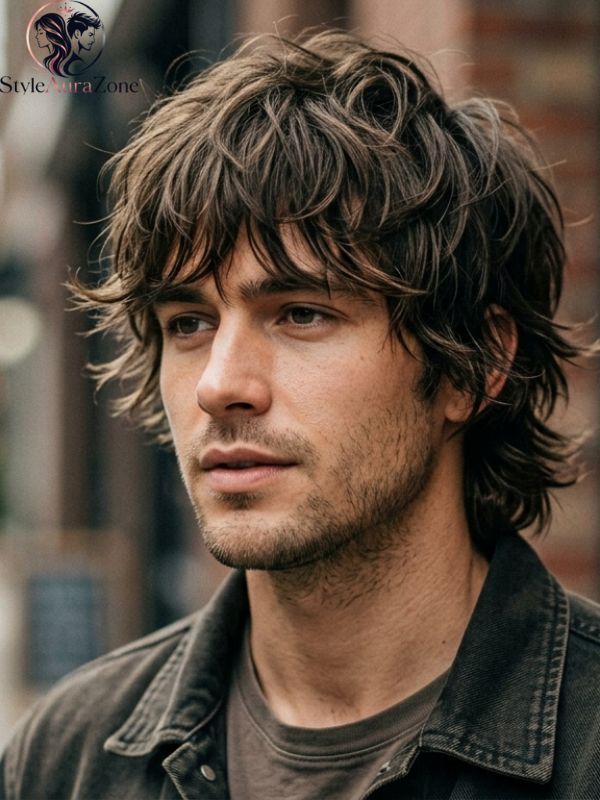
Choppy, feathered layers give the crown airy movement. Razor texturing keeps the ends wispy. Toss in a dry texture spray and ruffle with your hands. The style looks best when it appears a little unplanned.
Thick, Feathered Wings
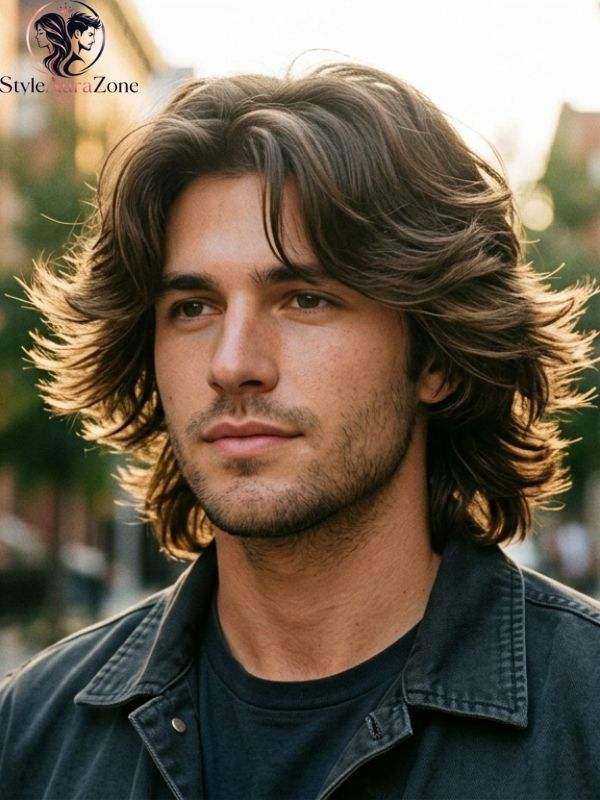
Layers on the sides flip gently outward like wings, keeping dense hair light and shapely. A nod to ’70s surf culture comes built in. Blow-dry the sides away from the face with a round brush for the signature flick.
Casual Flow
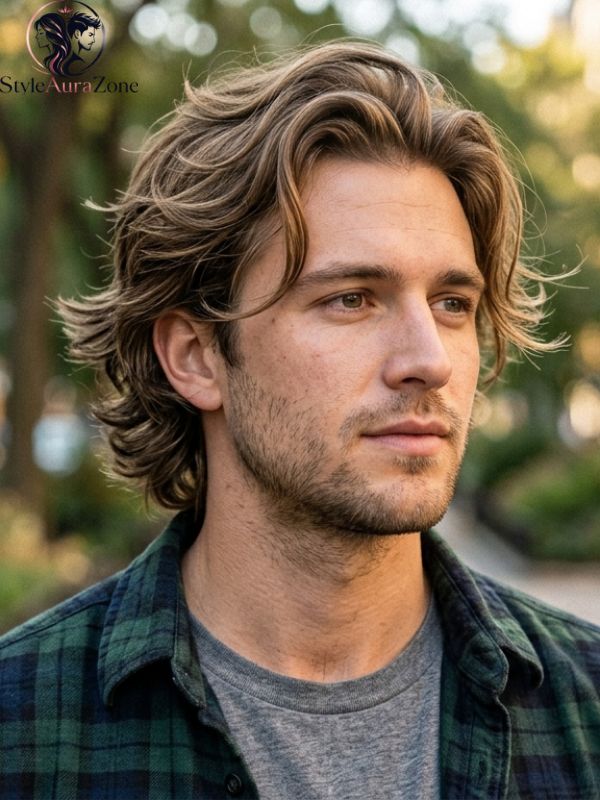
Long layers fall in an easy, unhurried way that works brushed back or left loose. Wavy hair makes it shine. A touch of lightweight cream tames flyaways without weighing the strands down.
Long Brush Back
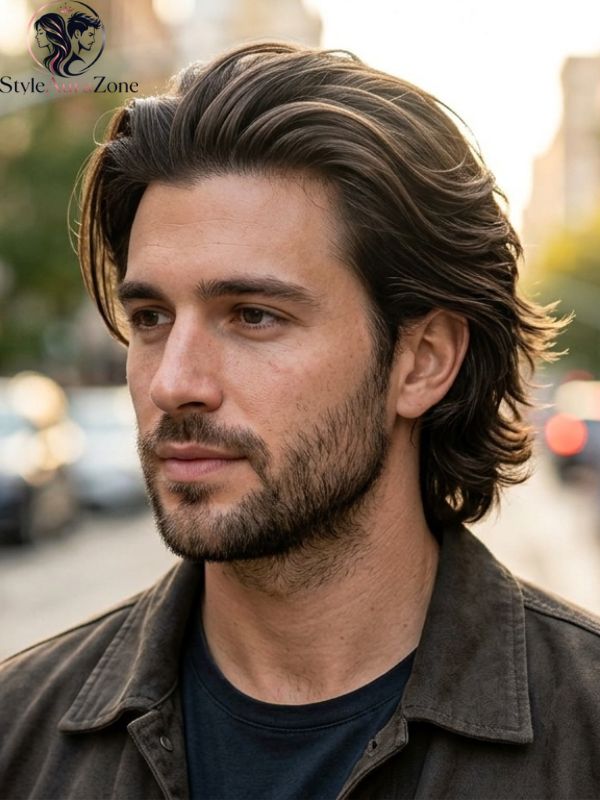
Extra length on top gets combed away from the forehead while a taper keeps the sides neat. It works in a boardroom and a bar. Smooth a little light pomade through damp hair, then comb back in one pass.
Textured Mullet Fade with Beard
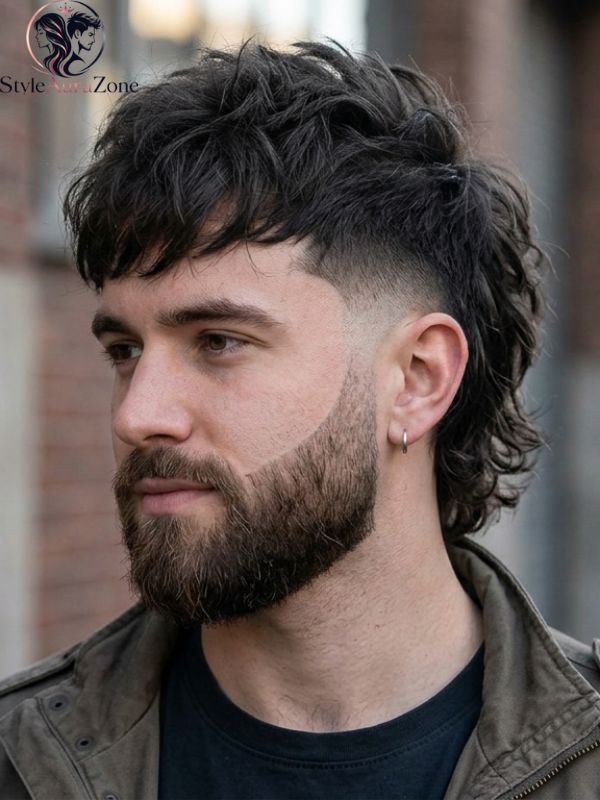
A skin-faded perimeter holds the shape tight while the crown carries texture and the back stretches long. The beard adds weight along the jaw. Use a pea-sized amount of cream so the layers stay separate.
Messy Brush Forward
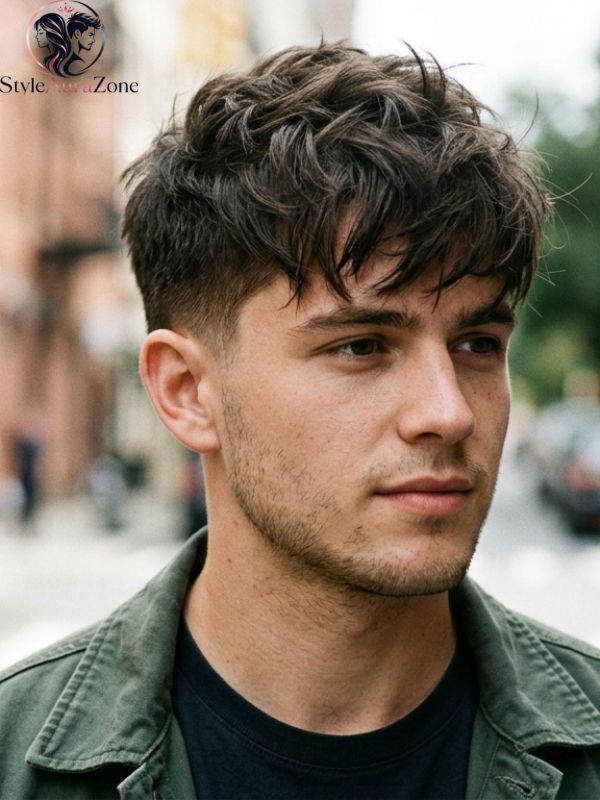
Razored layers nudge hair toward the forehead for an off-duty look. Straight to slightly wavy hair behaves best. Finger-style with a light wax and skip the comb so the pieces stay loose.
Faux Hawk Fade
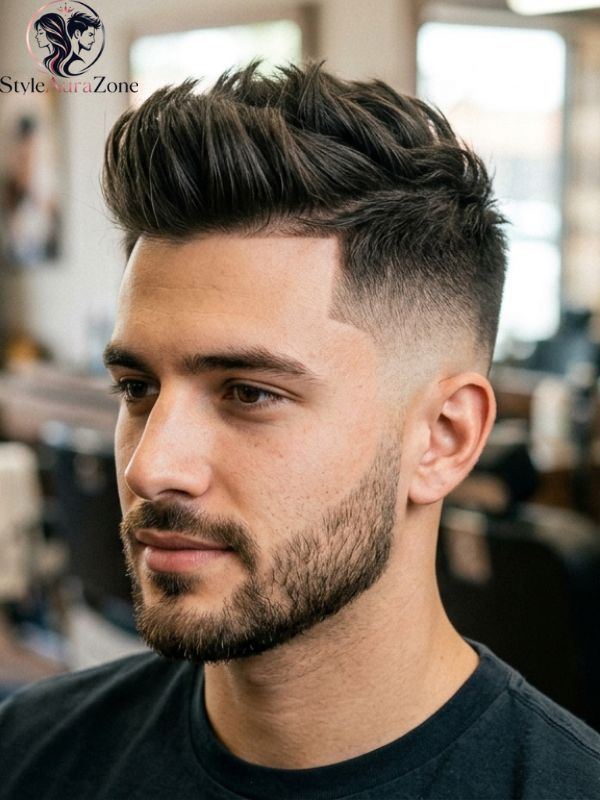
Longer hair through the center lifts into a soft ridge while faded sides tidy the outline. You get attitude without a full mohawk’s commitment. Push the center upward with your fingers and set it with clay.
Long Parted Flow

A parted top sweeps across the face while the sides taper neatly. Extra height near the part visually lengthens rounder faces. Thin the crown with texturizing shears to avoid a boxy shape. Blow-dry with lift at the root.
Long Shaggy Hair

Feathered, razor-cut ends build a carefree, rock-inspired shape without extra bulk. Layers do the heavy lifting here. Dab on texture paste to define strands, or skip product entirely on days you’d rather coast.
Longer Spiked Hair Fade
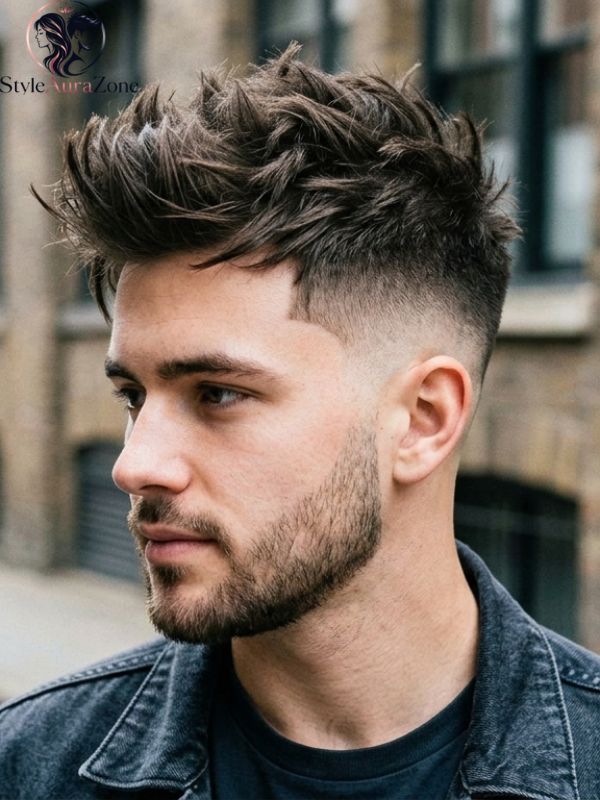
A controlled fade frames the face and keeps the sides quiet, leaving the top free for upward spikes. Slice-cut layers add lift without weight. Finger-tousle the spikes for a softer weekend version.
Flowing Mullet
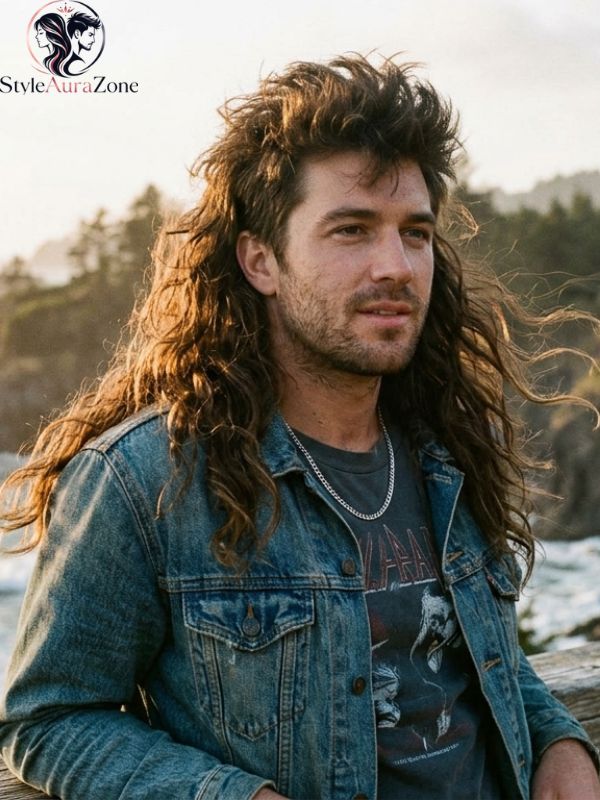
Point-cut layers blend the top into a longer back so everything glides together. Think retro idea, modern wardrobe. Rub a little light cream through the ends to tame the tail.
Long Quiff
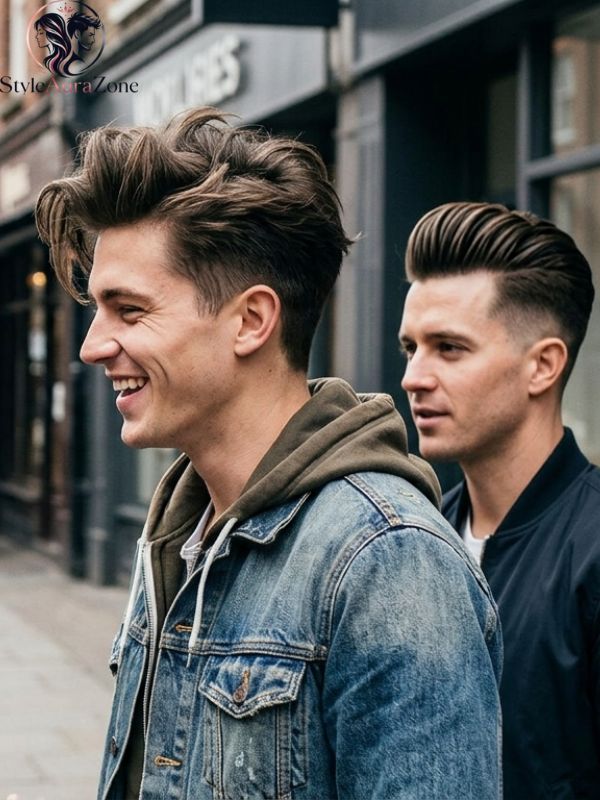
The front lifts and curves back, then settles gradually toward the crown. A fade or undercut at the sides sharpens the contrast. Blow-dry upward, then shape with medium-hold pomade. Frequent trims keep the peak from slumping.
Comb Over
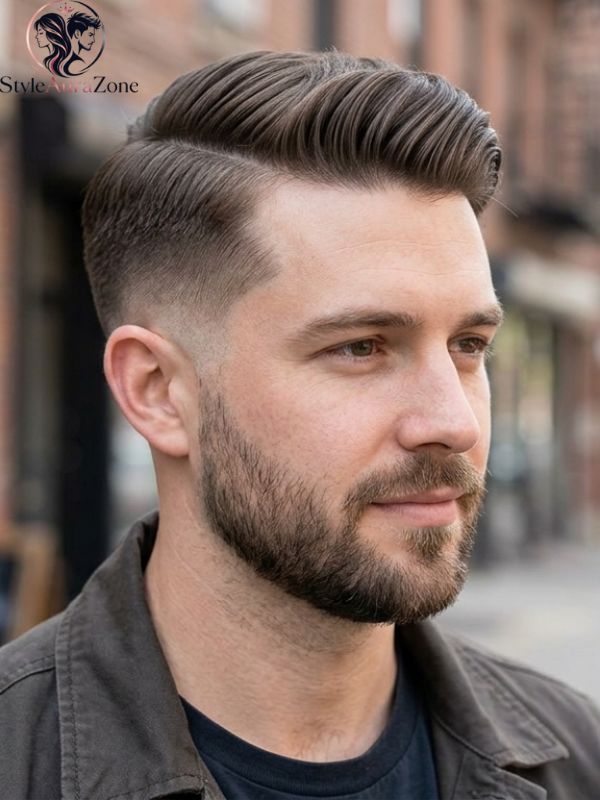
A neat part and a longer top swept across make this a workplace staple. Tapered sides add contrast. Choose a crisp, defined part for the office. A softer, natural line suits weekends.
Curly Curtains
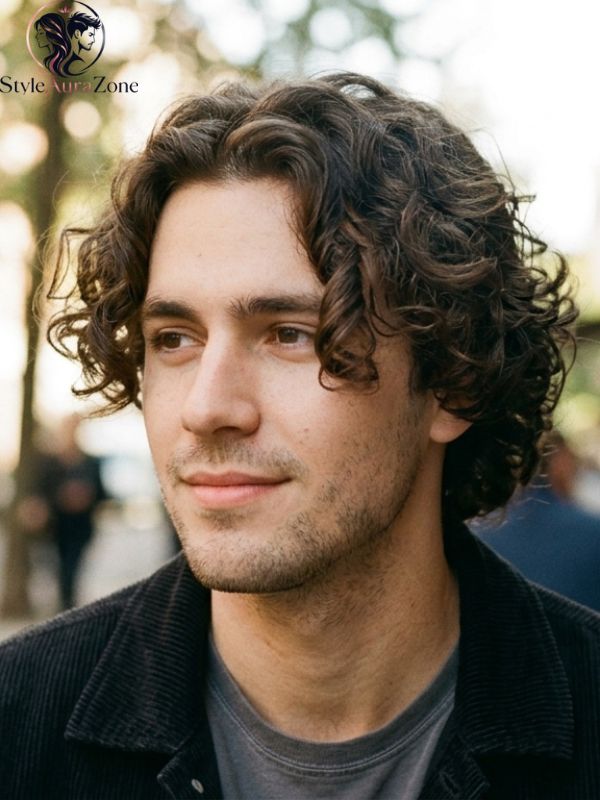
A side or center part lets curls fall in springy drapes on either side of the face. Subtle highlights can define individual coils. Apply curl cream, then diffuse. A full beard balances the volume up top.
Medium, Flowing Waves
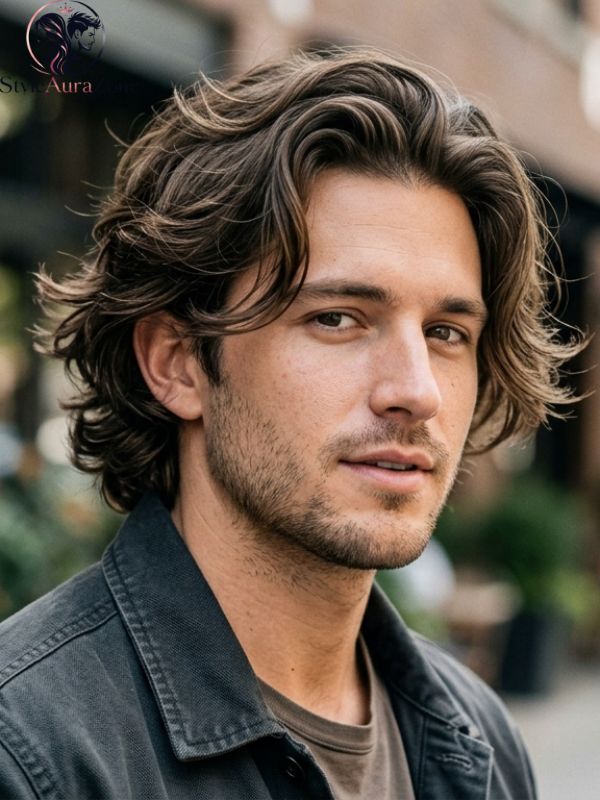
Waves roll back from the forehead and cascade over the sides in thick, layered ribbons. Rugged and soft share the same shape. Mist with sea salt spray, scrunch once, and leave it alone to dry.
Two Block
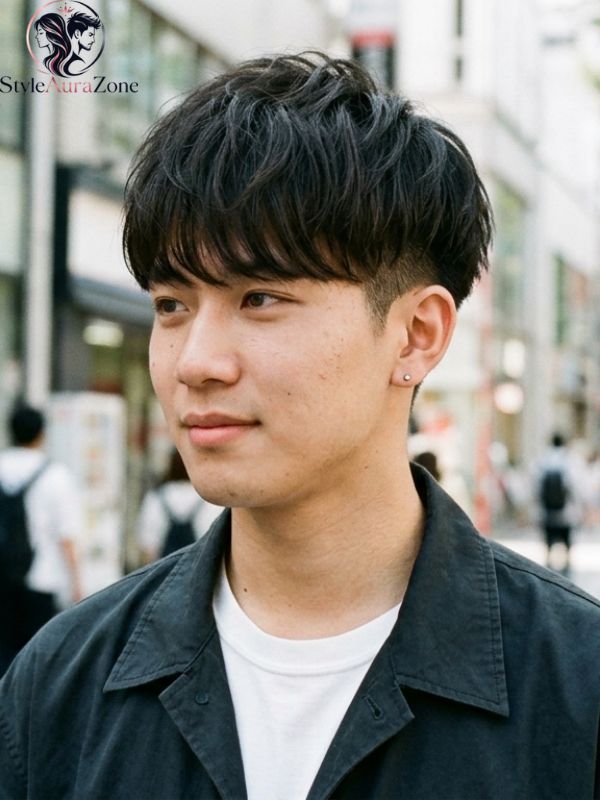
Short or faded sides and back sit beneath a much longer top section. Two distinct blocks of hair create the name. Popular in Korea, the cut brings a youthful punch. Style the top with texture paste and rake it forward.
Mohawk Fade
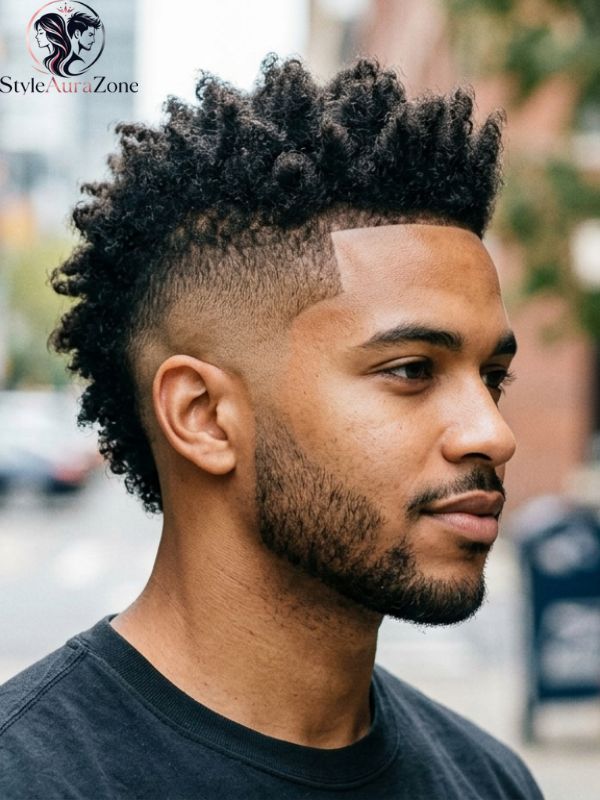
A swept fringe flows into soft spikes down the center while burst-faded sides frame the shape. It whispers rebellion yet still passes at a wedding. Shape the center with clay and keep the fade fresh.
Pulled Waves
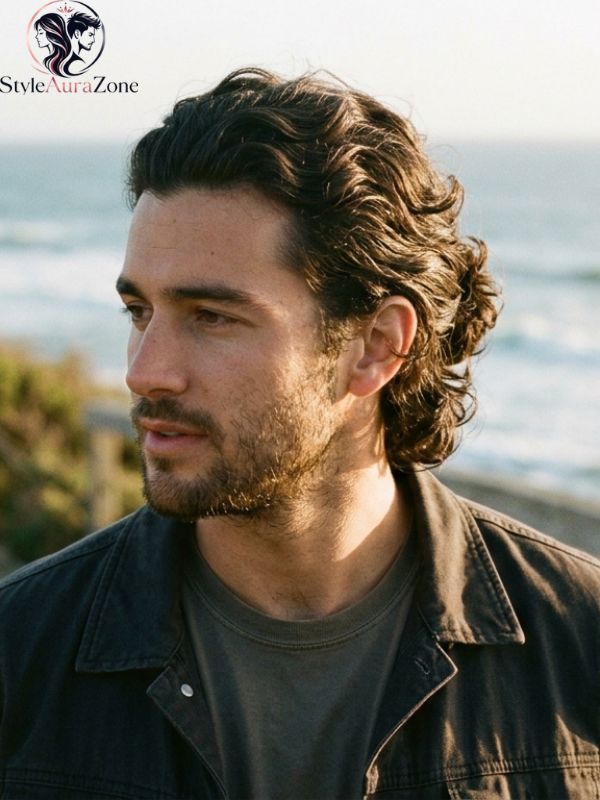
Hair is brushed back and gently pulled into soft S-shaped waves with a loose side part. The 1950s influence stays subtle. Stubble or a clean shave both work. Set the finish with a light-shine cream.
Mod Shag
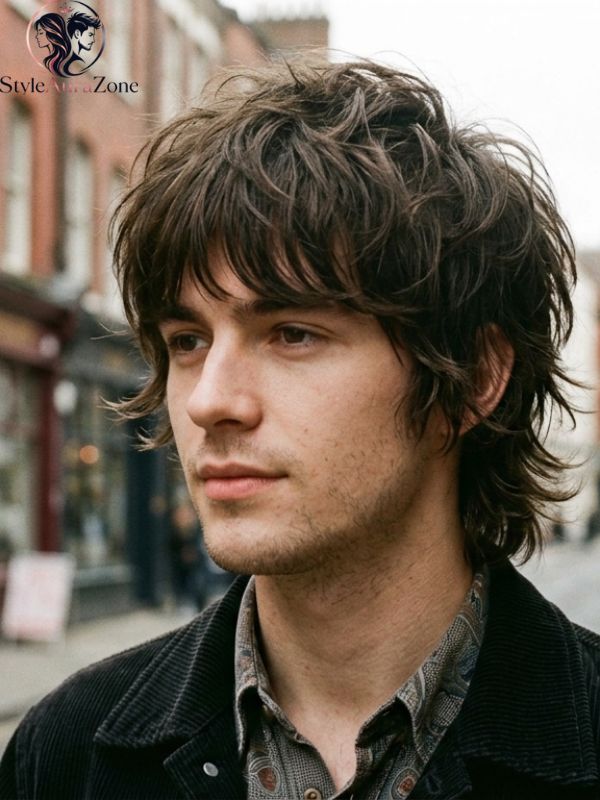
A thick fringe drops into mid-length sides and a slightly shorter back for a face-framing shape. Flat hair gains body, and angular features gain definition. Dry with a diffuser, then finish with texture powder.
Classic Push Back
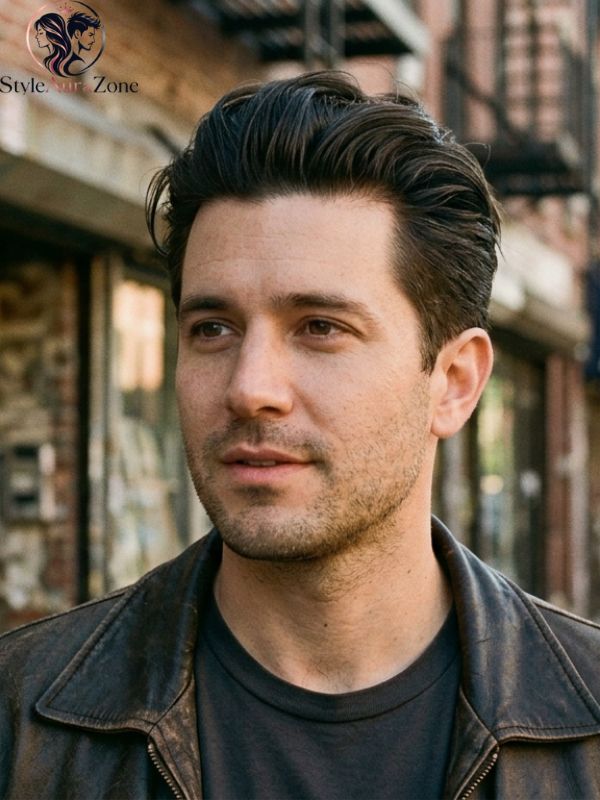
Hair sweeps back from a loose side part and blends into full, tapered layers around the sides and back. It looks tidy without feeling stiff. A medium-shine pomade adds polish while keeping strands flexible.
Wavy Middle Part
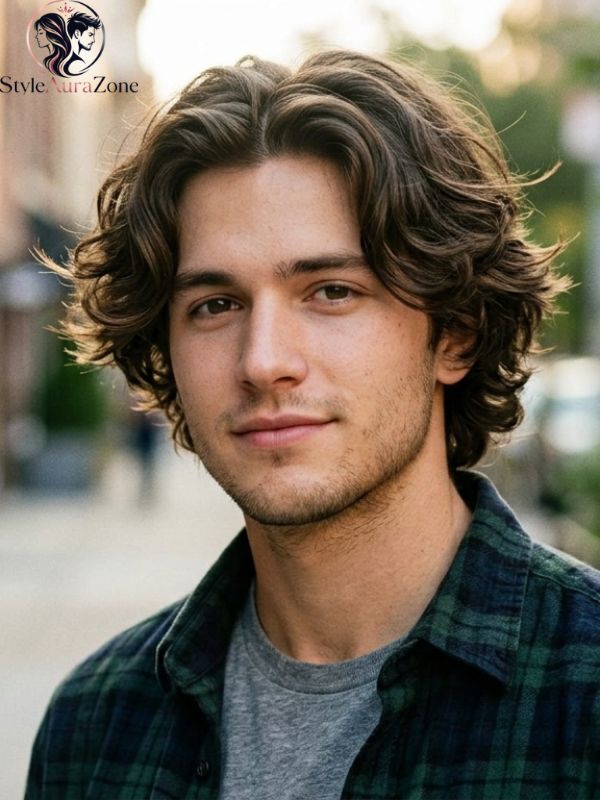
A center part and collar-grazing waves deliver a beachy, easygoing look. Soft layers stop the shape from turning triangular. Spray in sea salt, then scrunch as it dries to build texture.
Textured Comb Over Fade
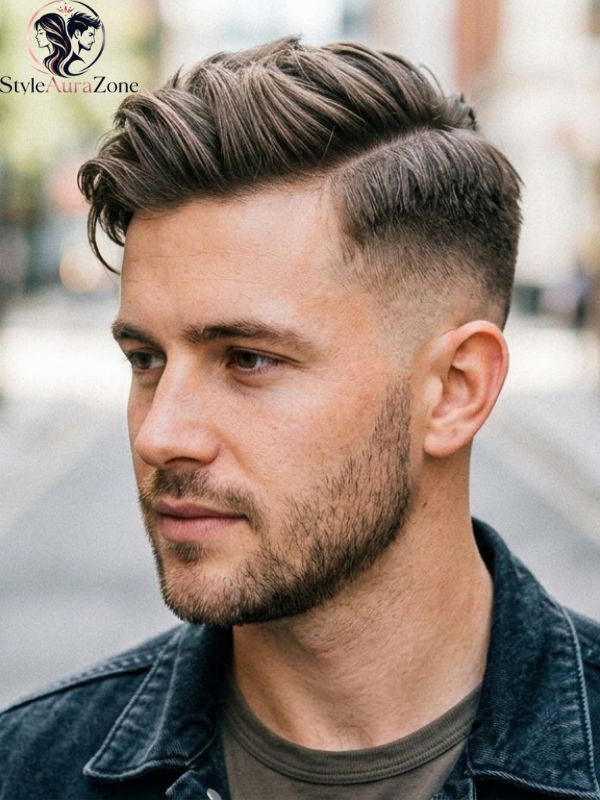
Tight faded sides meet a longer top combed across with a matte finish. It’s sharper than a shaggy cut and softer than a slick comb over. A wide-tooth comb and texture paste create natural separation.
Textured Flow Back
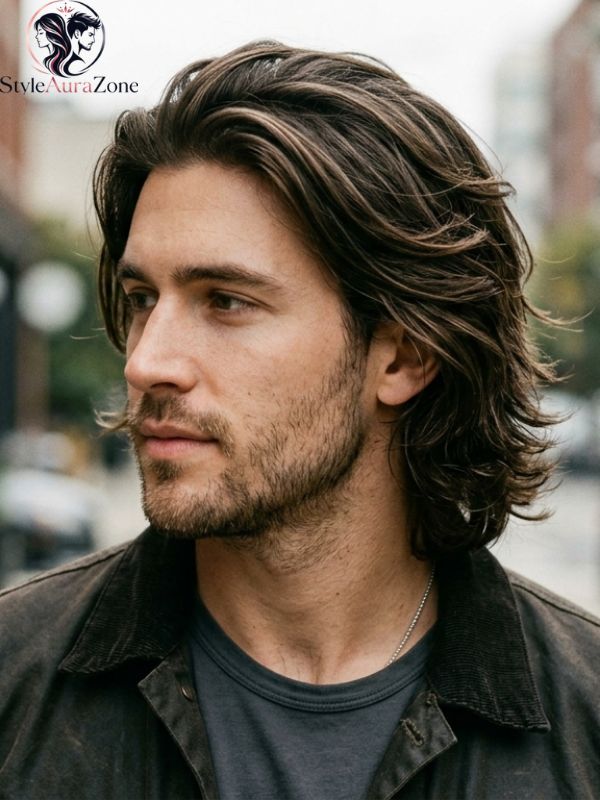
Thick hair rises off the forehead and rolls backward in a surf-like wave. A tapered undercut trims excess bulk. Rough-dry with your fingers pointed backward, then add matte clay for a casual finish.
Medium Curtains

A center part and a long fringe form curtains that frame the eyes. Sides and back keep enough thickness to look intentional. Let the hair air-dry, then tuck one side behind an ear.
Messy Two Block
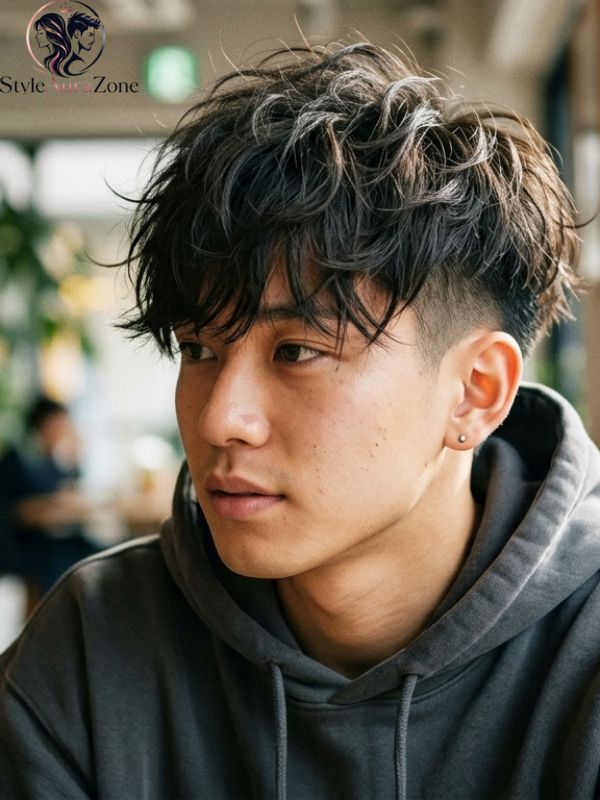
Layered waves get tousled on top above shorter sides for strong contrast. A texturizing pomade builds volume. Swap to cream and slick it back when a formal event appears.
Ponytail
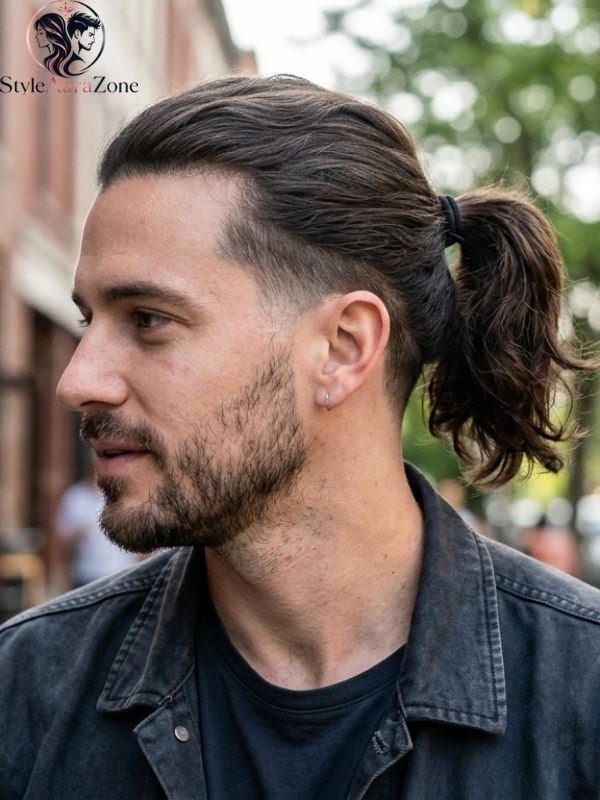
Hair gets pulled back and secured between the crown and the nape. A fade or undercut thins the sides and keeps the shape tidy. Choose a fabric-covered elastic to avoid snags, and loosen it at night.
Textured Quiff
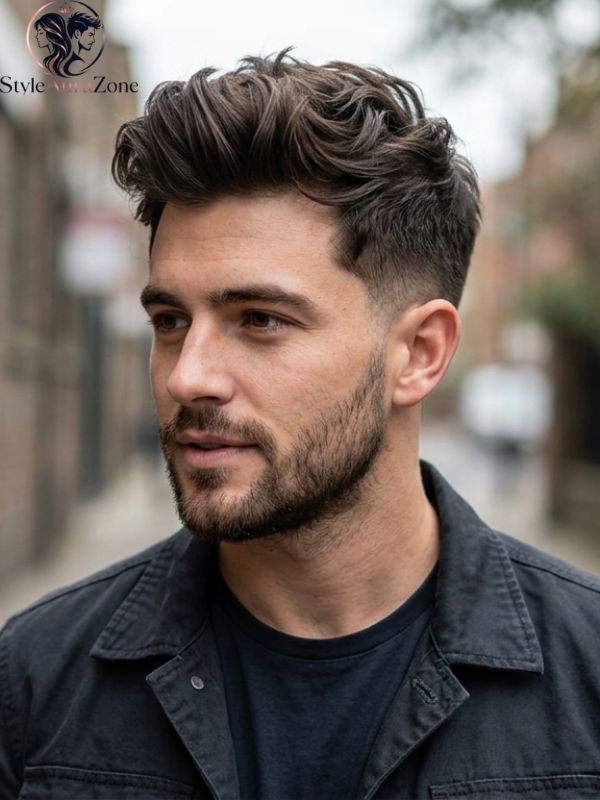
Choppy layers lift at the front into a tall, separated peak while short sides keep the balance. Blow-dry upward with a vent brush. Then rough it up with clay for a gravity-defying silhouette.
Afro Fade
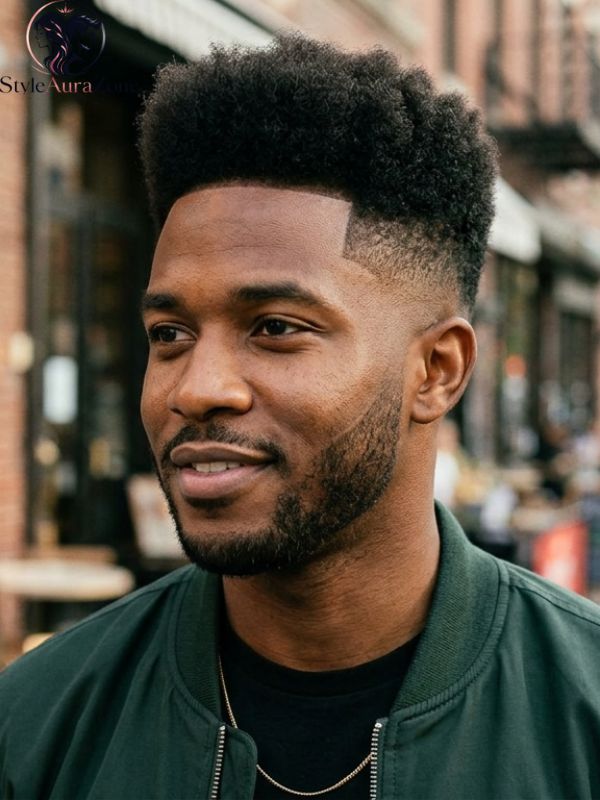
Dense curls rise into a rounded shape while a clean taper or fade neatens the edges. Shape the top with an afro pick and moisturize with a leave-in. A razor part or shaved design adds a personal signature.
What Is Medium-Length Hair?
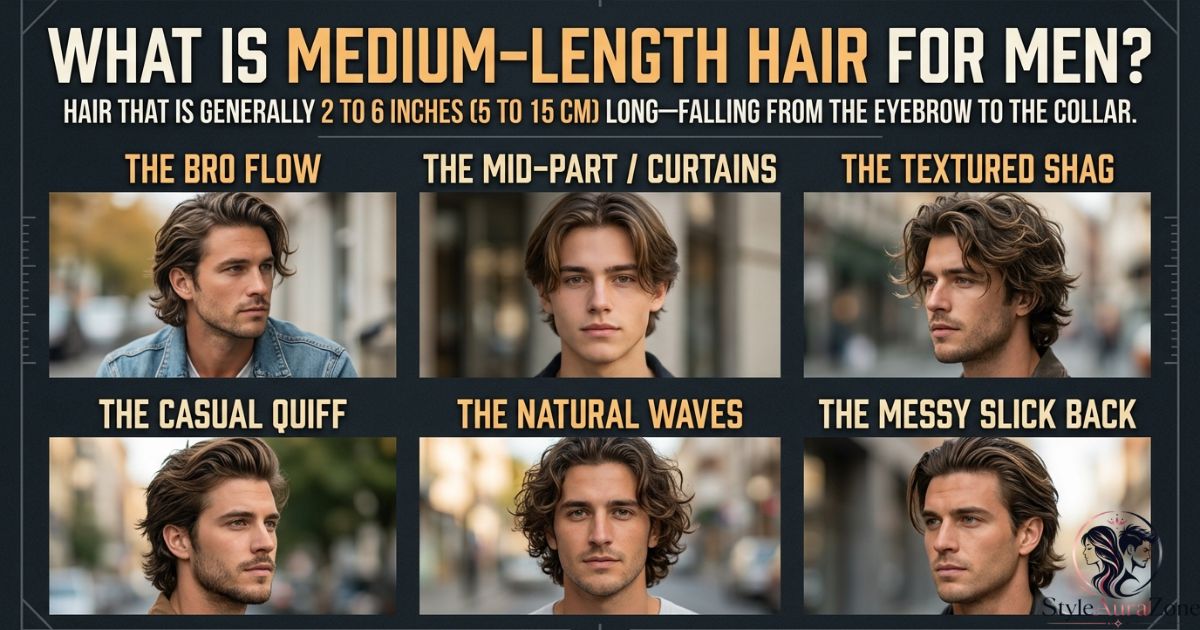
Medium-length hair for men usually measures about three to eight inches on top. At that length, your hair can move, part, and layer, but it doesn’t need to be tied back daily. Most cuts end somewhere between the ears and the collar.
At this length, shape matters more than clipper numbers. A skilled barber removes weight in specific spots, which is why layering and tapering carry so much weight in the final look.
Medium Length Vs Short & Long
The three categories overlap at the edges, but the table below shows where each one typically lands.
| Length | Approx. Top Length | Typical Cuts | Styling Freedom | Upkeep |
| Short | Under 3 inches | Buzz cut, crew cut, French crop | Limited | Lowest |
| Medium | 3 to 8 inches | Flow, quiff, shag, mullet, middle part | High | Moderate |
| Long | Past the shoulders | Man bun, long layers, loose waves | High, with more care | Highest |
Low-Maintenance Men’s Medium Hairstyles
Some cuts practically style themselves. The right layering lets hair fall into shape after a towel-dry, so you can skip the elaborate routine. Texture works in your favor here, because slightly messy hair hides imperfections better than a sleek finish.
| Style | Daily Effort | Product Needed | Best For |
| Medium Flow | Very low | Leave-in conditioner | Wavy or thick hair |
| Casual Flow | Very low | Light cream | Wavy hair |
| Middle Part | Low | Light cream | Straight to wavy hair |
| Messy and Layered | Low | Sea salt spray | Any texture |
| Textured Shag | Low | Texture spray | Fine or straight hair |
| Medium Curtains | Low | None to minimal | Straight to wavy hair |
When you book, ask for soft layers through the top and a light taper at the sides. That combination grows out evenly and keeps the shape balanced between appointments.
How To Style Medium Length Men’s Hair
A repeatable routine beats a complicated one. Follow these steps.
- Wash with a gentle shampoo, then condition the ends.
- Towel-dry until the hair is damp, not dripping.
- Mist a heat protectant or sea salt spray through the roots and mid-lengths.
- Dry with a vent or round brush, lifting at the roots and smoothing the lengths.
- Warm a pea-sized amount of clay, paste, or cream between your palms.
- Work it through from root to tip, using your fingers to define pieces.
- Shape the direction. Push back for a brush-back, sweep sideways for a part, or scrunch for waves.
- Finish with a light hairspray, or refresh on day two with dry shampoo at the roots.
The Best Styling Products That Work Well With Men’s Medium Hair
Medium hair needs enough product to hold a shape and little enough to keep moving. The table below shows how the main options compare.
| Product | Hold | Finish | Best For |
| Matte clay | Medium to high | Matte | Layered cuts, brush backs, quiffs |
| Styling cream | Light | Natural | Flows, curtains, waves |
| Sea salt spray | Light | Textured | Fine hair, beach waves |
| Curl cream | Light to medium | Soft | Curls and coils |
| Water-based pomade | Medium | Shiny | Pompadours, comb overs |
| Heavy pomade or gel | High | Glossy | Rarely needed at this length |
A matte hair clay is the strongest starting point.
Matte clay grips layers, adds separation, and still lets the hair bend. It suits brush backs, quiffs, textured slick backs, and shags. Use a pea-sized amount and warm it fully before applying.
A Light Styling Cream Is Perfect For Loose Looks That Need Movement
Dry, coarse, or wavy hair often needs softness before it needs hold. A light cream smooths the surface and leaves the strands free. Curly hair does better with a curl cream, while fine hair benefits from sea salt spray for lift.
What To Avoid: Heavy Pomades and Sticky Gels
Extreme hold flattens texture and glues layers together. Medium hair looks best when it shifts as you move. If your style feels frozen by midday, cut the amount in half before blaming the haircut.
How To Ask Your Barber For A Medium-Length Cut
Short cuts come with guard numbers. Medium cuts don’t, so vague requests lead to surprises. A clear conversation protects your length and gets you the shape you pictured.
What Every Barber Needs From You
Cover these four points before the cape goes on:
- Top length: Give a measurement, such as “about three inches left on top.”
- Side treatment: Say whether you want a fade, a taper, scissor-cut sides, or matching length.
- Layering depth: Choose light layers for fullness or heavier layers for movement.
- Fringe direction: Forward, side-swept, brushed back, or parted.
Stop Saying “A Trim”
The word “trim” means different things to different barbers. Replace it with specifics.
| Instead Of Saying | Say This |
| “Just a trim” | “Take half an inch off the top and keep the shape.” |
| “Leave it longer” | “Keep three inches on top and clean up the neckline.” |
| “Make it shorter on the sides” | “Taper the sides to a number 3 and blend into the top.” |
| “Give me some layers” | “Add light layers through the top using point-cutting.” |
Talk About Layering Specifically
Layers separate a flat, boxy cut from one with real movement. Fine hair needs lighter layering to protect fullness. Thick hair needs deeper layering and thinning to remove bulk. Name the depth you want and the technique if you know it, such as point-cutting or razor texturing.
Bring Two Reference Photos, Not One
A front view doesn’t show the back shape, and medium cuts depend on both. Bring one photo of the front and one of the side or back. Choose models whose hair texture resembles yours, because a style that works on thick waves may fall flat on fine, straight hair.
Tell Your Barber If You’re Growing It Out
A grow-out cut aims at a future shape, not the present length. Say so at the start. Your barber can then shape each visit toward the target, instead of trimming everything evenly.
The Conversation About Face-Framing Layers
Where the layers land changes how the face looks. Layers near the cheekbones can slim a wider face. Layers at the jawline can soften a narrow one. Tell your barber which features you’d like to highlight or play down.
How To Grow Your Hair From Short To Medium Length
Most men reach medium length by growing out a shorter cut. Hair grows about half an inch a month, or roughly six inches a year, according to the.Genetics, age, and health shift that pace a bit. For most men, a one-to-two-inch cut becomes a workable medium length in about 8 to 12 months.
The Realistic Month-By-Month Timeline
This timeline assumes you start with about one inch on top and grow at the average rate.
| Month | Approx. Top Length | What to Expect |
| 2 | 2 inches | Looks like a longer short cut. Easy to manage. |
| 4 | 3 inches | Hair starts to lie down. Awkward phase begins. |
| 6 | 4 inches | Peak awkwardness. Too long to spike, too short to flow. |
| 8 | 5 inches | Flows, side parts, and quiffs become possible. |
| 10 | 6 inches | Full medium length. Most styles are available. |
| 12 | 7 inches | Mullets, wolf cuts, and tied-back styles come within reach. |
How to Manage the Awkward Phase
The middle months test your patience. Three habits help:
- Keep the sides tighter than the top. A low taper or fade gives structure while the top grows.
- Visit the barber every four to six weeks. Shaping the grow-out keeps it looking intentional.
- Start a matte clay or paste around month three. Product adds control when hair can’t stand or flow on its own.
Styling Tricks During the Transition
- Sweep the hair to one side with a hard part to hide uneven lengths.
- Add sea salt spray for texture that transitional hair lacks.
- Use a round brush and dryer to direct the hair from about month four.
- Wear a hat on bad days without guilt.
Common Grow-Out Target Styles by Month
| Target Style | Earliest Realistic Month |
| Comb Over | Month 4 to 5 |
| Long Side Part | Month 5 to 6 |
| Textured Quiff | Month 5 to 6 |
| Medium Flow | Month 7 to 8 |
| Middle Part | Month 8 |
| Textured Slick Back | Month 8 to 9 |
| Wolf Cut or Modern Mullet | Month 10 to 12 |
| Man Bun or Ponytail | Month 12 and beyond |
Pick a Target Style Before You Start
Growing hair without a goal leads to quitting around month five, when the cut looks like nothing in particular. Choose a style on day one and save the reference photo. Show it at every appointment so each cut moves you closer.
How Often To Get A Haircut
Waiting too long doesn’t make a medium cut longer. It makes it shapeless. Match your visits to the style you wear.
Cut Cadence by Style
| Style Type | Examples | Visit Frequency |
| Faded sides, longer top | Mohawk Fade, Two Block, Faux Hawk Fade | Every 2 to 3 weeks for the fade, full trim every 6 to 8 weeks |
| Tapered sides, longer top | Comb Over, Long Side Part, Long Brush Back | Every 4 to 5 weeks |
| Uniform medium length | Medium Flow, Middle Part, Textured Shag | Every 6 to 8 weeks |
| Shoulder-length and loose | Long Shaggy Hair, Shoulder Length and Loose | Every 8 to 12 weeks |
| Tied-back styles | Man Bun, Ponytail | Every 10 to 14 weeks |
Touch-Up Versus Full Reset
A touch-up cleans the neckline, sideburns, and fade without removing length. A full reset reshapes the layers and takes off real inches. Tell your barber which one you want when you book. Faded styles lean on touch-ups. Flowing styles lean on resets.
Caring For Medium-Length Hair In The Long-Term
Medium hair has more surface area exposed to heat, friction, and sweat than short hair. Damage adds up quietly. A few extra minutes of care each day keep the ends smooth and the shape intact.
Heat Protection Is Non-Negotiable
Mist a heat protectant onto damp hair before any blow-dryer, round brush, or flat iron. Skipping this step rarely shows up right away. Dull, brittle ends appear a few months later and refuse to hold a shape.
The Pillowcase Question
Cotton roughens the hair’s outer layer overnight, which shows up as frizz by morning. A satin or silk pillowcase cuts down on friction. It costs very little and makes a visible difference.
Sweat Management for Active Guys
Sweat and salt dry out longer hair. After a workout, rinse with water and condition the ends. Avoid daily shampooing, which strips natural oils. Tie longer lengths back during heavy cardio.
Product Buildup
Clay, paste, and cream cling to medium hair. Use a clarifying shampoo about once a week to reset it. Without that, hair feels heavy and looks flat even right after washing.
Trim Cadence Is Part of Care, Not Just Style
Regular trims remove split ends before they travel up the strand. Trimming does not make hair grow faster, as dermatologist Dr. Hadley King notes in the.It does keep the length healthy so you lose less to breakage.
Conditioning Routine
Condition from mid-length to ends after every wash and skip the roots. Add a weekly mask for ten minutes. Dry, wavy, and curly hair benefit the most.
Sun Protection
Long hours in strong sun can dry out hair and fade color. A hat or a leave-in product with UV filters helps on high-exposure days.
Common Mistakes Men Make With Medium-Length Hair
Most medium-length problems start between haircuts, not in the chair. Here’s what to watch for.
Skipping Layers When Getting Cut
Medium hair without layers sits in a heavy block. Ask for layering and name the depth that fits your hair type.
Using Too Much Product
A pea-sized amount covers most cuts. Extra product flattens texture and leaves residue. Start small and add only if needed.
Letting the Cut Grow Too Long Between Visits
Overdue hair loses its outline. Stick to your style’s cadence so you never need a rescue appointment.
Wrong Product for the Texture
Heavy pomade flattens fine hair. Sea salt spray can make dry, coarse hair feel like straw. Match the product to your texture first and your style second.
Skipping Heat Protectant
Daily blow-drying without protection roughens the ends over time. One quick spray before the dryer prevents most of that damage.
Cotton Pillowcase Friction
Nightly friction builds frizz that styling can’t fully hide. A satin or silk case fixes the cause instead of covering the symptom.
Not Adjusting the Part as the Hair Grows
A part that worked at three inches may look off at five. Ask your barber to reposition it at each visit, since the part controls how the whole cut frames your face.
Trying to Fix a Bad Cut at Home
Home repairs on layered hair usually create uneven patches that take months to grow out. Book a corrective visit with a professional instead.
FAQ’S
How long is medium-length hair for men?
Medium-length hair is generally three to eight inches on top. It usually falls somewhere between the ears and the collar.
How long does it take to grow medium-length hair?
Most men need 8 to 12 months, since hair grows about half an inch per month. Starting length and genetics change the timeline.
How often should men get a medium-length haircut?
Every four to six weeks suits most styles. Faded cuts need touch-ups every two to three weeks.
What is the best medium-length hairstyle for thick hair?
Layered cuts that remove weight work best. Try a textured slick back, feathered wings, or a textured flow back.
What products work best for medium-length men’s hair?
Matte clay is the best starting point for most men. Add sea salt spray for lift or a light cream for softness.
Final Thoughts
Medium-length hair rewards men who match the cut to their texture, face shape, and schedule. Whether you choose a quiet middle part or a bold burst fade mohawk, layering and a clean perimeter do most of the work. Pick the style that suits your routine, not just the photo.
Start with a clear target, show your barber two reference photos, and keep a steady trim schedule. Add a heat protectant, a satin pillowcase, and a light hand with product. Stay consistent with those habits and any of these 47 trending looks will stay sharp long after the first week.