
A textured fringe with low taper fade gives you loose, lived-in hair on top and tidy sides that melt away near the ears. It looks sharp without looking fussy. Barbers book it daily for good reason: it flatters most faces, handles most hair types, and takes about two minutes to style.
This guide walks you through what the cut really is, who should wear it, and how to match it to your face shape and hair type. You’ll also get a barber script, a home styling routine, product picks, and a realistic trim schedule to help you leave the chair happy every time.
What a textured fringe with low taper fade actually is
A textured fringe with low taper fade is a haircut with longer, choppy hair that falls toward the forehead, paired with sides and a back that shorten gradually from just above the ear down to the neckline. The top carries the personality. The sides stay clean without drawing attention.
Two separate techniques make up the cut. The fringe is the front section of the top. A barber breaks up its weight with point cutting, a razor, or texturizing shears so the ends sit uneven and move on their own.
The low taper handles the perimeter. Clippers step down through shorter guards around the ears and nape, so the blend starts low and stays subtle. It leaves a soft shadow instead of a hard line.
| Term | What it means | How it differs |
| Textured fringe | Choppy, forward-falling top | Looks undone on purpose, unlike a blunt or slicked style |
| Low taper | Gradual shortening near ears and neckline | Keeps more hair than a fade |
| Low fade | Blend that reaches skin low on the head | Shows more scalp at the edges |
| French crop | Short, blunt fringe on a taper or fade | Sits higher and cleaner on the forehead |
Many barbers use “taper” and “fade” interchangeably. If you want skin showing at the neckline, say so. Otherwise ask for a taper that keeps a little hair.
Why the cut is everywhere in 2026
Men’s grooming has moved toward cuts that look effortless. Heavy gel, wet-look shine, and razor-hard lines feel dated now. Matte finishes and softer blends have taken over, and this cut sits right in that lane.
Social media played a part too. Short videos make textured tops look great from every angle, and barbers keep getting the same reference photo. Clients want movement, not helmet hair.
Practical reasons matter more. A low taper grows out gracefully, so you don’t look overdue after ten days like you might with a high skin fade. The routine is also short: damp hair, a pea of product, and your fingers.
Finally, the cut moves between settings without effort. It reads fine in an office, a classroom, or a Saturday night out.
Who it suits
This cut fits more men than almost any other style, but a few situations make it a standout choice.
- You want a modern look without a long morning routine.
- You prefer volume on top and slim sides.
- You feel nervous about high fades that expose a lot of scalp.
- You need one haircut that works for work and weekends.
It also suits teens, students, and men in their 40s and 50s who want a refresh without a dramatic change. Barbers often steer hairlines that are receding at the temples toward a slightly longer, forward-swept fringe, since it softens the corners.
Some hair needs adjustments. Very tight coils behave differently in a fringe, and very fine strands can’t carry heavy layering. Both are covered in the hair type section below.
Best face shapes
Fringe length, top volume, and taper height all shift how the cut frames your face. Small changes make a big difference.
| Face shape | Fringe length | Top volume | Taper tweak |
| Oval | Short to long all work | Flexible | Standard low taper |
| Round | Slightly longer | Lift at the roots for height | Keep sides slim and tight |
| Square | Softer, relaxed edge | Moderate | Go a touch lower if the jaw is wide |
| Oblong | Medium, worn forward | Keep it low | Blend slightly higher for width |
| Heart | Medium, pushed forward | Light at the crown | Keep the taper low and clean |
| Diamond | Side-swept or medium | Moderate | Leave a bit more length at the sides |
Not sure of your shape? Pull your hair back, look straight into a mirror, and compare the width of your forehead, cheekbones, and jaw. The widest of the three usually tells you where you land.
Best hair types
The textured top works on every hair type, but the technique changes. Here’s what to tell your barber for each.
Straight hair
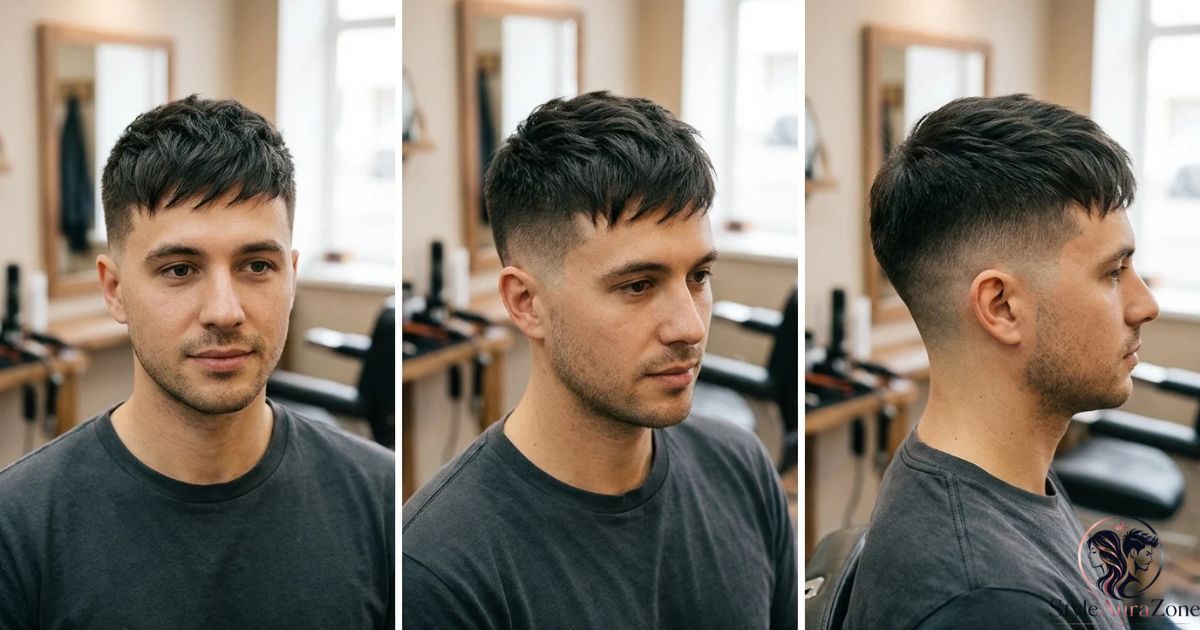
Straight hair takes texture beautifully. Point cutting separates the ends so the fringe falls in loose pieces instead of one flat sheet. Because straight hair lacks natural lift, a light spray or a few seconds with a blow dryer goes a long way.
Wavy hair
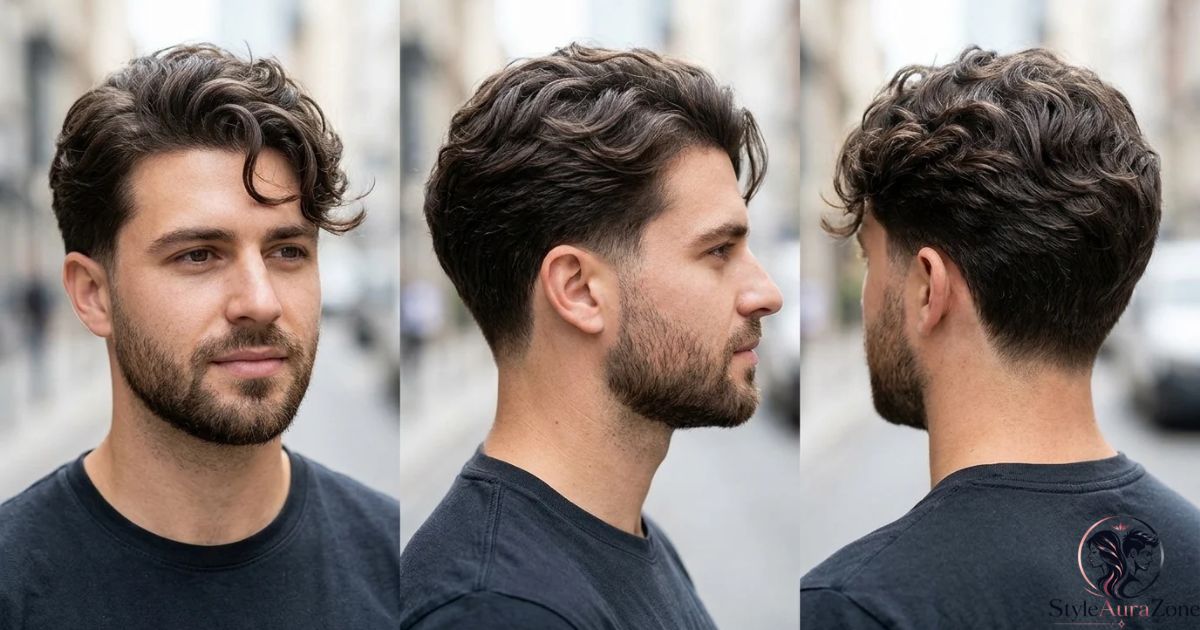
Wavy hair is the easiest match. The bend gives you movement before you touch a product. Your barber mostly removes bulk so the waves don’t stack, which means you can often air dry and go.
Thick hair
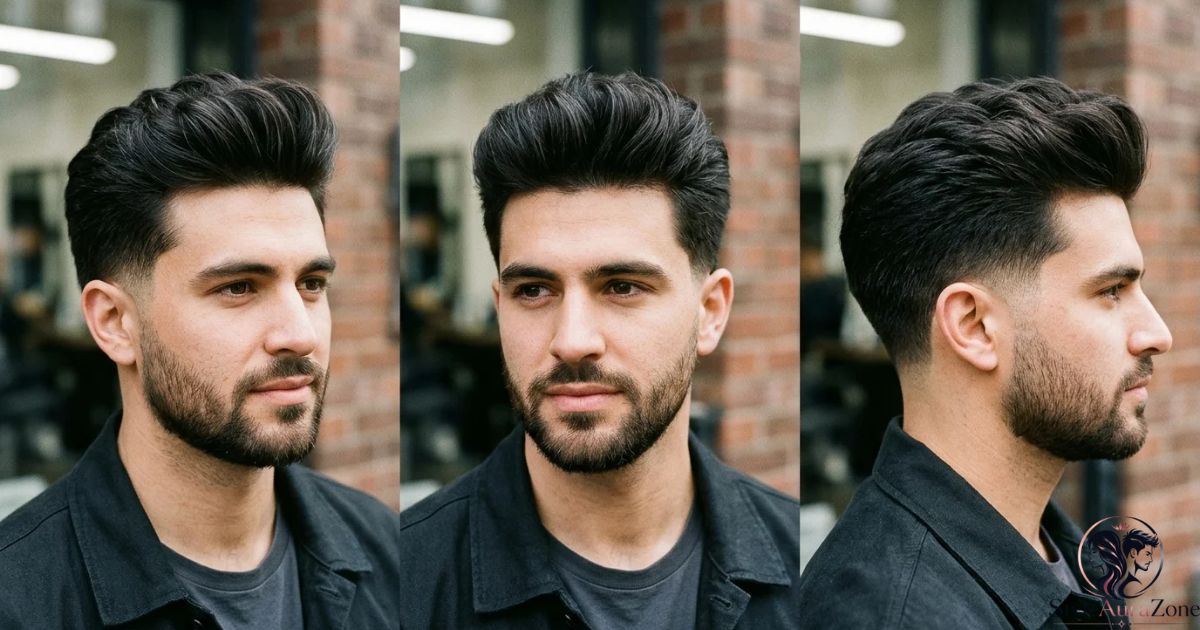
Thick hair looks full with this cut, though the bulk can sit heavy. Ask your barber to carve out weight through the top with texturizing shears. The fringe then lifts and moves instead of standing stiff.
Fine or thin hair
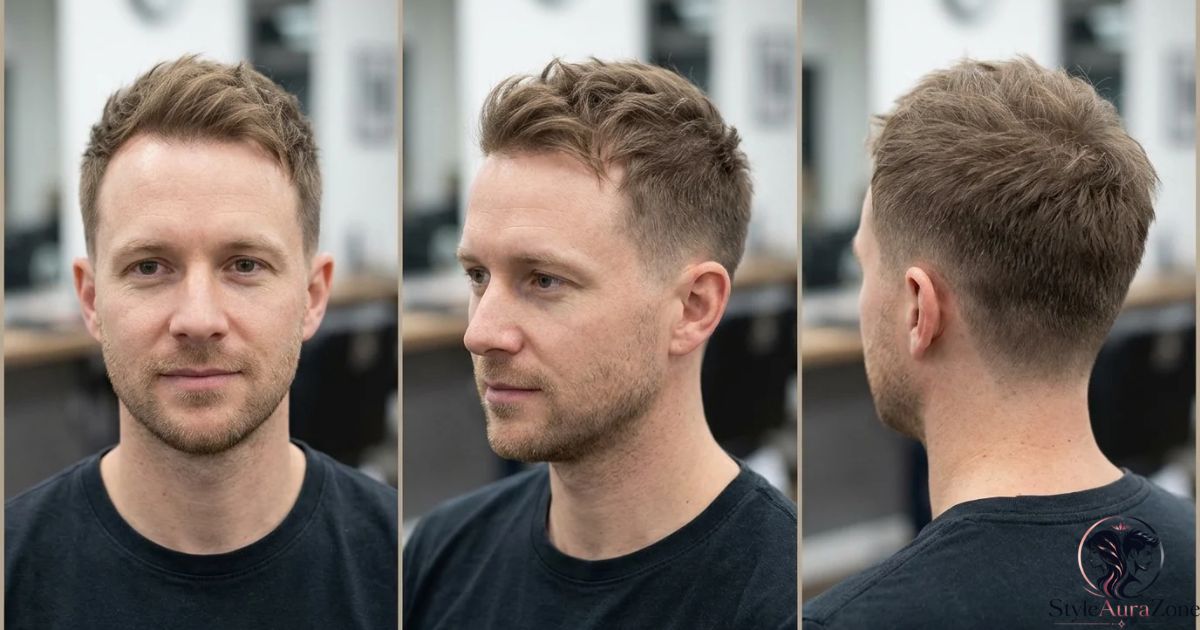
Fine hair needs a lighter touch. Too much texturizing leaves it looking sparse, so ask your barber to keep weight at the front. A pinch of texture powder at the roots adds grip and fakes density without making it heavy.
Curly hair
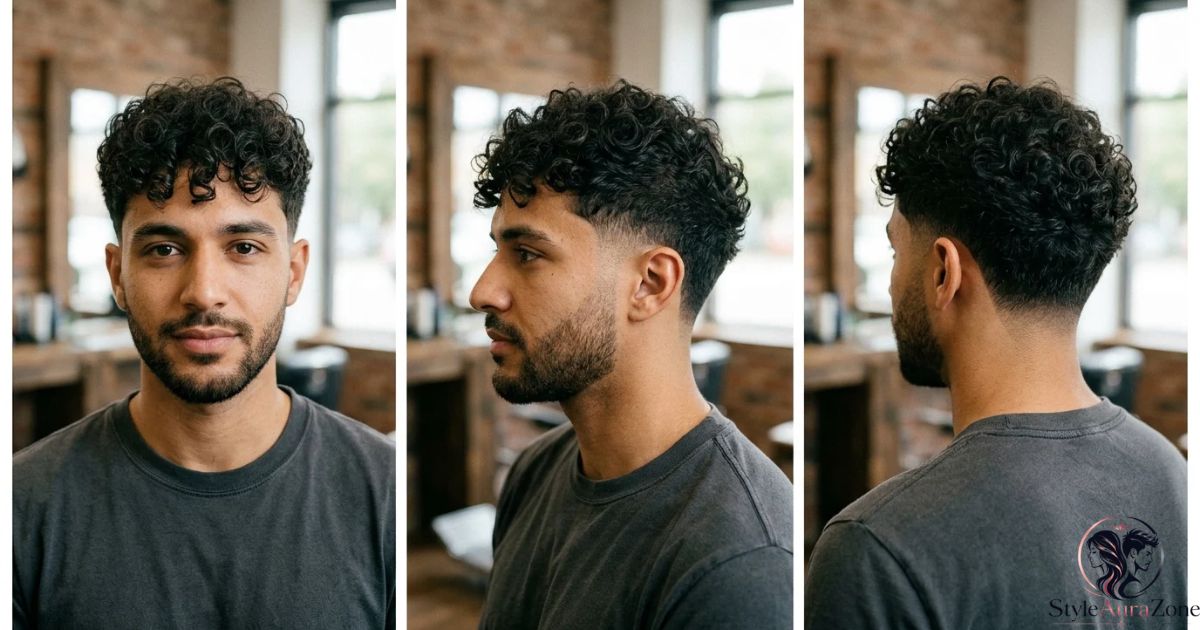
Curls shrink as they dry, so your barber should cut the fringe longer than your target. Request a dry cut or at least a dry check before finishing. Define the curls with a cream and let them settle naturally instead of brushing them out.
| Hair type | Barber’s focus | Product pick |
| Straight | Point cutting for separation | Sea salt spray or matte paste |
| Wavy | Bulk removal | Light cream |
| Thick | Weight removal | Matte clay |
| Fine or thin | Keep front weight | Texture powder |
| Curly | Cut longer, finish dry | Curl cream |
The main variations
Fringe length, edge shape, and how much skin shows at the neckline create very different looks from the same base cut.
| Variation | Top length | Best for |
| Short textured fringe | 1.5 to 2.5 inches | Active lifestyles and warm climates |
| Medium textured fringe | 2.5 to 3.5 inches | Most face shapes and hair types |
| Messy long fringe | 3.5 to 5 inches | Wavy or thick hair, casual style |
| Blunt-edge textured fringe | 2 to 3 inches | Straight hair, structured look |
| Skin low taper | Any length on top | Sharper contrast at the sides |
| Side-swept fringe | 3 to 4 inches | Receding temples, polished finish |
If you want the sides to curve around the ear instead of dropping straight, ask about a burst fade. A drop fade follows the line behind the ear. Both pair easily with the same top.
Read more:Low drop fade: styles, hair types, barber guide & upkeep
How to ask your barber
A clear brief beats a vague one. Barbers hear “textured” and “low fade” so often that they can fill in the blanks wrongly if you don’t spell things out.
Follow this order:
- Describe the top. Give a length, such as “about two inches in front, sitting above the eyebrows.”
- Name the technique. Ask them to point cut or razor the fringe rather than thin it out.
- Set the taper height. Say “low taper, starting near the ear and neckline.”
- Decide on skin. Choose a skin taper or a shadow taper with a bit of length left.
- Show photos. Bring front and side angles, and say what you like about them.
You can say it word for word:
“Low taper on the sides and back, starting near the ear. Leave about two inches on top, point cut the fringe so it moves, and keep the front just above my eyebrows. No blunt line.”
| You say | The barber may hear | Say this instead |
| “Low fade” | Blend to skin | “Low taper, not a skin fade” |
| “Just textured” | Heavy thinning | “Point cut the top for movement” |
| “A bit shorter” | Unclear amount | “Two inches on top” |
Ask about clipper guards too. A low taper often runs from a #1 or #2 at the shortest point up to a #3 or #4, though the numbers vary by barber and hair type.
How to style it at home
This cut was built for speed. You’re coaxing the hair, not forcing it.
- Start damp. Towel dry until the hair holds a little moisture. Soaking wet hair dilutes product, and bone-dry hair turns frizzy.
- Prep for lift. Mist sea salt spray at the roots if your hair lies flat.
- Warm a small amount of product. A pea-sized scoop of matte clay is plenty. Rub it between your palms until it disappears.
- Work it from back to front. Run your fingers through the crown first and finish at the fringe, so the front gets the least.
- Shape with your fingers. Push the fringe forward or to the side. Pinch a few pieces for separation.
- Dry if needed. Use a blow dryer on low heat for about a minute while lifting at the roots.
Skip combs. They flatten the exact dimension you paid for. If the result looks shiny or sculpted, you’ve used too much product. Rinse and start over with half the amount.
Best products
You don’t need a crowded shelf. One finishing product plus one prep product handles nearly everything.
| Product | Best for | Finish | Note |
| Sea salt spray | Straight and wavy hair | Rough, matte | Go light on fine hair |
| Matte clay | Thick and medium hair | Dry, flexible hold | Warm well before applying |
| Texture powder | Fine or thin hair | Lifted, airy | Apply at the roots |
| Light styling cream | Wavy hair | Soft, natural | Minimal hold |
| Curl cream | Curly hair | Defined, soft | Apply to wet hair |
Avoid heavy gel, wet-look pomade, and anything glossy. Shine flattens texture and makes the fringe look thin. If you want a brand to start with, compare labels for “matte” and “medium hold” on the front of the container.
Maintenance and trim schedule
The sides and top run on different clocks. The low taper blurs first, since hair near the ears and nape grows quickly and softens the blend within a few weeks.
| Area | Trim interval | What to ask for |
| Taper and neckline | Every 3 to 4 weeks | Clean-up of sides, nape, and sideburns |
| Fringe and top | Every 5 to 6 weeks | Point cut to remove weight and keep shape |
| Between visits | Every 1 to 2 weeks (home) | Light neckline tidy with a trimmer |
Tell your barber if you want to grow the top out. They can raise the blend point gradually so the sides fill in without a hard line.
Watch for these signs that you’re overdue:
- The fringe hangs into your eyes.
- The neckline looks fuzzy.
- The top feels heavy and won’t separate.
A good rule is to book your next appointment before you leave the chair, since good barbers fill up fast.
Common mistakes to avoid
Most disappointments with this cut come from a handful of repeat errors.
| Mistake | Why it hurts | Better move |
| Asking for the fade too high | Changes the whole character | Point to the ear and say “low” |
| Cutting the fringe too short | It can’t fall forward or move | Keep at least two inches |
| Using too much product | Clumps and stiffens | Start with a pea-sized amount |
| Combing it flat | Kills texture | Use your fingers |
| Skipping a reference photo | Leaves room for guesswork | Bring front and side shots |
| Stretching past six weeks | Loses shape at the sides | Book a sides clean-up |
| Wrong variation for hair type | Looks off or collapses | Match length to your hair type |
FAQ’S
How long should the fringe be?
Most men land between two and three inches, sitting just above the eyebrows. Go slightly longer if you have a round face.
How often should I get a trim?
Book the taper every three to four weeks. The top can usually wait five to six weeks between full cuts.
Is a textured fringe with low taper fade high maintenance?
No. Most men style it in about two minutes with a pea of matte clay and their fingers.
Does it work for thin or receding hair?
Yes, with a lighter texture and a slightly longer, side-swept fringe that softens the temples.
What’s the difference between a low taper and a low fade?
A low taper leaves a little hair at the edges, while a low fade blends all the way to skin.
Conclusion
The textured fringe with low taper fade earns its popularity by balancing relaxed and polished. You get movement on top, a clean blend at the sides, and a routine that fits busy mornings. Pick a fringe length that suits your face shape and let your hair type guide the texture.
Next, walk in with a clear brief, a reference photo, and the phrase “point cut.” Keep products light and matte. Book the sides every three to four weeks and the top will take care of itself. Do that consistently and this cut will look intentional on every single day.