
Taper vs Walk into any barbershop and you’ll hear both words tossed around like they mean the same thing. They don’t. A taper and a fade both shrink hair length from top to bottom, yet they finish in very different places, and that gap changes your whole look. Here’s how to tell them apart.
This guide breaks down what each cut does, where the two overlap, and which variations deserve a spot on your shortlist. You’ll also get a simple framework for choosing based on hair texture, style, and budget. Bring it to your next appointment and skip the awkward guessing game at the chair.
What Is A Taper?
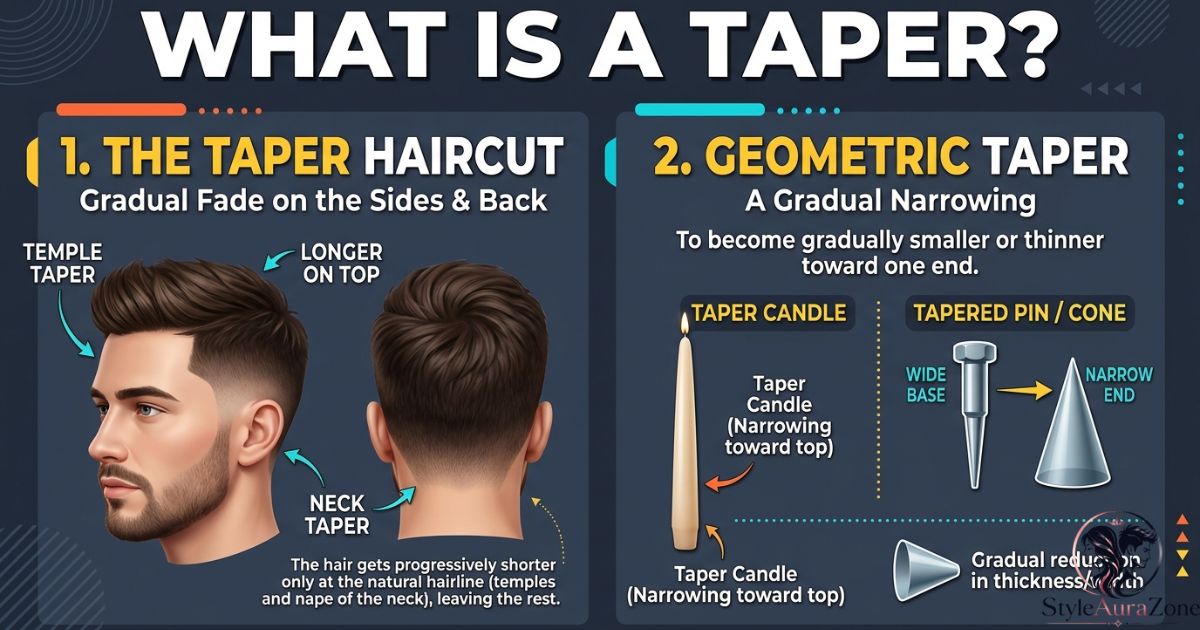
A taper trims hair gradually shorter toward the neckline and around the ears, yet it never drops to bare skin. The change in length stays even and soft. That makes the cut read as neat rather than dramatic.
Barbers build it with clippers and guard attachments, stepping down one length at a time. Scissor-over-comb work then smooths any visible lines. The result looks like a natural shadow instead of a hard edge.
One quick warning about wording. According to, many barbers hear “taper fade” and deliver a standard taper. Name the exact cut and show a photo to avoid surprises.
Key Features of the Taper Fade Taper vs
- Visible length stays at the neckline and sideburns
- Smooth, even transition with no bald areas
- Polished finish that suits offices and formal events
- Graceful grow-out, so you can stretch time between visits
- Pairs well with side parts, slick backs, crew cuts, and textured tops
What Is A Fade?
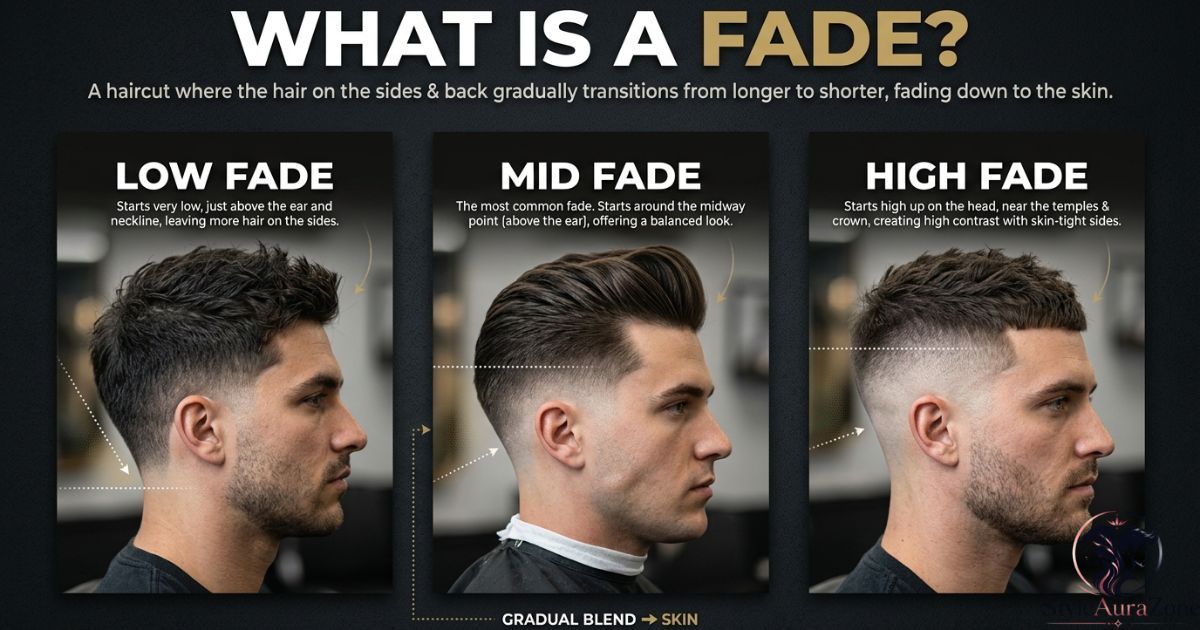
A fade blends longer hair on top into very short stubble or bare skin at the bottom. The shift happens faster than a taper and ends much shorter. That speed creates crisp, high contrast.
Barbers use clippers, lever adjustments, and often a foil shaver to melt the lengths together. Expect more detail work and a cleaner finish line.
Some sources, including, call the fade a specific kind of taper because both techniques shorten hair gradually. In the mirror, though, the fade still looks bolder.
Read more:The Undercut Fade: 17 Trending Haircut Variations
Key Features of the Fade
- Hair shortens to skin or near-skin at the lowest point
- Sharp, high-contrast blend against longer hair on top
- Modern, edgy personality that suits trend-forward styles
- Visible fuzz and regrowth within a couple of weeks
- Shows off pompadours, quiffs, curls, and textured crops
What’s The Difference Between A Taper and Fade?
The short answer: a taper shortens hair gradually and keeps some length at the edges, while a fade cuts much shorter, often to the skin, for sharper contrast.
| Feature | Taper | Fade |
| Length at the bottom | Short but visible | Skin or near-skin |
| Transition | Gradual and even | Faster and more dramatic |
| Contrast | Soft, subtle | Bold, high |
| Overall vibe | Classic, professional | Modern, edgy |
| Number of types | Mostly one core technique | Many variations |
| Typical upkeep | Every 4–5 weeks | Every 2–3 weeks |
| Grow-out | Gentle | Noticeable quickly |
A low taper and a low fade can look nearly identical at first glance. Both start just above the ear and trace the hairline. The giveaway sits at the bottom edge: the fade exposes skin, and the taper doesn’t.
Types of Tapers and Fades
Height and shape define each variation. The height options below apply to both cuts, though a fade will always end shorter.
| Type | Where It Starts | Look and Feel | Works Best For |
| Low | Just above the ears | Understated, clean | Office settings, first-timers |
| Mid | Around the temples | Balanced, versatile | Almost any hairstyle |
| High | High on the sides | Strong, fashion-forward | Short tops, bold contrast |
| Skin (Bald) | Any height, down to skin | Razor-clean | Maximum sharpness |
| Drop | Curves behind the ear | Fluid, eye-catching | Longer tops, curls |
| Burst | Semi-circle around the ear | Dramatic, rounded | Mohawks, mullets |
| Temple (Brooklyn) | Front sides near temples | Precise, compact | Short, tidy cuts |
How To Choose Between A Taper and Fade Haircut
Three questions decide it: What does your hair do naturally? How much contrast do you want? How often can you visit the barber?
Factor Your Hair Type and Texture
| Hair Type | Taper | Fade |
| Straight | Looks neat and structured | Adds crisp definition |
| Wavy | Keeps natural movement intact | Controls bulk on the sides |
| Curly or Coily | Frames defined curls softly | Creates sharp separation from the curls |
| Thinning | Softens the transition | Can highlight the contrast, so go lower |
Thick hair often benefits from a fade, since it trims excess bulk. Fine hair usually looks fuller with a gentle taper.
Contrast and Hairstyle
- Very short tops: A fade adds the punch these cuts need.
- Classic styles: Side parts and slick backs suit a taper.
- Modern styles: Quiffs, pompadours, and textured fringes shine against a fade.
- Medium to long hair: Both work, so pick the height first.
Not sure? Start with a mid taper. It sits comfortably in the middle and lets you adjust next visit.
Time and Money For Maintenance
Fades lose their edge fast, so most barbers suggest a visit every two to three weeks. Tapers forgive longer gaps, and four to five weeks usually works. Prices vary by shop, but fades often cost a bit more because they demand extra blending time.
On a tight schedule or budget? Choose the taper. Love a fresh, sharp finish? Budget for the fade.
FAQ’S
Is a taper the same as a fade?
No. A taper shortens hair gradually and keeps some length at the edges, while a fade cuts down to skin or near-skin.
Which lasts longer, a taper or a fade?
A taper grows out more gracefully, so it lasts longer between visits. Fades look rough within two to three weeks.
What does a taper fade mean?
Most barbers use the term to mean a taper, though some mean a low fade. Show a photo to confirm.
Is a taper or a fade better for curly hair?
Both work. A taper frames curls softly, and a fade creates stronger separation between the sides and your curls.
Can I combine a taper and a fade?
Yes. Barbers often fade the lowest section and taper the area above it for a smooth, layered blend.
Conclusion
A taper softens, and a fade sharpens. That single idea settles most of the debate. Choose the taper when you crave polish with little upkeep. Go with the fade when you need contrast that grabs attention the second you walk in. Both look sharp on the right head.
Still undecided? Bring a photo, name the exact type, and tell your barber how often you’ll visit. Those three details prevent most surprises. Book a consultation, test one cut for a month, and adjust from there. Expect to leave with exactly what you requested.