
The modern mullet has shed its punchline status and landed in barbershops as a precise, textured cut. Fades, tapers, and layered tops now frame a longer back, so the shape looks deliberate instead of accidental. This guide covers every style, plus the barber talk, styling, and upkeep you need.
Whether your hair is straight, wavy, or curly, a version of this cut probably fits. Picking the right version takes some thought. You will find fade options, texture matches, and grow-out advice below. Read on, pick a favorite, and walk into your next appointment knowing exactly what to ask for.
What Is The Modern Mullet?
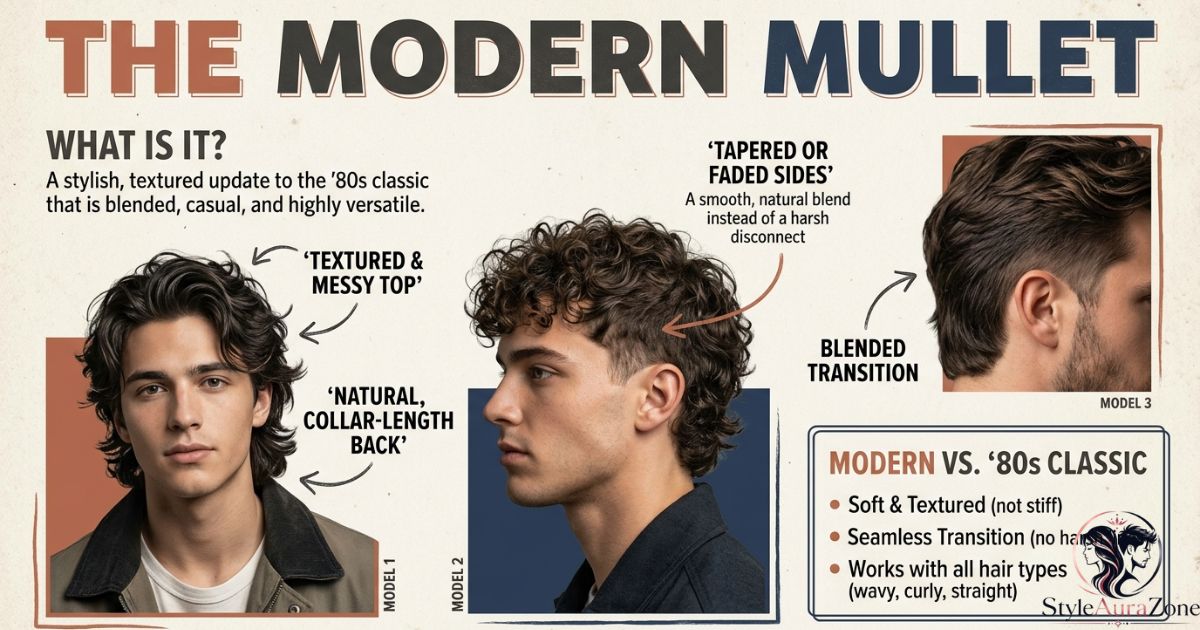
A modern mullet is a haircut with shorter, shaped sides and top and deliberate length at the back. The old formula of “business in front, party in back” still applies. What changed is the finish. Today’s version uses fades, tapers, point-cut layers, and fringes to turn a shaggy throwback into a sculpted style.
Every modern mullet has three parts:
- The top: layered and textured, often with a fringe.
- The sides: faded, tapered, or scissor-cut for clean contrast.
- The back: the signature tail, anywhere from nape-length to shoulder-grazing.
The gap between those three zones decides how subtle or loud the cut feels. Barbers and grooming editors, including and, describe the 2026 mullet as structured and wearable rather than rebellious for its own sake.
Modern Mullets with Fades and Tapers
The fade you choose sets the mood of the whole cut. Use this table to compare your options before you read the details.
| Fade Type | Where It Starts | Mood | Touch-Up Window |
| Taper | Ear and neckline | Soft, forgiving | 4–6 weeks |
| Burst | Curved around the ear | Sculpted, playful | 2–3 weeks |
| Drop | Dips behind the ear | Flowing, cohesive | 2–3 weeks |
| Low | Just above the ear | Understated | 3–4 weeks |
| Mid | Around the temples | Balanced, versatile | 2–3 weeks |
| High | Above the temples | Graphic, bold | 2–3 weeks |
| Skin | Down to bare skin | Sharp, high-contrast | 10–14 days |
| Scissor-cut taper | Shear-blended | Textured, natural | 5–6 weeks |
Taper Fade Mullet
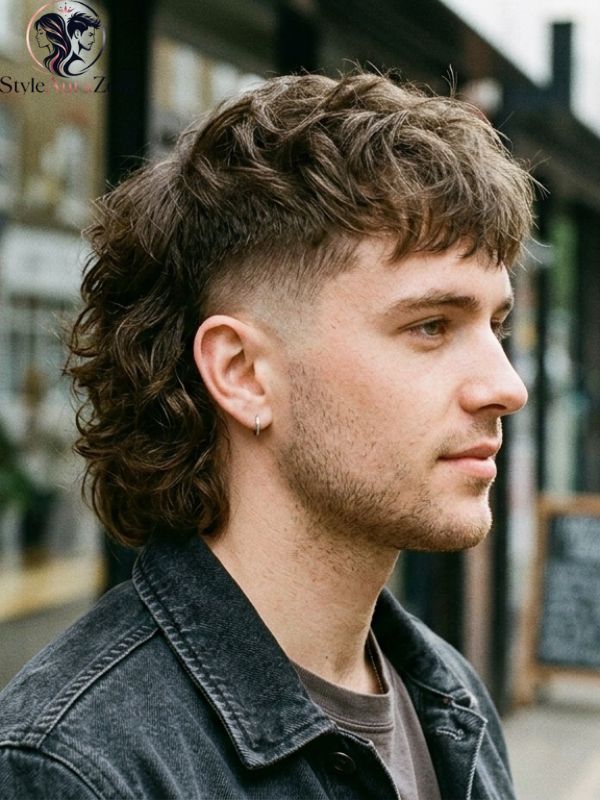
The taper fade mullet is the friendliest doorway into the trend. Hair shortens gradually around the ears and neckline without dropping to skin, so the shape stays soft and forgiving. Pair it with a layered top and a modest tail. Work in matte clay, then let the back fall naturally.
Burst Fade Mullet
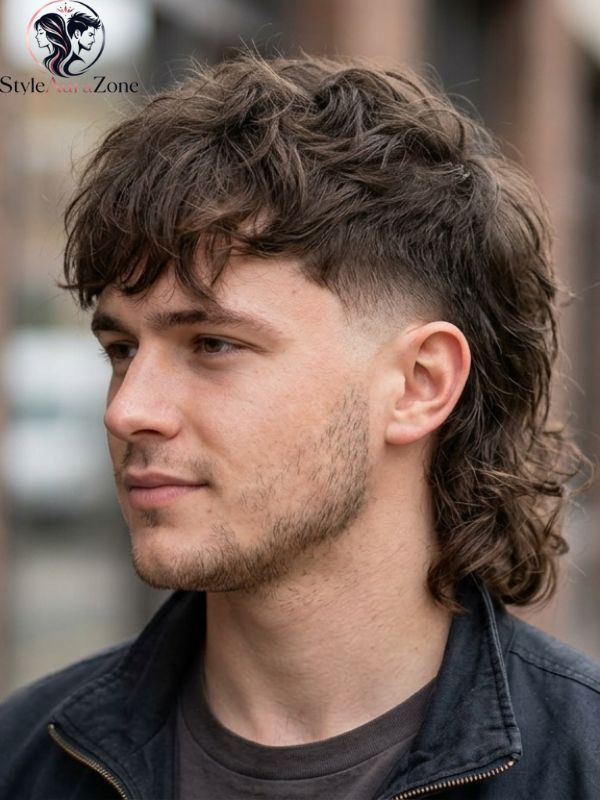
A burst fade carves a semicircle around the ear and leaves length behind it that flows straight into the tail. The curve adds drama without a bald finish. It looks especially good on curls and waves. Expect a touch-up every two to three weeks to keep that arc crisp.
Drop Fade Mullet
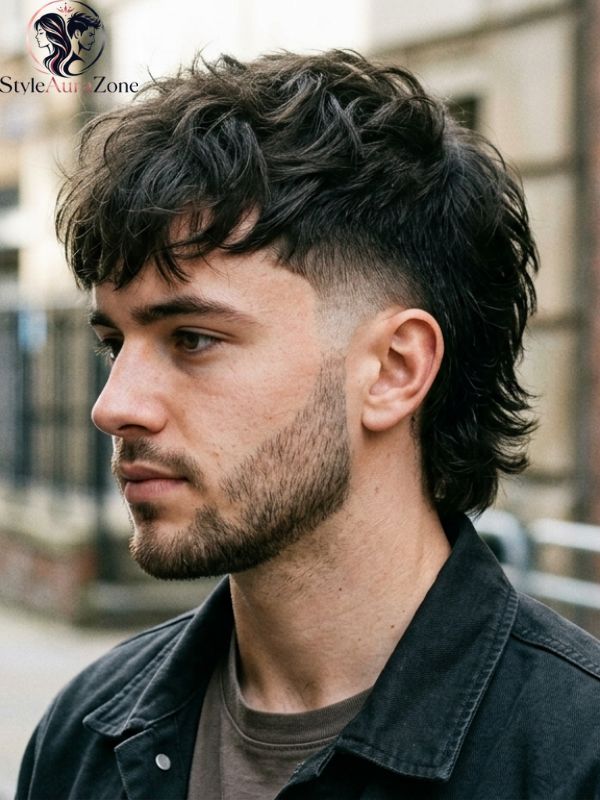
The drop fade dips lower behind the ear and echoes the downward slope of the tail. Fade and length move in the same direction, so the whole cut feels connected. Oval and oblong faces wear it well. A light styling cream keeps the top moving without any stiffness.
Low Fade Mullet
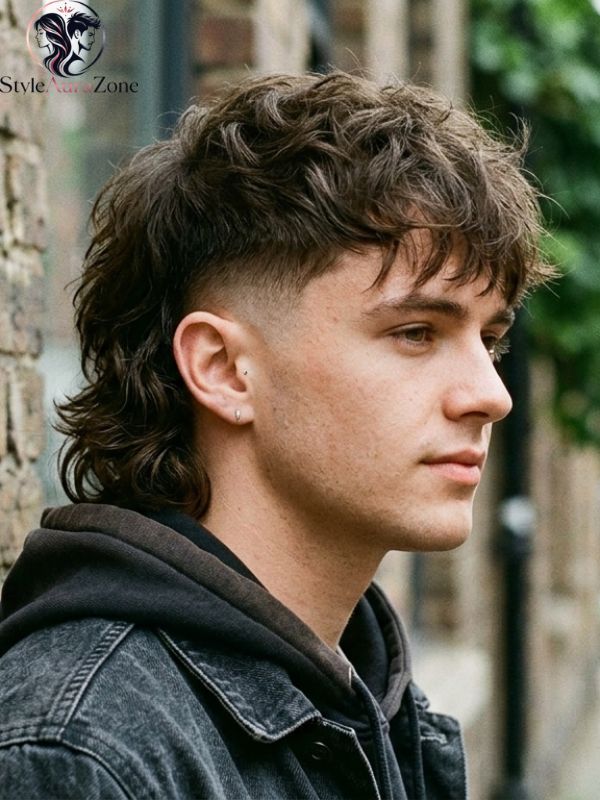
Starting just above the ear, the low fade mullet keeps contrast gentle and office-friendly. Most of your hair stays put, which preserves volume and texture. First-timers and anyone with a dress code will appreciate it. Finish with a matte paste and a loose, relaxed hand.
Mid Fade Mullet
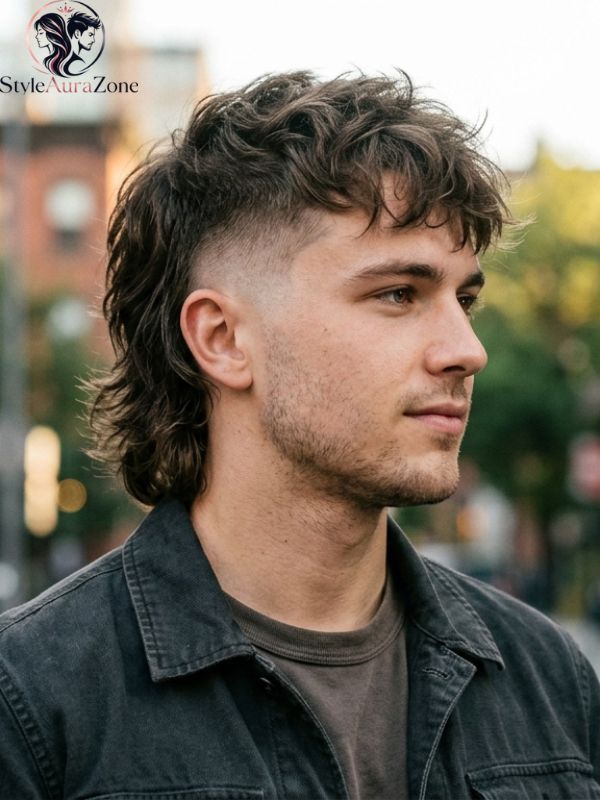
Beginning near the temples, a mid fade delivers visible contrast without going loud. Think of it as the Swiss Army knife of fades. It flatters most face shapes and dresses up or down with ease. Keep the back at a moderate length, then rough in some paste for grit.
High Fade Mullet
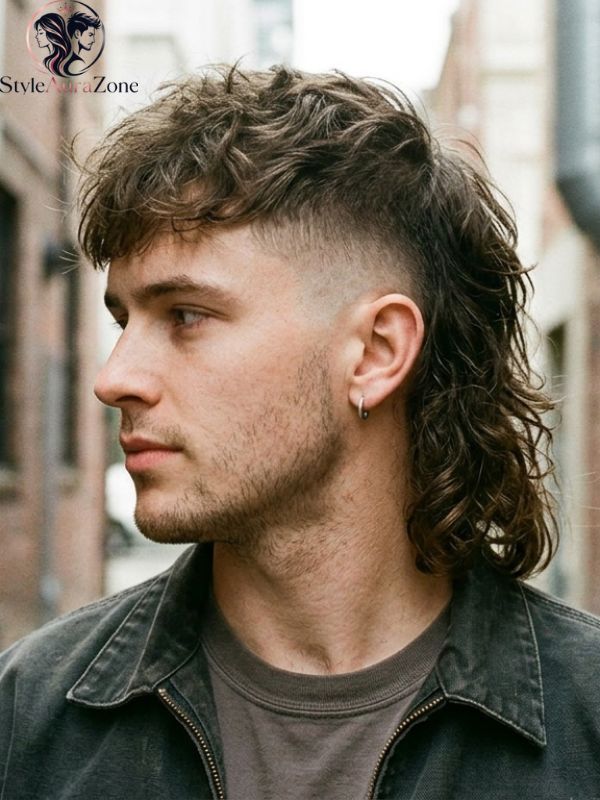
Here the sides climb above the temples and create a stark shelf between short hair and flowing length. The effect is graphic and confident. Rounder faces gain helpful height, while longer faces may feel stretched. A strong-hold matte product keeps the top crisp all day.
Skin Fade Mullet
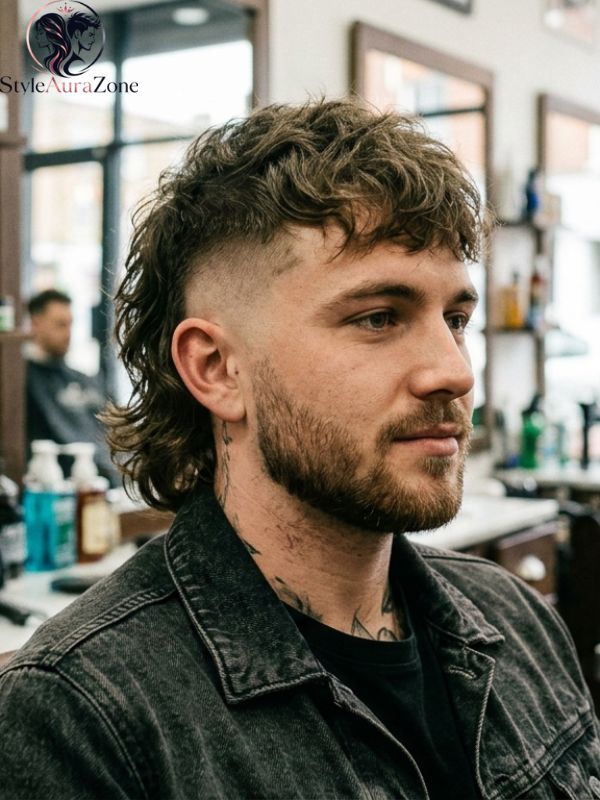
Take the sides down to bare skin and the top and tail suddenly look bolder. This skin fade mullet reads crisp and unmistakably current. It demands commitment, though. Plan a refresh every 10 to 14 days, or the contrast turns fuzzy and the cut loses its edge.
Scissor-Cut Taper Mullet

Instead of clippers, the barber uses shears and a comb to shorten the sides gradually. The finish is softer, slightly tousled, and forgiving as it grows. Wavy and curly textures love it. With no hard line to maintain, it’s one of the easiest mullets to live with. Mist with sea salt spray and air-dry.
Trendy Mullets Based on Hair Texture
Your natural pattern should guide the variation you pick. Here’s a quick view of how each texture behaves.
| Texture | Natural Strength | Main Challenge | Go-To Product |
| Curly | Built-in volume | Triangle shape | Curl cream |
| Straight | Razor-sharp lines | Falling flat | Matte clay |
| Textured | Movement and grit | Looking messy | Texture powder |
| Wavy | Effortless flow | Frizz in humidity | Sea salt spray |
Curly Mullet
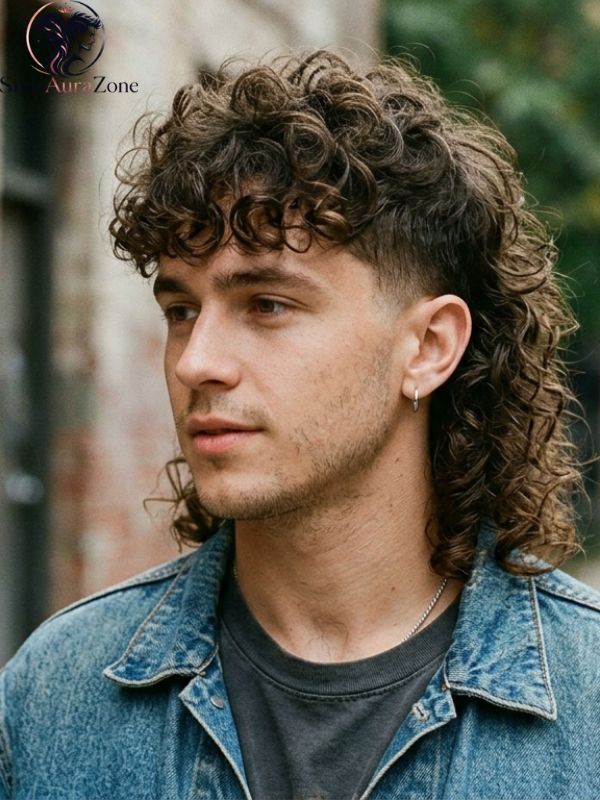
Curls add built-in volume, so the curly mullet practically styles itself. Tapered sides trim bulk while a layered crown prevents a triangle shape. The tail shows off your curl pattern. Smooth curl cream into damp hair, scrunch it, then air-dry or diffuse for extra definition.
Read more:40 Trendy Long Hairstyles For Men
Straight Hair Mullet
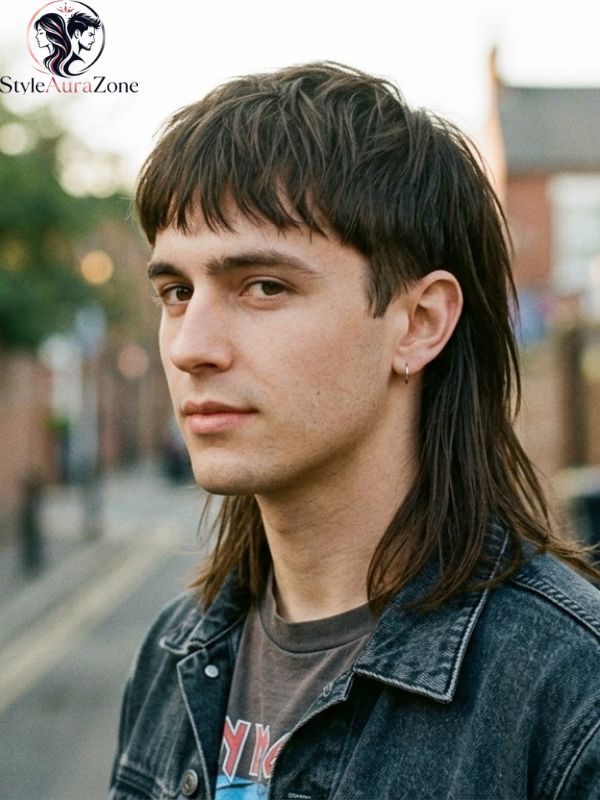
Straight hair exposes every line, so this version depends on skilled point-cutting and clean layering. Without natural bend, the top can collapse, which is why a fringe and matte clay help. Done well, it looks sleek and intentional. A quick blow-dry adds lift at the crown.
Textured Mullet
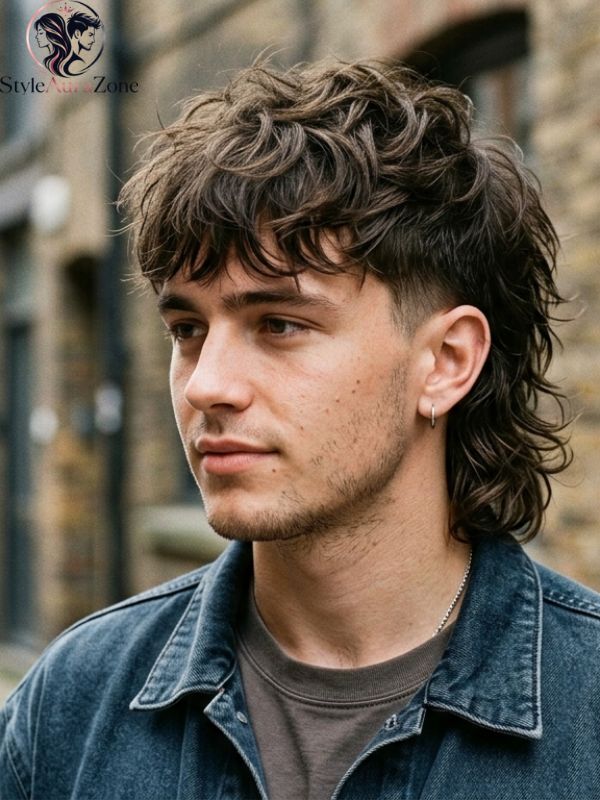
Choppy, point-cut layers define the textured mullet. Pieces separate and move instead of lying in one smooth sheet. It’s a smart fix for hair that looks limp or blunt. Rub texture powder or paste between your fingers, then tousle. Slightly undone is exactly the goal.
Wavy Mullet

Many barbers see waves as the ideal canvas. The natural S-pattern gives body on top and swing in the back with almost no effort. Taper the sides to control width, then apply sea salt spray or a light cream. Finger-comb the hair back or let it fall forward.
Edgy, Statement Mullets
Mohawk Mullet
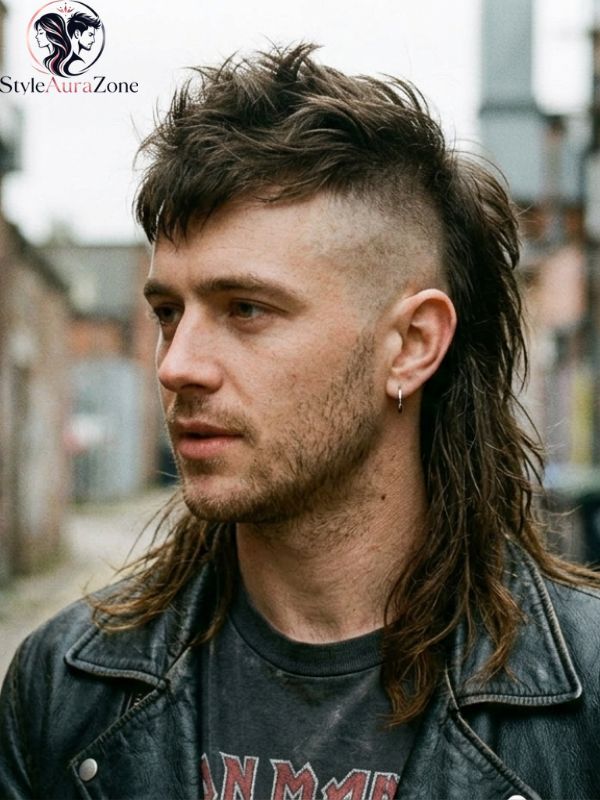
This style fuses a central ridge of length with a tail running down the nape. The sides are faded tight or shaved, which pushes every eye to the middle. It’s loud on purpose. Use a firm-hold paste or clay to lift the strip and keep it standing through the day.
Slicked-Back Mullet
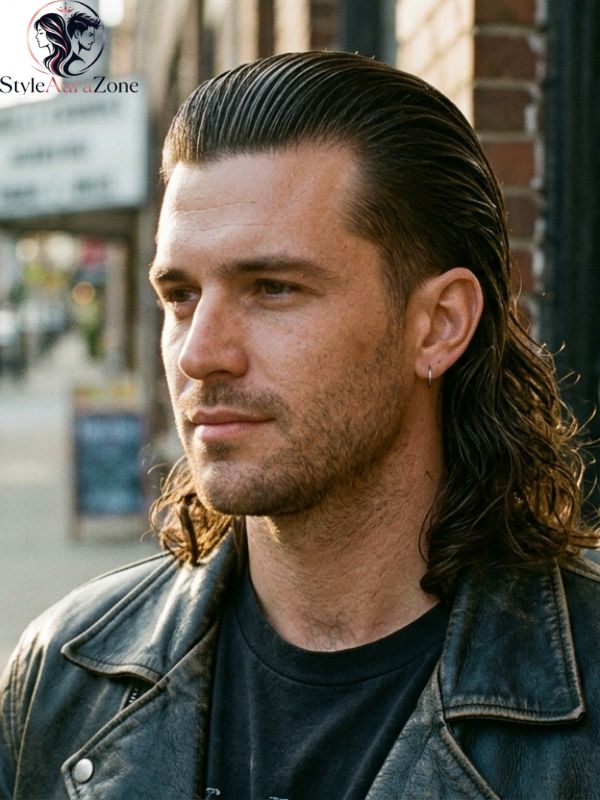
Surprisingly polished, the slicked-back mullet sweeps everything away from the face and lets the tail finish the line. It proves the cut can suit a dinner as easily as a gig. Comb in a low-shine pomade while your hair is damp, and keep the sides neat.
Thick Textured Mullet Fade with Heavy Fringe
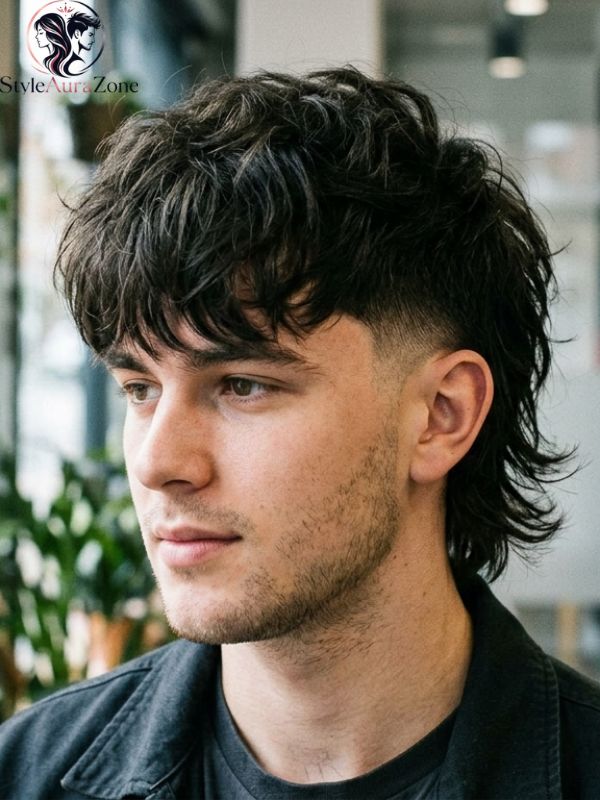
A weighty fringe falls over the forehead while choppy layers keep the crown from feeling bulky. Faded sides supply the contrast that makes the tail look planned. Thick hair handles this best. Ask for internal thinning, then use clay to break the fringe into chunky pieces.
Mullet with Hair Designs
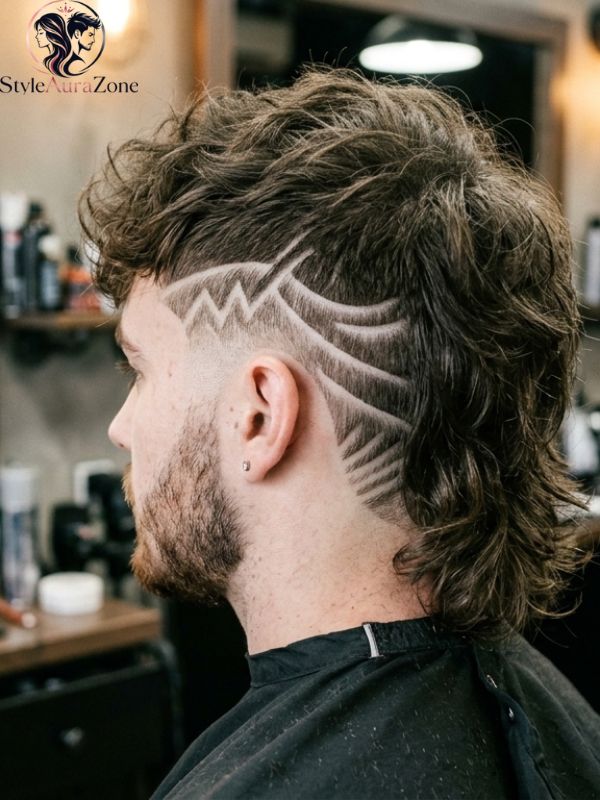
Shaved lines, patterns, or small motifs cut into faded sides turn the mullet into a canvas. Keep the top and tail simple so the artwork gets center stage. Choose a barber with steady detail skills. Expect to refresh the design every couple of weeks.
Long Mullet
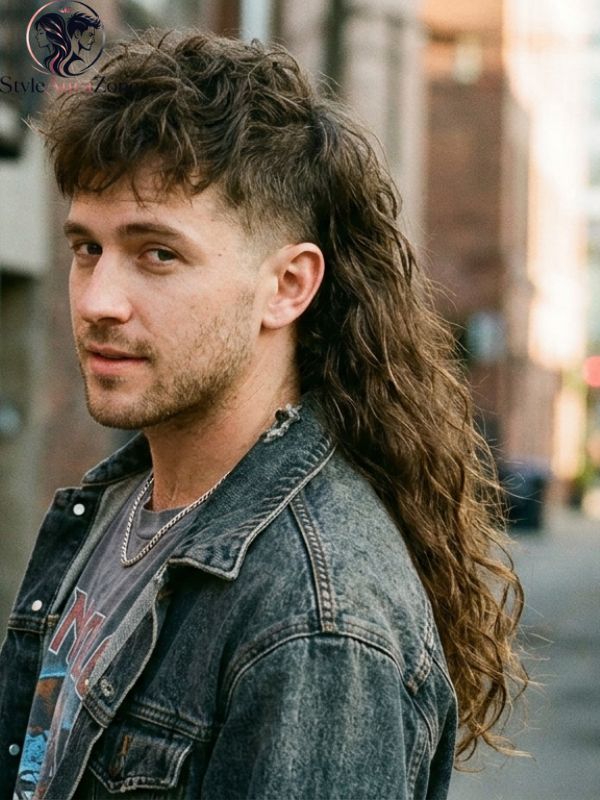
Here the tail is the headline, often reaching the collar or beyond. Commitment pays off in drama and movement. Conditioning matters because longer ends dry out and split. A neat taper on the sides keeps the whole cut from drifting into shaggy territory.
Shaggy Mullet

Soft, feathered, and a little rock-and-roll, the shaggy mullet leans on layers instead of sharp contrast. The sides stay lightly tapered, and the ends look lived-in. It’s relaxed by design. Toss in sea salt spray or matte cream, scrunch, and leave it alone.
Classy Mullets
Short Mullet
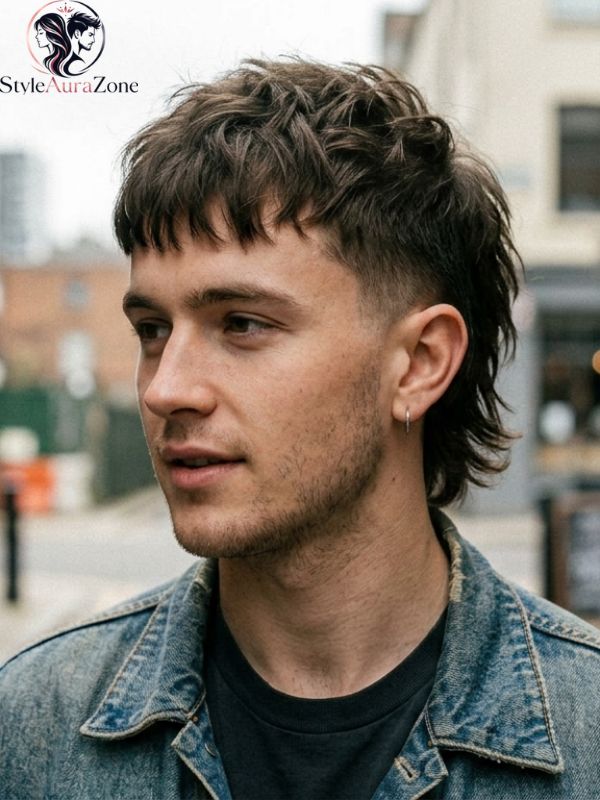
The tail barely brushes the nape, which keeps the silhouette clean and the attitude light. It’s a solid compromise for conservative workplaces. Men with fast-growing hair also like it because it stays tidy longer. Add matte clay to the top and finger-style for separation.
Mullet with Fringe
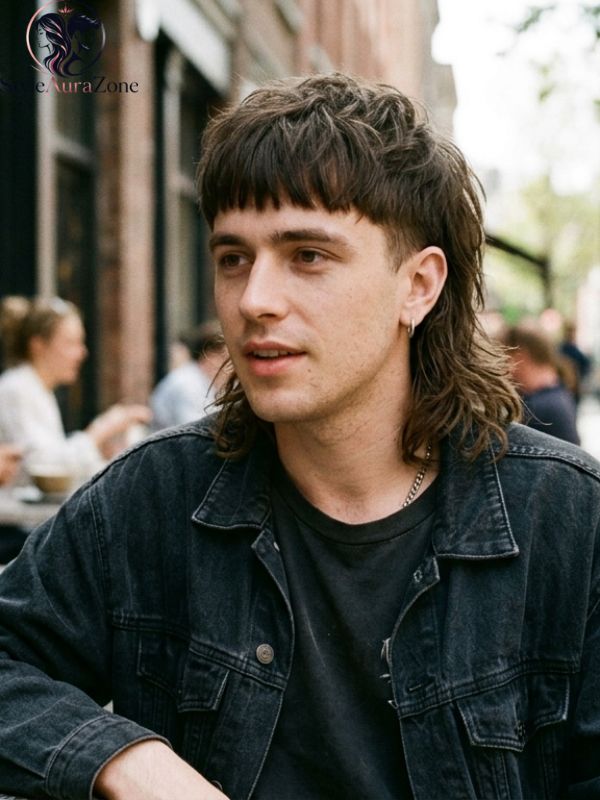
A fringe frames the face and softens a broad forehead. The tail then counterbalances it from behind. Taper the sides so the cut doesn’t feel top-heavy. Matte cream defines the fringe without any crunch, and a few loose strands make it look relaxed.
Mullet with Line Up
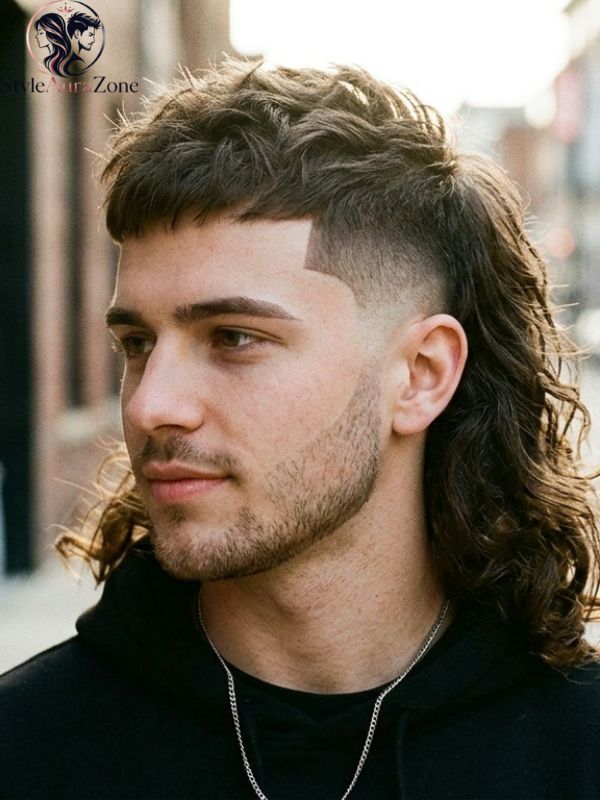
A sharp edge along the temples and forehead separates a planned mullet from a grown-out one. It works with every texture and every fade. Ask for it at each visit. That crisp frame tells everyone the length is a choice.
Mullet with Beard

Facial hair grounds the length above and gives the face structure. Keep the beard’s fullness roughly in line with the top so proportions stay even. Blend the beard into the sideburns for a seamless flow. Trim the neckline often, or the pairing starts to look wild.
Modern Textured Brush Back Mullet
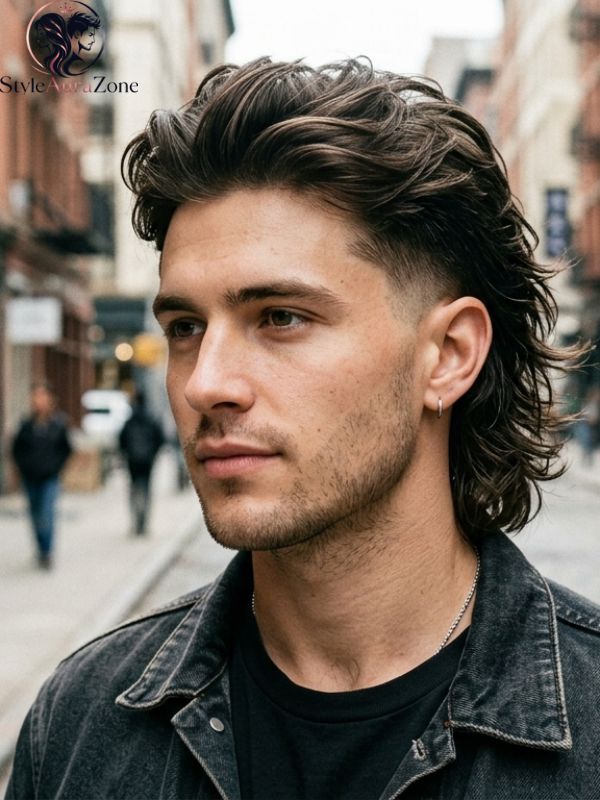
Hair sweeps back from the forehead in loose, windswept lines before spilling into the tail. It’s confident and low-effort. Tapered sides keep the shape lean. Apply lightweight cream, then brush back with your fingers or a wide-tooth comb for natural lift.
Edgar-Style Mullet
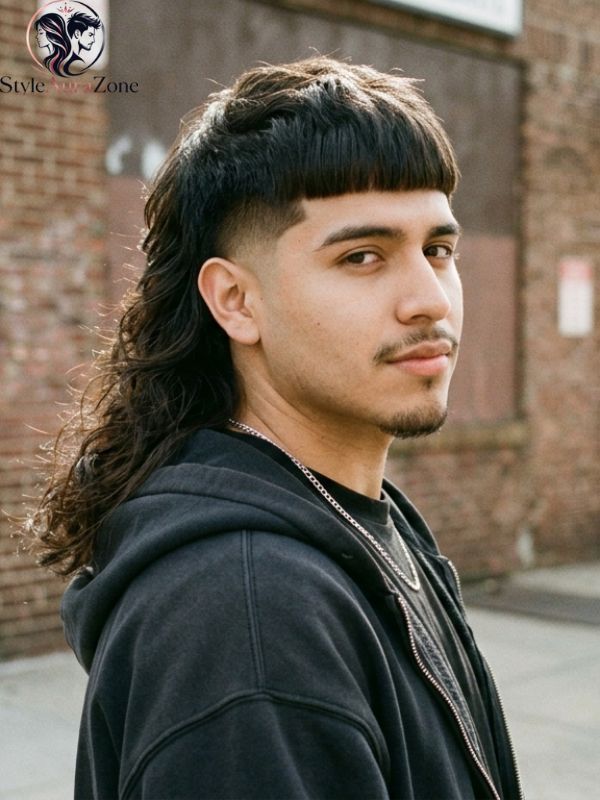
Rooted in Mexican-American youth culture, this cut, often called a Takuache mullet, pairs a blunt, straight fringe with a tail at the back. Ask for a crisp forehead line and a clean fade. Texture the back lightly. It’s bold, culturally rich, and best handled by a barber who knows it.
How To Ask Your Barber For A Mullet
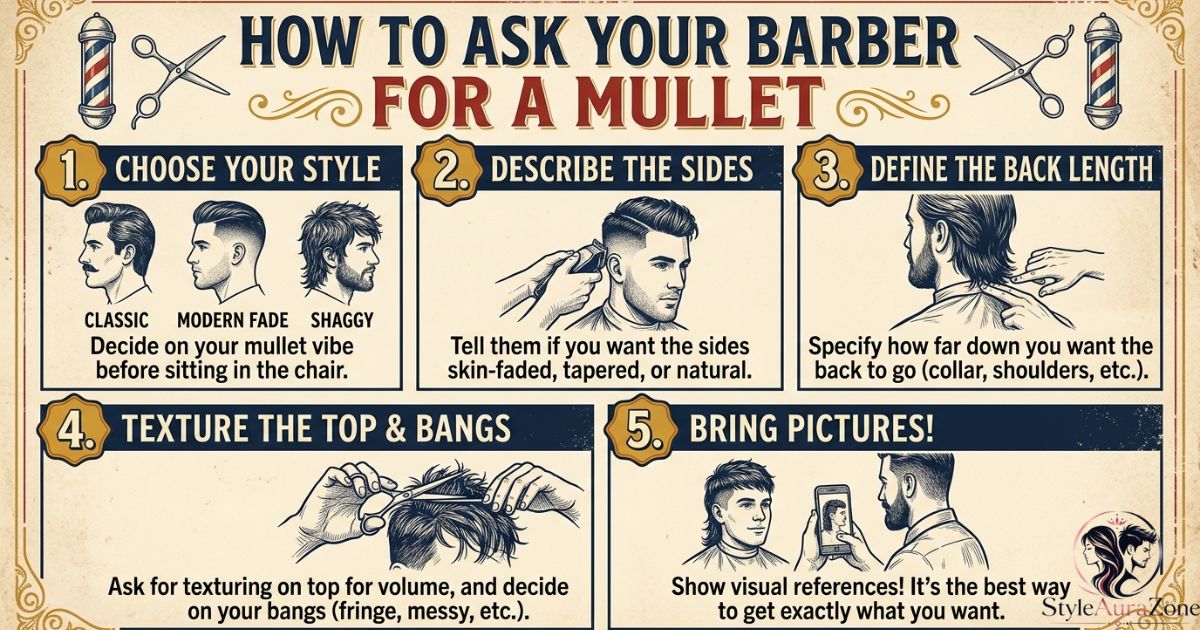
Clients leave happiest when they arrive with a clear picture. The mullet covers a wide range, from barely there to unmistakable. A precise conversation in the chair prevents most disappointments.
Say “Modern,” Not Just “Mullet”
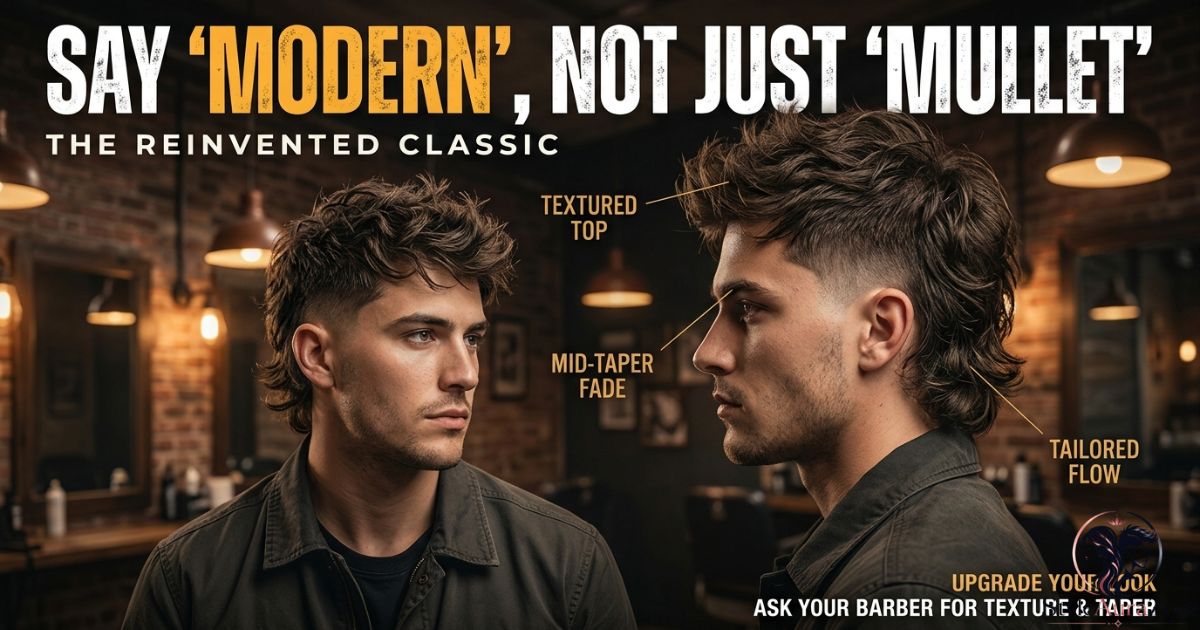
The word “mullet” alone invites guesswork. One barber may picture 1985 while another pictures today. Add “modern” and describe the fade and texture you want. Specific words lead to a specific result.
Cover the Specs
Walk your barber through four details so nothing gets left to chance.
| Spec | What to Say |
| Top length | “Two to three inches, layered” |
| Sides | “Mid taper” or “low skin fade” |
| Back length | “To the nape” or “to the collar” |
| Texture | “Heavy point-cutting” or “light and soft” |
Talk Through the Fade
Each fade changes the personality of the cut. If you’re unsure, describe the vibe instead, such as conservative, balanced, or bold. A good barber will recommend the height and style that fits your head shape and lifestyle.
Bring a Reference Photo
A photo says more than a paragraph can. Pick images of men whose hair texture matches yours. A straight-hair mullet won’t translate to tight curls, and your barber needs a realistic target.
Decide How Bold You Want to Be
Name where you want to land on the scale from subtle to statement. Saying “a three out of ten” or “a seven out of ten” gives your barber a clear gauge. This single step avoids the biggest mismatch between expectation and result.
Start Conservative on the First Visit
New to the cut? Go milder at first. You can always fade the sides higher or leave more tail next time. You can’t glue length back onto a tail cut too short. Build toward the bold version over two or three visits.
How To Style A Mullet
The Everyday Styling Routine
- Rinse or wash your hair, then towel-dry until damp.
- Warm a pea-sized amount of product between your palms.
- Work it through the top and fringe with your fingers.
- Shape the back so it sits cleanly.
- Check the profile in a mirror and adjust the crown.
Choosing the Right Hair Product
| Hair Type | Best Product | Finish |
| Straight | Matte clay or paste | Grip and definition |
| Wavy | Sea salt spray or light cream | Natural movement |
| Curly | Curl cream or mousse | Hydrated, defined curls |
| Thick | Strong-hold clay | Controlled bulk |
| Fine | Texture spray or powder | Lift without weight |
Do Not Neglect the Back
The tail is the signature of the cut, so give it daily attention. Comb or finger-style it so it lies neatly. A back that’s ignored is what makes a sharp mullet look sloppy.
Blow-Dry or Air-Dry
Air-drying suits wavy, curly, and shaggy versions because it protects natural texture. A blow-dry with a brush builds volume and polish, which helps straight hair. Choose based on the finish you want and the minutes you have.
How to Maintain A Modern Mullet
How Often to Visit the Barber
The fade sets the schedule. Skin fades need attention every 10 to 14 days. Burst, drop, and mid fades usually last two to three weeks. Tapers and scissor-cut versions stretch to five or six weeks. The top and tail can often go six to eight weeks between trims.
The Maintenance Imbalance
Mullets age unevenly. The sides may look overgrown while the back still looks great. Book shorter visits to refresh the fade and let the length keep growing. That rhythm keeps contrast sharp without sacrificing the tail.
Washing and Care
Wash according to your texture instead of a fixed calendar. Straight and wavy hair can handle shampoo every two to three days. Curly and coily hair prefers fewer washes and more conditioner. Longer hair at the back benefits from a weekly deep conditioner to prevent split ends.
When to Trim the Back
Decide early whether you’re maintaining the tail or growing it. If you’re maintaining, ask for a trim at each visit. If you’re growing, request a light dusting of the ends so the hair stays healthy while the length builds.
How to Grow Your Hair Out for a Mullet
The Realistic Timeline
Hair grows roughly half an inch per month. From a short crop, that means about three to six months for a convincing mullet.
| Starting Point | Approximate Time | Result |
| Short crop or buzz | 5–6 months | Short mullet |
| Medium length on top | 3–4 months | Standard modern mullet |
| Already past the ears | 2–3 months | Long or shaggy mullet |
Managing the Awkward Phase
The in-between stage is where most guys give up. Keep the sides, neckline, and area around the ears tidy while the back keeps growing. Strategic trims remove bulk and hold the shape. That way the cut looks like a work in progress instead of neglect.
The Barber’s Role
See your barber every four to six weeks during the grow-out. Share your end goal so each trim nudges you toward it. A skilled barber will layer the top, blend the sides, and protect the length you need.
The Best Modern Mullets by Hair Texture
Straight Hair
Straight hair produces the sharpest mullet because every layer shows. Ask for bold point-cutting and consider a fringe for interest. Matte clay is essential for grip.
Wavy Hair
Waves bring natural body and flow. Wavy, shaggy, and scissor-cut mullets all let the pattern lead. Sea salt spray on damp hair, followed by air-drying, does most of the work.
Curly Hair
Curls bring volume and a soft silhouette that the cut frames well. Keep the sides faded to balance the top. Scrunch in curl cream and let the curls dry without touching them.
Thick Hair
Thick hair can carry any variation, but bulk needs managing. Request texturizing and thinning so the shape moves freely. A firmer-hold product keeps everything in place.
Fine or Thin Hair
Fine or thinning hair can work with the right plan, though density matters. Keep the cut softer, shorter, and more blended. Avoid extreme fades, harsh disconnection, or a very long tail, since those can make sparse areas look thinner.
The Modern Mullet vs. Classic Mullet At A Glance
| Feature | Classic Mullet | Modern Mullet |
| Sides | Same length, no fade | Faded, tapered, or scissor-cut |
| Contrast | Extreme and abrupt | Controlled and balanced |
| Layering | Feathered, minimal | Point-cut and textured |
| Fringe | Rare | Very common |
| Finish | Loose and grown-out | Polished and intentional |
The word “modern” does real work when you talk to your barber. It signals a fade-driven, texture-forward cut instead of a feathered throwback.
A Brief History of The Mullet and Its Modern Revival
Short-front, long-back hair has appeared across eras. Rock stars popularized versions of it in the early 1970s, and by the 1980s it had become a mainstream look worn by musicians, athletes, and screen heroes. Few cuts have been as common in their moment.
Then came the backlash. Through the 1990s and 2000s, the mullet became shorthand for bad taste and the butt of countless jokes. Barbershop requests dried up, and the cut went underground.
The comeback began gaining speed in the early 2020s. Nostalgia, soccer stars, social media, and a broader love of textured hair pushed it forward. Younger men embraced it, and communities such as Mexican-American youth gave it fresh cultural meaning. Today, publications like,rank it among the most fashionable cuts of the era.
Common Mullet Mistakes to Avoid
Going Too Extreme on the First Cut
Asking for the boldest version right away often backfires. Start with a restrained mullet and build from there. You can always go bolder next time. You can’t un-cut.
Mismatching the Fade to the Face Shape
The wrong fade height can fight your proportions.
| Face Shape | Flattering Fade | Avoid |
| Oval | Almost any | Very little |
| Round | Mid or high | Wide, bulky sides |
| Square | Low or mid taper | Overly severe skin fades |
| Long or oblong | Low or drop | High fades |
Skipping Texture on Top
A flat top makes the mullet feel dated. Ask for point-cutting and layering, and choose a product that builds texture instead of weighing hair down.
Getting the Wrong Variation for Your Texture
A style designed for straight hair behaves differently on curls. Match the variation to your own pattern instead of copying a photo of someone whose hair is nothing like yours.
Letting the Fade Outgrow the Back
When the fade grows out but the tail stays sharp, the cut loses balance. Keep fade touch-ups on schedule even between full haircuts.
Trying to Cut It Yourself
Layering, contrast, and blending are harder than they look. Home attempts usually end with an uneven tail. Leave this one to a professional.
Treating It as a No-Effort Cut
The mullet looks relaxed but needs a quick daily routine and regular maintenance. Budget a few minutes each morning and a standing barber appointment.
FAQ’S
What is a modern mullet?
A modern mullet is a short-to-medium cut with faded or tapered sides, a textured top, and a deliberately longer back. It’s more polished than the classic version.
Are mullets still in style?
Yes. The mullet has stayed a popular barbershop request since its revival in the early 2020s and keeps evolving.
How do I ask my barber for a modern mullet?
Say “modern mullet” and name your top length, fade type, back length, and texture level. Bring a reference photo of similar hair.
How long does it take to grow a mullet?
Most men need three to six months, since hair grows about half an inch per month. Trim the sides along the way.
How often should I get a mullet trimmed?
Skin fades need a visit every 10 to 14 days. Tapers can wait five or six weeks, and the tail can wait six to eight.
Conclusion
A modern mullet rewards the man who plans it. Nothing about it is accidental anymore. Choose a fade that matches your lifestyle, pick a variation that suits your texture, and give your barber clear specs. Do that, and the cut looks sharp from the front, the side, and the back.
Keep the upkeep realistic, too. Book regular fade refreshes, condition the length, and style the back every morning. Start conservative if you feel unsure, because bolder is always available next time. Your best mullet is the one you will actually maintain with confidence. Then enjoy the compliments that follow.