
A mid burst fade sits in that sweet spot between subtle and bold, curving around the ear instead of running in a flat line across the side. It’s become one of the most requested barbershop cuts of the year because it works with almost any hair type and face shape without feeling risky. Get the curve wrong, though, and the whole haircut looks unfinished.
This guide walks through what the cut actually is, how it compares to similar fades, which top styles pair best with different hair textures, and exactly what to say in the chair. You’ll also get a maintenance schedule and fixes for the most common mistakes, so your fade stays sharp well past week one.
What is a mid burst fade?
A mid burst fade is a fade that wraps around the ear in a curved, half-moon shape rather than cutting straight across the side of the head. It starts at a medium height, low enough to stay wearable, high enough to show real contrast. That middle placement is why it suits such a wide range of guys.
The magic is in the shape, not just the height. Because the blend curves instead of running flat, your ear and jawline get framed naturally. Whatever you’re wearing on top, whether it’s tight curls, a swept fringe, or a clean buzz, gets to stand out because the sides aren’t fighting it for attention.
Why it’s called “burst”
The name comes from how the fade spreads outward from a single point near the ear, almost like a burst of light radiating in a curve. Instead of a straight horizontal line, the blend arcs around the ear before tapering into the neckline. That rounded spread is the defining feature of every burst fade, no matter the height.
Mid burst fade vs regular mid fade
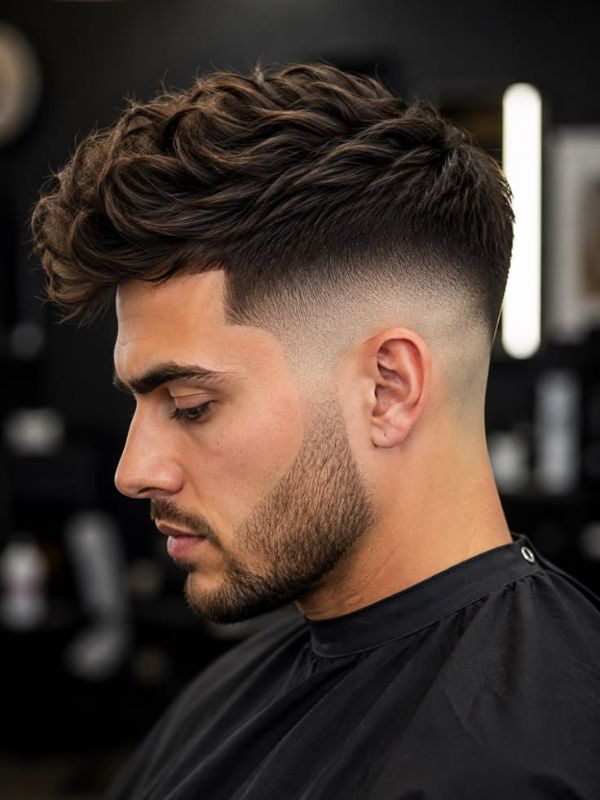
A regular mid fade cuts across the side in a mostly straight, even line. A mid burst fade curves specifically around the ear, creating a rounded outline instead of a flat one. Guys who want their ear and cheekbone framed go with burst. Guys who prefer a simpler, more traditional blend stick with a regular mid fade.
| Feature | Mid Burst Fade | Regular Mid Fade |
| Blend shape | Curved, wraps around the ear | Straight, runs across the side |
| Visual effect | Sculpted, frames the ear | Clean, uniform |
| Best for | Guys who want a statement cut | Guys who want something simple |
| Skill required | Higher (curve precision matters) | Moderate |
Low vs mid vs high burst fade and drop fade
Every burst fade uses the same curved concept, but where that curve sits on your head changes the whole vibe of the cut. Height is really the only variable, and it makes a bigger difference than most guys expect.
- Low burst fade: Sits close to the ear with a subtle blend. Good starting point if you’ve never worn a burst fade before.
- Mid burst fade: Lands in the middle zone. Balances contrast and wearability, which is why it works for most face shapes.
- High burst fade: Climbs toward the temple with bold, skin-close contrast. Best for guys who want the cut to be noticed.
Mid burst fade vs drop fade

A drop fade dips lower toward the back of the head, curving down to shape the neckline as it falls. A mid burst fade stays anchored around the ear, keeping its rounded shape without dropping into the neck area. Choose burst for a clean, framed ear line. Choose drop if you want the fade to trace the back of your skull and define the nape more dramatically.
| Feature | Mid Burst Fade | Drop Fade |
| Curve direction | Around the ear | Down toward the neckline |
| Focus area | Ear and temple | Back of the head |
| Look | Rounded, sculpted | Flowing, dipped |
| Pairs well with | Curls, buzz cuts, fringes | Mohawks, longer tops |
Learn more:Low Fade Crew Cut Hairstyles: Clean, Modern, Easy
Best mid burst fade styles by hair type
The fade sets the frame, but the top is where the personality lives. The right top length and texture for your hair type is what turns an average cut into a great one, because a mismatched top can throw off the whole proportion of the fade.
Hair that’s too heavy on top can puff out behind the ear and swallow the curve. Hair that’s too flat won’t give the burst anything to contrast against. Aim for a top that works with the shape, not against it.
Mid burst fade curly hair

Curls and a burst fade go together naturally, since the texture on top already does the visual work while the fade keeps the sides tidy. Ask for 2 to 4 inches of length on top so the curl pattern actually shows. The blend behind the ear needs to be smooth, or the curls can look disconnected from the fade.
For upkeep, a light leave-in conditioner paired with a curl cream keeps things defined instead of frizzy. If you diffuse, use moderate heat and don’t rush the process.
Mid burst fade straight hair

Straight hair needs texture to keep this cut from looking flat. Ask your barber for choppy layers on top and a true mid-height fade, not one that creeps toward the temple. Without texture, straight hair tends to sit heavy and cancels out the dimension the burst is supposed to add.
At home, a blow dryer for root lift followed by a small amount of matte clay works better than anything glossy. Shine products weigh straight hair down and flatten the whole look.
Mid burst fade textured fringe
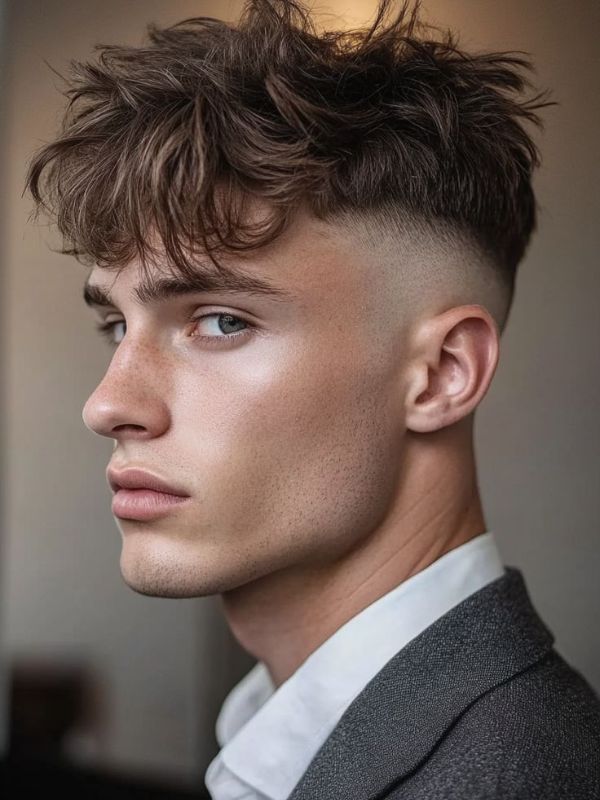
Pairing a textured fringe with a mid burst fade is one of the most requested combinations right now, especially for guys with a wider forehead or finer hair. Choppy, uneven texture in the fringe reads far better than one that’s blunt or overly shaped. Ask for the fringe to land just above the eyebrows.
Style it with a sea salt spray on damp hair, then blow-dry forward with your fingers. A touch of matte paste locks the texture in place and helps the fringe grow out gracefully between cuts.
Mid burst fade short hair and mid burst fade buzz cut
This pairing is the easiest to maintain of the bunch. The fade does most of the visual work, and the top stays simple with no daily styling required. A buzz cut version is especially popular with guys who want a sharp finish without touching a comb.
| Guard Length | Look | Growth Speed |
| #0.5–#1 | High contrast, very short | Grows out fastest |
| #2 | Sharp but natural | Balanced |
| #3 | Softer contrast, more coverage | Slowest to show growth |
Mid burst fade mullet and mid burst fade mohawk
A burst fade mullet keeps the ear area tight while the back stays longer and flows outward. A burst fade mohawk shaves the sides close and leaves a defined strip running through the center. Both rely heavily on a clean curve around the ear, or the whole cut reads as messy instead of intentional.
The most common issue with both is excess bulk behind the ear. For the mullet, light layering in the back keeps it flowing rather than puffing out. For the mohawk, a medium-width strip works best, since too wide softens the shape and too narrow looks harsh.
Mid burst fade black men

Textured and coily hair pairs especially well with a mid burst fade, since the natural volume on top creates a shape straight hair can’t replicate. What matters most is a crisp outline, a smooth blend, and a top style suited to your specific pattern.
Popular top choices include 360 waves, sponge curls, short twists, a curly top, or a short afro fade. Each sits differently above the fade, but all of them need a tight, clean curve to look finished. Keeping the natural hairline intact helps the cut grow out evenly, and moisturizing the scalp regularly keeps fresh lines looking sharp instead of ashy.
Mid burst fade with design and mid burst fade with V
A single razor line inside the fade adds a personal touch without overpowering the cut. One bold, clean line beats several thin overlapping ones, and simple designs hold up longer as the hair grows back in.
The word “V” gets used two different ways with this cut, so be specific with your barber. A V-cut neckline means the hair at the nape is shaped into a V. A V razor design means a V shape is etched directly into the fade itself. Naming the wrong one will get you the wrong result. If you’re pairing this cut with facial hair, ask your barber to blend the fade smoothly into the beard line for a seamless side profile.
What to tell your barber
Most haircuts go sideways in the consultation, not under the clippers. Saying “mid burst fade” on its own leaves too much room for interpretation. Give your barber at least two details: how high you want the fade and what you want happening on top.
A side-view reference photo helps more than any other angle, since it shows the curve around the ear clearly. Use these as a starting point:
- Curly hair: “Mid burst fade around the ear. Leave 2 to 4 inches on top. Smooth blend into the curls.”
- Straight hair: “Mid burst fade, true mid height. Add texture on top, not too flat.”
- Textured fringe: “Mid burst fade with a choppy, forward fringe. Keep it above the eyebrows.”
- Buzz cut: “Mid burst fade with a #2 or #3 guard on top. Keep it even.”
- Mullet: “Mid burst fade with a clean ear curve. Light layers in the back.”
- Razor design: “One bold razor line behind the ear. Keep it simple.”
- V-cut neckline: “Shape the neckline into a clean V.”
Maintenance schedule (week-by-week)
How long a mid burst fade holds its shape depends on your natural growth rate and how consistently you touch it up. Skin fades reveal growth faster than shadow fades, but every version of this cut needs some upkeep to stay sharp.
| Week | Task | Goal |
| 1 | Keep it brushed and clean | Maintain the shape |
| 2 | Trim sideburns and edges | Keep lines crisp |
| 3 | Quick barber touch-up | Refresh the curve |
| 4 | Full cut | Full reset |
Most guys land on a touch-up every two to three weeks. If you’re wearing a skin-close fade, plan closer to every two weeks. A softer shadow fade can usually stretch a bit longer.
Common mistakes and quick fixes
Nearly every mid burst fade problem shows up in one of three spots: the curve, the area behind the ear, or the neckline. Once you know the cause, the fix is usually a quick conversation at your next visit.
- Fade sits too high: It crept toward the temple instead of staying at true mid height. Bring a reference photo and ask for it to sit lower next time.
- Bulky area behind the ear: The hair wasn’t properly debulked. Ask your barber to blend and thin that section specifically.
- Uneven curve: One side doesn’t match the other, usually from a rushed guideline. Ask your barber to check both sides before finishing.
- Messy neckline: Pick a shape upfront, natural, rounded, or V-cut, and get it refreshed around week three.
FAQ’S
What is a mid taper burst fade?
It’s a haircut blending a gradual taper down the sides with a curved burst fade around the ear, landing at a balanced, medium height overall.
How is a mid taper burst fade different from a regular taper fade?
A regular taper blends evenly downward, while the burst version curves specifically around the ear, creating a rounded, sculpted shape instead of a flat line.
How often should I get a mid taper burst fade touched up?
Plan on a touch-up every two to three weeks. Faster hair growth or skin-close fades may need attention closer to the two-week mark.
Does a mid taper burst fade work with curly hair?
Yes, curly hair pairs naturally with this cut. Leave two to four inches on top so the curl pattern shows above a smooth, clean blend.
What should I tell my barber for a mid taper burst fade?
Specify the fade height, ask for the curve around the ear, and describe your desired top length and texture. A reference photo helps too.
Conclusion
A mid burst fade earns its popularity through balance. The curved line around the ear delivers a sharp, defined outline, while the mid height keeps it flexible enough for the office, the gym, or a night out. Match your top style to your hair type, keep the blend smooth, and be specific about details like neckline shape or razor designs.
Stick to the maintenance schedule and watch for the common mistakes above, and this cut keeps its shape well past the first week. With the right upkeep, a mid burst fade stays sharp, defined, and worth showing off all month long.