
A low taper fade with a textured fringe gives you a clean neckline and a lived-in top in one cut. The sides stay neat, the front stays loose, and the whole look works for the office, the gym, or a night out. It’s no surprise barbers keep booking it.
This guide covers 12 fresh looks for 2026, plus what the cut actually is, how low and mid tapers compare, and how to style it at home. You’ll also get face shape advice, a simple upkeep schedule, and barber-ready phrases, so your next appointment goes smoothly.
Why the Low Taper Fade Textured Fringe Is Trending
Three things drive this cut’s popularity. The low taper grows out gracefully, the textured fringe hides styling mistakes, and the pairing adapts to nearly every hair type. Barbers also like it because small tweaks create a completely different personality.
Below are 12 variations. Each one lists what makes it distinct and what to tell your barber.
Messy Textured Fringe Low Taper Fade
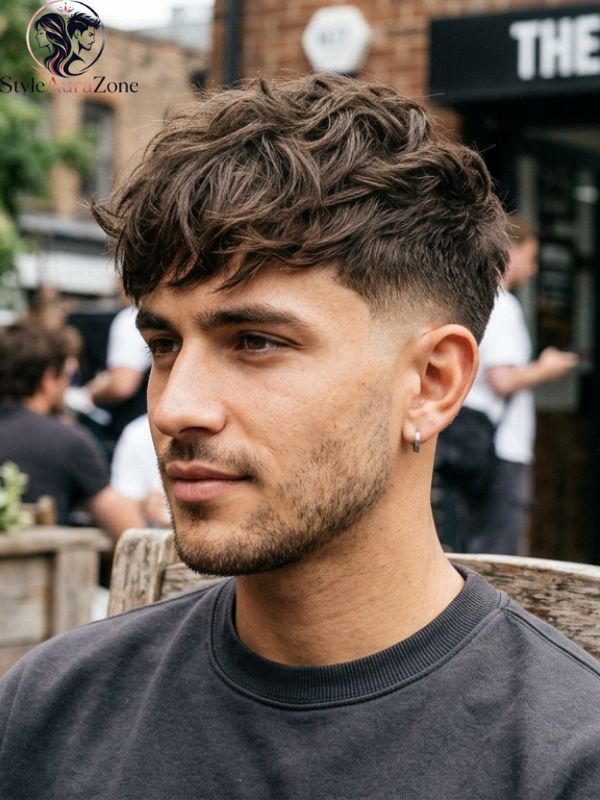
This is the “I just woke up like this” version. The barber point-cuts the fringe to leave broken, uneven ends about 2 to 3 inches long. A fingertip of clay and a quick rake finish the job.
Ask your barber: “Low taper, point-cut fringe, keep some weight at the front.”
Curly Textured Fringe with Low Taper
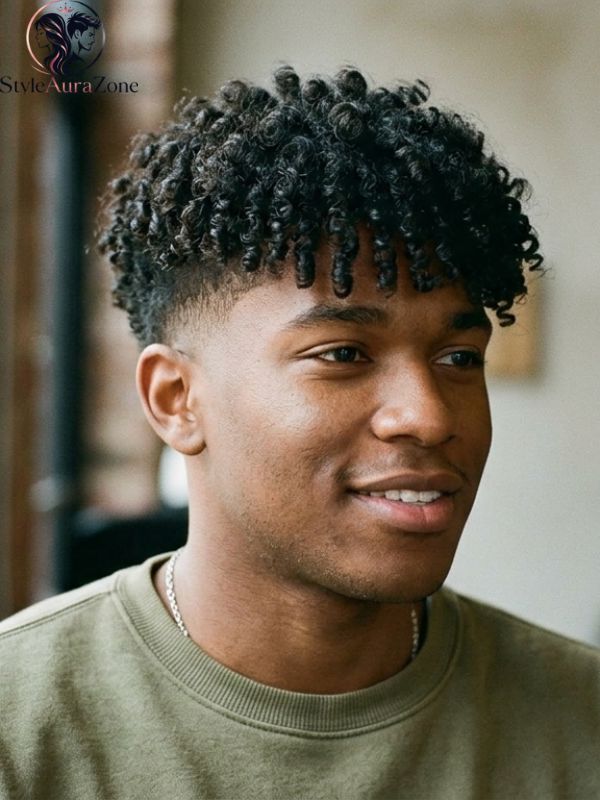
Curls bring built-in texture, so the taper does the tidying. Keep the fringe around 3 to 4 inches, because curls shrink once they dry. A curl cream defines the spring without crunch.
Ask your barber: “Cut the fringe dry so I can see the real length.”
Blowout Textured Fringe Low Taper
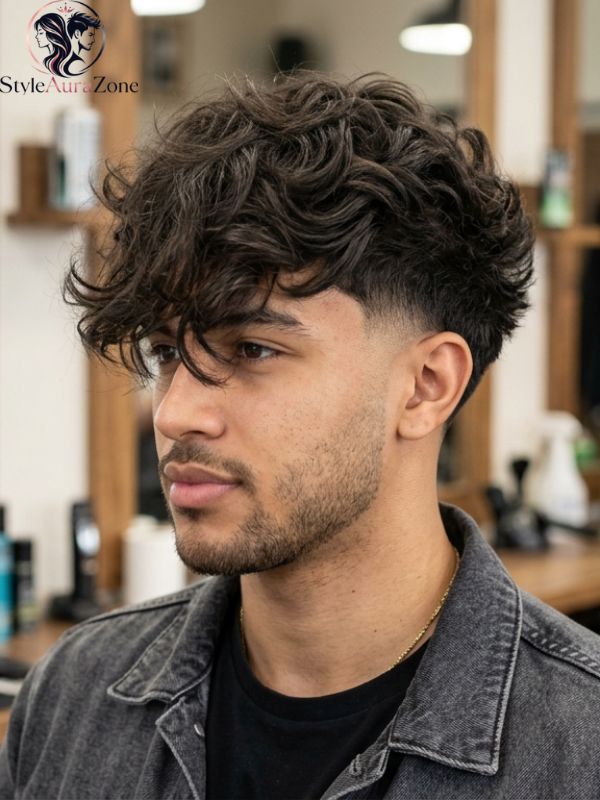
Here the top gets lifted with a blow dryer and a salt spray. The result is height at the roots and a soft fall toward the forehead. It suits fine to medium hair that needs extra body.
Ask your barber: “Longer, layered top for a blowout, low taper on the sides.”
Wavy Fringe Low Taper Fade
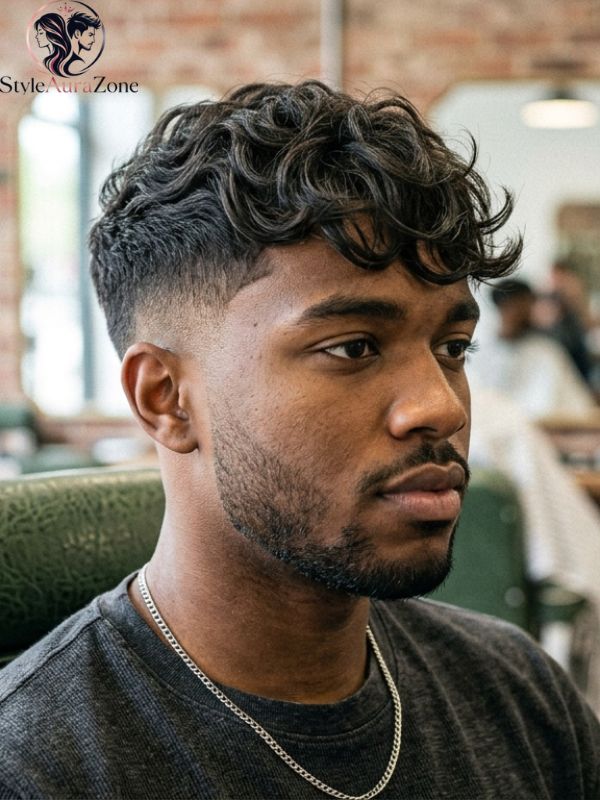
Waves already move, so you only need to guide them. A slightly longer fringe lets the S-pattern curve across the forehead. Use a light cream and let the hair air dry for the most natural shape.
Ask your barber: “Keep enough length for the wave to show.”
Read more:Modern Mullet with Wavy Hair: Effortless Styling Tips
Straight Hair Textured Fringe Taper
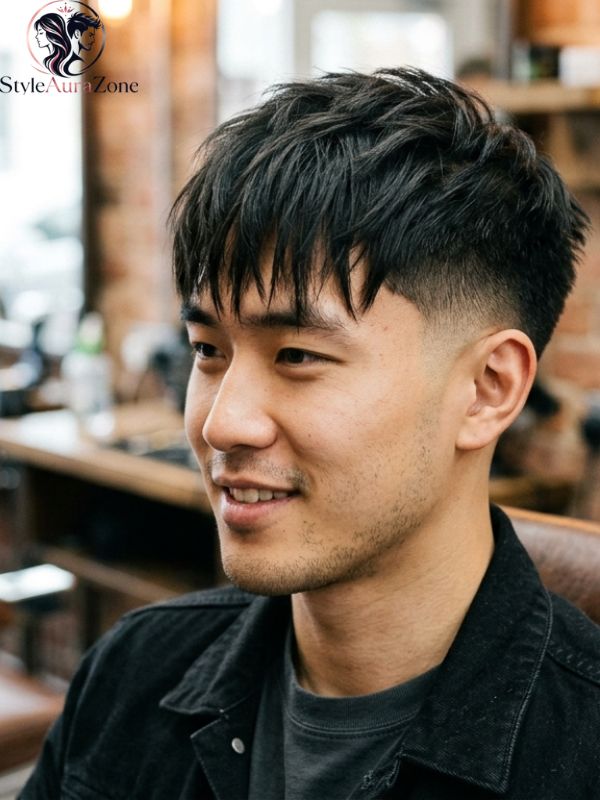
Straight hair tends to lie flat, so the texture has to come from the cut. Choppy ends and a matte paste create the grip it lacks. Without that, the fringe can look heavy and blunt.
Ask your barber: “Add texture with point cutting or thinning shears.”
French Crop Textured Fringe with Low Taper
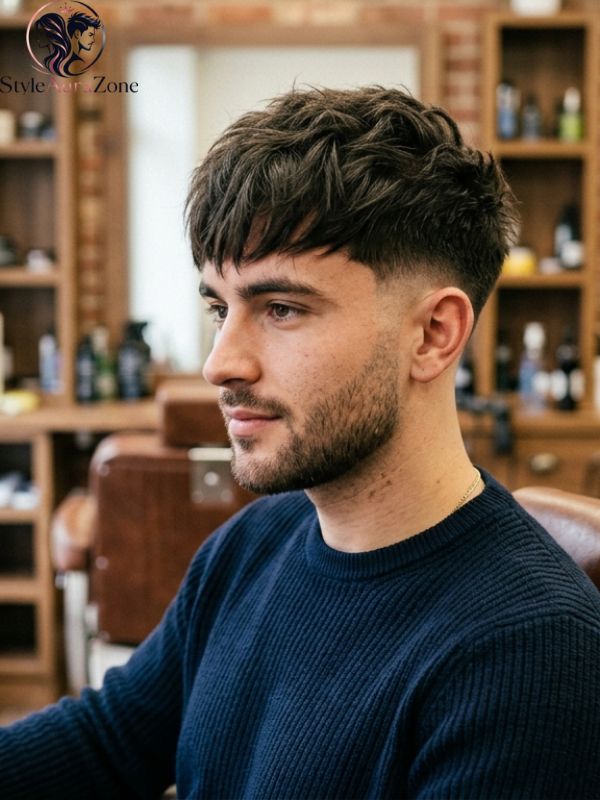
The French crop keeps the fringe short and cut straight across, usually about 1 to 2 inches. Pairing it with a low taper softens what is normally a stark cut. Push the fringe forward with matte clay for a modern finish.
Ask your barber: “French crop with a textured top and a low taper.”
Asian Textured Fringe Low Taper
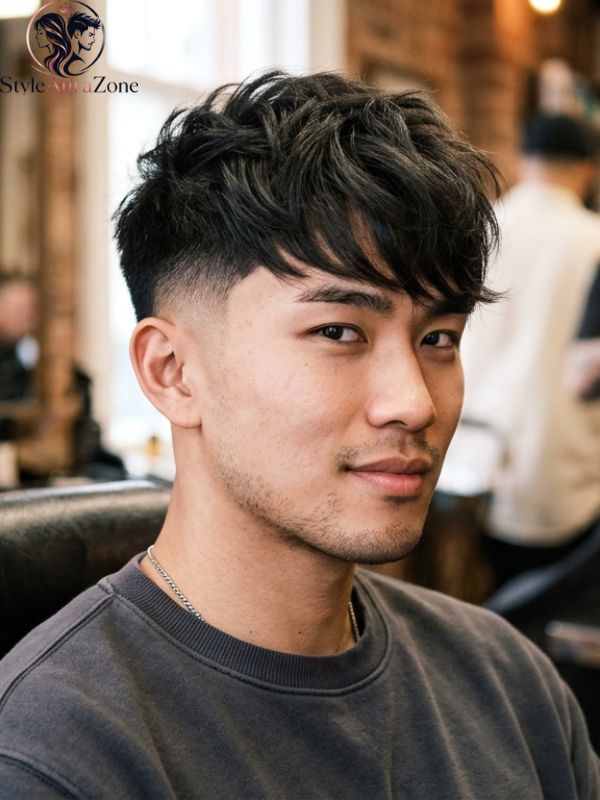
Dense, straight hair often flares out above the ears, so the taper does real work here. It removes bulk where it matters. A slightly longer, layered fringe then falls with movement instead of one heavy sheet.
Ask your barber: “Remove weight at the sides and layer the fringe.”
Fluffy Fringe Low Taper Fade
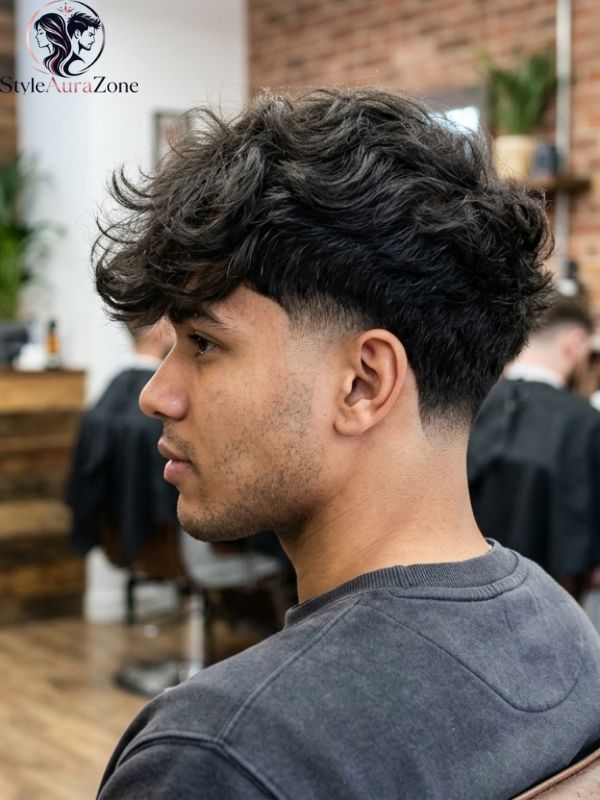
This look goes airy and soft. Blow-dry the front upward with your fingers, then let it fall forward. A volumizing powder adds lift without stiffness, which keeps the fluff believable.
Ask your barber: “Soft layers on top, nothing blunt.”
Mid-Length Textured Fringe with Low Taper
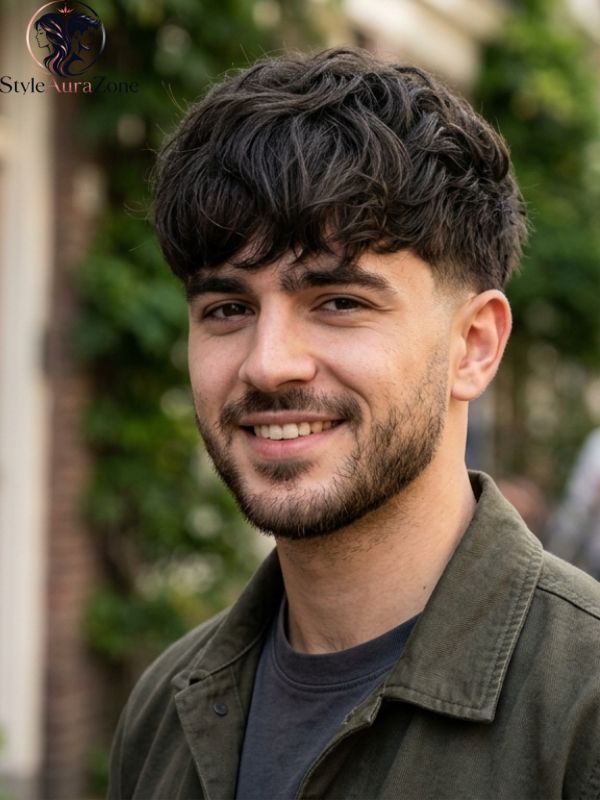
With 4 to 5 inches on top, the fringe can sweep across the brow or push to one side. The low taper keeps the longer top from looking shaggy. It’s a good bridge for anyone growing out a shorter cut.
Ask your barber: “Keep the length on top and tidy only the perimeter.”
Textured Fringe with Beard and Low Taper
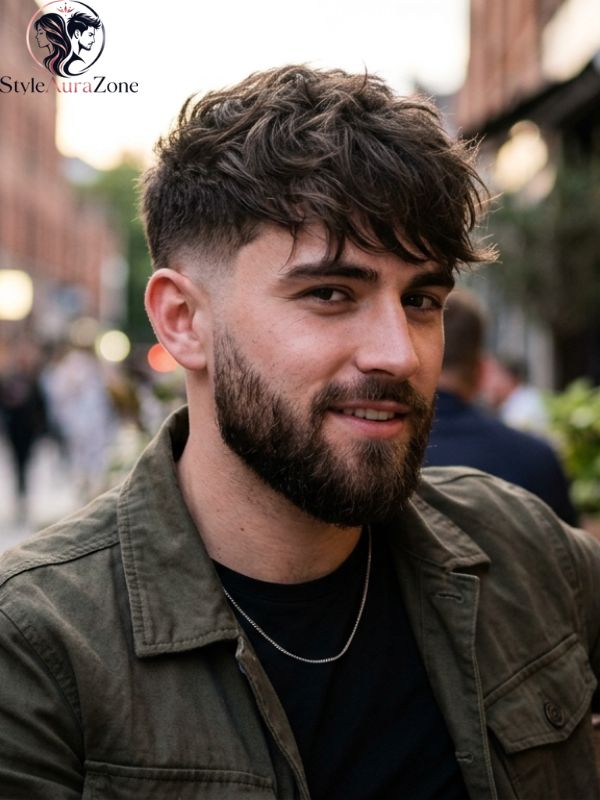
The taper should flow into your sideburns and beard line. When both blend, the face looks sharper and more intentional. Trim the cheek line regularly and use a little balm to control flyaways.
Ask your barber: “Blend the taper into my beard at the sideburns.”
Short Textured Fringe with Low Taper
If you want less styling time, this is the one. The fringe sits around 1 to 2 inches with light texture. Texturizing powder is often all you need.
Ask your barber: “Short, textured fringe, low taper, easy to maintain.”
Textured Fringe Low Taper with Mullet
This version pairs the neat sides with a softly longer back. The taper tidies the ears and nape edge while the fringe stays textured up front. It reads modern rather than retro when the back is only slightly longer.
Ask your barber: “Low taper with a soft, connected back and a textured fringe.”
Quick Comparison of the 12 Looks
| Look | Best Hair Type | Typical Fringe Length | Styling Effort |
| Messy | Thick, straight to wavy | 2–3 in | Low |
| Curly | Curly, coily | 3–4 in | Medium |
| Blowout | Fine to medium | 3–4 in | Medium |
| Wavy | Wavy | 3–4 in | Low |
| Straight | Straight | 2–3 in | Medium |
| French Crop | Straight to wavy | 1–2 in | Low |
| Asian | Thick, straight | 2–4 in | Medium |
| Fluffy | Fine, straight | 3–4 in | Medium |
| Mid-Length | Any | 4–5 in | Medium |
| With Beard | Any | 2–4 in | Medium |
| Short | Any | 1–2 in | Low |
| With Mullet | Straight to wavy | 2–4 in | Medium |
What Is Low Taper Fade Textured Fringe
It’s a haircut built from two parts. The low taper gradually shortens the hair around the ears and nape, starting just above the ear and following the natural hairline. The textured fringe is the longer front section, cut with broken edges so it looks relaxed.
A taper differs from a skin fade. Hair gets shorter gradually and often keeps some length at the lowest point, which gives a softer result.
Key traits of the cut:
- Short, neat sides with a gentle, low gradient
- A fringe that falls forward over the forehead
- Visible texture created by point cutting, razor work, or thinning shears
- Easy growth into a longer style if you skip a few visits
| Section | Typical Length | Cutting Method |
| Nape and ears | Skin to short guard | Clippers, trimmer edging |
| Transition zone | Short guard stepping up | Clipper-over-comb or blending |
| Top and crown | 2–5 in | Scissors and texturizing |
| Fringe | 1–5 in, depending on style | Point cutting, razor, or thinning shears |
Exact guard numbers vary by barber and hair density, so treat these as starting points rather than rules.
Low Taper Fade vs Mid Taper for Textured Fringe
The main difference is where the taper begins. A low taper stays near the ears and neckline. A mid taper starts higher, around the temple, and changes the shape of the whole head.
Low Taper Fade Textured Fringe
The low taper keeps more hair on the sides, so it looks subtle and professional. It also grows out slowly, which stretches the time between visits. Pick it if you want a polished look without a dramatic contrast.
Mid Taper Fade with Textured Fringe
The mid taper creates a stronger line between the sides and the top. That sharper contrast makes the fringe stand out more. It suits people who want a bolder profile and don’t mind more frequent trims.
| Feature | Low Taper | Mid Taper |
| Starting height | Just above the ears | Around the temple |
| Contrast with top | Soft | Moderate to strong |
| Grow-out | Slow, forgiving | Faster, more noticeable |
| Workplace friendly | Very | Usually |
| Best for | Subtle, classic polish | A stronger, modern edge |
Textured Fringe Low Taper from Different Angles
A good cut should look right from every side. Check the front and back before you leave the chair.
Front View of a Textured Fringe Low Taper
From the front, the fringe should sit evenly across the forehead without a straight shelf. Look for broken, varied ends and a soft transition at the temples. The taper should frame the face rather than outline it like a stencil.
Front-view checklist:
- The fringe length is even without looking blunt.
- The temples blend smoothly into the top.
- Both sides match in height.
Back View and Tapered Finish
The back reveals the barber’s skill. A clean low taper follows the natural nape and fades smoothly, with no visible lines or steps. Hold up a hand mirror and look for even blending across the full width.
Ask for a tapered or natural neckline if you want it to grow out gracefully. A squared edge looks sharp on day one and ragged by week three.
How to Style a Low Taper Fade Textured Fringe
Styling takes a few minutes once you know the routine. The goal is movement with some hold, not a stiff shell.
Creating Texture and Definition
- Towel-dry your hair until it’s damp, not dripping.
- Mist a salt spray or pre-styler through the roots.
- Blow-dry the top forward and up using your fingers.
- Warm a pea-sized amount of matte clay between your palms.
- Work it through the fringe, twisting the ends to separate them.
- Finish with a light-hold spray if you need extra staying power.
Styling Straight, Wavy, and Curly Hair
| Hair Type | Prep | Best Product | Finish |
| Straight | Salt spray, blow-dry forward | Matte paste or powder | Pull ends apart for choppy texture |
| Wavy | Light cream on damp hair | Lightweight cream or mousse | Air dry or diffuse |
| Curly | Leave-in conditioner or curl cream | Curl cream or gel | Scrunch, then diffuse on low heat |
The Evolution of Low Taper Fade Textured Fringe
Tapered sides have roots in classic barbering and military grooming, where neat edges mattered. Over the decades, the top got longer and looser, and the fade became a staple of modern barbershops.
| Era | Trend | What It Contributed |
| Early to mid 1900s | Classic tapered cuts | Neat sides, scissor-over-comb blending |
| 1990s | Textured crops | Choppy, forward-swept tops |
| 2010s | Fades and undercuts | Sharp contrast and skin fades |
| 2020s | Soft low tapers with texture | Gentler blends and lived-in fringes |
The 2026 version borrows from all of these. It keeps the precision of a barber’s taper and adds a relaxed, natural top that doesn’t demand constant styling.
Choosing the Right Fit for Your Face Shape
The fringe and taper can balance your proportions. Use this chart as a starting point, then adjust with your barber’s advice.
| Face Shape | Best Fringe Approach | Taper Tip |
| Oval | Almost any length | Low taper keeps balance |
| Round | Longer, textured fringe with lift | Keep sides tight to add length |
| Square | Softer, slightly longer fringe | Blend sides gently to soften the jaw |
| Heart | Longer fringe across the forehead | Low taper avoids a narrow look |
| Oblong | Shorter, forward fringe | Avoid too much height on top |
| Diamond | Fuller fringe to add forehead width | Keep the taper soft at the temples |
Maintenance Tips to Keep the Cut Sharp
The low taper starts looking grown out after 2 to 4 weeks, depending on how fast your hair grows. Plan your visits around that window.
| Task | How Often | Why It Matters |
| Barber visit for taper cleanup | Every 2–4 weeks | Keeps the nape and ears neat |
| Fringe trim | Every 4–6 weeks | Preserves length and shape |
| Shampoo | 2–4 times per week | Avoids buildup that flattens texture |
| Conditioner or leave-in | After each wash | Keeps fringe soft and manageable |
| Product refresh | Daily | Reactivates texture without re-washing |
A few habits that help:
- Use a wide-tooth comb on damp hair to avoid frizz.
- Rinse out heavy products fully before the next application.
- Book a quick edge-up between full cuts if your budget allows.
FAQ’S
How long should my hair be for a textured fringe?
You need about 2 to 3 inches on top for a basic fringe. Longer hair, around 4 to 5 inches, gives more styling options.
Is a low taper fade the same as a skin fade?
No. A taper shortens hair gradually and may keep some length at the bottom, while a skin fade goes down to bare skin.
How often should I get this haircut?
Every 2 to 4 weeks keeps the taper clean. The fringe can wait 4 to 6 weeks.
Does this cut work for thinning hair?
Yes. A textured fringe and short sides can make thinner hair look fuller. A matte powder adds extra body.
Can I wear this cut with curly hair?
Absolutely. Keep the fringe slightly longer to allow for curl shrinkage and use a curl cream for definition.
Conclusion
A low taper fade with a textured fringe delivers clean edges and easy movement in one haircut. With 12 variations, you can match it to your hair type, face shape, and daily routine. The right choice depends on what you actually want to do each morning.
Keep your visits on schedule, pick a product that suits your hair, and speak up about your preferred fringe length. Do that, and this cut stays sharp, flexible, and fresh through 2026. Bring a photo to your next appointment and start there.