
Short sides, a long tail, and just enough edge to turn heads. the low taper fade modern mullet has quietly become one of the most requested cuts of 2026. It keeps the sharp discipline of a taper fade while letting the back grow out with real personality and movement.
Below you’ll find 26 standout variations to bring to your barber, along with a ready-to-use script for your next appointment, face shape guidance, step-by-step styling advice, and maintenance tips. Whether your hair is straight, curly, thick, or fine, there’s a version of this cut built specifically for you.
What Is a Low Taper Fade?
A low taper fade trims the hair gradually from the top down to the skin near the ear and neckline, staying close to the hairline instead of climbing up the head. It’s the subtlest of the fade heights, which makes it easy to wear in almost any setting.
What Is a Modern Mullet Haircut?
The modern mullet swaps the boxy, dated silhouette of the 1980s original for softer layers, textured tips, and a tapered transition instead of a hard line. The front and top stay manageable while the back is left longer for shape and swagger.
Why This Haircut Is Trending in 2026
Barbers and stylists point to a few clear reasons this cut keeps climbing search charts and salon booking lists this year.
- Versatility: It looks polished enough for the office yet playful enough for weekends.
- Texture-friendly: It adapts to straight, wavy, curly, and coily hair without losing its shape.
- Low upkeep: The sides only need a touch-up every few weeks, while the back grows out gracefully.
- Social proof: Athletes, musicians, and streetwear influencers have driven visibility on short-form video, pushing demand higher every month.
Low Taper Fade vs Traditional Mullet
| Feature | Low Taper Fade Modern Mullet | Traditional Mullet |
| Side length | Gradual fade, skin-close near ear | Often left bushy or blunt-cut |
| Transition | Smooth, blended taper | Harsh, visible line |
| Top styling | Textured, layered, versatile | Usually flat or unstyled |
| Overall vibe | Polished, modern, adaptable | Retro, rugged, less refined |
| Maintenance | Fade touch-up every 3–4 weeks | Infrequent, minimal shaping |
26 Best Low Taper Fade Modern Mullet Haircut Styles
These variations cover every hair texture, length preference, and personal style, so you can walk into your next barber visit with a specific reference in hand.
Classic Low Taper Fade Modern Mullet
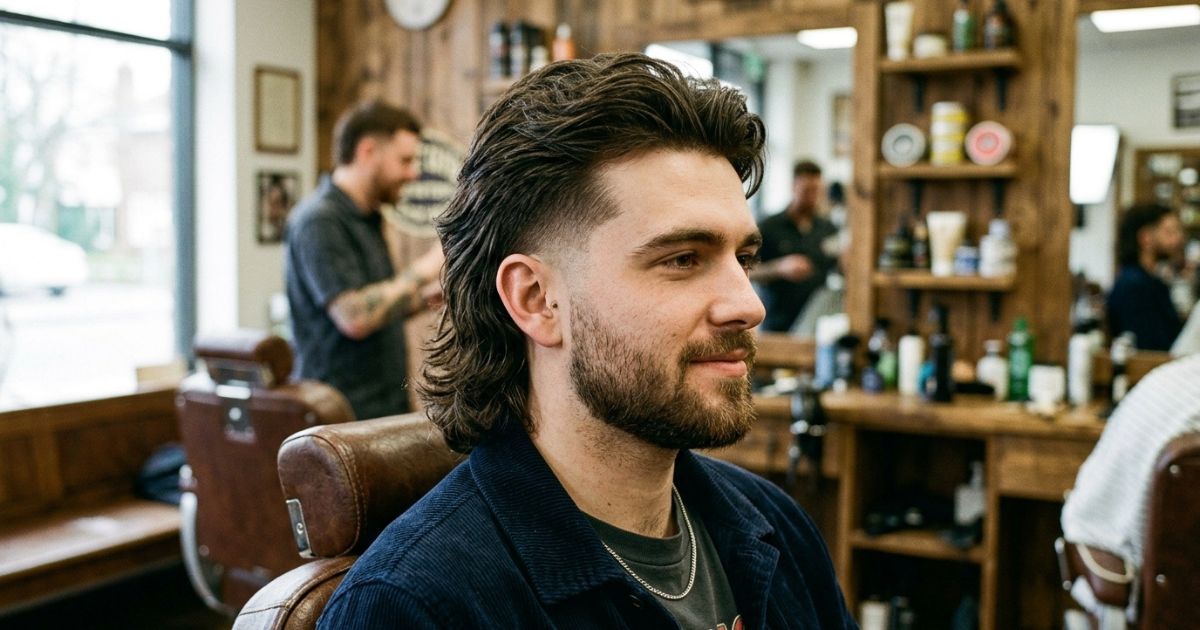
This is the baseline version: a soft fade around the ears blended into a natural-length back. It reads as clean and professional up front while still carrying mullet attitude behind the ears.
Textured Modern Mullet with Low Taper Fade
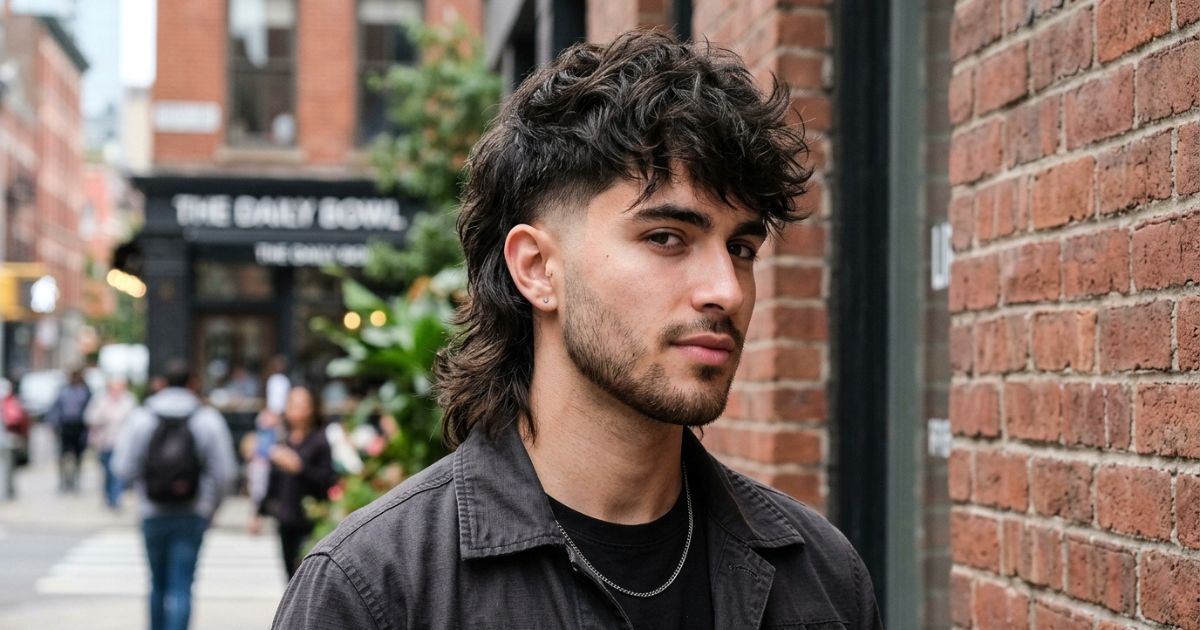
Point-cut layers add movement through the crown and tail, breaking up any flat sections. The choppy finish gives the cut a lived-in, effortless look that photographs well from every angle.
Messy Low Taper Fade Modern Mullet Haircut

Tousled, undone, and deliberately imperfect, this version relies on light product and finger-styling rather than a comb. It suits guys who want a low-effort morning routine with maximum visual payoff.
Curly Low Taper Fade Modern Mullet Haircut
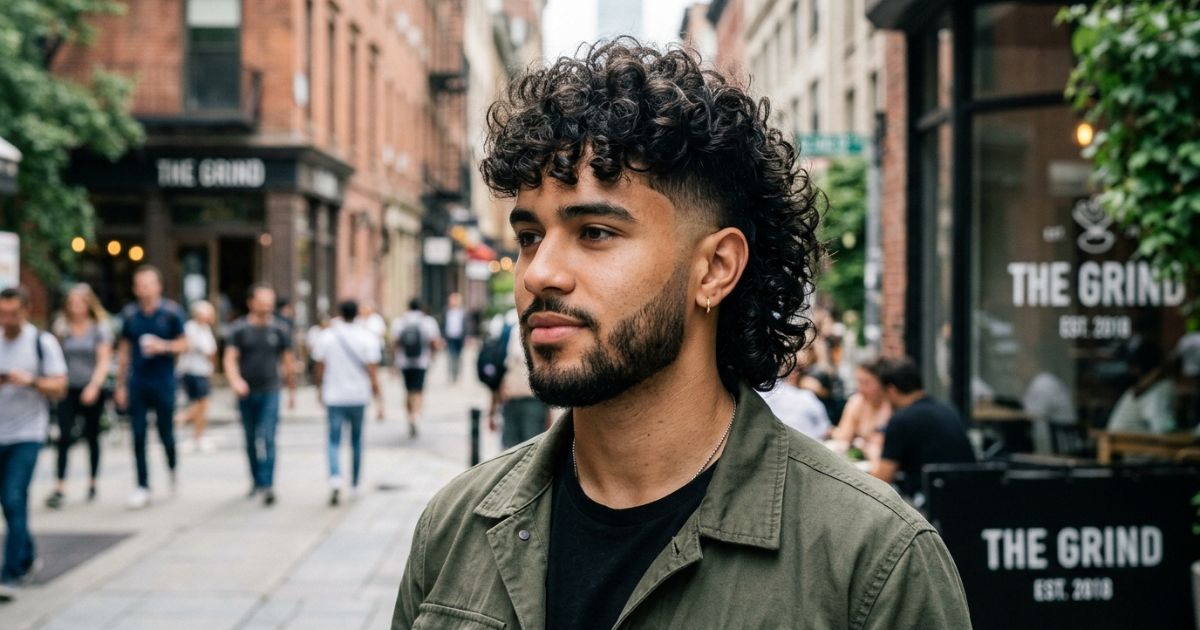
Natural curls are left long on top and in the back, creating volume that contrasts sharply with the tight fade. A curl cream keeps definition without weighing the pattern down.
Straight Hair Low Taper Fade Modern Mullet Haircut

Straight strands fall cleanly from the crown into a sleek tail, showing off the fade line with crisp precision. This variation styles fastest since there’s minimal texture to manage.
Wavy Low Taper Fade Modern Mullet Haircut
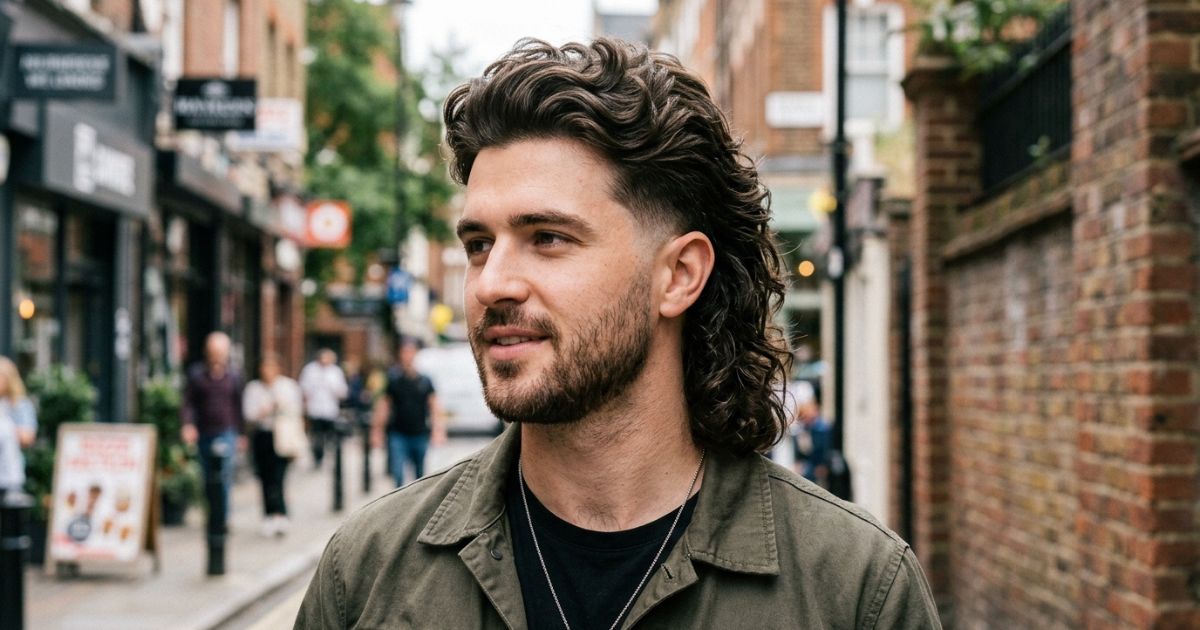
Natural waves add subtle dimension without full curl volume, giving the cut a relaxed, beachy quality. Sea-salt spray enhances the texture and helps the back hold its shape all day.
Blonde Low Taper Fade Modern Mullet Haircut

Bleached or naturally light hair makes the longer back stand out even more against the darker-toned fade. It’s a bold color statement that pairs well with warmer skin tones.
Short Low Taper Fade Modern Mullet Haircut

A trimmed-down back keeps the mullet subtle, ideal for workplaces with conservative grooming standards. You still get the tapered contrast, just with far less length to manage day to day.
Long Low Taper Fade Modern Mullet Haircut
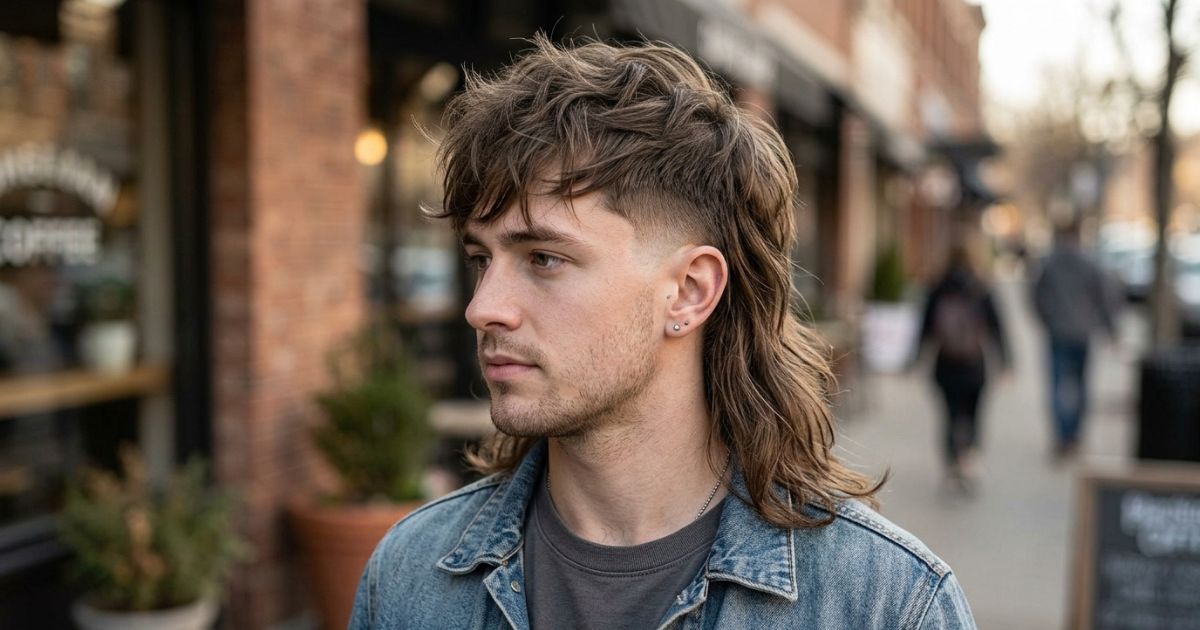
The back is grown out well past the collar, creating maximum drama and the boldest possible contrast with the fade. This works best for guys committed to regular trims and daily styling.
Burst Fade Low Taper Fade Modern Mullet Haircut

Instead of a straight fade line, the hair fades in a circular pattern around the ear. It softens the transition and adds a rounded, sculpted look that pairs beautifully with longer tails.
Low Taper Fade Modern Mullet with Textured Fringe

Choppy, piece-y bangs fall over the forehead while the sides and back stay classic mullet proportions. It’s a great option for guys who want a trendier front without changing the overall shape.
Learn more:Low Taper Fade Textured Crop Haircut: Top 26 Best Styles for Men in 2026
Low Taper Fade Modern Mullet with Side Part
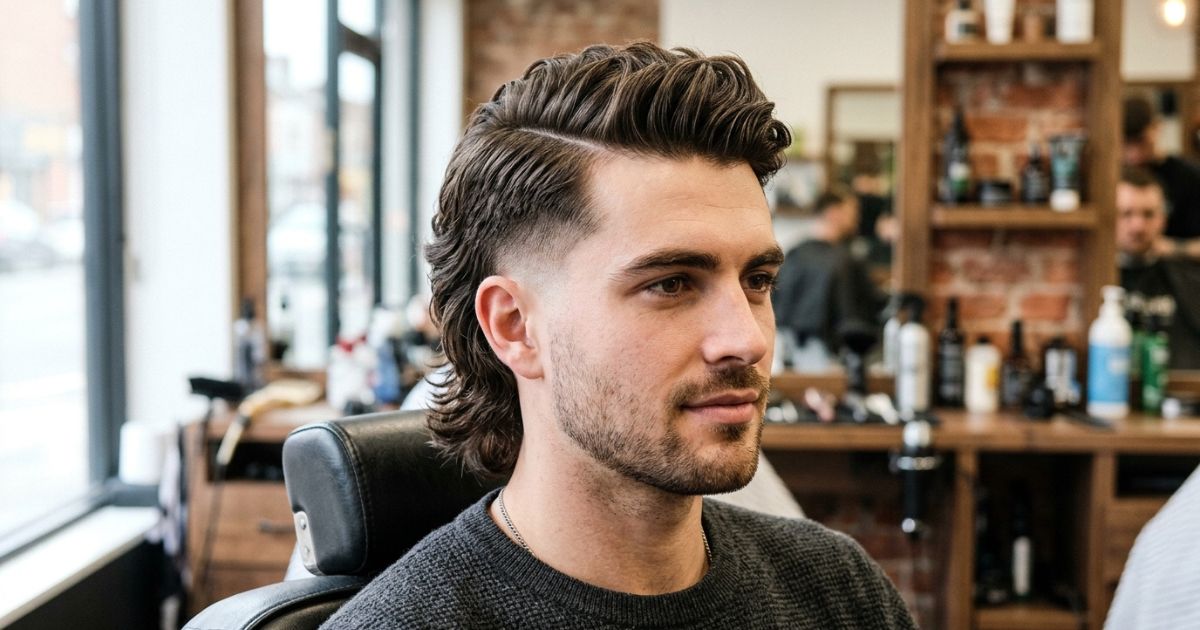
A defined part adds structure and a slightly dressier finish, making this version easy to switch between casual and formal occasions. A light-hold pomade keeps the part crisp through the day.
Low Taper Fade Modern Mullet Haircut Male

A straightforward, all-purpose take on the style built for everyday wear, with moderate length on top and a natural-looking taper. It works across nearly every age group and hair type.
Low Taper Fade Modern Mullet with Middle Part
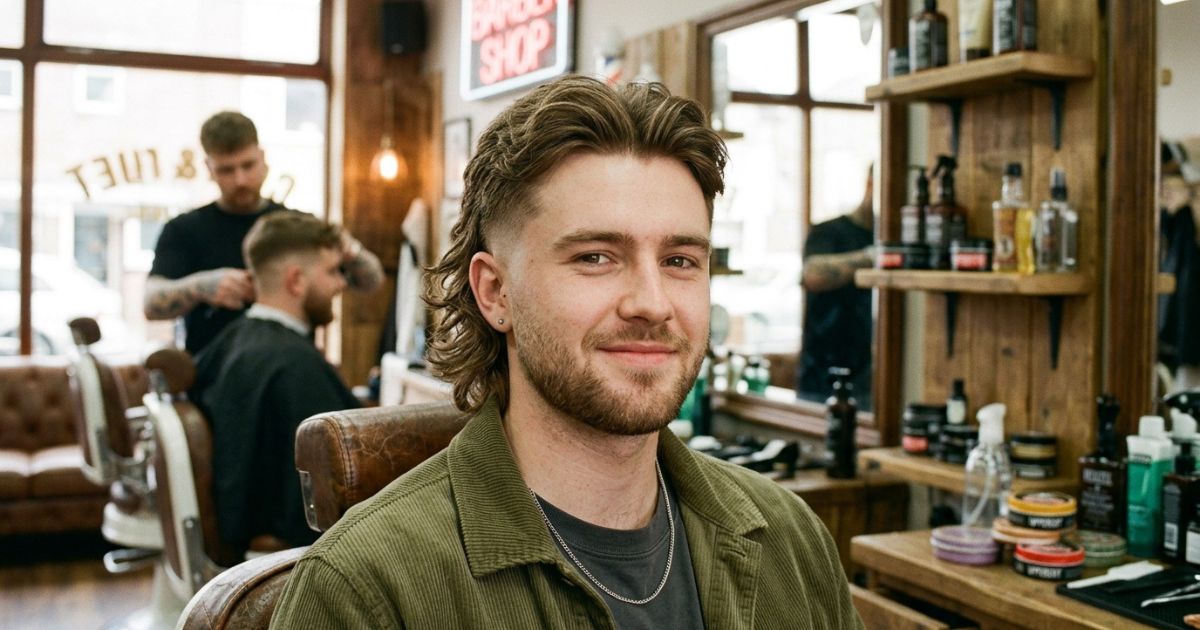
A center part gives the top a symmetrical, K-pop-inspired shape that frames the face evenly on both sides. It pairs especially well with straight or lightly wavy hair.
Slick Back Low Taper Fade Modern Mullet Haircut

The top is combed straight back with a strong-hold gel or pomade, creating a sharp, polished contrast against the loose, flowing back section. It’s a go-to for formal events.
Fluffy Low Taper Fade Modern Mullet Haircut

Blow-dried with a round brush, this version maximizes volume and softness on top while keeping the sides tight. A texturizing powder at the roots helps the fluff hold its shape.
Layered Low Taper Fade Modern Mullet Haircut

Multiple layers throughout the crown and back reduce bulk and add shape, making thick hair easier to manage and style. It also helps fine hair look fuller than it actually is.
Korean Low Taper Fade Modern Mullet Haircut

Soft, face-framing layers on top meet a subtle fade and a shorter, tidier back than most Western versions. Matte styling products keep the finish natural rather than glossy.
Asian Low Taper Fade Modern Mullet Haircut

Built to work with thicker, straighter hair textures, this version often keeps more length and weight on top to balance the tighter fade underneath. It suits a wide range of face shapes.
Low Taper Fade Modern Mullet with Beard

Pairing the cut with a well-groomed beard creates continuity from the fade line down through the jaw. Keeping the beard taper matched to the hair fade makes the whole look feel intentional.
Low Taper Fade Modern Mullet for Thick Hair

Thinning shears remove bulk from the crown so the style doesn’t look overly heavy, while the fade keeps the sides from feeling bulky. Matte clay controls frizz without adding shine.
Low Taper Fade Modern Mullet for Thin Hair

Shorter layers and a slightly higher fade create the illusion of density, since thin hair holds shape better with less length working against it. A lightweight volumizing spray helps at the root.
Teen Boy Low Taper Fade Modern Mullet Haircut

A shorter, lower-maintenance version that still delivers the trendy silhouette without requiring daily styling effort. It’s a popular pick for school-aged guys who want an easy, modern look.
Professional Low Taper Fade Modern Mullet Haircut

A more conservative back length and a tighter fade keep this variation office-appropriate while still nodding to the trend. It reads as neat and put-together in any workplace setting.
Low Taper Fade Modern Mullet with Hair Design

A shaved line, part, or small pattern is added into the fade for extra personality and detail. It’s a subtle way to stand out without altering the overall mullet shape.
Modern Wolf Cut with Low Taper Fade Mullet

This hybrid blends the shaggy, heavily layered wolf cut with a clean taper on the sides, resulting in maximum volume and texture up top. It suits guys chasing a bold, rock-star silhouette.
How to Ask Your Barber for a Low Taper Fade Modern Mullet Haircut
Clear communication is the fastest way to leave the chair happy. Bring a reference photo and use specific, measurable language instead of vague descriptions.
Barber Script
Try this when you sit down: “I’d like a low taper fade — start blending around the ear with a #2 and fade to skin at the neckline. Leave about 3 to 4 inches on top and 5 to 6 inches in the back for a modern mullet shape. Keep the fringe a bit longer and textured, not blunt.”
Quick Barber Cheat Sheet
| Spec | What to Say |
| Clipper guard | #2 on the sides, tapering to skin |
| Fade height | Low — just above the ear |
| Top length | 3–4 inches |
| Back length | 5–6 inches, longer if desired |
| Fringe | 2–3 inches, textured ends |
Clipper Guard
Ask for a #2 guard as the starting point on the sides, gradually shortening toward the skin near the ear and neckline for a seamless blend.
Fade Height
Specify “low” clearly, since barbers default to mid or high fades unless told otherwise. The fade should stay close to the ear, not climb toward the temple.
Top Length
Most versions keep 3 to 4 inches on top, enough for texture and styling flexibility without becoming unmanageable during the workday.
Back Length
Anywhere from 5 to 8 inches works, depending on how bold you want the mullet effect. Shorter lengths read as subtle; longer lengths read as statement-making.
The Fringe (Bangs)
Request textured, point-cut ends rather than a blunt line across the forehead. This keeps the front looking intentional and modern instead of dated.
Best Face Shapes
Most face shapes can wear this cut successfully, but small adjustments to volume and length make it even more flattering.
Oval Face (Egg Shape)
Nearly every variation works here, since oval faces have balanced proportions. Lean into bolder back lengths or textured fringe without worrying about awkward proportions.
Round Face (Circle Shape)
Add height on top and keep the sides tight to create length and angles that offset the natural roundness. Avoid heavy fringe that adds width to the cheeks.
Square Face (Box Shape)
Soft, textured layers help balance a strong jawline, while a slightly longer fringe softens the forehead. Avoid overly sharp, geometric fade lines that emphasize angularity.
Diamond Face (Wide Cheekbones)
Volume on top and a fringe that falls across the forehead help balance narrower jaw and hairline widths. Side parts work particularly well with this shape.
Heart Face (Wide Forehead, Pointy Chin)
A side-swept fringe minimizes forehead width, while extra length in the back helps balance a narrower chin. Avoid slicking hair straight back, which exposes the forehead fully.
Oblong Face (Long Shape)
Keep the top shorter to avoid adding extra vertical length, and favor a fuller, wider silhouette in the back. Fringe with some weight also helps shorten the face visually.
Best Hair Types
| Hair Type | How It Works With This Cut |
| Straight | Shows the fade line crisply; styles quickly with minimal product |
| Wavy | Adds natural texture and movement with little effort |
| Curly | Creates volume contrast; needs curl-specific products to define pattern |
| Coily | Works well with a slightly higher fade for definition; needs regular moisture |
| Thick | Benefits from thinning shears to reduce bulk on top |
| Fine/Thin | Needs shorter layers and volumizing products to avoid looking flat |
Pros and Cons
Pros
- Works across nearly every hair type and face shape
- Low-effort maintenance on the sides between trims
- Easy to dress up or down for different occasions
- Offers more creative freedom than a traditional short haircut
- Grows out gracefully without needing an emergency trim
Cons
- Requires regular fade touch-ups to stay sharp
- Longer back sections take time to fully grow in
- Not universally accepted in strict corporate or military settings
- Styling the back consistently can take practice at first
How to Style a Low Taper Fade Modern Mullet Haircut
Start with towel-dried, damp hair rather than fully wet or bone-dry strands, since product distributes more evenly at that stage. Focus product application on the mid-lengths and ends rather than the roots for a more natural finish.
Best Styling Products
| Product | Best For |
| Matte clay | Textured, natural-looking finish with low shine |
| Sea-salt spray | Beachy waves and added grip for styling |
| Pomade | Slicked-back or side-part styles with more hold |
| Volumizing spray | Fine or thin hair needing extra lift at the root |
| Curl cream | Defining natural curl or wave patterns without frizz |
Step by Step Styling Guide
- Towel-dry hair until it’s damp, not soaking wet.
- Apply a dime-sized amount of your chosen product, warming it between your palms first.
- Work product through the top and fringe using your fingers for texture.
- Comb or finger-style the back section into your desired shape.
- Use a blow dryer on low heat if extra volume or direction is needed.
- Finish with a light-hold spray to lock the style in place for the day.
How to Maintain a Low Taper Fade Modern Mullet Haircut
- Schedule a fade touch-up every 3 to 4 weeks to keep the sides sharp.
- Trim split ends in the back every 6 to 8 weeks without cutting length dramatically.
- Wash with a sulfate-free shampoo 2 to 3 times a week to protect natural oils.
- Deep-condition monthly if you’re growing out length in the back.
- Sleep on a silk or satin pillowcase to reduce frizz and breakage overnight.
Low Taper Fade Modern Mullet vs Classic Mullet
| Feature | Low Taper Fade Modern Mullet | Classic Mullet |
| Side treatment | Faded, blended taper | Often untapered or minimally shaped |
| Styling effort | Moderate, product-dependent | Minimal, mostly unstyled |
| Modern appeal | High — trending across social platforms | Retro, nostalgic aesthetic |
| Workplace suitability | Generally acceptable | Often seen as too casual |
Low Taper Fade Modern Mullet vs Burst Fade Mullet
| Feature | Low Taper Fade Modern Mullet | Burst Fade Mullet |
| Fade pattern | Straight, gradual taper | Circular fade around the ear |
| Visual effect | Subtle, blended contrast | Rounded, more dramatic contrast |
| Best for | Understated, everyday wear | Bolder, statement-making looks |
Low Taper Fade Modern Mullet vs Wolf Cut
| Feature | Low Taper Fade Modern Mullet | Wolf Cut |
| Layering | Moderate layers, longer back | Heavy layering throughout, shaggier |
| Volume | Controlled, moderate volume | Maximum volume and texture |
| Overall vibe | Clean, versatile, professional-friendly | Edgy, rock-inspired, high-texture |
Celebrity Inspiration
Athletes, musicians, and streetwear-focused influencers have helped push this haircut into the mainstream throughout 2025 and 2026. Its appearance across red carpets, sports broadcasts, and short-form video content has made barbers far more familiar with the request, so most shops can now execute it confidently on the first visit.
Common Mistakes to Avoid
- Asking for a fade without specifying “low,” which often results in a mid or high fade instead.
- Skipping regular touch-ups, which lets the fade grow out and lose its clean contrast.
- Overloading fine hair with heavy products that flatten volume instead of adding it.
- Cutting too much length off the back too soon, making the mullet shape disappear.
- Ignoring face shape guidance, which can make styling choices feel less flattering overall.
FAQ’S
What is a taper mullet fade?
It’s a haircut combining a gradual taper fade on the sides with mullet-length hair left longer in the back for bold, modern contrast.
How short should the sides be on a taper mullet fade?
Sides typically start around a #2 or #3 guard near the crown and blend down to skin or near-skin close to the ear and neckline.
Does a taper mullet fade work with curly hair?
Yes, curly hair adds volume and texture up top while the tapered sides stay neat, creating a striking contrast that suits most curl patterns.
How often should you trim a taper mullet fade?
Touch up the fade every three to four weeks to keep it sharp, while the back only needs trimming every six to eight weeks.
Is a taper mullet fade professional enough for work?
Yes, especially with a tighter fade and moderate back length.it reads as neat and modern rather than overly casual in most workplaces.
Conclusion
The low taper fade modern mullet haircut earns its popularity by balancing two opposing ideas: discipline on the sides and freedom in the back. It adapts to nearly any hair type, face shape, and lifestyle, which explains why it keeps showing up in barbershops and social feeds throughout 2026.
Use the barber script and cheat sheet above to communicate clearly at your next appointment, and lean on the styling and maintenance tips to keep the cut looking sharp between visits. With the right upkeep, this haircut rewards you with a look that feels both current and distinctly your own.