
Fade vs High Fade Walk into any barbershop and the first question is usually the same: how high do you want the fade? That single answer shapes your whole look. It decides how much skin shows, how sharp the contrast feels, and how often you’ll be back in the chair. Get it wrong and you’ll notice for weeks.
Low, mid, and high fades each start in a different spot and suit different people. Below, you’ll see where every fade begins, which faces and hair types it flatters, and how much upkeep it demands. You’ll also meet the main fade types, so your next barbershop visit goes smoothly with the right words ready.
What Is A Low Fade?
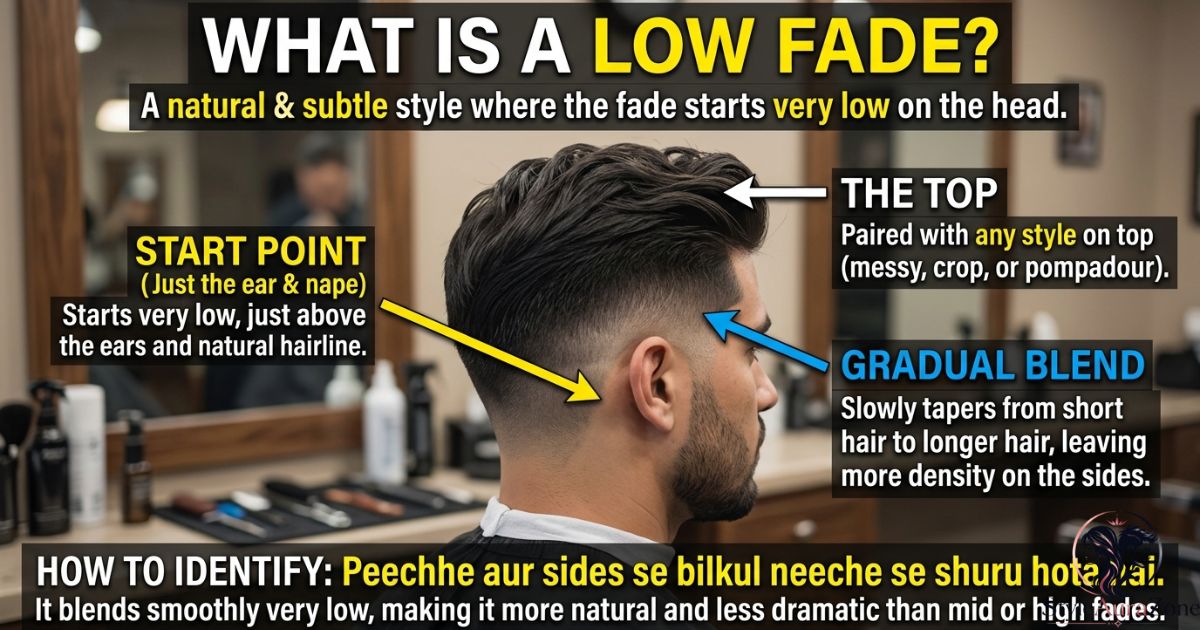
A low fade begins just above the ear and follows the natural hairline around the back of the head. The hair shortens gradually, so the shift from skin to length looks soft. Most of the sides and back keep their length.
Because the fade sits low, it reads as polished rather than loud. That makes it a safe first fade for anyone nervous about going too short. It also grows out gracefully, so a slightly overdue trim still looks intentional.
Defining Characteristics of A Low Fade
- Starting point: Roughly an inch above the ear, tracing the hairline
- Contrast: Subtle, with more length left on the sides
- Transition: Slow and soft
- Pairs well with: Side parts, comb overs, crew cuts, short crops, and mullets
- Best for: Office settings, first-time fade clients, and round faces that need a little added length
- Upkeep: A trim every three to four weeks keeps the line crisp
What Is A Mid Fade?
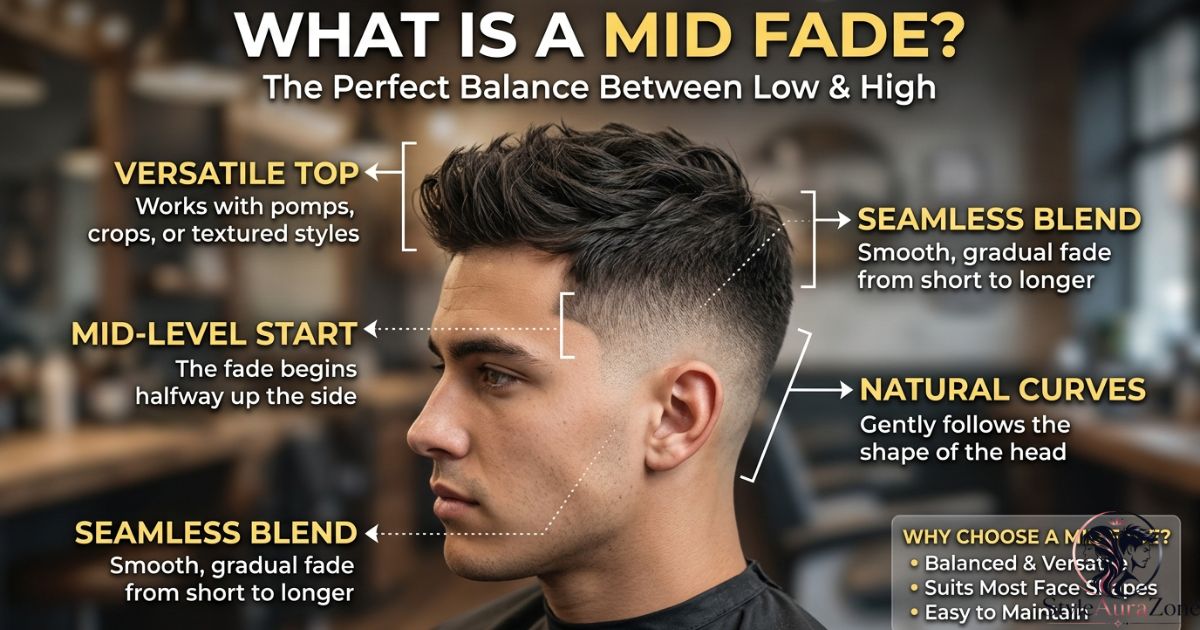
A mid fade starts around the temples, roughly halfway up the side of the head. It sits right between the other two options. The sides get noticeably shorter than a low fade, yet the cut never feels extreme.
That balance explains its popularity. A mid fade looks sharp at a client meeting and just as natural at a weekend barbecue. It also works with nearly every top length, from a buzz to a long quiff.
Read more:Fade Haircuts For Black Men: 27 Sharp, Cool Variations
Defining Characteristics of A Mid Fade
- Starting point: At the temples, near the level of the brow
- Contrast: Clear and clean without feeling dramatic
- Transition: Moderately quick, with visible skin near the bottom
- Pairs well with: Textured crops, pompadours, quiffs, slick backs, and curls
- Best for: Oval and square face shapes, plus anyone who wants one cut for every occasion
- Upkeep: A visit every two to three weeks holds the shape
What Is A High Fade?
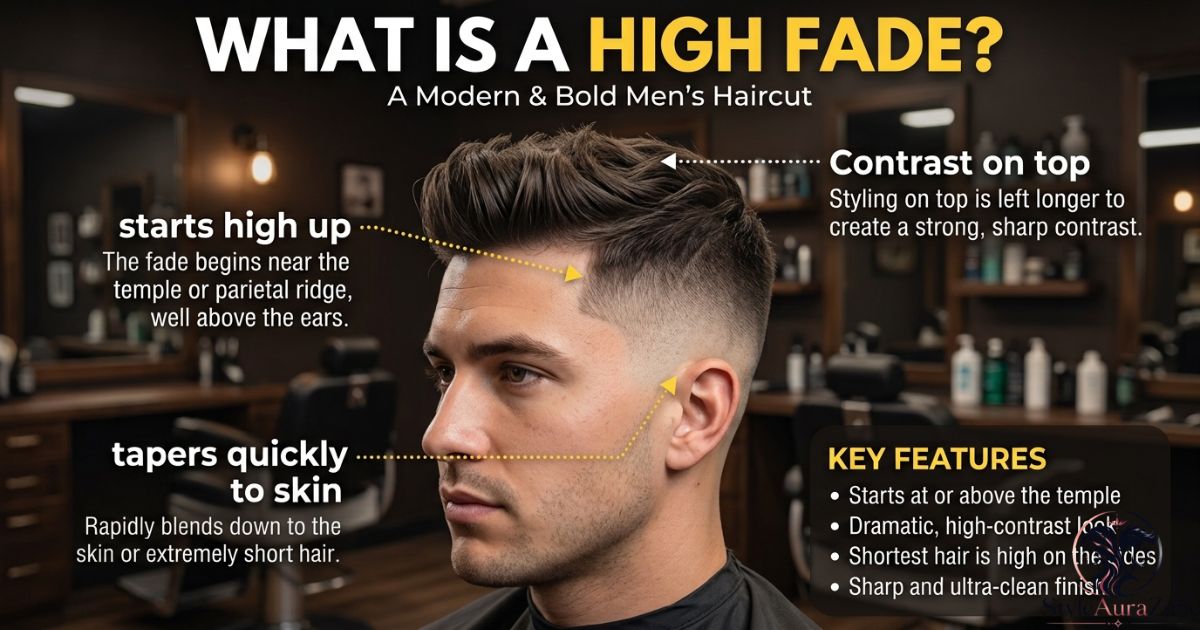
A high fade begins well above the temples, often near the top of the head. The hair drops to skin or a very short length quickly. What remains on top stands out with real impact.
This is the boldest of the three. High fades give clean, athletic lines and make longer hair on top look fuller by contrast. They also grow out fast, since there’s so little length to hide the regrowth.
Defining Characteristics of A High Fade
- Starting point: Above the temples, close to the crown’s curve
- Contrast: Strong and unmistakable
- Transition: Fast, with plenty of exposed skin
- Pairs well with: Pompadours, high and tight cuts, mohawks, afros, and sharp quiffs
- Best for: Strong jawlines, confident dressers, and people who enjoy regular barber visits
- Upkeep: A touch-up every one to two weeks keeps it sharp
Low Fade vs Mid Fade vs High Fade
The only real difference is where the blend begins. Everything else follows from that starting point: how much hair stays on the sides, how bold the contrast looks, and how soon the cut loses its edge. The table below puts the three side by side.
| Feature | Low Fade | Mid Fade | High Fade |
| Starts at | Just above the ear | Temples | Above the temples |
| Contrast | Subtle | Balanced | Dramatic |
| Look | Classic, polished | Versatile, modern | Bold, edgy |
| Upkeep | Every 3–4 weeks | Every 2–3 weeks | Every 1–2 weeks |
| Grow-out | Graceful | Clean for a while | Fast and obvious |
| Best face shapes | Round, oval, heart | Oval, square, most shapes | Square, oval, strong features |
| Best for | Offices and beginners | Everyday wear | Statement styles |
Hair texture matters too. Curly and coily hair often looks great with a mid or high fade because the contrast shows off the curl pattern. Straight and fine hair usually flatters a low or mid fade, since a very high fade can make thin hair on top look sparse.
Lifestyle should guide the final call. If you can’t visit the barber often, pick a lower fade. If you love a crisp, fresh look, go higher. For more on how barbers describe these heights,offers a quick second opinion.
How to Ask Your Barber
- Name the height first: low, mid, or high.
- Say how short you want the bottom: skin, shadow, or taper.
- Bring a reference photo from the front and the side.
- Mention how much length you want to keep on top.
Different Types of Fade Haircuts
Height tells you where a fade starts. The type tells you how it looks once it gets there. You can combine any height with any type below.
| Fade Type | What It Looks Like | Works Well With |
| Skin (bald) fade | Blends all the way down to bare skin | Crisp, high-contrast looks |
| Taper fade | Leaves short hair at the bottom, mostly around the ears and neckline | Classic, professional cuts |
| Drop fade | Curves down behind the ear in an arc | Mullets, quiffs, and textured tops |
| Burst fade | Fans out in a semicircle around the ear | Mohawks, curls, and modern mullets |
| Temp fade | Focuses on the temples and front edges | Lineups and short sides |
| Undercut fade | Disconnects the sides from the longer top | Slick backs and pompadours |
A quick note on naming: “skin fade” describes how short the fade goes, not where it starts. So a low skin fade and a high skin fade are both possible, and the makes the same point.
FAQ’S
What is the main difference between a low, mid, and high fade?
The starting point. Low fades begin near the ear, mid fades at the temples, and high fades above the temples.
Which fade is easiest to maintain?
The low fade. It grows out softly and holds its shape longest between visits.
Which fade suits a round face best?
A low or mid fade usually works best. They keep some width on the sides, which softens the roundness.
Can I get a skin fade at any height?
Yes. Skin describes how short the blend goes, so it can start low, mid, or high.
How often should I get a fade trimmed?
Every one to four weeks, depending on height. Higher fades need visits more often.
Conclusion
Choosing between a low, mid, and high fade comes down to one question: how much contrast do you want? Low suits a quiet, professional finish. Mid offers balance for almost any setting. High delivers sharp, confident lines. Each one works when it matches your style and schedule.
Think about your face shape, your hair texture, and how often you can visit the barber. Then bring a photo and name the height clearly. A good fade should feel like you, only cleaner. Start with the height that fits your routine, and adjust from there.