
The Caesar haircut stays popular because it solves a daily problem: looking sharp without a long routine. A short, even crop on top and a blunt fringe across the forehead give you structure, while clean sides keep everything tidy. It works at the office, the gym, and everywhere between.
Today’s versions go well beyond the classic. Barbers now pair the fringe with skin fades, tapers, texture, and even shaved lines. Below, you’ll find 30 modern Caesar cut ideas, a quick comparison with similar crops, and a step-by-step home guide so you can choose, ask, and style with confidence.
What Is A Caesar Haircut?
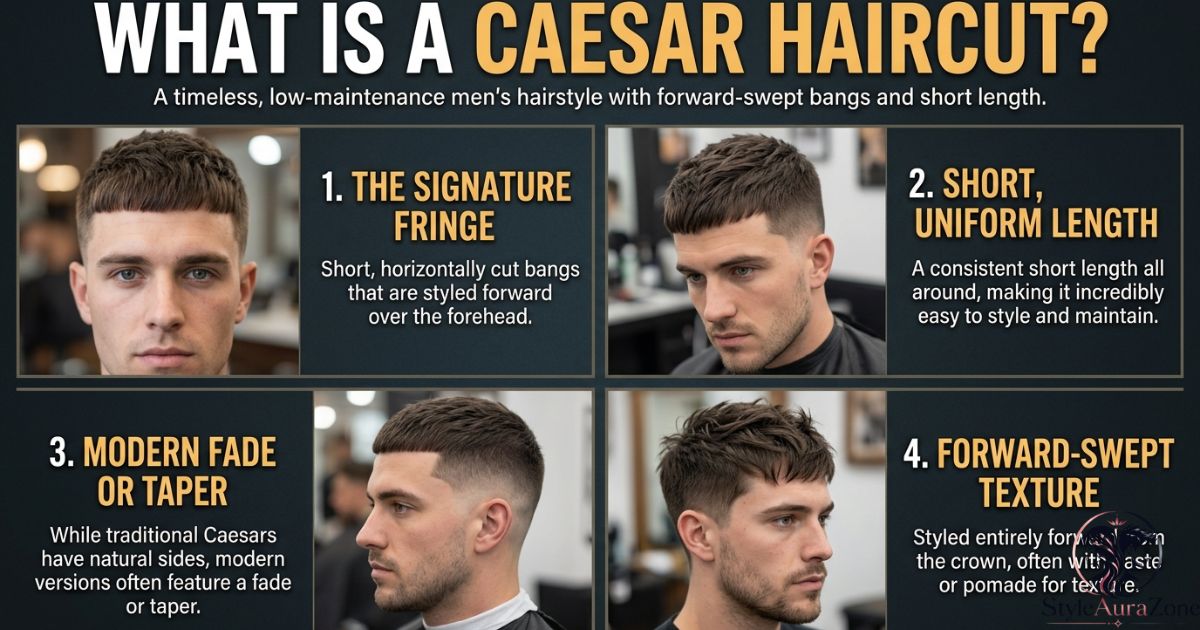
A Caesar haircut is a short men’s cut with a horizontal, forward-combed fringe, trimmed sides, and a top kept around 1 to 2 inches. Modern barbers often add a taper or fade on the sides and back for contrast and a cleaner outline.
The name comes from Julius Caesar, who is commonly said to have combed his hair forward. That detail explains why the style still flatters receding hairlines. A short fringe hides the temples and makes thinning areas look fuller.
The Caesar sits close to several other crops, and barbers often use the names loosely. One says a Caesar is typically clipper-cut with little visible texture, while a French crop shows more texture and a longer fringe. Use the table below to tell them apart.
| Feature | Caesar Cut | French Crop | Crew Cut | Textured Crop |
| Top length | 1–2 inches, fairly even | 2–3 inches, point-cut | Short, brushed up | 2–4 inches, choppy layers |
| Fringe | Short, blunt, forward | Longer, can cover half the forehead | None | Soft, broken-up |
| Texture | Low | High | Low | High |
| Best for | Receding hairlines, easy upkeep | Thick or wavy hair | Active, no-fuss routines | Fashion-forward looks |
Face shape also matters. This quick guide helps you tailor the fringe and sides before you sit in the chair.
| Face Shape | Fringe Length | Side Style | Why It Works |
| Oval | Any length | Low to mid fade | Balanced proportions suit nearly every version |
| Round | Slightly longer, textured | High fade or taper | Adds height and sharpens the profile |
| Square | Softer, choppy | Taper | Eases strong jaw angles |
| Oblong | Short and blunt | Low fade | Keeps the face from looking longer |
| Heart | Side-leaning, light | Low taper | Softens a wider forehead |
Popular Caesar Men’s Hairstyles
Modern Caesar

Think of this as the classic cut with a streetwise upgrade. Faded sides frame a short, textured fringe that moves instead of sitting rigid. Blow-dry the front forward, mist in sea salt spray for grip, then finish with a pea-sized dab of matte clay.
Caesar Fade
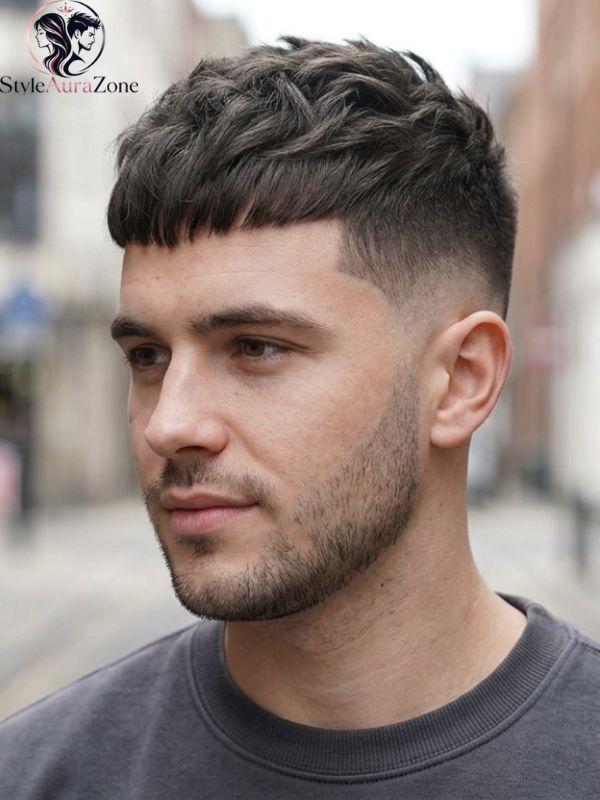
Here, the fringe stays short while the sides melt from skin to length. You can request a low, mid, or high fade, depending on how bold you want the contrast. Ask for a skin or shadow finish, and keep the top near 1 to 2 inches.
Long Caesar

Leave extra length on top, around 3 inches, and the cut turns relaxed and flexible. You can push the fringe forward, sweep it sideways, or rough it up. A light styling cream keeps movement soft without weighing the strands down.
Low Fade Caesar
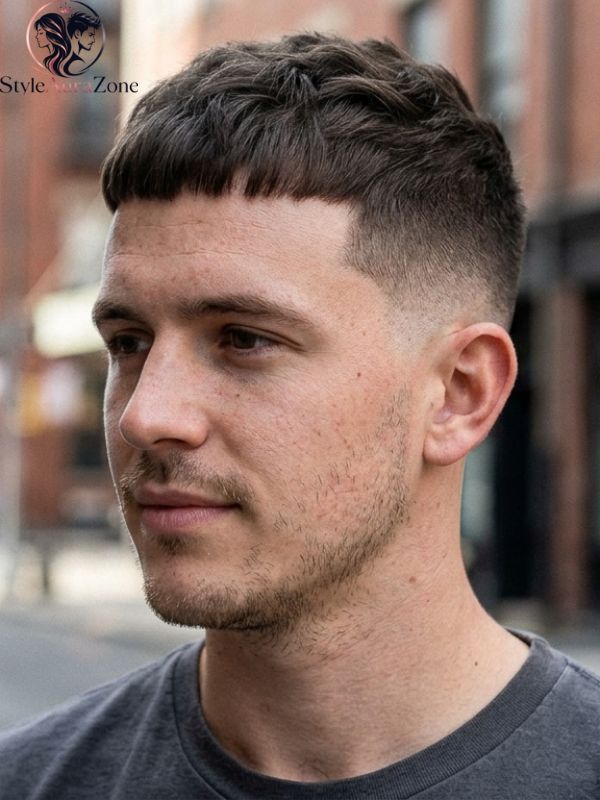
This one starts its fade just above the ear and tucks tightly around the neckline. It’s polished without being loud, which makes it a safe pick for interviews and client meetings. A trimmed beard sits nicely against that low blend.
Short Caesar

Prefer to skip the mirror? Keep the top near an inch and let the sides run neat. Dry hair, add a rice-sized amount of paste, and you’re done. Expect to book a trim every three weeks to hold the crisp shape.
Caesar Taper Fade

A taper shortens hair gradually and leaves length at the ears and nape, so nothing looks stark. Pair it with a cropped fringe and you get a smooth, professional finish. Matte clay adds hold while keeping the surface natural.
High Fade Caesar
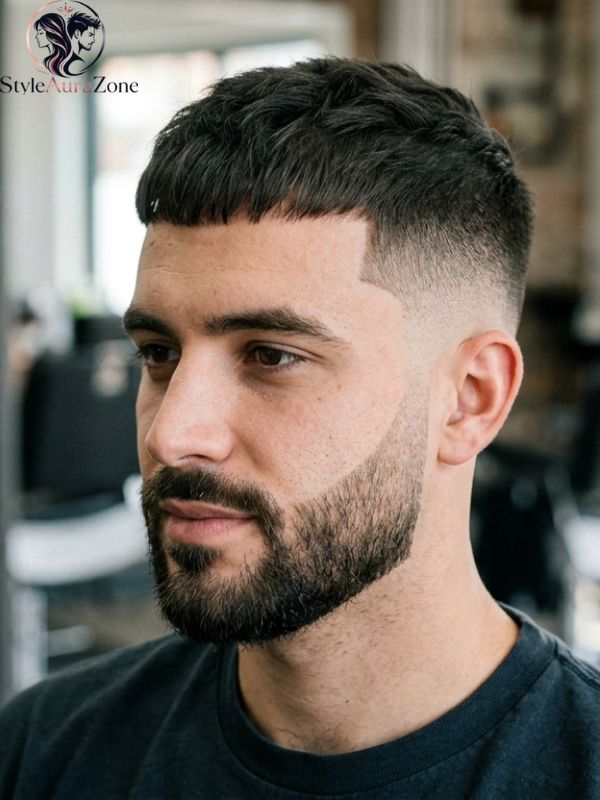
Starting the fade up near the temples creates real drama. Everything below disappears into skin, and the top stands out as the focus. Comb clay through for clean separation, or use cream when you’d rather have a looser feel.
Read more:30 Trending Asian Hairstyles For Men
Soft Textured Caesar Fade with Beard
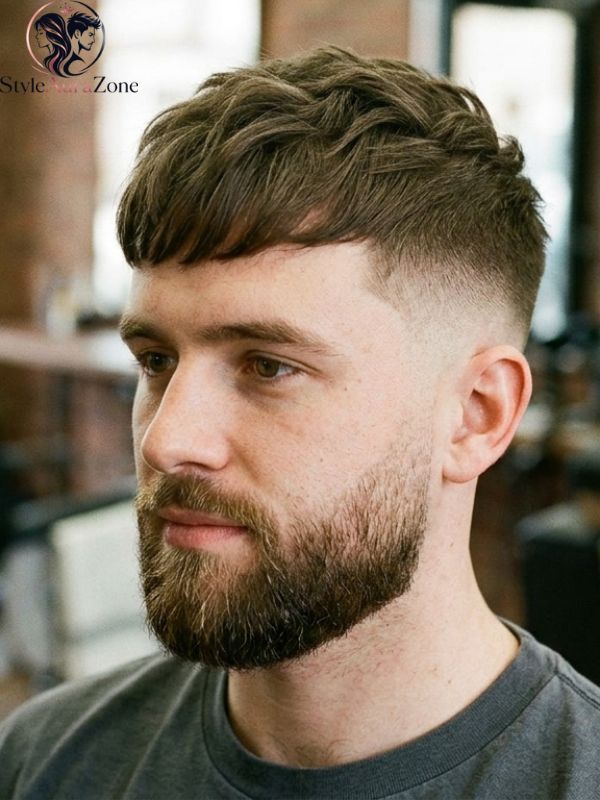
Layers on top give this cut gentle movement, and the faded sides flow right into your facial hair. The result feels rugged yet put together. Brush the beard daily and add a drop of balm so the blend stays smooth.
Combed-Through and Textured Caesar

Raking a comb through the fringe leaves neat lines, while light layering stops the crown from going flat. It’s tidy enough for a boardroom. Reach for a flexible paste or lightweight cream to avoid that stiff, crunchy look.
Dark Caesar

Tight coils and deep tones suit this evenly cropped version beautifully. A fade tightens the sides, and a straight fringe outlines the forehead. Moisturizing cream or leave-in conditioner prevents dryness, and a crisp line-up sharpens every edge.
Messy Caesar with Soft Fringe

Swap the ruler-straight bangs for a slightly longer, loosely directed front, and the whole cut relaxes. It looks effortless, even though the shaping is deliberate. Work paste through with your fingertips instead of a comb for that broken-up finish.
Textured Caesar Cut with Drop Fade
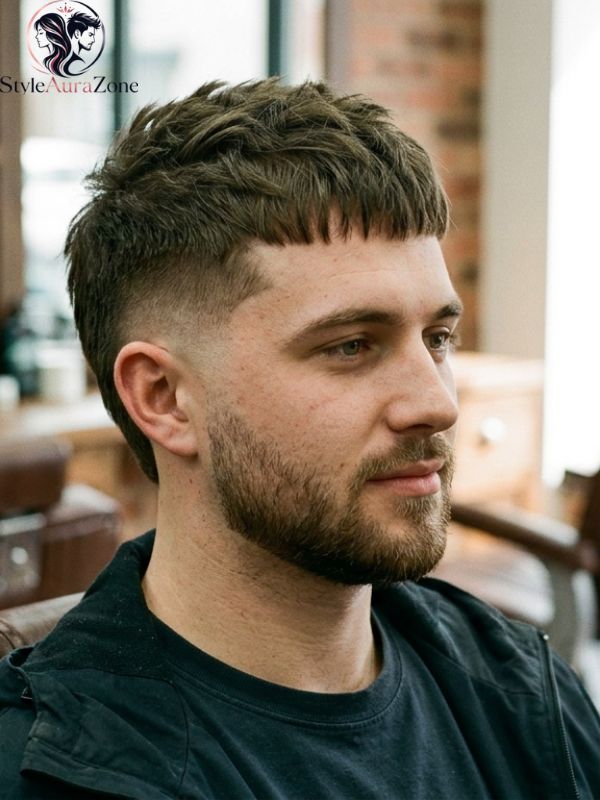
A drop fade curves behind the ear and dips lower at the back, wrapping the head in a rounded outline. Against a straight, textured fringe, that curve adds depth. Style damp hair with matte paste and your hands.
Heavy Caesar Fade
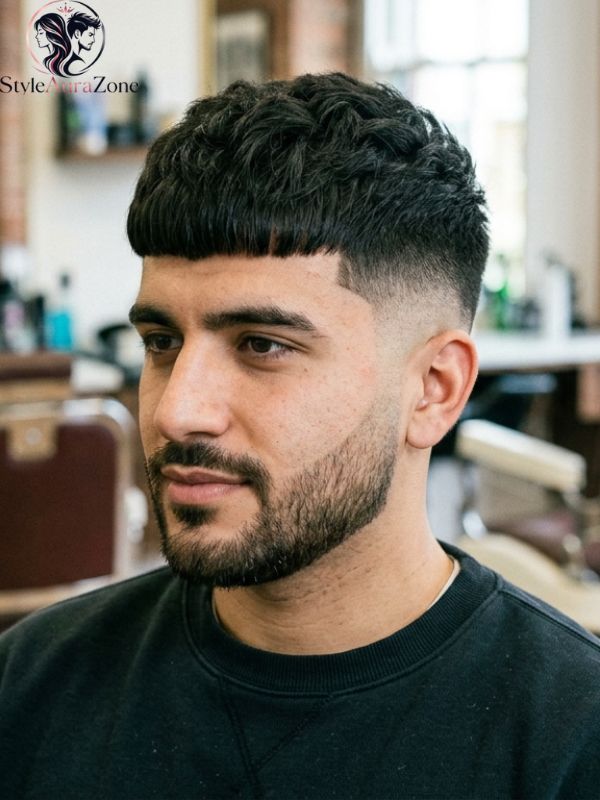
Extra density on top gives this version a fuller, weightier look beside tightly faded sides. The fringe hangs thicker and feels more pronounced. Brush it down slightly with a touch of cream, and schedule regular fade clean-ups.
Long Caesar Cut with High Fade
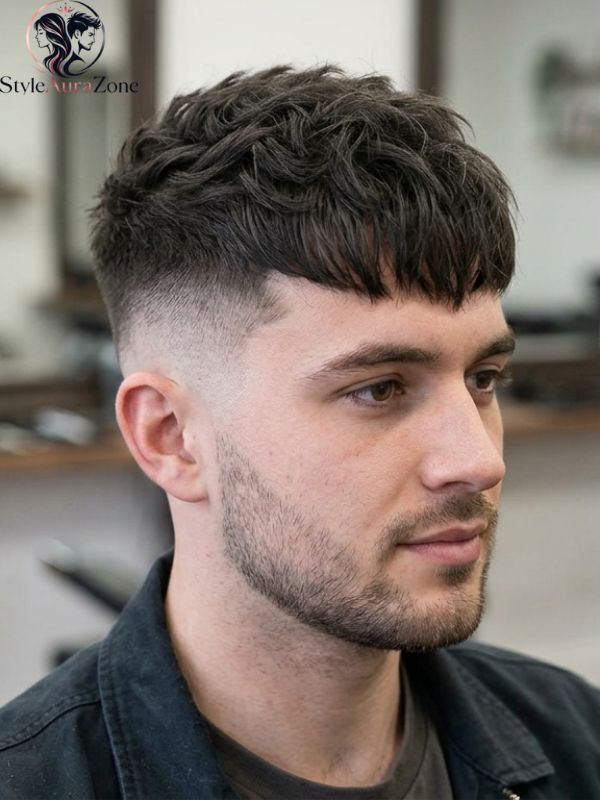
Pairing generous length with a high fade creates strong contrast and visually lengthens the face. The choppy fringe gives plenty of motion. After applying cream to damp hair, push the front forward and separate sections with your fingers.
Edgy Caesar Fade with Shaved Line
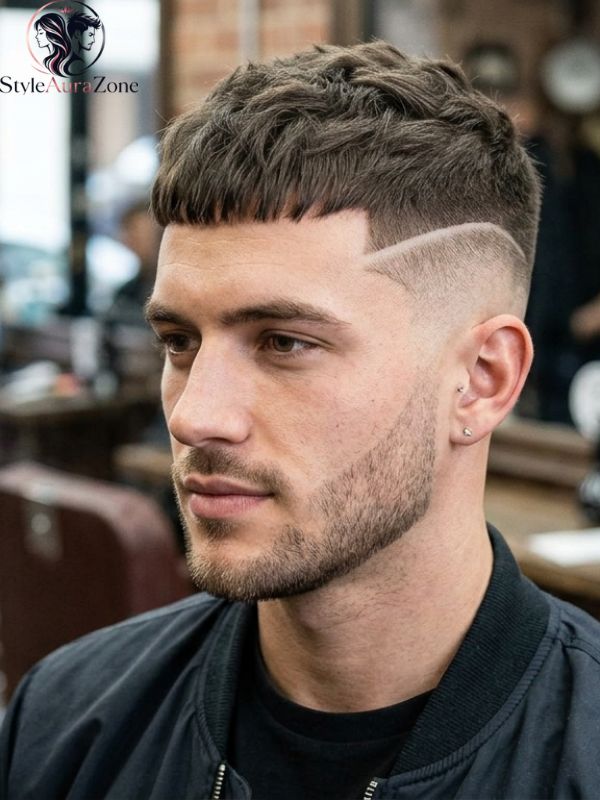
A razored line between the fringe and fade adds a geometric accent that catches the eye. It suits guys who like a bit of attitude. You’ll need frequent touch-ups, since the line blurs fast as hair grows in.
Fluffy Caesar with Low Temp Fade

This cut celebrates natural thickness. A low temple fade neatens the sides, and layered, forward-pulled length keeps the top airy. A light mousse or volumizing cream lifts the crown without leaving it heavy or sticky.
Moody Caesar with Taper Fade

Let the fringe grow a little longer and heavier, and you’ll get a brooding, cinematic mood. A soft taper balances it and flatters the cheekbones. Towel-dry, add matte paste, and sweep forward with a wide-tooth comb.
Wavy Caesar Cut
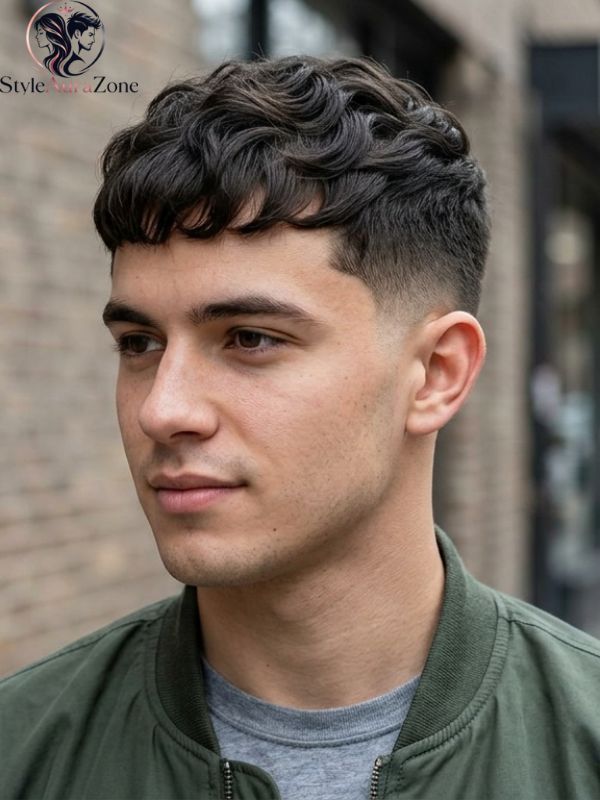
Natural waves add built-in texture to the fringe, so you rarely need much product. Short sides keep the shape disciplined and office-ready. A curl-enhancing cream defines the pattern, and scrunching with your fingers does the rest.
Dark Caesar Fade with Line Up
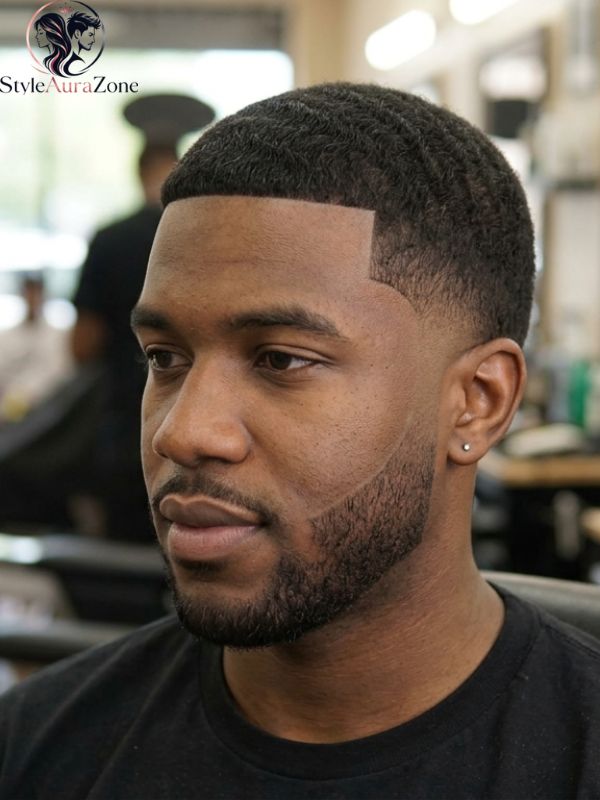
A forward fringe, tapered sides, and razor-sharp edges frame the jawline here. Define curls with a moisturizing butter or pomade on damp hair. Then book a barber visit every couple of weeks to keep the line-up crisp.
Blunt Caesar with High Fade
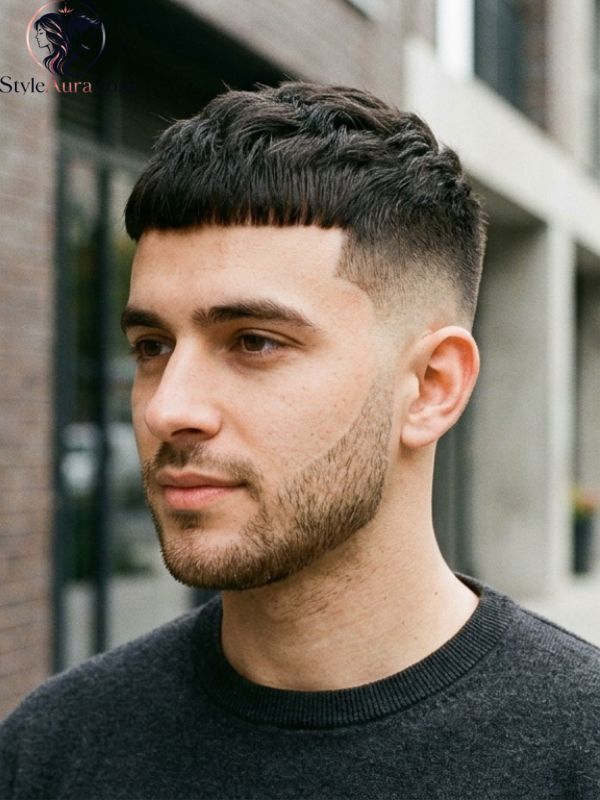
This blunt version cuts a straight line across the forehead, and a high fade heightens the effect. The sharp geometry feels confident and structured. Apply a little cream to keep the fringe defined, and don’t skip regular clipper visits.
Textured Caesar Low Fade
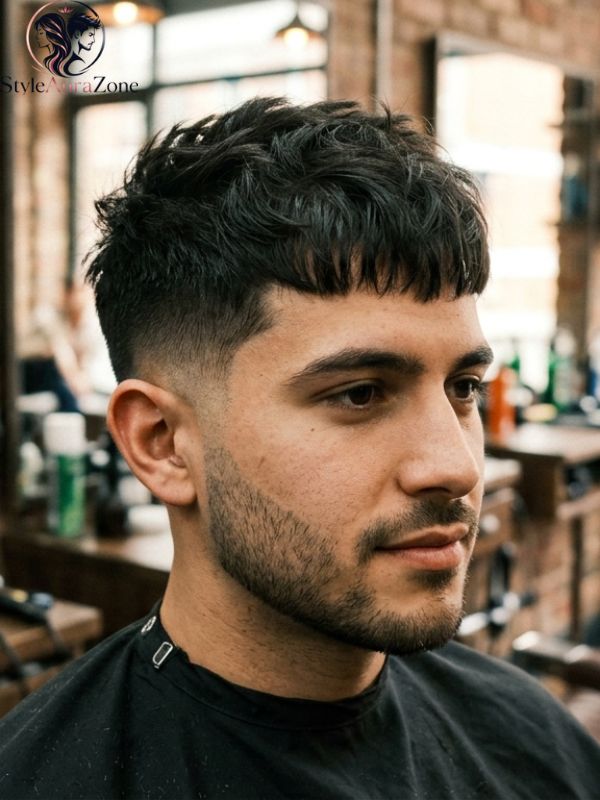
Subtle layering on top avoids a flat, helmet-like look, and the low fade glides down to skin. It’s a dependable all-rounder. Pull lightweight cream through damp hair, then separate the fringe with your fingers.
Modern Textured Crop with High Fade
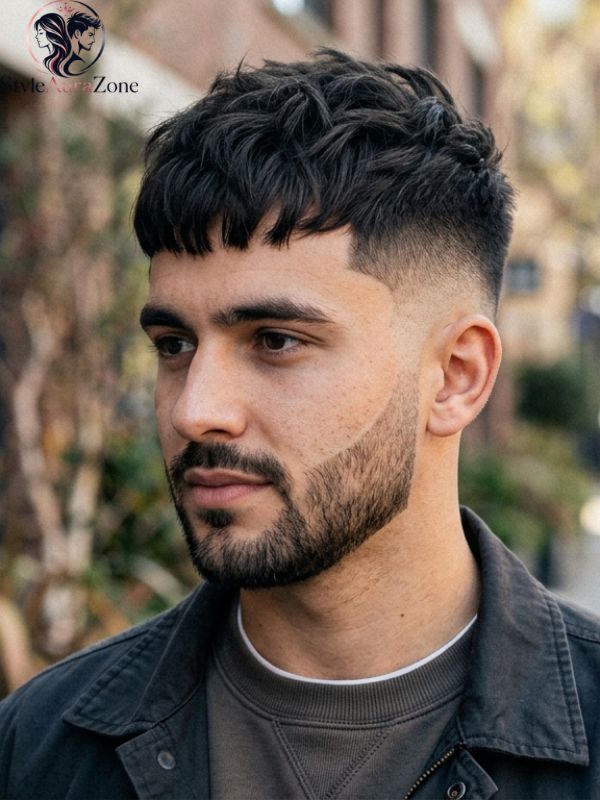
Here the top is short, ruffled, and slightly chunky, while a high skin fade lifts the layers. It reads bold and contemporary. A matte paste on damp hair, tousled with your fingers, delivers the right amount of grit.
Natural Caesar Fade with Shaved Line
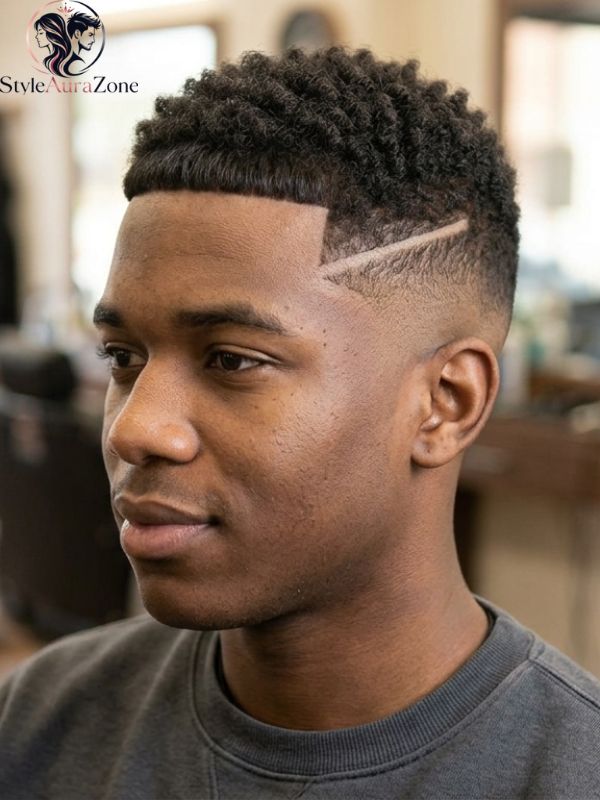
Combine a low fade with one sharp razor line, and you get a quiet statement piece. Ask your barber for fine-guard blending, then shape the fringe forward with matte paste. Trim the line every two weeks.
Shaggy Caesar with Tapered Sides

Messy, layered front pieces give this cut a grungy attitude, and precise tapered sides keep it respectable. That tension is the appeal. Rake a little clay through the crown, then let the fringe fall wherever it wants.
Long, Textured Caesar with High Taper

Extra length shows off choppy layers and holds highlights or dye well. A high taper tightens the sides and sharpens the silhouette. Ask for point-cutting through the top, then lift with lightweight matte clay.
Spiky Caesar with Sharp Low Fade

Upward-pushed pieces add height, and a low fade keeps the sides crisp. The shape draws the eye up and slims the face. Use a firm-hold matte paste, and angle the front slightly upward for definition.
Angular Caesar with Taper Fade and Shaved Designs
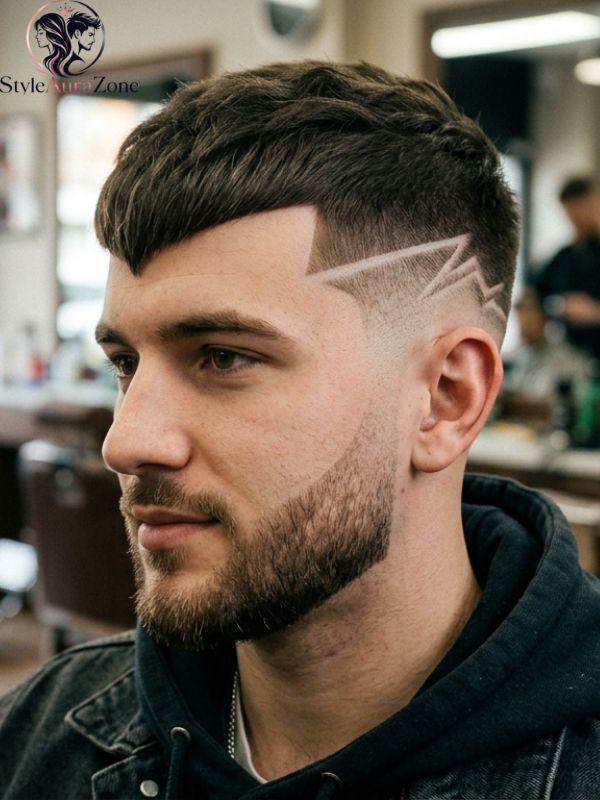
A slanted fringe, tapered sides, and thin shaved lines make this the most creative option here. It’s playful but still neat. Refresh the designs often, and set the fringe with a light wax.
Cropped Cut with High Fade

Minimal and clean, this cut keeps the top short and the fringe blunt. The high fade makes the remaining hair look thicker. Straight or wavy hair works best. A dab of matte paste separates strands.
Tousled Caesar with Tapered Sides

Soft layers and a loosely cut fringe produce easy movement, while the blended sides emphasize your jaw. It transitions from work to dinner without a fuss. Run cream through damp hair and ruffle it dry.
Thick Caesar with Sharp Low Fade
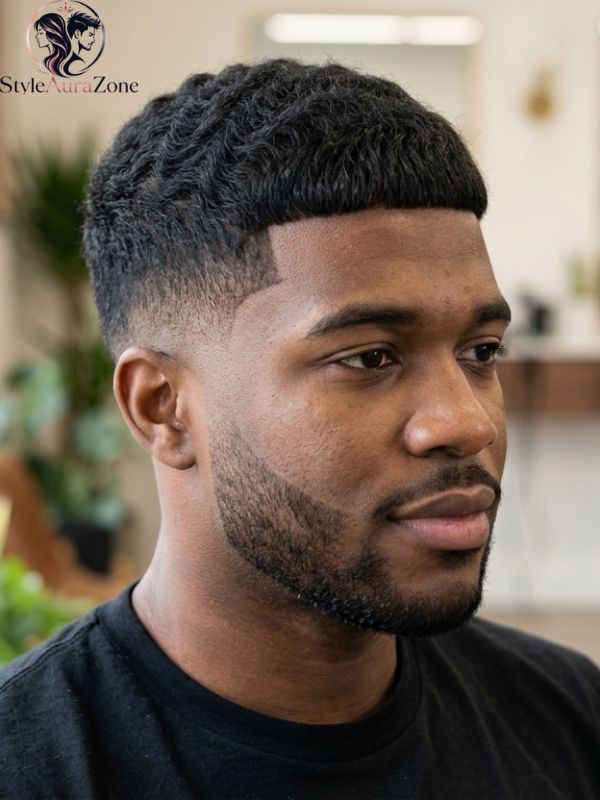
Dense hair gets its moment here. A low fade shapes the sides, and matte clay worked in at the roots keeps bulk under control. Ask your barber for point-cutting to soften the edges and improve flow.
How To Do A Caesar Cut At Home
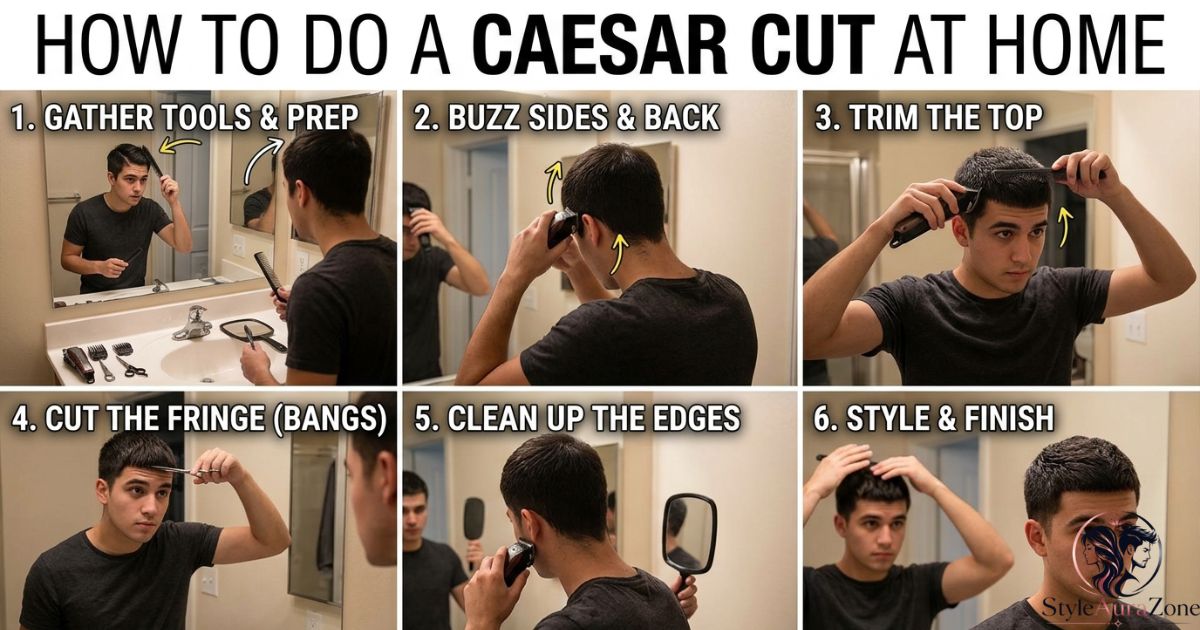
Cutting a Caesar at home is realistic because the shape is simple. You’ll need clippers with guards, sharp shears, a fine-tooth comb, a trimmer, and two mirrors. Work slowly, remove less than you think, and remember that hair always grows back.
1. Comb All The Hair Down and Forward
Start with clean, slightly damp hair. Comb the top forward and the sides straight down so every strand lies in its natural direction. Detangle fully, because knots lead to uneven lines.
2. Start with the Sides and Back
Attach a guard and run the clippers upward, working against the direction of growth. Use the chart below to choose your length, then switch to a longer guard near the crown to blend the transition.
| Guard | Length (inches) | Length (mm) | Typical Use |
| #1 | 1/8 | 3 | Tight sides, close neckline |
| #2 | 1/4 | 6 | Classic short sides |
| #3 | 3/8 | 10 | Softer sides, transitions |
| #4 | 1/2 | 13 | Short top for a cropped look |
| #6 | 3/4 | 19 | Medium top length |
| #8 | 1 | 25 | Longest standard top |
3. Trim The Top
Hold small sections between your fingers and snip off the ends with shears, aiming for roughly 1.5 to 2 inches. Alternatively, use a #6 or #8 guard for an even finish. Go gradually and check both sides.
4. Create The Fringe
Comb everything forward and cut a straight line near the middle of your forehead. For a modern finish, turn the shears vertically and snip tiny notches into the edge. That point-cutting softens the line.
5. Clean The Neckline
Tilt your head down and use the trimmer to remove stray hair at the nape and around the ears. A slightly rounded or natural outline looks more forgiving than a squared one.
6. Refine The Cut
Dry your hair, flick it forward, and study the result from every angle. Blend any harsh steps with a longer guard and snip uneven strands. Then style with a texturizing product.
Keeping the shape fresh takes little effort. Use this schedule as a baseline.
| Style Type | Trim Frequency | Daily Product |
| Short Caesar | Every 3 weeks | Matte paste |
| Caesar fade (low/mid/high) | Every 2–3 weeks | Matte clay |
| Long Caesar | Every 4–5 weeks | Styling cream |
| Dark Caesar with line-up | Every 1–2 weeks | Moisturizing cream |
| Wavy or textured Caesar | Every 4 weeks | Curl cream or sea salt spray |
FAQ’S
What Is A Caesar Haircut?
It’s a short men’s cut with a straight, forward fringe and trimmed sides. Modern versions often add a taper or fade.
Is The Caesar Cut Good For A Receding Hairline?
Yes. The short forward fringe covers the temples and creates the look of more density.
What Is The Difference Between A Caesar Cut And A French Crop?
A Caesar has a shorter, more even top with less texture. A French crop runs longer and carries more choppy movement.
What Guard Should I Use For A Caesar Cut?
Most guys choose a #2 or #3 on the sides and a #6 to #8 on top.
How Often Should I Trim A Caesar Haircut?
Every two to four weeks, depending on whether you wear a fade or a longer, softer version.
Conclusion
A Caesar haircut gives you rare flexibility. You can keep it short and tidy, grow it soft and messy, or sharpen it with a fade and razor line. Each version rests on the same simple foundation: compact length and a confident fringe.
Before your next appointment, save a few favorite photos, choose a fade height, and tell your barber how much texture you want. Then pick a styling product that suits your hair type. With regular trims, this cut looks good and stays easy.