
Getting your son to school with a haircut he actually likes and one that still passes the “no flashy hair” rule can feel like walking a tightrope. Parents want something tidy. Kids want something with personality. The gap between those two wishes used to be wide, but the modern mullet closes it neatly. It’s short and controlled where it needs to be, then loose and playful where a bit of fun does no harm.
This guide breaks down everything worth knowing about the boys mullet haircut in 2026, from picking the right variation for your child’s hair type and age to keeping it looking sharp between trims. You’ll find twelve style options, a quick-reference age chart, styling steps kids can follow on their own, and the exact words to use in the barber’s chair so you walk out with the cut you actually asked for. No guesswork, no confusing jargon, just a clear plan.
What Is a Boys Modern Mullet
Forget the choppy, uneven mullet from decades past. The modern version is a deliberately shaped cut with blended sides, a textured crown, and a back section that tapers gradually instead of dropping off in a hard line. The whole thing reads as intentional rather than accidental, which is exactly why it’s found its way into so many school hallways and barbershop request lists lately.
Part of the appeal is how adaptable it is. Straight hair, loose waves, tight coils the cut bends to fit whatever texture your son has naturally. The front and sides stay short enough to look neat for class photos, while the back carries a bit of extra length that gives the style its edge. It’s a haircut that manages to be both low-key and a little bold at the same time, which is a tough combination to pull off in most kids’ cuts.
How to Choose the Right Version
Two things decide which variation suits your child best: hair texture and how much time you actually have on a school morning. If your household runs on a tight clock, a shorter back with a soft taper is the smart pick it needs almost no daily styling and grows out without looking messy. Boys who want more personality in the mirror can handle a defined fade, which adds sharpness without making the cut harder to maintain at home.
Age plays a role too. Younger boys, roughly five to eight, generally look best in a shorter, tidier build that’s easy for a parent to manage between visits. Older boys and teens can carry more length in the back along with a stronger fade on the sides. If your son plays sports, prioritize short, clean sides that won’t bunch up under a helmet. If his school has stricter grooming rules, lean toward a taper rather than a hard fade, since it blends in more subtly. Nail down texture, age, and lifestyle first, and the right variation becomes obvious.
The Best Boys Mullet Haircut Variations
Here are twelve ways to wear the style, each built around a specific hair type, age group, or daily routine. Scan through and match one to your son’s hair and lifestyle.
1) Classic Boys Mullet
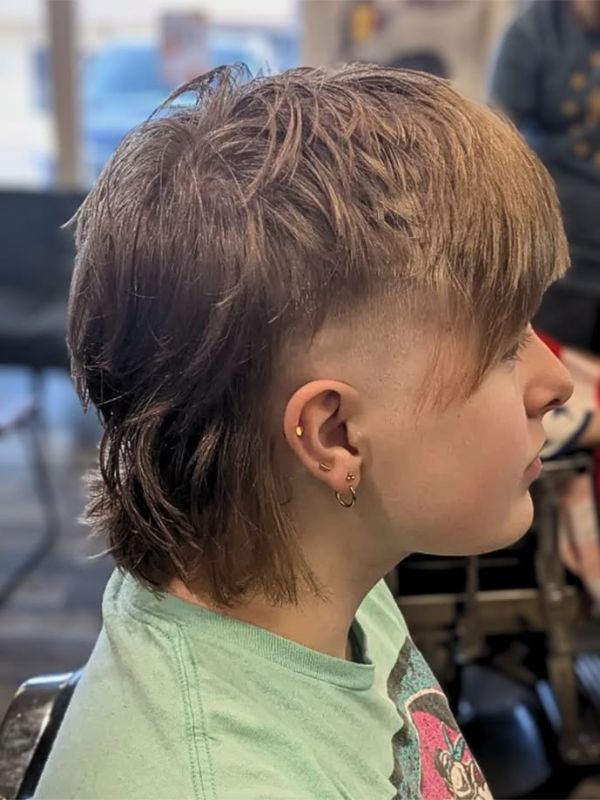
This is the safest entry point into the style. Sides stay tidy, the top gets light texture, and the back sits around collar length without going further. It suits straight, wavy, and curly hair without any real adjustment needed, and it photographs cleanly for school pictures. If your son has never worn a mullet before, this build is the one to try first.
2) Boys Mullet Fade

Sharp, defined, and a little more grown-up in feel. The sides taper close near the ear and blend smoothly up into the back section, creating a crisp outline. It flatters straight and wavy hair especially well and gives fine hair extra visual density. Plan on a quick edge tidy every three to four weeks to keep the fade line looking fresh rather than grown-out.
3) Short Mullet Haircut Boy
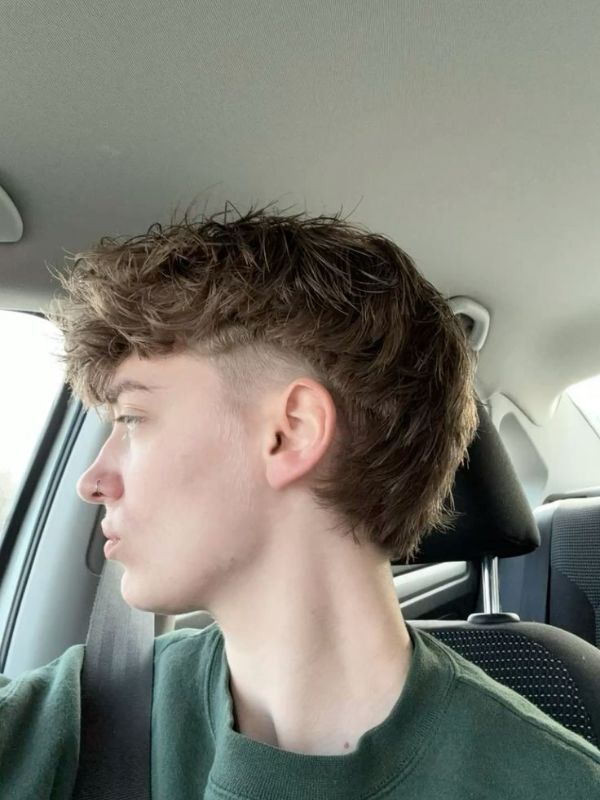
Not every kid wants length trailing down the neck, and that’s fine this version keeps the back modest while still texturing the top and tapering the sides. It fits stricter dress codes, needs almost no morning styling, and works particularly well for fine or straight hair since the shorter length holds shape on its own.
4) Curly Boys Modern Mullet

Curls and mullets pair naturally well. This build leaves soft layers in the back so the curl pattern can move freely, with a touch of extra length on top to support the natural spring. A small amount of leave-in product keeps frizz in check, and air-drying (or a diffuser on low heat) preserves the curl shape instead of loosening it.
5) Boys Modern Mullet Straight Hair

Straight hair can look flat at the back without the right cutting technique. Choppy layering adds movement here, preventing the back from sitting heavy or blocky. A light texturizing spray before drying gives the strands some grip, and a small amount of matte clay defines the top without stiffness.
6) Tapered Modern Mullet Haircut Boy
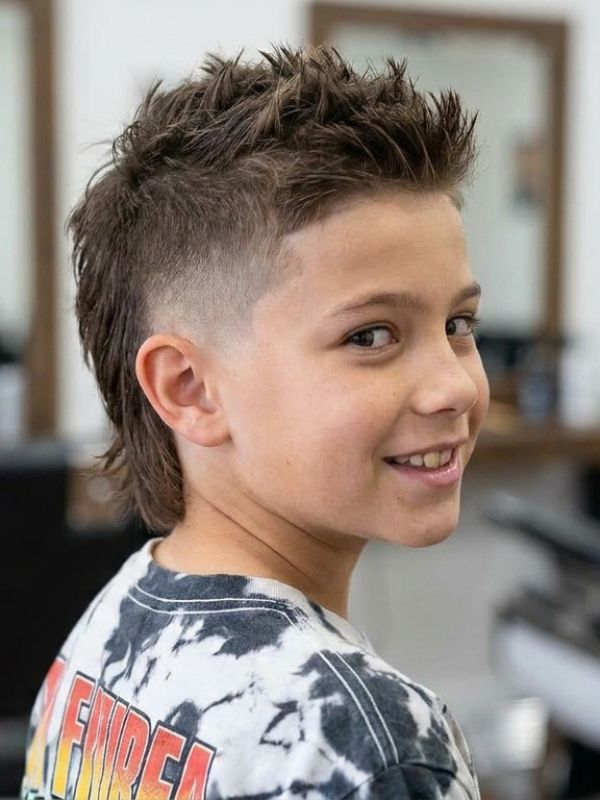
The most understated variation on this list. Sides fade gradually with no hard contrast lines, giving a relaxed, versatile look that suits nearly any setting school, sports, family events. Schools with stricter grooming policies tend to accept this version without issue, and daily upkeep is minimal.
Learn more:Burst Fade Mullet 2026: 25 Clean Styles That Look Bold
7) Burst Fade Boys Mullet Haircut

A curved fade sweeps around the ear and flows into the longer back section, giving the cut a more custom, deliberate shape. Thick hair benefits especially, since the arc removes bulk right where it tends to pile up. A touch-up every few weeks keeps the curved line sharp.
8) Sporty Medium Mullet
Built with active kids in mind. The back has enough length to show style but stays short enough to avoid interfering with games or practice. Close sides sit comfortably under helmets, and the top dries fast and falls back into shape without much fuss ideal for a cut that needs to survive both a classroom and a soccer field in the same day.
9) Wavy Surfer Mullet for Boys

This variation works with natural wave patterns instead of against them. The back carries a bit of extra length and light layering to avoid puffiness, while the top stays airy enough to fall into a relaxed shape as it dries. A little texturizing spray and air-drying gives it that easy, beach-day look while staying school-appropriate.
10) Fringe Mullet

Adding a fringe up front softens the whole look and frames the face nicely, especially for boys with finer hair. The back stays layered and light so the cut doesn’t feel top-heavy. It’s a friendly, modern option for boys who want personality without much added height on top.
11) Low Fade Modern Mullet
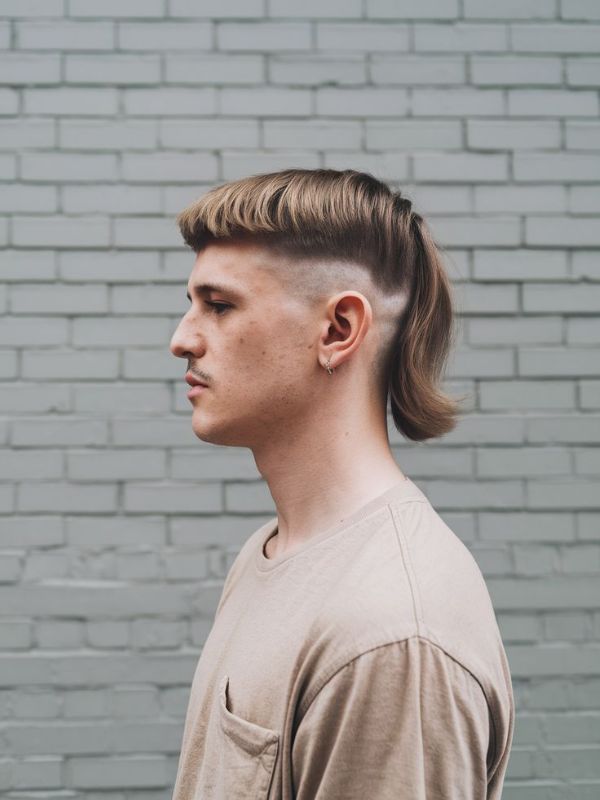
Contrast sits right at the ear here, with more length left above for a gradual, softer blend. The result reads polished rather than aggressive, and it keeps the hairline clean without letting the sides puff out a common frustration with thicker hair. It’s a balanced middle ground between a subtle taper and a bold high fade.
12) Longer Back, School Safe
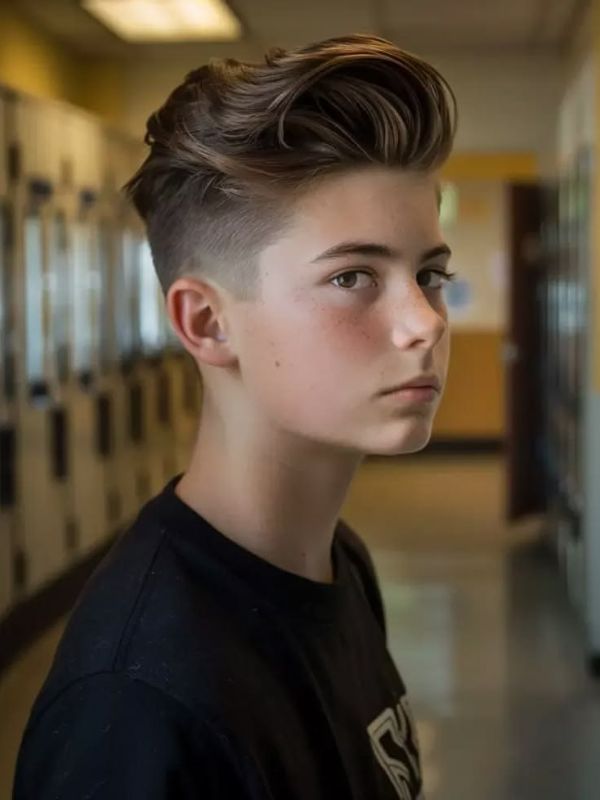
For schools with more relaxed length rules, this version leans into extra length at the back while keeping the front and sides clean. Soft layering at the ends prevents clumping, so the back stays light rather than heavy. It’s a way to wear a genuine style statement while staying within most dress code guidelines.
Quick Age and Care Guide
Length, fade style, and how often to book a trim all shift depending on age. Younger boys tend to do better with shorter, simpler builds that grow out cleanly, while older boys and teens can handle more length and stronger fades at the cost of more frequent visits to keep things sharp.
| Age Range | Back Length | Sides | Trim Frequency |
| 5–8 | Short to mid | Soft taper | Every 6–8 weeks |
| 9–12 | Mid | Low or mid fade | Every 5–7 weeks |
| 13–16 | Mid to longer | Fade or taper | Every 4–6 weeks |
Use this as a starting point and adjust based on how quickly your son’s hair grows and how much upkeep he’s realistically willing to do.
Daily Styling That Kids Can Do
One of the best things about this cut is that most boys can style it themselves once they’ve done it a few times. After a shower, towel dry gently rather than rubbing this matters even more for wavy or curly hair, where friction causes frizz.
- Straight hair: Mist a light texturizing spray at the roots, dry on low heat while lifting with your fingers to avoid a flat crown.
- Wavy hair: Scrunch in a small amount of sea salt spray, then let it air dry for natural movement.
- Curly hair: Apply curl cream from mid-length to ends, then air dry or diffuse on the lowest heat setting. Skip the brush once it’s dry.
- All hair types: Finish with a fingertip of matte clay or light cream on top and at the back for soft hold without stiffness.
The whole routine should take five minutes or less, which matters a lot on a rushed school morning.
Care and Upkeep
Keeping this cut looking sharp comes down to a few consistent habits rather than a complicated routine.
- Wash two to three times a week instead of daily over-washing strips the natural oils the longer back section needs to stay healthy.
- Use a gentle, sulfate-free shampoo and condition from mid-length to ends.
- Book regular trims; the neckline and side blend are the first areas to lose shape as hair grows out.
- For wavy or curly hair, a satin pillowcase cuts down on overnight frizz.
- Handle small touch-ups (neck, sideburns) at home between full appointments to keep the outline clean.
None of this takes much time, but skipping it is usually what makes a mullet start looking unkempt instead of styled.
Barber Talk That Works
Walking in with clear language saves time and avoids a haircut that misses the mark. Ask for a modern mullet with blended sides and a smooth transition into a longer back section. Specify the fade you want low, mid, or burst or ask for a soft taper if your child’s school has stricter grooming rules. Bringing a reference photo removes almost all the guesswork, since barbers can interpret the same words differently.
For curly hair, request soft layers and close sides so the curl pattern stays framed rather than flattened. For straight hair, ask for choppy layering in the back to avoid a flat, heavy look. Be specific about length too “just above the collar” communicates a lot more than “a little long.” A clear conversation up front means your son walks out with the exact cut you pictured.
FAQ’S
Is a mullet a good haircut for young boys?
Yes, especially the shorter, tapered versions. They’re low-maintenance, grow out cleanly, and still look neat for school.
How often should a boys mullet be trimmed?
Every 4 to 8 weeks depending on age and how fast the hair grows, with younger kids needing fewer visits.
Does a mullet work with curly hair?
It works very well. Soft layers in the back let curls keep their natural shape and movement.
Will a mullet pass a school dress code?
Most tapered or low-fade versions do, since the sides stay short and tidy. Check your specific school’s policy first.
Is the mullet hard to maintain at home?
Not really. A quick rinse, a small amount of product, and occasional at-home touch-ups keep it looking fresh between trims.
Conclusion
The boys mullet haircut earns its popularity in 2026 because it solves a real problem: kids want something with personality, and parents want something that still looks appropriate for school. Clean, tapered sides handle the practical side of things, while the longer back gives the cut its character. Every hair type adapts to it well, whether your son has straight strands, loose waves, or tight curls, which is part of why the style has spread across so many age groups and lifestyles at once.
Choosing the right version doesn’t need to be complicated. Start with your child’s hair texture and daily routine, pick a variation from this guide that matches, and stay consistent with trims and simple care habits. A little product, a five-minute styling routine, and a clear conversation with the barber go a long way. Once it’s dialed in, this is a cut that works just as hard on a school morning as it does on a Saturday afternoon.