
Curly hair deserves a cut that respects its shape, and the blowout low taper fade curly hair look does exactly that. You get a full, rounded top paired with sides that melt away near the ears and neckline. Nothing looks forced, and nothing looks flat. It grows out gracefully too.
This guide breaks down what the cut really is, how it fits each curl type, and what to say at the chair. You’ll also learn how to match it to your face shape, style it at home, and keep the fade crisp between visits. No guesswork required. Let’s get started.
What is a blowout low taper fade for curly hair?Blowout low taper fade curly hair
A blowout low taper fade for curly hair is a haircut with a full, rounded curly top and sides that shorten gradually, starting just above the ears and nape. The low blend keeps contrast soft, so your curls stay the focus.
At the barbershop, “blowout” describes a shape: height and roundness on top, often shaped with shears or clipper-over-comb. It’s a cut, not just a drying method. The “low taper” describes where the sides begin to shorten, which is close to the hairline rather than up at the temples.
Together they form one connected style. The top keeps enough length for waves or coils to show their pattern, while the sides and back stay tidy. Skip the connection and you get a mismatch, such as a shapeless top over harsh sides.
Blowout fade vs. skin fade vs. regular taper
These three terms get mixed up constantly, so here’s a quick side-by-side.
| Cut | Sides and back | Contrast | Best for | Typical touch-up |
| Blowout low taper fade | Gradual blend near ears and nape, short hair stays visible | Soft | Full, rounded curly tops | Every 2 to 3 weeks |
| Skin fade | Blends down to bare skin | High | Short curls, bold looks | About every 2 weeks |
| Regular taper | Light trim, slight length change | Very low | Relaxed, longer styles | Every 4 to 6 weeks |
A skin fade can fight dense curls because the bare sides exaggerate the width on top. A regular taper is easy to live with, but it lacks the sculpted outline. The blowout low taper fade lands between the two.
Read more:Burst fade for curly hair: styles, fit, barber script and care
Why it works so well with curly hair
Curls need length to show off their shape. Cut a 3C or 4A curl too close and it reads as stubble instead of a coil. This style leaves the crown long enough to loop and spring, then removes bulk where curly hair tends to misbehave.
Here’s what you gain:
- Controlled bulk: Thick hair piles up around the ears and nape, and the taper trims that weight away.
- A gentle transition: A low blend avoids the abrupt line that higher fades create beneath dense volume.
- Shape without effort: Short sides mean you only style the top.
- Forgiving growth: The blend softens as it grows, so it doesn’t look patchy right away.
Finer curls benefit too. Because the top stays long, the cut never looks thin the way it can under a high fade.
How curl pattern affects fade placement
Tighter coils shrink more when dry, so barbers judge length differently depending on the pattern. This table shows how fade placement usually shifts.
| Curl type | Typical fade placement | Why |
| 2A to 2C (waves) | Low and barely visible | Keeps attention on soft movement |
| 3A to 3B (springy curls) | Low to mid-low | Protects bounce while cleaning the sides |
| 3C to 4A (dense coils) | Low, with a longer blend | Reduces bulk without flattening the crown |
| 4B to 4C (tight coils) | Low, with a slightly higher start | Avoids a two-texture look between top and sides |
Best styles for different curl types
The same fade looks different on different textures. Pick the version that matches how your hair naturally behaves.
Loose waves and curls (type 2A–3A)
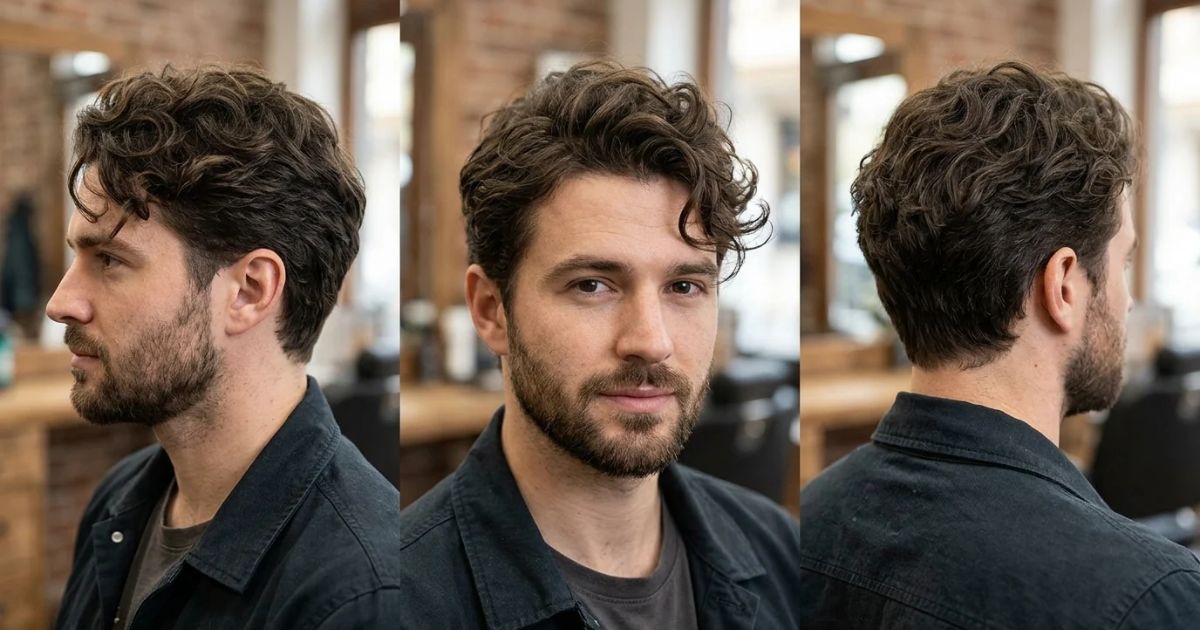
Loose patterns look full without much height. Ask for a soft, lightly rounded top with a longer front that sweeps forward. Keep the taper quiet enough that it barely registers in normal light.
This suits offices and casual weekends alike. Shears work better than clippers on the top, since repeated clipper passes can make waves uneven.
Defined curls (type 3B–3C)
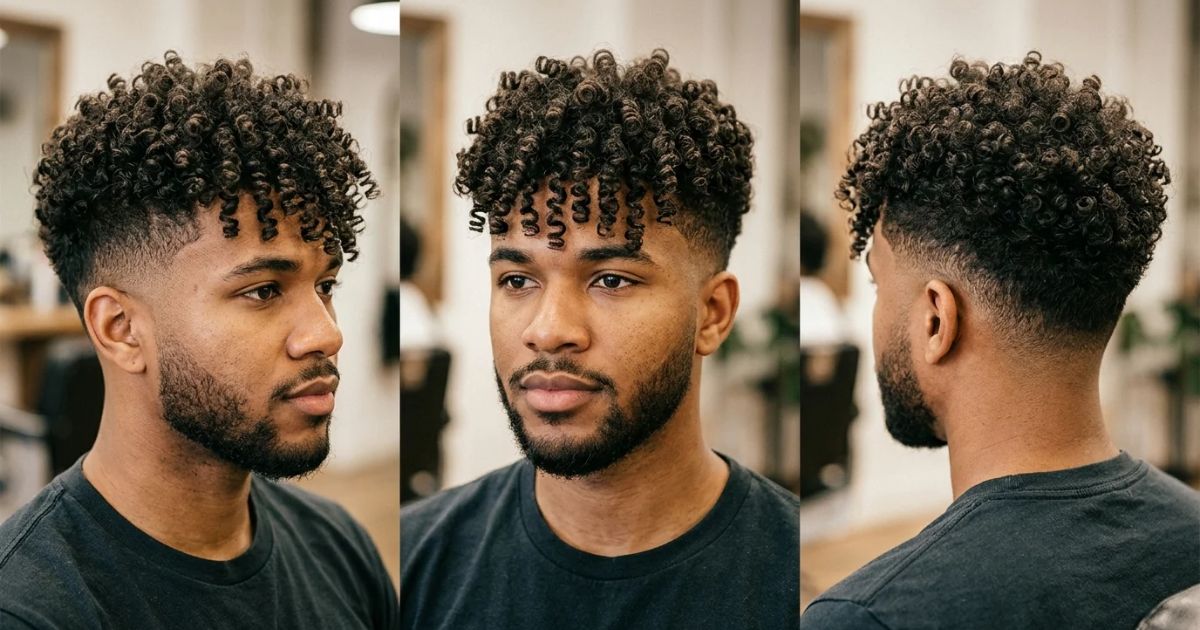
This is where the classic rounded shape shines. Defined curls hold a dome or slightly boxy outline well, especially after a wash-and-go or twist-out.
Many people add a hard part, a shaved line above one temple. It sharpens the look against the low blend. Mention it separately, since it’s not part of the fade itself.
Coily and kinky hair (type 4A–4C)
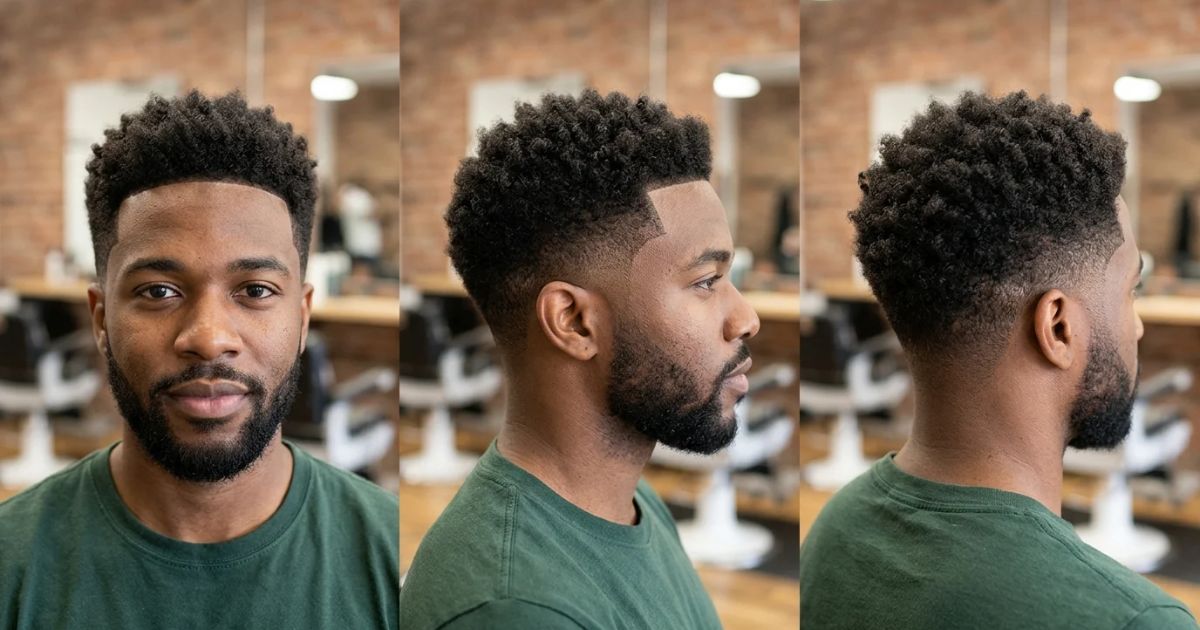
Coily hair gets plenty of height, and the low taper frames it cleanly. Barbers often cut it stretched, either blown out or braided, to judge true length before shaping.
Because tight coils shrink as they dry, the blend may start slightly higher than it would on looser curls. A crisp edge-up at the hairline and neckline finishes the look.
How to ask your barber for it
Barbers hear “fade” all day, so clarity matters. Describe the top and the sides as two separate parts. Try this script:
“I’d like a rounded blowout shape on top, shaped with shears. Take a low taper fade on the sides and back, nothing higher than just above the ear. Please keep the blend soft, not a skin fade.”
Then add these details:
- Describe your texture. Phrases like “tight curls” or “coily, shrinks a lot” help the barber judge real length.
- State your length goal. Tell them how much height you want to keep.
- Request the tool. Ask for shears on top if you have looser curls.
- Mention extras. A hard part, edge-up, or beard blend counts as a separate request.
- Bring a photo. One picture beats five minutes of description.
If your barber hasn’t worked much with your texture, ask to see examples of their curly work. also notes that a barber can advise on wash frequency and products, so it’s worth asking.
Choosing the right version for your face shape
The low taper works for most faces because it avoids harsh lines. Top height and width are what you adjust.
| Face shape | Best top shape | Why it works |
| Round | Tall crown, less width at the sides | Adds length and balances a soft jaw |
| Square | Slightly rounded top | Softens a strong jawline |
| Oval | Almost anything | Proportions already balance |
| Oblong | Moderate height, more width at the sides | Prevents the face from looking longer |
| Heart | Fuller sides, modest height | Balances a wider forehead against a narrower chin |
| Diamond | Soft, rounded top with some width at the front | Draws attention away from wide cheekbones |
Not sure which you have? Ask your barber to assess it before they start cutting.
How to style it at home
Styling takes about ten minutes once you’ve got the routine down. Follow these steps:
- Wash gently. Use a sulfate-free shampoo or a co-wash so you don’t strip natural oils.
- Condition and detangle. Work through wet hair with a wide-tooth comb, starting at the ends.
- Apply product. Spread a leave-in or curl cream through damp hair, focusing on the crown.
- Diffuse. Use low or medium heat, and lift sections toward the scalp for volume.
- Shape. Round the crown with your fingers or a pick while the hair is slightly damp.
- Leave it alone. Touching curls while they dry is a fast route to frizz.
Products, by the job they do
Skip the crowded shelf. Think about three jobs: lift, definition, and frizz control.
| Job | Product type | How to use it |
| Root lift | Light mousse or lifting spray | Apply at the roots before diffusing |
| Definition | Curl cream or custard | Smooth through damp curls, richer formulas for tighter coils |
| Moisture and frizz control | Leave-in conditioner | Apply after washing and refresh midweek with a light mist of water |
| Finish | Light oil, such as argan or jojoba | Use a tiny amount on the dry surface for shine and flyaways |
Heavy butters and thick gels can weigh down the crown, so keep them away from the roots.
Keeping the fade sharp and curls fresh
The sides lose their shape faster than the top. Hair near the nape and ears grows in quickly, so the blend turns fuzzy within a few weeks while the crown still looks great.
| Task | How often |
| Fade and neckline refresh | Every 2 to 3 weeks |
| Top trim | Every 6 to 8 weeks |
| Moisturizing wash or co-wash | 1 to 3 times a week, based on dryness |
| Clarifying shampoo | About once a week or every other week |
A few habits protect the shape:
- Sleep on satin. A silk or satin pillowcase or bonnet cuts friction and holds moisture.
- Rebook early. Schedule your next fade before you leave the chair.
- Rinse after sweating. Sweat loosens curl definition near the hairline.
- Watch the humidity. A stronger-hold cream helps the top keep its outline on damp days.
- Don’t over-trim. Cutting the crown at every visit slowly shrinks your volume.
How it compares: low fade, mid taper, and burst fade
Menus list these side by side, but they behave differently on curly hair.
| Style | Where the blend starts | Contrast | Works best with |
| Blowout low taper fade | Near ears and nape | Soft | Full, rounded curly tops |
| Low fade | Near ears and nape, often tighter or down to skin | Soft to medium | Shorter tops |
| Mid taper | Around the middle of the sides | Medium | Shorter curls, defined shapes |
| Burst fade | Curves around the ear | Localized | Fringes and mohawk-style tops |
A low fade only describes the sides and back, while the blowout low taper fade also covers the top shape. A mid taper adds contrast, which can look sharp on short curls but may compete with big volume. A burst fade follows the ear in an arc, so it suits fringe-forward looks more than a full dome.
For most curly textures, the low taper is the safest choice. It blends smoothly, needs less upkeep than a mid taper, and leaves your volume front and center.
FAQ’S
Does a low taper fade work on tight, coily hair?
Yes. The soft blend flatters coils because it avoids harsh contrast against dense volume, moving smoothly from the neckline into a full crown.
How often should I get the fade touched up?
Most people need a refresh every 2 to 3 weeks. The top can usually wait 6 to 8 weeks between trims.
Will blow-drying damage my curls?
Gentle diffusing with a leave-in keeps damage low. Frequent high heat without protection is what dries curls out over time.
Can I get this cut with fine or wavy hair?
Yes. Ask for a softer, less rounded top and a very subtle blend, since looser patterns don’t need much height to look full.
What’s the difference between a blowout and blow-drying?
A blowout is the shaped haircut with height and roundness. Blow-drying is simply a drying technique you use to style it.
Final thoughts
A blowout low taper fade gives curly hair room to show off while keeping the edges tidy. Pick the version that suits your curl pattern and face shape, then tell your barber exactly what you want. Clear communication prevents nearly every haircut regret, and a reference photo helps even more.
Once you leave the shop, a simple routine does the rest. Moisturize, diffuse gently, protect your curls at night, and book the next fade refresh before you leave. Do that consistently and your curls stay full, your fade stays clean, and your cut stays yours. Your barber will notice.