
A high taper fade haircut looks sharp on day one and still leaves your sides some fullness. It keeps the shortest hair around your temples, sideburns, and neckline while the rest of the sides blend gradually into the top. Barbers don’t always use the name the same way, though, which causes confusion.
This guide shows how the cut is built, who it suits, and which top styles fit your hair texture. You’ll also get a barber script, a photo checklist, upkeep timing, and the safety points most guides skip. Read it once, screenshot the script, and you’ll walk into the shop with confidence.
What is a high taper fade?
A high taper fade is a haircut that shortens the hair quickly around the temples, sideburns, and nape, then blends it up into a longer top. The sides keep more weight than they would in a full high fade. The shortest point can be skin, a guard length, or a soft shadow.
Think of it as two separate choices. One is where the fade starts. The other is how short it finishes. Mixing those up is the fastest way to leave the chair with the wrong cut.
Cut anatomy: fade zone, blend, and retained length
Every high taper fade has three working parts. Knowing them helps you point at the exact area you want changed.
| Part | Where it sits | What the barber does |
| Fade zone | Temples, sideburns, and nape | Cuts the shortest hair here, often with a zero-gap or small guard |
| Blend | Between the fade zone and the top | Steps through guard sizes and uses the clipper’s taper lever to erase visible lines |
| Retained length | Upper sides and the whole top | Leaves weight below the widest part of your head, so the sides stay full |
The blend is the part that separates a clean cut from a rushed one. A good barber moves through several guard sizes, then softens any step with a small clipper-over-comb pass. The top stays fully customizable, from a buzz to a full afro.
Terminology: why the name varies between barbers
No official rulebook governs these terms. Some barbers say a taper never reaches bare skin, so anything skin-close becomes a “fade.” Others treat “high taper fade” and “high fade” as the same order. Many booking menus list only “fade” or “taper.”
So settle two questions before the clippers turn on:
- How much of the side should the fade cover?
- How short should the shortest point go?
Photos answer both faster than any label.
High taper fade vs high fade, low taper, and mid taper
Four cuts sit close together on the fade map. They differ in coverage, starting height, retained weight, contrast, and scalp exposure. None of those is a fixed measurement, because placement shifts with your head shape and hairline.
| Feature | High taper fade | High fade | Mid taper | Low taper |
| Area affected | Temples, sideburns, nape | Most of the side and back | Mid-side, around temple level | Just above the ear and nape |
| Starting height | High, but localized | High and broad | Middle | Low, near the natural hairline |
| Side weight kept | More than a high fade | Least | Moderate | Most |
| Contrast | High | Highest | Balanced | Subtle |
| Scalp showing | Moderate, depends on finish | Highest | Low to moderate | Lowest |
| Grow-out | Noticeable | Most noticeable | Moderate | Least noticeable |
| Best for | Contrast with full sides | The boldest look | Balanced definition | A quiet, conservative cleanup |
Here’s the quick pick. Choose the high taper fade for strong contrast with some side fullness. Move up to a high fade for maximum boldness. Drop to a mid or low taper when you want fewer barber visits or a softer look.
What are the main benefits of a high taper fade?
A high taper fade gives you sharper definition than a low or mid taper while keeping more texture than a full high fade. It adapts to almost any top length, and the finish can sit anywhere between skin and a soft shadow.
- Clear contrast: The short temples and nape frame your face without stripping the sides.
- Flexible finish: Skin, zero, a guard length, or a shadow all work.
- Style range: It pairs with crops, curls, quiffs, braids, and buzz cuts.
- Beard friendly: The sideburn blends cleanly into facial hair.
- Easy daily routine: Most of the styling effort lives in the top, not the sides.
The trade-off is regrowth. A high, crisp cut shows grow-out sooner than a lower, softer one, so expect more frequent visits.
Who does a high taper fade suit?
This cut suits more people than the name suggests. Suitability depends on hair texture, growth pattern, scalp condition, and how often you’ll book a barber. Face shape matters less than most guides claim.
Hair texture, density, and growth pattern
Straight, wavy, curly, and coily hair can all carry it. Texture changes the top style and the guard choices. It doesn’t change basic eligibility.
| Hair type | What to know | Smart tweak |
| Straight and fine | Shows the blend line clearly | Ask for a softer transition |
| Wavy | Adds natural movement on top | Keep enough length for the wave to form |
| Curly | Shrinks after cutting | Choose a guard slightly longer than you think |
| Coily | Holds shape well for rounded tops | Keep the perimeter crisp and the crown full |
| Thick or dark | Creates a strong, sharp gradient | Blend carefully to avoid a harsh band |
Cowlicks near the crown or temples can pull the blend off-balance. Point them out before the cut starts, and your barber can plan around them.
Face, head shape, hairline, and scalp visibility
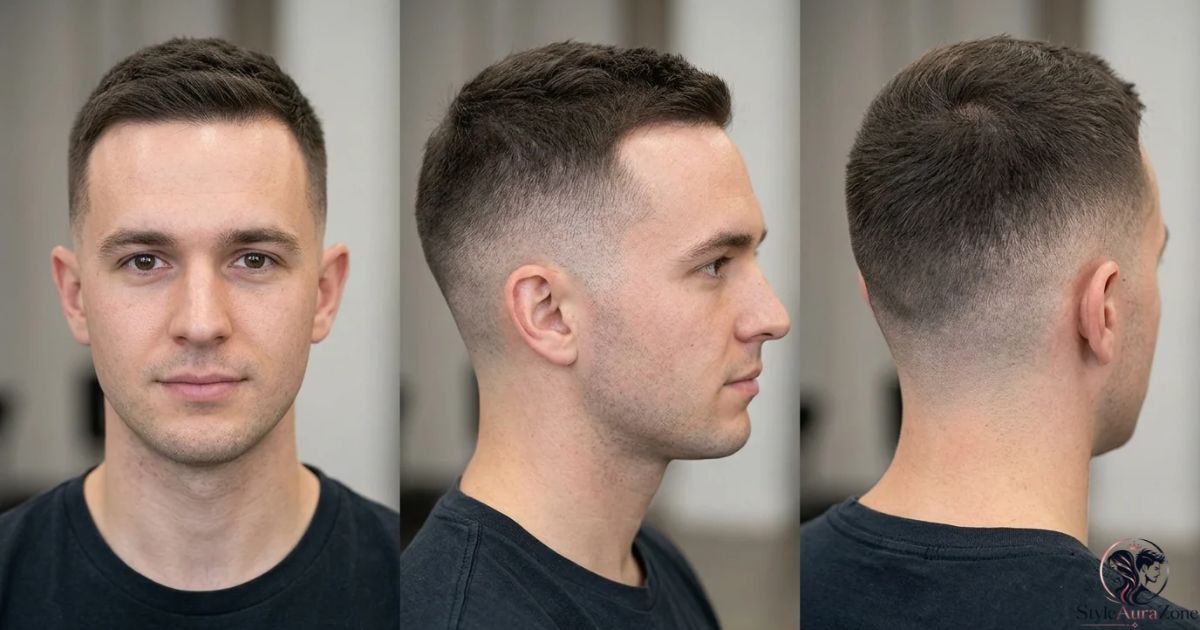
Round, square, oval, and long faces all work with the right top. Round faces gain height from a longer crown. Long faces usually look better with a slightly lower start and a softer top.
Watch your hairline too. A receding or uneven front can look more exposed under a tight temple fade. Scars, moles, and pigmentation also show more at close lengths. A lower, softer taper hides those details, so say so early.
Lifestyle and upkeep tolerance
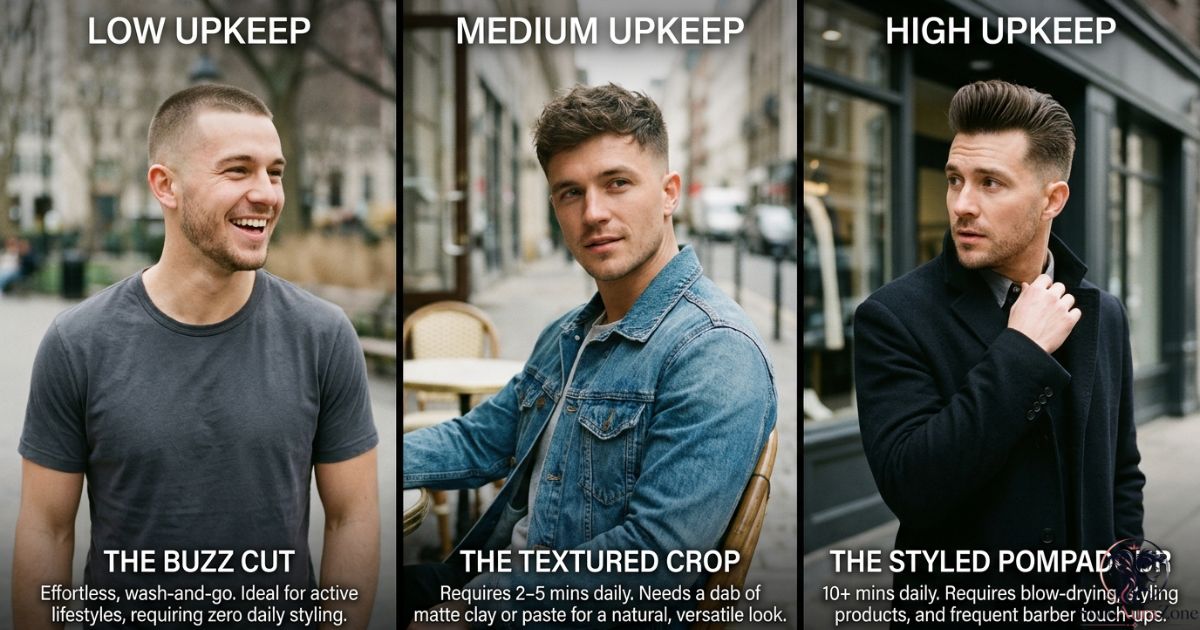
Be honest about your calendar. A skin finish looks crisp for a short window, while a shadow finish holds up longer. If you can’t book every two to three weeks, pick a guarded finish.
Work and school dress codes matter as well. Some settings frown on very high contrast, and a mid taper often passes more easily.
Which high taper fade style fits your hair?
Pick the top style by texture, density, and the minutes you’ll spend on it each morning. Copying a photo without adjusting it to your own growth pattern is where most disappointments begin.
High taper fade styles for curly and coily hair
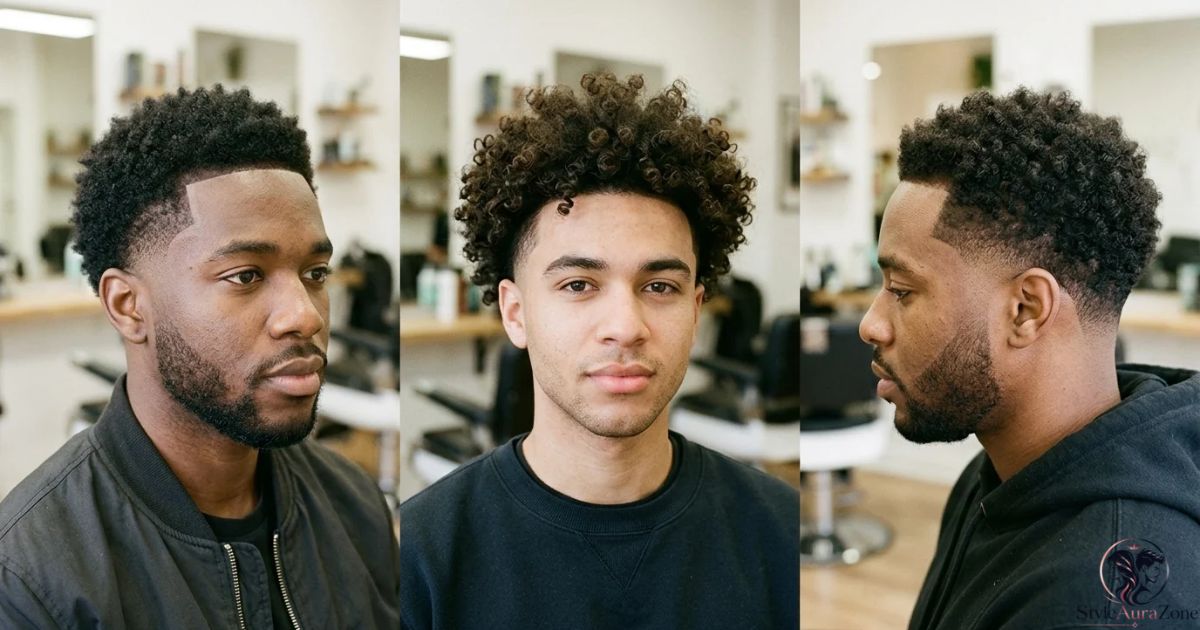
The taper outlines the shape while the top carries the pattern. Leave enough length for curls or coils to form. Many barbers also go one guard longer on tight textures, because curls spring back shorter once they dry.
Rounded afro or defined curly top
A rounded afro needs fairly even length across the crown. A defined curly top works well with shorter, uneven layers. Ask for a shape-up around the perimeter instead of heavy thinning, since thinning flattens volume.
Read more:36 Cool Short Modern Mullet Haircuts for Men
Twists, locs, or braids with a high taper
The taper only removes hair at the edges, so your parts and foundation stay intact. Talk with your barber, and your loctician or braider if that’s a separate visit, about how close the fade should come to the part lines. Match the temple and nape heights so the whole shape looks balanced.
High taper fade styles for straight and wavy hair
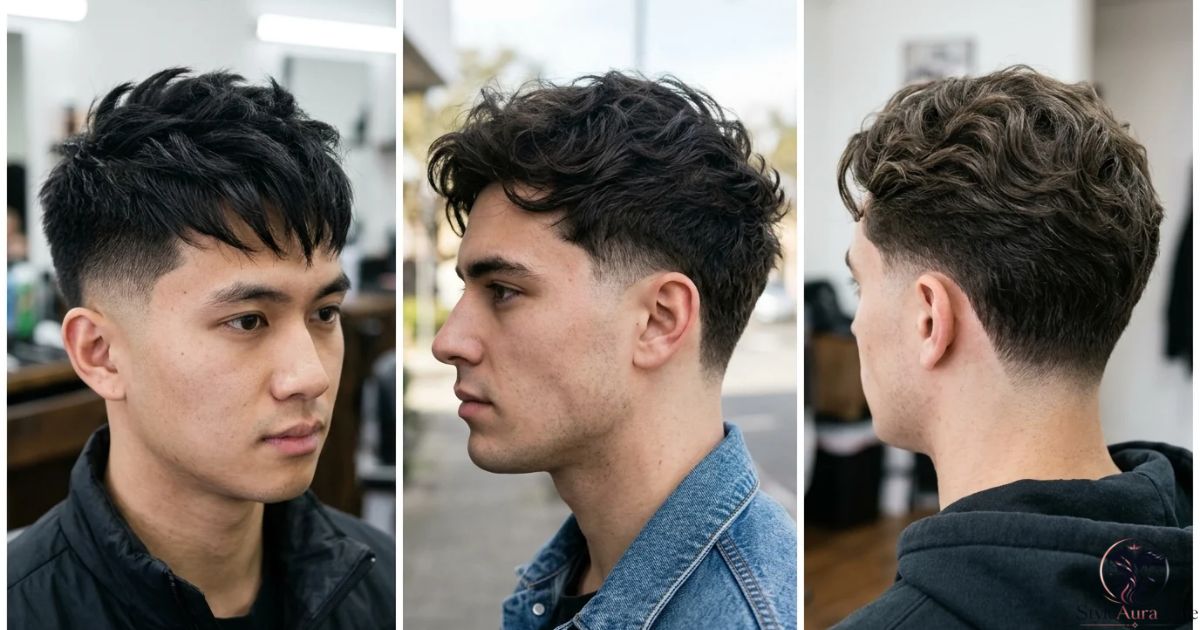
Straight hair shows every transition, so a gentler blend reads cleaner. Wavy hair brings movement without much effort. Both types give you plenty of room for texture.
Textured crop or forward fringe
A short, choppy top with a forward fringe pairs well with a tight taper. Matte clay or paste keeps the texture separated without shine. Because the top is short, the transition height carries most of the visual weight. Keep the blend soft.
Side part, quiff, or pompadour
These need roughly two inches or more on top so you can comb, part, or lift. Keep the taper clearly separated from the crown to avoid an accidental undercut look. A blow-dry against the part direction adds root lift, and a cream or pomade with medium hold keeps it all day.
Short high taper fade options with less daily styling
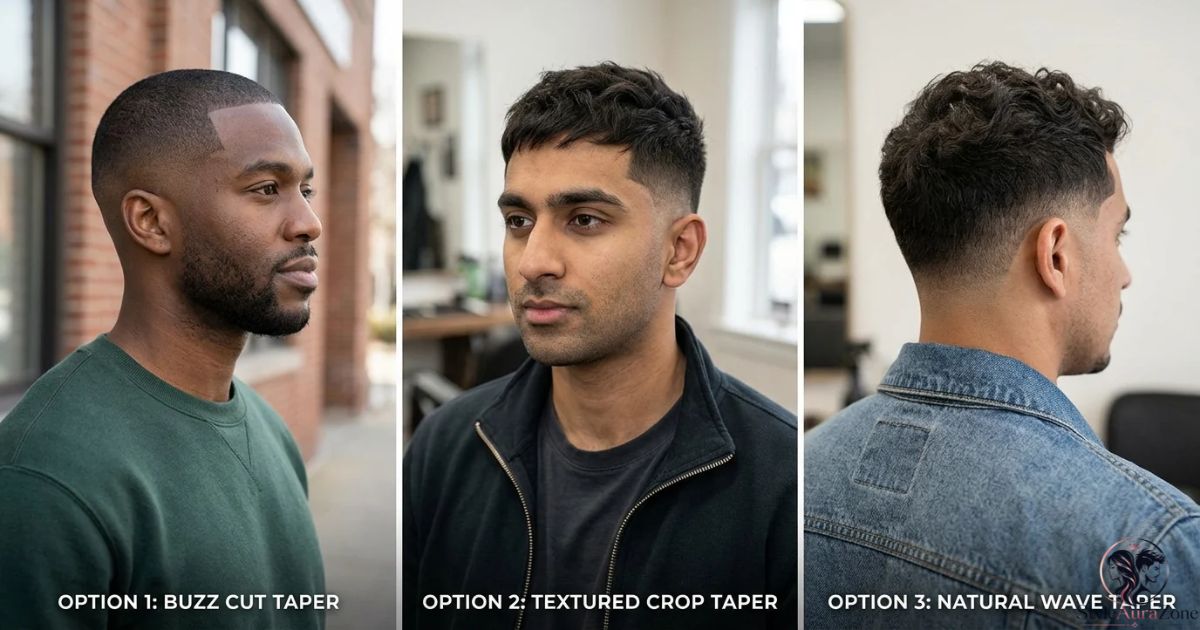
A shorter top trims your morning routine. It doesn’t reduce how often the fade itself needs a refresh. That schedule comes from the fade, not the length on top.
Buzz cut or crew cut
A buzz cut keeps the top and sides close in length, and the taper adds contrast at the temples and nape. A crew cut leaves a little more on top for a soft, brushed-forward front. Both finish with a towel dry and rarely need product.
Short textured top
A slightly longer top, textured with scissors or clipper-over-comb, adds definition without a part or comb. A pea-sized amount of matte paste on damp hair usually does it. Heavier products flatten texture at this length.
Beard and neckline pairings
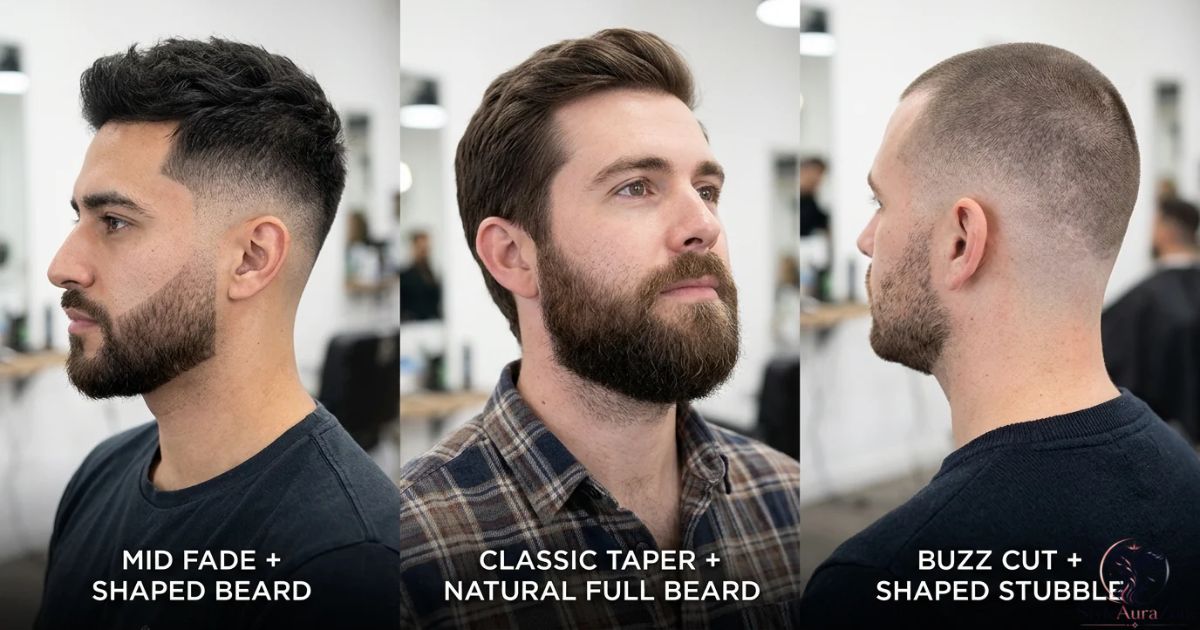
How the taper meets your beard and neck decides whether the cut looks connected, sharp, or soft. Decide this before the first pass.
Temple-to-beard blend
A gradual sideburn taper into the beard avoids a visible gap between hair and facial hair. Barbers typically use the same guard, or one step longer, as the beard begins. They then clean the cheek line separately once the blend is set.
Tapered nape versus defined neckline
| Finish | Look | Upkeep |
| Tapered nape | Fades softly into the neck, no hard edge | Grows out gently, fewer touch-ups |
| Defined neckline | Cut or shaved to a clean edge, squared or rounded | Shows regrowth sooner, needs frequent clean-ups |
How do you ask a barber for a high taper fade?
Don’t rely on the name alone. Describe coverage, height, shortest length, top shape, hairline, neckline, and beard connection. Bring photos from several angles so your barber can adapt the cut to your head.
Seven haircut specifications to agree on
- Fade coverage: Say whether the fade stays at the temples and nape or wraps the full side and back.
- Transition height: Describe where the blend should sit relative to your temples and ears.
- Shortest length: Choose skin, zero, a guard number, or a visible shadow.
- Top length and shape: Name the style, such as crop, curls, afro, fringe, side part, quiff, braids, locs, or buzz.
- Hairline treatment: Pick a natural edge, a light cleanup, or a sharp line-up.
- Sideburn and neckline finish: Decide whether sideburns are kept, tapered, or removed, and how the nape ends.
- Beard link: Ask for a gradual blend or a clean, intentional break.
Naming a guard number gives you an exact reference. Sizes vary slightly by brand, but this shows the standard system.
| Guard | Length (inches) | Length (mm) | Typical result |
| #0.5 | 1/16 | 1.5 | Near-skin shadow |
| #1 | 1/8 | 3 | Very short, soft shadow |
| #2 | 1/4 | 6 | Short, visible hair |
| #3 | 3/8 | 10 | Soft, conservative taper |
Reference-photo checklist
A useful photo shows the whole haircut, not just a nice top. Look for:
- Front, side, and back angles
- Hair texture and density close to yours
- A similar top length
- A clearly visible temple and neckline, with no filter hiding the blend
Mark what you like and dislike in each image. Treat photos as direction, because no cut looks identical on a different head.
Copyable barber script
“I’d like a high taper concentrated around the temples and nape, with the rest of the sides keeping some weight. I want the shortest point at [skin / #0.5 / #1 / shadow]. On top, I’d like [your style and length]. Please give me a [natural / sharp] hairline and a [tapered / defined] neckline, and blend the sideburns into my beard. Here are three photos from different angles. Adapt the cut to my growth pattern instead of copying them exactly.”
Your pre-appointment checklist
- Save three reference photos: front, side, and back
- Decide fade coverage and shortest length
- Note anything that must stay long
- Mention scalp sensitivity, scars, or past razor bumps
- Ask how your barber defines “high taper fade” before they start
How do you maintain and style a high taper fade?
Your top style sets the daily routine. Your growth speed and finish set the barber schedule. No single interval fits everyone.
Refresh schedule and grow-out
Scalp hair grows about, which is roughly an eighth of an inch per week. A skin-finished area therefore looks like a #1 guard after a week and a #2 after two. That’s an average, not a promise.
| Finish | Suggested refresh | Why |
| Skin or zero | Every 2 to 3 weeks | Close finishes soften fast |
| #0.5 or #1 shadow | Every 2 to 4 weeks | Holds shape a little longer |
| #2 or #3 guard | Every 3 to 5 weeks | Gentle grow-out, low contrast |
The line-up usually looks tired before the blend does, because regrowth along a straight edge shows faster. If only the edges have softened, ask for a neck and temple trim instead of a full reblend.
Daily styling by hair texture
| Texture | Product | How to apply |
| Curly or coily | Leave-in or curl cream | Work through damp hair to keep the pattern defined |
| Straight | Pomade or light cream | Blow-dry first, then shape |
| Wavy | Sea salt spray or light cream | Scrunch and air dry or diffuse |
| Short textured | Matte paste | Use a pea-sized amount, keep it off the faded zone |
Safe between-visit cleanup
- Trim stray hairs at the neckline or hairline edge only.
- Leave the fade line and the blend alone.
- Use clean, dry tools, and stop at the first sign of irritation.
- Book a barber for any reblend unless you already have clipper experience.
What are the drawbacks and safety considerations?
The downsides are mostly practical. You’ll see regrowth sooner, deal with naming confusion, and show more scalp than with a subtler cut. For some skin types, a very close finish can also cause irritation. None of this rules the cut out. It simply changes how you book and what you request.
Practical drawbacks and edge cases
- Faster grow-out: A high transition shows regrowth sooner than a lower fade.
- Overcutting risk: Going too high removes more side fullness than you wanted.
- Scalp visibility: Scars, pigmentation, or thinning show more under a tight fade.
- Cowlicks: Crown or temple swirls make an even blend harder.
- Dress codes: Some workplaces and schools restrict high-contrast cuts.
Irritation, razor bumps, and barber-tool hygiene
Very short coarse or curly hair can curve back into the skin and trigger razor bumps. The American Academy of Dermatology notes that, and its advice includes avoiding very close cuts. If you’re bump-prone, ask for a shadow finish or a light guard instead of bare skin.
Persistent bumps on the back of the neck deserve a dermatologist’s opinion. The AAD also describes,a condition often mistaken for razor bumps that can scar when left untreated.
Hygiene matters because clippers touch many heads in a day. Rules vary by state and country, so treat these as practical checks rather than legal advice:
- Watch for a clipper wipe or spray between clients.
- Look for a clean cape and a fresh neck strip.
- Check that guards and brushes look free of loose hair.
- Speak up if a station looks dirty. A good shop won’t mind.
What are the best alternatives to a high taper fade?
If the contrast, scalp exposure, or upkeep feels like too much, a neighboring cut probably gives you what you want.
| If you want | Try this instead |
| More side weight and less contrast | Low taper fade |
| A middle ground | Mid taper fade |
| A softer grow-out with no skin finish | Classic taper |
| The boldest contrast | Full high fade |
| A curve that follows the head behind the ear | Drop fade |
| Contrast wrapped around the ear | Burst fade |
FAQ’S
Is a high taper fade the same as a high fade?
Not quite. A high taper fade keeps the shortest work near the temples and nape, while a high fade clears most of the side. Some barbers use both names for one cut, so confirm coverage.
Does a high taper fade have to go down to skin?
No. The shortest point can be skin, a #0.5, a #1, or a soft shadow. Choose a guarded finish if your skin is sensitive.
How often should you refresh a high taper fade?
Every two to four weeks suits most people. Close finishes like skin need the earlier end of that range.
What guard number should you ask for?
Ask for a #0.5 or #1 for a soft shadow, or a #2 for a gentler taper. Pair the number with a description of coverage and height.
Can a high taper fade work with thin or receding hair?
Yes. Ask your barber for a lower, softer transition and a guarded finish so less scalp shows.
Conclusion
A high taper fade comes down to three choices: how far the fade reaches, how short the shortest point goes, and what stays on top. Settle those before you sit down. The label your barber uses then matters far less than the result in the mirror. Bring photos from three angles, too.
Match your refresh schedule to how fast your hair grows and how crisp you like the edges. A high taper fade with a skin finish usually needs a visit every two to three weeks. A guarded finish stretches longer. Between appointments, tidy only the neckline and let your barber handle the blend.