
A low drop fade looks simple from the front. The real story sits behind your ear, where the fade line curves down toward the nape. Get that curve right and the cut feels sharp for weeks. Get it wrong and you’ll notice it every time you pass a mirror.
This guide explains what the name means, how it differs from lookalike fades, and which tops pair best with it. You’ll also get barber-ready scripts, build steps, upkeep timing, and common mistakes. Whether you’re booking a first fade or fixing a near miss, you’ll know exactly what to say in the chair.
What is a low drop fade?
A low drop fade is a fade that starts low on the sides and curves downward behind the ear. The blend begins just above the ear. Instead of running level around the head, it arcs toward the nape.
The name describes a height and a shape. It says nothing about how short the bottom gets or what stays on top. Those two choices change the look more than most people expect.
| Detail | Low drop fade |
| Starting point | Just above the ear |
| Line path | Curves down behind the ear toward the nape |
| Area faded | Lower sides and back |
| Bottom length | Your choice: skin, shadow or guarded |
| Top | Anything from a buzz to a long quiff |
What does “low” mean in a low drop fade?
“Low” marks where the blend begins. On a low fade, the graduation stays in the bottom part of the sides, so most of your side length stays put. It sits below the temple and well under the crown.
Shops draw the line between low and mid a little differently. Point to the exact spot on your head, or show a photo. treats level and style as two separate requests, and that’s a smart way to think about it.
What does “drop” mean?
“Drop” describes the path of the line. Near the sideburn it sits higher. Behind the ear it dips, then meets the neckline lower than where it started. A standard fade holds roughly one height all the way around.
Because the dip hides behind the ear, a front mirror won’t show it. Ask for a hand mirror so you can check the side and back views before the barber blends anything.
Skin, zero or shadow: how short can it finish?
A low drop fade doesn’t have to end at bare skin. The curve and the closeness are separate decisions. Words like zero, bald and shadow also mean different things from shop to shop, so ask what your barber’s version leaves behind.
| Finish | What’s left at the bottom | Contrast | Grow-in |
| Skin (foil or razor) | Bare scalp | Highest | Stubble shows within days |
| Zero-gap or shadow | A faint haze of hair | High | Softens within about a week |
| #½ guard | 1/16 inch (about 1.6 mm) | Medium-high | Gradual |
| #1 guard | 1/8 inch (about 3.2 mm) | Softer | Most forgiving |
Those guard sizes follow. Other brands can run slightly different, so confirm the number with your barber.
Low drop fade vs similar haircuts
Four things separate these cuts: where the blend starts, which path the line follows, how much side hair comes off, and how the back is handled. Use the table as a quick map. The sections below add detail.
| Cut | Starts | Line path | Best for |
| Low drop fade | Just above the ear | Arcs down behind the ear | Clean sides with a shaped back |
| Low fade | Just above the ear | Level around the head | A simple, even perimeter |
| Low taper | Sideburns and nape | Follows the natural hairline | Keeping the most side length |
| Mid drop fade | Around the temple | Arcs down behind the ear | More contrast and more scalp |
| Low burst fade | Around the ear | Semicircle that wraps the ear | A fuller, longer back |
Low drop fade vs low fade
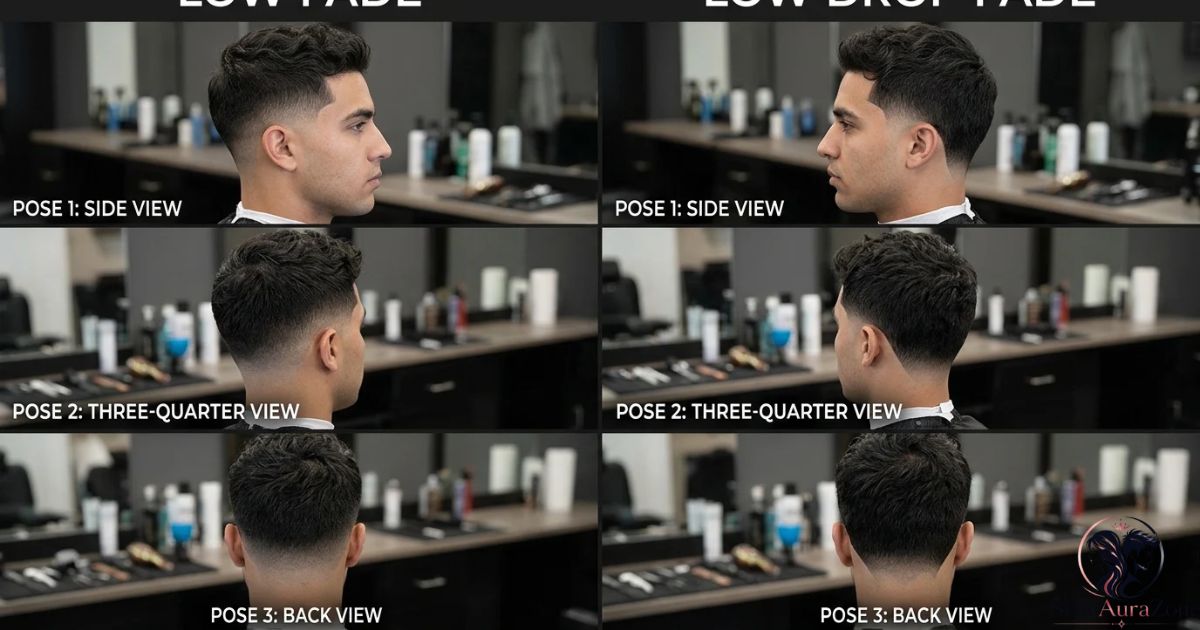
From the front, the two look nearly identical. The split shows at the side and back. A low fade holds a level line, while a low drop fade bends down behind the ear.
Some barbers blend the two. They keep the line level at the temples and let it drop only near the ear. Tell your barber whether you want the drop slight, moderate or deep.
Low drop fade vs low taper
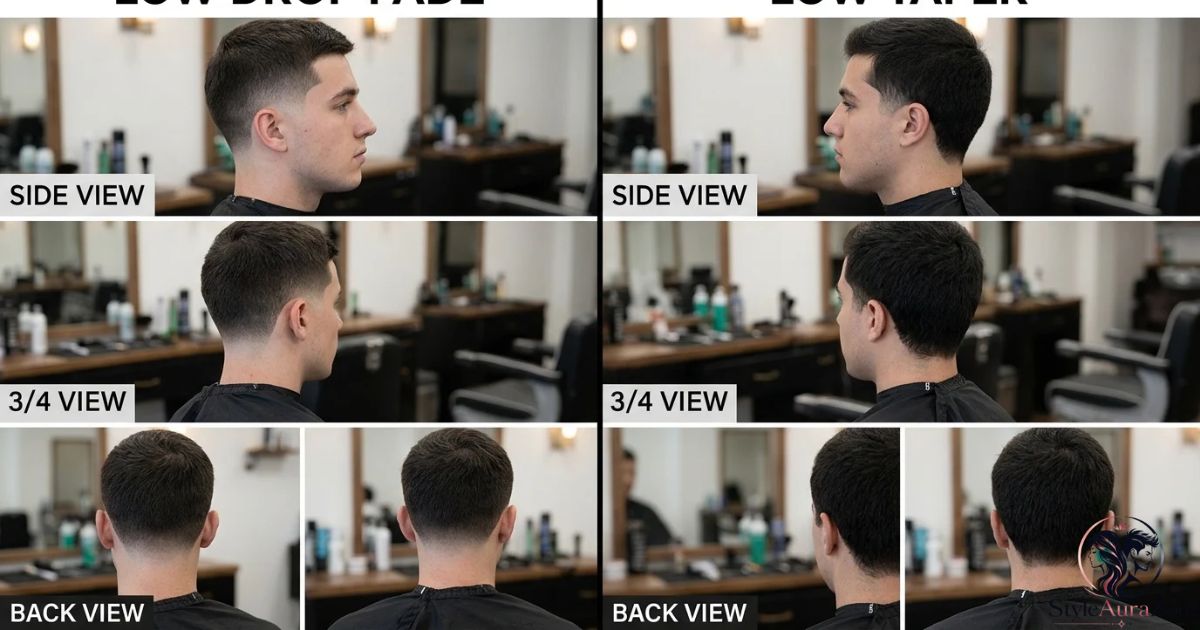
A taper trims mainly the sideburns and neckline. The sides keep most of their length. A fade removes more hair and blends down to something much shorter.
Terms overlap here, and barbers don’t always agree on them. Describe the result instead of leaning on the label. Say how much hair you want gone from the lower sides.
Low drop fade vs mid drop fade
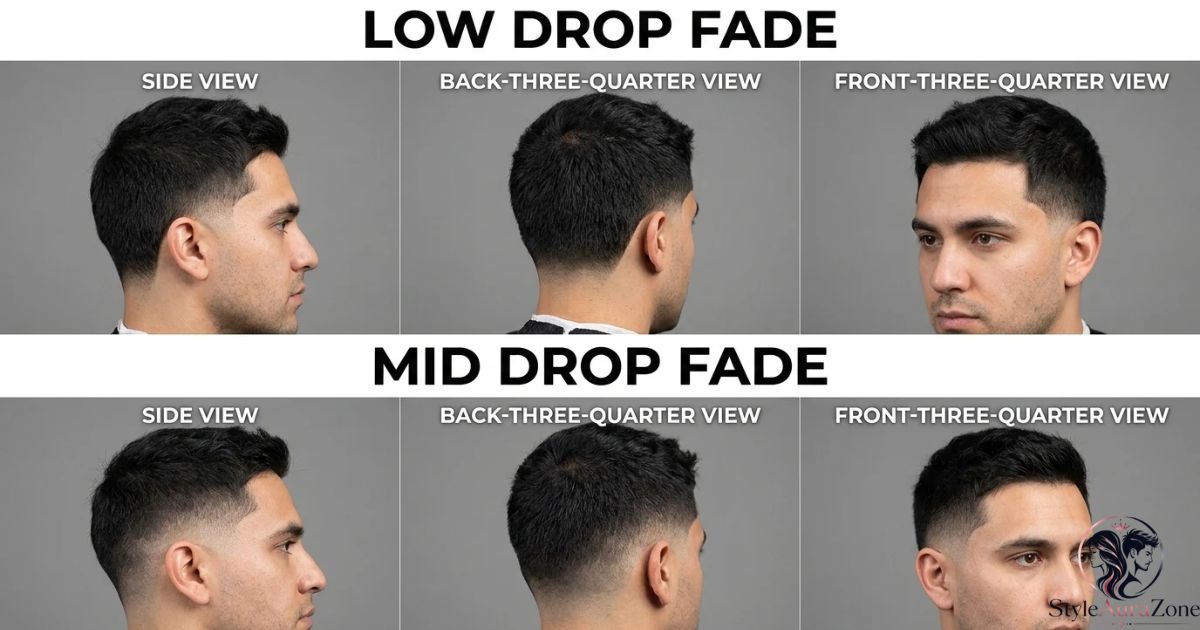
Both follow the same curve. The mid version simply starts higher, around the middle of the sides. That removes more weight and shows more scalp.
Not sure which one fits? Start low. A barber can raise a fade during the same visit. Nobody can lower it until the hair grows back.
Low drop fade vs low burst fade
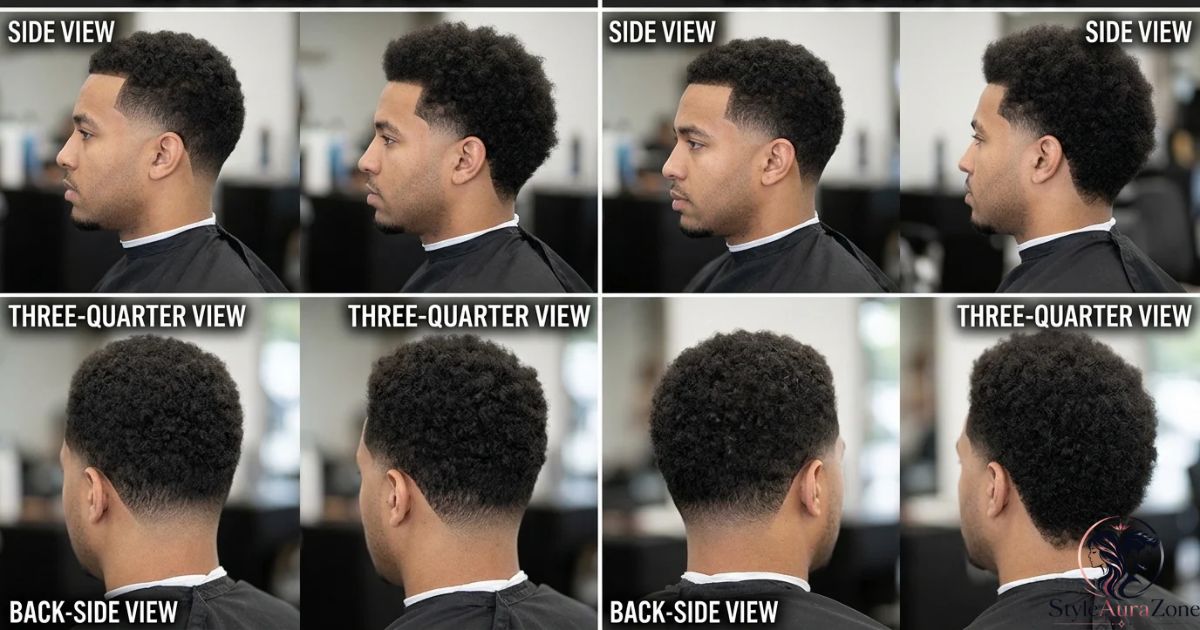
A burst fade wraps around the ear in a semicircle and leaves more length at the nape. A drop fade keeps falling toward the neckline instead. Burst suits mohawks, mullets and fuller backs.
Show a rear photo to settle which shape you want. Front views make the two look almost the same.
Read more:Low Taper vs Low Fade: What’s the Difference, and Which Should You Choose?
Who does a low drop fade work for?
This cut works on most heads. Fit depends less on face shape and more on things you can check yourself: density, texture, growth direction, the back of your skull and how often you’ll rebook.
Hair texture, density and growth pattern
The shape adapts to straight, wavy, curly and coily hair. What changes is how the blend looks and how much work it takes to keep it clean.
| Trait | What it affects | What to tell your barber |
| Straight hair | Shows every blending flaw | Ask for a gradual, soft transition |
| Curly or coily hair | Hides blend lines well | Judge top length dry, not wet |
| Fine or low density | Shows scalp sooner | Choose a guarded base over skin |
| Thick hair | Adds weight above the line | Ask for weight removal in the upper sides |
| Cowlicks or nape swirls | Can bend the arc | Mention them before the first pass |
Head shape, neck shape and upkeep
Short sides reveal your skull’s shape, and the drop follows the curve behind your ear. So the back of your head matters more than your face. A flat or bumpy spot at the nape can make the arc look uneven.
On a narrow neck, a deep drop can look dramatic. A shallower arc usually softens it. Be honest about upkeep too. A skin base looks sharp for days, while a guarded base forgives a longer gap between visits.
Low drop fade styles by hair type and top shape
Every style below shares the same low, curving sides. Only the top changes. Pick the top you want first, then make sure the fade leaves enough weight to support it.
| Top style | Typical top length | Suggested base | Works best on |
| Textured crop | 1 to 2 inches | Skin or #½ | Straight, wavy, thick |
| French crop | 1 to 2 inches | #½ or #1 | Straight, fine |
| Fringe | 2 to 4 inches | #1 | Straight, wavy |
| Buzz or crew cut | Under 1 inch | Any | Every texture |
| Quiff or side part | 3 inches or more | #1 | Straight, wavy, thick |
| Curly top or twists | 2 to 5 inches | #½ or #1 | Curly and coily |
Low drop fade for straight and wavy hair
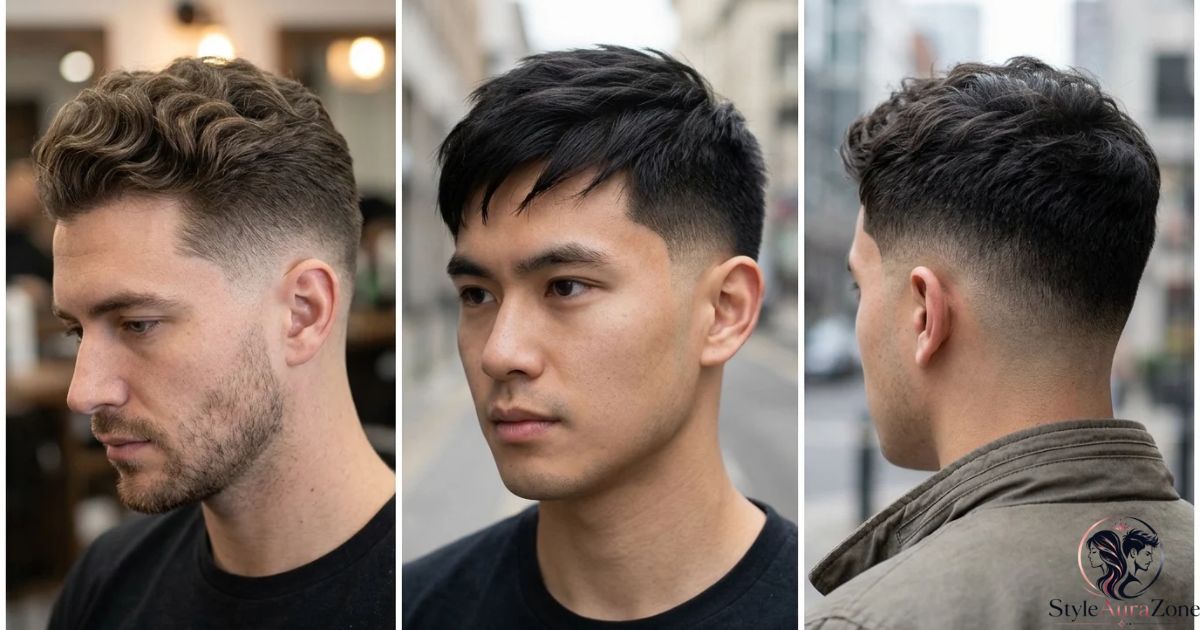
Straight hair has no curl to soften a rough transition, so every gap shows. Ask for a gradual blend and agree on how much length stays above the curve. Otherwise the upper sides can look boxy.
Wavy hair is more forgiving. The pattern breaks up the blend line and adds natural volume. A light cream or sea salt spray keeps the waves defined without weighing them down.
Low drop fade for curly, coily hair and waves
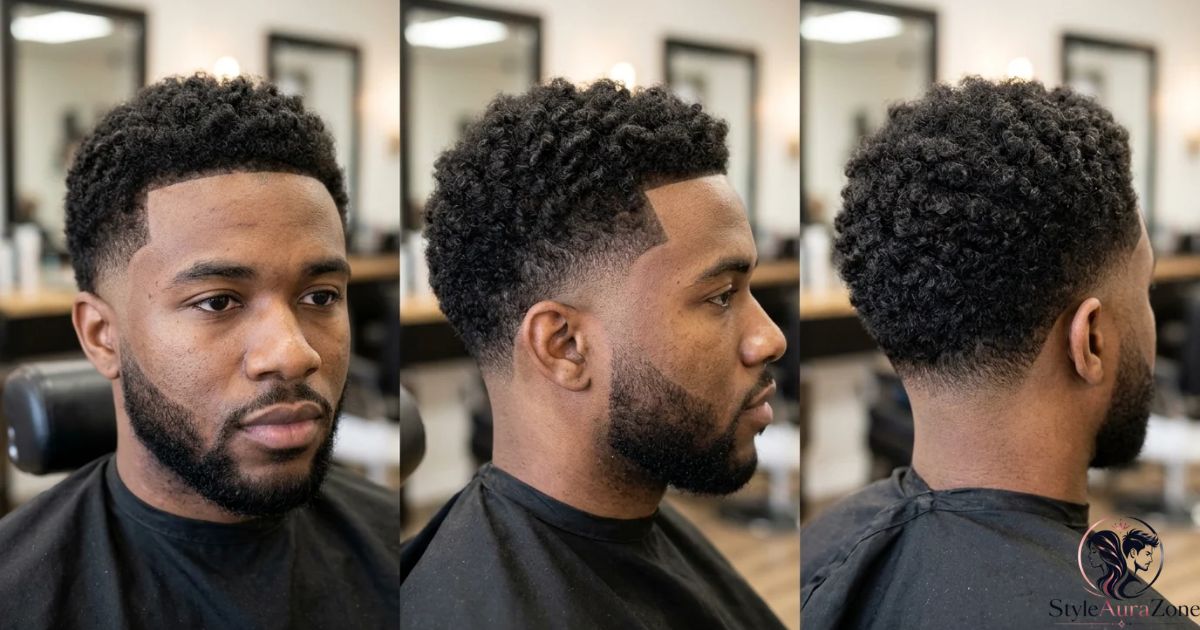
Curls change length as they dry. Tight coils can shrink a lot, so judge your length dry and leave more than you think you need. Describe the shape you want: cropped curls, a rounded top, twists or a longer curl.
Ask for a longer transition zone where the fade meets the top. That prevents a shelf-like edge. If you brush waves, keep some hair on the sides. A low drop with a #1 base protects the pattern better than a skin fade does.
Textured crop, French crop and fringe
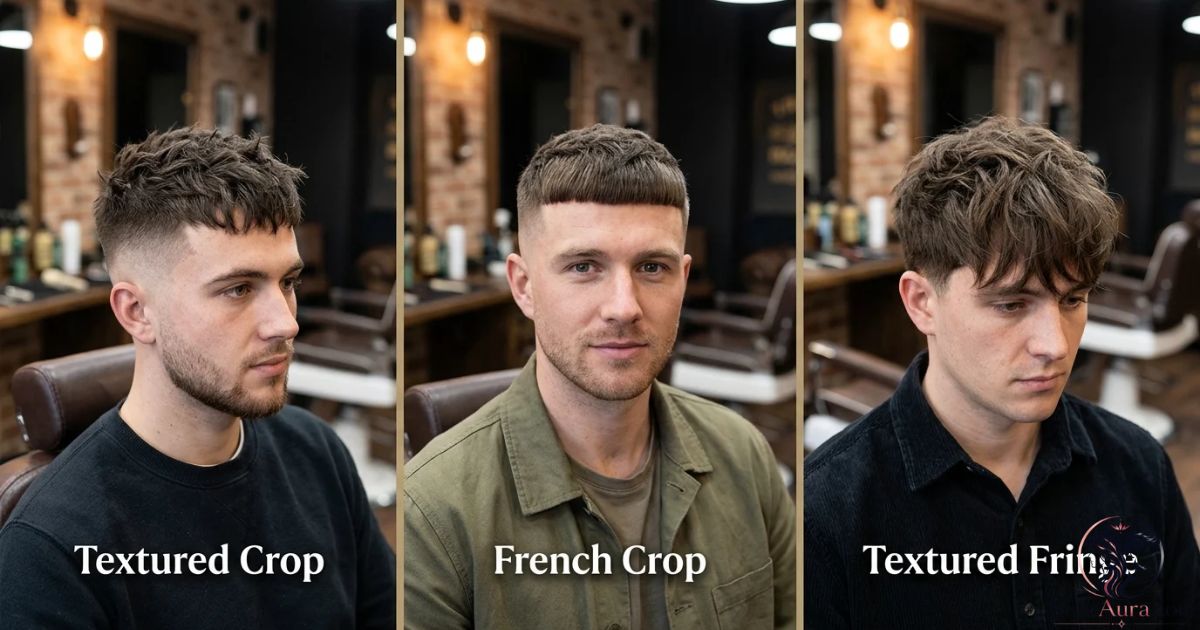
These three tops differ mostly at the front. A French crop is short and flat with a clean edge. A textured crop is short but broken up. A fringe runs longer and falls toward the brow.
The low drop sits under any of them. Bring a photo of the front you want. Mention the fringe length in inches so your barber doesn’t guess.
Buzz cut and crew cut
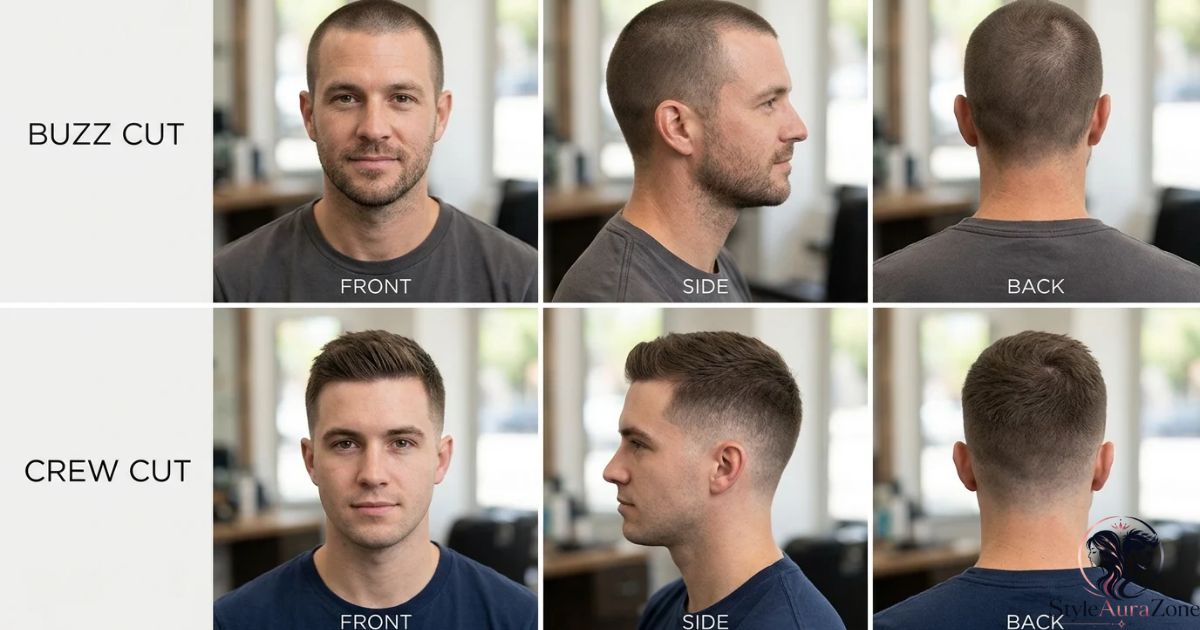
With little hair on top, the fade has nowhere to hide. Symmetry and arc depth show instantly. Agree on the drop before the clippers start.
A buzz cut keeps one length over the whole top. A crew cut leaves the front slightly longer. Both look best when the base length sits a clear step below the top.
Quiff, side part and slick back
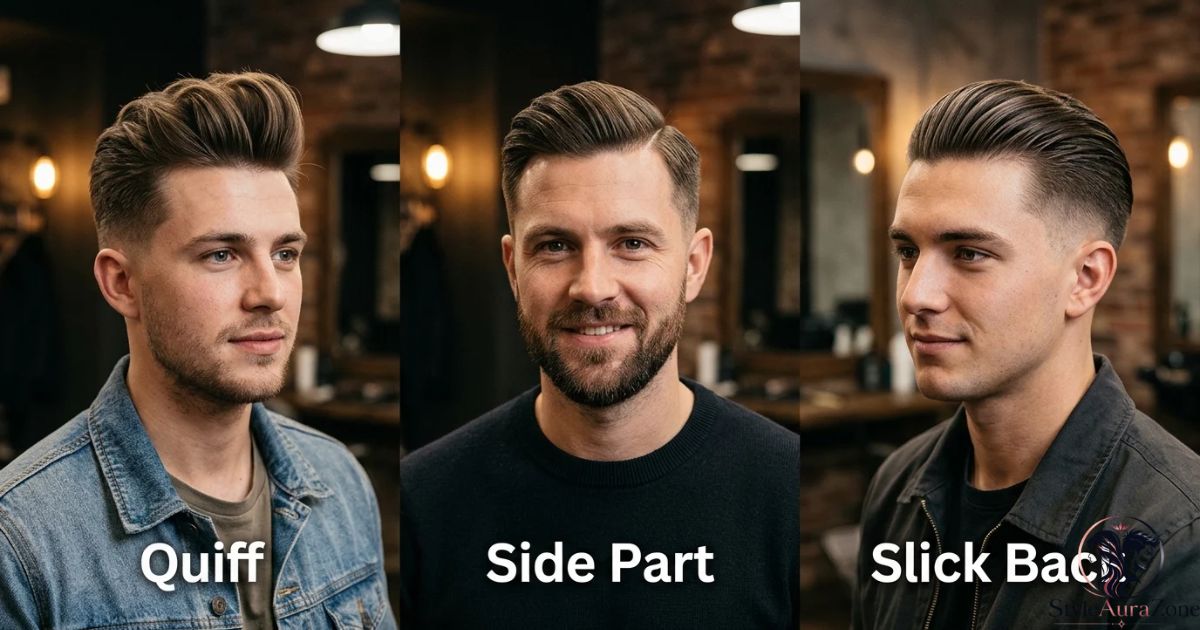
Longer tops need weight above the fade. Without it, the outline looks heavy at the corners. Aim for roughly three inches or more on top.
A low drop keeps the upper sides full enough to frame all three styles. Use pomade or a light paste to hold the shape. Comb it through on slightly damp hair for a cleaner finish.
Beard blend and line-up
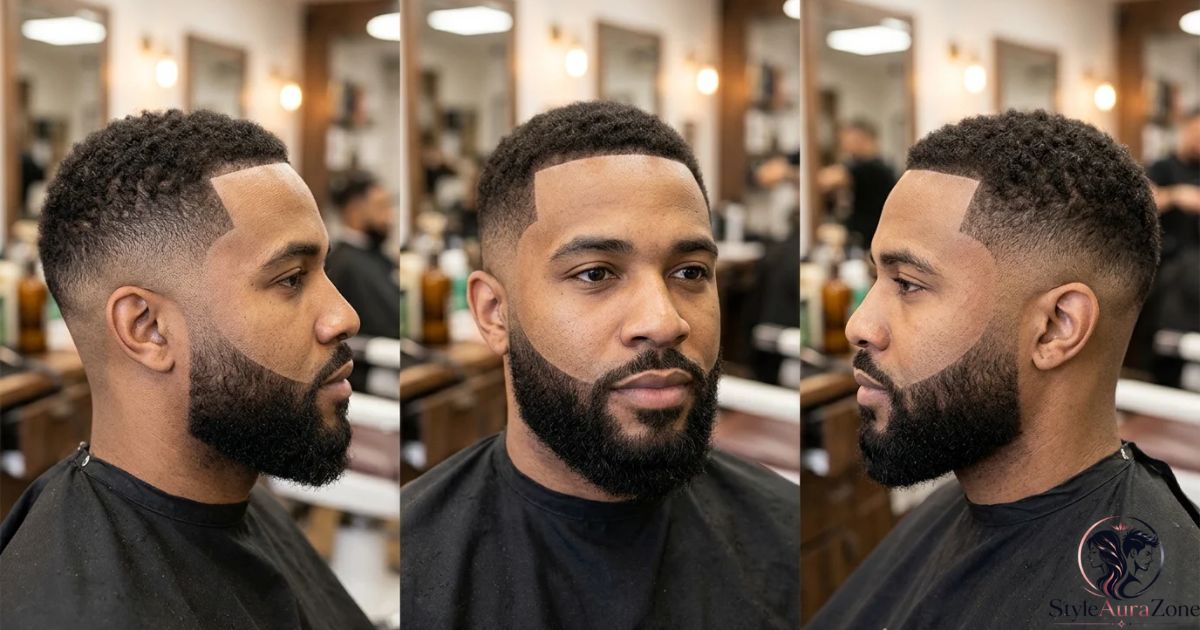
For a connected beard, the sideburn fades into the facial hair. Barbers usually step the guard length up as the beard moves toward the chin. A disconnected sideburn is the other option.
A line-up sharpens the hairline, temples and sideburns. Ask your barber to follow your natural hairline. A line pushed back too far looks obvious as it grows in.
How to ask your barber for a low drop fade
“Low drop fade” alone leaves too much to guesswork. Five choices remove most of it. Settle them in order, because each one narrows the next.
Choose these five specs before the cut
- Height: Say the blend starts just above the ear and stays low. Point to the spot.
- Drop depth: Pick a subtle, moderate or deep arc behind the ear.
- Bottom length: Name skin, shadow, #½ or #1. Say it applies to the very bottom only.
- Top length: Give a number in inches, measured dry. Say whether it blends in or stays disconnected.
- Neckline and edges: Choose squared, rounded or tapered. Decide on a line-up and beard connection.
Bring the right reference photos
Photos beat adjectives every time. Three angles do the job.
- Side view: Shows fade height and top shape.
- Rear view: Shows the drop, which is the whole point of this cut.
- Front view: Shows the hairline and any fringe.
Choose photos of real haircuts on hair similar to yours. A cut on thick straight hair won’t translate to fine or curly hair. Heavily edited or generated images can show blends that real hair can’t reproduce. A barber’s own portfolio is the safest reference.
Use a one-sentence barber brief
Use this order: height, drop, base, top, edges. Swap in your own numbers.
Guarded base
“Low drop fade with a #1 at the very bottom and a gentle arc behind the ear. Leave about three inches on top, blend the upper sides, and finish with a tapered neckline.”
Skin base
“Low drop fade taken down to skin at the base, with a clear arc behind the ear. Keep the upper sides full, cut a short textured top, and round the neckline.”
Curly or coily top
“Low drop fade with a #½ at the bottom and a moderate arc. Leave two to three inches of curl, measured dry. Blend gradually into the top and keep the edges natural.”
Ask the barber to start conservative. Clear up any mismatch with your photos before the blend begins.
How a barber builds a low drop fade
A good low drop fade starts with the curve, not the blend. The barber marks the arc, confirms both sides match, then graduates the lengths to follow it. Knowing that order tells you when to speak up: before blending starts.
Set the curved guideline and check symmetry
The barber outlines the arc with an edger or trimmer, starting above the ear and curving down toward the nape. Then they step behind you to compare both sides. A line sitting lower on one side can’t be blended away.
If something looks off, say so now. Redrawing the line takes a minute. Fixing it later means waiting for regrowth. Ask for a hand mirror at this stage.
Blend the zones without pushing the fade too high
The shortest zone sits under the guideline. Each longer zone above it steps up with passes that curve along the arc instead of running straight across. Barbers use clipper levers, guard steps and clipper-over-comb or scissor-over-comb work to smooth the joins.
| Zone | Typical tool | Goal |
| Below the line | Clippers, foil shaver or guard #½ to #1 | The shortest, cleanest area |
| Blend zone | Clipper lever and stepped guards | Smooth gradient along the curve |
| Upper sides | Clipper-over-comb or shears | Connect the fade to the top |
| Edges and neckline | Trimmer | Sharp, intentional outline |
Watch the top edge of the blend. That’s where a low cut quietly turns into a mid one.
How to style and maintain a low drop fade
The fade needs almost no daily styling. Your top sets the routine. Your base sets the rebooking schedule.
Style the top by hair type
| Top | Product | How to apply |
| Short crop or fringe | Clay or matte paste | A small amount on dry hair |
| Curls or coils | Cream or light curl paste | Work through damp hair |
| Side part or slick back | Pomade | Comb into place |
| Fine or thinning hair | Lightweight clay | Use sparingly |
Start with less than you think you need. You can always add more. Heavy waxes weigh down fine hair fast.
How often should you refresh the fade?
The base length decides most of this. Rebook just before the grow-in bothers you, then note how long that took.
| Base | Typical refresh window |
| Skin | Every 2 to 3 weeks |
| Zero-gap or shadow | Every 2 to 3 weeks |
| #½ guard | Every 3 weeks |
| #1 guard | Every 3 to 4 weeks |
Between visits, a cordless trimmer can tidy the neckline and sideburns. Leave the arc alone. One slip there stays visible until it grows out.
Skin comfort with very close fades
Very close cuts can trigger razor bumps, especially on coarse or curly hair. Short hairs can curve back into the skin. The advises against shaving too closely for that reason.
A guarded base is the simplest fix. Keep the curve and raise the length. If bumps keep returning on the neck or scalp, see a board-certified dermatologist. The AAD notes that can scar without treatment.
Common low drop fade mistakes and how to avoid them
Most bad low drop fades trace back to vague instructions or hair removed before the shape was agreed.
| Mistake | What goes wrong | How to avoid it |
| Giving a guard number with no location | “A #1” could mean the base or the whole side | Say “#1 at the very bottom, blending up” |
| Showing only a front photo | The barber guesses the drop depth | Bring side and rear photos |
| Assuming “low drop” means skin | Sources and barbers disagree on the default | Name your base length out loud |
| Staying quiet until the end | Height and symmetry can’t be fixed after blending | Speak up after the first pass |
| Choosing skin for the photo | A bare base grows in fast if you rebook monthly | Match the base to your schedule |
| Letting the blend creep up | The cut turns into a mid fade | Point to the height before you start |
| Ignoring cowlicks and nape growth | The arc sits unevenly | Mention growth patterns first |
FAQ’S
Is a low drop fade the same as a burst fade?
No. A burst wraps in a semicircle around the ear, while a drop keeps curving down toward the neckline. A rear photo settles which one you want.
Can a low drop fade end at a #1 instead of skin?
Yes. The curve and the bottom length are separate choices. A #½ or #1 base keeps the same arc with less contrast.
How low should the drop sit behind the ear?
There’s no fixed number. Pick a subtle, moderate or deep arc from a rear photo, then check the drawn line in a hand mirror before blending.
How does a low drop fade grow out?
The base fills in first, so a skin finish loses contrast within about a week. A guarded base changes more slowly and looks tidy longer.
Does a low drop fade work on fine or thinning hair?
Usually, with a guarded base. A #½ or #1 under a short textured top keeps the sides from looking sparse.
Conclusion
A low drop fade comes down to two ideas: a low start above the ear and a curve behind it. Everything else, from base length to the top, is your call. Name each piece out loud at the start and the result stops being a gamble.
Bring side and rear photos, check the arc in a hand mirror before blending begins, and pick a base you can actually maintain. If close cuts irritate your skin, keep the curve and raise the guard. That small habit keeps the shape consistent.