
Walk into any barbershop and ask for a low taper, and you might leave with a low fade instead. The two cuts start in the same spot, so people mix them up constantly. That mix-up can cost you a haircut you didn’t want, or a standing appointment you never planned on.
The low taper vs low fade question comes down to contrast. One blends softly and keeps some length near the skin. The other drops sharply and shows the scalp. This guide breaks down looks, face shapes, hair types, upkeep, and the exact words to use with your barber, so you can book confidently.
The main difference
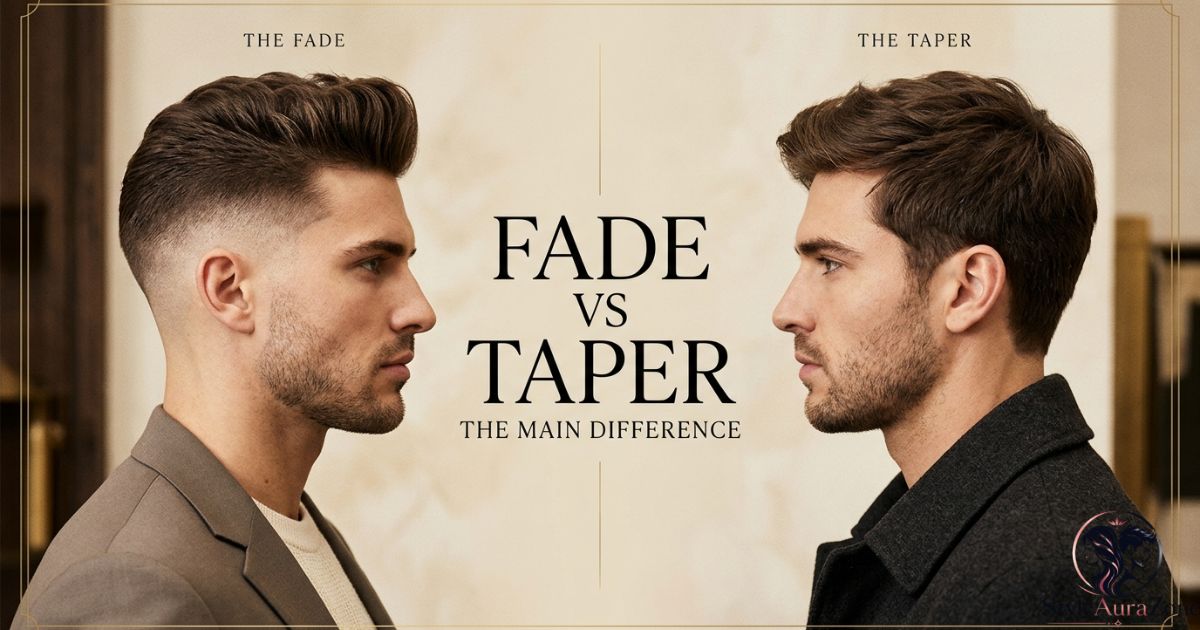
Both cuts begin low, just above the ears and along the natural neckline. After that, they take different roads.
A low taper shortens the hair gradually. The sides stay a bit longer, and the transition looks soft. A low fade shortens the hair much more, often down to skin, and the drop is easy to spot.
Think of it as volume control. A taper turns the dial down slowly. A fade turns it down fast and leaves a clear line between top and sides.
Barbers also split these cuts by technique. As points out, a taper keeps more scalp coverage than a fade and suits classic styles.
What is a low taper?
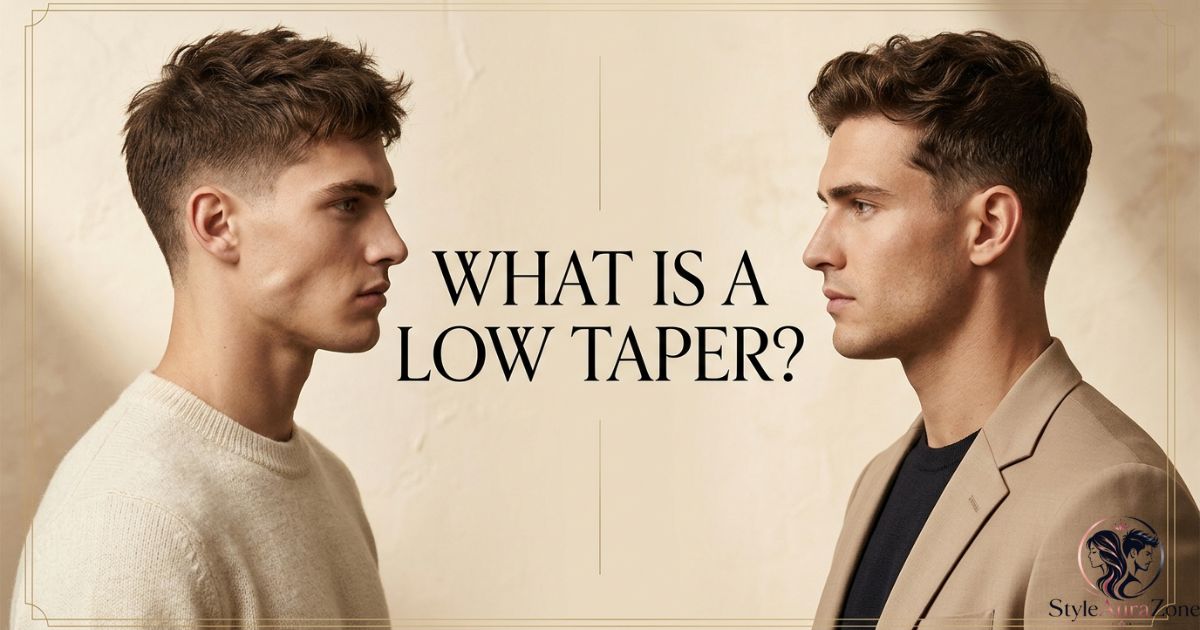
A low taper trims the sideburns and the nape in a smooth gradient. Most barbers work it from a guard #2 or #3 up into the longer hair, so the shortest section still shows some hair. Bare scalp rarely appears.
That restraint is the appeal. The cut looks clean without drawing attention to itself. Coworkers notice you look sharp, but they can’t say why.
It also forgives a late appointment. Since no hard line exists to lose, the cut simply grows a little longer instead of turning ragged.
Typical traits of a low taper:
- Gradual, soft blend around the ears and neckline
- Little or no skin showing
- Works with short, medium, and longer tops
- Suits both casual and formal settings
What is a low fade?
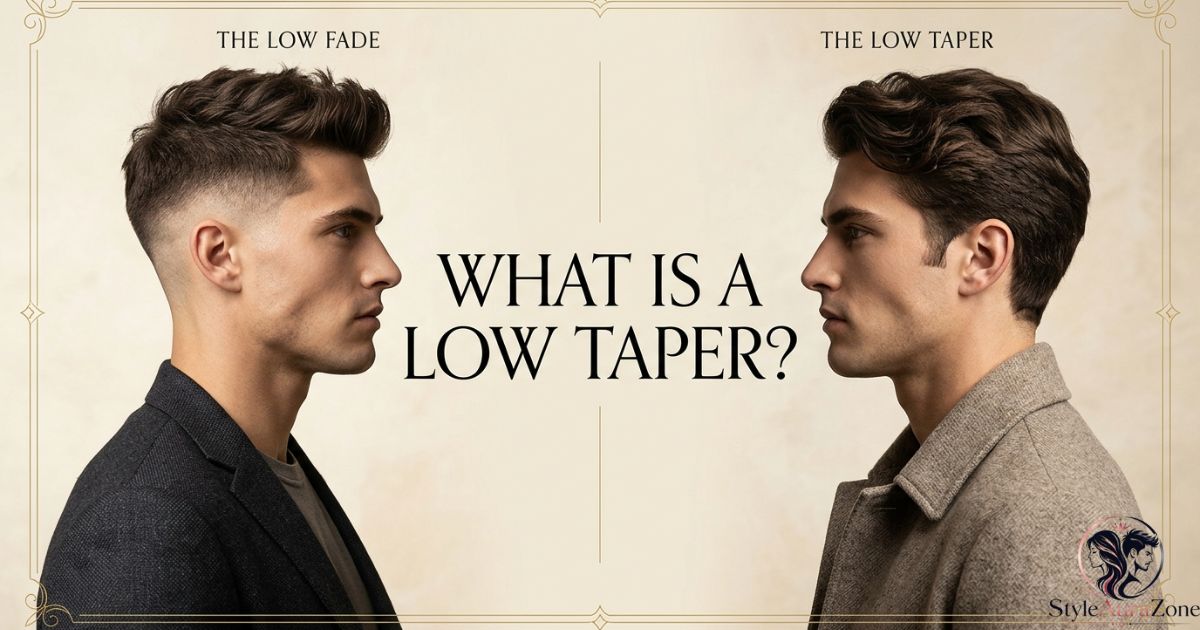
A low fade also starts near the ears, but it runs from longer hair on top down to very short stubble or bare skin. Many barbers begin at a #0 or #1 guard, or use a foil shaver for a skin finish.
The result is crisp. You get clear separation between the top and the sides, and the cut photographs well. That visible drop is the whole point.
The price is upkeep. Fresh growth blurs the fade zone quickly, so the sharp look fades along with the hair.
Common low fade finishes include:
- Skin fade: Goes all the way to bare skin
- Shadow fade: Stops just short of skin for a softer edge
- Drop fade: Curves down behind the ear instead of running straight
Low taper vs low fade at a glance
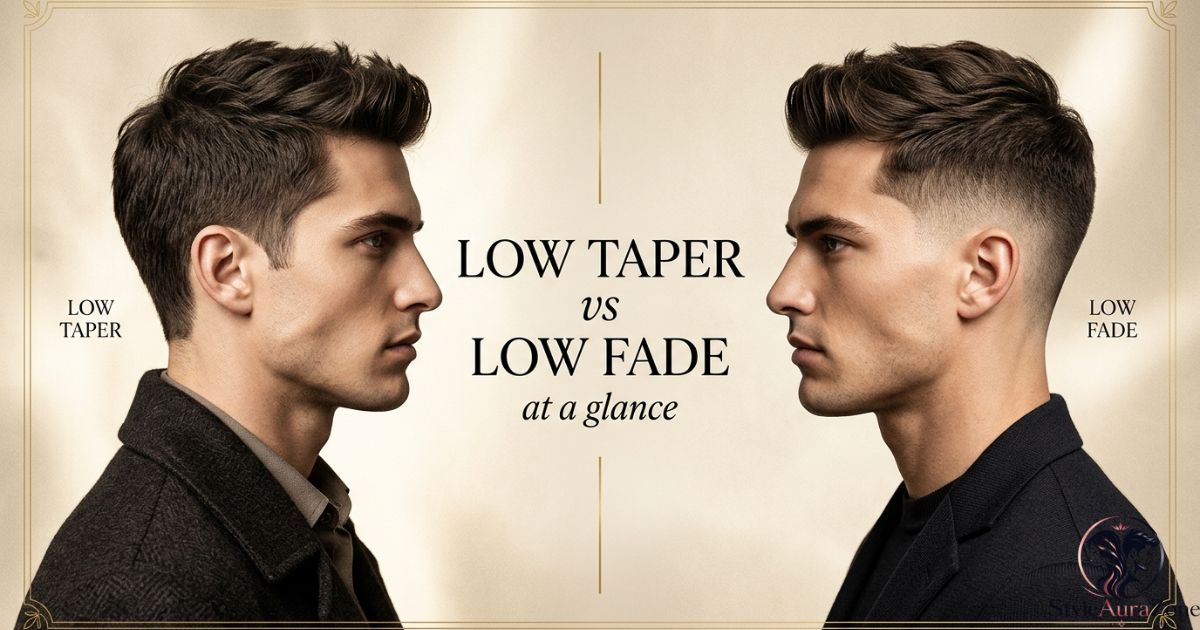
Here’s the quick comparison before you sit in the chair.
| Feature | Low Taper | Low Fade |
| Starting point | Near ears and neckline | Near ears and neckline |
| Contrast | Soft and gradual | Strong and obvious |
| Skin showing | Little to none | Often skin or near-skin |
| Overall vibe | Natural, polished, understated | Sharp, modern, defined |
| Grow-out | Stays tidy longer | Softens within a couple of weeks |
| Upkeep | Lower | Higher |
Read more:Low Taper Fade: The Complete 2026 Haircut & Style Guide
Which one looks more natural, and where each works best
For a natural look, the taper wins. It follows how hair grows and avoids a visible outline. Nobody sees a “cut” at all, just a tidy head of hair.
A fade does the opposite on purpose. It frames the head with a clean edge, which makes it feel styled and intentional.
Setting matters too. Here’s where each tends to shine.
| Setting | Better Pick | Why |
| Conservative office | Low taper | Reads polished and quiet |
| Job interview | Low taper | Safe and professional |
| Wedding or formal event | Low taper | Neat without trying too hard |
| School or sports | Either | Both stay within most dress codes |
| Nights out and social events | Low fade | Sharp sides add a finished look |
| Creative workplace | Low fade | Contrast signals personal style |
Choosing based on your face shape
Face shape is a guide, not a rule. Your barber’s skill and your hair density matter just as much. Still, a few patterns help.
| Face Shape | Leans Toward | Reasoning |
| Oval | Either | Balanced proportions suit both |
| Round | Low fade | Sharper sides add angles and length |
| Square | Low taper | A soft blend avoids stacking sharpness on a strong jaw |
| Oblong | Low taper | Subtle sides won’t stretch the face further |
| Heart | Low taper | Keeps the lower face from looking narrow |
A fade with a fuller top can still flatter a square face. Ask your barber to keep the top textured, not flat.
Choosing based on your hair type
Texture and density change how each cut lands.
| Hair Type | Better Match | What to Know |
| Straight | Either | Shows clean lines well; a taper looks smooth, a fade looks precise |
| Wavy | Either | A taper looks effortless; a fade adds punch under a textured top |
| Curly | Low fade | The faded base frames curls and defines their shape |
| Coily or afro-textured | Low fade | Crisp edges bring out natural texture |
| Thick | Either | Holds both shapes without trouble |
| Fine or thin | Low taper | Avoids a sparse look at the sides |
Thin hair can look see-through when a fade strips the sides. A taper keeps the appearance of density, which many people with fine hair prefer.
Maintenance and how long each lasts
Upkeep often decides the debate. Hair on the sides grows roughly half an inch per month, and that growth hits a fade harder.
| Cut | Typical Time Between Visits | What Happens as It Grows |
| Low taper | 3 to 4 weeks | Gets longer but stays neat |
| Low fade (shadow) | 2 to 3 weeks | Blur appears around the fade zone |
| Low skin fade | 2 weeks | Stubble shows within days |
Between visits, a few habits help:
- Wash and condition the sides so they stay soft and even
- Use a small trimmer to clean the neckline only
- Skip home fading, since uneven blends are hard to fix
- Book your next visit before you leave the shop
If your calendar is packed, the taper is the practical pick.
Pairing with popular styles on top
The sides are only half of the picture. Your top style shapes the final result.
- Textured crop: A fade gives it a sharp, modern frame
- Quiff: A fade supports the volume, while a taper gives a softer, vintage feel
- Curly top: A fade defines the curls and cleans up the outline
- Fringe: A taper keeps it classic, and a fade works well with a textured version
- Side part or comb over: A taper suits the traditional feel
- Buzz cut: A taper stays uniform, and a fade adds definition at the base
- Messy top: A fade balances the chaos with clean sides
How to ask your barber
Clear words prevent surprises. Follow these steps.
- Name the technique, either taper or fade
- Say “low” and point to just above the ear
- State the finish: skin, shadow, or no skin showing
- Describe the neckline: natural, rounded, or squared
- Mention how long you plan to keep the top
Then try one of these lines:
“Low taper, soft blend, no skin showing, natural neckline.”
“Low fade starting above the ear, taken to a shadow.”
Bring a photo too. Even seasoned barbers appreciate a visual, and it cuts down on guesswork.
So, which should you choose?
Choose a low taper if you:
- Want a subtle, natural finish
- Work in a conservative setting
- Prefer fewer barber visits
- Have fine or thinning hair
- Want a versatile first cut
Choose a low fade if you:
- Love sharp, defined contrast
- Wear curls, volume, or a textured top
- Don’t mind frequent touch-ups
- Want a cut that photographs well
Still unsure? Tell your barber about your routine and let them recommend a starting point. Starting longer is safer, because hair can always be taken shorter next visit.
FAQ’S
Is a low taper better than a low fade?
Neither wins outright. A taper suits low-maintenance routines, and a fade suits anyone who wants sharper contrast.
Does a low fade show more skin than a low taper?
Usually, yes. A fade often reaches skin or near-skin, while a taper typically leaves some hair at the base.
Which cut lasts longer between haircuts?
The low taper. It grows out neatly for about three to four weeks, while a fade starts softening around two to three.
What’s the difference between a low taper fade and a low fade?
A low taper fade blends gradually and keeps more length at the bottom. A low fade drops to shorter lengths with stronger contrast.
Can I get either cut with curly or coily hair?
Yes. Many people with curls or coils prefer a low fade for its clean edge, though a taper works well for a softer look.
Conclusion
Choose a low taper if you want a soft, natural blend that grows out gracefully and fits every setting. Go with a low fade if you want crisp contrast and don’t mind frequent touch-ups. Neither choice is wrong. Each one simply serves a different routine and a different look.
Before you book, think about your hair texture, face shape, and calendar. Then bring a reference photo and tell your barber how much skin you want showing. That one detail prevents most haircut regrets and helps you walk out with a cut that looks right for weeks.