
The middle part taper is a modern men’s hairstyle that combines a classic center part with neatly tapered sides and a clean neckline. This haircut has become a popular choice for men who want a stylish appearance without making their hair look too formal or overly complicated. It blends the timeless appeal of a middle part with the fresh, polished finish of a taper haircut.
One of the best features of the middle part taper is its versatility. It can be styled with straight hair, wavy hair, loose curls, or layered medium-length hair. Some men prefer a relaxed curtain hairstyle, while others choose a more structured middle part with a subtle taper around the temples and sideburns.
What Is a Middle Part Taper?
A middle part taper is a men’s haircut in which the hair is divided near the center of the head, while the sides and neckline gradually become shorter. The center part creates two sections of hair that fall toward either side of the face, and the taper provides a neat transition around the temples, sideburns, and back of the neck.
Unlike a traditional middle part with uniform sides, this haircut introduces a cleaner outline. Unlike a high fade, a taper usually removes less hair from the sides and keeps the transition more subtle.
The final appearance depends on the length of the hair, the natural texture, and how the barber creates the taper.
A typical middle part taper includes three main elements:
- Center part: The hair is divided near the middle, allowing it to fall to both sides.
- Tapered sides: The hair gradually becomes shorter around the temples and sideburns.
- Clean neckline: The hair at the back is shaped to create a neat and natural finish.
This combination makes the middle part taper suitable for casual outfits, professional environments, social events, and everyday grooming.
15 Best Middle Part Taper Hairstyles for Men
1. Classic Middle Part Taper
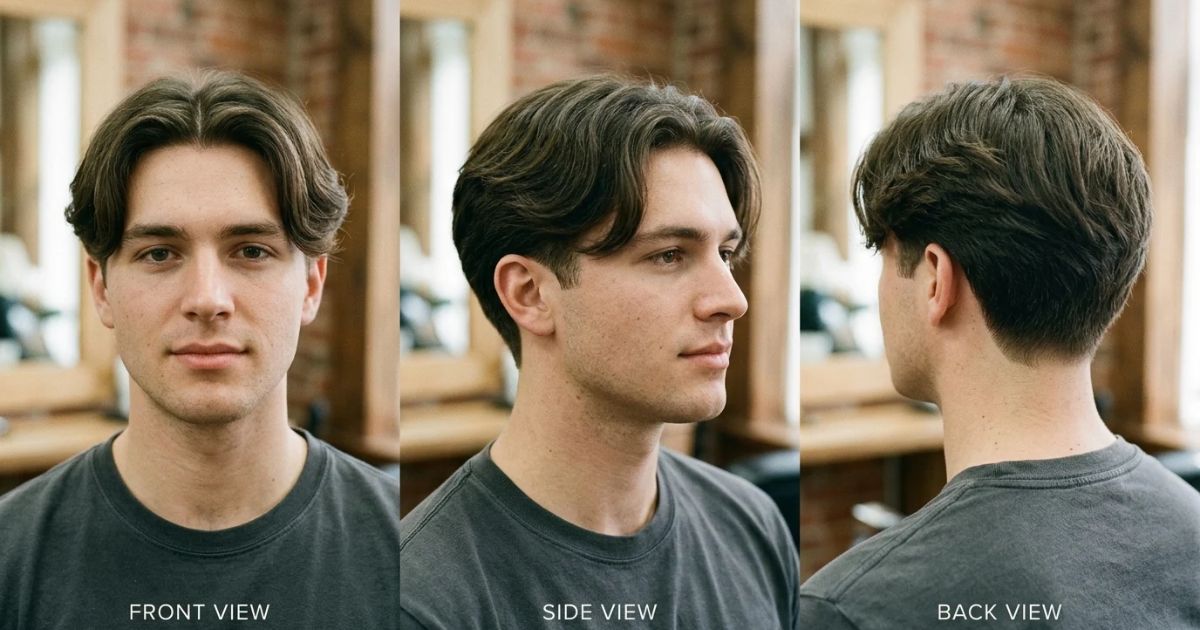
The classic middle part taper is an excellent choice for men who appreciate a timeless hairstyle with a modern finish. The hair is parted in the center and falls naturally toward both sides, while the temples and neckline receive a subtle taper.
This variation works particularly well with straight or slightly wavy hair. Medium length on top provides enough movement to create a curtain effect without making the hairstyle difficult to manage.
For a natural finish, use a lightweight styling cream and allow the hair to follow its natural direction. Avoid using too much product because heavy formulas can make the hair appear flat.
Best for: Men who want a versatile, balanced, and easy-to-style haircut.
2. Middle Part Taper with Straight Hair
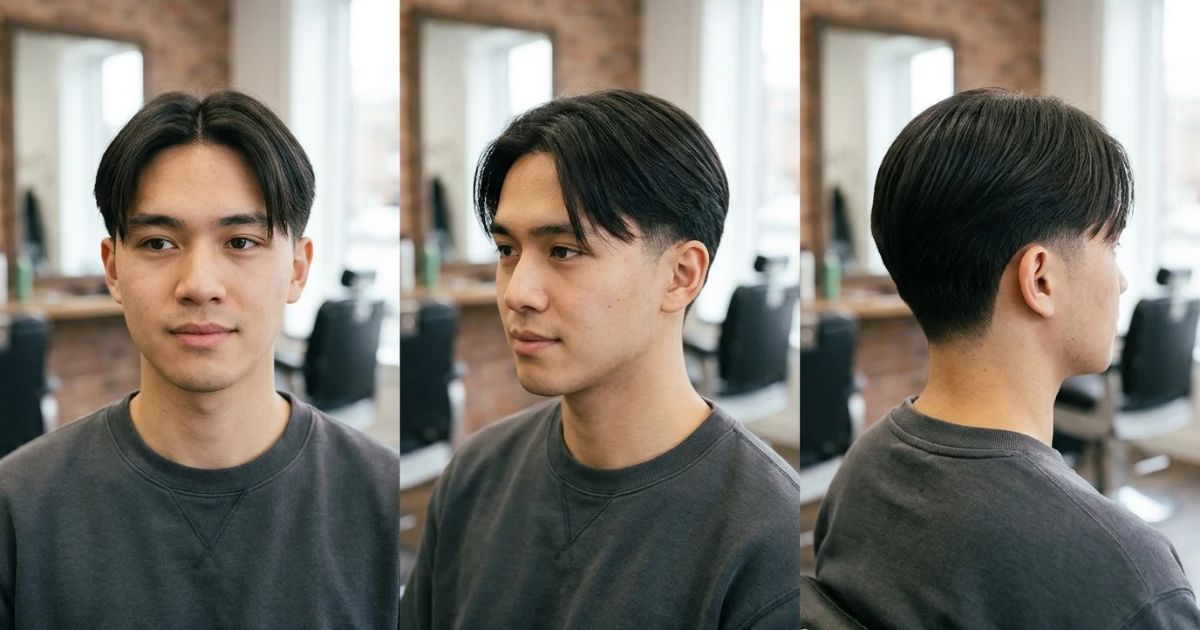
Straight hair creates a smooth and defined middle part. The strands fall neatly on either side of the face, giving the haircut a clean and symmetrical appearance.
A taper around the temples and sideburns prevents the overall style from looking too heavy. You can keep the top around medium length or grow it slightly longer for a more noticeable curtain effect.
A lightweight blow-drying routine can help direct the hair away from the center part. Finish with a small amount of styling cream if you want additional control.
Best for: Men with straight hair who prefer a neat and polished appearance.
3. Middle Part Taper with Wavy Hair
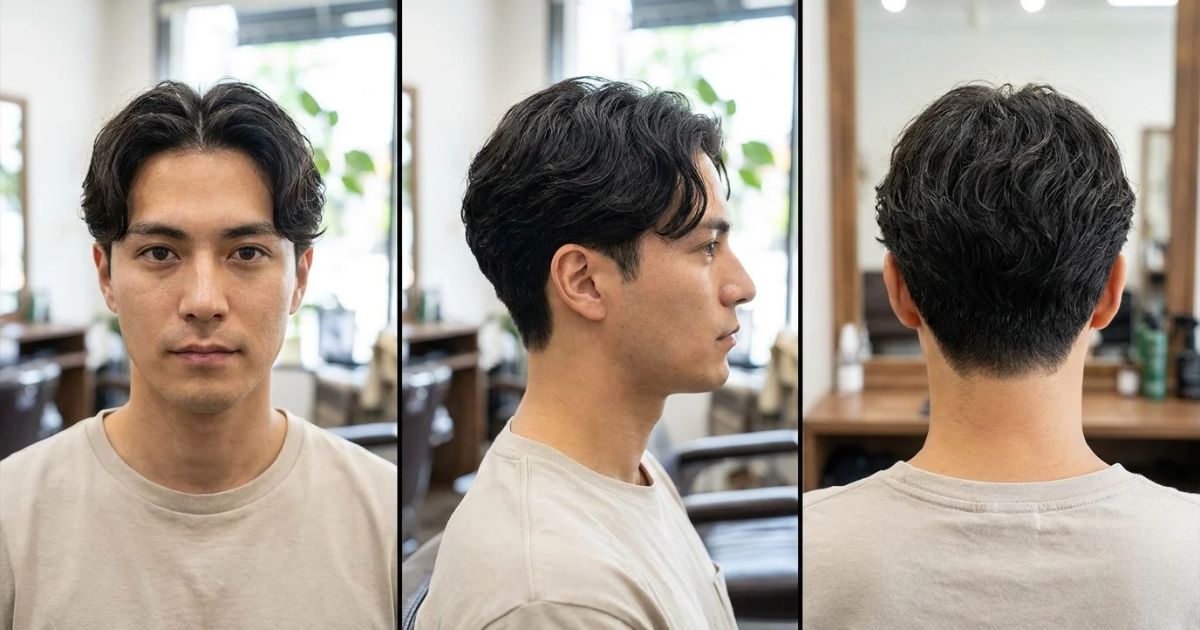
A middle part taper with wavy hair adds natural texture and movement to the classic curtain hairstyle. Instead of falling completely straight, the hair forms soft waves that create a relaxed and fuller appearance.
The taper keeps the sides tidy while allowing the waves to remain the focus. This style can look especially good with medium-length hair that naturally bends around the forehead and ears.
Apply a lightweight leave-in product or styling cream to damp hair. Allow it to air-dry or use a diffuser on a suitable setting to encourage the natural wave pattern.
Best for: Men who want a relaxed hairstyle with natural movement.
4. Middle Part Taper with Curly Hair
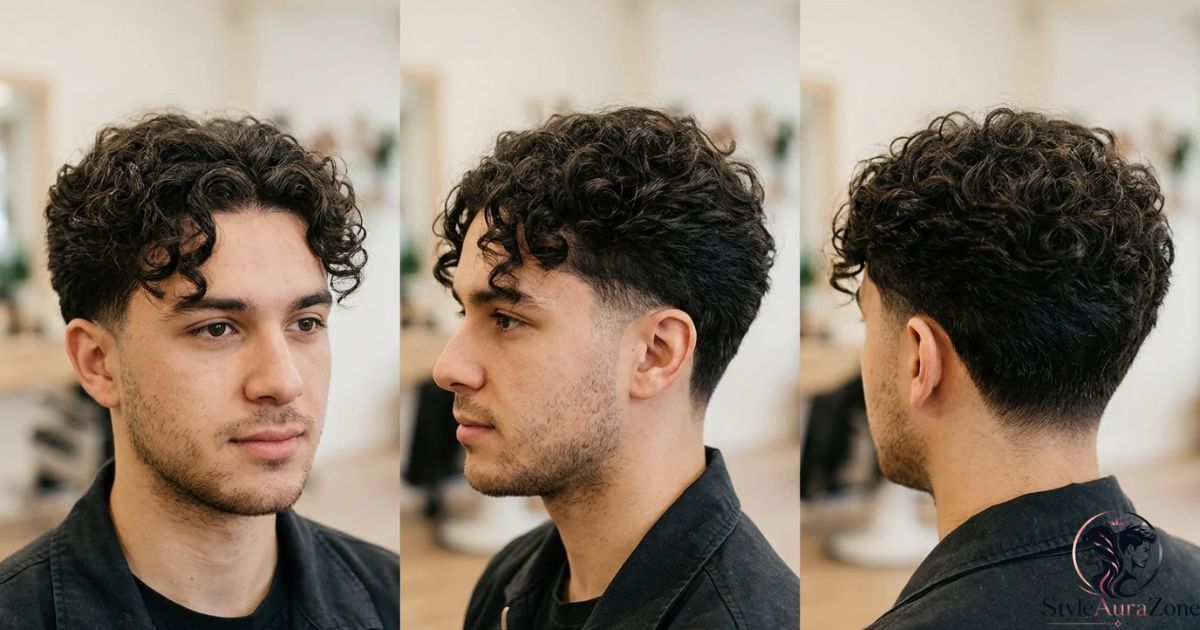
Curly hair adds volume and definition to a middle part taper. The curls can be allowed to fall naturally toward both sides, creating a fuller appearance around the forehead and temples.
The barber should preserve enough length on top for the curls to form their natural shape. A subtle taper helps reduce bulk around the sideburns and neckline without making the haircut look disconnected.
Use a curl-friendly moisturizer or styling cream that suits your hair texture. Avoid forcing tight curls into a straight curtain shape if you prefer to maintain their natural appearance.
Best for: Men with loose or defined curls who want a textured center-parted haircut.
5. Middle Part Taper with Curtain Bangs
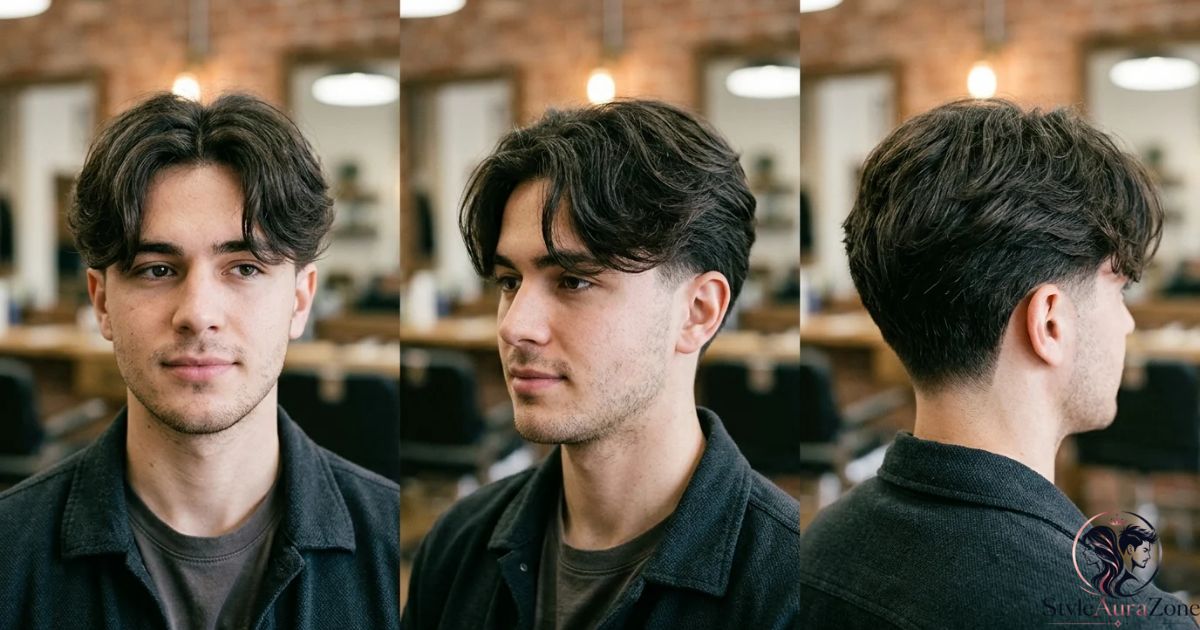
Curtain bangs are one of the defining features of many middle part hairstyles. The front sections fall toward either side of the forehead, creating a curtain-like frame around the face.
When paired with a taper, the hairstyle looks cleaner around the temples while maintaining enough length in the front for movement.
You can choose shorter curtain bangs for a compact style or longer bangs that reach closer to the cheekbones. Your barber should consider your hair density and natural growth pattern when shaping the front.
Best for: Men who want a fashionable middle part with face-framing length.
Read more:Mid Taper Fade Black Male: 15 Stylish Haircut Ideas for Men in 2026
6. Middle Part Low Taper
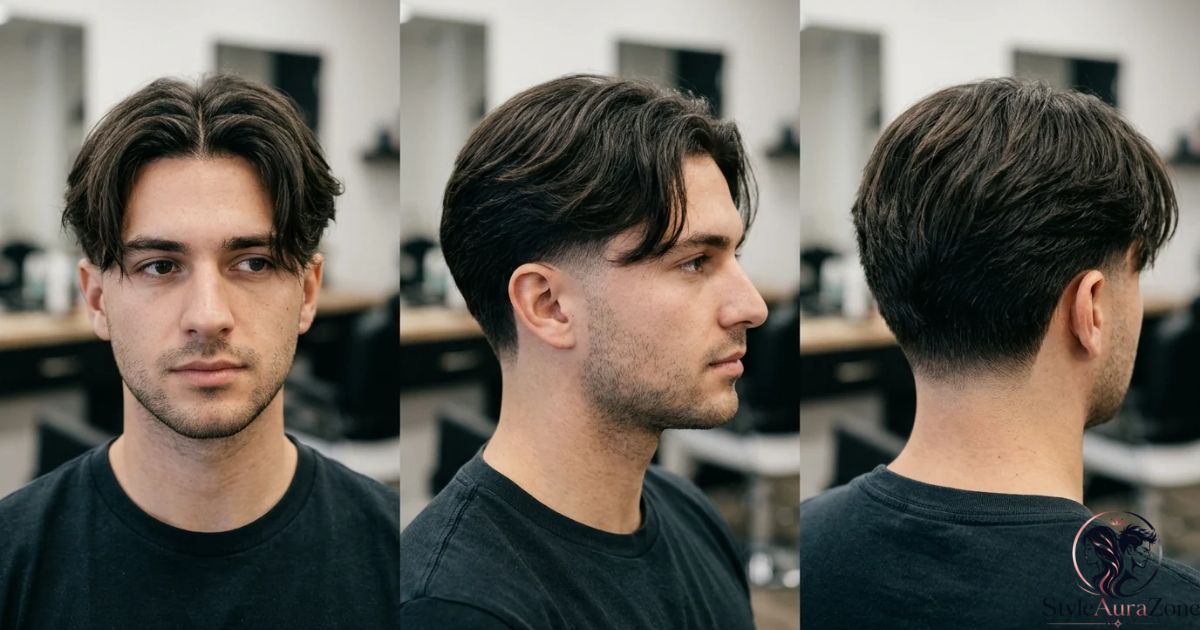
The middle part low taper keeps the taper close to the sideburns and lower neckline. This produces a subtle, understated finish that does not remove too much hair from the sides.
The center part remains the main feature, making this option suitable for men who want a natural-looking haircut rather than a dramatic fade.
It works with straight, wavy, and lightly curly hair. You can also keep the sides slightly fuller if you want a softer transition.
Best for: Men who prefer a conservative, subtle, and professional hairstyle.
7. Middle Part Mid Taper
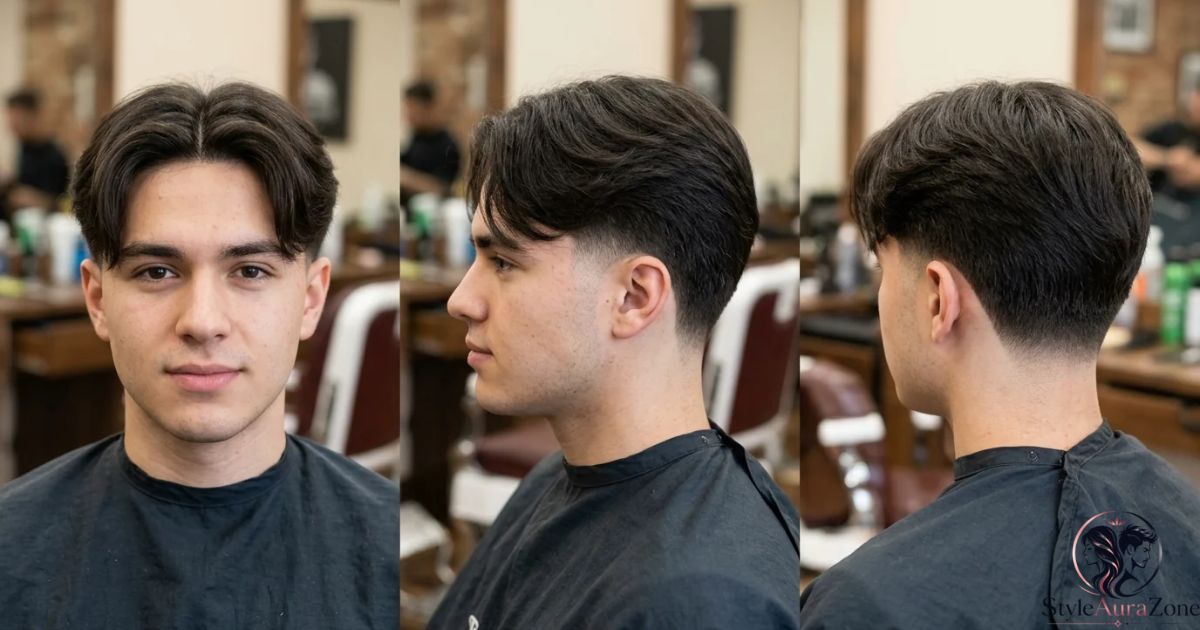
A middle part mid taper creates a more noticeable transition around the sides than a low taper. The taper starts higher around the side area, while the top remains long enough to maintain the center part.
This variation provides a balanced combination of a clean outline and visible hair length. It is particularly useful for men who want the sides to appear neater without choosing a high fade.
Ask your barber to preserve the curtain length and blend the taper gradually into the surrounding hair.
Best for: Men who want a modern center part with a more defined outline.
8. Middle Part Taper with Layers
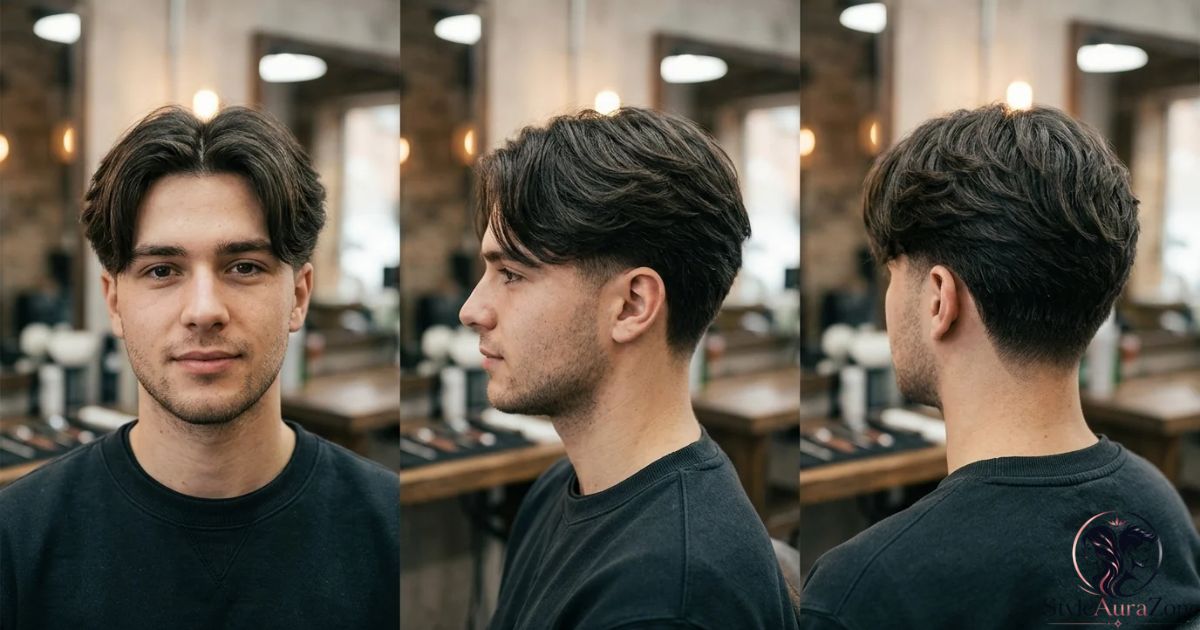
Layered hair creates movement by allowing different sections to sit at slightly different lengths. When combined with a middle part taper, layers can prevent medium-length hair from appearing too heavy or flat.
The center part divides the hair evenly, while the layers add texture around the forehead, sides, and back.
This style works well with straight and wavy hair. A barber can adjust the layers according to your hair thickness and the amount of volume you want.
Best for: Men who want a natural, flowing hairstyle with additional movement.
9. Middle Part Taper with a Textured Top
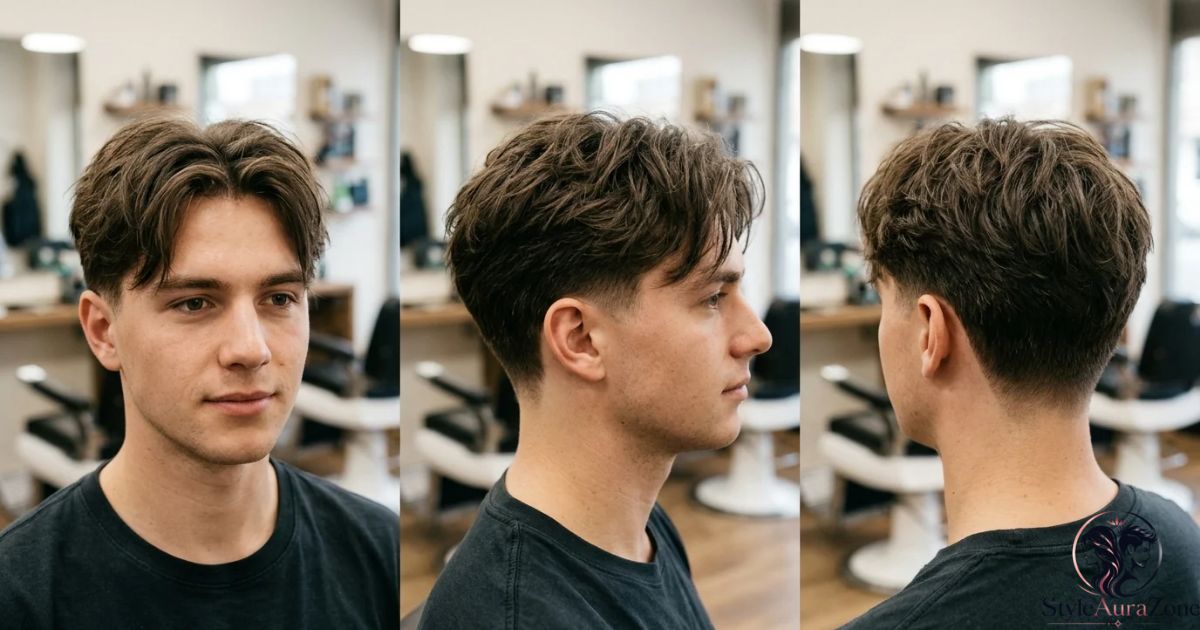
A textured top adds definition and separation to the hair while keeping the center part visible. The result looks less uniform than a traditional curtain haircut.
This style is especially suitable for men who prefer a slightly messy finish. The taper adds structure around the sides, balancing the more relaxed texture on top.
Use a lightweight texturizing product if your hair needs additional separation. Start with a small amount and avoid applying too much near the roots.
Best for: Men who like modern, casual hairstyles with a little extra texture.
10. Middle Part Taper with a Fluffy Top
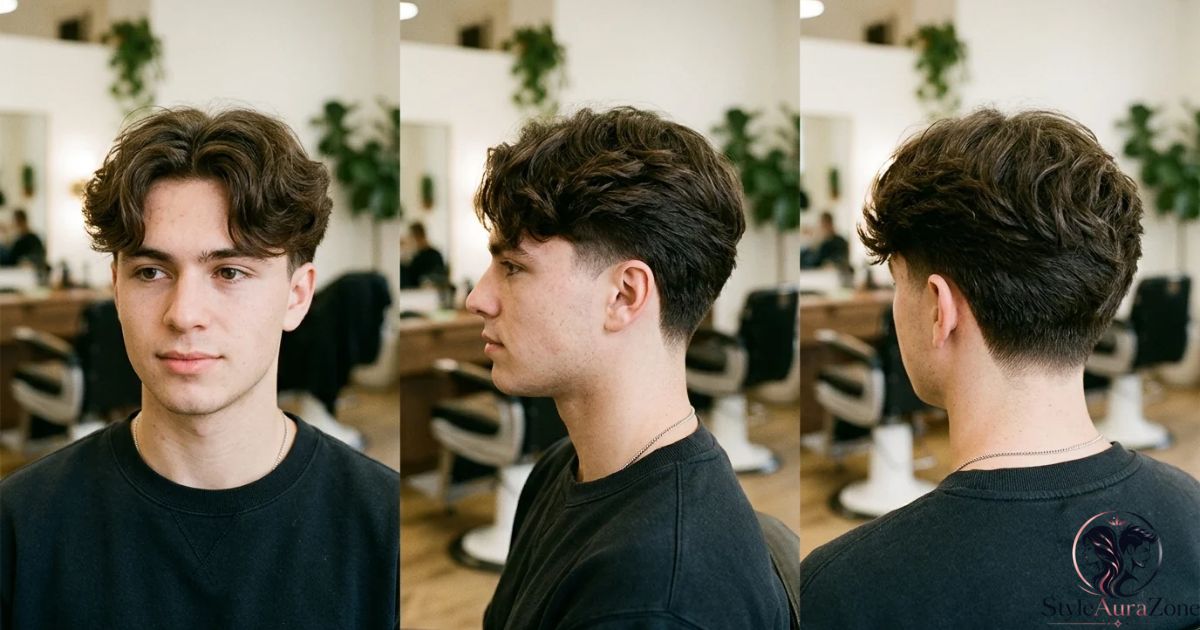
The fluffy middle part taper features a fuller top with soft volume around the forehead and crown. Instead of lying flat against the head, the hair has a light, airy appearance.
This variation works best when the hair has enough length to create natural movement. Blow-drying with a brush can help lift the roots, while a lightweight styling product can maintain the shape.
The taper prevents the sides from appearing too bulky, allowing the fuller top to remain balanced.
Best for: Men who want a voluminous and youthful-looking hairstyle.
11. Middle Part Taper with Short Hair
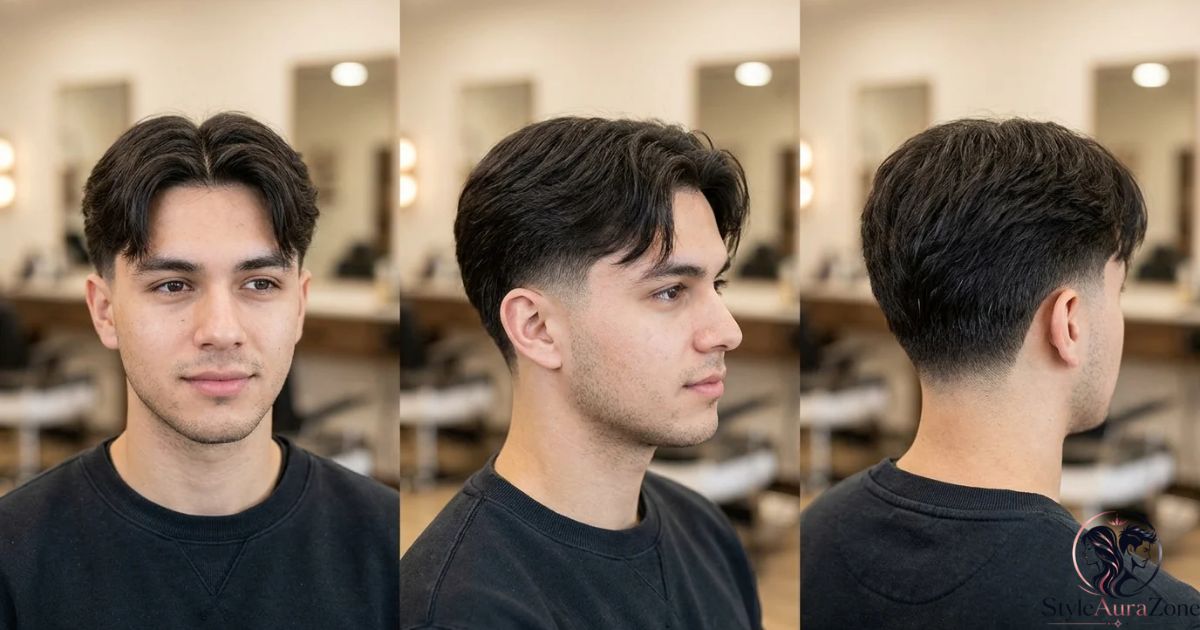
A middle part does not always require long curtains. Men with shorter hair can create a compact center part by keeping enough length at the front and top to separate the hair into two sections.
The taper gives the haircut a clean outline, while the shorter length makes daily styling more manageable.
This option works best when the hair is long enough to maintain the part naturally. If your hair is extremely short, your barber may recommend growing the front slightly before creating the style.
Best for: Men who prefer a practical haircut without long bangs.
12. Middle Part Taper with Long Curtains
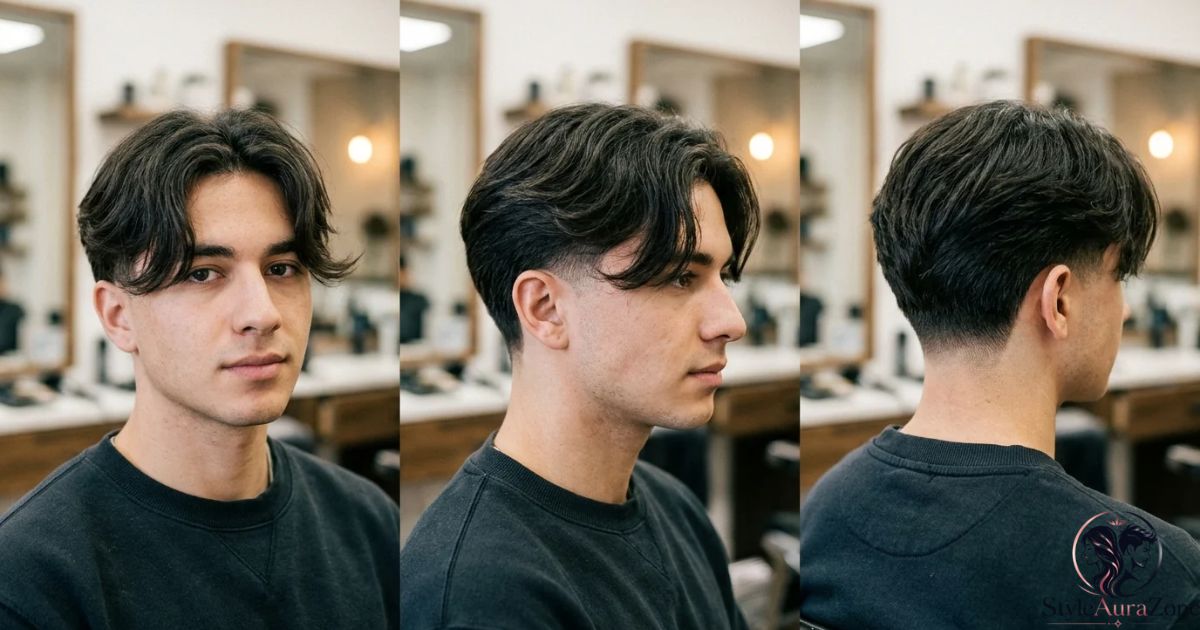
Long curtains create a more noticeable middle part, with the front sections extending toward the cheekbones or ears, depending on the length.
The tapered sides help prevent the hairstyle from appearing overly bulky around the temples. The top and front remain longer, allowing the hair to frame the face.
Regular trimming can keep the ends healthy and maintain the intended shape. Use a suitable conditioner and avoid excessive heat styling if you want to preserve the natural movement.
Best for: Men who enjoy longer, flowing hairstyles.
13. Middle Part Taper with a Soft Fringe
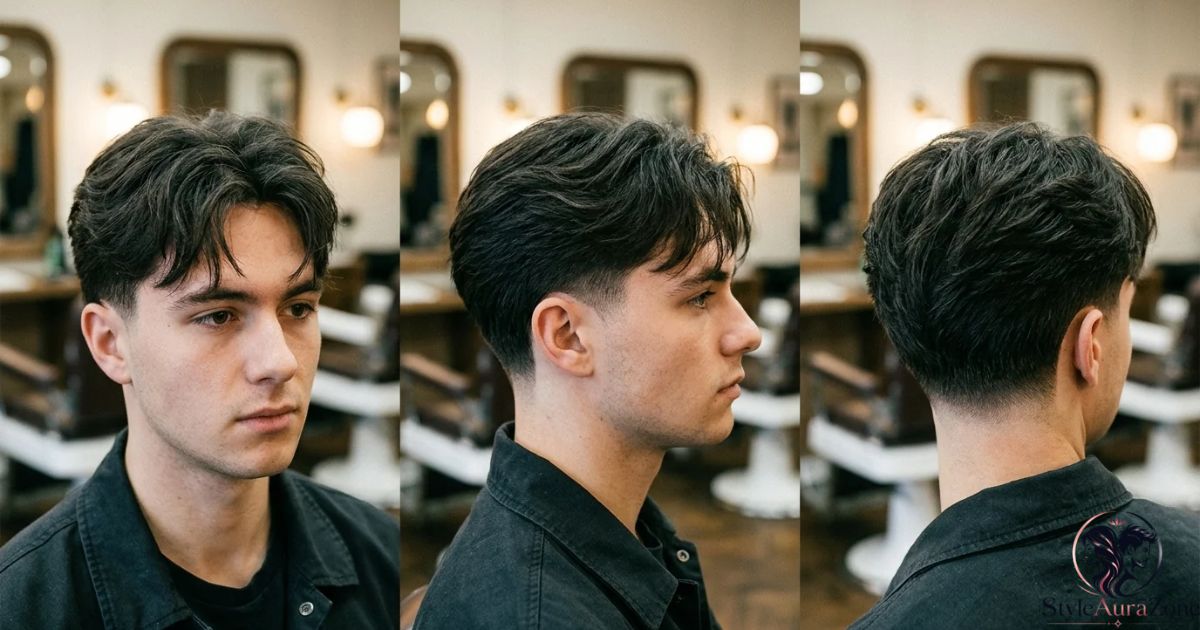
A soft fringe combines the center part with front sections that fall naturally toward the forehead. Unlike a sharply defined fringe, this variation uses a relaxed shape that blends into the surrounding hair.
The taper keeps the sides clean while the fringe adds softness to the overall appearance.
This haircut can work with straight, wavy, and some curly hair textures, although the final result will vary according to natural growth patterns.
Best for: Men who want a softer alternative to a sharply structured curtain haircut.
14. Middle Part Taper with a Korean-Inspired Curtain Style
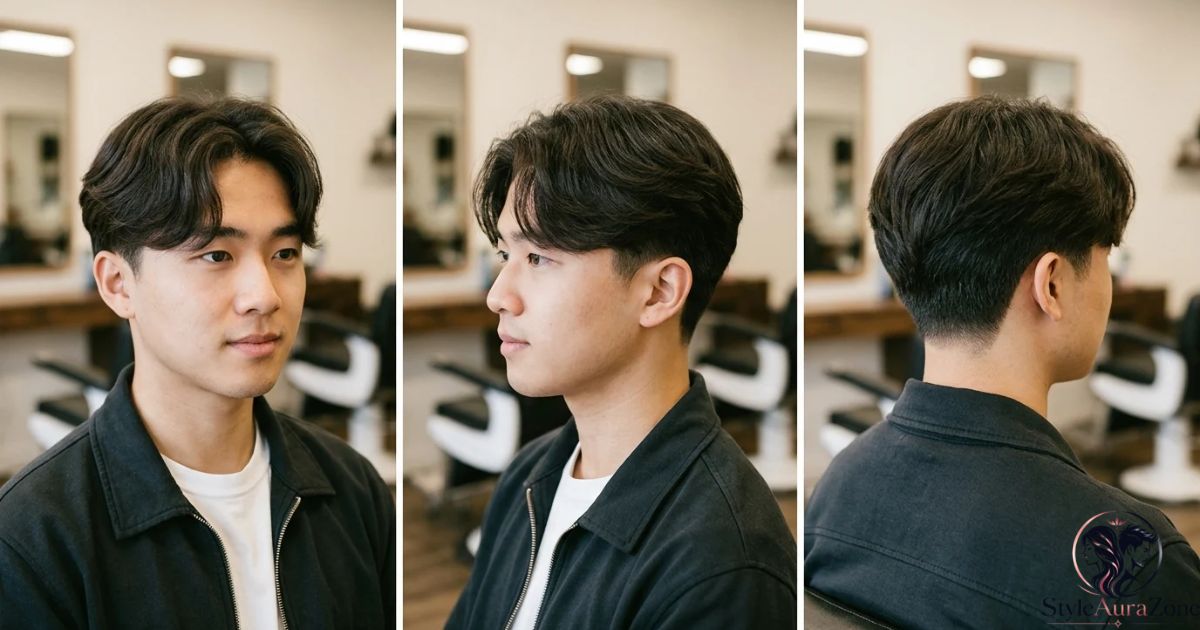
Korean-inspired curtain hairstyles often feature a center or slightly off-center part, soft layers, and natural volume. Adding a taper around the temples and neckline makes the style look cleaner without removing its relaxed character.
The top usually needs enough length to fall naturally to both sides. Depending on your hair type, blow-drying and a lightweight styling cream may help create the desired shape.
Bring a reference photograph to your barber because curtain styles can vary considerably in length, layering, and volume.
Best for: Men who like soft, layered, contemporary curtain hairstyles.
15. Middle Part Taper with a Messy Finish
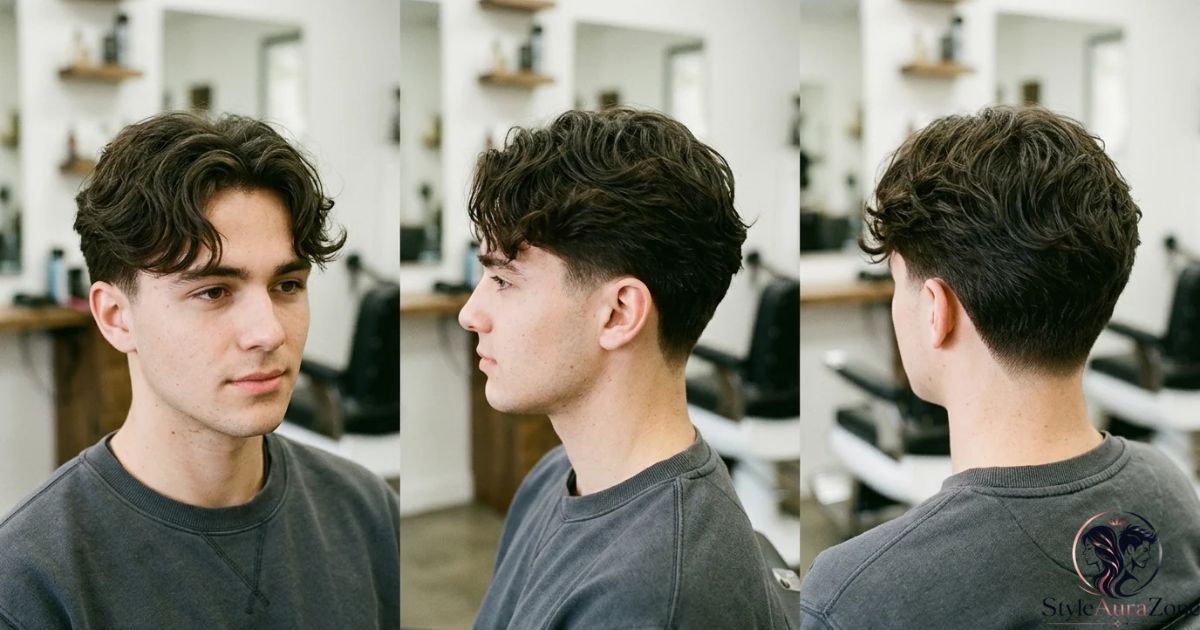
The messy middle part taper combines a recognizable center part with loose, textured sections that do not need to sit perfectly in place.
This variation creates a casual appearance while the taper keeps the sides and neckline looking neat. It is particularly suitable for men whose hair naturally has movement or a slight wave.
Apply a small amount of lightweight texturizing cream, then use your fingers to shape the front sections. The goal is to preserve natural movement rather than create a rigid style.
Best for: Men who prefer relaxed, effortless-looking hairstyles.
Middle Part Taper Hairstyles Comparison Table
The following table compares popular variations to help you select a hairstyle that matches your hair type and daily routine.
| Hairstyle | Suitable Hair Type | Maintenance | Overall Appearance |
| Classic Middle Part Taper | Straight, wavy | Low to medium | Timeless and balanced |
| Straight Hair Middle Part | Straight | Low to medium | Smooth and polished |
| Wavy Middle Part | Wavy | Medium | Relaxed and textured |
| Curly Middle Part | Curly | Medium | Full and natural |
| Curtain Bangs | Straight, wavy | Medium | Face-framing and modern |
| Low Taper | Most hair types | Low | Subtle and neat |
| Mid Taper | Most hair types | Low to medium | Clean and defined |
| Layered Middle Part | Straight, wavy | Medium | Flowing and textured |
| Textured Top | Straight, wavy | Medium | Casual and modern |
| Fluffy Top | Straight, wavy | Medium | Voluminous and soft |
| Short Middle Part | Straight, wavy | Low | Simple and practical |
| Long Curtains | Straight, wavy | Medium to high | Flowing and expressive |
| Soft Fringe | Straight, wavy | Medium | Relaxed and natural |
| Korean-Inspired Curtains | Straight, wavy | Medium | Soft and contemporary |
| Messy Middle Part | Straight, wavy | Low to medium | Casual and effortless |
Maintenance levels are general estimates. Hair length, natural texture, personal styling preferences, and the desired finish can change the amount of upkeep required.
Middle Part Taper vs. Middle Part Fade
Although the terms are sometimes used interchangeably, a taper and a fade can create different results.
A middle part taper generally features gradual shortening around the temples, sideburns, and neckline. More hair remains visible around the sides, giving the haircut a natural transition.
A middle part fade usually involves a more extensive reduction in hair length along the sides. Depending on whether the fade is low, mid, or high, the contrast between the sides and the top may be more noticeable.
| Feature | Middle Part Taper | Middle Part Fade |
| Side appearance | Natural and gradually shortened | Can be shorter and more contrasting |
| Hair removed | Usually limited to selected areas | May cover a larger area |
| Overall effect | Subtle and balanced | More defined and modern |
| Top length | Short to long | Short to long |
| Styling options | Curtains, layers, waves | Curtains, textured tops, other variations |
| Best suited to | Men who prefer a softer outline | Men who prefer stronger contrast |
Neither option is automatically better. The right choice depends on the amount of contrast you want and how much hair you prefer to retain on the sides.
How to Choose the Best Middle Part Taper for Your Face Shape
A suitable haircut should complement your natural features and work with your hair’s growth pattern. Consider these general guidelines when choosing your middle part taper.
Round Face Shape
Men with round faces may prefer a middle part with some height at the roots or light layers that create a more elongated silhouette. A neat taper can also reduce excess bulk around the sides.
Avoid adding excessive width at the cheeks if you want a more balanced appearance.
Oval Face Shape
An oval face can work well with many middle part variations, including classic curtains, layered hair, a textured top, or longer front sections.
You can experiment with different lengths according to your personal style and maintenance preferences.
Square Face Shape
Square faces often have a defined jawline and angular features. A soft middle part with natural movement can complement these features, while a clean taper adds structure around the temples.
If you prefer a softer appearance, consider lightly layered curtains instead of an extremely rigid style.
Long Face Shape
Men with longer faces may prefer a middle part with moderate volume and balanced side sections. Very tall hair at the crown can make the face appear longer, so consider a flatter or more evenly distributed shape.
The length of the curtain sections can also affect how the haircut frames your face.
These are general styling suggestions rather than strict rules. Your hair texture, personal preference, and the skill of your barber are equally important.
How to Ask Your Barber for a Middle Part Taper
Clear communication helps your barber understand the exact result you want. The term middle part taper describes the general style, but details such as taper height, top length, and layering can make a significant difference.
Follow these steps before your haircut:
- Bring a reference photo: Choose a picture that shows the center part, taper height, and overall length you prefer.
- Explain the parting: Tell your barber whether you want a precise center part or a natural, slightly off-center separation.
- Choose the taper height: Decide whether you prefer a low taper or a more noticeable mid taper.
- Discuss the top length: Specify whether you want short hair, medium curtains, or longer front sections.
- Ask about layers: Layers can create movement and help thicker hair sit more naturally.
- Explain your preferred finish: Decide whether you want a neat, polished appearance or a relaxed, textured look.
- Check the final shape: Make sure the center part falls naturally and the taper blends smoothly into the surrounding hair.
You can tell your barber: “I want a middle part with medium-length curtains and a subtle taper around the temples and neckline. Keep enough length on top for natural movement, and avoid cutting the sides too high.”
If you are growing your hair, explain which areas you want to preserve before the barber starts cutting.
How to Style a Middle Part Taper at Home
Styling a middle part taper does not need to be complicated. The right routine depends on whether your hair is straight, wavy, or curly.
Step 1: Start with Clean Hair
Wash your hair according to your scalp’s needs and use a suitable conditioner. Gently remove excess water with a towel rather than rubbing aggressively.
Hair that is slightly damp is often easier to shape into a middle part.
Step 2: Create the Center Part
Use a comb to separate the hair from the middle of the forehead toward the crown. You can move the part slightly to either side if a perfectly centered part does not suit your natural growth pattern.
Use your fingers to guide each section away from the center.
Step 3: Add Volume if Needed
If your hair tends to lie flat, use a blow dryer on a moderate setting. Direct the airflow away from the center part and toward the sides to encourage natural volume.
A round brush can help lift the roots, but avoid excessive tension or heat.
Step 4: Apply a Suitable Styling Product
Choose a lightweight styling cream for a natural finish or a suitable texturizing product if you want additional separation.
For wavy hair, a curl-enhancing product may help preserve the natural pattern. For straight hair, a light styling cream may provide enough control without making the hair stiff.
Step 5: Finish the Shape
Use your fingers or a comb to adjust the two sections. Keep the front balanced and allow the ends to fall naturally.
Avoid applying too much product near the roots, as this can make the hairstyle look greasy or flat.
How to Maintain a Middle Part Taper
Regular maintenance helps the haircut retain its shape as the hair grows.
Keep the Taper Neat
The temples and neckline may lose their clean appearance before the longer hair on top needs trimming. Depending on your growth rate and desired finish, you may want to visit your barber every few weeks.
You do not need to trim the entire hairstyle every time. Ask your barber whether the taper can be refreshed while preserving the length on top.
Maintain Healthy Hair
Use a shampoo and conditioner appropriate for your scalp and hair type. If your hair is dry, a suitable leave-in conditioner may help improve softness and manageability.
Avoid using excessive heat or repeatedly applying strong styling products without cleansing your hair.
Trim Split Ends When Necessary
Longer curtain hairstyles can benefit from occasional shaping. Trimming damaged ends can help maintain the intended style, although the frequency depends on your hair’s condition and growth.
Avoid Overstyling
Repeatedly pulling, brushing, or applying excessive heat can contribute to damage. Use gentle techniques and allow the hair to rest when possible.
Preserve Natural Movement
The middle part looks best when the hair can fall naturally. Choose a cut that suits your texture instead of relying on heavy products to force your hair into a shape it does not naturally maintain.
Common Middle Part Taper Mistakes to Avoid
Even a stylish haircut can be difficult to manage if the cut does not match your hair type or preferred routine.
- Cutting the front too short: Short front sections may not fall into the curtain shape you want.
- Choosing an overly high taper: This can create more contrast than you expected.
- Ignoring your natural part: Some hair naturally falls slightly off-center, so forcing a perfect center part may require extra styling.
- Using too much product: Heavy products can flatten the roots and reduce movement.
- Skipping regular shaping: An overgrown taper can make the overall haircut look less defined.
- Ignoring hair texture: Straight, wavy, and curly hair behave differently and may need different cutting techniques.
- Adding unnecessary layers: Excessive layering may remove more fullness than you want.
- Using too much heat: High temperatures can contribute to dryness and damage over time.
The best way to avoid these problems is to discuss your preferred result with your barber and choose a reference photo that closely matches your hair texture and length.
FAQ’S
What is a middle part taper?
A middle part taper is a men’s haircut featuring a center part with gradually shortened hair around the temples, sideburns, and neckline. It combines curtain-style hair with a clean, natural outline.
Is a middle part taper good for men?
Yes. It is a versatile hairstyle that can work with straight, wavy, and some curly hair types. The right variation depends on hair length, texture, and personal styling preferences.
What hair length is best for a middle part taper?
Medium-length hair is often suitable for classic curtain styles because it provides enough length for the front sections to fall to both sides. Shorter versions are also possible if the front remains long enough to maintain the part.
Can I get a middle part taper with wavy hair?
Yes. Wavy hair can add natural movement and texture to a middle part. A subtle taper keeps the sides neat while the waves create a relaxed appearance.
Is a middle part taper the same as a middle part fade?
No. A taper generally shortens selected areas around the temples and neckline, while a fade may reduce hair over a larger section of the sides. The final difference depends on the barber’s technique and the chosen fade height.
Final Thoughts
The middle part taper is a stylish men’s haircut that combines the classic appeal of a center part with the clean finish of tapered sides. Whether you prefer straight curtains, natural waves, curls, layered hair, or a textured top, there are many ways to personalize the look.
Before choosing your style, consider your hair texture, preferred length, face shape, and daily grooming routine. A suitable reference photo and clear communication with your barber can help you achieve the right balance between the middle part and the taper.2026.