
A buzz cut asks for one clipper, one guard, and about ten minutes. That’s it. No mirror battles, no shelf of products, no blow dryer. Despite that simplicity, the buzz cut for men still looks sharp enough for the boardroom, the gym, and a Saturday night out.
This guide walks you through 21 classic and modern buzz cut hairstyles, from the induction cut to the buzz cut fade. You’ll also get clipper numbers, face shape advice, barber phrases, upkeep tips, grow-out timelines, and hair loss strategies, so your next trim lands exactly where you want.
Buzz Cut For Men Types of Buzz Cut Lengths
Length is the first decision, and it changes the whole mood of the cut. Here’s a quick comparison before the detailed breakdown.
| Buzz Cut Type | Typical Guard | Length on Top | Vibe |
| Induction | No guard or #0 | About 1/16 in | Bold, ultra-minimal |
| Burr | #1 to #2 | 1/8 to 1/4 in | Rugged, clean |
| Butch | #3 to #4 | 3/8 to 1/2 in | Balanced, office-friendly |
| Brush | Clipper-over-comb or scissors | 1/2 to 1 in | Textured, upright |
| High and Tight | Skin or #1 sides | 1/2 to 1 in on top | Military, high contrast |
| Long Buzz | #5 to #8 | 5/8 to 1 in | Soft, versatile |
| Crew | Tapered sides | 1 to 2 in on top | Preppy, styleable |
Induction Buzz Cut
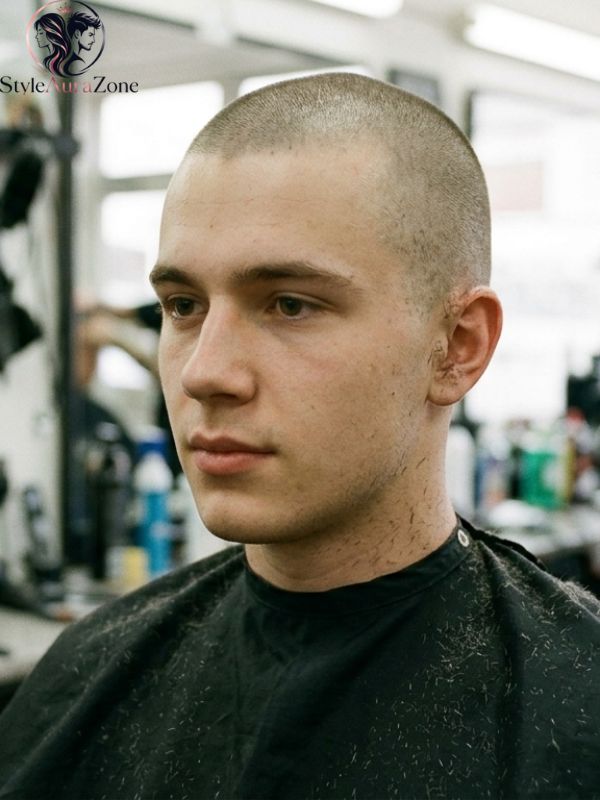
The induction cut is the shortest buzz you can get without a razor. Clippers run bare across the scalp, so only a whisper of stubble stays behind. Recruits get this trim on arrival at boot camp, which explains the name.
How To Get The Look:
- Ask for clippers with the guard removed, or a #0 attachment, over the entire head.
- Request crisp edges at the temples and nape.
- Add a mid skin fade only if you want the sides to read even cleaner.
Why It Works:
Zero styling means zero decisions. The tiny length also pushes your jawline and cheekbones into the spotlight, which flatters men with strong bone structure and an even head shape.
Burr Cut
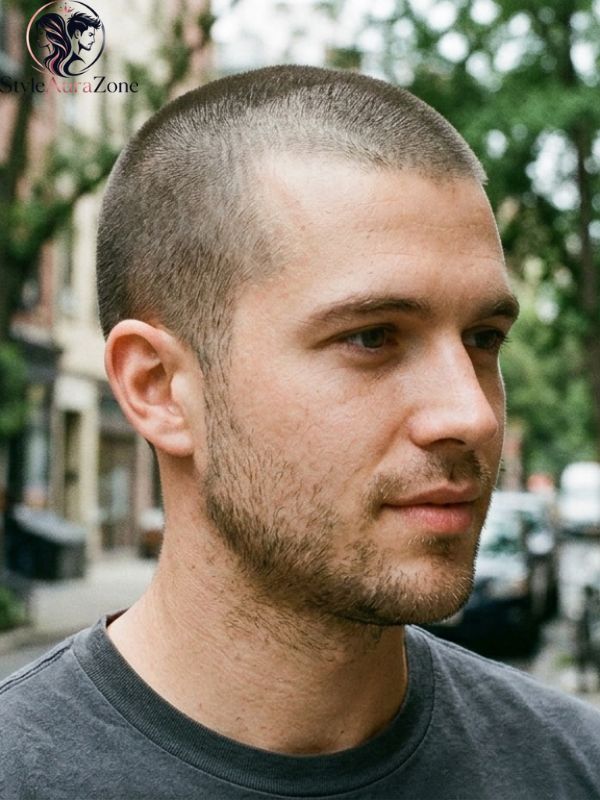
The burr cut sits one step above the induction. A #1 or #2 guard leaves a soft, velvety layer that looks neat without feeling severe. Barbers love it because the result stays consistent from ear to ear.
How To Get The Look:
- Choose a #1 guard for a tighter finish or a #2 for a little more cushion.
- Finish with a clean line up along the forehead and neck.
- Pair it with a low fade if you want subtle depth around the ears.
Why It Works:
Short length blurs the line between thick and thin areas, so the burr cut hides early thinning well. Add light stubble and you get a polished, lived-in look in minutes.
Butch Cut
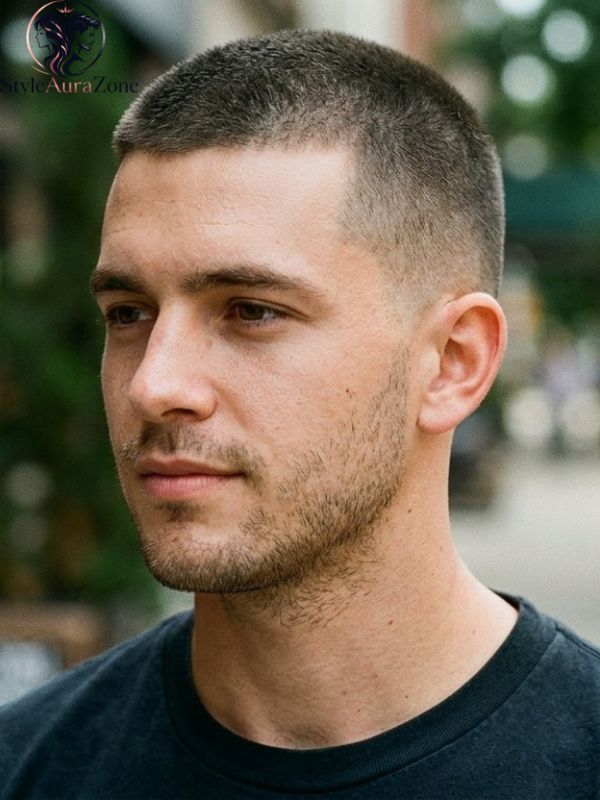
The butch cut trades a little edge for a lot of versatility. A #3 or #4 guard keeps the hair even, yet the extra length reads friendlier and more professional than a burr. Think of it as the “meeting-ready” buzz.
How To Get The Look:
- Run a #3 or #4 guard evenly over the head.
- Ask for a taper or fade on the sides if you want sharper contrast.
- Dab a pea-sized amount of matte paste on top for a flatter, natural finish.
Why It Works:
It covers more of the scalp, so the cut feels softer and less exposed. Office dress codes, weddings, and weekend plans all suit it without any extra effort.
Brush Cut
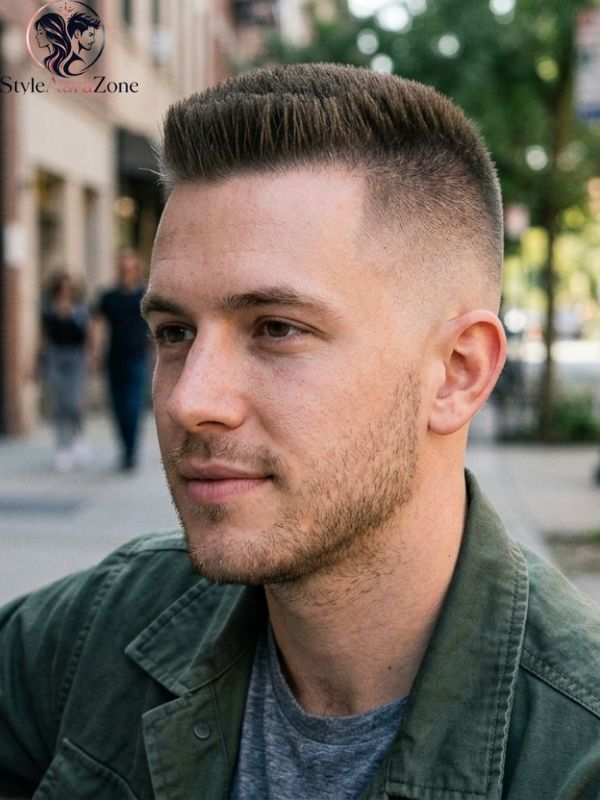
The brush cut keeps the top just long enough to stand at attention, like short, firm bristles. The sides taper down to meet it. Because the top has real height, the style adds a touch of vertical length to the face.
How To Get The Look:
- Leave roughly 1/2 to 1 inch on top, cut evenly so the hair stands up.
- Taper the back and sides, or add a short fade for contrast.
- Work in a little matte clay or wax to keep the bristles defined.
Why It Works:
It feels a step more finished than a plain buzz. Men with thick, straight hair get the best results, since the strands naturally stand upright.
High and Tight
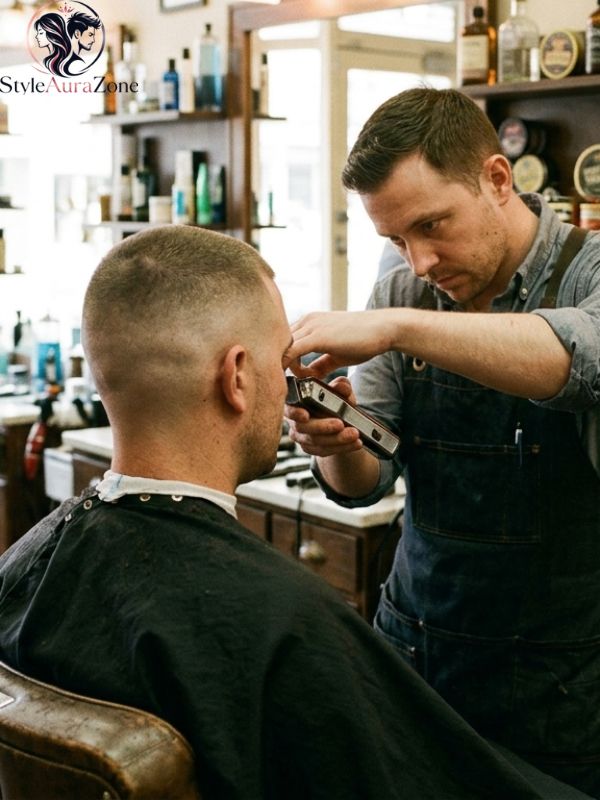
The high and tight pairs bare, tightly shaved sides with a slightly longer top. The stark contrast is the whole point. Marines and athletes made it famous, and it still looks sharp on a modern street.
How To Get The Look:
- Ask for a high skin fade, or shave the sides up to the temple line.
- Leave 1/2 to 1 inch on top, or up to 2 inches for a crew-style twist.
- Use a little clay or wax if you want shape on top.
Read more:The Mid Fade Haircut: 33 Stylish, Popular Variations with A Barber’s Guide
Why It Works:
The contrast draws the eye upward and makes the face look longer and leaner. It also stays cool, clean, and fast to maintain.
Long Buzz Cut
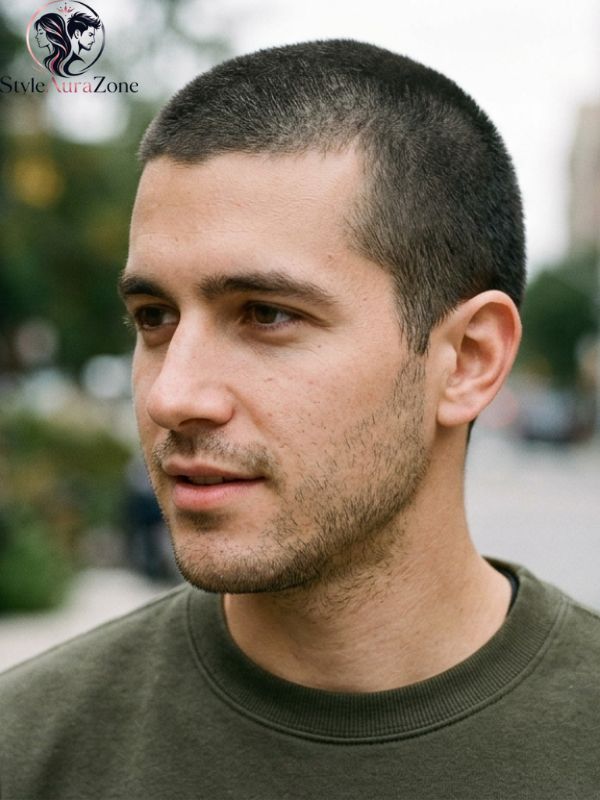
The long buzz cut stretches the classic clipper idea to #5 through #8. You keep the no-fuss routine, but the extra length gives you a plusher, softer finish. It also leaves room for a hint of texture.
How To Get The Look:
- Use a #5 or #6 guard for a mild trim, or go up to #8 for maximum softness.
- Add a low, mid, or high fade to sharpen the sides.
- Finish with a light cream or paste if you like movement.
Why It Works:
Longer hair softens angular features, which helps square and rectangular faces. It’s also the safest starting point if you’ve never buzzed before.
Crew Cut

The crew cut is the longest member of the buzz family. Short, tapered sides frame a top that runs about an inch or two. You can brush it forward, sweep it sideways, or push it up for an easygoing finish.
How To Get The Look:
- Keep the sides and back tapered or faded for a clean profile.
- Leave 1 to 2 inches on top for shape and direction.
- Use matte clay, pomade, or cream to control the texture.
Why It Works:
It suits students, executives, athletes, and dads alike. The cut stays low-maintenance, yet it offers real styling choices that a pure buzz can’t.
Popular Men’s Buzz Cut Styles
Buzz Cut Fade
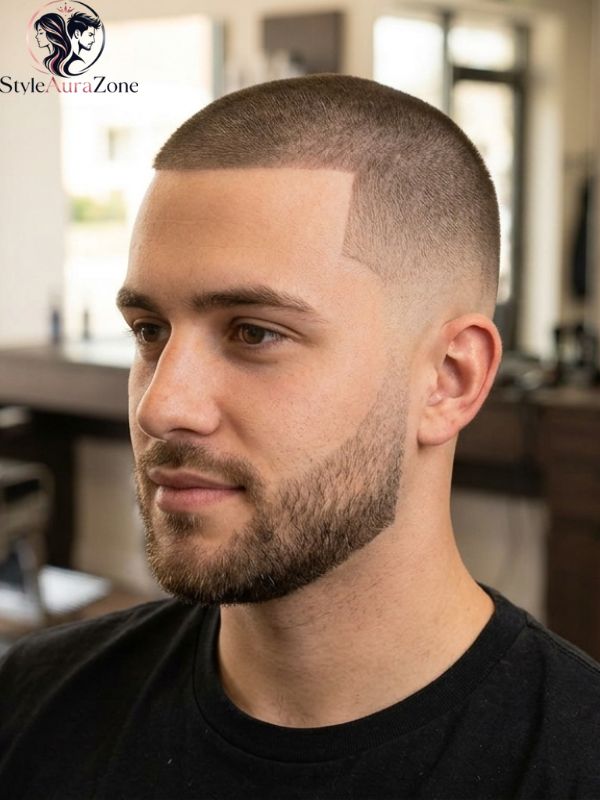
A buzz cut fade blends the sides and back from skin to a short top. That gradual shift adds depth that a flat, uniform buzz can’t match. A sharp line up completes the polished look.
Classic Buzz Cut

The classic buzz cut uses one guard number from front to back. It’s tidy, honest, and easy to repeat at home with decent clippers. Pick a longer guard if your face is round or square.
High Fade Buzz Cut
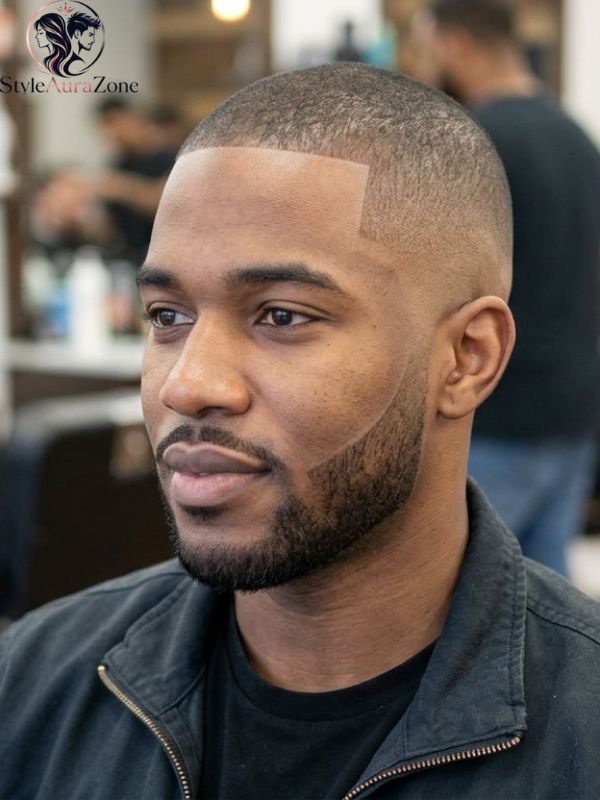
Here the fade starts high, near the temples, and drops quickly toward the skin. The contrast is loud and confident. Pair it with a #1 to #3 top for a crisp, athletic silhouette.
Long Buzz Cut with Taper Fade
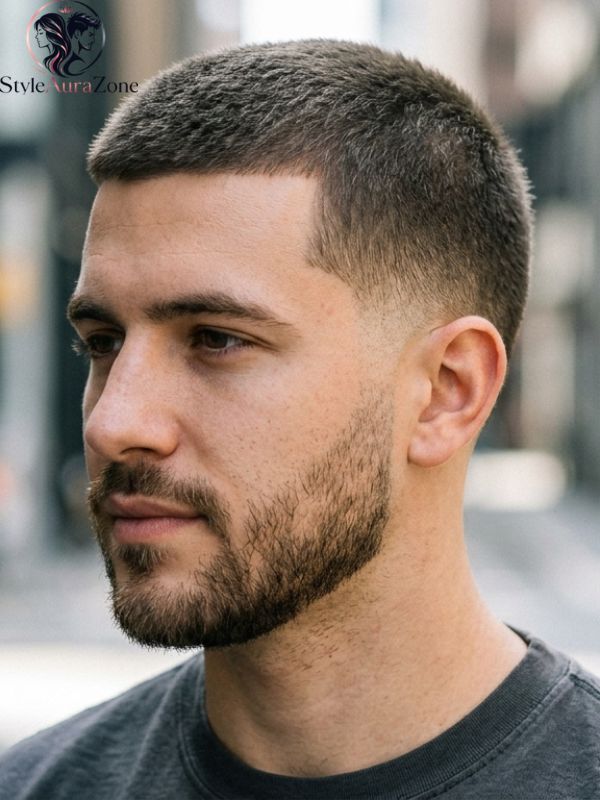
A taper fade only touches the sideburns and neckline, so the sides keep their weight. Combine it with a #5 or #6 top and you get a soft, office-safe shape. Skip heavy product here.
Low Fade Buzz Cut
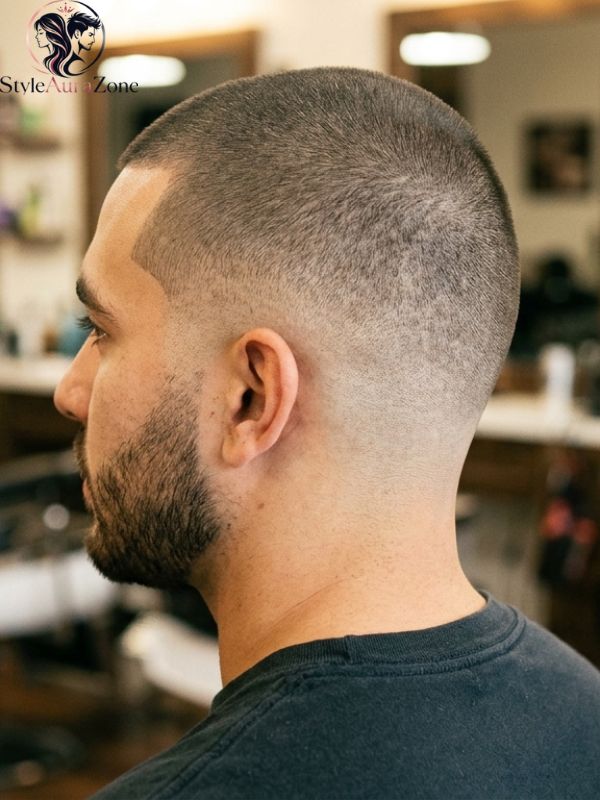
The low fade begins just above the ears and wraps gently around the nape. It’s subtle, tidy, and forgiving. Choose it when you want sharpness without a dramatic change.
Thick Buzz Cut with Beard

A #4 or #5 top paired with a full beard creates a rugged, balanced frame. The longer hair on top keeps the look from feeling harsh. Trim the beard neck line weekly for a clean result.
Buzz Cut with Mid Fade
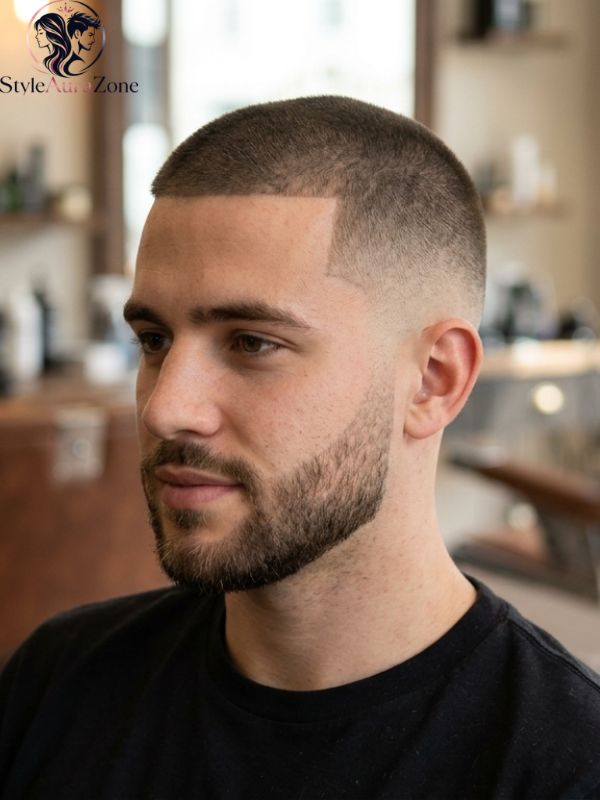
A mid fade sits halfway up the sides, so it balances contrast and subtlety. It frames the cheekbones and jaw without drawing attention to the hairline. It’s a barber favorite for good reason.
Blonde Buzz Cut

Bleached or dyed blonde hair turns a plain buzz into a statement. Platinum, ash, and golden tones all work. Use a purple shampoo once a week to keep brassiness away.
Short Buzz Cut Fade
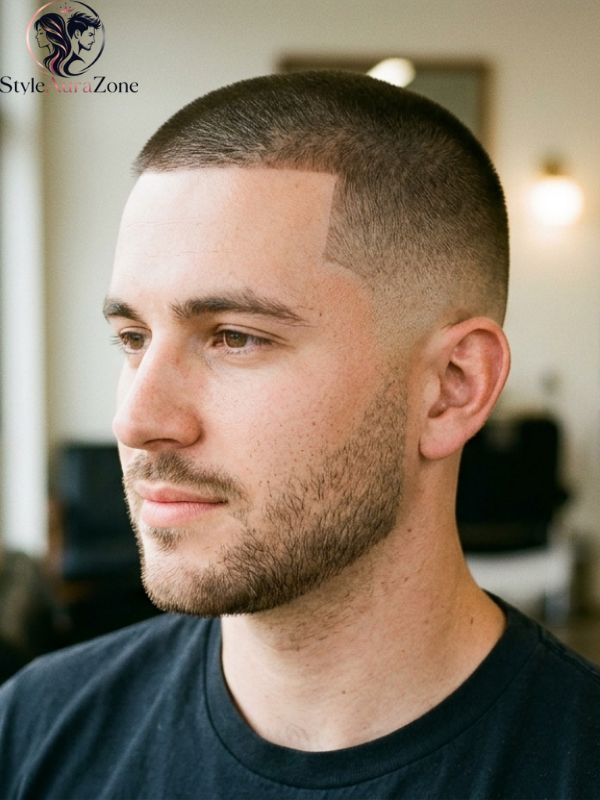
Pair a #1 or #2 top with a tight skin fade and you get almost no daily upkeep. The sharp finish highlights the eyebrows, jaw, and cheekbones. Refresh the edges every two weeks.
Buzz Cut with Low Taper Fade
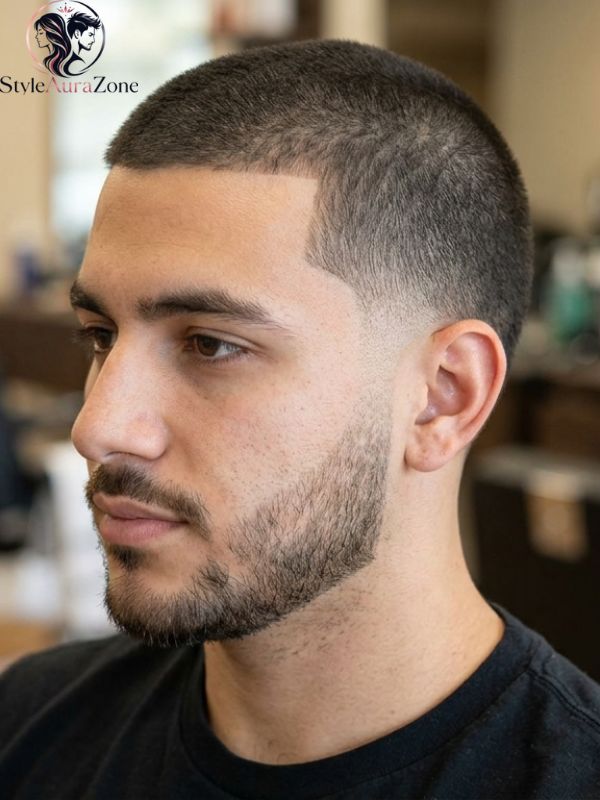
This one keeps the top even and trims only the edges around the ears and neck. The result is neat, classic, and easy to wear. A drop of light oil adds a healthy sheen.
Buzz Cut with Drop Fade
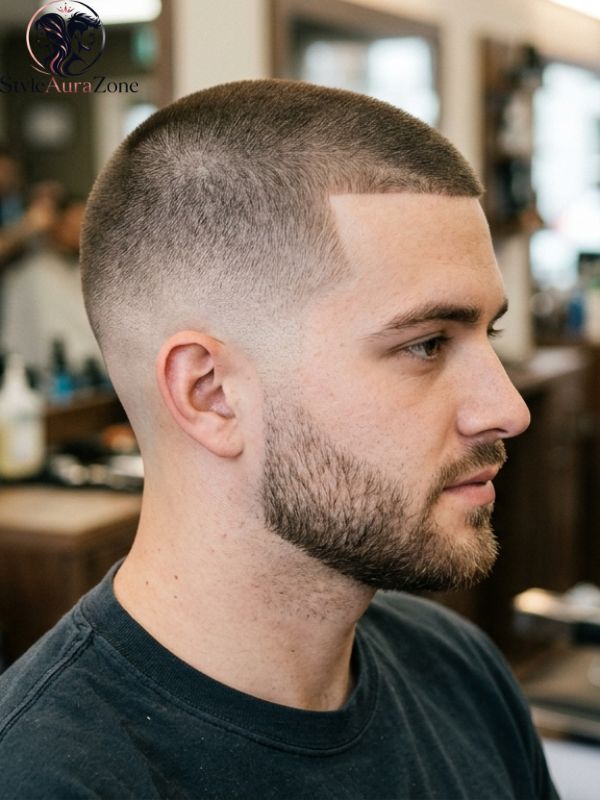
A drop fade curves down behind the ear and follows the skull’s shape. It gives the back of the head a custom, sculpted look. Ask your barber to keep the arc crisp with a trimmer.
Black Men’s Buzz Cut
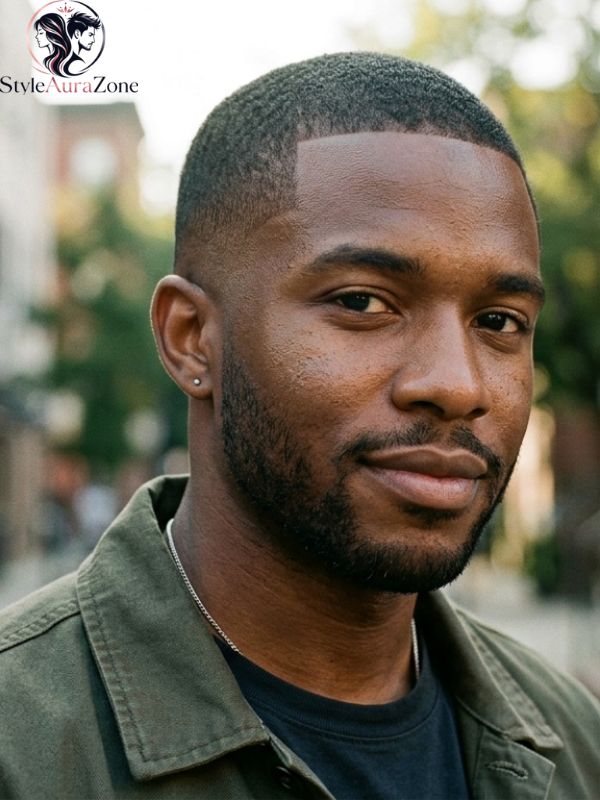
A buzz cut shows off the natural density of coily hair while cutting down on bulk and dryness. Pair it with a skin fade and a sharp line up for definition. Moisturize the scalp often.
Latino Men’s Buzz Cut
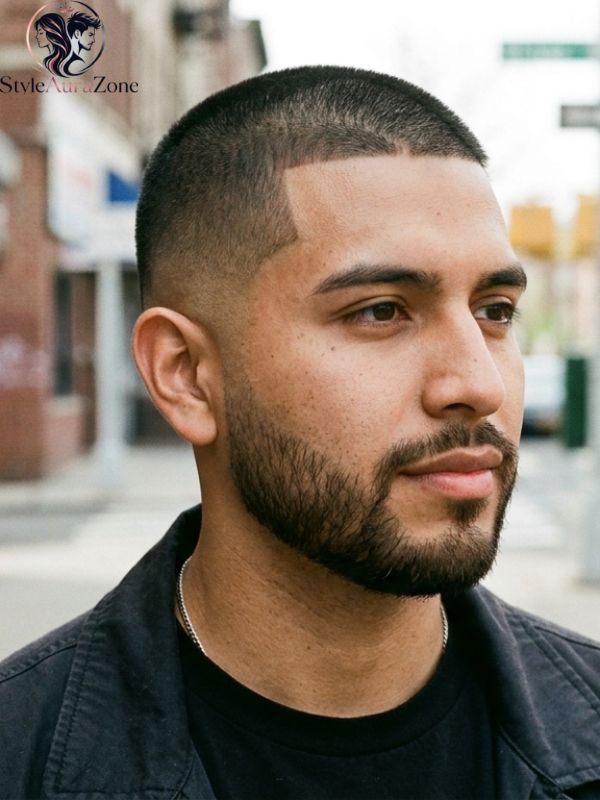
Thick, dense hair responds well to a buzz because the clippers remove weight and tame volume. A precise line up frames the hairline beautifully. Shampoo regularly to keep the scalp fresh.
Asian Men’s Buzz Cut
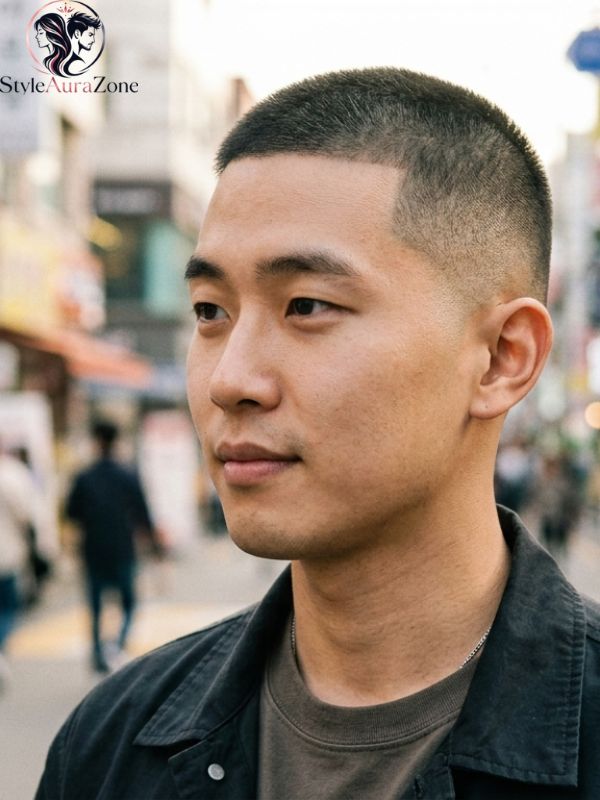
Straight, strong hair gives a buzz cut a crisp, uniform surface. The style complements defined jawlines and angular features. Trim every two to three weeks so the length stays consistent.
What Is A Buzz Cut?
A buzz cut is a short haircut done with clippers, where the hair gets trimmed to one close length. The classic version stays uniform from front to back. Modern versions add a fade or taper so the sides fall away to skin.
Because nothing hides behind longer hair, small details start to matter. Guard length, head shape, hairline, and edge work all show. That’s why a decent barber makes a visible difference. For a second take on guard-by-guard options, check
Key Features of Buzz Cuts:
- Length: Usually under an inch, and often under half an inch.
- Styling: Little or none, so mornings get much shorter.
- Variations: Induction, burr, butch, brush, and crew, plus fades and tapers.
- Best for: Strong jawlines, even head shapes, dense hair, and men who want fast grooming.
- Watch out for: Visible scalp irregularities, thinning crowns, and sensitive skin.
Should You Get a Buzz Cut?
Not every head loves clippers. The right buzz leaves you looking sharp and confident, while the wrong one leaves you feeling exposed. A few quick checks tell you which side of that line you’re on.
Recommendations By Face Shape
| Face Shape | Best Buzz Cut | Tip |
| Oval | Almost any length | Experiment freely with fade height |
| Square | #1 to #3 | Short length highlights the jaw |
| Oblong | #4 to #6 with a low fade | Adds width, shortens the vertical line |
| Round | High fade or high and tight | Elongates the face; a beard helps |
| Heart | #3 or #4 butch or crew cut | Avoid extreme contrast on the sides |
| Diamond | #4 butch cut with a beard | Softens prominent cheekbones |
Run Your Hands Across Your Scalp Before You Commit
Hair hides bumps, dents, and uneven spots. A buzz cut shows every one. Slide your palms from forehead to nape, then side to side across the crown. Notice anything pronounced? Start with a #3 or longer so a little softness remains.
Recommendations By Hair Type
| Hair Type | Best Guard Range | Why |
| Thick, straight | Any length | Stands up clean and shows sharp edges |
| Fine or thin | #1 to #2 | Reduces contrast between hair and scalp |
| Coarse, curly, or coily | #1 to #4 | Curls tighten, so the cut looks denser |
| Wavy | #3 or longer | Preserves some wave pattern |
Lifestyle Fit
- Athletes and gym regulars: A #1 or #2 handles sweat, helmets, and headbands with zero fuss.
- Uniformed roles: An induction or high and tight usually fits regulations.
- Office professionals: A butch or crew cut at #3 or #4 keeps things polished.
- Frequent travelers: No product, no heat tools, no packing headache.
- Hot climates: Shorter lengths keep the scalp cooler and drier.
When NOT to Get a Buzz Cut
Skip the clippers if any of these apply:
- You have an active scalp condition. Eczema, psoriasis, and folliculitis can look worse and feel irritated with frequent close cuts. Ask a dermatologist first.
- Hair loss is advanced and uneven. A fully shaved head often looks more deliberate than a patchy buzz.
- Your head has pronounced flat spots or scars. A buzz exposes them completely.
- You can’t keep up with touch-ups. A buzz grows out faster than you’d expect.
Haircut Numbers and Hair Clipper Sizes
Clipper guards carry numbers, and each number maps to a length. Lower numbers leave less hair. Brands vary slightly, so confirm with your barber before you commit.
| Guard | Length (Inches) | Length (mm) | Typical Look |
| #0 or no guard | 1/16 | 1.5 | Induction |
| #1 | 1/8 | 3 | Burr, tight |
| #2 | 1/4 | 6 | Burr, classic |
| #3 | 3/8 | 10 | Butch |
| #4 | 1/2 | 13 | Butch, fuller |
| #5 | 5/8 | 16 | Long buzz |
| #6 | 3/4 | 19 | Long buzz |
| #7 | 7/8 | 22 | Long buzz, soft |
| #8 | 1 | 25 | Longest buzz |
How To Ask Your Barber For The Buzz Cut
Buzz cuts leave no room for vague requests. A #2 instead of a #3 changes the whole feel. Going to skin instead of stopping at #1 swings the look from rugged to severe. Clear language fixes that.
The Three Specs Every Barber Needs From You
- Top length: Give a guard number, or say “about half an inch” if numbers feel foreign.
- Side treatment: Choose uniform, tapered, or faded to skin.
- Hairline shape: Pick square, rounded, or natural, since this decides how the line up finishes.
Sample Phrases That Get You What You Want
- “Buzz it to a 2 all over with a square line up in front.”
- “Give me a 4 on top with a low skin fade on the sides.”
- “Take it to a 1 with a high fade and clean up the neckline.”
- “I’d like a butch cut at a 3 with a low taper and a natural hairline.”
One sentence with a guard number and a fade height tells your barber everything before the clippers turn on.
Decide Between a Natural and Enhanced Hairline
A sharp line up adds structure, but it isn’t automatic. Tell your barber whether you prefer a natural edge or a geometric one. Chasing perfect corners can mean cutting into healthy growth, and the regrowth makes that fake line obvious fast.
Men with a maturing hairline should lean natural. Ask the barber to clean stray hairs and tidy the temples without moving the front edge. Dense hairlines can handle crisper corners, but ask to see the planned line before any trimmer touches skin.
Bring A Reference Photo
Pictures beat adjectives. Choose two or three photos of men with a similar face shape, hair texture, and hairline density. Then ask your barber what they’d tweak to make it work on your head. That single question saves a lot of regret.
If This Is Your First Buzz Cut, Start Long
Hair can go shorter next visit, but it can’t climb back up. Begin one or two guards above your end goal. A #4 or #5 shows how a buzz sits on your skull and lets you dial in over a few trims.
How To Maintain A Buzz Cut
No styling doesn’t mean no upkeep. Hair grows roughly half an inch a month, which barely registers on a long cut but shows up fast on a #1. A simple routine keeps the shape looking intentional.
How Often To Get A Buzz Cut
| Cut Type | Touch-Up Frequency |
| Induction (#0) | Every 7 to 10 days |
| Burr (#1 to #2) | Every 10 to 14 days |
| Butch (#3 to #4) | Every 2 to 3 weeks |
| Long buzz or crew (#5 to #8) | Every 3 to 4 weeks |
| Any fade or skin work on the sides | Every 10 to 14 days |
Fades blur quickly as the stubble returns, so the sides need attention more often than the top.
Scalp Care For Men With Buzz Cuts
A buzz cut leaves your scalp out in the open. Treat it like the skin on your face.
- Moisturize daily: Use a light, non-comedogenic lotion after showering.
- Exfoliate weekly: A soft brush or gentle scrub clears dead skin and helps prevent ingrown hairs.
- Choose a mild shampoo: Harsh formulas strip natural oils and cause flaking.
- Keep the water lukewarm: Hot showers dry the scalp and worsen irritation.
Sun Protection Is Not Optional
Hair acts as natural shade, so a fresh buzz leaves a pale scalp exposed. The Skin Cancer Foundation notes that,yet most people apply too little. Use a generous layer of broad-spectrum sunscreen across the whole scalp.
Hats help too. Baseball caps only cover part of your head, so choose a wide-brimmed style with a UPF 50+ rating when you’ll be outside for a while. Reapply sunscreen every couple of hours.
The Best Wash Routine
- Wash with a gentle scalp shampoo two to three times a week.
- Skip body wash on the scalp, since it dries the skin.
- Rinse with lukewarm water.
- Pat dry with a soft towel instead of rubbing.
How To Grow Out The Buzz Cut
Sometimes a buzz cut is a chapter, not the whole book. A wedding, a new job, or plain curiosity can trigger a grow-out. The timeline is predictable, and the rough patch is shorter than it feels.
The Buzz Cut Grow-Out Timeline
| Timeframe | What To Expect |
| Weeks 1 to 4 | About half an inch of growth; still reads as a buzz |
| Weeks 4 to 8 | Hair starts lying flat instead of standing up |
| Weeks 6 to 10 | The awkward phase; too long for a buzz, too short to style |
| Weeks 10 to 14 | Enough length for a textured crop or short side part |
| Weeks 18 to 24 | Room for a quiff, pompadour, or slick back |
How To Manage The Awkward Phase
Two habits make the awkward phase bearable. First, keep the sides shorter than the top, which gives the shape structure while the crown catches up. Second, keep visiting your barber every three to four weeks. A light shaping session turns scruffy growth into a plan.
Styling Products For The Transition
- Matte clay or paste: Adds texture without shine while hair stays short.
- Lightweight styling cream: Guides hair without flattening it.
- Sea salt spray: Gives short strands grit and lift.
Common Target Styles For The Grow-Out Process
| Target Style | Approximate Time |
| Crew cut | 8 to 10 weeks |
| French crop or textured crop | 12 to 16 weeks |
| Side part or Ivy League | 14 to 18 weeks |
| Pompadour or slick back | 20 to 24 weeks |
Pick a target early and show it to your barber at every visit.
Buzz Cuts For Receding Hairlines and Thinning Hair
A receding hairline often looks worse with longer hair than with none at all. Short hair shrinks the contrast between sparse and dense areas, so the eye reads one even surface. Men like Jason Statham and Pep Guardiola made that choice years ago and never looked back.
Why The Buzz Cut Works For Thinning Hair
Contrast gives thinning away. Longer strands next to exposed scalp highlight every gap. A buzz narrows that gap in tone and length. Attention then shifts to your jawline, eyes, and cheekbones.
There’s a mental upside as well. Instead of restyling around a moving hairline, you make one decisive move and stop fighting it.
The Fade Is Your Secret Weapon
A low or mid fade adds visual interest along the sides and pulls the eye away from the front. A high fade does the opposite. It draws attention upward and can spotlight the recession. Stay low or mid for the best camouflage.
Pair Your Buzz With A Beard
Facial hair changes how your face reads. A full beard or solid stubble:
- Moves attention from the hairline to the lower face.
- Adds contrast and dimension.
- Replaces the styling flexibility you’ve given up on top.
Even a short beard trimmed with a #2 to #4 guard balances the proportions.
When To Consider Shaving Instead
Once the hairline retreats past the mid-scalp or the crown thins heavily, stubble can no longer hide the gaps. The buzz starts exposing them instead. At that stage, a fully shaved head usually looks more intentional.
Many men ease into it. They step from crew cut to butch, then burr, then induction, and finally a razor over a year or so.
What About Hair Loss Treatments?
Treatments such as finasteride and minoxidil have long clinical track records. Speak with a dermatologist or licensed provider before starting either one. A buzz cut and a treatment plan work well together, and plenty of men run both.
Buzz Cut vs. Shaved Head: How To Decide
Both looks are clean, bold, and low-maintenance. The real differences come down to texture, upkeep rhythm, and how much hair you still have.
| Feature | Buzz Cut | Shaved Head |
| Finish | Visible stubble | Smooth scalp |
| Tool | Clippers | Razor or foil shaver |
| Upkeep | Every 1 to 3 weeks | Every 1 to 3 days |
| Skin sensitivity | Gentle | Prone to razor burn |
| Best for | Early to moderate thinning | Advanced hair loss |
The Visual Difference
A #0 buzz still shows a shadow of hair. A shaved head removes it. That small change shifts the mood from rugged to bold, and many men find the smooth look more dramatic.
Maintenance Rhythm Comparison
A buzz cut packs upkeep into one longer session, around fifteen minutes every couple of weeks. A shaved head spreads effort across the week, with five to ten minutes every day or two plus aftercare.
When A Buzz Cut Is The Better Choice
- Your thinning is early or moderate.
- You want the least daily effort.
- You like the texture of stubble.
- You might want your hair back later.
- Your skin reacts badly to razors.
When A Shaved Head Is The Better Choice
- Hair loss is advanced, around Norwood 5 or higher.
- Your hairline looks uneven even under a buzz.
- You want a stronger, more dramatic statement.
- You’ve already tried the shortest buzz.
- You enjoy the shaving ritual.
The Transition Path From Hair To Shaved Head
- Move from your current style to a crew cut.
- Drop to a butch cut at #3 or #4.
- Shorten to a burr cut at #1 or #2.
- Try an induction cut at #0.
- Switch to a razor if you like what you see.
Many guys stop at step four, and that’s a perfectly good place to land.
Common Mistakes Men Make With Buzz Cuts
Buzz cuts punish small errors, and fixes take weeks. These mistakes show up again and again in barbershops and bathrooms alike.
Going Too Short On The First Try
A #1 looks great on a model, but hair doesn’t return to the floor and jump back on your head. Pick a guard one or two sizes longer than your dream length. Then trim shorter next visit.
Ignoring Your Head Shape Before Committing
Bumps, flat spots, and a lopsided crown all become visible once hair disappears. Feel your scalp before booking. If something stands out, start at #3 or higher.
Skipping Sun Protection
A newly exposed scalp burns quickly, and peeling can wreck a fresh cut for a week. Apply broad-spectrum SPF 30 or higher, or wear a proper hat, for the first few weeks.
Buzzing Dirty Hair
Oil and product buildup make guards drag and skip across the head. The result is patchy and uneven. Wash and fully dry your hair before any clipper touches it.
Cutting With The Grain Instead Of Against It
Clippers should travel against the direction your hair grows. Moving with the grain leaves strands longer than the guard suggests and creates visible patches. Check the growth pattern in each zone first.
Not Adjusting For Hair Texture
Curly and coily hair shrinks dramatically once buzzed. A #2 on straight hair looks nothing like a #2 on tight coils. Many barbers go one guard longer on textured hair to hit the target length.
Skipping The Line Up
Without crisp edges, a buzz cut looks unfinished. A minute or two with a trimmer around the forehead, temples, and neck makes the whole cut look deliberate. Ask for it if your barber doesn’t offer.
Using Cheap Clippers At Home
Bargain clippers overheat, snag, and dull quickly. They leave uneven lengths and frustrate first-time DIYers. A solid professional-grade set costs more upfront but saves money on barber visits.
Quitting Mid-Grow-Out
Around week seven or eight, the urge to re-buzz hits hard. Resist it. Regular shaping trims and a bit of matte clay carry you through the stretch.
FAQ’S
What number is a buzz cut?
Most buzz cuts use guards from #0 to #4. Anything from #5 and up usually counts as a long buzz or a crew cut.
How often should you cut a buzz cut?
Every one to three weeks, depending on length. Shorter cuts and skin fades need touch-ups more often.
Can you give yourself a buzz cut at home?
Yes. With quality clippers, a guard set, and a handheld mirror, a uniform buzz takes about fifteen minutes. Leave fades to a barber.
What’s the difference between a buzz cut and a crew cut?
A buzz cut keeps one short length all over. A crew cut leaves one to two inches on top with tapered sides.
What’s the difference between a buzz cut and a shaved head?
A buzz leaves stubble and uses clippers. A shaved head is razor-smooth and needs re-shaving every day or two.
Conclusion
The buzz cut for men rewards simple choices. Pick a guard number that suits your head shape, add a fade if you want contrast, and shield your scalp from the sun. Those three moves separate a deliberate, polished look from a rushed trim every single time.
Start a little longer than you think you need, bring a reference photo, and book touch-ups on schedule. Whether you choose a classic buzz, a buzz cut fade, or a crew cut, consistency keeps the shape crisp. Your barber handles the rest, so go book that chair.