
A burst fade mullet takes the loud, rebellious energy of the classic mullet and pairs it with a fade that’s actually easy to keep neat. Instead of shaggy sides that grow out into a mess, you get a rounded, sculpted taper that curves around the ear while the back keeps its signature length and movement.
This guide breaks down what the cut is, how it stacks up against similar fades, which version fits your hair type and face shape, and 25 ways to wear it in 2026. You’ll also get a quick-reference table, a simple styling routine, and the exact wording to use in the barber chair.
What Is a Burst Fade Mullet
A burst fade mullet is a mullet haircut finished with a burst fade on the sides a fade that arcs outward from behind the ear instead of running in a straight diagonal line. The curve gives the cut a rounded, “sunburst” shape near the temple and hairline.
Up top, the hair is left with enough length for texture and movement. In the back, the mullet length stays intact, usually resting anywhere from the nape to the collar depending on how bold you want the contrast. The result is a cut that reads as sharp and deliberate rather than grown-out or careless.
Barbers like this pairing because the burst fade naturally hugs the shape of the skull around the ear, which keeps the transition from short to long looking smooth instead of choppy.
Why Choose a Mullet Fade
Fading the sides solves the biggest complaint people have about mullets: bulk. Older mullet styles kept the sides thick, which made the whole cut look heavy and dated. Once the sides are faded down, the eye is drawn straight to the texture up top and the flow in the back the two parts of the cut that actually make a mullet interesting.
A few reasons this pairing keeps gaining ground in 2026:
- Low daily effort. A quick finger-style with a light product and you’re done.
- Sharper first impression. Faded sides read as intentional, not overgrown.
- Works across hair types. Straight, wavy, and curly hair all fade cleanly on the sides.
- Easy to dial up or down. Go low and subtle for the office, or high and bold for weekends.
- Pairs well with beards. The fade can blend straight into a beard line for a finished look.
It’s also more forgiving between barber visits than people expect. Because the length lives in the back and on top, a little regrowth on the sides doesn’t ruin the shape the way it would on a shorter, all-over cut.
Burst Fade Mullet vs Drop Fade Mullet

Both fades remove bulk around the ear, but the shape of the line is different, and that difference changes how the whole side profile looks.
| Feature | Burst Fade Mullet | Drop Fade Mullet |
| Fade shape | Curves outward, rounded arc around the ear | Dips downward behind the ear, following the skull’s curve |
| Visual effect | Sharper, more sculpted, higher contrast | Softer, more rounded, blends lower |
| Best hair type | Straight, wavy, or thick hair | Curly or coily hair (the drop follows curl pattern well) |
| Maintenance | Trim every 3–4 weeks to keep the arc crisp | Trim every 4–5 weeks, grows out more evenly |
| Best for | Bold, statement looks | Understated, everyday looks |
If you want people to notice the fade itself, burst is the stronger pick. If you’d rather the fade blend quietly into the rest of the cut, drop is the safer route.
Burst Fade Mullet vs Taper Mullet Fade
A taper is the gentlest version of a fade it thins the hair gradually without ever taking it down to skin. A burst fade, by comparison, is sharper and more defined.
| Feature | Burst Fade Mullet | Taper Mullet Fade |
| Contrast level | High to very high | Low to moderate |
| Skin exposure | Can go to skin (skin burst) | Rarely goes to skin |
| Grow-out | Shows regrowth faster | Grows out smoothly, less noticeable |
| Workplace friendly | Depends on height and skin level | Almost always safe for strict dress codes |
| Styling effort | Slightly higher to keep the arc clean | Very low |
Neither option is “better” it comes down to how much contrast you want and how often you’re willing to sit in the barber’s chair. First-timers often start with a taper and move to a burst fade once they know they like the mullet shape.
Face Shape Tips
The right burst fade mullet flatters your face shape instead of fighting it. Here’s a quick breakdown:
| Face Shape | What Works | What to Avoid |
| Round | Higher fade, more height on top, slimmer sides | Full, rounded volume on top |
| Square | Mid to high burst, soft top texture to balance strong angles | Overly boxy or blunt shapes |
| Long | Low to mid fade, keep crown height minimal | Excess height, which stretches the face further |
| Oval | Almost any version works, from low to skin burst | Nothing specific to avoid flexible face shape |
| Heart | Fuller top, fade kept subtle near the temples | Very high or skin-level fades near the forehead |
| Diamond | Mid burst with textured fringe to soften cheekbones | Slicked-back styles that expose the full temple |
If you’re not sure which category you fall into, a low or mid burst fade mullet is the safest starting point it flatters nearly every face shape and gives you room to go bolder later.
Bangs, Hairline, and Sideburns
The small details around the front of the cut matter as much as the fade itself.
- Bangs or fringe: A soft, textured fringe softens a strong forehead and adds a relaxed, lived-in feel. Keep the ends slightly uneven rather than blunt for a more natural finish.
- Hairline: A natural hairline (not overly squared off) keeps the cut looking current. Barbers typically follow your existing hairline shape rather than sharpening it into hard corners.
- Sideburns: Sideburns should taper into the fade rather than stopping abruptly. A clean, even sideburn line is what makes the burst arc look finished instead of unfinished.
- Nape: Don’t skip it. A crisp, tidy neckline is often the difference between a mullet that looks styled and one that just looks like it needs a cut.
25 Burst Fade Mullet Variations
1. Classic Burst Mullet

This is the foundation everyone else on this list builds from. The sides carry a clean, rounded arc, the back sits around collar length, and the top has just enough texture to avoid looking flat. It’s a dependable starting point if you’ve never worn a mullet before, and it grows out evenly between visits.
2. Burst Fade Mullet Haircut

A tighter, more defined take on the classic. The arc is sharper, the top gets more deliberate texture, and the back is layered so it has real movement instead of hanging flat. Finished with a crisp neckline, this version looks intentional from every angle.
3. Low Burst Fade Mullet
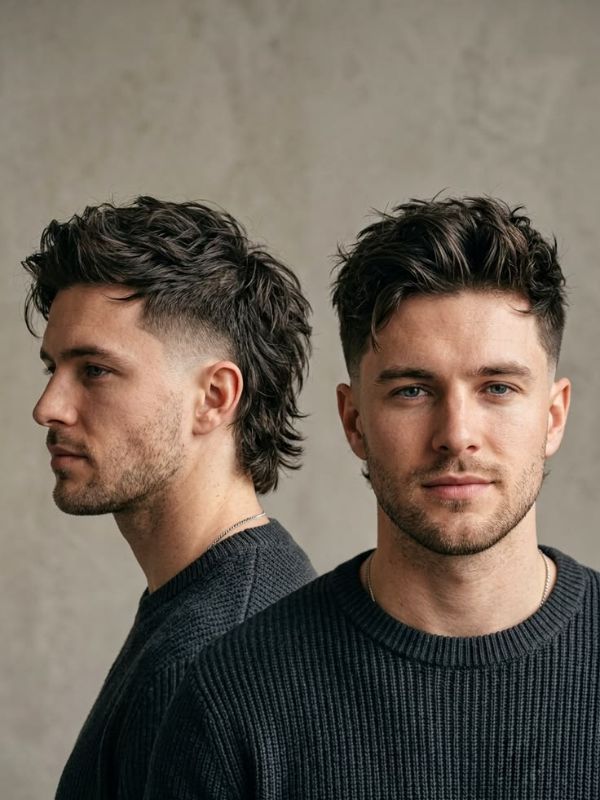
The fade stays close to the ear instead of climbing toward the crown, which keeps the contrast subtle. It’s a smart pick for offices, schools, or anyone easing into the mullet trend without drawing too much attention right away.
4. Straight Hair Burst Fade Mullet
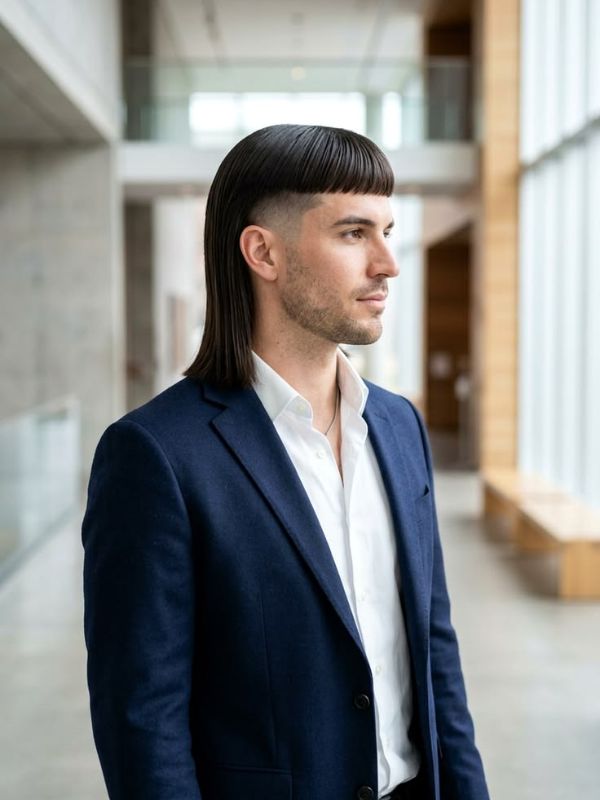
Straight hair needs help in the back, or it can sit stiff and shelf-like. Layering the back and softening the ends lets the hair fall naturally instead of jutting out. Leave two to three inches on top for styling flexibility, and let the fade do the heavy lifting on the sides.
5. Burst Fade Mullet Curly Hair
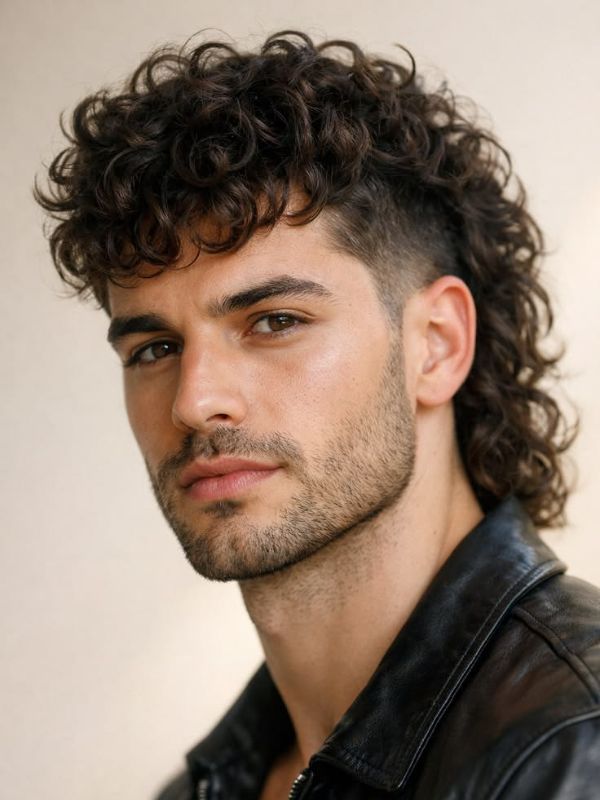
Curls take center stage here while the faded sides frame the face. Removing bulk near the temples keeps curls from puffing too wide, and soft layering through the back helps the curl pattern stay defined instead of clumping.
6. Mullet Skin Fade

The boldest version on this list. The sides fade all the way to bare skin before curving into the top and back. It’s striking on thicker hair and demands more upkeep plan on a cleanup every three weeks to keep the contrast sharp.
7. Mullet Side Fade

The fade is concentrated on the side panel and blends fast toward the crown, which visually slims the head. It’s practical for anyone who wears hats often, since shorter sides bounce back into shape quickly.
8. Modern Mullet Fade

Built to look like a real, deliberate haircut rather than a throwback. Clean texture on top, a layered back, and a crisp outline keep it office-appropriate while still carrying real style. Adjust the fade height depending on how much contrast you’re after.
9. Taper Mullet Fade

The calmest option on the list. A gradual taper replaces the sharper burst line, which makes it a strong choice for workplaces with stricter grooming standards. You still get the full mullet length in the back the overall vibe is just quieter.
10. Curly Mullet Fade

Similar to the curly burst version but with a softer, tapered transition on the sides. Selectively thinning the curls keeps the shape controlled without flattening the texture that makes curly hair distinctive.
Learn more:Low Taper Fade Black Male: 2026 Barber Guide for Waves,Curls, Afros & Locs
11. Short Mullet Fade
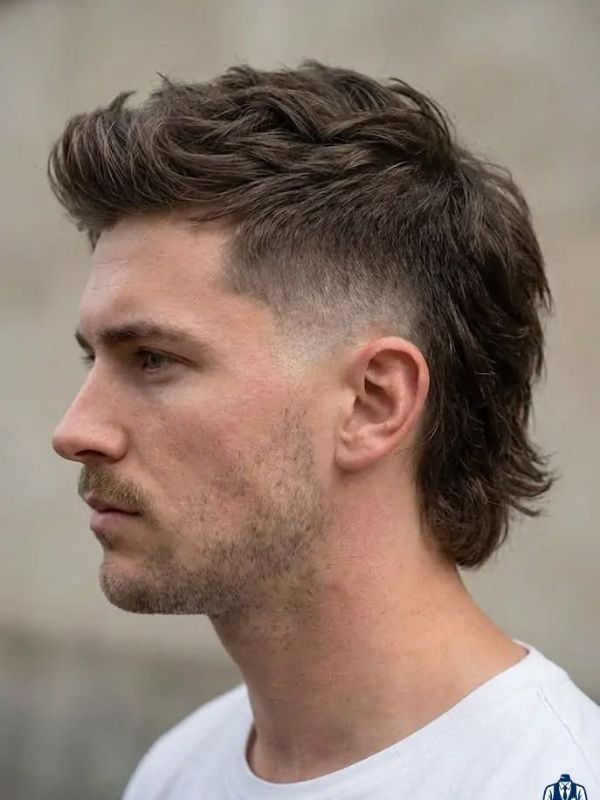
For anyone not ready to commit to a lot of back length, this version keeps things to two or three inches instead of full collar-length flow. Light texture on top and a tapered or faded side give you the mullet silhouette without the full statement.
12. Kids Mullet Fade

A low, tidy fade keeps kids looking sharp without needing constant upkeep between visits. The top stays lightly textured, the back is short enough to survive sports and swim days, and it dries fast with almost no product needed.
13. Taper Modern Mullet Fade

A hybrid that softens a modern silhouette with a gradual, taper-style transition instead of a hard skin fade. It photographs well and holds up through a full work week without needing a touch-up.
14. Taper Short Mullet Fade
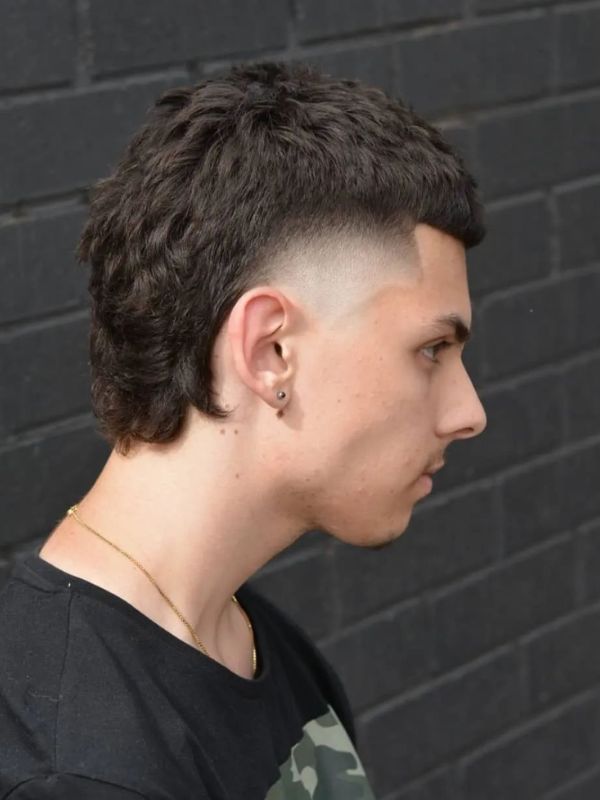
One of the lowest-maintenance combinations here. Short back, light texture on top, and a soft taper on the sides no dramatic contrast, no heavy styling. It’s an easy pick for fine hair or anyone growing through an awkward in-between stage.
15. Modern Mullet Fade Straight Hair

Straight hair almost always needs back layering to avoid a blunt, heavy edge. Softened ends instead of a straight-across cut let the hair move naturally, which is what makes this version look styled rather than simply grown out.
16. Burst Fade Mullet V Cut

A shallow V shape cut into the nape sharpens the back and gives the cut a second focal point beyond the fade itself. Keeping the V centered and touched up regularly is what keeps it looking sculpted instead of uneven.
17. Mullet Burst Fade

The general, catch-all version of the style arc height, fade level, and back length are all customized around your face shape and hair type. This is the term to use if you want your barber to build the cut specifically for you rather than copying a set style.
18. Temple Fade Mullet

Instead of wrapping fully around the ear, the fade concentrates on the temple and sideburn area. It’s a strong option for wider faces since it visually narrows the frame, and it works especially well if you wear glasses regularly.
19. Burst Fade Mullet Straight Hair V Cut

Combines the rounded side arc with a sharp V nape, both tailored for straight hair. Feathered ends in the back keep the hair from sticking out at odd angles, giving straight hair far more shape than it usually holds on its own.
20. Mid Burst Fade Mullet

A strong middle-ground pick that sits between subtle and bold. The arc rises higher above the ear than a low fade but stops short of a full skin fade, giving noticeable contrast without heavy upkeep.
21. High Burst Fade Mullet
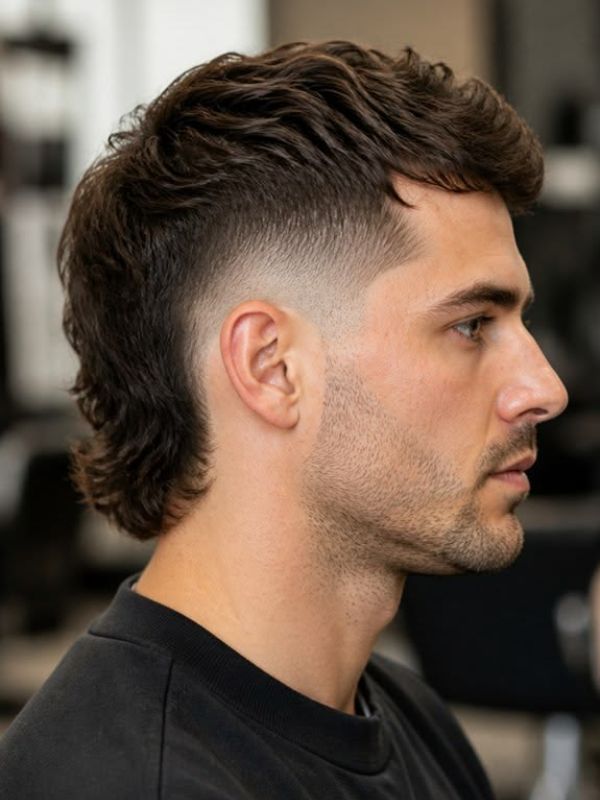
Pushed higher up the head for maximum visual impact. With so little hair left on the sides, all the attention shifts to the top texture and back length. Growth shows quickly at this height, so budget for more frequent trims.
22. Burst Fade Mullet with Design

A simple razor line or geometric pattern near the arc turns the cut into a statement piece. Keep any design simple a single curved line holds its shape as it grows out far better than an intricate pattern does.
23. Taper Burst Fade Mullet

A softer relative of the mid and skin burst versions, keeping more hair on the sides for a gentler grow-out. It reads as polished and professional while still carrying the rounded arc shape that defines the burst fade family.
24. Burst Fade Mullet with Beard Blend
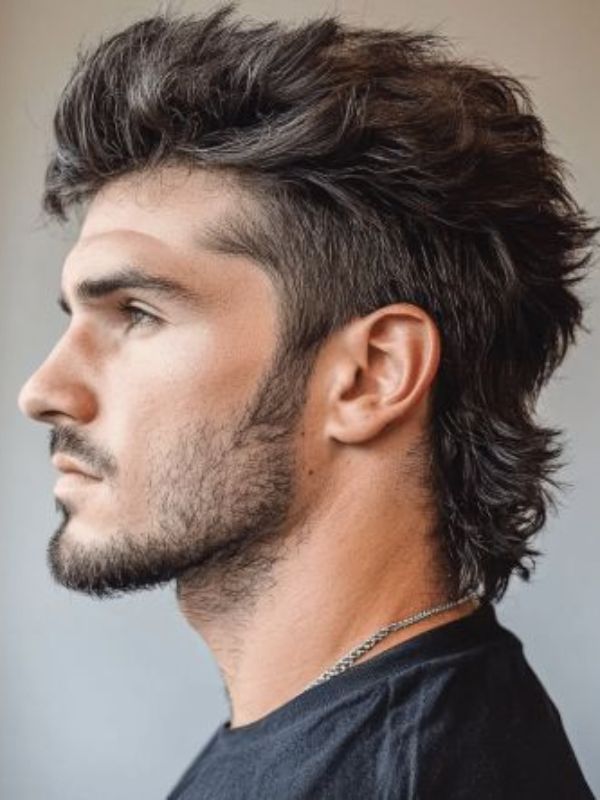
For guys with stubble or a fuller beard, this version ties the fade directly into the beard line at the sideburn so there’s no visible break between hair and facial hair. It’s arguably the most polished, mature take on the style.
25. Burst Fade Mohawk Mullet
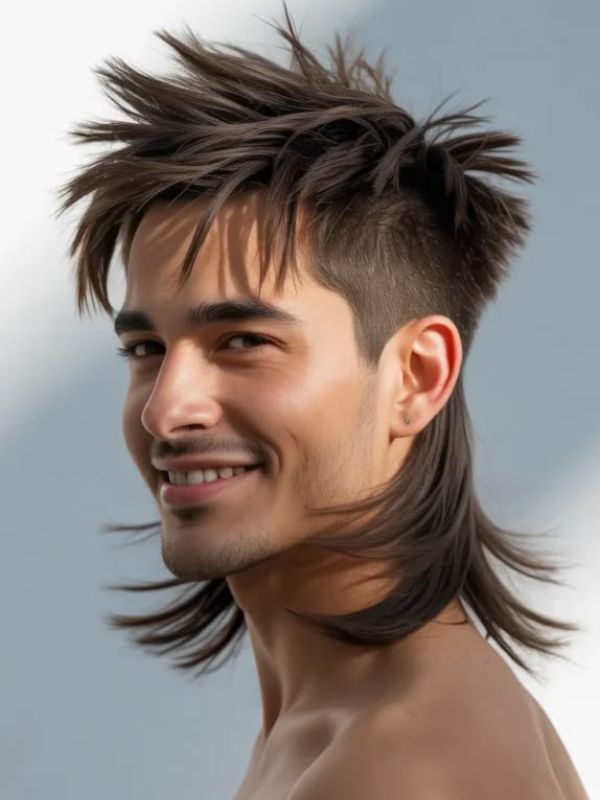
The boldest hybrid on the list. Tight, faded sides frame a textured strip running down the center of the head, which then flows into the mullet length in the back. A mid or high burst fade gives the strip enough contrast to stand out.
Quick Reference Table
| Hair Type or Goal | Best Match | Why |
| Straight, fine hair | Straight Hair Burst Fade Mullet | Layering adds shape the hair lacks naturally |
| Thick hair | Mullet Skin Fade or Mullet Side Fade | Removes bulk fast for a cleaner silhouette |
| Curly hair | Burst Fade Mullet Curly Hair | Frames the face while keeping curl definition |
| Low-maintenance goal | Taper Short Mullet Fade | Minimal contrast, smooth grow-out |
| Bold statement | Burst Fade Mullet V Cut or High Burst | Maximum visual impact and contrast |
| Workplace-safe | Taper Mullet Fade or Low Burst Fade Mullet | Neat, subtle transition that grows out cleanly |
| Wider face shape | Temple Fade Mullet | Narrows the frame without extreme contrast |
| Beard wearer | Burst Fade Mullet with Beard Blend | Seamless connection between hair and beard |
Easy Styling Routine
- Start on towel-dried hair. Skip the comb and work product through with your fingers for a more natural finish.
- Choose the right product for your texture. A light grip cream works well for straight hair; curly hair benefits more from a curl-defining cream through the back.
- Blow-dry on low heat. Shape the top with your fingers as it dries instead of using a brush, which flattens texture.
- Stop before it looks too polished. The burst fade mullet is meant to look a little loose and lived-in, not stiff or overly styled.
- Touch up the nape and sideburns. A quick trim with clippers between full haircuts keeps the edges sharp even as the top grows.
What to Tell Your Barber
Start with one clear sentence: “I’d like a burst fade mullet with a smooth blend from the ear arc into a layered back.”
Then fill in the specifics so there’s no guesswork:
- Low, mid, or skin-level burst
- How much length to keep in the back
- Rounded nape or a V-shaped nape
- Fringe or no fringe up front
- Whether the fade should blend into a beard
Care and Upkeep
Plan on a trim every four to six weeks for most versions skin fades need attention sooner, closer to every three weeks, since regrowth shows fast at that contrast level. Wash two to three times a week with a gentle shampoo, and use conditioner through the mid-lengths and ends so the back doesn’t dry out or frizz.
Between visits, keep the sideburns and nape tidy with a trimmer if you notice stray hairs. That small habit keeps the whole cut looking fresh even weeks after your last barber visit.
Where It Fits
- Office or school: A low burst or taper mullet fade with a shorter back keeps things professional.
- Weekends and photos: A mid burst fade with more length in the back adds presence without going overboard.
- Fashion-forward looks: A skin fade, V cut, or mohawk mullet pushes the style as far as it can go.
Whichever version you pick, the cut works best when the outline stays sharp and the back is layered enough to move naturally.
FAQ’S
Is a burst fade mullet still trending in 2026?
Yes. It remains one of the most requested men’s fades this year, largely because it balances bold styling with an easy, low-maintenance shape.
How often do I need a trim?
Most versions need a trim every four to six weeks, though skin fades and high bursts show regrowth faster and may need attention every three weeks.
Can I get a burst fade mullet with thin hair?
Yes. Keep the back length modest and add light texture on top heavy layering can make thin hair look sparse.
Does a burst fade mullet suit curly hair?
It does, especially when the barber removes bulk near the temples and keeps soft layers through the back to preserve curl definition.
What’s the difference between a burst fade and a regular fade?
A regular fade runs in a straight diagonal line, while a burst fade curves outward around the ear in a rounded arc.
Conclusion
The burst fade mullet delivers bold shape with a surprising amount of everyday control. Keep the ear arc clean, add light texture on top, and layer the back so it moves instead of sitting flat and heavy.
Pick the version that matches your hair type and lifestyle, from a low taper to a full skin fade with a V cut. Bring the barber wording from this guide, and you’ll walk out with a mullet fade that looks sharp and stays easy to manage all week long.