
High Taper Fade for Straight Hair Want a cut that turns heads the second you walk in the room? A high taper fade straight hair combo delivers sharp lines and bold contrast, no waiting around. Your hair lies flat, so the fade shows clean and crisp from the very first cut. A high taper fade straight hair style starts above the temples and tapers all the way down to the skin near your neck. The top stays long, so you keep real volume and a shape that stands out. That’s exactly what makes a high taper fade straight hair look pop.
Dark strands show off a high taper fade straight hair cut like nothing else. Light hair can join the party too, it just needs a softer touch. This guide hands you the products, the top styles, and the face-shape picks for a high taper fade straight hair look that works. You’ll learn how to style it right and keep it razor-sharp for weeks.
Does A High Taper Fade Work With Straight Hair?
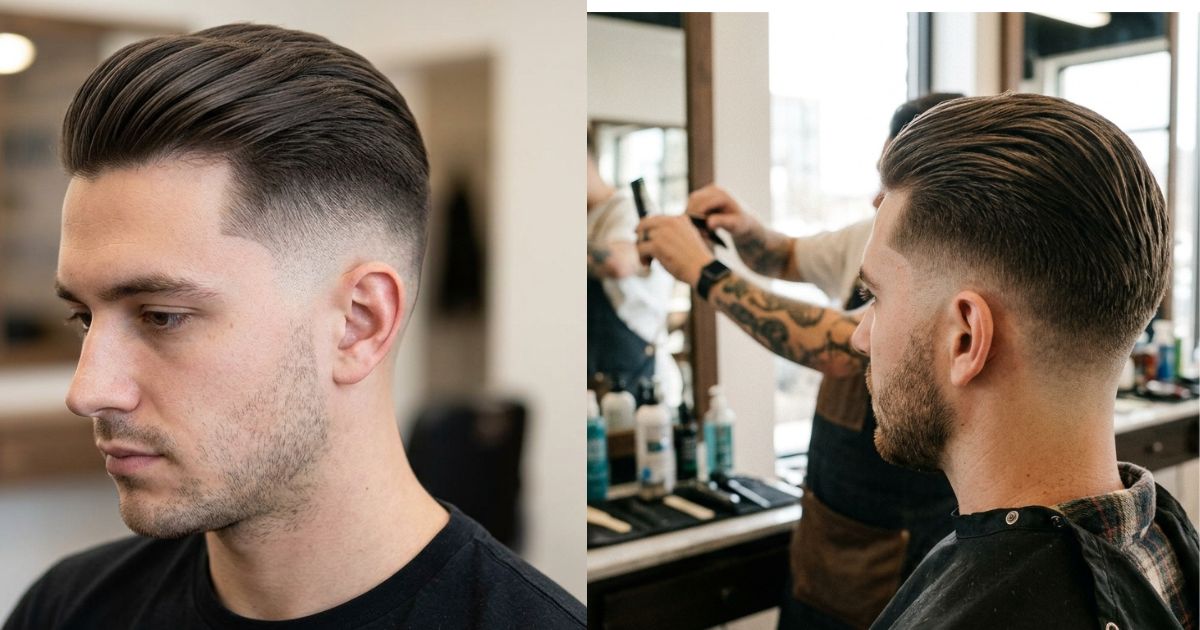
Yes, it does. Straight hair lies flat against the head. That flat lie lets the fade show through with zero blur or fuzz getting in the way.
Barbers love working with straight hair for this reason. The line between short and long reads crisp, right from the first cut. No curl pattern fights against the blend.
Medium to thick, darker straight hair gives you the sharpest contrast. Lighter or finer strands still work fine. They just need a gentler gradient instead of a hard skin fade.
What Is A High Taper Fade And Does It Work For Straight Hair?
A high taper fade starts blending above your temples. That’s higher than a low or mid fade. From there, it tapers down smooth, all the way to skin at your neckline.
The word “taper” matters here. Unlike a hard skin fade, the transition stays gradual. Your barber blends length little by little instead of chopping straight to bare skin at one spot.
Straight hair suits this cut better than most textures out there. Strands sit flat, so the fade line looks exactly how your barber shaped it. Density on top still matters. Medium thickness gives you the best contrast against those tight sides.
Will A High Taper Fade Show Up On Light Or Blonde Straight Hair?
Contrast comes from two things: length and color. Dark hair gives you both, so the fade pops no matter what. Blonde or light brown hair only gets the length difference, since there’s barely any color shift.
Taken down to bare skin, a high taper on light hair can look thin instead of styled on purpose. That doesn’t mean you should skip the cut. It just means your barber needs to adjust the approach a bit.
Good news: you’ve got options. A hard part, a softer gradient, or some texture on top can all add the contrast that color alone won’t give you. Pick the technique that matches your hair and your daily routine.
Technique 1 — The Hard Part
A hard part is a thin line, razor-cut from your temple up toward the crown. It creates a sharp break between your top and sides, no matter your hair color.
This trick works because it doesn’t rely on contrast from length or shade. The line itself does the job. Ask for a razor part, not just a comb part, for the cleanest edge.
Pair it with a side part or a comb-over on top. That combo gives you the most reliable results if you’ve got light or blonde straight hair and want real definition.
Technique 2 — Soft Gradient Over Skin Fade
Instead of fading all the way to bare skin, ask your barber to leave a #1 guard’s worth of length at the bottom. That tiny bit of length keeps some color right where the fade ends.
This small tweak avoids the exposed-scalp look that bare skin fades can give light hair. You still get a taper that reads clearly from across the room, just without the harsh drop-off.
It’s a simple ask, and most barbers know exactly what you mean. Just say “soft gradient” or “leave a guard at the bottom” and they’ll take it from there.
Technique 3 — Textured Top Styling
Matte clay or texturizing paste worked through your top adds shadow and lift. That builds contrast through shape, not color. It’s a solid backup when your hair’s too light for color-based contrast.
This technique gives you the most control day to day. You can dial the texture up or down depending on how sharp you want the look for that day or that event.
Combine it with either of the first two techniques for even stronger results. Texture on top, plus a hard part or soft gradient below, covers you from every angle.
What Products Does Straight Hair Need For A High Taper Fade?
Straight hair has no natural texture to hold volume by itself. Skip the right product, and your top falls flat fast. That flattens the whole point of the cut, which is contrast.
Match your product to your hair’s thickness. Fine straight hair needs something light, like a mousse or light clay. Thick straight hair can handle a stronger pomade or paste without weighing down.
| Hair Density | Product Type | Hold | Finish | When To Apply |
| Fine Straight | Lightweight Mousse Or Light Clay | Light | Matte | Damp Hair, Roots Only |
| Medium Straight | Texture Clay Or Medium Pomade | Medium | Matte Or Low Shine | Towel-Dried, About 70% Dry |
| Thick Straight | Strong Pomade Or Paste | Strong | Matte Or Gloss | Damp Or Dry Hair |
How To Style A High Taper Fade On Straight Hair
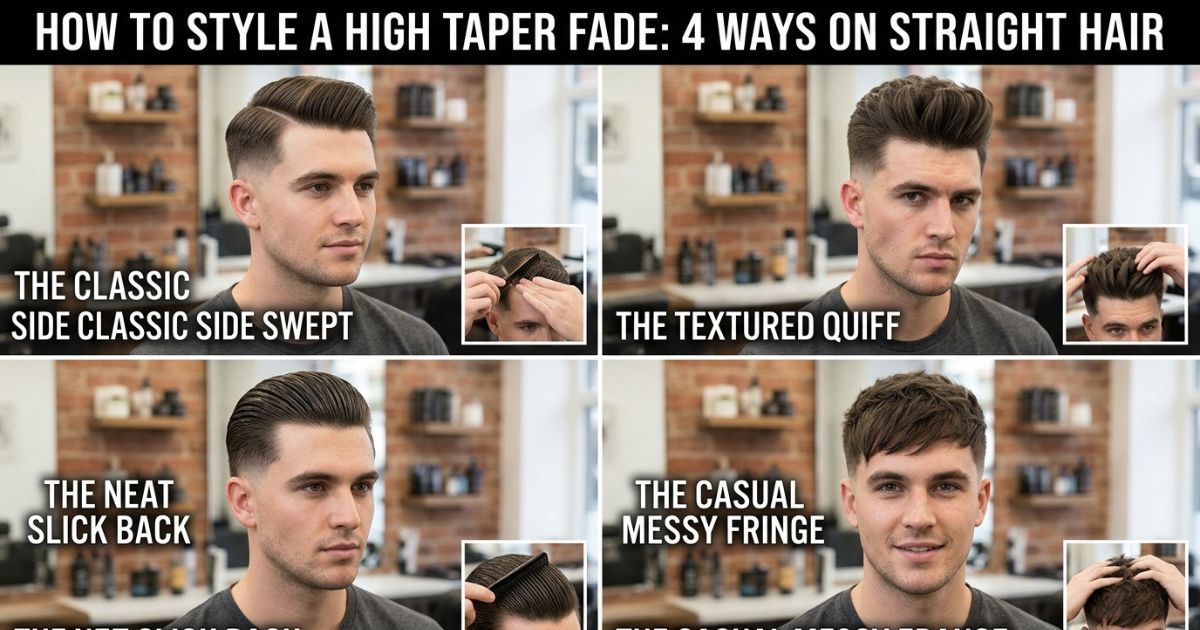
Start with damp hair, towel-dried to about 70 percent. Work a dime-sized amount of texture clay or mousse into your roots. Focus that product right at the crown for lift.
Blow-dry upward and backward using a round brush. Point the airflow toward the back of your head. Hold the cool-shot button for 10 to 15 seconds once you’re done, which locks the volume in place.
Finish with a pea-sized bit of styling cream through your mid-lengths and ends. That gives you control without adding extra weight. A light spray of texturizing mist on top adds hold if you need it.
Which High Taper Fade Styles Work Best On Straight Hair?
Straight hair’s smooth, even lie makes it perfect for structured top styles. You get clean lines without any curl fighting your comb or brush along the way.
Six styles stand out for straight hair specifically. Each one pairs differently with a high taper, and each one suits a different face shape, density, and daily routine.
Pick based on how much time you’ve got each morning. Some of these styles need five minutes flat. Others ask for a bit more patience and a round brush.
Learn more:Best Powerful What Are the Types of Taper Fade? 12 Styles Explained 2026
Textured Crop Best For Low-Maintenance Straight Hair
Kept to about 1.5 to 2.5 inches, the textured crop uses choppy, point-cut ends for a natural finish. It needs almost no daily effort once your barber shapes it right.
Work matte clay into your roots, then tousle with your fingers. That’s it. You’re done in under five minutes, and the look still holds sharp definition through the day.
This style suits medium-density hair best. It also works great on oval and square face shapes, giving you a relaxed, effortless vibe without sacrificing that bold taper contrast.
Pompadour Best For Volume Goals
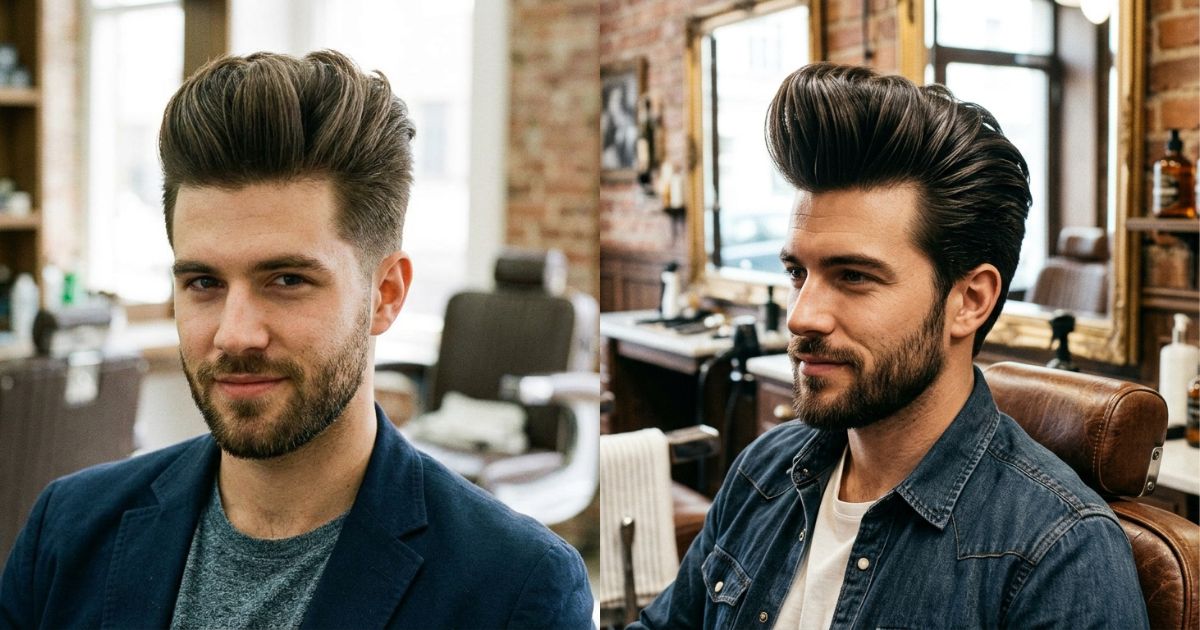
The pompadour sweeps your hair up and back from the hairline. That height builds serious contrast against tight, high-taper sides, giving you one of the boldest looks on this list.
Medium to thick straight hair holds this shape best. Fine hair can still work, but you’ll need extra mousse and a firm-hold pomade to keep the height standing tall all day.
Apply mousse to damp hair first. Blow-dry up and back with a round brush, then set with a strong-hold pomade once it’s dry. That combo keeps the pompadour standing through wind and humidity.
Side Part / Comb-Over Best For Professional Settings
A side part combs your longer top section in one clean direction. It holds all day once set, which makes it one of the most reliable styles for busy mornings.
Apply a light to medium pomade to damp hair. Comb your part into place, then blow-dry along that same line. The result looks polished without feeling stiff or overdone.
This style suits every face shape out there. That versatility, plus its workplace-ready look, makes it the safest pick if you’re not sure which style to choose first.
Slick Back: Best For Thick Straight Hair
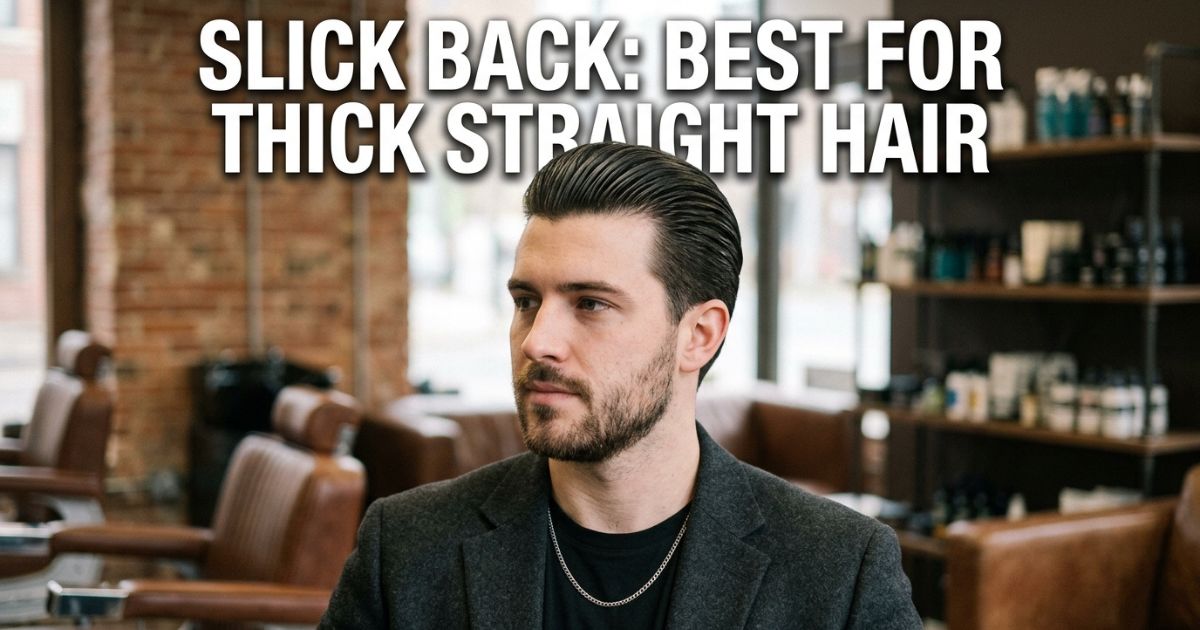
Thick straight hair carries a full slick back without collapsing halfway through the day. Brush every strand toward the crown for a sleek, streamlined shape that pairs sharp with a high taper.
Lock it in with a strong-hold pomade or paste. Thick hair needs that extra grip to stay smooth and shiny instead of falling loose by midday or after a windy walk outside.
Fine straight hair should skip this one. The product weight needed for a slick back flattens thinner strands fast, and you’ll lose the contrast the whole cut depends on.
Quiff: Best For Round Faces With Straight Hair
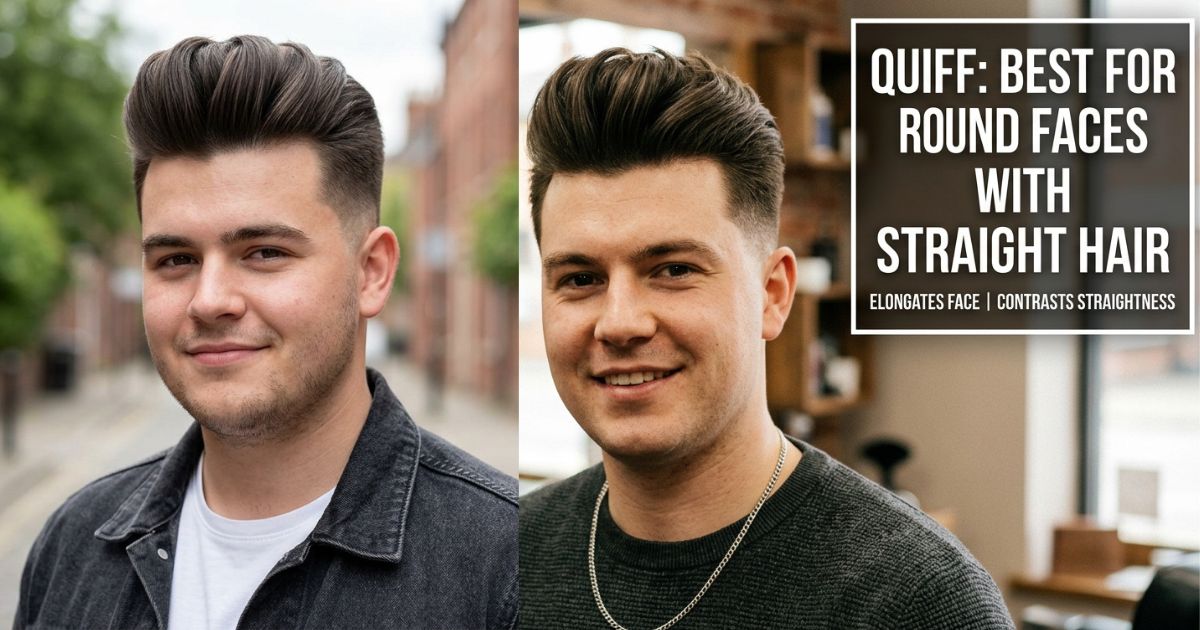
The quiff lifts your front section upward instead of sweeping it straight back. That height concentrates right at your hairline, which flatters round faces more than almost any other style here.
Apply volume mousse at your roots first. Blow-dry the front section upward using a round brush, then shape it with a medium-hold clay once it’s dry and cooled.
This style works especially well if your goal is length, since the upward lift creates an illusion of a longer face. Pair it with a high taper for maximum contrast.
Buzz Cut Top Best For Zero-Maintenance Straight Hair
A buzz cut top stays uniform at half an inch to a full inch long. It needs zero daily styling, since the contrast comes from the cut itself, not from any product.
This style works on any density and any face shape. If mornings are tight and you’d rather not touch a comb, this is about as easy as haircare gets.
One trade-off: the sides grow out faster with such a short top. That means your contrast fades within a week or two, so plan your trims accordingly.
Which Face Shape Gets The Best Results From A High Taper Fade?
Your face shape decides two things. First, whether the cut flatters your features. Second, how much length you need on top to keep everything looking balanced and proportional.
Round faces get the most from this cut. Extra height on top compensates for width, and straight hair’s flat lie makes that upward styling motion easy to hold in place daily.
Long or rectangular faces need more caution here. A tall pompadour or quiff can add too much vertical length. Keeping the top shorter, or picking a mid taper instead, usually looks more balanced.
| Face Shape | Suitable? | Top Length | Notes |
| Oval | Ideal | 2–4 in | Balanced Proportions, Any Top Style Works |
| Round | Ideal | 3–4 in | Creates Vertical Elongation, Skip Flat Tops |
| Square | Works Well | 2–3 in | A Soft Blend Softens Jaw Harshness |
| Heart | With Care | 2–3 in | Keep Top Volume Moderate |
| Long / Rectangular | Approach Carefully | 1.5–2 in | A Mid Taper Often Looks More Balanced |
| Diamond | Yes | 2–3 in | A Textured Crop Or Side Part Balances Well |
How Often Does A High Taper Fade Need To Be Trimmed?
A high taper needs more upkeep than any other fade height out there. More of your head gets tapered, and the blend point shifts down fast as your hair grows in.
Expect a trim every one to two weeks for the sharpest look. That’s more frequent than a low or mid taper, so factor that into your budget and your schedule before committing.
Most guys stretch their visits by cleaning up the neckline at home between appointments. That habit brings your realistic annual cost down while keeping the cut looking fresh most days.
| Fade Height | Trim Frequency | Cost Per Visit | Annual Visits | Annual Cost |
| Low Taper | Every 3–4 Weeks | $30–45 | 13–17 | $390–$765 |
| Mid Taper | Every 2–3 Weeks | $35–50 | 17–26 | $595–$1,300 |
| High Taper | Every 1–2 Weeks | $40–55 | 26–52 | $1,040–$2,860 |
How To Extend Your High Taper Fade At Home
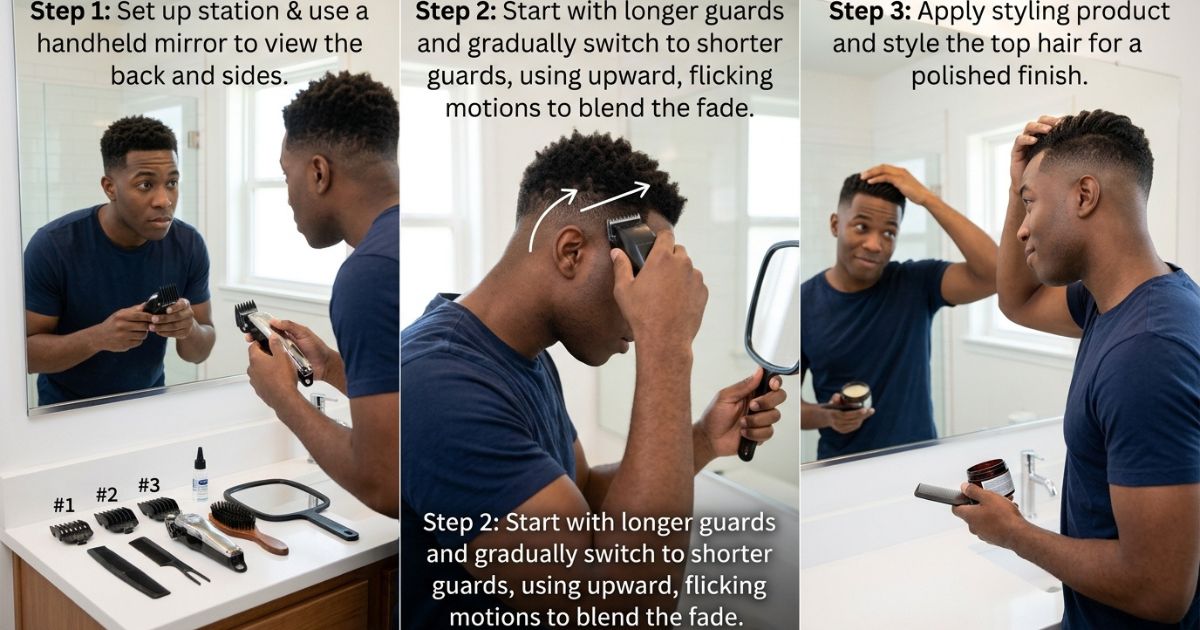
Clean your neckline with a bare or #0 clipper guard, following your natural hairline. Tighten the lower sideburn edge using that same guard for a clean, matching finish on both sides.
A single-blade trimmer gives you sharper hairline definition than clippers alone. Use it slowly and carefully, since one wrong pass can throw off the whole line you’re trying to maintain.
Leave the actual blend gradient to your barber, though. Re-blending fade lines takes clipper skill and guard changes that go wrong easily at home, even with steady hands and good lighting.
How Do You Ask Your Barber For A High Taper Fade On Straight Hair?
Most miscommunication happens because clients describe the cut in general terms. Barbers need specifics instead. Give them exact numbers, guard sizes, and reference points instead of vague words like “shorter” or “cleaner.”
Try this: “I’d like a high taper fade, blend starting above the temples, sides down to a #1 or skin at the bottom. My hair’s straight, so keep the transition gradual with no harsh lines.”
Bring two or three reference photos, shot from the front, side, and back. Show them before the cut starts, not partway through. That small step saves you from a result you didn’t want.
| Term | What It Means |
| High Taper | Blend Starts Above The Temples |
| Soft Blend | No Visible Harsh Lines Between Lengths |
| Hard Part | A Razor-Cut Line From Temple To Crown |
| Natural Neckline | Follows Your Existing Hairline Curve |
| Straight Razor Neckline | A Clean, Sharp Horizontal Edge |
High Taper Vs. Mid Taper Vs. Low Taper: Which Is Right For Your Straight Hair?
Each taper height starts blending at a different point. Low starts near your neckline. Mid starts around ear level. High starts above your temples, giving you the boldest look of the three.
Straight hair works with all three heights, so this choice comes down to personal style. Want subtle and easy to maintain? Go low. Want bold and sharp? High taper wins every time.
Switching between heights doesn’t mean growing your hair out first. Moving from mid to high is one appointment, where your barber just raises the blend’s starting point. The reverse works just as fast.
| Feature | Low Taper | Mid Taper | High Taper |
| Blend Starts At | Neckline / Above Ear | Ear Level | Above The Temples |
| Contrast Level | Subtle | Moderate | Bold |
| Best For Straight Hair | All Densities | All Densities | Medium–Thick, Dark Tones |
| Maintenance | Every 3–4 Weeks | Every 2–3 Weeks | Every 1–2 Weeks |
| Light / Blonde Hair | Best Option | Good Option | Needs A Soft Blend Strategy |
Which Straight Hair Type Works Best With A High Taper Fade?
Dark, medium to thick straight hair gets the best results from a standard high taper. You can pair it with almost any top style, from a pompadour to a sharp textured crop.
Fine, light-colored straight hair is the toughest combo to pull off well. If that’s you, ask for a #1 guard minimum at the bottom and stick to lightweight mousse on top.
Heavier clay or paste collapses fine hair’s volume within an hour. That kills the contrast the whole cut depends on, so lighter products matter more than usual for this hair type.
| Hair Color | Density | Recommended Fade | Recommended Top Style |
| Dark | Medium–Thick | High Taper | Pompadour Or Quiff |
| Dark | Medium | High Taper | Textured Crop |
| Dark | Fine | High Taper, Soft Blend | Textured Crop Or Caesar |
| Medium Brown | Medium | High Taper | Side Part Or Quiff |
| Light Brown | Medium | High Taper, Soft Blend | Textured Crop |
| Blonde / Light | Medium | Mid Taper Or Hard Part High Taper | Side Part |
| Blonde / Light | Fine | Mid Taper Recommended | Caesar Or Buzz Cut |
Seasonal Styling Adaptations For A High Taper Fade On Straight Hair
Weather changes how your product performs, even if your cut stays exactly the same. What holds great in October can fall apart completely by July, so plan your routine around the season.
Straight hair reacts fast to humidity, dryness, and static. A little seasonal swap in your product lineup keeps your high taper looking sharp no matter what the forecast throws at you.
Below, you’ll find quick fixes for summer, winter, and the shoulder seasons. Small changes, like swapping a mousse for a wax, make a bigger difference than most guys expect.
Summer — Humidity And Sweat High Taper Fade for Straight Hair
Humidity reactivates mousse and loosens its grip on straight strands. That’s why a routine that holds fine in cooler months can fall apart fast once summer heat and sweat show up.
Switch to a humidity-resistant styling cream or a beeswax-based pomade instead. Both hold up better against moisture in the air than a standard mousse or light gel ever could.
Layer a light texturizing spray on top to seal that hold further. Carry a travel-size product with you too, for touch-ups on long, active, or especially sweaty days outside.
Winter — Static And Dryness
Indoor heating dries out your scalp fast during winter months. That dryness, combined with static, lifts fine or medium straight hair in ways you can’t always predict or control easily.
Smooth one or two drops of lightweight argan oil over your styled hair. That calms static right down without adding unwanted shine or weighing your top section down at all.
Wash with a moisturizing shampoo two or three times a week. That keeps your scalp healthy through the driest months, which helps your hair hold its shape and style better overall.
Spring And Fall — Flexible Hold
Spring and fall bring unpredictable weather, sometimes within the same afternoon. A rigid-hold product forces you to restyle constantly, which gets old fast when the forecast keeps changing on you.
A medium-hold matte clay solves this problem well. It lets you refresh your shape with just your fingers midday, no need to wash and start completely over each time.
This flexibility makes shoulder-season styling the easiest stretch of the year. Keep one reliable medium-hold product on hand, and you’re covered no matter what the weather decides to do.
FAQ’S
Does a high taper fade work with straight hair?
Yes, straight hair shows the fade’s gradient with total clarity since the strands lie flat and uniform, letting medium-density, darker hair produce the sharpest, boldest contrast overall.
How often should you trim a high taper fade?
Plan on a trim every one to two weeks. The high starting point grows out fast, so at-home neckline touch-ups help stretch appointments to two or three weeks.
What products work best for straight hair with a high taper fade?
Use lightweight mousse or texture clay at the roots for lift, plus styling cream on the ends for control. Heavier pomade collapses fine, straight hair within hours.
Will a high taper fade show up on blonde or light straight hair?
Contrast reads softer since color differential is minimal. A hard part, soft gradient, or textured top styling adds definition without depending on natural color contrast alone.
Which face shape suits a high taper fade best?
Round faces benefit most, since the extra height on top creates vertical elongation. Long or rectangular faces should keep the top shorter or consider a mid taper instead.
Conclusion
This guide on **High Taper Fade for Straight Hair: Volume, Contrast & Styling Guide** covers everything you need. A high taper fade straight hair cut looks sharp. It gives clean lines. It adds real volume on top. Straight hair shows off this fade better than most textures. That’s why a high taper fade straight hair style stays popular.
Pick the right products. Use the right top style. Match it to your face shape. A high taper fade straight hair cut needs regular trims too. Follow these tips. Your high taper fade straight hair look will stay sharp and bold every time.