
Your haircut speaks before you do. Walk into a boardroom, a client lunch, or a video call, and people read your grooming within seconds. A sharp, deliberate cut signals attention to detail, and that message lands long before your first handshake.
This guide covers 27 professional men’s haircuts, from classic side parts to textured quiffs and curls. You’ll also learn what makes a cut office-ready, which styles suit job interviews, how to brief your barber, and how to adjust your look as your career grows.
Attractive Business Professional Hairstyles For Men
Classy Comb Over with Taper Fade
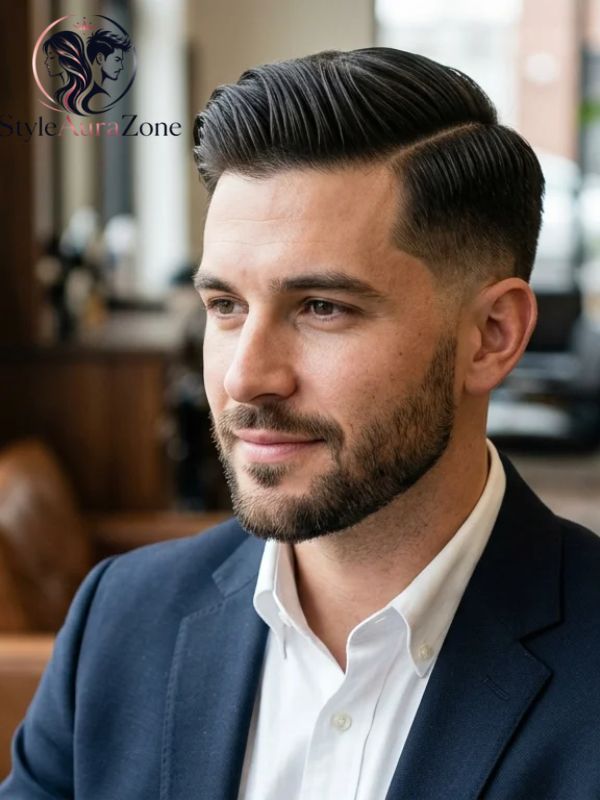
This cut pairs a neat side sweep with sides that shrink gradually toward the neckline. It’s the closest thing to a universal corporate look. Work a pea-sized amount of matte wax through damp hair, then comb the top over and set it.
Natural Flow

Men with wavy or loosely textured hair can let length do the talking here. The hair sweeps back or to the side without much force. Air-dry it, then add a touch of light cream to control frizz. Keep the neckline tidy, and the style reads relaxed but intentional.
Mature Spiky Hair

Short, upright texture adds lift for men with silver or thinning strands. Choose a flexible clay instead of a stiff gel so the spikes look soft rather than sculpted. Trim the sides close, and the whole shape stays youthful without feeling like you’re trying too hard.
Short Tousled Hair with Cropped Sides
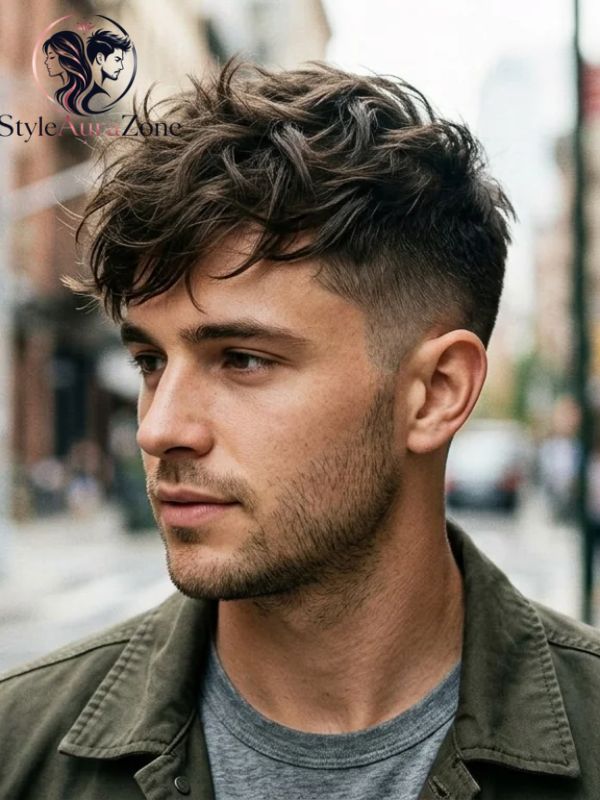
Tight sides frame a messy, lightly layered top. The contrast gives you personality without breaking dress-code rules. Blow-dry the crown with a bit of mousse, then rough it up with your fingertips. A trimmed stubble finish sits nicely with this one.
Short Curly Hair

Short curls are tidy by nature. Keep the sides snug, leave about two inches on top, and the cut stays crisp for weeks. Apply curl cream on wet hair and let it dry with a diffuser. You’ll avoid frizz and save yourself a fair amount of morning effort.
Long Fringe with Taper Fade
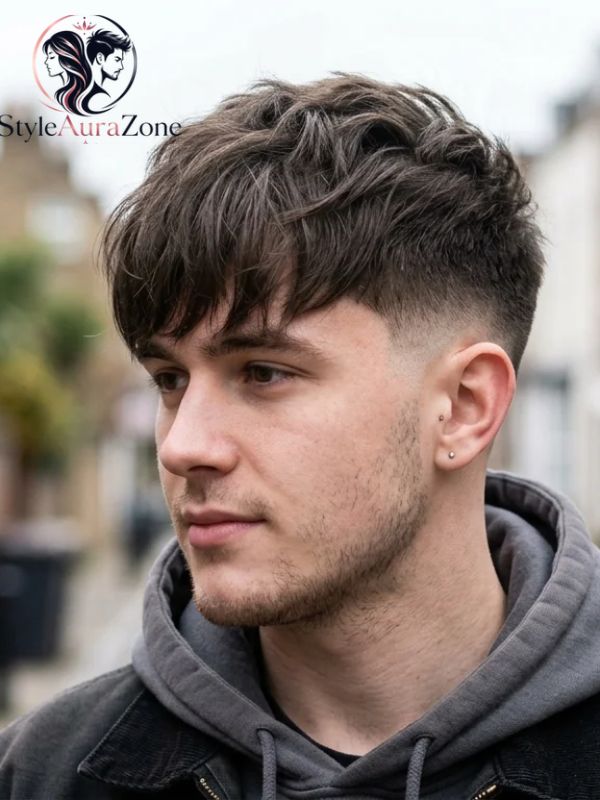
A forward-swept fringe adds a modern edge, while a tapered back and sides keep the outline clean. Sweep the front across the forehead and set it with a light styling cream. Book trims every three to four weeks so the fringe doesn’t drift into your eyes.
Side Swept Ivy League
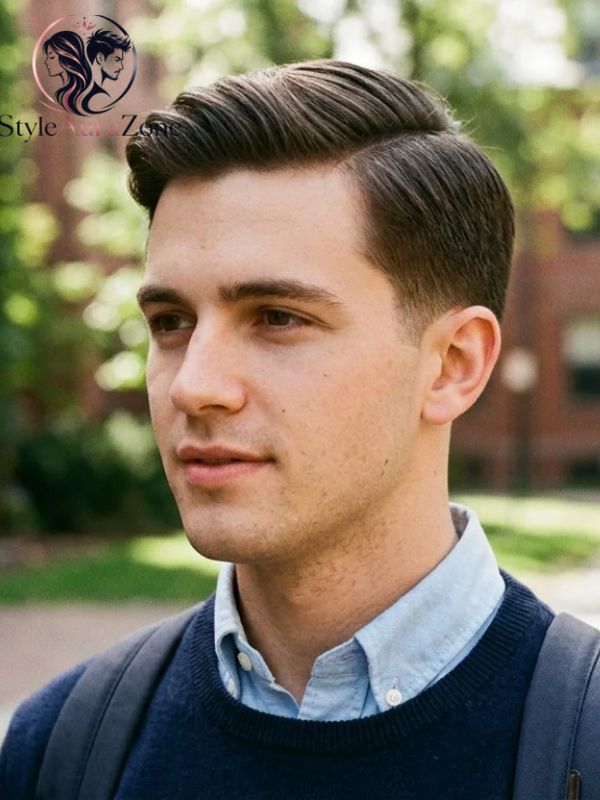
Think of it as a crew cut that grew up. The top stays long enough to comb across, and the sides are scissor-cut. It suits nearly every office, and it ages well. A dab of light pomade and a fine-tooth comb finish the job.
Short Brush Up with Low Taper Fade
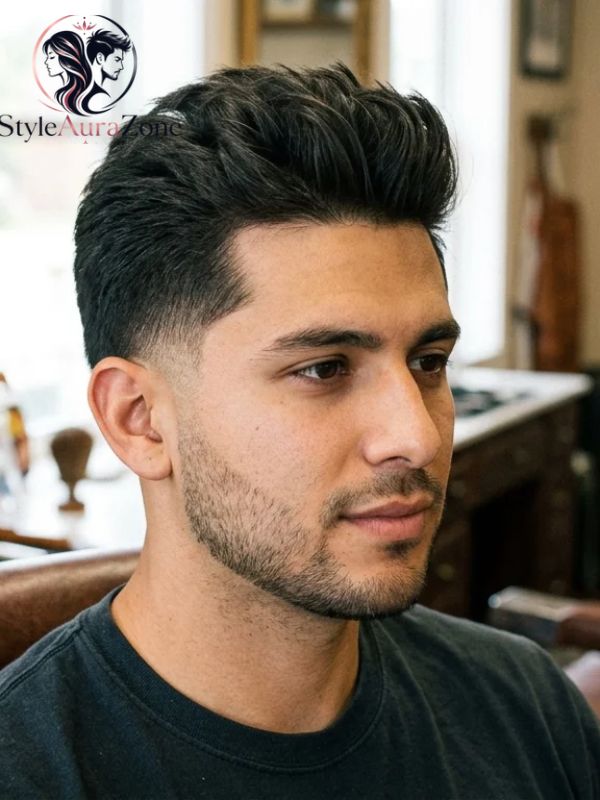
Hair is lifted off the forehead and sits just above a low, subtle taper. The result looks energetic yet controlled. Push the front upward with a blow-dryer, then lock it in with matte paste. It’s a strong pick for sales and client-facing roles.
Man Bun

Long hair can work at the office when it’s groomed. Wear it low at the nape for conservative settings, or higher in creative ones. Smooth flyaways with a drop of serum. Pair it with a neat beard, and the whole look stays deliberate.
Read more:The High and Tight Haircut: 20 Modern Examples For Men
Textured Modern Quiff
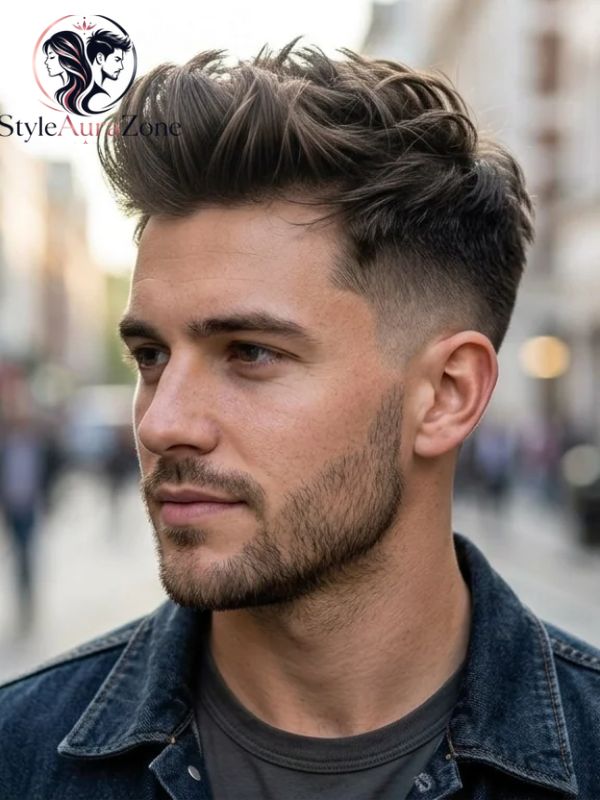
Volume at the front and crisp texture through the crown give this cut real presence. It’s the one to choose if you want height without a heavy pompadour. Dry the roots upward, then separate pieces with a small amount of clay.
Brushed Forward Waves with Tapered Sides
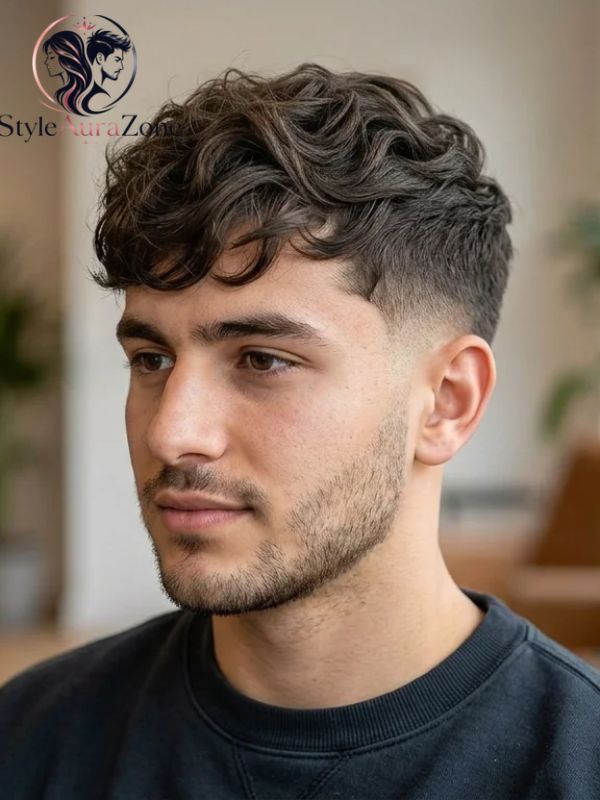
Waves fall naturally toward the forehead while the sides stay trimmed. That balance keeps the style polished. Use a sea-salt spray on damp hair to bring out the pattern. A groomed mustache or short beard tightens the entire look.
Messy Medium Hair with Undercut
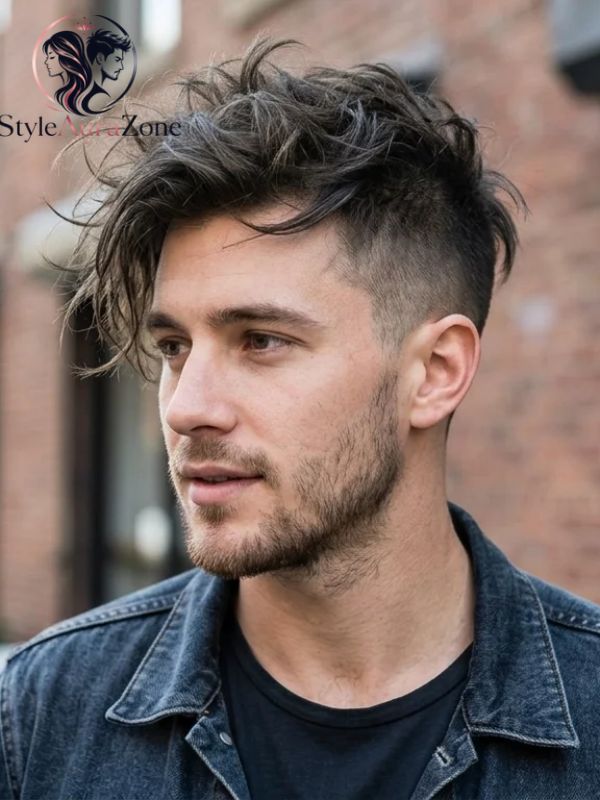
An undercut strips weight from the sides, and the longer top gets plenty of room to move. It’s best for creative fields and relaxed offices. Scrunch in a light-hold product and let gravity do the work. Keep the shaved portion short and clean.
Mod Cut
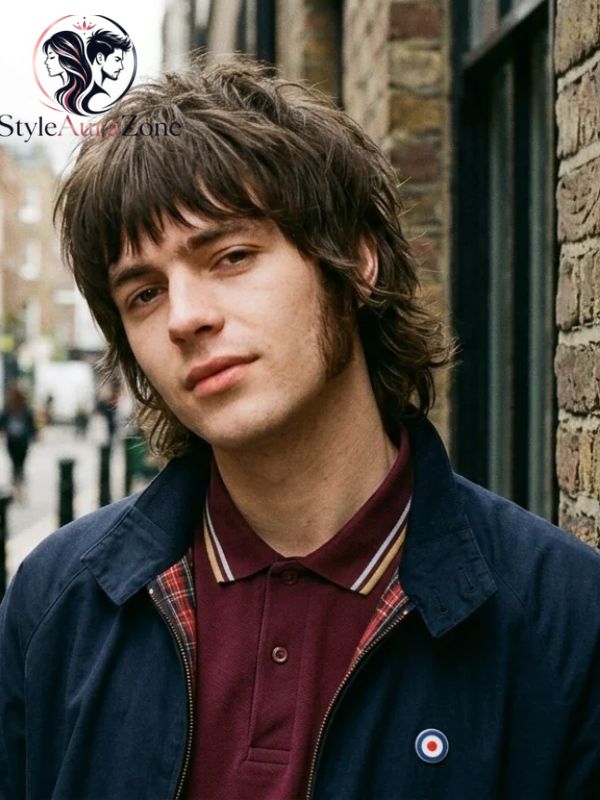
A throwback with sharp lines, the mod cut features a short back and a fuller top with a blunt fringe. It looks vintage but still polished. Comb the fringe forward, and set it with a touch of pomade. Regular trims keep the geometry exact.
Buzz Cut
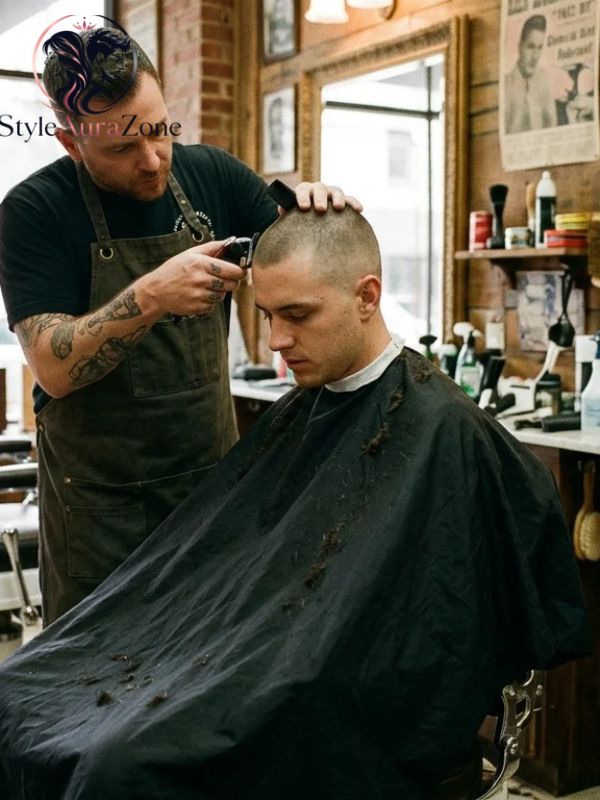
Clippers and one guard number are all you need. Buzz cuts suit men who want zero fuss and a confident silhouette. A skin-tight taper at the neck adds refinement. Moisturize your scalp, since there’s nowhere for dryness to hide.
Faux Hawk
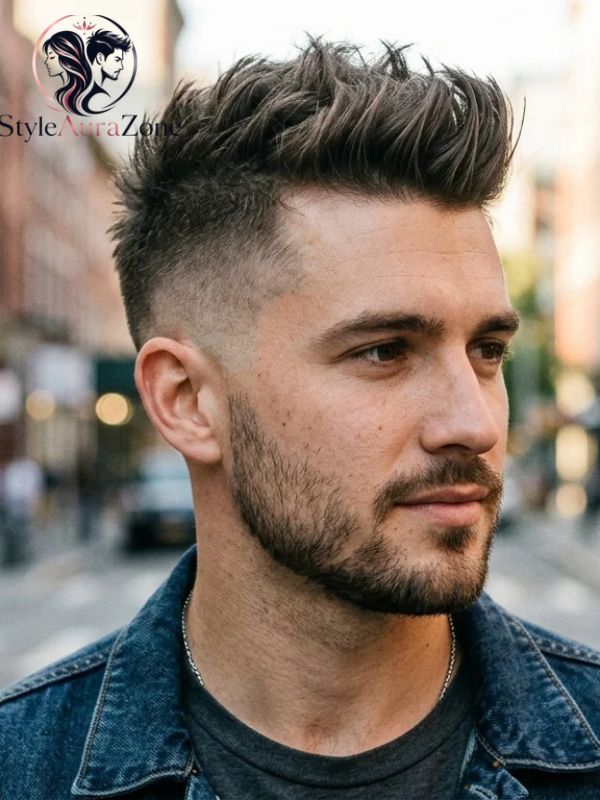
A slightly raised center strip with short sides creates edge without going full mohawk. Keep the height modest for office wear. Blow-dry upward, then smooth the sides with a comb. In conservative industries, tone down the lift and you’re set.
Textured Crew Cut
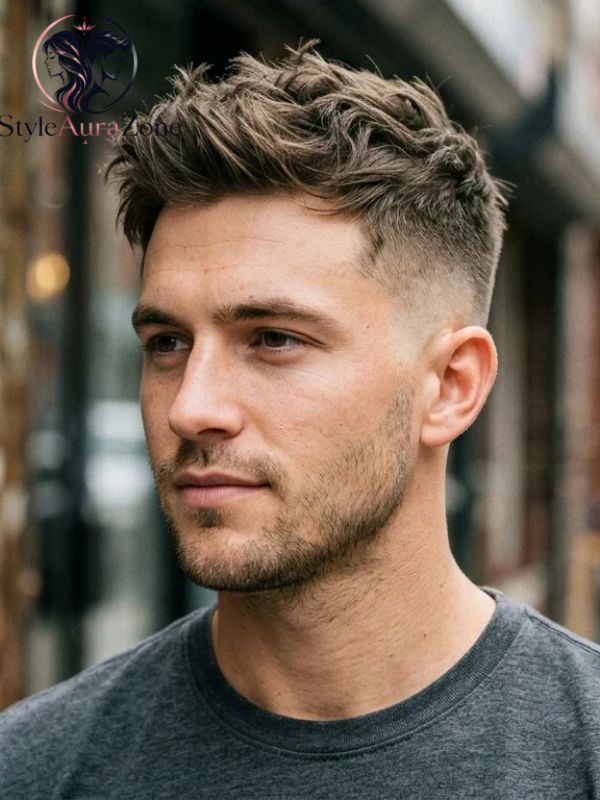
Short, choppy layers add movement to a classic. The cut stays neat, but the surface looks alive rather than flat. Rub a bit of matte clay between your palms and tousle. It’s a dependable choice for men who need a low-effort routine.
Brushed Back Waves
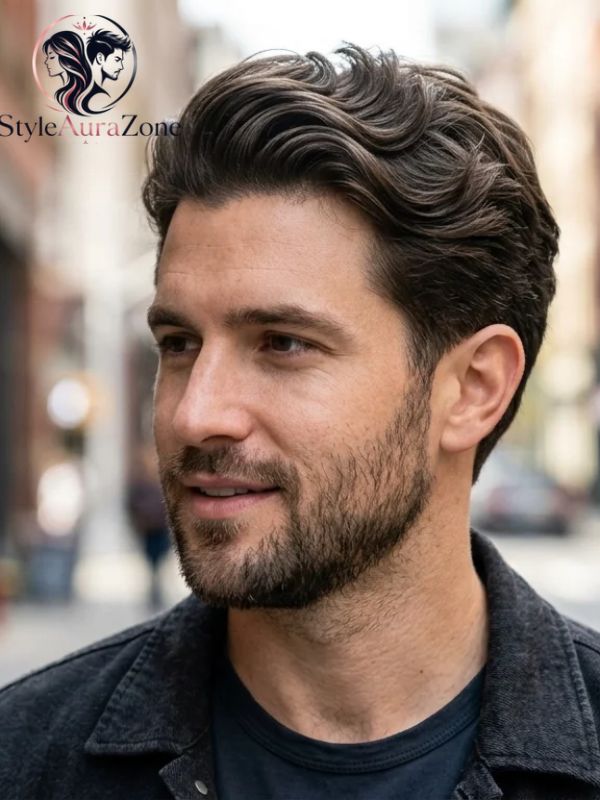
Brush the hair up and away from the face, and wavy strands settle into soft, sweeping lines. This shape suits medium lengths. Use a light cream to avoid crunch. Add a trimmed beard, and the look comes across as seasoned rather than scruffy.
Loose Messy Curls

Relaxed curls with a bit of volume suit entrepreneurs and creative leaders. Define them with a leave-in conditioner, then scrunch gently. Tighten the sides with a fade or scissor taper so the outline stays professional. Avoid brushing dry curls, which only creates frizz.
Low-Maintenance Short Hair with Beard
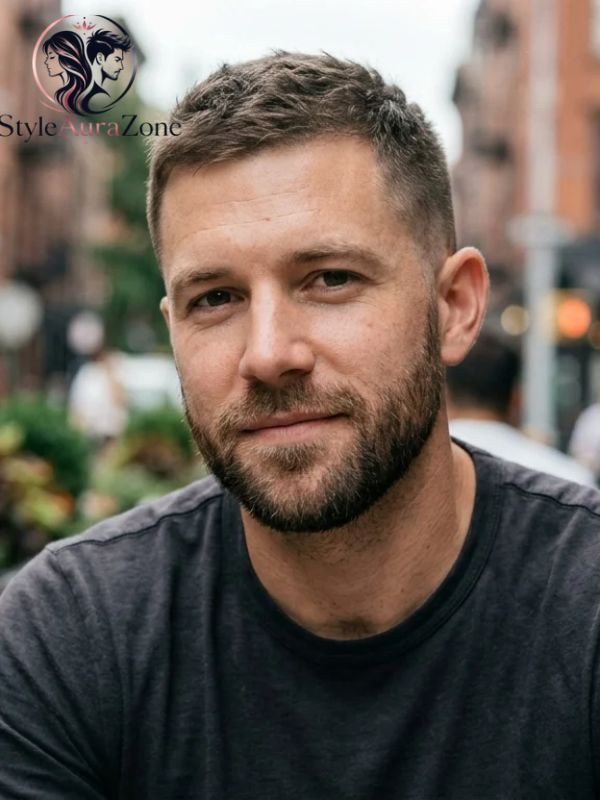
This one’s built for busy schedules. Short, even layers on top and sides match a beard trimmed along the jawline. Blend sideburns into the beard for a seamless connection. A monthly barber visit is usually enough to keep everything crisp.
Tousled Long Crew Cut
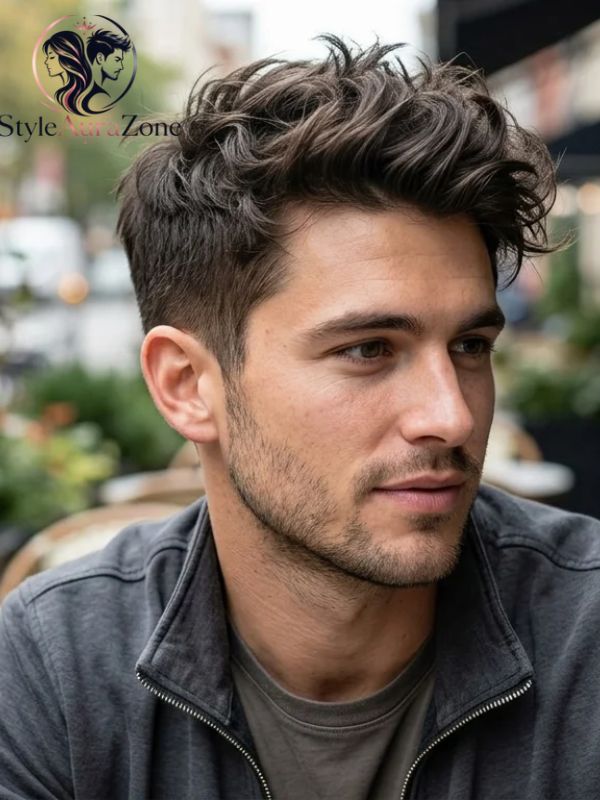
Take the standard crew cut and leave extra length up front. The top gets a rumpled finish, while the sides remain tapered. It feels laid-back but never sloppy. A little texture powder adds grip, so the style holds through long workdays.
Long Comb Over
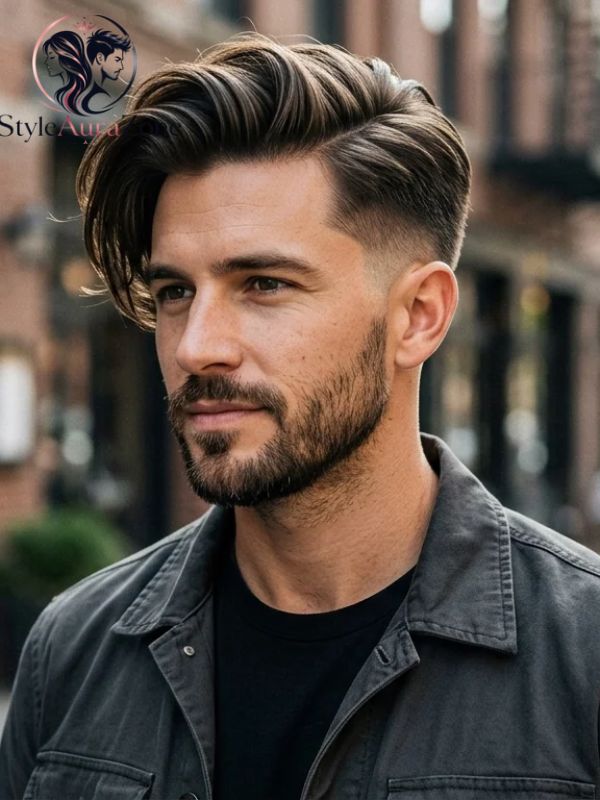
A generous top section is swept across with a defined part. The effect is classic and a little dramatic. Use a strong-hold matte product and a wide-tooth comb. Pick a tapered side for modern offices, or scissor-cut sides for a traditional room.
French Crop Fade
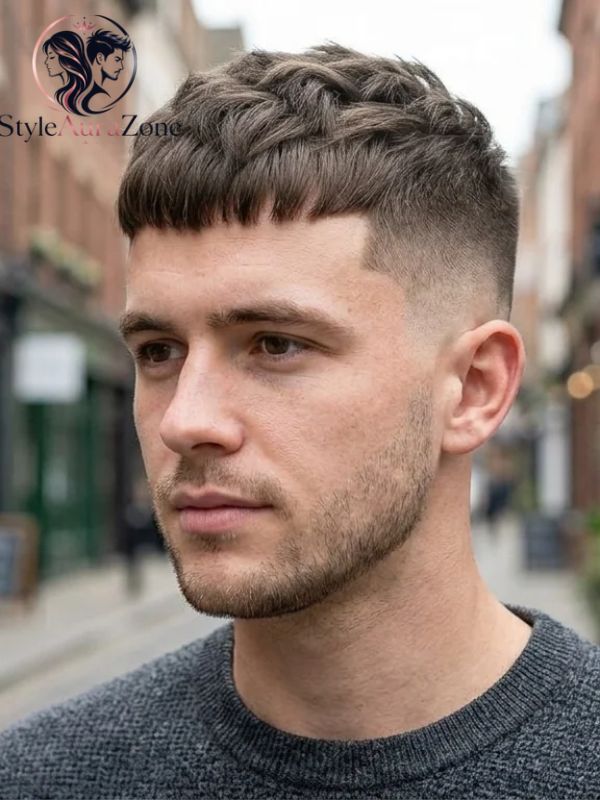
Short, blunt fringe lies flat over the forehead, with faded sides below. It’s low-effort and quite forgiving on thinning hairlines. Apply a pinch of paste and push the fringe forward. Keep the fade low to mid if your workplace leans conservative.
Thick Curly Fringe with Mid Taper Fade
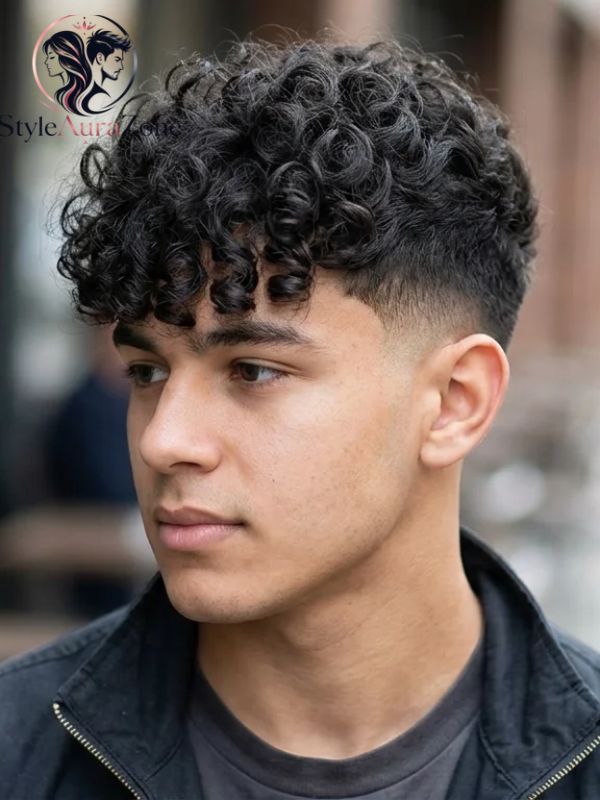
Dense curls on top gain structure when the sides taper down. The cut balances volume with discipline. Use a curl-defining cream and a diffuser to keep the shape springy. Tell your barber to keep the taper soft so the change in length doesn’t look abrupt.
Posh Shaggy Haircut
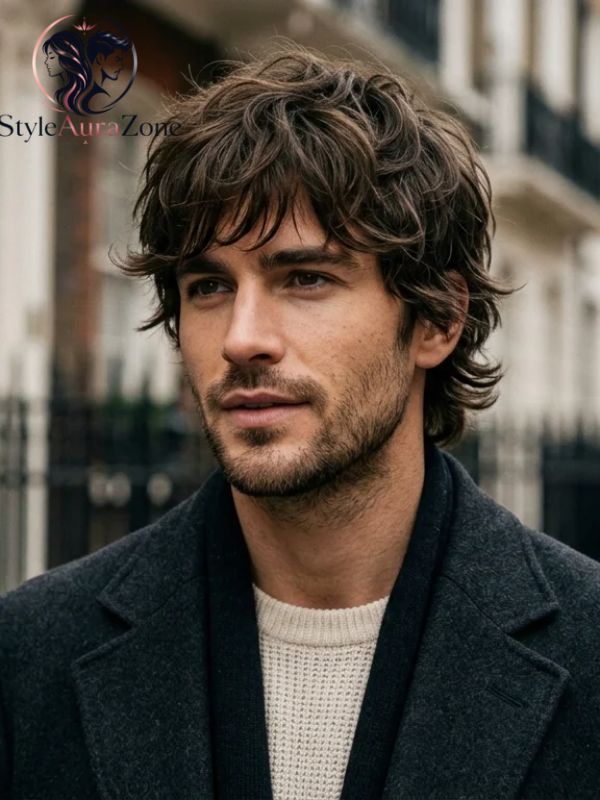
Layered, feathered ends create a lived-in finish that feels expensive. This is a bold option, so reserve it for relaxed or creative workplaces. Apply sea-salt spray, then air-dry. Regular layer maintenance prevents it from sliding into untidy territory.
Slick Back
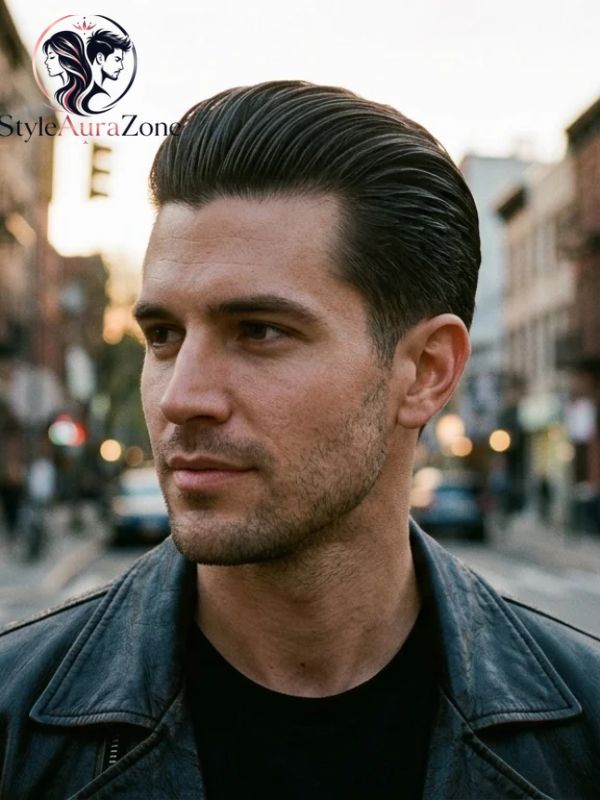
Hair is combed straight back from the forehead, exposing the face and giving off a sharp, authoritative look. Use a firm-hold pomade on towel-dried hair. Keep the sides short, and the contrast sharpens the shape. It’s a favorite for evening events and formal meetings.
Short Side Swept Crew Cut with High Taper Fade
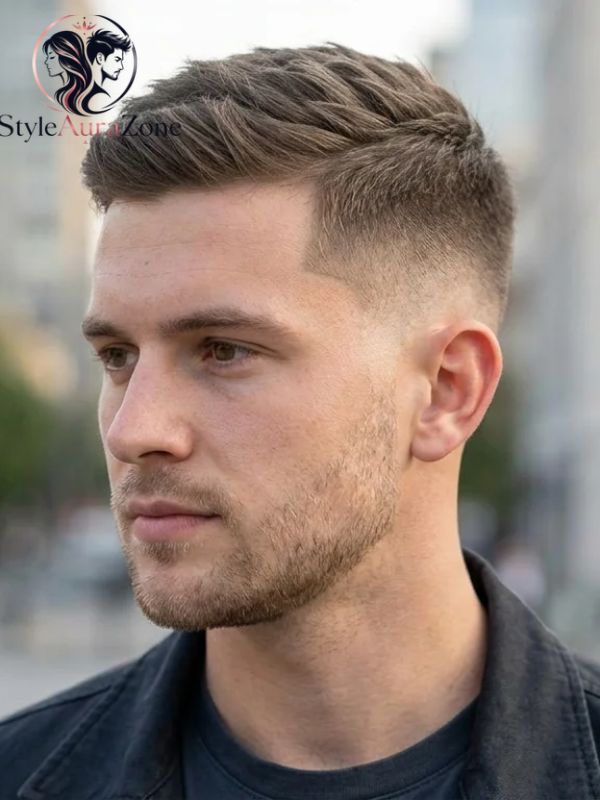
A compact top is brushed to the side, and a high taper cleans up the lower half. The result is tidy and a bit athletic. Use a light paste for gentle hold. A short, trimmed beard completes it without overpowering the cut.
Hard Side Part with Low Taper Fade
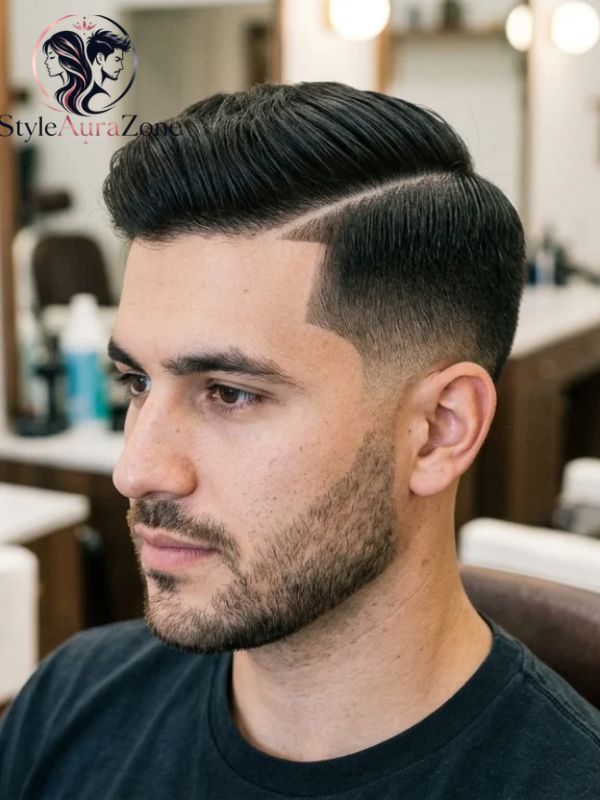
A razor-sharp part, a full top, and a low taper make this cut look like a tailored suit for your head. Ask your barber to define the part line. Comb the hair over with a bit of pomade, and finish with light hairspray.
Quick Guide: Matching Styles To Your Workplace
| Work Environment | Best-Fit Styles | What To Keep In Check |
| Law, banking, government | Side part, Ivy League, crew cut with low taper | Fade height, product shine |
| Consulting, accounting, healthcare | Comb over, short quiff, brush up | Top length, edgy texture |
| Tech, marketing, sales | French crop, textured crew cut, natural flow | Messy finishes |
| Creative and media | Shaggy cut, man bun, loose curls, undercut | Overgrown edges |
| Startup founders | Slick back, faux hawk, curly fringe | Consistency across meetings |
What Makes A Haircut “Professional” Looking?
A professional haircut isn’t defined by length alone. It comes down to shape, cleanliness, and consistency. Hair that looks planned supports your suit, your résumé, and your reputation. Hair that looks neglected quietly undercuts them, even when everything else is polished.
The Criteria of a Professional Haircut
Four quick checks tell you whether a cut qualifies:
- Clean outline: The neckline, sideburns, and hairline look crisp.
- Controlled shape: The silhouette stays put without a ton of product.
- Quiet impression: The cut supports your presence instead of stealing attention.
- Staying power: It still looks good after three weeks of growth.
The Conservative-to-Creative Spectrum
Every industry sits somewhere along a scale. Use the table to place yourself.
| Level | Typical Fields | Safe Cuts |
| Most conservative | Law, private banking, defense | Side part, Ivy League, short crew cut |
| Moderately conservative | Consulting, accounting, healthcare | Comb over, low taper styles |
| Modern professional | Tech, sales, education | French crop, textured crop, quiff |
| Creative | Design, advertising, media | Longer layers, curls, man bun |
Choose your cut based on the most conservative room you enter regularly. You can always loosen up after hours.
What Makes A Cut NOT Professional
Some choices tend to clash with corporate settings. Unnatural dye colors, carved designs, ultra-high skin fades, and long, unkempt hair usually read as personal statements. Overgrown neck hair and a patchy beard can do just as much damage as a bold style.
The “Would A Client Notice?” Test
Ask yourself one question. If a new client met you today, would your hair be the first thing they remember? If so, dial it back. A professional cut should blend into your overall presentation rather than compete with it.
Choose A Cut That Still Looks Professional Three Weeks Later
Grow-out matters more than most men realize. A skin fade looks incredible on day one but shows growth fast. A low taper or scissor-cut side softens as it grows. Tell your barber how often you can visit, and let that shape the cut.
The Best Haircut For A Job Interview
An interview gives you one shot at a first impression. Your goal is simple: look prepared, current, and calm. Reliable cuts beat risky ones every time.
The Safest Interview Hairstyles For Men Professional Men’s Haircuts
- Side part with a taper: Works in almost any industry.
- Ivy League: Polished, structured, and endlessly dependable.
- Crew cut with a low taper: Neat, quick to style, and confident.
- Short comb over: Adds a modern touch without crossing any lines.
When To Schedule The Cut
Timing changes how a cut looks. Use this schedule as a guide.
| Timing | What Happens | Verdict |
| Same day | Lines look stiff and freshly shorn | Avoid |
| 1 day before | Slightly rigid, with no time to adjust | Risky |
| 5 to 7 days before | Edges soften, hair settles naturally | Ideal |
| 2+ weeks before | Shape starts to blur | Too late |
Interview-Specific Considerations
- Skip hard skin fades and shaved designs for traditional employers.
- Keep stubble groomed, or trim a full beard with defined lines.
- Match the cut’s formality to your outfit.
- Practice styling your hair at home at least twice before the big day.
The First-Day-at-New-Job Question
Resist the urge to change your look on day one. Your new colleagues hired the person they met in the interview. Observe the office culture for two or three weeks, then adjust your style gradually if the environment allows it.
How To Ask Your Barber For A Professional-Looking Cut
Barbers can only deliver what they understand. Vague requests like “just clean it up” leave too much room for guessing. A few specific details turn a decent cut into the right one.
The Four Details That Matter Most
| Detail | What To Say | Example |
| Top length | Give a measurement | “About an inch and a half on top” |
| Sides | Name the height and the finish | “Low taper, not a skin fade” |
| Hairline | Choose square or rounded | “Natural, slightly rounded neckline” |
| Finish | Pick matte or shine | “Matte, with minimal product” |
The Conservative Qualifier
If you want a trendy cut that’s still office-friendly, say so. Mention your industry, and your barber can lower the fade, soften the part, or shorten the top. That one sentence often prevents a haircut you’d regret in Monday’s meeting.
Reference Photos for Professional Contexts
Skip celebrity shots and fashion editorials. Those images rely on lighting, styling teams, and editing. Look for photos of working professionals in your field, such as LinkedIn headshots or company bio pages. They show what real offices accept.
The Beard Conversation
If you wear a beard, ask your barber to shape it during the same appointment. Matching the beard lines to the haircut keeps the whole face consistent. A sharp cut next to a shaggy beard looks mismatched.
Starting a New Job or Career Transition
Mention a new job or industry change when you book. Barbers who know your context will steer you toward a suitable cut. For a first haircut in a new role, choose something refined and adjust over later visits.
Professional Haircuts by Career Stage
Your best haircut shifts as your responsibilities grow. A style that earns credibility early on may need an upgrade when you’re managing teams or presenting to boards. Use the table as a quick reference, then read the details below.
| Career Stage | Style Goal | Recommended Cuts |
| Entry-level | Blend in, show reliability | Side part, crew cut, short taper |
| Mid-career | Add polish and personality | Textured quiff, French crop, comb over |
| Senior professional | Project authority | Classic side part, slick back |
| C-suite | Build consistency and presence | Signature cut, held for years |
| Career changer | Signal a fresh start | Updated style that fits the new field |
Entry-Level and Recent Graduates
Keep it tidy and conservative. Early in your career, you’re proving reliability, so let your work take the spotlight. A neat side part or short taper makes you look prepared without drawing extra attention.
Mid-Career Professionals
Once you’ve earned trust, you get more flexibility. Textured tops, softer fades, and light personality touches are all fair game. This is also the stage when many men settle into a beard and refine their routine.
Senior Professionals and Executives
Authority comes from steadiness. Classic cuts with crisp edges look confident rather than trendy. Many senior leaders find one reliable shape and refine it over the years, which creates a calm, dependable image.
C-Suite and Leadership Roles
At this level, your look becomes part of your personal brand. People remember consistency. Work with one barber who knows your preferences, and keep appointments on a fixed schedule so you look the same in every photo, meeting, and presentation.
Career Transitions and Reinventions
Changing industries calls for a visual reset. Moving from finance to a startup, for example, may justify more texture and a softer taper. Update your style for the environment you’re entering, not the one you’re leaving.
FAQ’S
What is the most professional haircut for men?
A side part with a low taper fade is the safest all-around choice. It looks sharp in nearly every industry.
How often should I get a haircut for work?
Every three to four weeks keeps most business cuts crisp. Skin fades may need a visit every two to three weeks.
Is a fade professional for work?
Yes, when it’s a low or mid taper with soft blending. Very high skin fades suit relaxed offices better.
Can men with long hair look professional?
Yes, if the hair is clean, tied back neatly, and trimmed regularly. A low bun suits most settings.
What is the best haircut for a job interview?
A neat side part, Ivy League, or crew cut with a low taper. Get it cut five to seven days beforehand.
Conclusion
A professional haircut isn’t about playing it safe. It’s about choosing a shape that fits your industry, flatters your hair type, and still looks sharp three weeks later. Start with the room you walk into most often, then add personality through texture and styling.
Give your barber clear details, schedule cuts around big moments, and stay consistent as you move up. Do that, and your hair will quietly back up every pitch, interview, and promotion conversation. The right cut won’t do the talking, but it’ll make sure people listen.