
Korean mullet haircuts have moved from Seoul street style into barbershops everywhere. The cut trades harsh contrast for soft layers, face-framing fringe, and a relaxed nape that flows instead of shouting. In 2026, even office workers feel comfortable asking their barber for it.
This guide covers eight modern variations, from the gentle soft mullet to the sharper fade and taper versions. You’ll get a quick comparison table, styling ideas that work at home, and a simple way to match a cut to your hair type. Bring it to your next appointment.
Why Korean Mullet Haircuts Are Trending in 2026
A Korean mullet is a layered haircut with a face-framing front, softly shaped sides, and an extended nape. Unlike the classic Western mullet, it blends the lengths together. The result looks connected and lived-in rather than “short on the sides, long in the back.”
K-pop idols and Korean drama leads keep this shape in the spotlight. Fans copy what they see on screen, and barbers have adapted fast. Most shops now know how to build curtain fringe, feathered ends, and a blended nape.
Here’s what keeps the trend growing:
- Flexible fit: It works on straight, wavy, and permed hair.
- Low daily effort: Once it’s cut well, a blow-dry and a little product does the job.
- Easy dress-up: It pairs with streetwear, smart casual, and even a suit.
- Adjustable boldness: You can keep it subtle or push it toward wolf-cut territory.
Top Modern Korean Mullet Haircuts Timeless Variation 2026
Each variation below changes one or two things: fringe, side length, crown layering, or nape shape. Read through all eight before you pick, because a small tweak can shift the whole mood.
Korean Soft Mullet
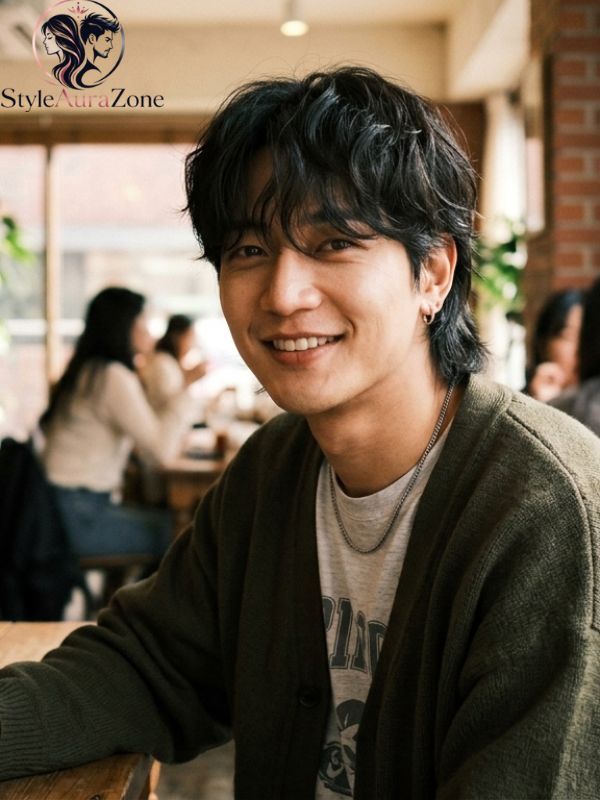
The soft mullet keeps every transition gentle. Thin, feathered layers blend from the fringe to a nape that barely grazes the collar. Nothing looks chopped or forced, which makes it a smart entry point for first-timers with fine to medium hair.
Because the back stays modest, grow-out is painless. Your barber can reshape it in a single visit, and it still looks neat at the office or on a weekend date.
Styling tip:
Rough-dry the roots with a blow dryer, then smooth a pea-size dab of lightweight cream through the ends.
Korean Layered Mullet
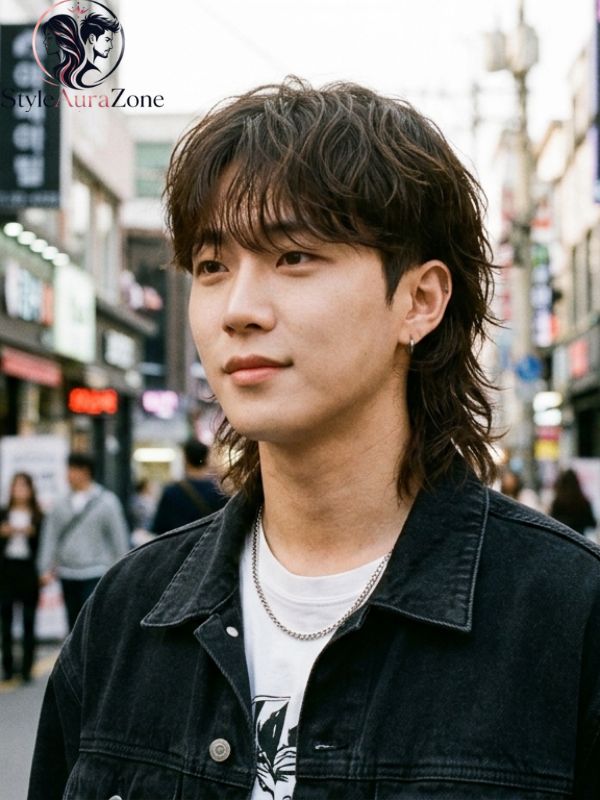
Stacked layers give this version its depth. Shorter pieces sit on top while longer ones fall through the back, which removes bulk and adds bounce. Thick, dense hair benefits most since the weight gets redistributed.
Point cutting keeps the ends airy instead of blunt. Ask for layers that connect so the crown flows into the nape without a visible step.
Styling tip:
Work texturizing mousse into damp hair and scrunch lightly for clean separation between layers.
Korean Mullet Wolf Cut
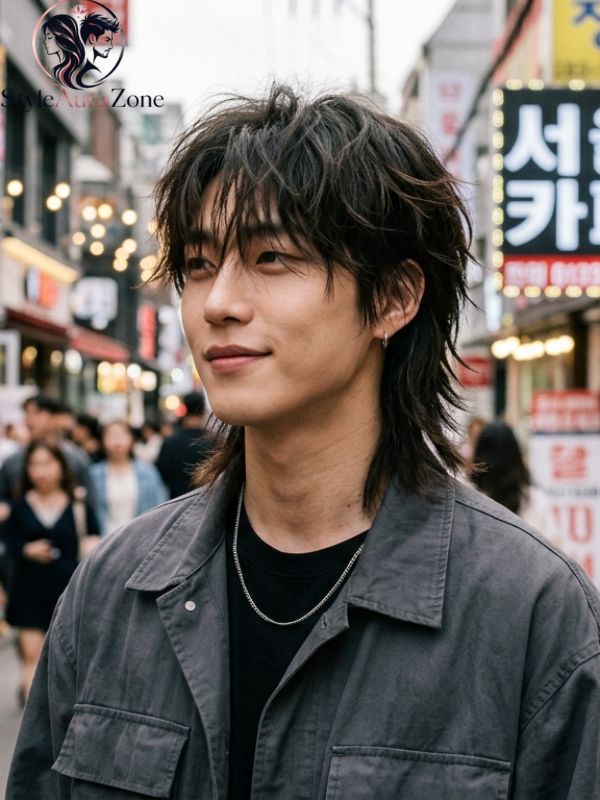
Picture a shaggy crown meeting an extended nape. Choppy layers stand tall on top, and the ends look deliberately undone. It’s the loudest option here, and younger guys with a fashion streak tend to pick it.
Density matters with this one. Thin hair can look wispy after heavy layering, so ask your barber to leave enough weight through the ends.
Styling tip:
Finger-dry the roots for lift, then dust in matte texture powder for grip.
Read more:Buzz Cut Fade: A Modern Haircut That Never Goes Out of Style
Korean Middle Part Mullet
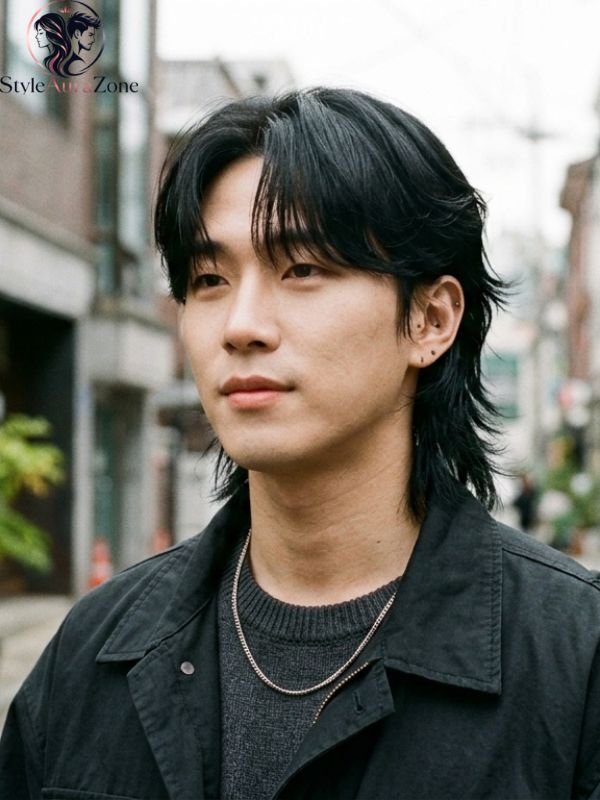
A center part splits the fringe into soft curtains that frame both cheeks. The sides taper gradually toward a longer back, which keeps the profile smooth. This shape softens the jawline, and that’s a big reason it’s so popular.
Straight and slightly wavy hair falls into place with little effort. Strong cowlicks may nudge the part off center, so let your natural growth guide the line.
Styling tip: Blow-dry each side away from the part, then mist lightly with shine spray.
Korean Mullet Two Block
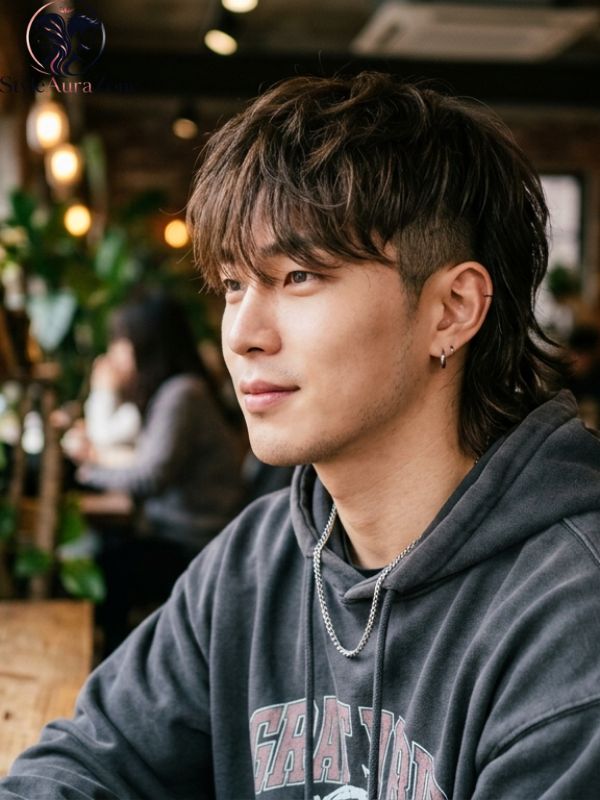
The two block splits hair into a longer upper section and clipped lower sides. Add extra length at the nape and you get a crisp, modern mullet with plenty of contrast. It looks structured without turning severe.
That contrast fades as the sides grow in. Plan a tidy-up every three to four weeks.
Styling tip:
Sweep the top forward or to one side, and keep the clipped sides clean to hold the sharp line.
Korean Fluffy Mullet
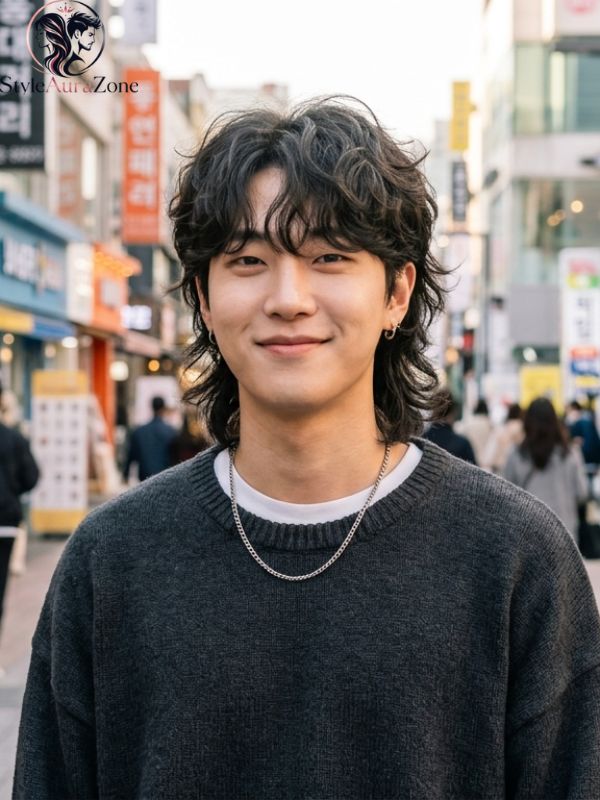
Volume drives the fluffy mullet. Layers are cut to lift at the root, and the ends stay slightly rounded instead of sharply pointed. The crown looks like a soft cloud, and the longer back balances it.
Fine hair gains the most here. The cut builds body that thin strands can’t create alone.
Styling tip:
Dry the roots upside down, then finish with a light-hold mousse so the fluff doesn’t sag.
Korean Mullet Fade
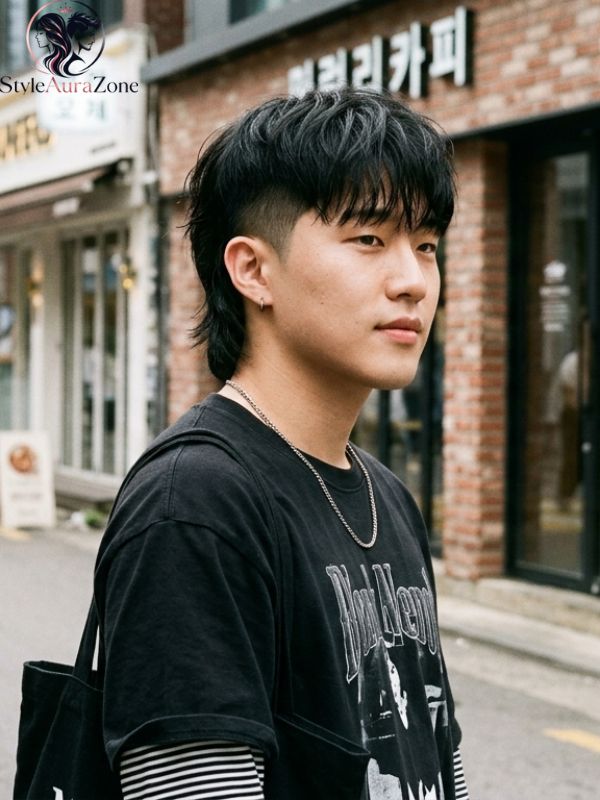
Want a sharper edge? The fade version melts short sides into a layered top and a longer back. Pick a low, mid, or high fade to control how bold the contrast looks.
A skin fade looks best fresh, so book a touch-up every two to three weeks. Otherwise the blend softens into a regular taper.
Styling tip:
Use a bit of matte paste on top to keep the contrast crisp.
Korean Taper Mullet
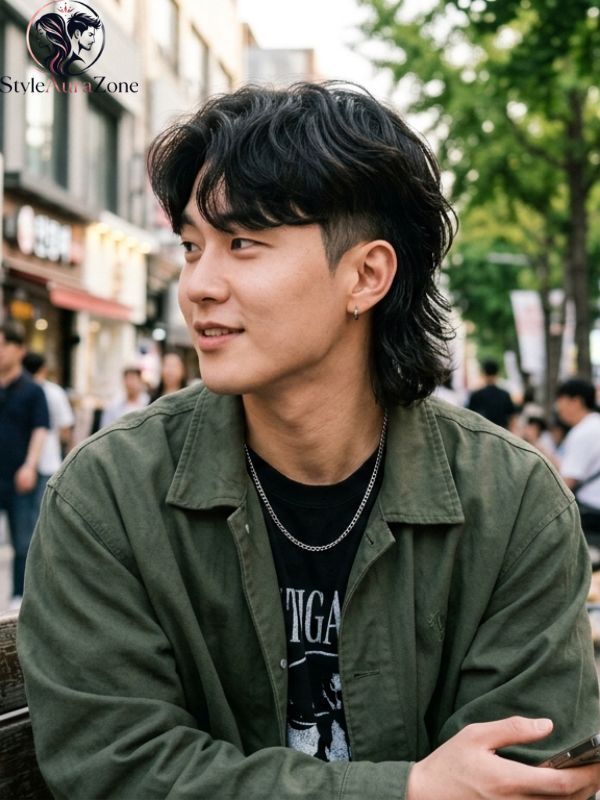
This is the office-friendly pick. The sides shorten gradually with no hard line, which gives a polished finish. You still get the mullet silhouette, only quieter.
Choose a low taper for a subtle change. Go with a mid taper when you want more visible shape around the ears.
Styling tip:
Air-dry, then run sea salt spray through the top for light texture.
Quick Comparison of Korean Mullet Styles
| Style | Best Hair Type | Maintenance | Face Shapes | Overall Vibe |
| Soft Mullet | Fine to medium, straight | Low | Round, oval | Gentle, beginner-friendly |
| Layered Mullet | Thick, dense | Medium | Oval, square | Textured, full of movement |
| Wolf Cut Mullet | Medium to thick, wavy | Medium | Oval, heart | Messy, fashion-forward |
| Middle Part Mullet | Straight to slightly wavy | Low | Round, square | Smooth, idol-inspired |
| Two Block Mullet | Straight, medium density | High | Oval, square | Structured, high contrast |
| Fluffy Mullet | Fine, straight or wavy | Medium | Round, diamond | Airy, soft volume |
| Mullet Fade | Any, with clean growth | High | Most shapes | Sharp, bold |
| Taper Mullet | Any texture | Medium | Most shapes | Polished, workplace-safe |
Best Hairstyling Ideas on Korean Mullets
Korean mullets look best when they move. Heavy gel and wax flatten the layers, so keep products light and use less than you think you need.
Simple daily routine:
- Start with damp hair and a light leave-in or cream to tame frizz.
- Blow-dry the roots first, especially at the crown, to build lift.
- Direct the fringe where you want it: away from the part or forward.
- Add mousse or sea salt spray for texture and separation.
- Shape the ends with your fingers instead of a brush.
- Finish with a whisper of shine spray or matte paste, depending on your look.
Product cheat sheet:
| Product | Works Best On | What It Does | Skip It If |
| Lightweight cream | Straight, fine hair | Smooths and adds soft control | Your hair is already oily |
| Mousse | Fine or wavy hair | Adds lift without weight | You want a slick finish |
| Sea salt spray | Wavy or layered cuts | Builds airy grit | Your hair runs dry |
| Matte paste | Two block, fade, taper | Defines pieces with no shine | You prefer a wet look |
| Texture powder | Wolf cut, shaggy styles | Boosts grip at the roots | You have very dark hair and hate residue |
A few extra ideas: try a soft perm for flatter hair, or ask for subtle caramel highlights to make the layers pop. Neither is required, and the cut looks great on its own.
Korean Mullet Guide Man of the Trend
Three things decide the right cut: hair texture, face shape, and how much effort you’ll put in each morning. Match those and the rest gets easy.
Pick by hair type:
| Your Hair | Best Bets | Why It Works |
| Straight | Middle part, soft mullet | Falls into place with little styling |
| Wavy | Layered, wolf cut | Layers highlight natural movement |
| Curly | Layered, taper mullet | Shape follows curl pattern; ask for extra length to offset shrinkage |
| Fine or thin | Fluffy, soft mullet | Builds body without removing weight |
| Thick | Layered, two block | Cuts bulk and keeps shape |
How to ask your barber:
- Say how long you want the fringe.
- Mention a center part, curtains, or forward-swept texture.
- Decide whether the sides stay natural, tapered, or faded.
- Explain how far the nape should extend.
- Bring photos from the front, side, and back with similar hair to yours.
A sample script: “I’d like a medium Korean mullet with a center part, soft layers through the crown, tapered sides, and a lightly feathered nape.”
Trim schedule:
| Style | Suggested Trim |
| Soft, layered, fluffy | Every 6 to 8 weeks |
| Wolf cut, middle part | Every 5 to 6 weeks |
| Taper mullet | Every 4 to 6 weeks |
| Two block, fade | Every 3 to 4 weeks |
Growing out the back? Tell your barber up front. Otherwise the nape gets trimmed with everything else and you lose the silhouette.
FAQ’S
Does a Korean mullet need a middle part?
No. Textured fringe, wispy bangs, or a swept-back front all work.
Can curly or wavy hair pull off a Korean mullet?
Yes. Ask your barber to account for curl shrinkage and keep enough crown weight.
How long should my hair be to start?
Two to three inches on top and a bit at the nape is enough for a short version. Medium lengths give you more options.
How often should I trim it?
Every four to six weeks suits most styles. Fade and two block versions need visits closer to every three weeks.
What products work best?
Lightweight cream, mousse, and sea salt spray keep the layers soft. Skip thick gels and heavy wax.
Conclusion
The Korean mullet works because it bends to your hair instead of fighting it. Soft layers, a face-framing front, and a controlled nape give you a modern shape without the shock factor. Whether you pick a soft, layered, or wolf version, the look stays wearable every day.
Start with your hair type and your daily effort budget, then choose the variation that fits. Show your barber photos with similar texture, ask for connected layers, and book a trim every four to six weeks. Do that and your Korean mullet will keep looking sharp all year.