
Curly hair and a sharp fade used to feel like opposites. One is loose and unpredictable, the other is precise and controlled. The burst fade curly hair combo solves that tension by carving a rounded arc behind the ear while leaving every curl on top untouched, so texture and structure finally work together instead of fighting each other.
This guide breaks down every height, finish, and variation worth asking for in 2026, plus the barber terms you need so your next appointment goes exactly how you picture it. No guesswork, no vague descriptions, just a clear path from “I like that photo” to “that’s actually my haircut now.”
What is a Burst Fade on Curly Hair
A burst fade is named for its shape, not its length. Instead of a straight fade line running across the side of the head, the clipper work curves around the ear like a half-moon, or a burst of light radiating outward. That curved line is the entire identifying feature of the cut.
On curly hair, this curve solves a specific problem. Curls naturally expand outward near the temples and behind the ears, creating a wider silhouette than straight or wavy hair produces. A burst fade trims that width away in a rounded shape rather than a flat one, which keeps the head looking proportional instead of boxy.
The style adapts to nearly any curl pattern, from loose S-waves to tight coils. It doesn’t require the curls to be brushed out, gelled down, or altered in any way to look sharp. The fade does the structural work; the curls simply get to be curls.
Barbers also favor the burst shape on textured hair because it blends more forgivingly. A straight-line fade shows every uneven spot instantly. A curved burst fade hides small inconsistencies in curl density near the hairline, which is one reason curly-haired clients often get recommended this style specifically.
Low vs Mid vs High Burst Fade Curly Hair
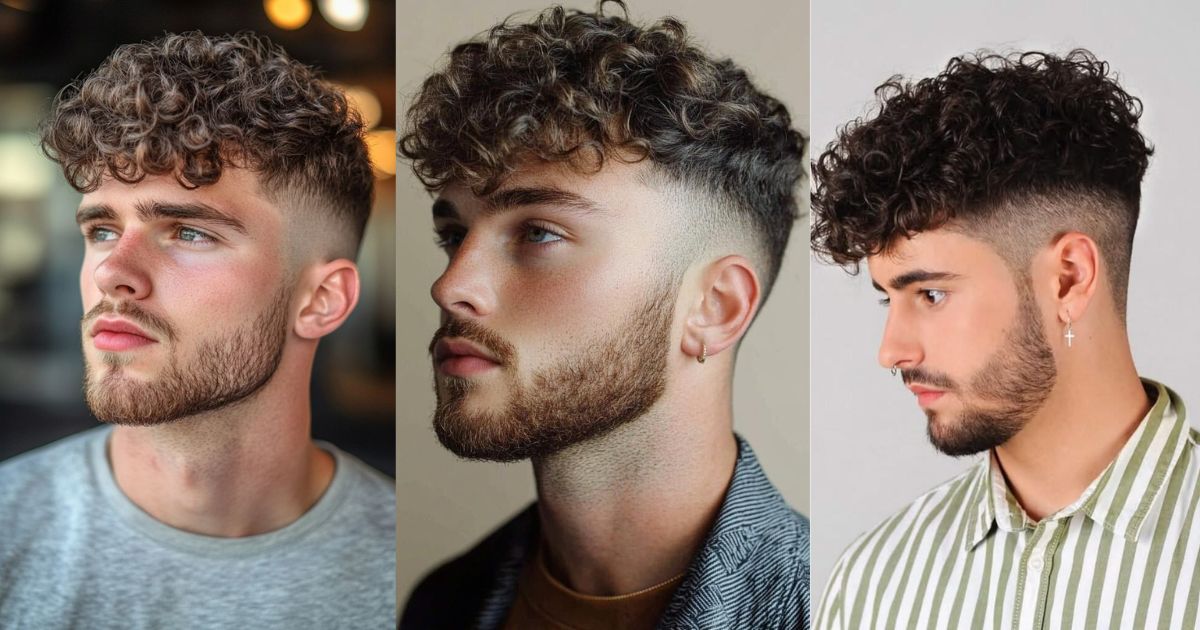
Fade height is the first real decision, and it affects everything downstream: how bold the contrast looks, how fast it grows out, and how often you’ll be back in the chair. Here’s how the three heights compare side by side.
| Fade Height | Arc Position | Contrast Level | Regrowth Speed | Best Fit |
| Low burst fade | Just above the ear | Subtle | Slowest | First-timers, office settings |
| Mid burst fade | Between ear and temple | Balanced | Moderate | Most face shapes and curl types |
| High burst fade | Above the temple line | Maximum | Fastest | Thick curls, bold statement looks |
A low burst fade is the easiest entry point if you’ve never had a fade before. It removes bulk without drawing much attention to the sides, so it reads as neat rather than styled. A mid burst fade is the one most barbers default to when a client says “surprise me,” because it flatters nearly every head shape. A high burst fade is dramatic and photogenic, but it needs attention roughly every ten to fourteen days before the line starts to blur.
If you’re torn between two heights, go lower. You can always ask for more height at your next visit once you’ve seen how the curve sits against your curl pattern.
Burst Fade vs Taper Burst Fade Curly Hair
These two get confused constantly, and the difference comes down to what happens at the very bottom of the fade. A standard burst fade often finishes down to skin near the base of the arc, especially close to the neckline. A taper burst fade curly hair cut stops short of skin, leaving a thin layer of hair even at the shortest point.
| Feature | Burst Fade | Taper Burst Fade |
| Finish at the skin | Yes, often bare | No, leaves stubble length |
| Contrast | Sharp and high | Softer and gradual |
| Grow-out appearance | Noticeable within 1-2 weeks | Holds shape 2-3+ weeks |
| Sensitive skin/scalp | Can irritate near hairline | Gentler, less razor contact |
Choose the standard burst fade if you want the most defined shape for photos, events, or simply because you enjoy a crisp look and don’t mind the maintenance. Choose the taper version if your schedule doesn’t allow biweekly barber trips, or if you’ve had razor bumps or irritation from skin fades in the past. Neither is objectively better; they just serve different lifestyles.
Best Burst Fade Curly Hair Styles
The following 21 styles are the most requested variations for 2026, each built on the same foundation: a curved arc, healthy curls left intact on top, and one or two tweaks to height, length, or added detail.
1. Low Burst Fade Curly Hair
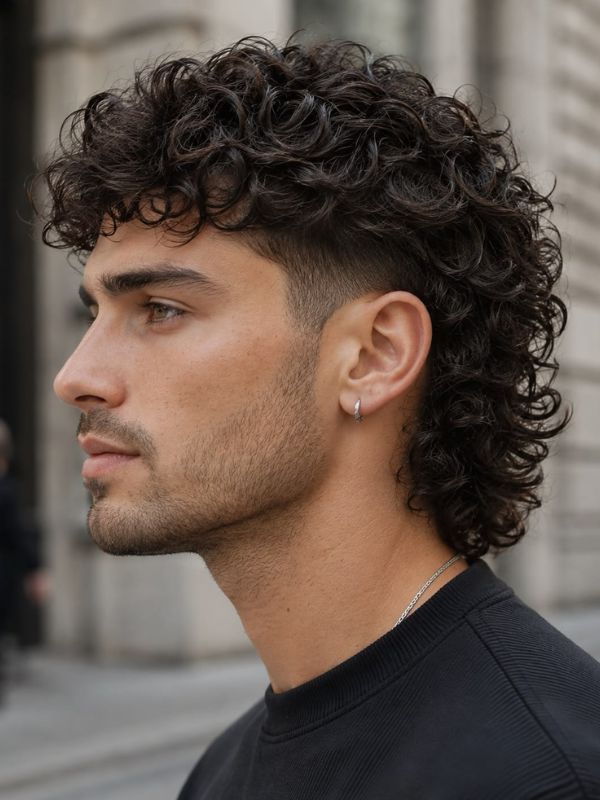
This is the most conservative version of the cut. The curve sits low, close to the ear, so it reads as tidy rather than styled. It’s a strong choice for anyone under a strict dress code or trying a fade for the very first time without committing to a dramatic look.
2. Low Burst Fade Curly Hair Men

Here the emphasis shifts slightly toward length retention on top. The fade stays low while the curls are left longer, so the cut still reads unmistakably curly rather than cropped. Ask your barber to shape with scissors instead of clippers up top to protect the curl pattern.
3. Mid Burst Fade Curly Hair

The middle-height version tends to suit the widest range of face shapes, which is why it’s the most commonly recommended option in barbershops. The arc is visible enough to look intentional but doesn’t dominate the overall silhouette. It pairs well with almost any curl density.
4. Mid Taper Burst Fade Curly Hair

Combine the flattering middle height with a soft taper finish and you get a cut that looks sharp fresh out of the chair but ages gracefully over the following weeks. It’s a smart pick for anyone who travels often or can’t guarantee a two-week barber schedule.
5. High Burst Fade Curly Hair

The boldest height on this list, a high burst fade removes the most volume from the sides, making curls on top look taller and denser by comparison. It suits thicker curl types especially well, since there’s more width to trim down into a clean shape.
6. Taper Burst Fade Curly Hair

This variation keeps the burst curve but avoids a bare-skin finish altogether. The result looks softer in person and photographs almost as sharp as a skin fade while requiring noticeably less upkeep between visits.
7. Low Taper Burst Fade Curly Hair

The gentlest combination possible: low height, taper finish, minimal contrast. It’s built for guys who want to look put-together without any part of the haircut standing out as a fashion statement. This one holds its shape the longest of any variation here.
8. Burst Fade Curly Hair Mullet

Pairing a burst fade with mullet length works because the clean arc keeps the front and sides from looking unfinished. Without it, a curly mullet can read as simply overgrown. With the curve in place, the length in back looks deliberate rather than accidental.
9. Modern Mullet Burst Fade Curly Hair
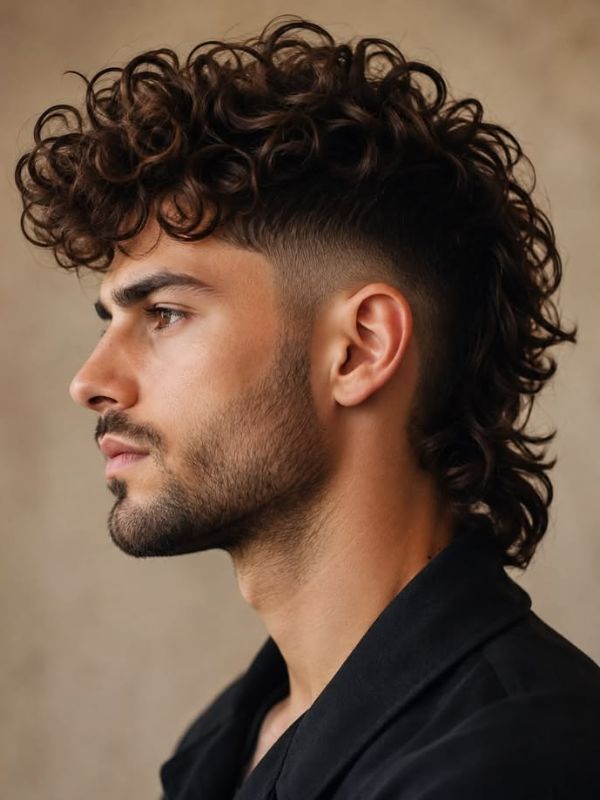
A more polished take on the mullet pairing, this version layers the back so it moves rather than sitting in one heavy chunk. From the front, it looks like a standard curly fade; turn sideways and the extra length becomes the whole point.
10. Mohawk Burst Fade Curly Hair
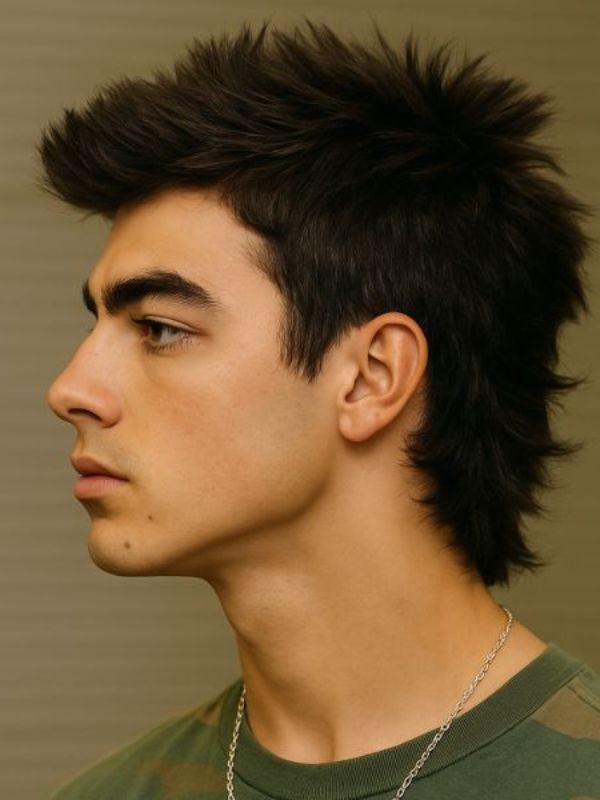
A strip of curls runs down the center while both sides curve into the burst shape. It’s one of the more athletic, high-energy looks on this list and needs almost no product to hold its shape, since the curl pattern does that job naturally.
11. Burst Fade Curly Hair V
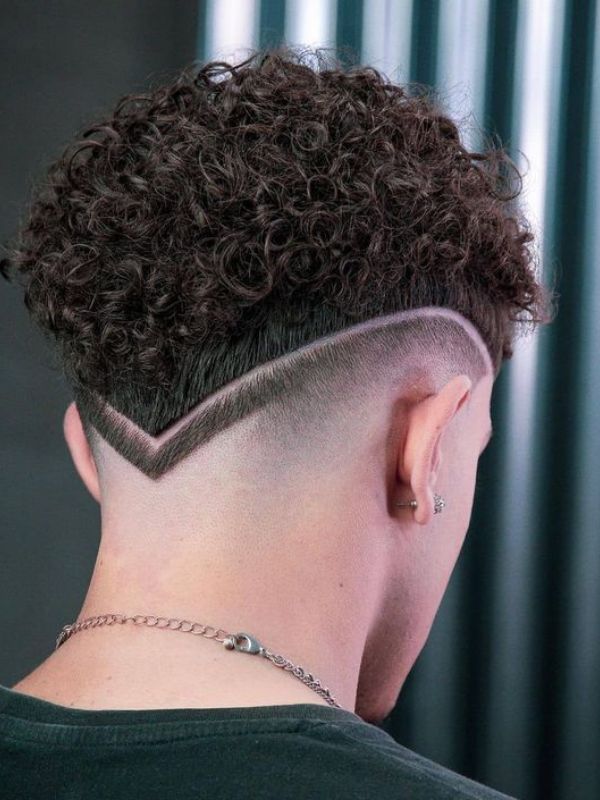
A V-shaped neckline finish adds a small but noticeable detail at the back of the head. Instead of a flat or rounded neckline, the hairline dips into a soft point, which visually elongates the neck and gives the whole cut a more finished appearance.
12. Burst Fade Curly Hair Design
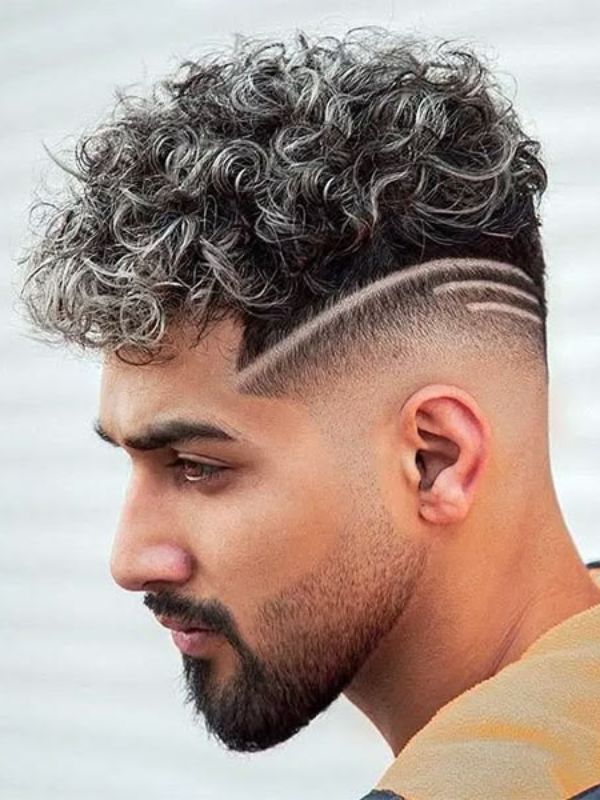
A single carved line following the curve of the fade adds a graphic touch without overcomplicating the cut. Simplicity matters here: one clean line ages better than an intricate pattern, which blurs out within a week or two as new growth comes in.
13. Low Burst Fade Curly Hair Mullet
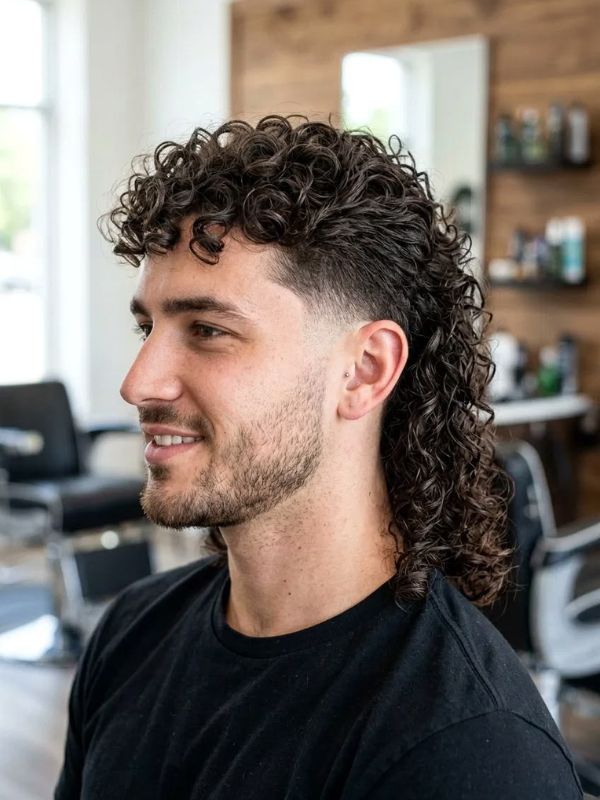
This combines the calmest fade height with mullet-length hair in back, producing a look that’s unexpected without being loud. It’s a good testing ground if the mullet trend interests you but you’re not ready for a dramatic version.
Learn more:Straight Hair Mullet Guide 2026: Styles, Fade, and Easy Care
14. Mid Burst Fade Curly Hair Mullet

Moving the arc up to mid height adds noticeably more contrast to the mullet pairing. Curls on top appear taller, sides look leaner, and the length in back reads as more purposeful. This version photographs particularly well.
15. High Burst Fade Curly Hair Mullet
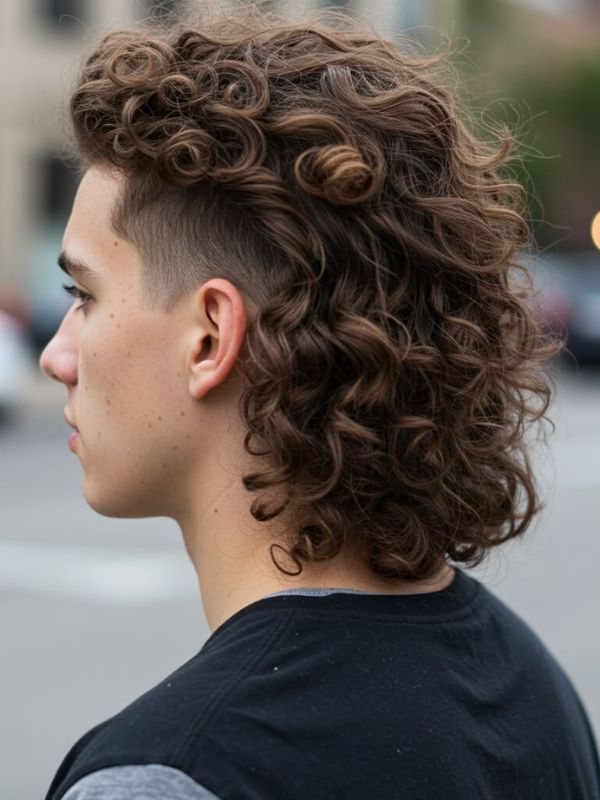
The most dramatic mullet pairing on this list. A high arc clears most of the side hair away, so the curls up top look concentrated and full, while the length in back provides a striking contrast. Expect to maintain this one closely.
16. Burst Fade Curly Hair Men
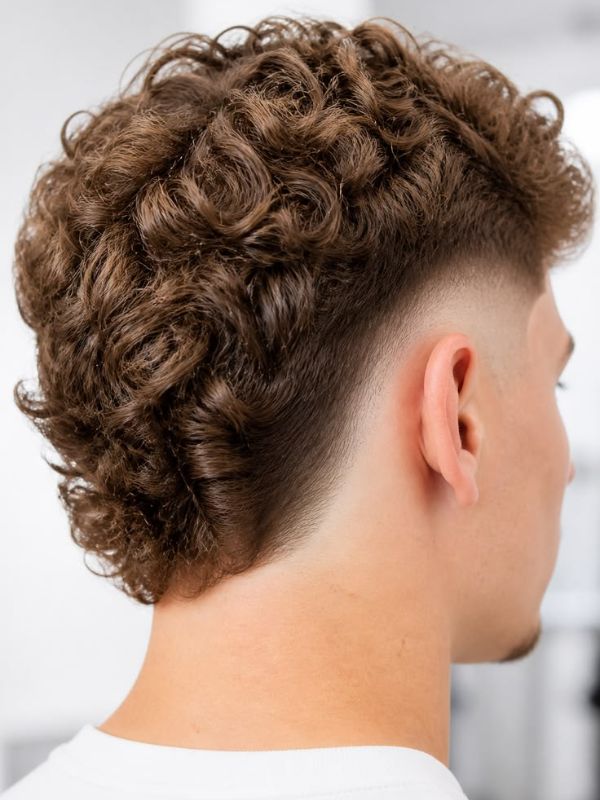
A catch-all everyday version that works at any height. The consistent goal is clean sides paired with healthy, well-shaped curls on top, making it a dependable option regardless of your curl pattern or lifestyle.
17. Mens Burst Fade Curly Hair

Popular for how quickly it looks fresh and how gracefully it grows out between visits. A smooth arc on both sides, a clean outline near the sideburns, and slightly longer curls on top give this version broad appeal.
18. Burst Fade Curly Hair With Design

Similar to the design variation above but often paired with slightly more elaborate detailing, like two parallel lines instead of one. Keep any added lines thin, since thicker carved designs lose definition faster as the surrounding hair grows.
19. Burst Fade Curly Hair Short

Shorter curls on top mean less morning styling and a cooler feel in warm weather. The arc stays clean at a low or mid height while the top keeps enough length to still look distinctly curly rather than buzzed.
20. Burst Fade Curly Hair Black
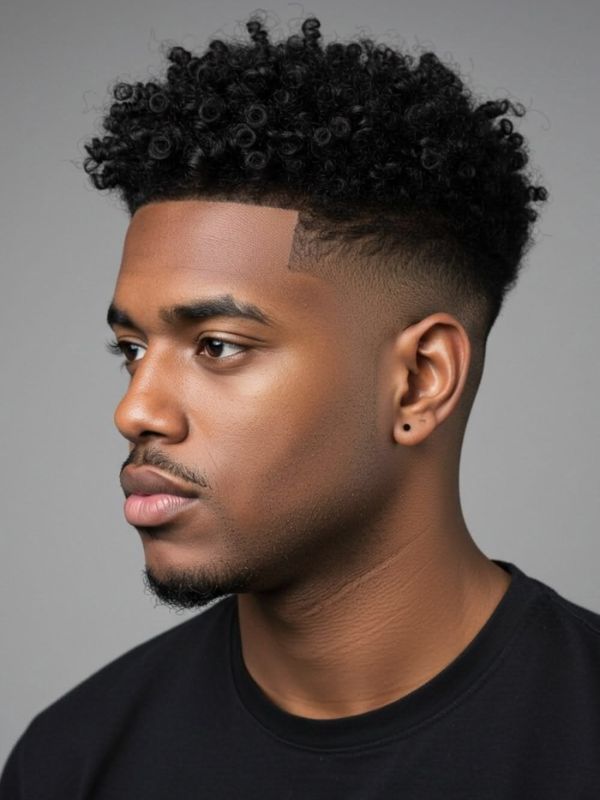
This version celebrates natural coil and curl patterns rather than minimizing them. The arc creates contrast against tight sides while the top retains its full texture, working equally well on short afros, medium coils, or looser curl types.
21. Short Burst Fade Curly Hair

A tight, controlled look from every angle. The curve wraps cleanly around the ear, the curls stay short but textured, and the whole cut requires little more than a small amount of curl cream to stay defined through the day.
Barber Tutorial: Burst Fade Curly Hair
A skilled barber starts by placing the arc first, not the length on top. This curved guideline is set using clippers around the ear before any other cutting begins, since every other decision in the haircut references that curve.
Once the arc is placed, the blend moves outward in stages:
- The clipper establishes the tightest point of the curve near the ear.
- Guard lengths increase gradually moving upward and outward from that point.
- The barber checks for visible lines or steps and smooths them with a lighter guard pass.
- Attention shifts to the top, where scissors, not clippers, shape the curls.
- Both sides get checked against each other for symmetry before the final cleanup.
The scissor work on top matters as much as the fade itself. Clippers can flatten or shred curl texture, while scissor-over-comb shaping removes bulk while preserving the natural spring of each curl. A barber experienced with textured hair will typically ask about your curl pattern before cutting a single strand, since tighter coils and looser curls respond differently to the same technique.
How to Ask Your Barber for a Burst Fade With Curly Hair
Clear communication saves you from a haircut that doesn’t match what you pictured. Use a short, direct script and let your barber fill in the technical details:
“I’d like a burst fade that curves around my ear, kept [low / mid / high], with a [taper / skin] finish.”
From there, mention any extras you want included, such as mullet length in back, a V-shaped neckline, or a carved design line. Keep the request simple; overexplaining tends to create confusion rather than clarity.
A reference photo matters more than words ever will. Bring one that matches your actual curl pattern, not just a haircut you like the shape of. Tight coils and loose waves fade differently, so a mismatched reference photo can lead to a result that looks off once it’s on your head. It also helps to mention how often you can realistically get back in the chair, since your barber can adjust the height and finish to fit a busier or looser schedule.
Styling and Care for Curly Burst Fades
The haircut itself does most of the visual work, so daily styling should stay minimal. Right after a shower, gently squeeze out extra water with a microfiber towel or soft cotton shirt rather than rubbing with a regular towel, which roughens the curl cuticle and causes frizz.
While hair is still damp, apply a small amount of curl cream or light gel and scrunch it upward into the roots. Avoid brushing curls when they’re dry, since this separates the curl pattern and creates a puffier, less defined shape. A wide-tooth comb or curl pick works fine on damp hair if you want extra volume before the curls set.
At night, a satin or silk pillowcase reduces friction against the curls, helping them hold their shape for an extra day or two between wash days. Skipping this step is a common reason curls look flat or frizzy by the second morning, even when the haircut itself is fresh.
Maintenance Schedule
Consistency is what keeps a burst fade looking sharp rather than grown-out. Below is a general timeline, though your personal hair growth rate will shift these numbers slightly.
| Maintenance Task | Recommended Frequency |
| Fade touch-up (low/mid height) | Every 2-3 weeks |
| Fade touch-up (high height) | Every 1-2 weeks |
| Top reshaping (curls) | Every 4-6 weeks |
| Design line refresh | Every 10-14 days |
| Deep conditioning treatment | Every 1-2 weeks |
If your schedule is unpredictable, a low taper burst fade curly hair cut holds its shape the longest between visits, making it the most forgiving choice for a packed calendar. High fades and added design lines both demand tighter upkeep, so factor that into your decision before booking.
Common Mistakes and Easy Fixes
A few recurring issues show up again and again with this cut, and most of them are easy to avoid once you know what to watch for.
- Cutting the top too short: Curls need a certain amount of length to actually look like curls rather than a tight buzz. Ask your barber to leave more length than feels necessary; you can always trim more at the next visit.
- Letting fade height creep upward: Each visit, ask specifically to keep the same height rather than “clean it up,” which some barbers interpret as going shorter and higher by default.
- Over-thinning the curls: Thinning shears used too aggressively leave curls looking sparse and frizzy instead of full. Request light shaping only, particularly if your curl density is already on the finer side.
- Skipping moisture between cuts: Dry curls hold a fresh cut’s shape poorly. A simple leave-in conditioner or curl cream routine keeps the haircut looking sharp for longer.
- Choosing a design that’s too intricate: Detailed carved patterns blur out fast as new hair grows in. A single clean line lasts noticeably longer than anything more elaborate.
FAQ’S
Is a burst fade good for curly hair?
Yes. It controls the width and puffiness curls create near the temples while leaving the curl pattern fully untouched on top.
Which burst fade height works best for thick curly hair?
Mid or high heights suit thick curls best, since they remove more bulk from the sides for a cleaner overall shape.
How long does a burst fade curly hair cut last before needing a touch-up?
The fade itself typically holds for two to three weeks, while the shape on top can go four to six weeks between trims.
Can I still get a burst fade if my curls are dry or prone to frizz?
Yes, though keeping curls moisturized between visits helps the cut hold its shape and look noticeably cleaner day to day.
Does a burst fade suit every face shape?
Generally yes. The curved shape slims the sides and adds visual height on top, which balances round, square, and oval faces alike.
Conclusion
A burst fade curly hair cut earns its popularity honestly: it’s one of the few fade styles built specifically to work with texture instead of against it. Low keeps things quiet and professional, mid strikes the widest appeal, and high delivers maximum contrast for anyone chasing a bolder look in 2026.
Whichever height or finish you choose, the formula stays the same. Bring a matching reference photo, use a clear script when talking to your barber, and commit to a realistic touch-up schedule. Handle those three things and the rest of the haircut takes care of itself, curve by curve.